Some (possibly unexpected) advice for aspiring pros

_5504110 copy
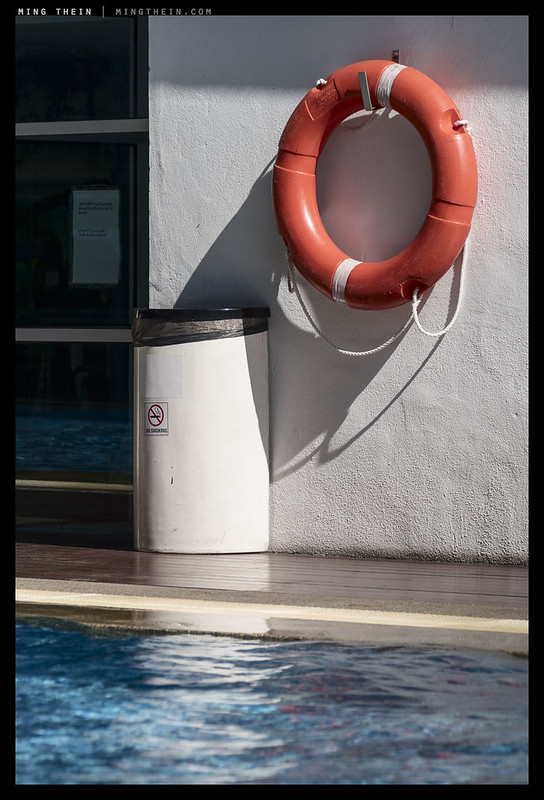
Sink or swim: except in the real world, there’s almost never a life preserver.

There are any number of articles on this topic already existing: how to ‘make it’, how to be successful, how to market, how to run a business. There are courses, books and videos. And there are people, who make a business out of teaching others how to run a business. And then there are people who actually make a living doing what you want do: being paid to create and deliver images. For some odd reason, I’ve been getting a lot of emails in the last few weeks from people wondering how to make photography work as a career: corporate switchers, graduates, pre-graduates, people who were doing something else creative but want a change of medium. I have no qualifications to answer these questions or offer absolute advice other than a) I make more than 80% of my income from selling images, mostly commissioned, and b) I’ve been doing this for a few years now. Market conditions in your country are probably going to be quite different to mine, and even if they aren’t, things have no doubt changed from five years ago. So, with that disclosure out of the way, here we go.
[Read more…]

Photoessay-gallery: the story of sushi

45_7R2_DSC4523 copy

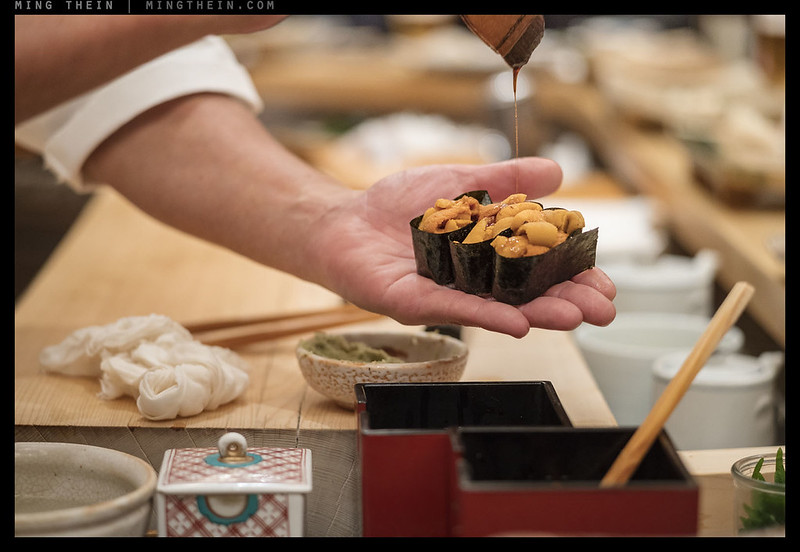
Regular readers will know that Tokyo is one of my favourite destinations both as a city and a photographic locale. Sushi is inseparable from Japan, and probably the only food I could eat every day without getting bored. I’ve visited Tokyo at least once a year for the last ten years; almost every time I shot at Tsukiji Market, the clearinghouse for a huge portion of the high grade seafood caught. It didn’t occur to me to try to curate these visits into a coherent documentary until before my last visit; at the same time, I found out that Tsukiji was going to close and be relocated to a new site in preparation for redevelopment for the 2020 Olympics. It would be the end of an era in more ways than one – and most of the proprietors I spoke to inside the market sadly agreed that things would never quite be the same again. Tsukiji is in so many ways an insular community unto itself, and a Tokyo institution. Today’s presentation is my tribute to that: a reasonably complete journey of fish to sushi, via Tsukiji.

[Read more…]

Repost: the value of having a muse

AB0000036 copy

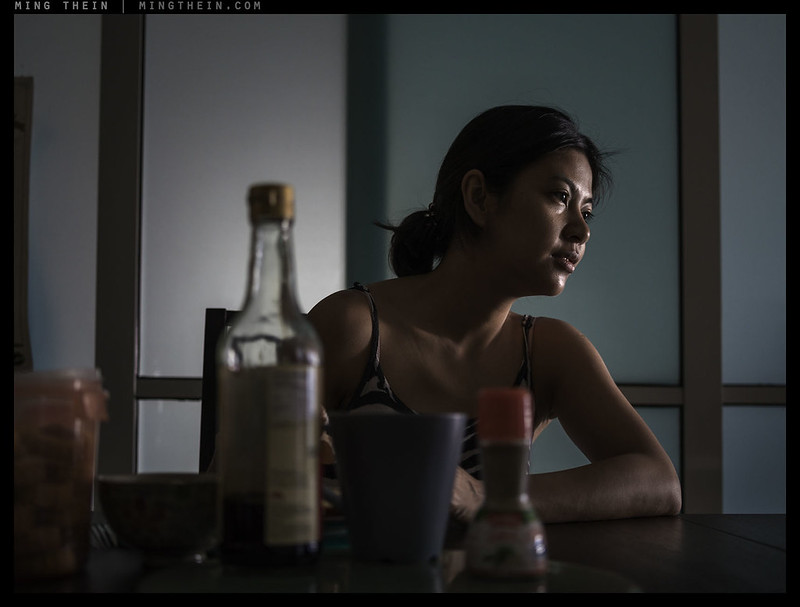
This has been another one of those tricky articles to write – mainly because a lot of self-reflection went into it, and as we all know, it’s very difficult to do that and remain objective. The essays is illustrated with images that are representative of experiments that worked – things I was inspired to try with various muses, and in turn learned something from.

What is a muse? In its purest form, a muse is perhaps best defined as something that triggers inspiration in an artistic or creative sense. It doesn’t have to be an inanimate object; most artists’ muses tend to be people; in fact, most artists tend to land up romantically involved with their muses. Creativity is impossible to separate from inspiration, and inspiration is a very close bedfellow of attachment – attachment to an idea. (I know this sounds like Inception, but bear with me here.*)

*On an unrelated note, that movie contains one of the most spectacular dining rooms I’ve ever seen – from a design and architectural point of view. And I suspect it would be pretty cool as both a photographic subject and backdrop, too.

[Read more…]

On assignment photoessay: Chinese University of Hong Kong Library

_8053805 copy

One from the archives for today – I thought I’d posted this a long time ago, but turns out it sat in the ‘draft posts’ folder. Oops!

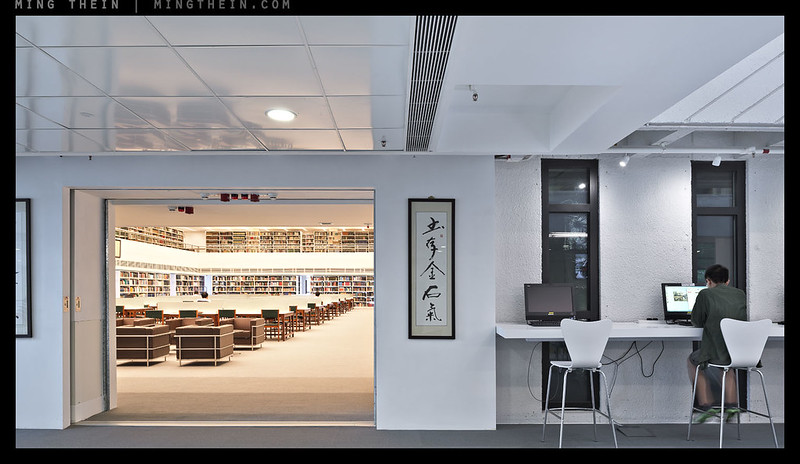
Inspiration begets inspiration. At least that’s my own theory of creativity. If you’re in photographically inspiring surroundings, it’s unquestionably easier to make an interesting image than otherwise – or at very least feel that you’ve got far more possibilities to hand. There are some assignments where one must fall back onto professionalism and the motto of the US postal service* to get the job done, but then we also have those where you couldn’t stop shooting even if it were forbidden. This assignment was most certainly the latter, and appropriate given the subject was the Chinese University of Hong Kong’s new library space – which in itself is presumably meant to be inspiring to its students.

*Come rain, come shine, dogs be damned etc.

[Read more…]

Structure

_7R2_DSC2912 copy

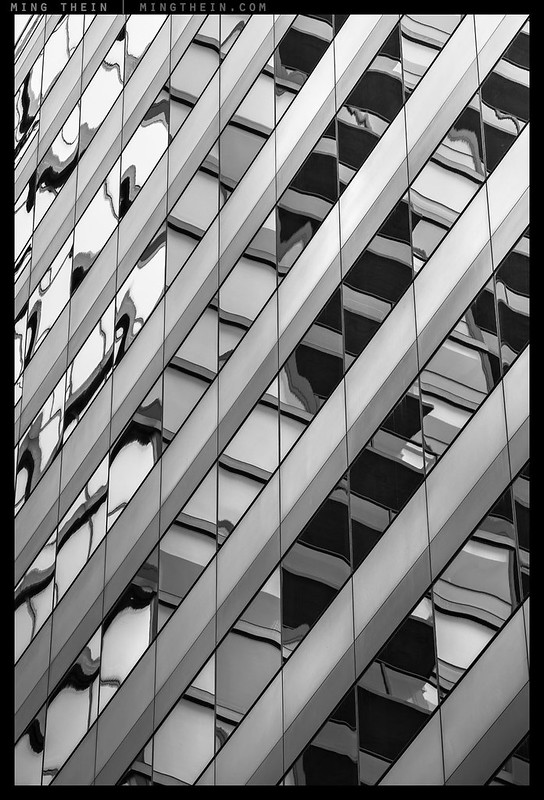
I’ve put off writing this article for a very, very long time for the simple reason that there are visual things that I have to figure out how to explain which somewhat transcend the limits of the written language to describe. Even defining the meaning of ‘structure’ in a photographic sense is tricky: we understand it to be a system of support that is not necessarily seen but underpins what we see on the surface – both physical and metaphysical. It is the means by which order is created out of chaos. Photographically, I like to think of ‘the structure of an image’ as the flow or visual rhythm of elements. Controlling the structure of an image controls the order in which the elements are read, and in turn the idea or story implied by those elements. Without conscious management of structure, it is therefore very difficult to consistently create images with anything more than a very literal impact.

[Read more…]

Photoessay: the monochrome Nilgiris

B0001577 copy

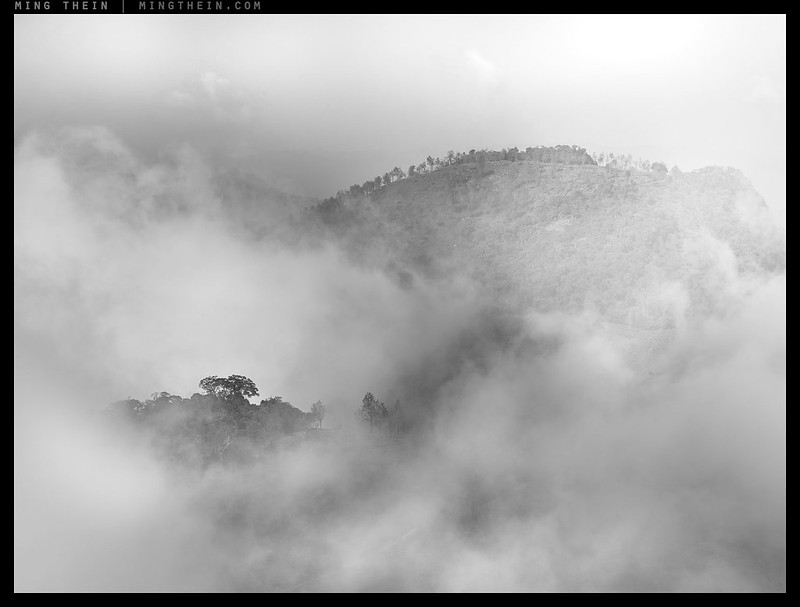
I was having a discussion about the presentation of landscape and color use the other day with one of my students – which in turn got me thinking about why we see so few modern landscapes that work in monochrome, typically unless the shooter is trying to imitate Ansel. My theory is that it’s much, much harder to make a compelling image of nature without color – there is the tendency for the scene to look dead, rather than vibrant and alive. You also lose all of the delicate color gradients in skies and the like – which further deadens the scene. But as with all monochrome, surely we could also use these properties to imply a sense of timelessness, surreality or detachment?

[Read more…]

Choosing gear: a webinar in collaboration with DearSusan – 3 or 4 June 2016

IMG_9686b copy

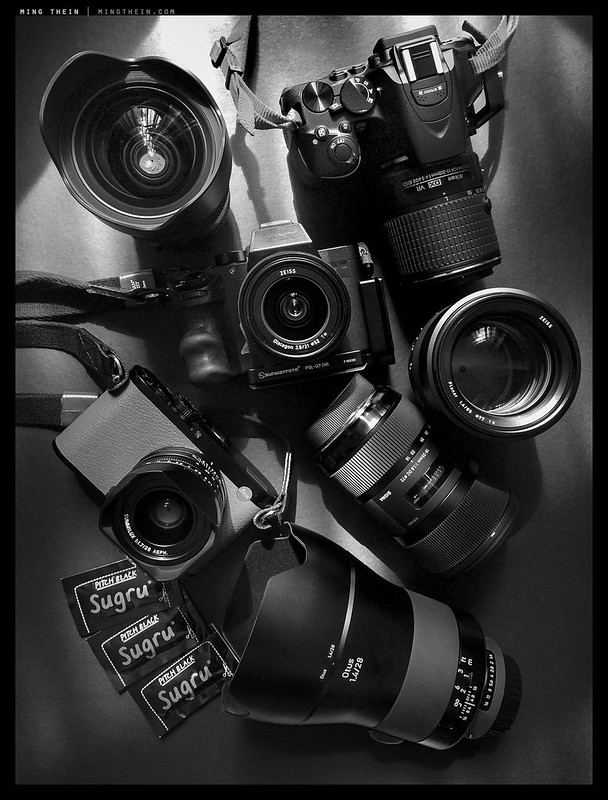
Regular readers will have noticed I’ve gone through a year of pain and bleeding cash whilst searching equipment-wise whilst trying to figure out the best creative and professional fit equipment-wise. After a discussion with Pascal Jappy – the founder of DearSusan – first at a Zeiss event last year and then more recently; we came to the conclusion that it might be useful to offer a little guidance for those still navigating the process (which includes Pascal, actually). Choosing the right gear is important for two reasons: you want the most suitable tool for your creative objectives and shooting style, whilst avoiding expensive experimentation and system swaps. The logic is pretty simple: the less you worry about the hardware, the more time you want to shoot and the more time you actually spend doing it – which presumably is the objective of photography for most people.

The nice but confusing thing is of course that we have choices: the same thing isn’t ideal for everybody, and no, I’m not going to say medium format is the only long term answer. 🙂 Pascal and I have come up with a framework to help objectively determine the best setup for your creative and personal needs – and will guide you through it, with live interaction in a webinar format.

There are two available dates for the webinar:

A spot in either session costs US$27. Sessions will last approximately 1-1.5 hours and the number of participants will be limited to allow maximum interaction for everybody.

Please click here to book.

Thanks and see you this week! MT

[Read more…]

Photoessay: Paradise Lost, part III

B0000193 copy

Today’s images are I think a little darker and sadder than the previous two (part I, part II) – but not quite over the edge into full-blown depression. I see it as being analogous to one of those portraits where we want to enhance the lines on the subject’s face. I can see the final presentation of this series going in waves, with grouping and pacing a mirror image to the way we have different moods depending on the day – though I feel the impact of this particular set is lost in color, and mixing the two is somewhat odd unless the presentation medium is conducive (e.g. separate gallery areas, or sections in a book – but not as a continuous scroll or all at once. The ‘break’ is required to prevent a jarring visual discontinuity. What do you think? MT

This series was shot mostly with a Hasselblad 501CM, CFV-50C digital back, 4/50 C T* and 4/150 CF T* lenses. Postprocessing follows the Monochrome Masterclass workflow.

[Read more…]

Photoessay: Paradise Lost, part II

_8B34724 copy

I’ve been continuing to work on the Paradise Lost project for some time now; at some point I will have to curate a consistent body of work to a theme and declare the thing ‘finished’, but in the meantime I’m still experimenting with the presentation. As mentioned previously, I’m treating this project as an ‘open book’ so you can see what goes into the creation of something like this. My current dilemma is a question of mood: is it a happy retirement, or a sad one, or a melancholic one? Or perhaps somewhere in between the three?

[Read more…]

2016 Masterclasses and Workshops

Prague Masterclass 5-10 Sep 2016  The Weekly Workflow The Print School

Current status: Prague (full, accepting standby bookings) 

Please email me to book, or if you’d like more information 🙂