Time for something different. This April, I’m offering more than a workshop: an intensive experience to raise your photography to the next level. The focus will be on landscape, in and around Queenstown, New Zealand. We (I) will be driving a lot, bringing you to locations I discovered on my last trip to both explore and develop your own work. But here’s the kicker: the workshop will limited to just three participants, and is inclusive of 4*+ accommodation and ground transport costs. It’s something I’ve been asked for in the past, but didn’t make much sense unless going to a location where driving/ground transport is necessary and we have much range to cover.
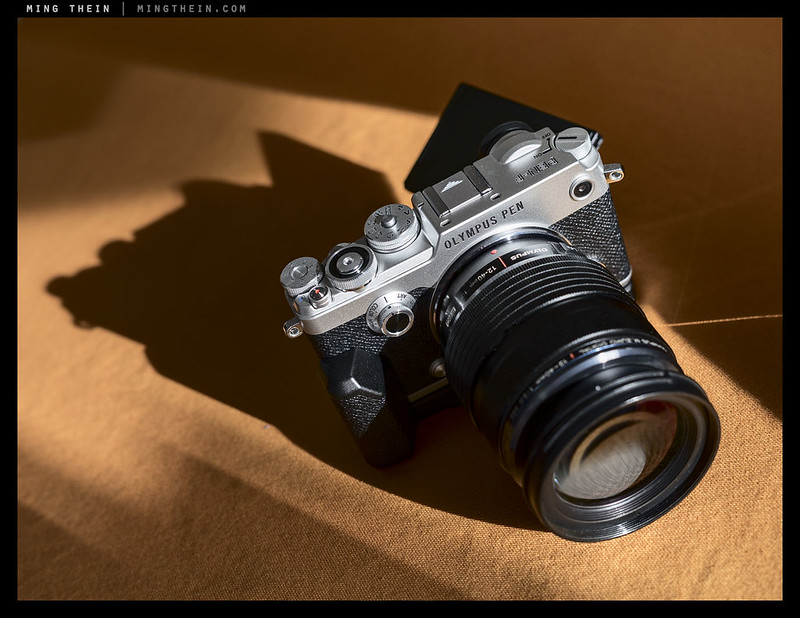
Premiere and review: The Olympus PEN F
After being limited to 16MP for nearly four years, we now have a marginal increase in resolution – to 20MP, matching the Panasonic GX8 announced last year (and quite possibly sharing the same sensor, too). The PEN F is another retro-tastic design clearly inspired by the original film half-frame PEN F, right down to the knob on the front vertical face of the camera. It is also yet another subdivision of a niche by Olympus of its EVF cameras – we have the photo-centric E-M1, the video-centric E-M5II, the budget-centric E-M10II, and now the PEN F. One thing that struck me throughout the test period was that the camera really feels as though it’s geared towards the JPEG shooter (or, more likely, the social media crowd). It’s the first all-new ‘serious’ camera from Olympus in a couple of years – so how does it perform?
Thank you to Olympus Malaysia for the loan. Note that all images were processed in Olympus Raw Viewer 3, and then run through my usual photoshop workflow; as such it’s difficult for me to make objective and comparative statements about image quality as this is not my normal workflow and one cannot compare it to other cameras easily. What I can do for now is assess how this particular workflow performs, and that’s what I’ll be doing later. Additional images will be posted to this flickr gallery.
Reportage and medium format: Thaipusam 2016 with a Hasselblad H5D-50C
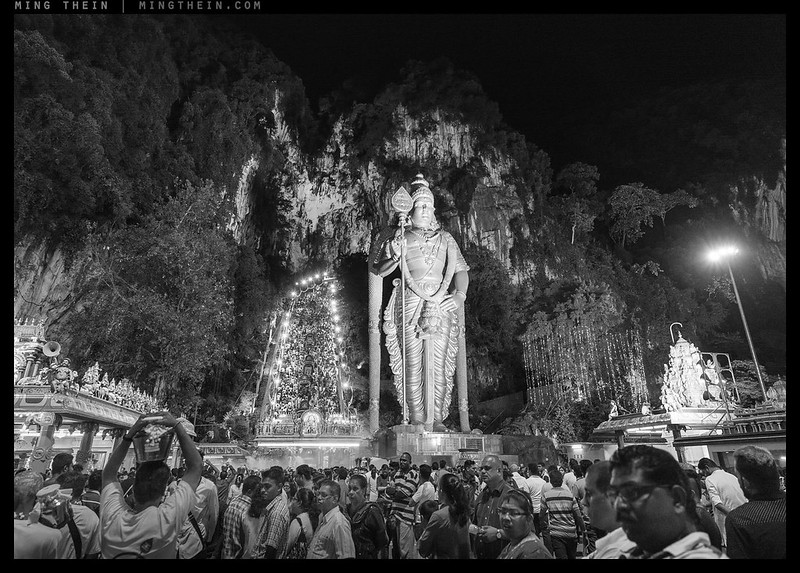
Thaipusam is a Big Deal for those involved religiously* – but also quite an amazing experience as an observer. One of, if not the largest of these festivals takes place in a cave temple about 15km outside of Kuala Lumpur every year at the Batu Caves. I’ve photographed the event previously in 2008, 2011 and 2012. This year’s festival happened just a couple of days ago on the 23rd-24th of January, and I went back for the fourth time. I’ll be the first to admit that it’s a very special experience even as a non-participant and not really understanding the significance of the ceremony to the believers. There really is some energy there from the sheer number of participants and general positive and hopeful thoughts that are going around at the time.
*Wikipedia does a much better job of explaining it than I can.
Don’t settle

Portrait of a building – time does not have to be an instant; perhaps the best side of a subject has to be a composite
I have previously written about various personal approaches to photography – manifestoes or beliefs or aspirations or aims if you will. I’ve written about why we photograph and the relationship between images, the artist and the audience. But I don’t think I’ve ever really written about the endgame.
Photoessay: Saul and Edward
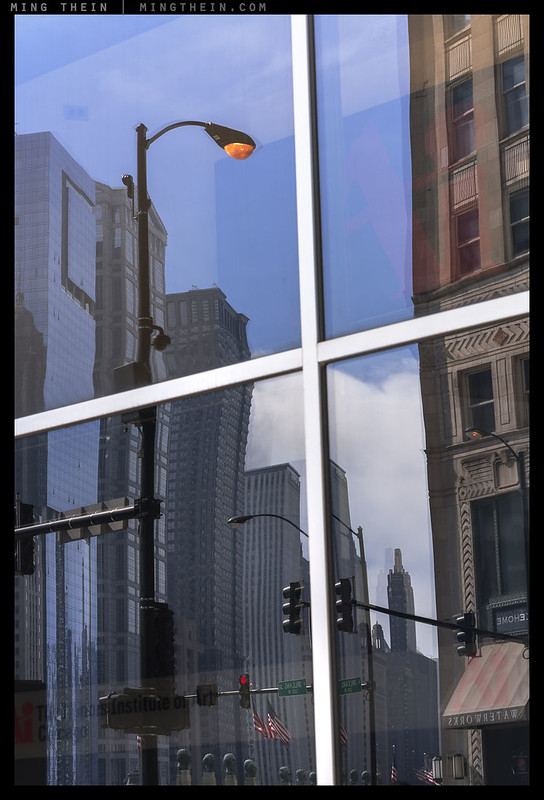
As a very much non-American, Chicago tends to evoke a few things in my imagination every time I visit: gangster hits in back alleys with fire escape stairs and Art Deco building rear entrances; Ayn Rand’s The Fountainhead; Edward Hopper’s Nighthawks painting (which coincidentally is in the Art Institute of Chicago, though I’ve not seen it in person), and to a lesser extent, Saul Leiter’s splashes of color sandwiched between glass. I suppose it must be curious to a local which of the many cultural references make it across the international divide, and how few of them are sporting…
On making lenses, inside Sigma, and the 18-300…

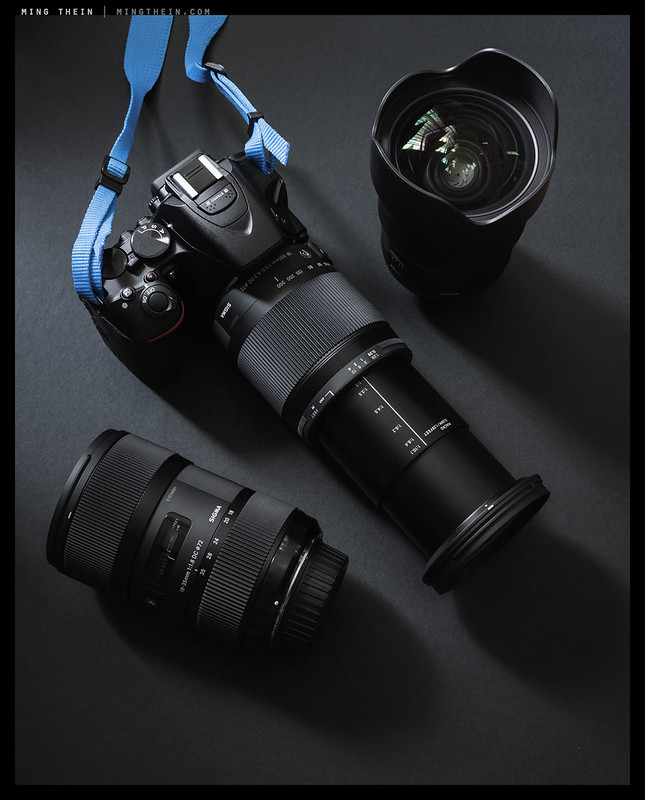
Monochrome images in this article from the factory were shot with a Leica Q. Color images were shot with a Nikon D5500 and Sigma 18-300/3.5-6.3 DC OS Macro C.
Following the interview I conducted with him last year, Sigma CEO Kazuto Yamaki invited me to ‘visit home’, as it were, should I ever be in Japan. I took him up on that offer following the Tokyo Masterclass in November. Of course, Sigma’s production facilities aren’t located in Tokyo (even though the design and marketing parts of the firm are): far from it; a number of modes of transport brings us to Bandai, where the factory is. We were graciously hosted by Kazuto-san and Shinji-san, who works in international marketing and is Kazuto-san’s cousin. Sigma, as I found out earlier, has always been a family business. And that allows them to take an interesting approach to lensmaking.
Photoessay: An exercise in masochism
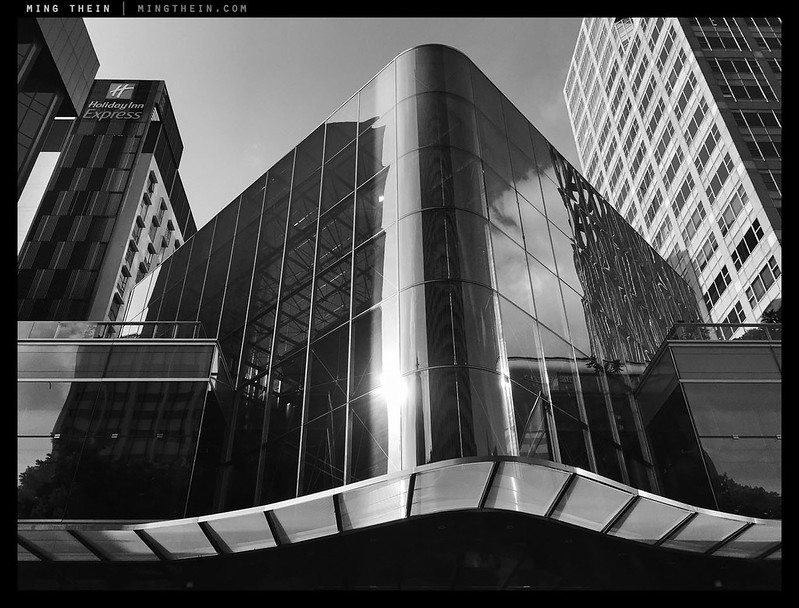
In the unlikely event you might have gotten the wrong impression from the title, let me set the record straight: the masochism refers to attempting to photograph architecture with an iPhone. There are far more reasons not to do so than otherwise – lack of perspective correction, for one. But there might still be reasons why you would: the intellectual exercise; practicing the discipline of composition and light (you definitely don’t have much else at your disposal), only having the wrong focal length on your other camera (or no other camera at all), or because…well, sometimes we all get lazy. Or have to make Instagram fodder. Curiously, I find that the typical clean blue skies I prefer for architecture do not play well at all with iPhones; they land up turning into a noisy mess. I suspect on these smaller sensors, the blue channel is taking a serious hit – worse still if you’re adjusting exposure to avoid clipping in some other area. Something to watch for when postprocessing, and selecting subjects. MT
This set was shot almost entirely with an iPhone 6 Plus (there might be some 5S in there) from various places around the world over the last year or so, and processed with Photoshop Workflow II. You can also look over my shoulder at the underlying postprocessing in the Weekly Photoshop Workflow series.
New Ultraprint offer: In the round

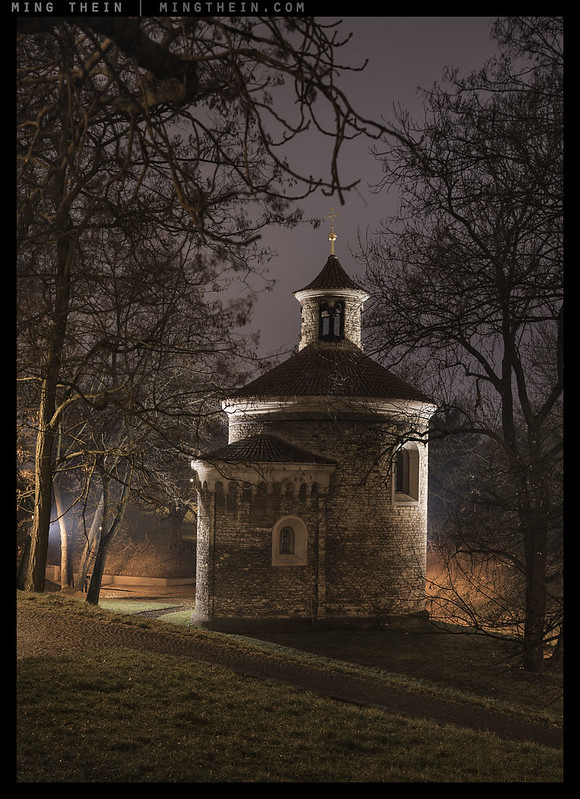
In the round, Vysehrad, Prague
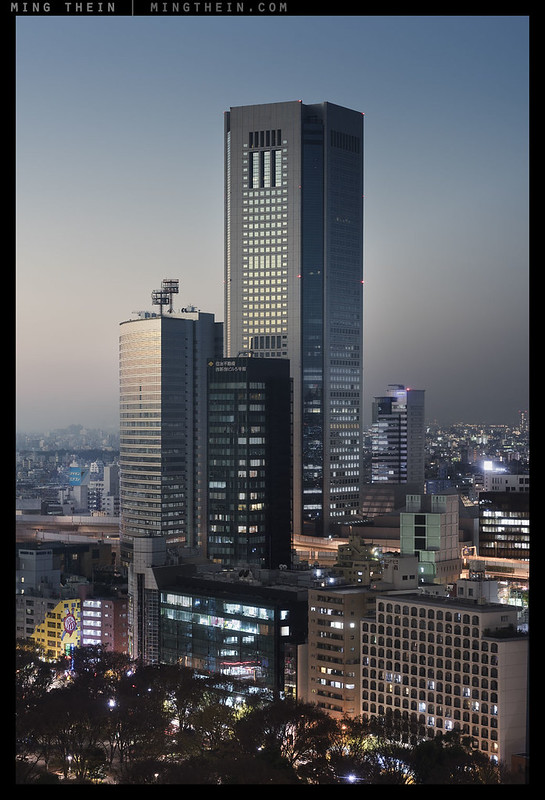
There are a lot of stories that begin with ‘it was a dark and stormy night…’ – but in this case, it was true. Myself and another masterclass participant had been freezing and moistening ourselves in a windy horizontal rain shooting from the top of Vysehrad, which is a castle/monastery/fort complex on top of a hill overlooking Prague. We were about done for the day, packed up, heading down back towards civilisation and hot goulash, but got diverted. We’d walked past this building earlier in the (overcast) day, which was striking for its shape and size, and I remarked that it would be great with the right light – turns out we got it. With the wide mixture of light sources on the building (halogen), surroundings (sodium vapour) and sky (light pollution from the city reflecting off low level rainclouds), I couldn’t have lit it better myself even if given free reign. This was the result – an accurate but highly atmospheric portrait of stories in the night.
Read on for more information and to order.
Back to basics: subject isolation

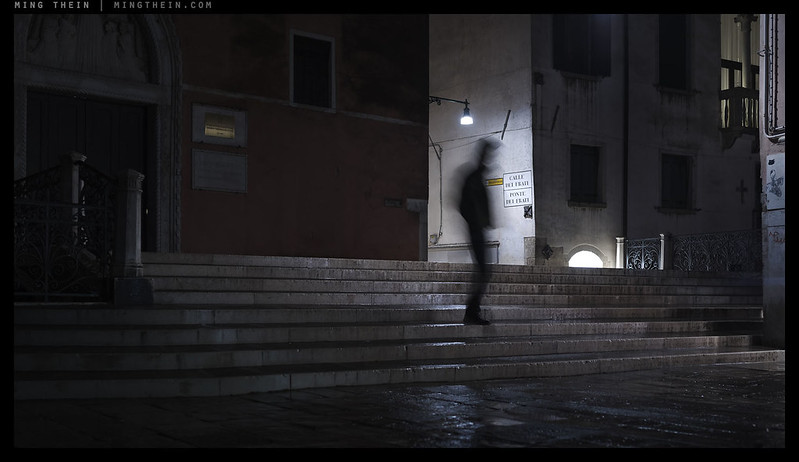
The man: color, texture, contrast, motion. We’re not really missing shallow DOF, are we?
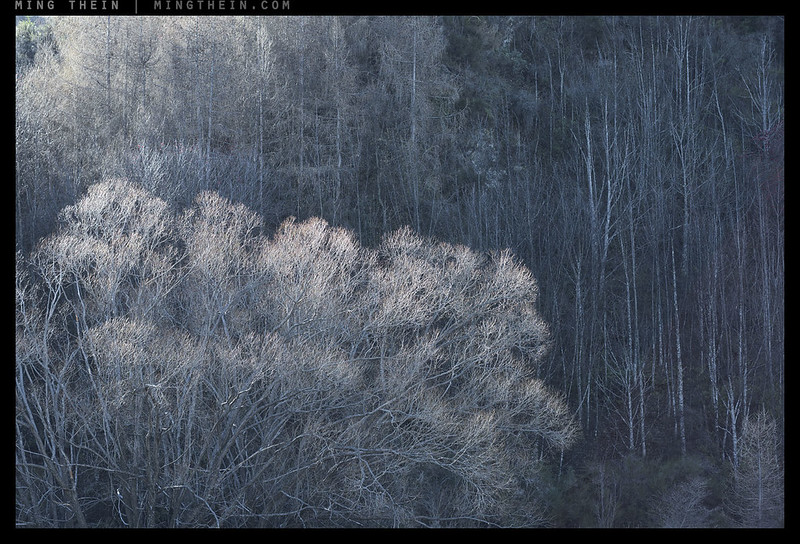
Regular readers will know that I’ve distilled down four common traits of a strong image: quality of light, clarity of subject, balance of composition and ‘the idea’. The first is very simple: does the light present the subject in a flattering way or as you would desire? Is it directional (i.e. are there shadows) so that it’s possible to determine spatial layout of the scene? The last two require some practice, and the final one is really an never-ending quest for every photographer because there is no limit to the complexity of message that can be conveyed. Today, we will look at the easiest yet most commonly overlooked one of the four: subject isolation.
Photoessay: Abstracted forms, Chicago
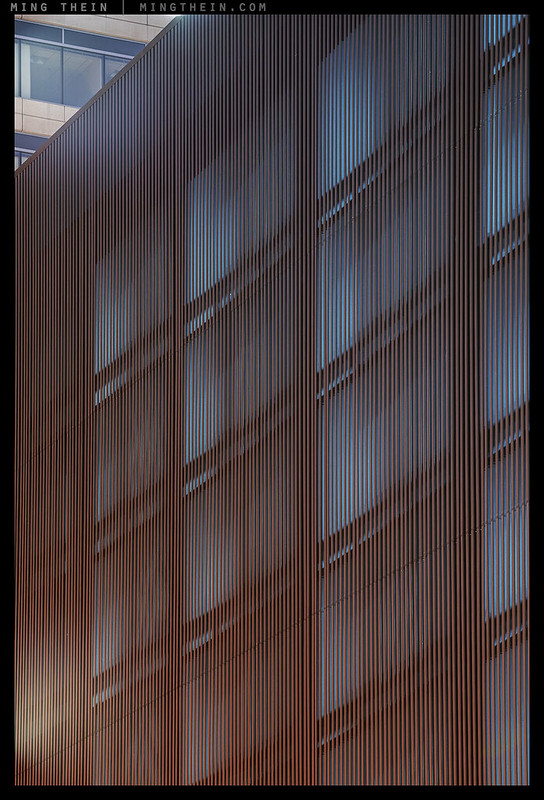
It is only natural that one is drawn to photographing architecture in what must be the most accessible living history in the world – Chicago has a human scale to it that New York does not, space to stand back and see the progression of styles and evolution of engineering from a couple of centuries back to today, and moreover experience the buildings in a human-scale way. It also has the opposite effect of highlighting the abstraction, and in a way coldness – of today’s architectural forms. I suspect it’s because we no longer build to an accessible scale: we just build to a final desired size. From a building user’s perspective, I’m not sure I like this. The detailing and intimacy of historical structures is gone; I suppose the cost is significantly lower, but sadly this isn’t at all reflected in the current purchase price of apartments. As a photographer however, it does make for some interesting images. This is a slightly shorter phototessay than usual simply because I did not find that many opportunities for the graphic compositions I wanted…until next time! MT
This series was shot with a Leica Q, Sony A7RII, Zeiss 2.8/35 PC Distagon, 1.8/55 FE, 1.8/85 Batis and Voigtlander 180/4 APO-Lanthar. Images in this set were processed with Photoshop Workflow II. You can also look over my shoulder at the underlying postprocessing in the Weekly Photoshop Workflow series.