I left Olympus Malaysia not too long ago, which came as a surprise to many, and subsequently Ming Thein on this awesome photography site as an active contributor. Since then, I’ve been asked by many curious people how my life has been, what I’ve been doing, which manufacturer I’ve jumped ship to (Sony? Fujifilm? *gasp*) and how the hell I can still afford that expensive cup of coffee? [Read more…]
Review: The Olympus Zuiko Digital ZD 12-100/4 Pro
For the last year, the question I’ve been asked most frequently is when will I review the Olympus M.Zuiko 12-100mm F4 lens? The reason this has been pushed back so long is because I knew I was exiting Olympus, and I wanted this review to be written after I had left the company. While Olympus never restricted me, during my time there, in saying anything I wanted to about their cameras or lenses, I just felt that being completely independent would make it easier to write freely. [Read more…]
Street photography with the Olympus E-M10 Mark III
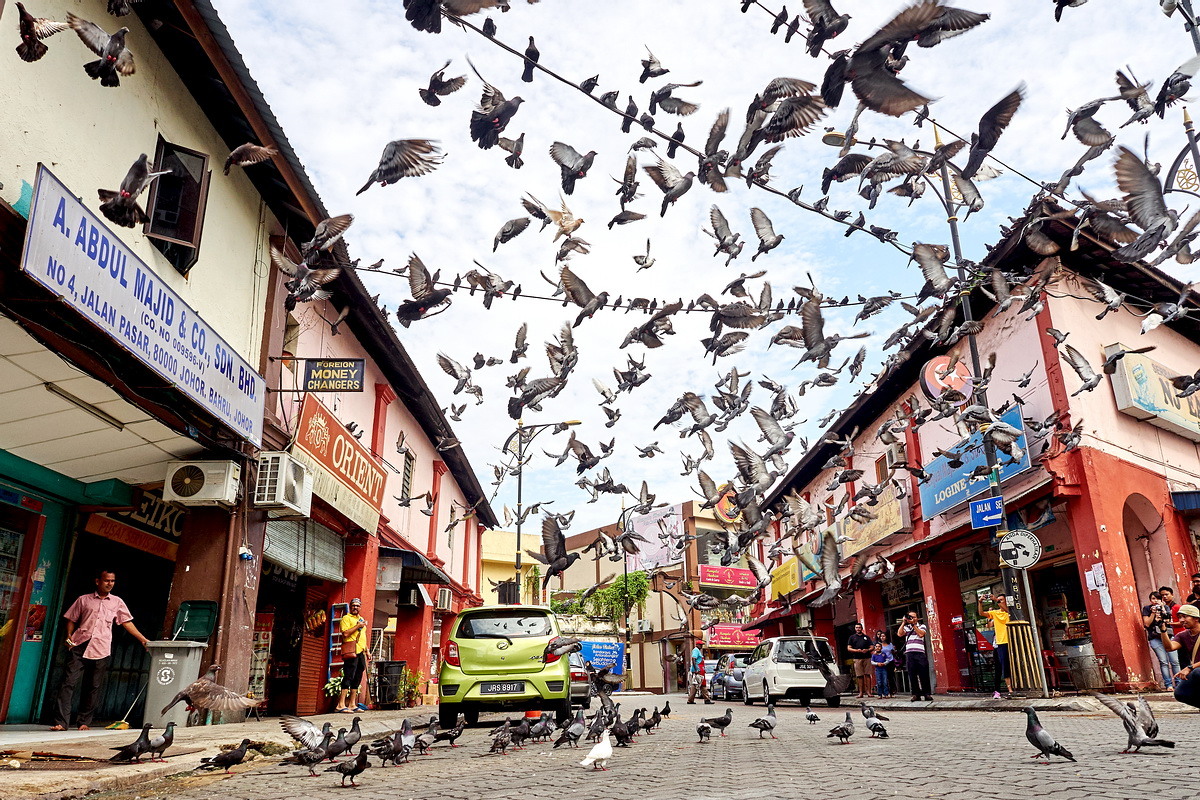
Traditionally, I always bring a new camera to the streets to shoot for review. For the recently launched Olympus OM-D E-M10 Mark III (full review here), I decided to shoot a different variety of sample shots which included sports, outdoor portrait and landscape. I am all game when it comes to doing something different to keep my reviews fresh. Still, since I had the E-M10 Mark III with me for a few more days, I had to satisfy the itch to have my shutter therapy on the streets. [Read more…]
Photoessay/ Drone diaries: Postcards from Europe, part I
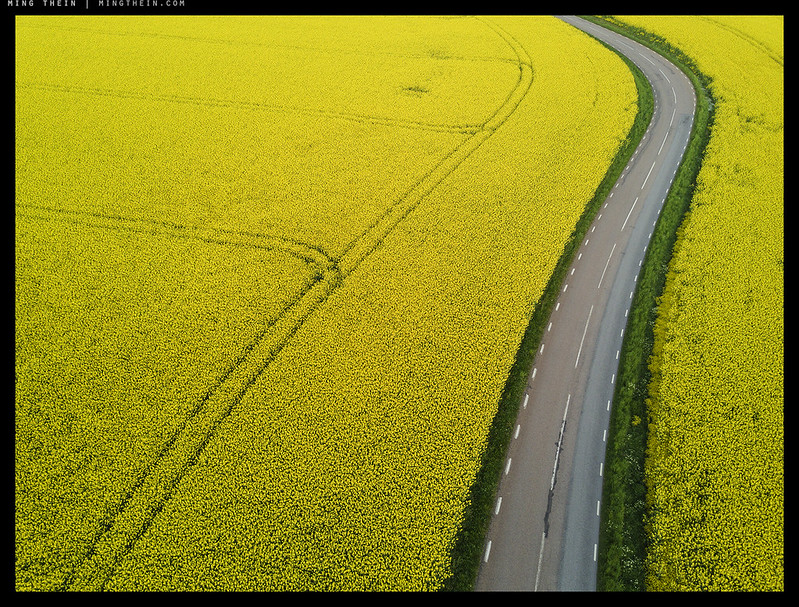
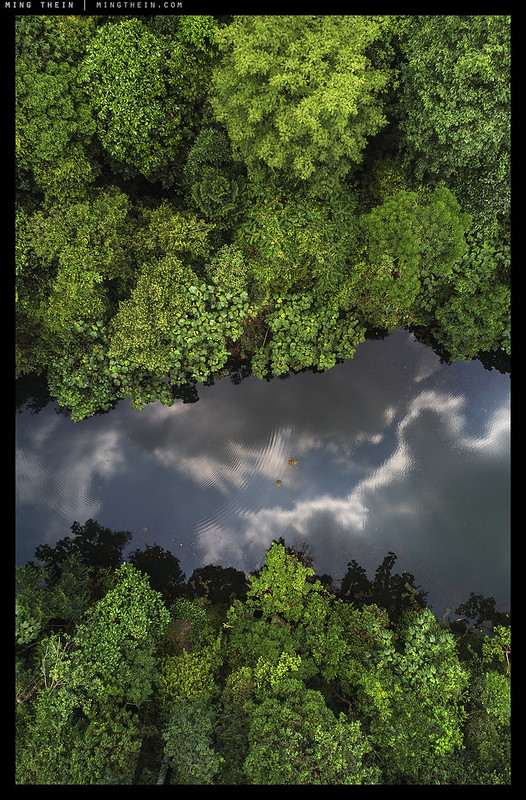
Today’s images are a series shot from various parts of Europe – mainly Sweden and Switzerland. Some were captured as part of scouting for another shoot with the much larger M600/H6D-100c combination, and some were simply because the weather looked incredible and there was no reason not to fly*. The packing penalty for including the Mavic in my travel bag is so small that I think I’ll probably make a habit of this in future – sometimes there are really incredible mornings where you’d like to see the place come alive in the light… MT
*Be sure to check local regulations first: in Switzerland, for example, no-fly zones within a certain distance of an airport are marked as are restricted zones with height ceilings. There are also weight category restrictions. Sweden requires a permit full stop.
These images were shot with a DJI Mavic Pro and post processed with Photoshop Workflow III and the Weekly Workflow.
Premiere and review: The 2017 Olympus E-M10 Mark III
Update (14 May 2018): Olympus has launched version 1.1 firmware update for E-M10 Mark III, enabling RC Mode (wireless flash TTL).
Olympus just launched a new camera in their OM-D series – the E-M10 Mark III. I personally own an E-M10 Mark II that was launched 2 years ago and have found it to be an extremely reliable and versatile camera to work with. The new and third iteration of the E-M10 comes with a few feature upgrades and improvements. In this article I shall review the OM-D E-M10 Mark III’s performance based on my own experience.
Drone diaries: differentiated aerial perspectives
More months, more flying. I’ve come to believe that real appeal of aerial photography lies solely in one thing: the ability to see familiar places or objects or classes of objects from a drastically and otherwise physically inaccessible perspective. An image shot from a slightly elevated level with gimbal only slightly down is not that different to standing on a hill or building; an image shot from some altitude and entirely top down is at the other end of the scale. Most of the really interesting drone images I’ve seen or personally captured seem to fall into the latter category. We are coming dangerously close to the automated and the formulaic, here. Or are we?
Frequently asked questions at street photography workshops
For the several years, I have conducted basic street photography workshops for Olympus Malaysia and it’s been a great joy for me to be able to share some tips and tricks on street shooting with my workshop participants. After each and every session, I am amazed at how, regardless of the diversity in participants, the same questions were asked repeatedly. Therefore, I thought I’d share some of these frequently asked questions and a few things I have learned during these sessions today. [Read more…]
E-shutter firmware for the Hasselblad X1D
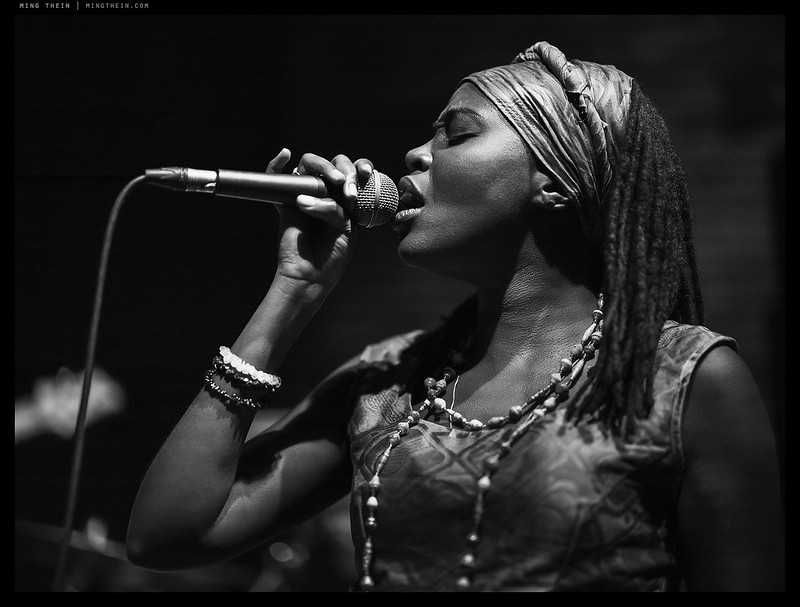
A couple of you guessed correctly in the comments of my earlier post – we’ve been working on an electronic shutter firmware for the Hasselblad X1D. Whilst we are still limited by the underlying sensor hardware*, there are significant increases to the shooting envelope afforded by an electronic shutter that is both completely silent and completely vibration free. Used within limitations, it can be a very useful tool. The above image was shot at a performance (without disrupting it) – on the X1D, and Zeiss 1.4/85 Otus APO-Planar**, with focus peaking on. Hit rate for critical sharpness was about 70-80% – which is to say, possibly higher and easier than focusing it on a native Nikon DSLR.
*The total sensor readout time remains at 300ms; if there is motion in the frame, you may see rolling shutter artefacts regardless of the shutter speed, especially under phased lighting such as LED or fluorescent. Similarly, flash is disabled as there is no way to sync with a 300ms rolling shutter. High ISO is limited to 3200 for the moment (sensor native).
**Yes, you read that correctly. I also used the 55 Otus and 2/135 APO.
The firmware also improves stability adds resizable focus points (35, 63 or 117 boxes) and can be downloaded immediately on the Hasselblad website here. Happy to answer any questions in the comments below, and a list of compatible lenses and a rough assessment of performance on 44x33mm – as so far tested by me – follows. MT
Medium telephoto lenses for street photography
Given how widely practiced it is, its no surprise that street photography has many rules-of-thumb, and one of them has to do with focal lengths – the traditionally preferred ones have been on the wider end such as 28mm, 35mm and 50mm. However, I’ve often found myself using an unconventional focal length of 90mm. While the wider focal lengths may be more suited for environmental portraits and story telling, using a longer focal lengths allows me to break away from that stereotype and to create a more dramatic outcome.
In this article, I will explore why medium telephoto is my preferred focal length and the advantages of using tighter framing in street photography. It’s important to not that since I primarily shoot with Olympus OM-D E-M1 Mark II and M.Zuiko 45mm F1.8 these days, “medium telephoto” here refers to 90mm in 35mm terms.
Photoessay: Hagia Sophia, part II
(continued from part I)
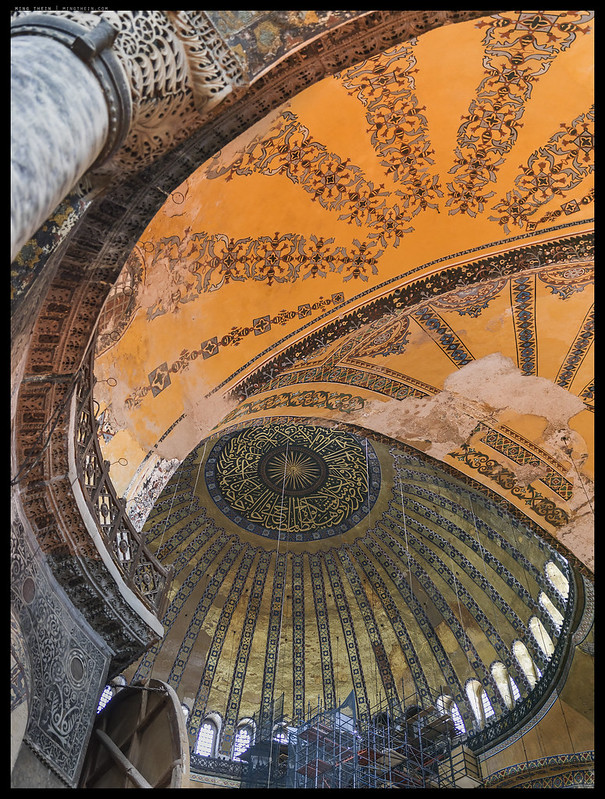
Hagia Sophia is not only an incredible piece of engineering and architecture – but also one of faith. Constructed in its current form between 532 and 537 AD, it has served as church and mosque (and now museum). Even today, you can’t help but be inspired, humbled and in awe of the work behind it; given its sheer size, it would still take a significant effort to build with modern construction techniques, and that’s excluding the huge amount of specialised handwork required for decoration and outfitting. I’m pretty sure very little of what we build today at that scale will still be around in 1500 years. The question of faith is quite interesting, too: the sheer resources and determination to construct something of that size places huge demands on the population of the city and its rulers. There was probably no economic return model, either – unlike say the European market towns of the Middle Ages. What impressed me the most wasn’t so much the sheer size or unsupported internal volume (though this was still significant) – but the detail given to every surface. Not all of it was completed by 537, and renovations and restoration have been pretty much ongoing non stop thanks to wars, earthquakes and simple entropy – but it’s nevertheless what makes it a truly colossal undertaking, and because of this I think of the renovations as much a part of the building as anything else. Other buildings like the Pyramids might be larger, but they simply don’t have the same kind of finishing requirements, or continual evolution and sense of being an active, alive part of history rather than merely a passive observer. (And I can’t think of anything modern except perhaps the Sagrada Familia that comes close, and even that is still not finished after more than a hundred years.)
I had the opportunity to shoot it for perhaps a few hours total; nowhere near enough time to do justice to the structure (and obviously not around the scaffolds, tripod restrictions etc.) – even so, there are so many images this photoessay will be split into two parts. Enjoy! MT
This series was shot in Istanbul with a Hasselblad H6D-100c, 50, 100 and 150mm lenses, and post processed with Photoshop and LR Workflow III (and the Weekly Workflow). Get more out of your voyages with T1: Travel Photography.