Discussion points: photographic rules

_RX100_DSC1102bw copy

Much has been written about photographic guidelines or rules that are supposed to guarantee you – or at least lead to a high chance of success – an interesting or balanced image. I’m not about to reinforce those, but neither am I about to dismiss them completely. Instead: let me offer you an alternative take on The Pantheon of Photographic Dogma like ‘the rule of thirds’ and ‘best light at dawn and dusk’ and ‘blur only your backgrounds’ etc. Important: it is not to be confused by the limitations imposed by the physiology of the way we see: we cannot help notice bright colours because this is the way our brains and eyes are wired. We cannot help but notice abrupt highlight clipping (but not black shadows) – because we cannot change the way the cells in our retinas are laid out. Apply some scepticism to internet pundits who can’t differentiate between man-imposed rules and those which are physiologically limited. With that, let’s move on to the discussion background.
[Read more…]

Boxing day sale: 50% off all videos at the Teaching Store – Final call: ENDS 21 JAN

christmas tree store badge

Firstly, we hope all our celebrating readers enjoyed a good Christmas with their families – and may there have been a photographic toy or two under the tree for you. If not, and even if there was, we’re celebrating here in the tradition of retailers worldwide and offering you a crazy boxing day discount on all workshop videos at our Teaching Store: 50% off the total amount for all purchases over US$100 – so now’s the time to fill out your collection. This applies to single videos (not bundles – though adding singles with the coupon will result in significantly more discount anyway 🙂. Use the code XMAS2017 at checkout – but please note there are a limited number of vouchers. Enjoy! MT

Photoessay: Icelandic seascapes

X1D5_B0002289 copy

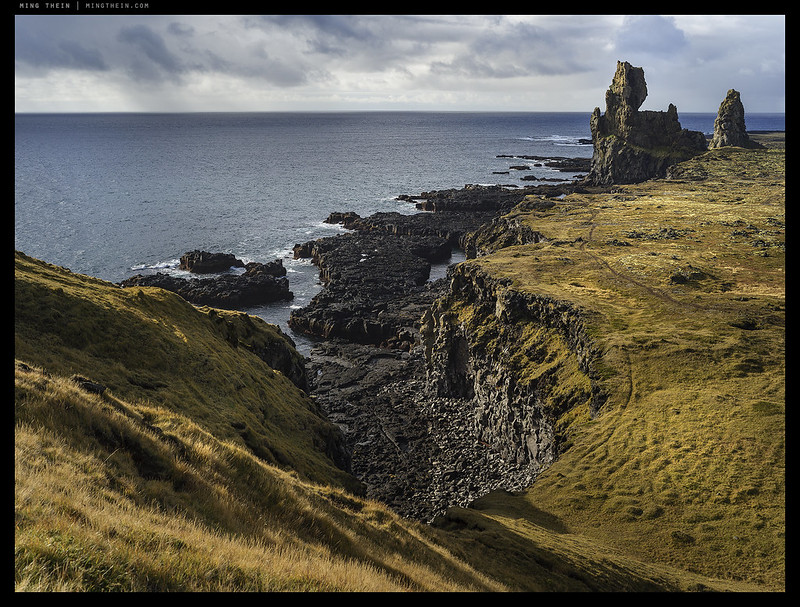
Today’s series of images are some of the ones that stuck from my trip to Iceland a few months back – specifically, the seascapes. I was only there for a week, so seasonal weather variations were minimal. Nevertheless, we did get some drama in the skies (though no truly bad storms, thankfully). That said, I’m still one of those people who believes there’s no such thing as light that’s impossible to work with; better/worse, yes, but even the crummiest weather conditions can yield something visually interesting. Oddly, I have to admit that one of the scenes that spoke the most to me was the stones on the beach: constantly moist from spray and waves, they glistened, jewel-like. At a macro level, they look pretty perfect; at the micro level, despite being polished for years by the waves – none of them are quite. The closer you look, the harder it is to find perfection. I’m sure there’s probably a photographic moral in there somewhere. MT

Shot with the Hasselblad X1D Field Kit and processed with PS Workflow III.

[Read more…]

Micro Four Thirds and wedding photography

There is a perception that the use of large DSLR cameras with gargantuan lenses equals professional wedding photography; I beg to differ. I have been shooting weddings for several years using Micro Four Thirds exclusively and have found it to be sufficient in delivering results. In fact, there are distinct benefits in using the Micro Four Thirds system for wedding photography, which I will discuss in this article.

I’ve used varying combinations of OM-D cameras and lenses, with my current setup being: the Olympus OM-D E-M1 and E-M10 Mark II with M.Zuiko lenses 12-40mm F2.8, 25mm F1.8 and 45mm F1.8 lenses. I also use an external flash when necessary. Typically, wedding photographers require super fast autofocus to capture fleeting moments, comfortable handling for all day shooting and running around, and most importantly good, high quality image output. This basically means clean high ISO images, sufficient dynamic range is harsh light and the ability to render shallow depths of field for effective subject isolation. Mirrorless interchangeable lens camera systems have come a long way, and have improved to a point where they can adequately fulfill all these needs.

[Read more…]

Major firmware update (1.20) for X1D and H6D

Given the large number of Hasselblad users here, I thought a general public service update would be appreciated. There is a new firmware 1.20 for both the H6D-100c and X1D-50c that adds a lot of requested features in addition to operational improvements, with the major highlights being:

  1. Contrast detect autofocus lenses for certain H lenses on the X1D and XH adaptor. Not all lenses are compatible as some have old control chips, or are in the process of being coded for. Note that lenses will also require an update.
  2. Viewfinder-based operation for the X1D, allowing for zooming, scrolling, playback etc. without using the rear LCD
  3. Selectable aspect ratios (yes, including XPAN). Note that these are only recognised when Phocus is used to open the image, and the whole sensor area is still recorded. Even if you use other postprocesisng software, it’s still useful as a compositional guide since the crop area is always centred and can be easily replicated afterwards.

A full list of changes is here for the X1D and here for the H6D.

Lastly – we’ll be putting out an XPan – X adaptor soon, along with a V-X adaptor a little later. The new firmware may be downloaded here for the X1D and here for the H6D (both versions). Enjoy! MT

Photoessay: An hour at the Blue Mosque

H61C-B0001632 copy

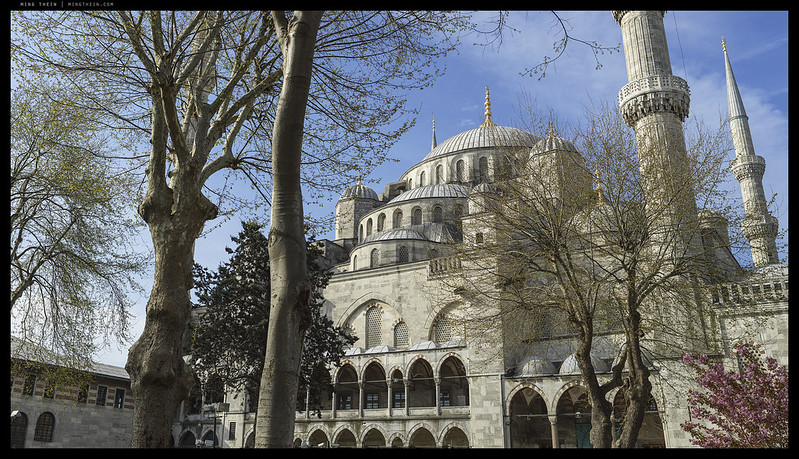
Disclaimer: I spent a cumulative hour in total shooting it, hence the different times of day. It’s one of those buildings that – much like Hagia Sophia – dominates and encroaches into every frame and vista in the Sultanahmet district. You can’t avoid it, but like all large buildings – there’s a curious effect of perspective that occurs as you get closer; the upper tiers appear to recede (probably because the upper tiers are stepped in pyramid form to better transfer the roof’s weight through the half domes). Construction started in 1609 and reflects the predominant architectural styles of the time: nested domes and half domes to create a largely free-standing internal volume, but still a rather stocky rectangular/square base profile. I’ve always thought of this ‘hemisphere on a square’ type of architecture of being a very distinctive characteristic of medieval Turkey. Unusually, the mosque has six minarets instead of the usual four – folklore puts this down to the architect mishearing the Sultan’s request for gold minarets. Internally, a rather low chandelier provides illumination but diminishes the perception of lofting space because of the weight of the ironwork; the very warm incandescent lights largely negate the effect of the blue tiles cladding the entire internal space – you have to look hard to see them, and the impression is a ceramic rather than blue one. As with most of these (relatively) ancient buildings – I’m left amazed that something with such delicacy and intricacy could have been constructed that long ago, whilst my five year old apartment has a habit of springing random leaks. I’m left humbled and wondering if it’s cost, care/pride in work, or something else. MT

This series was shot in Istanbul with a Hasselblad H6D-100c, 50, 100 and 150mm lenses, and post processed with Photoshop and LR Workflow III (and the Weekly Workflow). Get more out of your voyages with T1: Travel Photography.

[Read more…]

Working with multiple systems and formats in the field

_Q116_L1120373 copy H51-B0003003 copy
Q, H5D

A typical assignment for me may involve a) quite a variety of objectives, and b) quite a variety of hardware. Whilst the obvious solution would be to go with one complete system and suitable backups, this isn’t always possible for any number of reasons – from weight to lack of coverage in that system to cost or practical versatility. I had a recent email discussion with a reader and fellow pro over how to manage this in the most efficient way possible – both from a cost and logistic standpoint, but also a creative one. Often, suitable equipment for a broad range of optimal coverage* may require a significant shift in shooting mindset between different bits of hardware; for obvious reasons this becomes quite a bit more challenging when you’re working under pressure. I thought it might be an interesting topic to examine further…

[Read more…]

Macro redux: Getting lost in the insect world

When I want an escape from the world, I simply pick up my macro gear and indulge in some insect macro photography. I find the process to be both physically and mentally challenging and lose my myself quite easily in the tiny world of bugs. The little creatures often hide in the most unexpected places that require me to flex and stretch my body in impossible ways while holding the camera and the flash steady. The mind must be entirely focused on getting the shot and doing it quickly because insects do not stay still for very long. All kinds of calculations and considerations come to play, as you juggle between lighting, getting closer for better magnification, ensuring critically sharp focus and not to forget, composition! There is just so much the mind and body needs to coordinate and execute to achieve one simple insect macro shot. In that brief moment, I find myself entering a different universe where only getting the shot matters to me.

For today’s set of images, I hiked the trails of the Bukit Gasing Forest Park to find the critters. Half of the fun was in the hunt for the bugs. All the images shown in this article were shot with Olympus OM-D E-M1 Mark II and M.Zuiko 60mm F2.8 Macro lens. I used the FL-50R flash off camera. If you have questions about my technique, I’ve shared those in detail in a previous article here.

[Read more…]

To be a specialist, you have to be a good generalist

_5016957 copy

Here’s today’s provocation of the day: there is really no such thing as a specialist. I’m going to explain why, using photography as the background context. The general expectation is a specialist in one particular topic or subject or tightly defined discipline should be familiar with and understand how to handle the vast majority of variations encountered around that topic or subject. They would probably have to keep up to date with new developments or changes and do enough experimentation to answer any self-doubt or uncertainty: an expert sports photographer, for instance, would know how to deal with indoor arena lighting, outdoor high noon and night games – and still produce an image that would pass muster for their clients. An aerial photographer would know how to deal with haze – either to minimise in post, or to use as a feature of the image. Yet I keep encountering this odd resistance…even amongst supposedly educated and image-savvy people. Why?

[Read more…]

Shutter therapy in Phnom Penh

Life has been incredibly hectic lately, so when my friend Amir randomly asked if I was down for a short holiday to Phnom Penh, Cambodia, I immediately jumped at it. It was not planned as a photography trip and we were there simply to catch up with old friends and drink as much cheap beer as we could. However, it’s inevitable that I squeeze time for shutter therapy, especially in a city I haven’t been to before.

[Read more…]