The eyes of a baby

_Q116_L1020754 copy
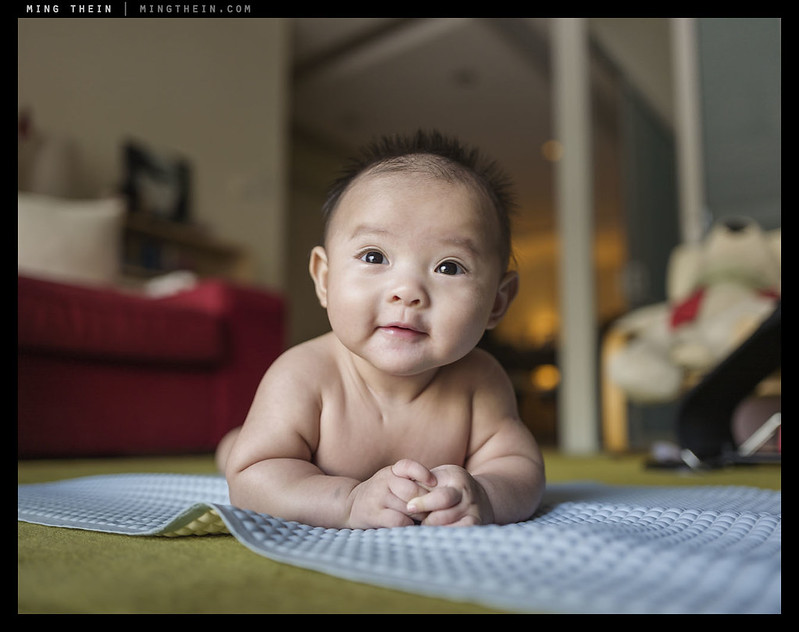
Insert gratuitous infant photo here.

As many of you know, I have a 11-month old daughter. This is not going to be a scientific attempt at trying to replicate infant vision; far from it. Think of it more as a series of observations from the perspective of a photographer observing and observer. All in all: as anybody who’s had children will know, sometimes they have just as much to teach us (or remind us of) as we do them.
[Read more…]

Photoessay: People of Tokyo II

_5502278 copy

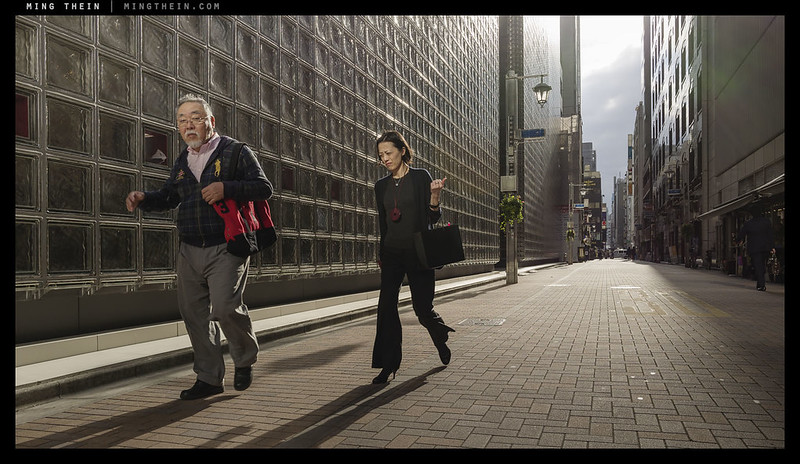
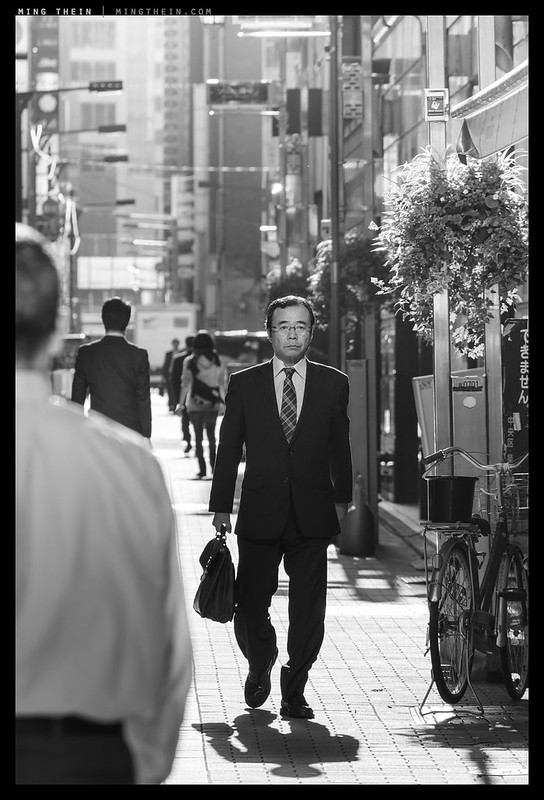
As usual, it is impossible not to be in a place like Tokyo and do at least some street photography; the very difference in the way people act and the things they do already attracts our attention because it breaks the pattern which we’re used to seeing. Furthermore, Japan’s tolerance for photography in general as a society and the close proximity in which people usually find themselves makes things even easier. It is however impossible to avoid people on phones: I still think this is the ‘hat-and-newspaper’ of the 21st century; just as life-documenting photographers eighty years ago could not avoid that cliche – which now seems quaint to us – we are locked into the era of the cellphone. It is harder to find somebody not using one. I’ve always said the best street work should be pretty close to documentary in nature, though much more personal in significance. If phones are the nature of reality today, so be it. That of course doesn’t mean there isn’t plenty else going on. I did get a feeling of longing and melancholy I didn’t observe the last time I was there; the usual conspicuous isolation was even stronger on this visit. A sign of the times for society, perhaps? MT

This series was shot with a Leica Q 116, Nikon D5500 and 55-200/4-5.6 DX VR II, Sony A7RII and Zeiss 2.8/21 Loxia and 1.8/85 Batis lenses and post processed with The Monochrome Masterclass workflow. You can also look over my shoulder at the underlying postprocessing in the Weekly Photoshop Workflow series.

[Read more…]

4th anniversary sweepstakes at B&H: win a $500 gift card

I’ve got one last bonus today thanks to the folks at B&H: a competition exclusive to readers of my site only. It’s simple: hit the referral link here (which will take you to the main landing page with your origin site logged), or in the sidebar on the right, spend $1000 on anything at all, and be automatically entered into a sweepstakes for a chance to win a $500 gift card from B&H (see Terms & Conditions for details)”

The competition closes on 1st May. Good luck! MT


Sweepstakes rules apply…

__________________

Visit the Teaching Store to up your photographic game – including workshop and Photoshop Workflow videos and the customized Email School of Photography. You can also support the site by purchasing from B&H and Amazon – thanks!

We are also on Facebook and there is a curated reader Flickr pool.

Images and content copyright Ming Thein | mingthein.com 2012 onwards. All rights reserved

Four years, and an anniversary sale (UPDATE: all gone!)

4th anniv bundle badge

UPDATE: We’re nearly out of vouchers for the anniversary sale – there are a few more coupons left, so if you would like to take advantage of the birthday sale, now’s the time 🙂 The offer ends once we hit the magic number… All gone now – thank you for your support!

It’s the fourth anniversary of mingthein.com, and I’d like to say a big thank you to my readers and supporters. May we continue for at least another year…

In the interests of the site’s original goal of furthering photographic education – which I think I’ve made inroads into with the 1,150 articles published here – we’re offering a special sale on the core six-vide Making Outstanding Images video series (D: Fundamentals, Ep. 1-5). The normal price for the set is $412; it is now 40% off at $247. Just add the D, E1-5 videos to your cart and use the voucher code 40OFF4YEARS at checkout; there are a small and limited number of vouchers. Proceeds go towards a) educating you photographically; b) keeping the site running and c) making more videos. Please note that this offer is a standalone and not valid with other video bundles.

Thanks for your support! MT

Photoessay: Tokyo cinematics II

_Q116_L1080008 copy

Continued from part one.

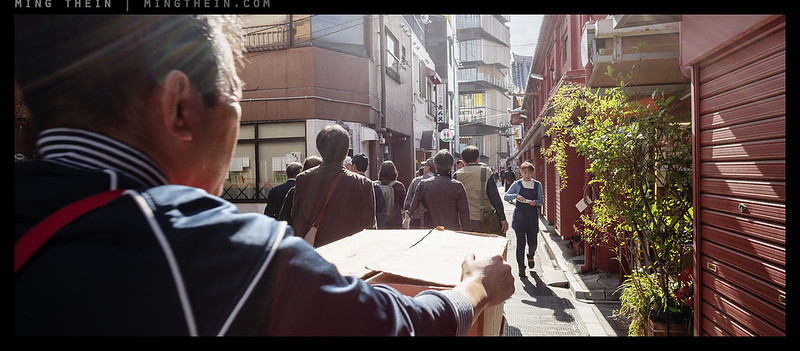
I frequently get asked if it is possible to work in the cinematic style with a wide lens; the answer is of course yes. There are a couple more considerations over the more traditional conception of the genre that is heavily dependent on longer focal lengths to split the scene into planes and blur the unimportant portions; it is true that the latter is much easier with a longer focal length due to simple rules of physics. However, use of the wide perspective is also important for several reasons, with the main one being trying to create a feel of involvement and immediacy for the audience. It can also be used in tight quarters and to create the impression of distance between observer and scene/subject. In all situations, the frame has to perceptually appear level – otherwise a very strong (and distracting) tipping sensation is produced. The wider the lens, the more care you need with levelling and keeping subjects away from the edges of the frame to avoid geometric distortion drawing attention to itself. Lens choice is also fairly critical because any out of focus areas are unlikely to be drastically out of focus; there will be a lot of transition zones. I personally prefer a smooth rendering here rather than a crisp one because it’s very difficult to reduce the prominence of background or foreground distractions after capture. Enjoy! MT

This series was shot with a Leica Q 116, and post processed using the Cinematic workflow in Making Outstanding Images Ep.5. You can also look over my shoulder at the underlying postprocessing in the Weekly Photoshop Workflow series.

[Read more…]

Photoessay: Tokyo cinematics I

_7R2_DSC3568 copy

The lights of Tokyo always form an irresistible backdrop to some interesting characters; for what must be the fourth or fifth year running, I’m back (I’ve honestly lost count) at what I consider to be the best season – autumn, before the weather gets unpleasant, the skies are still blue, and there’s an orange leaf or twenty. An unusually warm summer this year resulted in not much of an autumn – the leaves weren’t anywhere near as extensive as in 2013, and in 2014 I was a week too late – ah well, the vagaries of nature. Nevertheless, Tokyo is so extensive that I feel as though you could live there your entire life and barely scratch the surface photographically. On this trip, I tried out some different hardware for cinematic work compared to my normal 55/85 Otus – I wanted to see if smaller, lighter could also apply to cinematic work albeit with slightly reduced maximum apertures. I used the Zeiss 1.8/85 Batis (Sonnar) and the Zeiss 2.8/85 Sonnar, an older Contax design. What I found was the Sonnar actually produced a more pleasing rendering for this purpose – the Batis is razor sharp but I somehow prefer the softer, more rounded properties of the older lens – especially for out of focus foregrounds and skin. It is stronger at middle and close distances because of this; the Batis excels at longer distances because it differentiates between planes more easily. Neither is as good as differentiating as the 85 Otus, but that’s also a faster and better corrected (apochromatic) lens – the price we pay there is occasionally nervous bokeh and some onion rings under certain conditions. I digress: it is of course about applying the right tool to the right situation to get the desired images…enjoy! MT

This series was shot with a Sony A7RII, Zeiss 1.8/85 Batis, Contax Zeiss 2.8/85 Sonnar MMG and Zeiss 2.8/21 Loxia and post processed using the Cinematic workflow in Making Outstanding Images Ep.5. You can also look over my shoulder at the underlying postprocessing in the Weekly Photoshop Workflow series.

[Read more…]

The Switch

AB0000297 copy
Advance warning: this post contains nothing but gear p***, since it is an equipment-centric post after all…and I make no apologies whatsoever for that. And that thing isn’t a carrying handle, it’s the HTS.

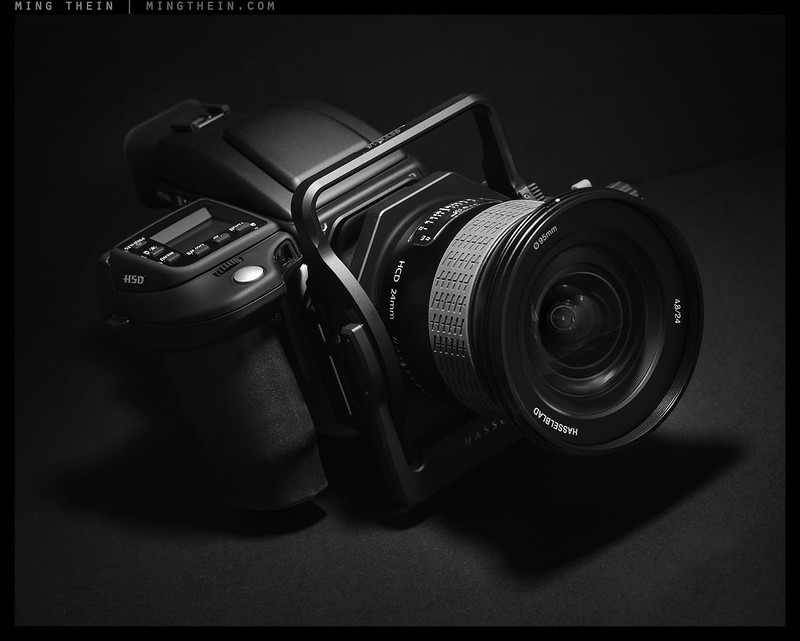
I suppose many of you will have seen this coming: I have switched primary camera systems from Nikon to Hasselblad. And you’ll also probably know I’ve got extremely good reasons for doing so, even more so since this is a significant commitment by any standards. I’ve also had several conversations with various people in the organisation that have convinced me that their future is also going to be pretty exciting indeed. Judging by the number of people who commented and emailed me after the previous recent posts on medium format (here, here) – there’s quite a lot of curiosity and more medium format shooters here than I previously thought. Today’s post is an explanation of that rationale, and the comments will be an attempt to answer any questions from the curious.

[Read more…]

Photographing babies

_Q116_L1020754 copy

Today’s article is both somewhat off topic and an indication of how things have changed for me in the last seven months. It certainly isn’t something I’d have done or even considered previously, but when your shooting hours are severely curtailed by parental responsibility, a photographer has little choice. I’m sure we’ll be updating this post with a ‘photographing toddlers’ amendment in a year or two, but for now, I’d like to share some of the useful things I’ve learned – I’m sure there are probably a considerable number of people in the audience who might find them useful. Feel free to wait for the next article or dig in the archives for today’s entertainment if it isn’t applicable to you. And I do promise not to turn into one of those people who does nothing but post photographs of their kids…

[Read more…]

Photoessay: the towers, Chicago

_Q116_L1050367 copy

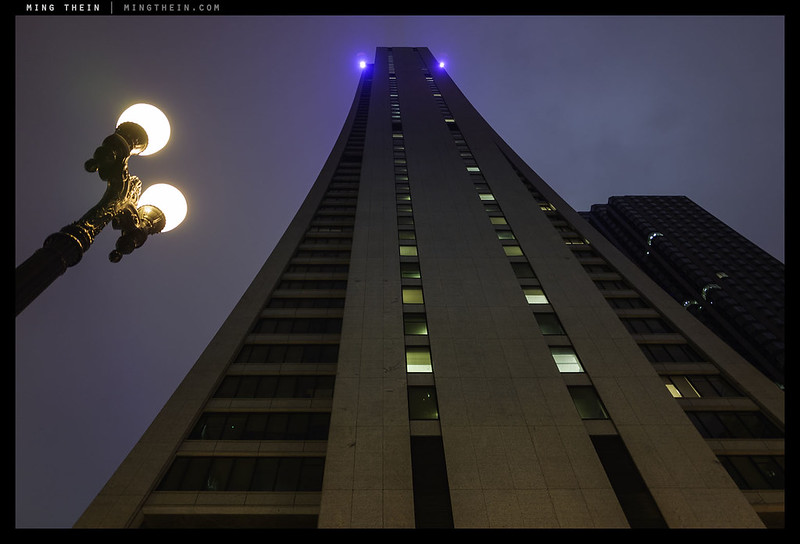
After the previous verticality projects, I wanted to try to find a different but still coherent approach to photographing large buildings from the human perspective at street level – this is harder than it sounds, given you have little room to back up in most cases. At the same time, overt geometric distortion from the use of a wide lens is not always acceptable. With the exception of two images, the rest were shot from fairly close to the base of the buildings with minimal or no perspective correction and the intention of preserving just enough of the uniquely identifiable aspects of the architecture. Locals or architecture fans should be able to identify the edifices, or I should go back to the drawing board. Enjoy! MT

This series was shot with a Leica Q 116, D810/ Zeiss Otus 28, A7RII and Zeiss Batis 85 and post processed with PS Workflow II. You can also look over my shoulder at the underlying postprocessing in the Weekly Photoshop Workflow series.

[Read more…]

Social media and photography: how to get it wrong

IMG_3199b copy

It never fails to surprise me at the – let’s be blunt – stupidity of some companies in the age of social media. Let’s say you operate a number of malls in the centre of a large city, in prominent locations with moderately interesting facades. Your objective as a mall operator is obviously to increase traffic through your property so that you can increase rental to your tenants and your own underlying return on capital. You want to encourage people to visit and spend money in every way possible. More than a few studies have shown that people who are happy are more likely to spend money than people who are not. Similarly, people are more likely to spend money in a popular environment than one that is not – part of that is herd mentality, part of that is fear of missing out. You spend money on advertising, promotion and the like. You sponsor photo competitions and go out of your way to be seen as a ‘patron of the arts’. Yet why do you program your guards to a) prevent people from taking photographs anywhere near your property when the subject isn’t even your property but the opposite direction; b) be rude about it, and c) act over real estate and public thoroughfares over which they have no jurisdiction?

[Read more…]