Photoessay: Suburban geometry, part I

AB0001054 copy

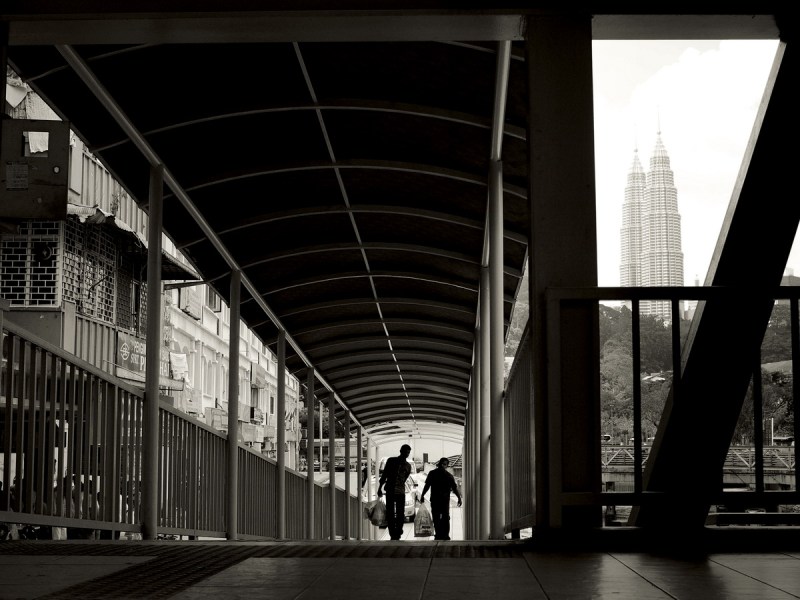
Am I the only one who finds it odd that a) we are of organic, irregular shape and yet b) create our environments to be as regular and inorganic as possible – even with the possibilities long afforded to us by modern manufacturing methods, we stick to at best a greatly reduced and simplified facsimile of nature? Furthermore, all suburban environments have become so similar I don’t know whether to think of it as fairness, aspiration to the same standards or a homogenous dystopia. Case in point: these images were shot in no less than six cities, but you wouldn’t know it at first glance (and there is also a massive curation bias that is involved in removing any localising elements, of course). This is especially true as configurations and details simplify into what is cheapest to build, easiest to maintain or least likely to cause offence. Chasing uniqueness in the photography of urban exploration has become a challenge not so much to find unusual locations so much as a race against the shadows for the flaneur – perhaps, much as it should be. MT

This series was shot with an assortment of cameras and lenses over a fairly wide period of time, but all post processed using the techniques in the weekly workflow and PS Workflow III and the Weekly Workflow.

[Read more…]

Review: the Panasonic DG Vario-Elmarit 12-60 f2.8-4

Olympus and Panasonic have been releasing increasingly similar and overlapping lenses as the Micro Four Thirds system matures. More options and choice can definitely be seen as an advantage. Early this year, in January, Panasonic released the Panasonic Leica DG Vario-Elmarit 12-60mm F2.8-4.0 zoom lens. The other competitors for a similar zoom lens are: the Panasonic 12-35mm F2.8 and Olympus 12-40mm F2.8 at about the same price as the new 12-60mm F2.8-4. For a premium, you can have the Olympus 12-100mm F4, and at the lower end there is the Panasonic 12-60mm F3.5-5.6. There is no shortage of standard zoom lenses. Therefore in this review, I shall explore the capabilities of the Panasonic 12-60mm F2.8-4 and discuss how this lens stands out from the rest of the crowd. [Read more…]

Photoessay: cityscape Istanbul

H61C-B0001559 copy

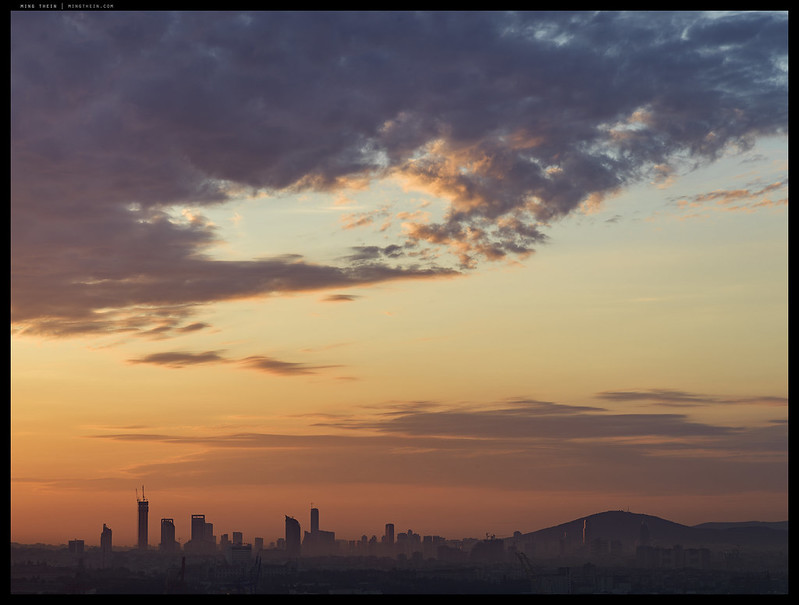
At the macro level, the structure of a city has always seemed much cleaner and more organised than when you get in it – there’s a sort of fractal perfection of the wimmelbild kind where the overall visual density is quite homogenous within all of the areas that can be build upon. It’s as though we seek to fill and exploit every possible space available to us – and in doing so, make something that’s always reminded me of a carpet or a lawn: from a distance, regular, but close up, completely random. I’m sure if we were to take the site of any of the world’s major cities and start again, the result would be extremely different from what we have now (and in some cases, perhaps wouldn’t exist at all – building below sea level, for instance, is probably not a such a good idea in the long run). At a more pragmatic level, we never quite made it to the far side of the strait – next time…MT

This series was shot with a Hasselblad H6D-100c, various lenses and post processed with Photoshop Workflow III.

[Read more…]

About the ‘Robin Wong’ look…

I find it humorous how people can look at a photograph and say that is has the “Robin Wong” look. Truth be told, I haven’t successfully developed a distinctive photography style yet (unlike others like say, our host, Salgado, McCurry, Leibowitz etc). I am still in the process of experimenting, trying out different techniques and shooting methods,  and deciding what works and what doesn’t. I believe photography is a dynamic process that requires us to go beyond our comfort zone and try new and different approaches. Growth in photography takes time, and I, like everyone else am still learning.

[Read more…]

Tips to improve your photography using what you’ve got

We constantly find excuses to justify the purchase of new, more expensive camera gear. However, it is important to remind ourselves from time to time that simply upgrading  gear does not improve our photography. The greatest weapon a photographer possesses is their vision – how they see the world around them, with their unique artistic sense and perspective.

[Read more…]

Photoessay: Eastern melancholy, part II

GX85_1000604 copy

Continued from part I

Much further east, but still considered ‘eastern’ relative to other parts of the world – I shot these in Tokyo a month ago (at the time of writing) and very much remembered how I felt: the usual excitement of being in Tokyo, the anticipation of a reset in culture and scenery, and some slight dread for my wallet thanks to the camera havens of Shinjuku. Aside from that, certainly not what I seem to have captured: a sort of ‘quiet resignation to the task at hand no matter how bad or what it is’ – rather than the same sort of slightly uncertain edginess in Istanbul. Cultural? Perhaps. Or perhaps somebody in the audience is going to tell me there are things I have deeply repressed…MT

This series was shot in Tokyo with a Panasonic GX85, various M4/3 lenses, and post processed with The Monochrome Masterclass Workflow. Get more out of your voyages with T1: Travel Photography.

[Read more…]

Photoessay: Eastern melancholy, part I

H61C-B0002225 copy

Every image is a reflection of the photographer’s state of mind at the time of capture; we see and interpret the world through a lens of personal bias. We either notice things that are extremely in sync with us – or extremely opposite. It is difficult to say whether the collective feeling exists or we are simply applying tunnel vision to only notice what we want to see. Going back to curate through one’s archives tends to yield very telling glimpses into your psyche at the time, and something much easier to see objectively in hindsight. These images were shot more than six months ago, but reviewing the entire set yields an almost manic split between the bright, cheerful and happy, and the downright depressing. I honestly don’t remember what I was feeling at the time – probably not strongly positive or negative – but mainly that the environment was so different that it was rather difficult to ‘be a mirror’ and let the images come rather than looking for them. What’ll be interesting is the counterpoint part II post… MT

This series was shot in Istanbul with a Hasselblad H6D-100c, 50, 100 and 150mm lenses, and post processed with The Monochrome Masterclass Workflow. Get more out of your voyages with T1: Travel Photography.

[Read more…]

Off topic: Presenting the MING 19.01

MING 19.01 3

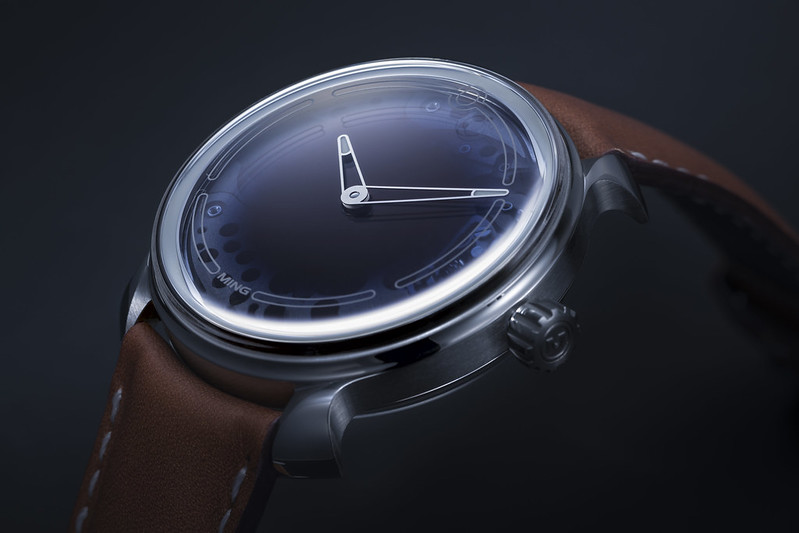
Many of you will know that I’ve recently brought my interest in watches full circle with the launch of my own watch brand earlier in the year. We were surprised and humbled by the response, but also fortunate as we had another project in the works at the same time: something at the other end of the spectrum, and our flagship: the 19.01. Whilst the 17.01 was designed to be an honest watch that brought a lot of the features valued by collectors to a more accessible price point, the reality is there were a lot of things I wanted to do that I simply couldn’t because of production cost restrictions. This is not the case with the 19.01, which was designed without compromises ad to be something very special in a world that’s already got a lot of very special watches. This is of course not a simple task, and required something special aesthetically, mechanically and stylistically consistent with previous designs so as to fit within the MING lineup.

[Read more…]

Final stock for the MTxFF Mirrorless and Duffel bags

_8B41434 copy_8B41517 copy

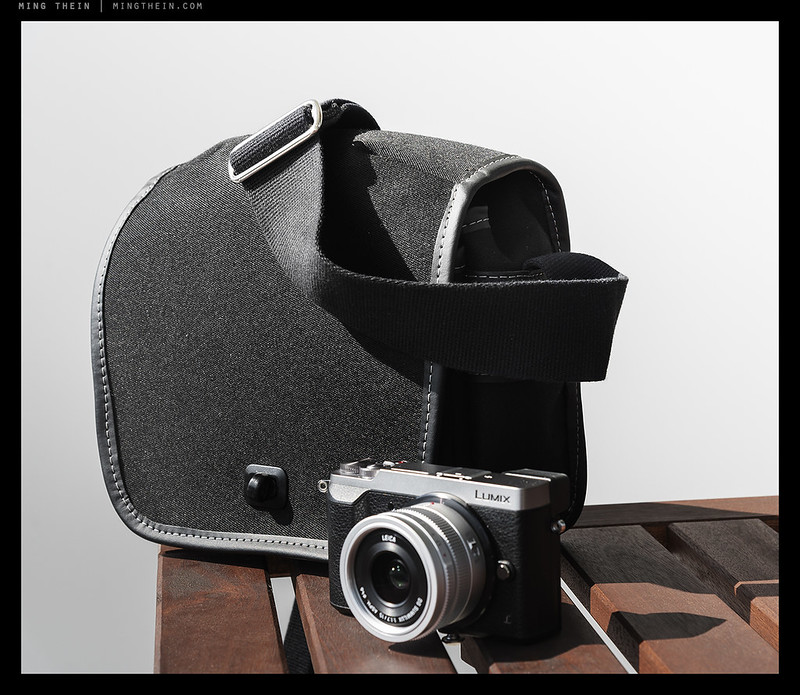
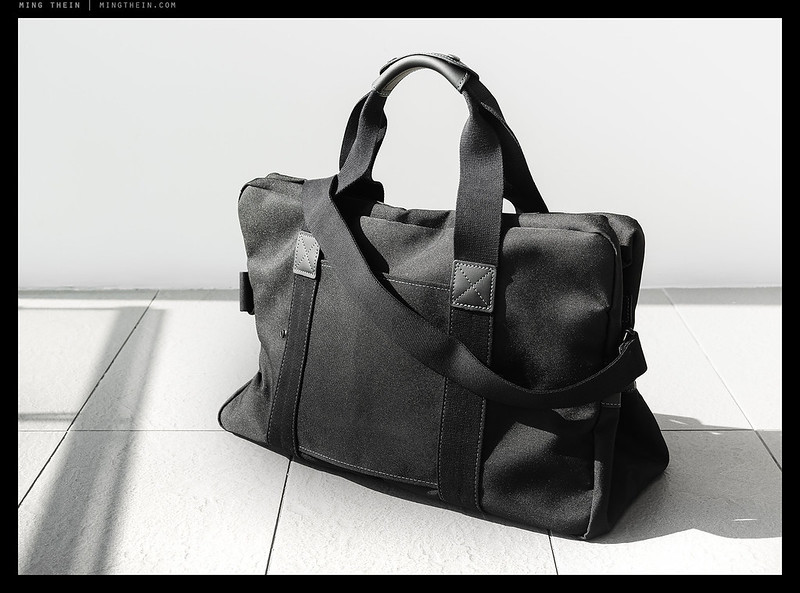
We’ve decided to end the Mirrorless and Folding Travel Duffel bags after the current production run – it’s time to work on other new projects. There are currently 13 Mirrorless bags and 6 Duffels remaining, and once these are gone – we will not be producing any more. Please click on the images above or the links below if you would like to order one. Thanks! MT

Buy the MT x FF Mirrorless bag
Buy the MT x FF Folding Travel Duffel

__________________

Visit the Teaching Store to up your photographic game – including workshop videos, and the individual Email School of Photography. You can also support the site by purchasing from B&H and Amazon – thanks!

We are also on Facebook and there is a curated reader Flickr pool.

Images and content copyright Ming Thein | mingthein.com 2012 onwards unless otherwise stated. All rights reserved

Drone diaries/ Photoessay: Over Iceland

IS1017_DJI_0110 copy

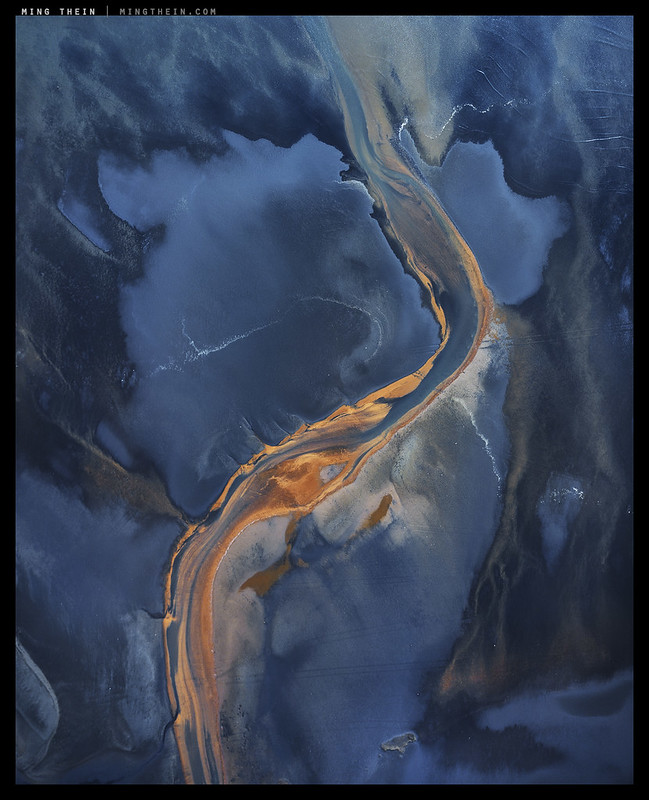
I’m going to start this post with a confession: I lost/crashed a drone during the making of these, which is why there’s no video of me flying through the sea arch at Hellnar, or of that double sided beach where the waves pound a narrow strip of rocks. (I do have the stills from the Hasselblad though, which I’ll post in the near future.) Feeling confident after the flight low over the surf and through the arch, I went a bit further out to sea to do a flyby of the coastal cliffs, and an orbit of a sea stack. Mistake number one: I wasn’t high enough, and the signal was looking a bit ropey. That should probably have been enough of a clue that something was going to go wrong. Mistake number two: I underestimated the winds between the cliffs and the rocks – and there’s not really any way to judge wind speed remotely, other than sponginess of controls and lack of manoeuvring overhead as the bird uses more and more of its available reserve power to fight the wind. Mistake number three: I was flying sideways so the gimbal and camera would be pointed in the correct position to film, which meant that I didn’t really have much idea of what was behind me (the Mavic doesn’t have rearward or sideways sensors). What I surmise happened is that I got too close to the cliffs behind me, and a gust of wind did the rest. Game over.

[Read more…]