Nikon D800 review update: daylight shooting

_8000881 copy
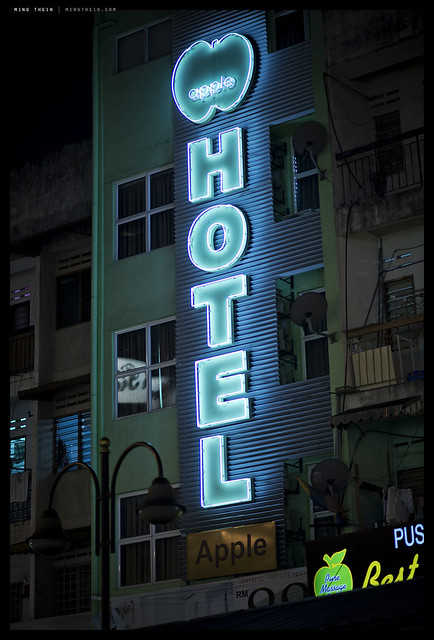
On reflection. D800, Zeiss ZF.2 2/28 Distagon

As promised, here’s an update to the Nikon D800 first impressions review I posted last night. I’ve now had the chance to shoot with the camera for several hours under bright daylight conditions (read: no problems with running out of light, base ISO and nice high shutter speeds) and want to share some more images, impressions and report back on a couple of things.

_8001170 copy
Are you my mother? D800, 28-300VR

Firstly, I think I need to clarify a few points that have repeatedly come up on both the forums and in the comments to the first part of the review.

_8000848 copy
Out of place. D800, Zeiss ZF.2 2/28 Distagon

1. AF is not as fast as the D4, nor do we expect it to be.
The difference is similar to that between the D700 and D3 – probably down to battery voltage and the current available to drive the lens motor. It seems subjectively the same as the D700 under very low light conditions – specifically, speed and tracking ability. However, I was using an 85/1.4 G wide open to see if the camera could track moving objects with it – the answer is, hit and miss. Sometimes yes, sometimes no. I suspect the actual AF module performance is no worse than the D700, but with the increased pixel density of the D800, the demands on focus accuracy just got a lot higher – and that’s the shortfall we’re seeing here.

_8001196 copy
Distorted reality. D800, 28-300VR

2. Noise.
People seem to get angry and anxious when I say it isn’t as good as the D700 at the pixel level – I don’t know how it could be, the photosites occupy half the area! (Probably less, once you take into account the additional power and read circuitry required to run the sensor.) HOWEVER, if you downsize to 12MP to match the D700 (or print both at the same size) – the D800 is better, markedly so. I’d put it a stop ahead for noise, and there’s of course the extra detail.

_8001141 copy
Not used to being the little one. D800, 28-300VR

3. A lot of people have said the images are noisy. Yes, they are at the pixel level, but remember a) mixed light sources; b) I run zero noise reduction and sharpen fairly aggressively – I much prefer grain to smearing and indistinct edges; c) this is a worst-case scenario, overall.

_8001166 copy
Virtual continuation in reflection. D800, 28-300VR

4. Usability and ‘demandingness’.
To achieve the same PIXEL LEVEL quality as the D700, you’re going to have to up your game. And the camera itself cannot deliver the same level of quality at the individual pixel level (think 100% enlargement on screen) because the pixels themselves are smaller. Those are laws of physics. In reality, this means shooting at one stop lower ISO, and taking care with camera shake. If you’re just talking about the overall appearance of a print at a given size, see #2.

_8000816 copy
Man-mountain to capitalism. D800, 28-300VR

With that settled, let’s move on to the update part of the review. This is to address performance of the camera under bright daylight, i.e. close to optimal conditions.

AF, under daylight
Focusing is snappy, positive, and noticeably faster than the D700. I was testing the AFS 28-300/3.5-5.6 VR today – not known for being a snappy lens – but nevertheless, the picture was in focus before I expected it to be. I often re-focused again, because I wasn’t sure it had locked – subsequent testing revealed it always had. AF-C mode is best described as being a little bit skittish – you can hear the AF motor chattering away as it tries to keep the lens elements in optimum position. Whether this is because of the new AF system, the interaction between the camera and the lens or something else, I don’t know. Tracking moving subjects – in this case motorbikes coming towards the camera – was no problem at any focal length using the 28-300VR. I’m certain performance would be better if a lens with a faster motor was used.

_8001054 copy
Untitled. D800, 28-300VR

Resolution
In short: at base ISO and sufficiently high shutter speeds that camera shake isn’t a concern, there’s more resolution here than you can shake a stick at, even with decidedly ordinary lenses: even the 28-300VR delivers pretty amazing levels of detail. With the Zeiss ZF.2 2/28 Distagon, it’s on par with the entry level medium format systems. Retouchers, beware. This thing is going to produce files that take two or three times as long to fix as previous cameras, simply because there’s so much more information here. I would honestly recommend NOT getting the D800E if you’re shooting portraits, because it’s going to produce downright unflattering results for anybody without absolutely perfect skin or makeup. Bottom line: the D800 delivers what you’d expect it to, and in a most impressive way. The anti-aliasing filter in the regular D800 is evidently very weak; fine detail remains well resolved, but simultaneously it’s just strong enough to prevent moire. I haven’t seen any evidence of it in the ~2000 images I’ve shot so far, even in fine repeating textures (which you’ve be surprised by how many of them there are when you have this much resolving power).

_8001178 copy
Porthole-barnacles. D800, 28-300VR

Some more resolution examples:

_8000890 copy
Work in progress. D800, 28-300VR

_8000890 crop
100% crop of above

_8000753 copy
Morning skyscrapers. D800, Zeiss ZF.2 2/28 Distagon

_8000753 crop
100% crop of above

_8000874 copy
The much-maligned pump room. D800, Zeiss ZF.2 2/28 Distagon

_8000874 crop
100% crop of above

Dynamic range
Nikon’s claims about more dynamic range than the D700 are true, but must be accompanied with a caveat. I’m finding that while there was a lot of recoverable headroom in D700 files, there isn’t so much in the D800 – however, there’s more useable shadow detail and less noise. Subjectively, I think we’ve lost 1 stop in the highlights and gained around 2 in the shadows; this at base ISO. You could probably pull a bit more out of it with judicious use of the right sliders in your raw converter, but then color accuracy starts to wane. At higher ISOs, color accuracy in the shadows is a bit suspect and heavily influenced by the ambient light source.

_8001011 copy
Urban dynamic range torture test canyon. D800, 28-300VR

White balance, color and tonality
The D800 seems to deliver the same general white balance as the D700, but with a slightly different tonal response. I can’t put my finger on exactly how it’s different, but the files are quite reminiscent of the Leica M9’s output – my color profiles for that camera actually deliver better results during conversion than the D700’s profiles. I can only put it down to new sensor architecture, or perhaps a change in the filter pack in front of the sensor. It’s definitely more pleasing, that’s for sure. Note that I’m talking about RAW file output converted via ACR for both cameras, which removes any manufacturer-specific processing.

_8001015 copy
Untitled. D800, 28-300VR

The other crop modes
I’m actually finding these surprisingly useful. The 15+MP file you get from the smallest DX crop is still a serious amount of resolution. On a personal note, I’m also starting to like 5:4 a lot. 3:2 is increasingly feeling like no-mans’-land between 16:9 and square for me.

_8001081 copy
Verticals. D800, 28-300VR

Battery life
Seems even better than yesterday after a full charge and cycle – I shot 500 frames today, and at the end was only down by 20% – again with heavy LCD use and mucking around in the menus. I was also using a VR lens, which wasn’t the case yesterday. That means an estimated 2,500 shots per charge – on par with my D3, as far as I recall. I don’t know what Nikon have done with power consumption, but it’s impressive. I don’t think I need to buy that third battery anymore.

_8000919 copy
Voluntarily caged people. D800, 28-300VR

Commentary on the AFS 28-300/3.5-5.6 VR
This lens has been a bit of a mixed bag for me in the past – it’s so-so on the D700, good at some focal lengths (the longer end) and downright unusable at 28mm until you hit f5.6 or preferably f8. Oddly, it did pretty well on my D5100; enough that I’d actually use it. On the D800, it’s a big, big surprise. The midrange is excellent at f5.6 and outstanding at f8 – we’re talking about 35-200mm or so here; the ends are slightly less good, with the 28mm lagging slightly behind the midrange (but useable wide open, if slightly hazy due to flare) and the 300mm end being just okay to good. Still, it’s a surprise given the resolution of the sensor. I didn’t think the lens was capable of resolving this well. Don’t get too excited though, while it delivers excellent macro contrast, micro contrast structure lags far behind the Nikon primes, let alone the Zeiss primes. Look out for a full review of this lens in the near future.

_8000837 copy
Chevrons. D800, 28-300VR

_8000837 crop
And a 100% crop of the above – can you say ‘detail’?

The shutter mechanism
Although it’s a bit more hollow-sounding than the D700, and frankly I was a little disappointed it wasn’t as smooth and well-damped as the D7000, it’s got one other trick up its sleeve: low vibration. Again, subjectively because I have no way of testing this, the D800’s shutter and mirror mechanism has a lot less recoil than the D700 – this is very, very, very important because it helps us reduce camera shake. Bravo.

_8000884 copy
The glass ceiling. D800, 28-300VR

Intermediate conclusion
Initially, I thought I’d shoot this camera at full size raw and then reduce by 50% to 18MP; not so. Instead, I’m processing at full resolution but forcing myself to be more selective about the keepers. I guess it’s a rare example of a camera actually driving you to be a better photographer – which isn’t necessarily a bad thing. I still need to go out to buy more hard drives, though. MT

Look out for more updates and images over the coming days and weeks. I’ll be shooting some studio assignments this week and next week, so I’ll report back after on how the camera performed. I’ll also try to make some video with it in the near future.

_8001188 copy
Keep on smilin’. D800, 28-300VR

____________

Visit our Teaching Store to up your photographic game – including Photoshop Workflow DVDs and customized Email School of Photography; or go mobile with the Photography Compendium for iPad. You can also get your gear from B&H and Amazon. Prices are the same as normal, however a small portion of your purchase value is referred back to me. Thanks!

Don’t forget to like us on Facebook and join the reader Flickr group!

appstorebadge

Images and content copyright Ming Thein | mingthein.com 2012 onwards. All rights reserved
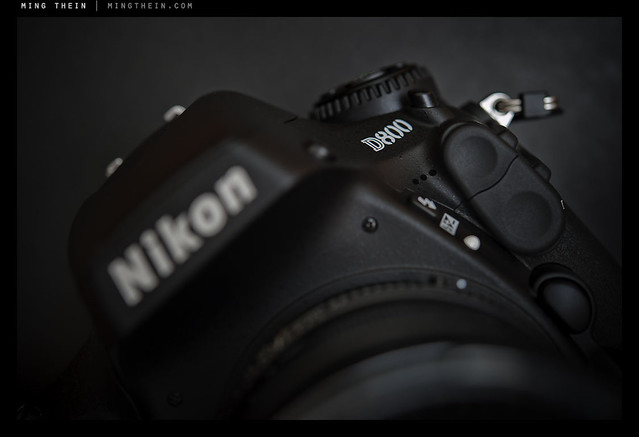
A (very detailed) first impressions review: The Nikon D800

_7062045 copy

We all know the paper specs for the Nikon D800: 36MP, 4fps, full frame. Same ISO range as the D700 – 100 to 25,600. 100% viewfinder, full HD movies, and an improved 51-point AF system derived from the previous camera. And to boot, a D800E version with no anti-aliasing filter for even more resolution, as if 36MP with a weak filter wasn’t enough for you. What we don’t know is how it fares in the real world.

What follows is what I believe is the one of, if not the first, complete, real-world test by a photographer of a production D800. 8 hours of non-stop flat-out work – so, please leave a comment if you enjoyed it.

_7062028 copy

I first heard D800-shaped noises way back at a Nikon event in March 2011, both locally and from my sources in Japan. These definitely wasn’t the same information as what was going around on the popular rumor sites at the time – I was told specifically D3X replacement, slightly higher pricing. An interesting strategy; too bad the initially planned May-2011 release got derailed by the tsunami. The Sendai plant that produces the D700, D800, D3S and D4 was inundated and had all of its precision machinery replaced; an amazing feat considering the magnitude of the disaster.

_8000063 copy
Stall chef. D800, 85/1.4 G. 

All images in this review were shot as 14-bit lossless compressed NEF and converted in ACR 6.7/ PSCS5.5.

Still, the camera has finally arrived, and delivered precisely on the promised date – even in a small market like Malaysia. That’s impressive. I got mine through NPS; apparently there are around 200 members, 90 D800 orders, and…only 18 cameras to go around. Mine must be one from the very very first batch – serial number 234.

_8000411 copy
Literally, Mickey Mouse color. D800, 85/1.4 G, DX crop mode.

Initially, I wasn’t going to order one. Then my high-mileage D700 began to give up the ghost, and I downloaded some sample images – which in short, blew me away. They were honestly better than the output from the Hasselblad H3D-39 I used a couple of years back in mid-2010 – and quite close to what I’ve seen out of the Leica S2 (I do have access to one, I will try to do some comparisons soon) so far. I called my local NPS rep and put in an order for the D800E; however, playing with both sets of demo files further, it became clear that a) you weren’t really giving up that much getting the regular D800, and as a bonus, it would arrive sooner – an increasingly important factor given this month’s shooting commitments – and b) lenses and diffraction would be the limiting factor for me, not the camera’s sensor. Furthermore, for most purposes outside the studio environment, I intend to shoot the D800 in 14 bit compressed RAW, but downsize by half to 18MP for manageable output, lower noise, and better per-pixel detail.

_8000317 copy
Untitled. D800, 85/1.4 G

At some point, I will probably source a split prism screen and have the focusing screen and mirror precisely adjusted for manual focus planarity; for now, I’m relying on AF. I do really miss the focusing snap of the custom-cut F6 type-J screen on my D700; it’s just so much easier to tell if things are in focus or not. The standard D800 screen is bright but doesn’t have much snap. This may sound odd, but I’m having trouble getting used to the 100% finder again – I’ve become so accustomed to mentally adding a little bit around the edges of the D700 frame (97% finder) that now I’m chopping things off. Just one of those little differences between the two cameras, but important nevertheless.

_8000136 copy
Minor copyright infringement hotel. D800, 85/1.4 G

First impressions on lenses
But this is a camera review! Glass matters. Two big things: a) AF fine tune matters a LOT; b) the optimal set of lenses for this camera is different to the D700, again. The 24/1.4 never quite focused properly on my D700 – I was at the extreme limit of AF fine tune adjustment – but it’s bang on with the D800 with zero adjustment, and incredibly sharp all over. The 85/1.4 needs a lot of shutter speed while handheld to shine; probably double what you’d expect – in the 1/125s range or higher. I’m also seeing a lot of edge CA that wasn’t there before (1-2 pixels worth; that’s probably less than a pixel on the D700). My 60/2.8 G Micro is soft until f5.6 and focus shifts, which isn’t something I’ve ever seen before. Oddly, the 28-300VR is actually rather impressive at 300mm on the D800 – NOT something that could be said about the lens on the D700. In fact, it performs much better on the D800 than it did on my D700 – curious considering the demands of this sensor.

_8000506 copy
Mall performance. D800, 85/1.4 G

_8000506 100pc crop
And a 100% crop – this is a best case scenario for CA, with the lens wide open at f1.4. There were other, much worse shots; I suspect being ever so slightly out of focus also contributes to visible CA in a big way. The older 85/1.4 D is very likely going to be unusable wide open with any subject that’s even moderately contrasty.

The sole lens that has been outstanding on every camera it’s been mounted on is the Zeiss ZF.2 2/28 Distagon – wide open, I think it has the highest resolution of any of my lenses. Makes me want to get the 2/100 Makro-Planar again, and possibly also the 4/18 Distagon. Generally, lenses I though were good wide open on the D700 are showing a slight but noticeable improvement stopped down, even if only by a stop – I’m talking about my workhorse AFS 24/1.4 G, AFS 60/2.8 G Micro and AFS 85/1.4 G here. Also, lenses that vignetted a bit before will vignette more strongly now; I suspect it’s because the individual photo sites are smaller, and there’s no trick offset micro lens array like in the Leica M8/M9 to counter it.

_8000147 copy
Disposal. D800, 85/1.4 G

It was dark by the time I got the camera and had a chance to shoot with it, so take it as a worst case scenario and impressions will almost certainly improve when I have more light to work with. I will not be providing full size files, so please don’t ask. There may be crops. Clicking on any of the images will bring you to a larger version on Flickr; the EXIF data is all intact.

_8000127 copy
Untitled. D800, 85/1.4 G

Autofocus
Seems to be about the same speed as the D700 in good light, no difference as far as I can tell in low light. Has issues focusing the 85/1.4 G accurately in low light; this may be true of the D700 but it’s a lot more noticeable here due to the higher resolution. Tracking ability seems slightly improved. More tests are required before I can reach a conclusion here. Contrast detect AF for live view subjectively seems at least twice as fast as the D700, and doesn’t require as many passes while hunting.

_8000040 copy
KL Tower peeking. D800, 85/1.4 G

Ergonomics
First thing you notice is the camera is lighter – about 100g, according to the specs. However, I personally find it not quite as comfortable as the D700; my fingers were cramping after use. This is because the lower section of the grip is thinner – not sure why, perhaps their testers had small 4th/5th fingers, or perhaps Nikon just really, really wants you to buy the vertical grip.

_8000071 copy
Fruit choices. D800, 85/1.4 G

That’s about the only bad thing ergonomically – I don’t know if it’ll be a deal breaker for extended use. Sadly I don’t find it anywhere near as comfortable as the D4, which is pretty amazing. Oh, there IS one more thing: the mode button is a stretch to access; I feel like I’m going to dislocate my index finger by pressing it. Too often I hit the movie record button by mistake and wondered why nothing was happening. A firmware fix to make the movie button change exposure mode when shooting stills would be a nice easy fix. I do like the new angle for the shutter button, though – it’s much more comfortable.

_8000342 copy
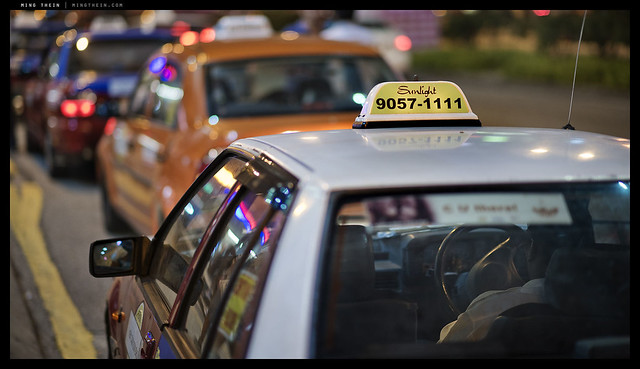
Taxi man. D800, 85/1.4 G

There are a lot of nice touches though. Live view is a lot easier to access thanks to the button where the AF mode switch used to be; am I the only person who misses the AF mode switch though? That little button near the lens mount is not so easy to find, but at least you can see what the camera is set to in the finder. The new drive mode dial is also a lot easier to use – it locks and still has detents, so you can count positions and change modes in the dark – there’s a big difference between using CH and Q in a theatre, for instance. Speaking of the shutter, it’s slightly more hollow sounding than the D700; crisper, too. Sadly not as quiet as the D7000, which is nearly silent in Q mode. Interestingly, the mirror doesn’t cycle when shooting in live view – just the shutter – so the camera is actually very quiet, and doesn’t vibrate much. Although the maximum frame rate is 4fps, it doesn’t feel any slower than the 5fps D700. Mirror blackout time is the same, which is to say, effectively instantaneous.

_8000236 copy
Dial-a-sunlight. D800, 85/1.4 G

Metering
I mention this because it seems that Nikon’s newest meter isn’t quite as accurate as the last one. My D800 definitely meters a bit hot compared to the D700, and seems a bit more erratic. Further investigation is required here.

_8000241 copy
Plugged in. D800, 85/1.4 G

Turning AUTO ISO on and off is an option from the button, finally! You use the front command dial to toggle on/off, and the rear one to select ISO. There’s also an option to automatically select minimum shutter speed as a 1/focal length, with some fine tuning in either direction – sadly, the fine tuning isn’t granular enough. For example, the 85mm defaults to 1/90; adjusting this to ‘faster’ gives 1/200 rather than say 1/125, which would be perfect. Back to manually selecting shutter speed again, it seems. In short: you will be needing to use higher shutter speeds than 1/focal length would suggest. Think about what you’d set on a D7000, and that’s about right – remember, the pixel density is the same.

_8000164 copy
Communist taxi. D800, 85/1.4 G

Image quality
Bearing in mind that I’ve only shot it under low light/ night/ available darkness conditions, I’m impressed. It’s doing a decent job for the pixel density – though I would not pick this over a D700 for reportage work. The few flash-based tests I have done have left me stunned. Color accuracy is slightly better than the D700, but resolution is out of this world. Dynamic range is about the same, subjectively; however, instead of being highlight-biased as with the D700/D3, it’s shadow biased – you’ve got to be careful not to blow highlights because there simply isn’t as much recoverable color information there. Still, I wish I’d had the camera earlier today for the food assignment I just shot; it would be the ultimate tool for things like that. No matter, because I’ve got several watch shoots in the coming weeks. Early impressions are that the pixels don’t have the same degree of elasticity/ integrity as the D700 (duh) and are probably somewhere between that and the D7000; probably closer to the D7000.

_8000130 copy
The burden. D800, 85/1.4 G

Noise
See the following crops; they were shot under pretty dark conditions and tungsten light, i.e. a torture test. Subjectively, I think it’s ~1 stop behind the D700 at a pixel level; if you downsize to D700 size, it’s actually a stop ahead. Now if only Nikon would give us a pixel-binned half-resolution sRAW size for low light! If you are shooting full resolution, I recommend stopping your auto-ISO at 6400; anything higher than that has to be downsized to look good. 3200 is definitely acceptable, and anything below is good. The reality of printing, however, is that because you’ve got so many more pixels, a print will look a lot better than at 100% on screen. There’s no sign of banding, but beware of strong noise in one particular channel over another in the shadows, but it depends on the temperature of your light source – for instance, heavy shadow recovery or dodging under fluorescent lights is going to give you a red cast to that area.

Note that I didn’t bother with ISO 100 and 200, they look the same as ISO 400. Click to go see larger versions on flickr – the ‘original’ size is a 100% crop.


D700-D800-ISO400-800
ISO 400-800

D700-D800-ISO1600-3200
ISO 1600-3200

D700-D800-ISO6400-25k
ISO 6400-25600

Here’s a real world ISO 6400 example, sodium-vapor street light. Yes, it’s noisy at 100%, but I’m fairly confident it’ll print just fine.

_8000558 copy

_8000558 ISO6400 100pc crop
And a 100% crop.

Movie mode
I’m not a huge video person, though I have dabbled (to be the subject of a future article). I do know what good quality footage looks like. The D800 is excellent. Dynamic range is great; noise is low, and above all, there’s no rolling shutter effect that I can see – even while panning rapidly under fluorescent light operating off a 60Hz AC supply.

_8000082 copy

Battery life
Pretty darn good, I think – I just grabbed the battery that came with the camera; 36% charged; shot about 650 frames, and it went down to 6%. Extrapolating, that’s about 2,100 shots per charge. And that was with heavy LCD use and some live view. One battery should more than get you through a day – you’ll run out of card space far, far sooner. I can’t honestly say I’m pleased about the complete battery system change (I have plenty of EN-EL3es and EN-EL4as) – but at least the new power system lasts longer, and also has a little catch that allows for a spring loaded (read: easier to replace) battery.

_8000696 copy
Salad days. D800, Zeiss ZF.2 2/28 Distagon

Buffering and file handling
The manual claims 25 images for 14-bit compressed raw – the camera shows r13, but I’m getting 17, using a UHS-I Sandisk Extreme 32GB SDHC card. Still trying to find out where the difference is; auto ISO gives back three more frames, but curiously NR makes no difference. The buffer flushes surprisingly quickly, and you never feel like you’re waiting for files to write – although there is a slight lag when playing back images, probably due to the file size.

It’s probably worth noting that file handling is a bit slower, but not 3x slower (despite 3x the resolution) – however some operations like brushes etc. and even converting in ACR definitely take longer, so budget time accordingly. I’m using a mid-2010 MacBook Pro with the 2.66GHz i7 and 8GB of RAM. I don’t even want to think about retouching files this big yet.

_8000696 100pc crop
100% crop of the above.

Early conclusion
It doesn’t take a rocket scientist to figure out that getting the most out of the D800 is going to require a lot more care than the D700; the resolution is so high, in fact, that I think the AF system may be letting it down slightly – not from a speed point of view, but from a precision standpoint. And I’m not sure it’s the AF sensor per se, but possibly the granularity with which the lens motors can move the elements small distances. I know that in live view, there’s a point of critical sharpness that’s usually very tough to hit using the focusing rings of AF lenses; the travel is simply too fast.

_8000702 copy
Untitled soaking tomatoes. D800, 60/2.8 G Micro

I don’t think the D800 is a general purpose tool. It definitely isn’t a run-and-gun photojournalist’s camera; in fact, I find it more demanding to shoot street with this than the Leica M9-P. It’s probably at a two stop or more disadvantage to the D700 if you want critical sharpness at the pixel level – firstly, you’ve got a slightly noisier sensor, and secondly, you’re going to need higher shutter speeds to maintain pixel integrity and combat camera shake. Although downsizing the files to 12MP yields lower noise and more detail than the D700, I don’t think I’ll be using the D800 for photojournalism at the moment; I’m going to have to figure out the AF and lens foibles first.

_8000702 100pc crop
100% crop of the above.

Where the camera will shine is in the studio for work with controlled lighting, or landscapes – the resolution is outstandingly impressive, and dynamic range at base ISO seems subjectively on par with the D700 – no mean feat indeed. However, I need to do more testing in daylight (not experiments with flash) to determine for sure. Stay tuned for more images and thoughts over the next few days; at some point I want to try to get hold of a Leica S2 to do a head to head comparison. Please leave a note in the comments below if you’ve got any questions or have something you’d like me to test, and I’ll do my best. Right now, I’m going to get some sleep. MT

Get the D800 from B&H and here and the D800E Amazon

____________

Visit our Teaching Store to up your photographic game – including Photoshop Workflow DVDs and customized Email School of Photography; or go mobile with the Photography Compendium for iPad. You can also get your gear from B&H and Amazon. Prices are the same as normal, however a small portion of your purchase value is referred back to me. Thanks!

Don’t forget to like us on Facebook and join the reader Flickr group!

appstorebadge

Images and content copyright Ming Thein | mingthein.com 2012 onwards. All rights reserved
Passion and frustration

I’ll begin by saying that this is a difficult post for me to write for many reasons. Over the course of the last month or so, you – my valued readers – have hopefully seen some of my work and passion, and even more hopefully learned something from the articles and how-to’s.

I started this site for several reasons. Firstly, I wanted to share my knowledge; secondly, I want my work to reach a greater audience – although every true artist would (and often does) work without pay or acknowledgement, sometimes the egotistical part of us does value recognition. Thirdly, there are sites aimed at amateurs, at professionals, at particular user groups…but I find the level of content not really that advanced, or too equipment-focused, or not balanced between pure image sharing, learning and techniques/ equipment. Photography is all of these things. Finally, I want to figure out a way to spend more time doing photography-related things, and less time in the corporate world.

The reality of commercial photography these days is that there are plenty of talented people out there; more so now that people have discovered skills thanks to the ever-lowering barriers to accessibility. This is further compounded by the effects of social media (yes, I know I’m benefitting too). Curiously though, although the overall standard for images has raised thanks to the proliferation of photographers, the business community attaches less and less value to it – meaning to say bluntly that there really isn’t any money in the business (with a few very rare exceptions) because corporate buyers are both spoiled for choice and frankly can’t tell the difference most of the time. Those that can are served by long-standing relationships with existing photographers.

What does this mean? ‘Professionals’ are usually scratching a living and unable to have the freedom to develop and improve because that requires time and money; they’re short of the former because they need to do more jobs to get enough of the latter. ‘Amateurs’ have all of the equipment, for the most part act outwardly like professionals, but when the crunch hits, usually can’t quite deliver. The people who are truly pushing are either those aforementioned professionals with long-standing commercial relationships – think Annie Leibowitz and the like – or serious amateurs whose living costs are supported by a day job. I know for a fact that almost all of my professional photography friends do not make a living from selling pictures or photo work. Think about this for a minute: if professional photographers aren’t valued, who’s going to drive the image creation of the future? How are companies going to find the ever-better visual content demanded but not support the people they rely on to create it? I don’t think they’ve given any thought to that; bottom lines are all that matters.

I’m not complaining; far from it. The shift in photography market dynamics has opened up other opportunities that would have been previously unsustainable or commercially unworkable. But the reality for me is that I have to choose between my passion and my day job – which is both mutually exclusive, and nowhere near a fair contest.

Maintaining this blog – creating articles, photographing and keeping myself up to date and pushing the envelope to deliver content that you’d want to read – takes time. A lot of it. Somewhere in the region of 20-30 hours per week, actually – that’s almost a full time job in itself. Actually, it is a full time job if you think about how much more productive you are when you both don’t have to take breaks and can produce everything by yourself – and the topic is something you’re an expert on.

At some point, I’m going to have to decide which path I take going forward – I no longer have the time or ability to maintain both. It’s a tough choice, though – because one path is nothing but uncertainty (except perhaps certain poverty) and the other is the diametric opposite of anything creative. I suppose everybody who is intensely passionate about something, and that something is not their day job, faces this dilemma eventually. What I wonder is how many people regret not trying – and how many people try, but never manage to make it work and just give up eventually. Society likes to talk about determination leading to success – but we also call people fools who try repeatedly but never succeed.

So I’m going to do three things now:

1. Ask for your opinions and thoughts – please leave a comment on this post

2. Ask you to share – use the social media buttons; email links to articles you like; link my blog. (It’s still ad free, and in order to keep it that way I need to traffic to try out some of the other exciting ideas I have planned – which can only work if I have a big enough readership).

3. Shamelessly, if you’ve enjoyed reading or viewing or have learned something, please consider a donation via PayPal ([email protected]) – however large or small, it does help me to continue providing content and art for you all to enjoy. It’s not just the time cost; there are hosting costs, equipment costs, travel costs…the list goes on. The more resources I have, the better content I can create.

Finally – thank you all for your continued support! MT

POTD: Weekend worshippers at the temple of retail

_PM01826 copy
Weekend worshippers at the temple of retail.
Olympus E-PM1 Pen Mini, 45/1.8

Who says the economy is bad? Our (already high as a per capita basis) shopping malls are always packed to the gills on weekends, and still they open more. Note red shirted queue at top right – the malls are such crowd-pullers that Canon stages an annual one-day photography competition set solely in the mall itself. There were at least a thousand people running around with probably $1-2k of gear each – says quite a lot about the state of the photography industry, really. Never has it been so consumer-centric – which is a great thing for variety of equipment, but a disaster for working pros unless you’re well entrenched at the highest end of the spectrum. MT

Quick tip for the Leica M9: toggling images while zoomed in

I just discovered that if you hold down the play button and press the left or right arrow simultaneously, you can quickly toggle to compare successive images while zoomed in. I previously thought this was something only Nikons had – glad to see this handy review feature on the M9 and M9-P, too. Should make assessing images on the fly a lot faster. MT

Photoessay: Cigars

One of my other passions is to have a good cigar now and again. Although I mostly prefer Cubans, there are also some very good things coming out of the Dominican Republic such as the Fuente Opus X and Padron brands. Needless to say, a camera usually accompanies me to these outings; partially because it’s attached to me like an extra limb, and partially because I write the occasional review and video for My Cigar Blog. MT

This series shot with a whole load of different equipment.

_M9P1_L1001196 copy

_7050217 copy

_7050126 copy

_7048354 copy

_7041334 copy

_7041315 copy

_220_IMG_0162bw copy

POTD: Sunset clouds over the sea

_M9P1_L1013197 copy
Sunset clouds over the sea. Over Hat Yai, Gulf of Thailand. Leica M9-P, 35/1.4 ASPH FLE

Nikon D800 update

I’m impressed, Nikon is delivering on time for once: worldwide launch day is supposedly Thursday, 22 March; I got a call from my local NPS rep informing me that my D800 will be ready for collection that morning. However, I’ve got a whole day shoot booked – no chance that’s going to happen – so I’ll pick it up first thing Friday. Can’t wait! Expect first impressions Friday evening. Now I’m off to pick up new hard drives and cards – these files are going to be monstrous. MT

Observing vs. participating: behind the camera

Today’s post is a follow-on spurred by the discussion following yesterday’s article on hiding behind the subject. Apologies to anybody if I lose you in the second paragraph, but I promise it will be worth it.

A camera can be many things.

A tool, to produce an image.

A bridge, to start a conversation.

An observer, to record an event, or bear witness to something.

A shield, to distance and separate the photographer from the scene he or she is attempting to capture.

There’s a big difference between being part of the action, and just being a witness to the action. Which do you think makes for stronger images? Unquestionably, the former. However, it’s not that simple: photojournalism is like quantum mechanics.

Let’s take a little detour. Quantum mechanics 101: under the quantum mechanical realm – i.e. the very small – an observable event has no distinct state, but rather a continuum of probability. This means that there’s the potential for any possible outcome to our observable event; however, until we observe it, we don’t know what the outcome will be. However, the very act of observing the event changes the outcome – because once the outcome has been observed, it can no longer be any of the other possible outcomes. This changes the probability continuum for the event, thus changing the event itself.

The best example of this is Erwin Schrodinger’s (the famous physicist) cat experiment. A box contains a live cat, whose lid triggers a mechanism that <em>might</em> kill the cat. So until you open the lid of the box, you don’t know if the cat is dead or alive; by observing the cat, you interfere with its state of being: namely, you might kill it by checking if it’s really alive or not.

_PM05775 copy
A demonstration of the link between quantum mechanics and photography. Behaviour of the person in the middle didn’t change until he saw me bring the camera up.
New year’s eve 2011-12, Kuala Lumpur. Olympus Pen Mini E-PM1, 12/2

Back to photography. As a photojournalist, if you are an observer, you do not generally interfere with the course of events – other than any secondary impact arising from people viewing your images, and possibly taking action or interfering with the course of history. However, if you are a participant rather than an observer – then by taking photographs, you are directly interfering with the event. From a photographic point of view, it means that the images you get may be more powerful, but not necessarily as genuine because the subjects are aware of the camera and will almost certainly change their behavior accordingly, which again changes the image and changes the course of events because the subjects change the way they act around the camera. As a stealth operative, you will capture the natural reactions of your subjects – but at the expense of involvement for the viewing audience.

_PM04759 copy
Active participation at a family event. Olympus Pen Mini E-PM1, 12/2

They’re very different types of images, and both have their advantages and disadvantages – to say nothing of the ethical dilemmas posed for a photojournalist when covering certain events, for instance wars and natural disasters. I can’t say whether one is better than the other, but I do know that it’s much more difficult to get powerful images if you are not a participant – simply because the focus of the subject is not the camera.

_7048120 copy
Passive observer. Epicure 2011. Nikon D700, 85/1.4G

I’ve always felt the best compromise is to be an observer, but an active one: anticipate and seek out your targets; study behavior and be ready for what comes next, so when that one fleeting moment of critical action – what HC-B memorably termed ‘the decisive moment’ – you are ready, and manage to capture it.

_N8_L1000374bw copy
The kiss, hommage a HC-B. London. Leica M8, Zeiss ZM2.8/21.

Required a lot of anticipation because a) the M8 is manual focus; b) you have to shoot wide open in the low light conditions of the Underground; c) here’s the kicker: they were on an escalator moving in the opposite direction to me, so there was really only one chance to get the shot.

There are times when you should not be a passive observer. In intimate social situations, for example – hiding behind your camera would just come across as awkward, antisocial and downright rude. Portraiture is another example. People naturally connect and express emotion more easily when there’s another human on the receiving end, rather than an enormous and intimidating piece of glass attached to a big black camera.

Perhaps this is why smaller cameras such as the compact system cameras and rangefinders are seeing a modern resurgence (aside from the obvious size and weight benefits) – they remove a layer between you and your subject in a couple of ways. Firstly, if you’re interacting with your subject, they can see your face; body language is the vast majority of communication, and your subject will take visual cues from you. If you’re not interacting with your subject, smaller cameras attract a lot less attention, and let you shoot without the subject being conscious of your presence. I have no problem shooting in very close quarters with a good point and shoot or mirrorless camera – the Ricoh GR-Digital III and Olympus Pen Mini are my favorites because of size and responsiveness – and to a lesser extent, the Leica M9-P. The full-sized Nikons are a no-no (especially anything with a battery grip or large aperture lens) unless you’re in a public situation where the expectation is a lot of people will have cameras and be taking photos.

_M8_L1022749bw copy
Never a problem finding a protest if you’re shooting a Leica. Just look like you’re a world-weary photojournalist and you’d be surprised how many ‘official’ lines you can get past. Leica M8, Voigtlander 50/1.1 Nokton

Speaking of expectations, this should be a good guide to what equipment and technique is best suited to get the best images: if you’re expected to look and play the part of a photographer – a fashion shoot, for instance – using a small camera so the model can see your face probably isn’t going to get you the results you desire. If you’re trying to be stealthy and cover an insurgent protest, then a point and shoot probably is a good idea to help you keep a low profile. Street photography is something else that’s best done with compacts, too. Bottom line: take your cue from your subjects.

One final word: if you are not comfortable, then it will show in your body language. Remember, most communication is nonverbal: this means you’re also going to make your subjects aware of your discomfort (and probably also make them feel uncomfortable with the situation). Most important tip: be confident, regardless of whatever your equipment choice, and however you chose to shoot. Photographers create images: appearing the part is a very important piece of the puzzle. MT

POTD: The hidden market

_M9P1_L1013142 copy
Woman at the hidden market, Witthayu Soi Polo, Bangkok. Leica M9-P, 35/1.4 ASPH FLE

Concealed in a back alley near the Polo Club off Embassy Row (Wireless Road) in the heart of downtown Bangkok is a traditional old Thai community – complete with elderly people, wooden houses on stilts and plenty of small businesspeople selling one or two items from little stalls. Nestled in the high rises and million-dollar condominiums, how long can a place like this last before a developer sweeps in to make another quick fortune? Sad, but also touching at the same time that pockets of the old life like this still exist. MT