Premiere and review: The 2017 Olympus E-M10 Mark III

Update (14 May 2018): Olympus has launched version 1.1 firmware update for E-M10 Mark III, enabling RC Mode (wireless flash TTL). 

Olympus just launched a new camera in their OM-D series – the E-M10 Mark III. I personally own an E-M10 Mark II that was launched 2 years ago and have found it to be an extremely reliable and versatile camera to work with. The new and third iteration of the E-M10 comes with a few feature upgrades and improvements. In this article I shall review the OM-D E-M10 Mark III’s performance based on my own experience.
[Read more…]

Drone diaries: differentiated aerial perspectives

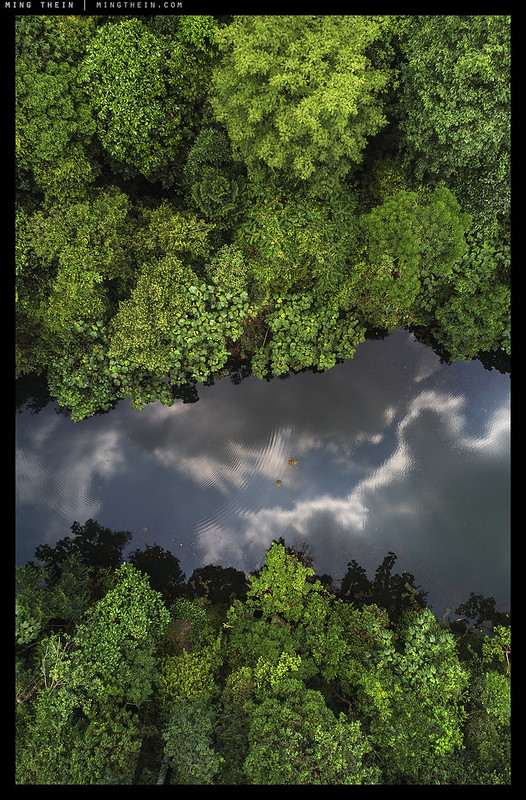
DJI_0063 copy

More months, more flying. I’ve come to believe that real appeal of aerial photography lies solely in one thing: the ability to see familiar places or objects or classes of objects from a drastically and otherwise physically inaccessible perspective. An image shot from a slightly elevated level with gimbal only slightly down is not that different to standing on a hill or building; an image shot from some altitude and entirely top down is at the other end of the scale. Most of the really interesting drone images I’ve seen or personally captured seem to fall into the latter category. We are coming dangerously close to the automated and the formulaic, here. Or are we?

[Read more…]

Frequently asked questions at street photography workshops

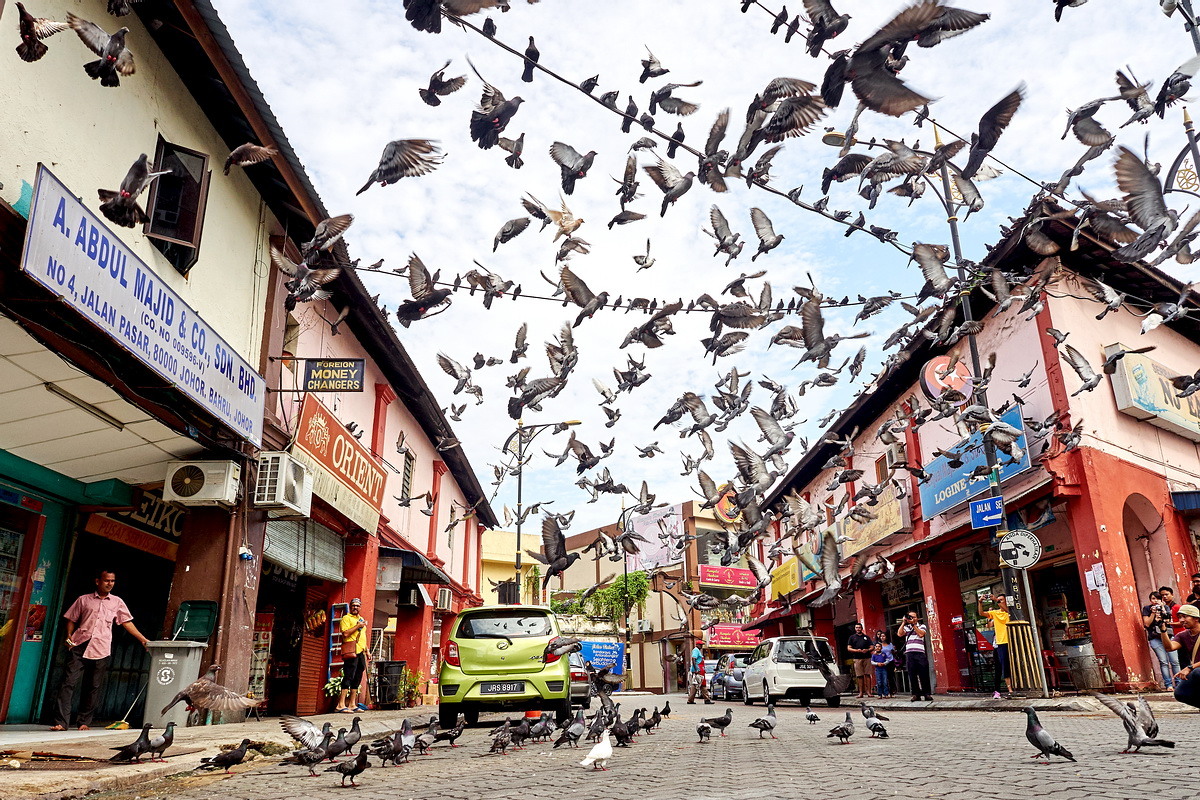
For the several years, I have conducted basic street photography workshops for Olympus Malaysia and it’s been a great joy for me to be able to share some tips and tricks on street shooting with my workshop participants. After each and every session, I am amazed at how, regardless of the diversity in participants, the same questions were asked repeatedly. Therefore, I thought I’d share some of these frequently asked questions and a few things I have learned during these sessions today. [Read more…]

E-shutter firmware for the Hasselblad X1D

X1D5_B0001422bw copy

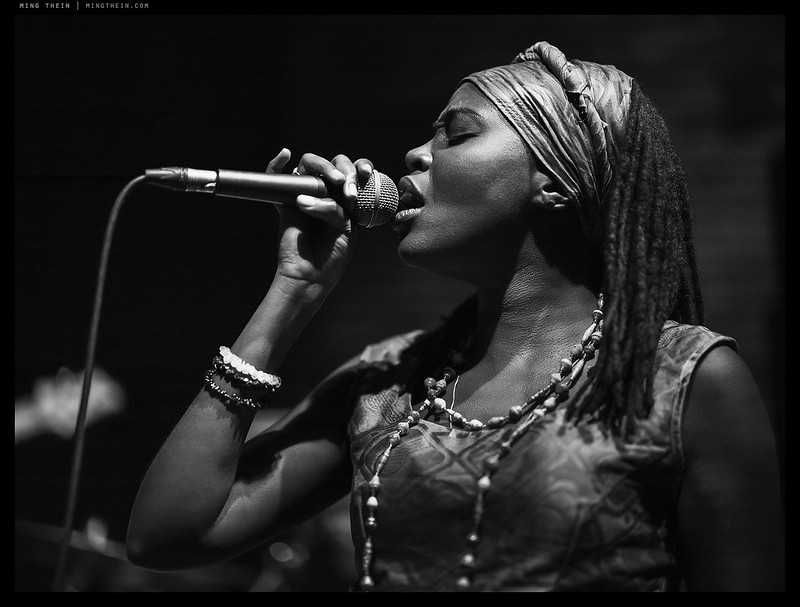
A couple of you guessed correctly in the comments of my earlier post – we’ve been working on an electronic shutter firmware for the Hasselblad X1D. Whilst we are still limited by the underlying sensor hardware*, there are significant increases to the shooting envelope afforded by an electronic shutter that is both completely silent and completely vibration free. Used within limitations, it can be a very useful tool. The above image was shot at a performance (without disrupting it) – on the X1D, and Zeiss 1.4/85 Otus APO-Planar**, with focus peaking on. Hit rate for critical sharpness was about 70-80% – which is to say, possibly higher and easier than focusing it on a native Nikon DSLR.

*The total sensor readout time remains at 300ms; if there is motion in the frame, you may see rolling shutter artefacts regardless of the shutter speed, especially under phased lighting such as LED or fluorescent. Similarly, flash is disabled as there is no way to sync with a 300ms rolling shutter. High ISO is limited to 3200 for the moment (sensor native).

**Yes, you read that correctly. I also used the 55 Otus and 2/135 APO.

The firmware also improves stability adds resizable focus points (35, 63 or 117 boxes) and can be downloaded immediately on the Hasselblad website here. Happy to answer any questions in the comments below, and a list of compatible lenses and a rough assessment of performance on 44x33mm – as so far tested by me – follows. MT

[Read more…]

Medium telephoto lenses for street photography

Given how widely practiced it is, its no surprise that street photography has many rules-of-thumb, and one of them has to do with focal lengths – the traditionally preferred ones have been on the wider end such as 28mm, 35mm and 50mm. However, I’ve often found myself using an unconventional focal length of 90mm. While the wider focal lengths may be more suited for environmental portraits and story telling, using a longer focal lengths allows me to break away from that stereotype and to create a more dramatic outcome.

In this article, I will explore why medium telephoto is my preferred focal length and the advantages of using tighter framing in street photography. It’s important to not that since I primarily shoot with Olympus OM-D E-M1 Mark II and M.Zuiko 45mm F1.8 these days, “medium telephoto” here refers to 90mm in 35mm terms.

[Read more…]

Photoessay: Hagia Sophia, part II

H61C-B0001860 copy

(continued from part I)

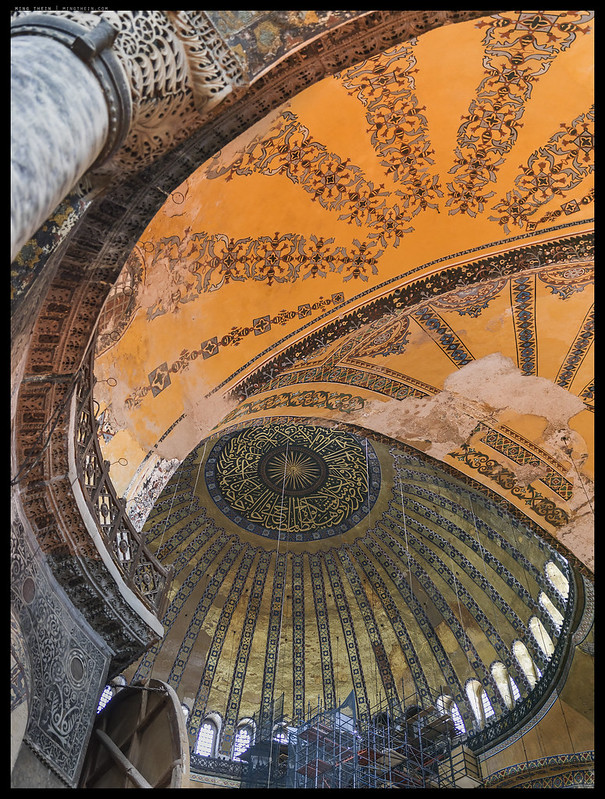
Hagia Sophia is not only an incredible piece of engineering and architecture – but also one of faith. Constructed in its current form between 532 and 537 AD, it has served as church and mosque (and now museum). Even today, you can’t help but be inspired, humbled and in awe of the work behind it; given its sheer size, it would still take a significant effort to build with modern construction techniques, and that’s excluding the huge amount of specialised handwork required for decoration and outfitting. I’m pretty sure very little of what we build today at that scale will still be around in 1500 years. The question of faith is quite interesting, too: the sheer resources and determination to construct something of that size places huge demands on the population of the city and its rulers. There was probably no economic return model, either – unlike say the European market towns of the Middle Ages. What impressed me the most wasn’t so much the sheer size or unsupported internal volume (though this was still significant) – but the detail given to every surface. Not all of it was completed by 537, and renovations and restoration have been pretty much ongoing non stop thanks to wars, earthquakes and simple entropy – but it’s nevertheless what makes it a truly colossal undertaking, and because of this I think of the renovations as much a part of the building as anything else. Other buildings like the Pyramids might be larger, but they simply don’t have the same kind of finishing requirements, or continual evolution and sense of being an active, alive part of history rather than merely a passive observer. (And I can’t think of anything modern except perhaps the Sagrada Familia that comes close, and even that is still not finished after more than a hundred years.)

I had the opportunity to shoot it for perhaps a few hours total; nowhere near enough time to do justice to the structure (and obviously not around the scaffolds, tripod restrictions etc.) – even so, there are so many images this photoessay will be split into two parts. Enjoy! MT

This series was shot in Istanbul with a Hasselblad H6D-100c, 50, 100 and 150mm lenses, and post processed with Photoshop and LR Workflow III (and the Weekly Workflow). Get more out of your voyages with T1: Travel Photography.

[Read more…]

Photoessay: Hagia Sophia, part I

H61C-B0001531 copy

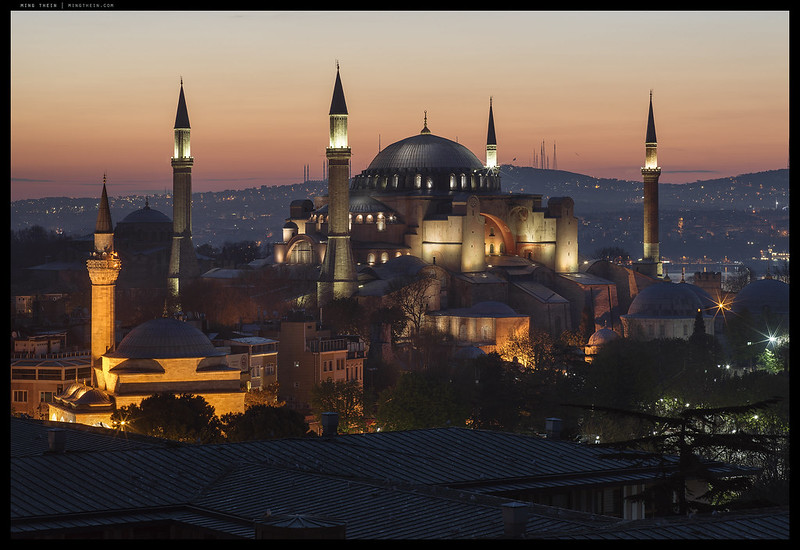
Hagia Sophia is not only an incredible piece of engineering and architecture – but also one of faith. Constructed in its current form between 532 and 537 AD, it has served as church and mosque (and now museum). Even today, you can’t help but be inspired, humbled and in awe of the work behind it; given its sheer size, it would still take a significant effort to build with modern construction techniques, and that’s excluding the huge amount of specialised handwork required for decoration and outfitting. I’m pretty sure very little of what we build today at that scale will still be around in 1500 years. The question of faith is quite interesting, too: the sheer resources and determination to construct something of that size places huge demands on the population of the city and its rulers. There was probably no economic return model, either – unlike say the European market towns of the Middle Ages. What impressed me the most wasn’t so much the sheer size or unsupported internal volume (though this was still significant) – but the detail given to every surface. Not all of it was completed by 537, and renovations and restoration have been pretty much ongoing non stop thanks to wars, earthquakes and simple entropy – but it’s nevertheless what makes it a truly colossal undertaking, and because of this I think of the renovations as much a part of the building as anything else. Other buildings like the Pyramids might be larger, but they simply don’t have the same kind of finishing requirements, or continual evolution and sense of being an active, alive part of history rather than merely a passive observer. (And I can’t think of anything modern except perhaps the Sagrada Familia that comes close, and even that is still not finished after more than a hundred years.)

I had the opportunity to shoot it for perhaps a few hours total; nowhere near enough time to do justice to the structure (and obviously not around the scaffolds, tripod restrictions etc.) – even so, there are so many images this photoessay will be split into two parts. Enjoy! MT

This series was shot in Istanbul with a Hasselblad H6D-100c, 50, 100 and 150mm lenses, and post processed with Photoshop and LR Workflow III (and the Weekly Workflow). Get more out of your voyages with T1: Travel Photography.

[Read more…]

Off topic: Presenting the MING 17.01

_8B41717 copy

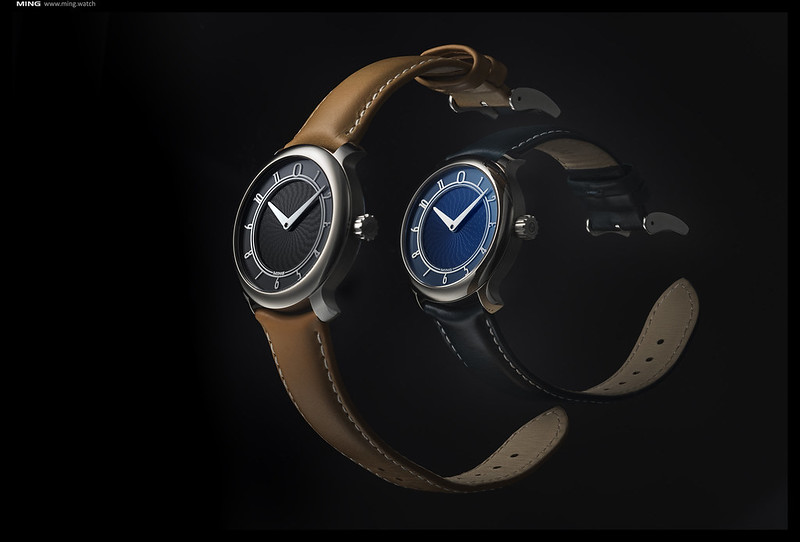
Many of you might be aware of my historical preoccupation with mechanical watches: it’s arguably what started me photographing seriously in the first place. Which is why after nearly two years in gestation (and just in this form) I’m very proud to present my latest project: the 17.01. It’s the first of a new line of watches designed by me, made in Switzerland and funded by a group of fellow collectors, but brought to life with the aid of individuals who’ve been in the industry for a long time. To avoid the bunch of cliches that are typically used during new watch launches: it’s an honest watch that tells the time reliably and has the benefit of experience behind it – nothing more, nothing less.

[Read more…]

Opinion: Sensible perspectives on film and digital in current times

_8040557 copy

Today’s post has been a long time brewing. The recent resurgence in the popularity of film is undeniable, to the point that there are both new brands and revivals of old ones happening on a fairly regular basis. It seems to be not so interesting for the big guys – look at the continual Fuji price increases as prime exhibit – but this has meant that there business is more open to the enthusiasts and those creating film specifically for the demands of those markets (such as JCH Street Pan). Anybody who gets off their comfortable chair to put money and action where their mouths are deserves a round of applause, in my book. Given all of this – it’s only natural that there have also been a lot of people rising to the defence of the medium, in the comments here, and sometimes much more aggressively over email. In the interests of saving much angst, it’s probably about time I make my personal position on film clear, and more importantly, the rationale behind it.

[Read more…]

Micro four thirds and insect macros (part II)

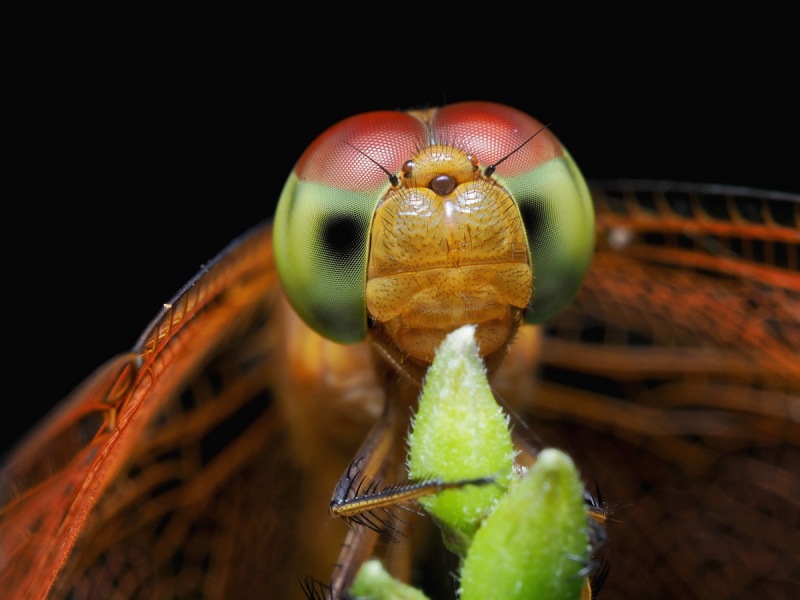
This is a follow up to the last article on insect photography but unlike in that, I will not discuss techniques today, but rather why I find the Olympus Micro Four Thirds system ideal for newcomers to photography, who want to explore the world of insect macro. [Read more…]