Quick review: the 2019 Fuji XF10

_Z728140

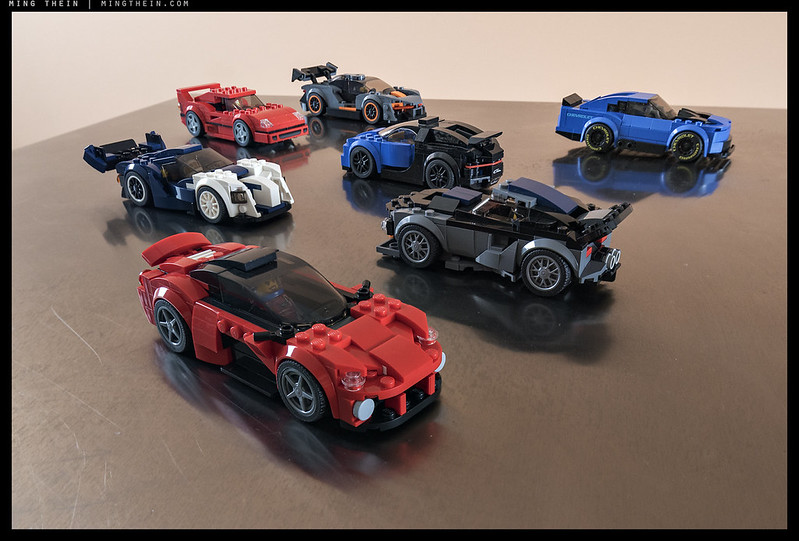
Some camera purchases begin with much research, planning and deliberation; not to mention angst and hand-wringing. Others begin at airport duty free with too much time on one’s hands, and subsequent serendipity in locating a second hand unit. This falls into the latter category. I make no secret to being a big fan of large sensor compacts for their versatility and image quality. I liked the original APS-C GR, the Coolpix A and to a lesser degree, the original RX100; the RX0II is in my bag. You see, I had some time to kill at Heathrow, and landed up playing with some things I wouldn’t have done so otherwise. Those touch-and-try display counters are dangerous things.
[Read more…]

On Assignment photoessay: Automated building

H61C-B0005175 copy

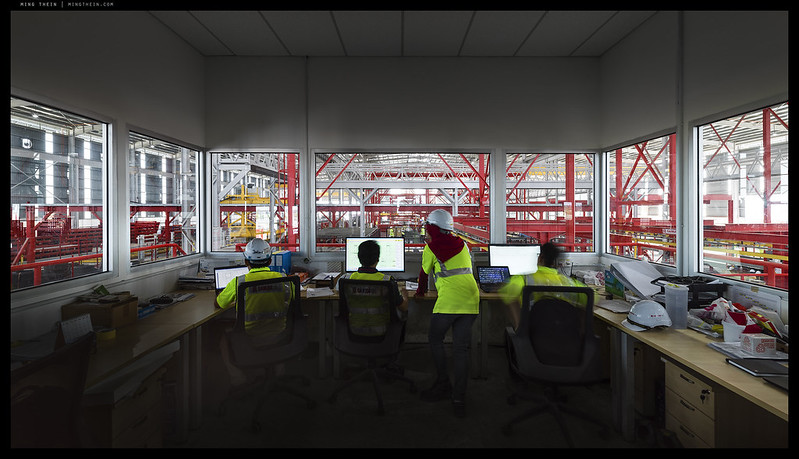
Some time back, I was given a rather interesting commission by a large local industrial conglomerate: to photograph their automated building facility. The factory uses an automated system to lay up wall, floor and ceiling units for modular buildings according to plan; these precast slabs are then simply installed on site, with reinforcement, connections, conduits for piping and electricals etc. all laid up and ready to go. The surfaces are finished during the production process, and unlike cast in place or brick-types, do not require additional plaster or skimming for a very consistent and precise finish. Interestingly, I was told that below a certain scale this is a more expensive process for building than traditional manual labor, but the overall quality is much higher (and it begins to make sense for large developments). From a photographic standpoint, the completed slab stockyard was very enjoyable – no end of shadows/ geometries/ strong colors/ details and all of the things that make for interesting vignettes and artistic experimentation; the factory was much more challenging due to the lighting.

[Read more…]

Computational photography: what ‘format’ is it?

IMG_5107b copy
Gratuitous header; moment of enlightenment.

One of the unavoidable buzzwords of the last couple of years has been ‘computational photography’. Besides sounding slightly oxymoronic and insulting to the ‘real’ photographer who presumably represents what they see and doesn’t attempt to manipulate objects into (or out of) being that aren’t physically there, the reality is that it’s unavoidable and has been unavoidable since the start of the digital era. Everything that requires photons to be converted into electrical signals and back to photons again (whether off a display or reflected off a print) – must be mathematically interpreted and altered in some form before output. It is not possible to avoid this: the Bayer interpolation, in-camera JPEG conversions, any file format saving, conversion to print color space – a ‘computation’ has to be performed to translate the data. Hell, there’s already an implicit computation in the analog to digital stage (although arguably photons are already ‘digital’ since they represent discrete quanta of energy, but that’s another discussion for another time). However, what I’d like to discuss today* is something one step further down that road, and following on from the previous posts on format illusions: in light of the broader possibilities of computational photography, what does ‘format’ even mean?

*I.e. excluding things like subject recognition for tracking, depth mapping and simulated shallow DOF transitions etc. for the time being; we’ll revisit that later.

[Read more…]

Photoessay: Of canopies and curves

_3502288 copy

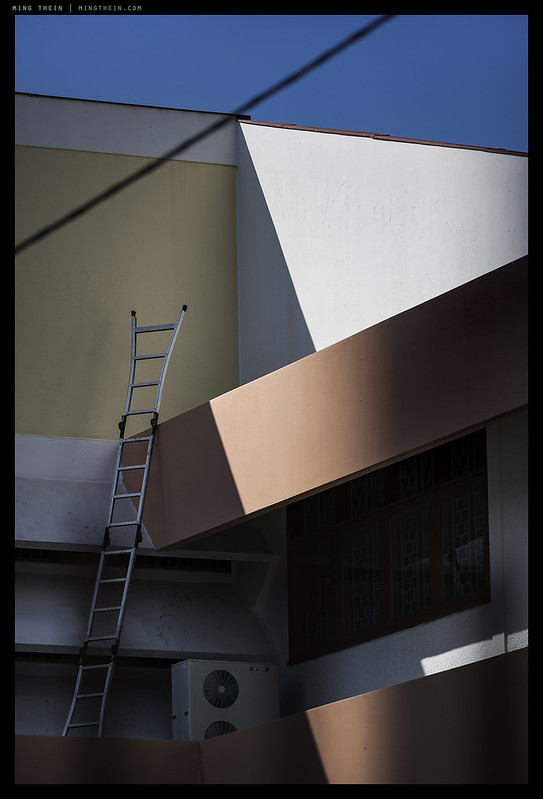
There’s a collection of rather strange but interesting architecture within the Lake Gardens in Kuala Lumpur; it was built at different times but is surprisingly coherent. None of it is used much, but at least it’s visually interesting. I presume it must be intentional that the curves somewhat mirror the canopies of the trees; it would be hard to think of any other reason to make construction this difficult (especially in a country not known for either exacting standards or quality builders). Can’t be good for the trees though, since the enclosed ones don’t seem to be doing quite as well as those out in the open. I had a sense of deja vu walking through here – the forms are oddly reminiscent of The Garden of Cosmic Speculation but without the massive earthworks, or the underlying cosmological references. Still, as a respite from the functionally boring boxes popular here, I’m not complaining. MT

This series was shot with a Nikon D3500 and AF-P 10-20/4.5-5.6 DX VR, and post processed with Photoshop Workflow III.

[Read more…]

OT: Hobbies and diversions

_3502180 copy

Photography for me started off as a diversion – just as it probably did for many of you. It was the ideal hobby for a busy corporate person: without predictable chunks of free time, looking for something piecemeal that could be satisfying in a ten minute gap or stretched to fill an unexpected day. It combined elements of unpredictability, reward for improvement in skill, as well as instant gratification (between instant results and gear lust). As I developed my skills and found other things I wanted too communicate, it turned into a tool to let me express ideas in a way that could be understood by others. And then it became both a calling and a career. But at some point in the last couple of years, it also became all-consuming – to the point that there was no longer any boundary between work and not-work, and thus between photography for creative fulfilment and photography (and related activities) for a living. Photography used to be a break that forced me to refocus my thoughts and allow for creative experimentation; inspiration would flow between different kinds of photography, different approaches for different subjects (i.e. client-subjects and personal-subjects) and different creative processes – photography and non-photography. But without the break: how does one you find inspiration?

[Read more…]

Photoessay: Colorlumpur

_Z706267 copy

Today, a slight disjointed set of wimmelbild-esque urban vignettes. I’m pretty sure at a subconscious level my attraction to these scenes was the variety of textures present in each; they also happened to make a good variety of test subjects in my usual preferred kind of hard light to to see if I’d managed to match the Z7’s SOOC JPEG curve tuning to the ‘normal’ workflow I’ve used up to this point. I think a little more work might be required to fine tune things, but there’s something quite attractive about how the lower midtones are being handled; the tonal richness is there. It was also a rare opportunity to shoot the old part Kuala Lumpur in this kind of light – I find it really makes you look at the city in a different way, especially if you can manage to disconnect a little and pretend you’re somewhere completely new. Turns out it isn’t that difficult to do if you haven’t been to this part of town in six months… MT

This series was shot with mostly a Nikon Z7, AF-S 70-200/4 VR and my color SOOC profile; there are a few other singles from other cameras I had sitting around that I could never quite coherently place in a set until now. Those were processed with Photoshop Workflow III.

[Read more…]

Back to basics: Turning an idea into an image

H51-B0017943 copy
Alienation and transience in Prague, I

Judging from the correspondence and comments flying around recently, it’s about time we did a refresher course here on the fundamentals of composition and image-making. As usual, there’s far too much obsession over hardware and not enough thought about what it’s actually being used for. This will be the first of several posts from the archives in this theme. That said, those people are unlikely to read these posts anyway…

Today’s article has proven to be another one of those significant challenges to write, once again for reasons of limitations of language to describe visual elements. On top of that, there are three conceptual leaps that have to be made: abstract idea, to descriptive language/ elements to characterise and quantify the specific unique traits of that idea so we conceptually understand it, then the final translation to a visual idea that can be understood by a wider audience than just the creator. There are really two questions at hand here: firstly, what is the idea, and secondly, what’s needed to convey it – and what do we need to avoid overdoing that results in dilution or confusion?

[Read more…]

Photoessay: A Japanese puzzle

_8509005 copy

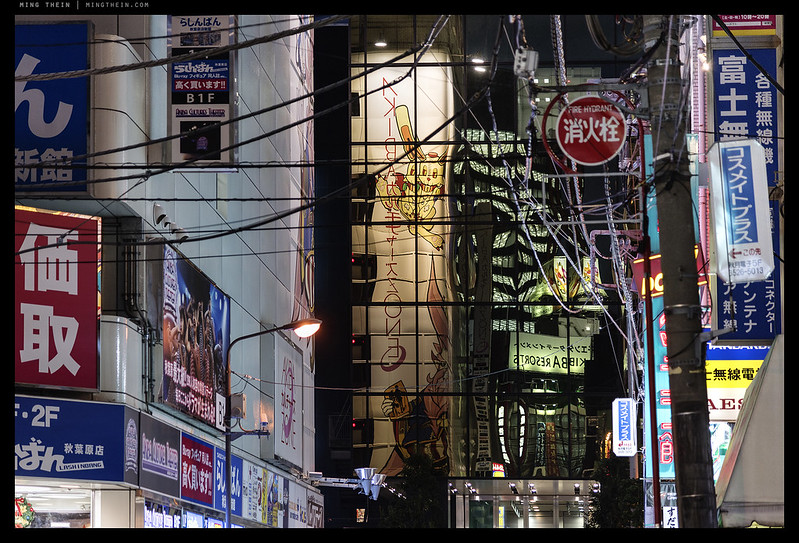
The precision with which Japanese cities come together has always felt like akin to a puzzle with a thousand architects – though things appear chaotic at first, there is a sense of underlying deliberation and precision probably borne from just how clean each individual element tends to be, and how neatly it slots into place whilst respecting the space of its surrounding neighbours. Perhaps it is a metaphor for Japanese society in a nutshell – which makes sense, given cities are a reflection of their inhabitants (and unfortunately this isn’t always a good thing). I have always been drawn to wimmelbild-type scenes like this in any city as they feel to capture a good sense of the essence and mood of a city without resorting to using distinctive landmarks for identification – if done well, you should know where you are without having to search for street signs… MT

This series was shot with a Nikon D850, 24-120VR and processed with Photoshop Workflow III – the images predate the custom presets, though these would have worked fine, too.

[Read more…]

Back to basics: Layering

_8B11643 copy

Judging from the correspondence and comments flying around recently, it’s about time we did a refresher course here on the fundamentals of composition and image-making. As usual, there’s far too much obsession over hardware and not enough thought about what it’s actually being used for. This will be the first of several posts from the archives in this theme. That said, those people are unlikely to read these posts anyway…

There are two obvious definitions to layering: the literal splitting of the frame into planes of different distances, and the metaphorical addition of implied meaning through careful choice of subjects and subject placement. Ideally, an image should employ both to reward the viewer on further contemplation and to provide a visual that isn’t overly literal or one-dimensional. Unquestionably, a degree of ambiguity is required too, especially when working with implied meaning. But how can we consistently make images that fire on all cylinders?

[Read more…]

Photoessay: Structured

_3503305 copy

As the the title suggests, the images in today’s post were curated by pattern, spatial frequency and something that probably has a formal architectural name that I’m not aware of – but tend to think of as ‘orders of complexity’. We got from rectangles to triangles and tetrahedrals; uniform to recursive; compound straight shapes to arcs and arches and on to organic forms. These forms take on a rhythm and get more complex, but then distill and simplify down into something more focused and massive. In a way, it feels a lot like the thought process behind designing a watch…

This series shot with a Nikon D3500, AF-P 10-20 DX VR, AF-P 18-55 DX VR II, AF-P 70-300 DX VR. SOOC JPEG.

[Read more…]