Inspirations from older cameras: The Panasonic TZ3

This will be the first in a series of photoessays dedicated to showcasing older equipment: don’t bury those dinosaurs just yet! In all seriousness, I hope it will both go do its part to convince you that the equipment doesn’t matter; and at the same time, show you my evolution as a photographer (to be the subject of a future article; one of the hardest things to write are the introspective, self-assessment genres).

First up is the Panasonic TZ3, a 2007 vintage compact ‘travel zoom’ camera that combined a very good 28-300mm equivalent zoom with a multi-aspect ratio sensor; I particularly enjoyed 16:9 mode on this camera. It shot fast, too – 4-5fps depending on the shutter speed, with large bursts and fast buffer clearing, making it ideal for capturing sequences of expressions. The lens-based stabilizer was also excellent. Its main handicap? A sensor that was dodgy at ISO 400 and above. I’m not 100% sure what happened to the camera, but I think it’s probably with my brother in law somewhere.

Enjoy! All images can be clicked on for larger versions, or EXIF information. MT

P1020707b copy.jpg
Moon and ships

P1040071b copy.jpg
The bits of the chicken we don’t eat

P1040305b copy.jpg
Paradise found

P1070363b copy
Sunset in the city

P1030661b copy.jpg
Heavy metal

P1020718b copy.jpg
Singapore by night

P1070145b copy.jpg
Koi pond

P1030744bw copy.jpg
The need for air conditioning

P1030208b copy.jpg
Race time

P1070114bw copy.jpg
A tudor story – in Malaysia

P1020998b copy.jpg
Advertising in your fridge

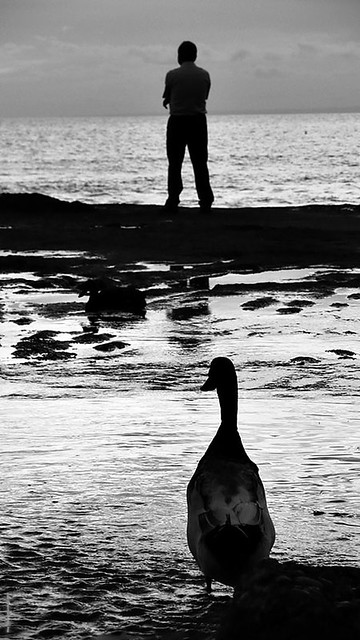
P1040458bw copy.jpg
Man and duck

P1070101b copy.jpg
Cameron highlands fog

____________

The inaugural mingthein.com photography contest closes 31 July 2012 – the more people entering, the larger the cash prize! Enter here

If you enjoyed this post, please consider supporting the site via Paypal ([email protected]) or via Ming Thein’s Email School of Photography – learn exactly what you want to learn, when you want to learn it. You can also get your gear from Amazon.com via this referral link.  Prices are the same as normal, however a small portion of your purchase value is referred back to me. Thanks!

Don’t forget to like us on Facebook!

Thoughts on Instagram and similar apps

IMG_0923b copy
No instagram, just careful exposure. iPhone 4

It seems that there are several distinctive ‘looks’ that amateur photographers recognize and try to replicate:

– High contrast black and white, sometimes with extra grain, usually all in focus
– Solarized/ retina-searing color, usually all in focus
– Partial bleach-bypass cross-processed color, usually with uneven depth of field or obvious lens flaws (Holga-with-expired-film)
– Very shallow depth of field of any sort
– The ‘miniature effect’ – pseudo tilt-shift

Originally, these styles were either conscious artistic decisions, or the consequences of not enough money and using expired film. They were chosen precisely because they looked unique – either because it was a difficult thing to execute well (using tilt-shift lenses, for instance) or because nobody else did it (cross-processing). The only exception to this is the high contrast black and white style, which was more a consequence of the limitations of the film chemistry at the time, and the requirements a picture of any recognizable description under difficult lighting conditions over fine grain.

However, now that we have a choice of how we process our images – and there’s sufficient latitude even in files from point and shoot cameras – a proliferation of either in-camera modes, filters or apps has taken hold of the photography industry, each claiming to be all you need produce one or all of the above styles.

I’ve got mixed feelings about this. On one hand, it takes the skill out of actually having to do any of these things (learn to process B&W properly, either chemically or in Photoshop, for instance); on the other, it does make crappy camera phone shots a lot more pleasant to look at. Until you’ve seen perhaps five, after which they’re all the same anyway – you might as well just have say five or ten random images that come out of the filter, regardless of what you actually shot – after all, you want your grab shot to look like a HC-B, right?

Yes and no. While filters and apps are great for improving the ease of getting the look you want and promoting the general democratization of photography, it’s also sad to see that the vast majority of people can’t tell the difference between a sloppily applied filter, an Instagram shot, and something that was actually done intentionally with full control. It’s even sadder to see that there are a lot of internet ‘photographers’ and bloggers who claim to be the best thing since sliced bread, but would be completely lost without Silver Efex or similar. Strip the artifice away, and what are you left with? A shot with extremely weak composition.

This isn’t so say that mobile phones are useless as capture devices; far from it. My previous article on using the iPhone as a camera is very much in support of it. If you learn the limitations of your device, you don’t need to resort to overcooked processing to mask its inherent limitations – blown highlights or blocked up shadows, for example. There are definitely undoubted advantages – instant connectivity, the ability to share and abundant abundant processing power all come to mind. Apps that come close to replicating the functionality and control of Photoshop – PhotoForge is a good example – make a very good argument for what an intelligent camera can do.

I’ve long maintained that all of these post-capture applications – be they photoshop or filters – cannot materially add to or take away from the composition of the image, because that’s the one thing that’s baked in at the time of capture. No matter how badly you botch the processing, if it’s a strong shot, it will always remain a strong shot whether in B&W, or color, or run through the Holgarize filter on your iPhone. However, the reverse of course applies: garbage in, garbage out. Composition aside, everything else is merely distraction. The problem is when the distraction portion is so great that the viewer can’t tell the difference, or worse, is drawn in at first by the distraction then disappointed by the lack of substance – I admit it happens to me a lot when browsing through images on flickr.

Put it this way: putting effort into learning how to compose properly will pay off in a much bigger way than putting effort into figuring out which button does what on the app. Or if you want to do both, then at least your image will have some substance to it.

If I sound a bit cynical and bitter about the whole thing, it’s not because I see people doing things with ease that I do the manual way – far from it; if there is an easier, faster workflow I’m usually the first to adopt it. What bothers me is that there are plenty of these ‘photographers’ who are not only ignorant about what they’re doing – ‘oh, I’ll use the Velvia filter’ – without actually knowing what Velvia is, or how it’s actually meant to look. Worse still, they get preachy about it and suddenly become an authority on slide film because they have an app or a button that says so. Never mind the fact that some of us shot commercial product jobs with multiple lights on slide, back in the day when you had to calculate guide numbers manually…man, I sound old.

Remember: it’s a tool, not a religion, and before you spout opinions, make sure you can back them up – it’s quite possible the other person you’re talking to has forgotten more than most people ever learn about the particular topic you’re talking about, but is just too polite to say anything about it. With that, I stand ready to be corrected. MT

____________

Visit our Teaching Store to up your photographic game – including Photoshop Workflow DVDs and customized Email School of Photography; or go mobile with the Photography Compendium for iPad. You can also get your gear from B&H and Amazon. Prices are the same as normal, however a small portion of your purchase value is referred back to me. Thanks!

Don’t forget to like us on Facebook and join the reader Flickr group!

appstorebadge

Images and content copyright Ming Thein | mingthein.com 2012 onwards. All rights reserved

Photoessay: Geneva monochromes with the Olympus OM-D

Some street photography from Geneva with the Olympus OM-D andy 45/2.8 Macro. I didn’t use the 45/1.8 (my choice for this kind of thing) because I was decompressing with my backup lenses after being on assignment…

Enjoy! MT

As usual, all images can be clicked on for larger versions.

_5004225bw copy

_5004177bw copy

_5004129bw copy

_5004200bw copy

_5004086bw copy

_5004146bw copy

_5004111bw copy

_5004102bw copy

_5004097bw copy

_5004088bw copy

____________

The inaugural mingthein.com photography contest closes 31 July 2012 – the more people entering, the larger the cash prize! Enter here

If you enjoyed this post, please consider supporting the site via Paypal ([email protected]) or via Ming Thein’s Email School of Photography – learn exactly what you want to learn, when you want to learn it. You can also get your gear from Amazon.com via this referral link.  Prices are the same as normal, however a small portion of your purchase value is referred back to me. Thanks!

Don’t forget to like us on Facebook!

Book review: Workers, by Sebastiao Salgado

_5A00513 copy

One of my favorite photography books of all time is Sebastiao Salgado’s Workers, published by Phaidon. There are various printings around – some hard cover, some soft; the one I have is soft cover with a dust jacket. I actually find these easier to read, but I do worry about the long term durability of the bindings. Groups of pages are stitched together then held in a glued matrix at the spine – this kind of binding has given me some issues in the past, if the quality of the glue isn’t up to par.

But I digress. The book is about the photographs, and to a lesser extent, the printing; not the binding.

Brazillian-born Salgado is a photojournalist who needs no introduction – his long and distinguished career has included a stint at Magnum before founding his own agency, Amazonas Images; he’s also a UNICEF ambassador and has worked with the UN, WHO and other NGOs. He’s one of the few people who’s even had a special edition Leica set produced for him, which I believe was eventually auctioned off for charity. (As of late, he also seems to be a Canon brand ambassador.)

_5A00525 copy

Salgado has a preference for megaprojects – photographic assignments that last for years, or decades, rather than mere days or weeks; his latest and final project, Genesis, begun in 2004 and supposedly nearing completion. Workers was shot on medium format and Leicas; he has recently switched to a digital capture workflow, however, physical negatives are made from the select files and printed the old-fashioned way – which undoubtedly contributes to how his images have such a unique look.

That look – best described as tonally rich, with well-executed dodge and burn in the highlight and shadow quarter tones – is extremely distinctive, and highly textural. You can usually tell at a glance if an image is a Salgado. What elevates Salgado into the great photographic pantheon is his ability to combine perfect presentation with perfect framing, dynamically strong lighting and emotionally arresting subjects – each image provokes an emotional reaction in the viewer – anger, hope, pity, awe, fear – sometimes all at once, even.

_5A00521 copy

The content of Workers is very much encapsulated in the title – it’s a look at the people who keep the great economic machine turning over; curiously, there’s very little seen of the ‘managers’ and clerks; you get the impression that he either doesn’t think they’re worth bothering with because they do little to no real work. The reality is probably a mix of that, and the fact that piles of paper and meeting tables in faceless offices don’t typically make arresting photographic subjects. What you do get is a very intimate view into the spectrum of physical labor – from sulfur mining with bare hands to the construction of the Channel Tunnel. Nothing is clean and industrialized, perhaps with the exception of an auto production line; Salgado’s images portray reality: dirty, oily, textured and visually stunning.

The book itself contains several hundred images in black and white – I don’t think Salgado has ever tried working in color – there’s very slight bronzing to the printing, but I personally feel it adds to the overall look and feel of the images. I’ve had the privilege to see original prints at the Tokyo Metropolitan Museum of Photography, and feel these are very authentic indeed. The density of printing is also excellent, with blacks being extremely deep and the rich tonal variations faithfully reproduced. There are also numerous foldout pages for larger subjects.

_5A00519 copy

If you have a single photojournalistic bone in you, Workers and his other books are highly, highly recommended – it’s a book I go to for both compositional and tonal inspiration. Even if you have no interest in photojournalism, it’s difficult not to be awed by Salgado’s images; they show us a side of the world that few get to see, but for some people forms their entire reality. And hopefully, that incremental understanding and tolerance we take away from seeing into the lives of others goes beyond the enjoyment of the images. MT

____________

If you enjoyed this post, please consider supporting the site via Paypal ([email protected]) or via Ming Thein’s Email School of Photography – learn exactly what you want to learn, when you want to learn it.

You can also get your gear from Amazon.com clicking through this referral link. It doesn’t cost you any more, but a small portion of your purchase value is referred back to me. Thanks!

Don’t forget to like us on Facebook!

Photoessay: Opening night at the World Gourmet Summit 2012

From the opening night party of the World Gourmet Summit 2012, held at Resorts World Sentosa, Singapore. Non stop eating, drinking and general merriment…and one Charlie Chaplain impersonator who grabbed my camera and pointed it at himself. Shooting and eating standing up simultaneously was tough! MT

This series was shot with a Leica M9-P, 35/1.4 ASPH FLE and 50/0.95 ASPH.

_M9P1_L1014993 copy

_M9P1_L1014874 copy

_M9P1_L1014937 copy

_M9P1_L1014866 copy

_M9P1_L1014984 copy

_M9P1_L1014927 copy

_M9P1_L1014877 copy

_M9P1_L1014924 copy

_M9P1_L1014996 copy

_M9P1_L1014980 copy

Photoessay: Polo time, part 1

From an afternoon spent at the Royal Selangor Polo Club as a guest of one of the players – one of the very few times I’ve shot sport, believe it or not. I once again come to the conclusion that I’ve got an insufficient number of millimeters, and you need rather high shutter speeds to get any sort of useable and sharp images out. Now that I’ve got a Panasonic 100-300 for my OM-D, I’ll have to try and get myself invited back again…MT

This series shot with the Nikon D700, D3100 and 28-300VR.

_7021220bw copy

_3100_DSC0166 copy

_7021334bw copy

_7020966 copy

_7021206 copy

_7020910 copy

_7020841 copy

_7020817 copy

_7021312 copy

_7021180 copy

_7020854 copy

_7020985 copy

_7021112bw copy

_3100_DSC0133 copy

Commercial work vs personal work vs experimentation vs development

_7049662 copy
This shot was the result of creative white balance use, and getting up early because I wanted to try it. Nikon D700, 28-300VR

One thing I’ve noticed since turning to photography full time is that the amount of personal work I do has greatly reduced. It’s not because I don’t have time to do it – on the contrary, I should have plenty more opportunities to sneak out and shoot for half an hour or an hour here and there – I think it’s because I’m starting to fall into the trap of complacency. Or perhaps I’m reaching a photographic saturation point of sorts.

_7042990 copy
This shot was the result of experimenting with large amounts of blu-tack to keep the watch in place for the shot. Nikon D700, 60/2.8 G Micro

I definitely still enjoy shooting, and I still feel the same rush when I nail the frame – what I’m missing is the feeling of wanting to go out and do it in the first place. I think a large part of it is because once you start running your own business, there are always more things you can be doing on the development front – either sending out feelers to potential new clients, following up on existing ones, or doing post processing from jobs past. And that doesn’t count this blog, either.

_7044748 copy
Up to this point, I’d never used dinner plates as props for watch photography before. Nikon D700, 60/2.8 G Micro

It’s odd, but equipment choice paralysis also seems to be a contributing factor. I’ve now got three systems – Nikon FX, Leica M and Micro 4/3 – each for a specific purpose, but also each with enough lenses to make a general purpose kit that I can comfortably go out and shoot anything with, be it an assignment or a holiday at the beach. And that doesn’t count the various compact cameras, either. Sometimes I honestly stand in front of the equipment cabinet before going out and feel plagued by indecision – even if I pick a system, which lens(es) should it go with? What do I anticipate shooting? What kind of look or style am I going for?

_3026245 copy
Divisive symmetry. One of those experiments. Nikon D3

Constantly planning shots and thinking about the end result does make you a more conscious and prepared photographer, but it also means that to some extent you’re either paralyzed by indecision, or micromanaging everything in your control to the point that it doesn’t become fun anymore. Perhaps the most frustrating thing is the feeling that you definitely have the wrong piece of equipment on you, but the right one is sitting in the cabinet at home. (At that point, the best thing you can do is figure out what you can do with what you’ve got and just shoot, but that’s an entire post on its own for another day).

_PM03858 copy
The ephemeral missing sushi. One of my favorite near misses – even though nothing is in focus, you can make out enough of the shot to know that there should be something between the fingers and on it’s way to the diner’s mouth. To my eyes, the blurriness of it all actually helps to reinforce the implied surrealism. Olympus E-PM1 Pen Mini, Panasonic 20/1.7 G

So what’s the upshot of all of this? Well, not doing as much personal work means that that the times you do shoot are mostly bridled by the requirements of your clients, and frequently do not result in you pushing the creative envelope – especially if you have conservative clients. The importance of photography for yourself is that it gives you time to experiment and develop your style and technique; without it, it’s too easy to stagnate into a creative rut and consequently land up being unproductive, or worse, uncompetitive. Not having an end client to please takes the pressure off you, and leaves you free to try things that you might not have time to do while on assignment, especially if time is tight and shot list is long – which it almost always is.

_M9P1_L1003657 copy
It was extremely dark, and empty – there were no people to fill the frame and provide context, motion and life – I didn’t even know if the shot would work technically, let alone aesthetically. I’m very pleased with the result, though. Leica M9-P, 50/1.4 ASPH

Inevitably, the early results of any experiment result in failure, or at best, partial success. Whilst this may not be acceptable in a client scenario, it’s a crucial part of the learning and development process – if you succeeded at something straight away, chances are you will develop that style far less that somebody who has to work at it. The reasons is down to understanding: assuming we don’t give up, humans understand things by doing them; the more times you have to try something, the more parameters you have to change, the more complete a picture you will be able to build up of how things work. This in turn results in better control over the end result, which of course culminates in better output.

_M9P1_L1009159 copy
Same with this shot – one of those surreal, but fun experiments that came to mind after passing by the gorilla for sale in a store window. Leica M9-P, Zeiss 28/2.8 Biogon

Without this experimentation, one stagnates creatively; it’s actually very obvious in the work of various ‘famous’ wedding photographers in this country. Many of them revert to the same portfolio of five or ten compositions and apply them to every shoot – which has several consequences; firstly, they are increasingly pigeonholed into a particular style or look, and that’s what clients expect; secondly, they can’t take the risk of doings something else because of client rejection; finally, they can’t break out of that way of seeing because they’ve been doing it for so long, and the creative process has atrophied. It’s a dangerous cycle.

_VL31_L1000565 copy
Reflections – another experiment. By this point in the shoot (shooting a launch gallery for the Leica V-Lux 3) – I’d had a whole card full of standard shots, but nothing different and interesting – there wasn’t any clean water in sight for a neat reflection, so had to try and make do.

What I always find interesting – and inspiring – is the work of serious amateurs; Flickr is one of the best places to see this. Whilst there are a good number of pros on the site (myself included), it’s also home to a lot of people who fall into the former category. Serious amateurs are in an enviable position – one I didn’t appreciate myself until recently – most of the time, they have the skills to be able to make the shot they want, the lack of pressure to execute it, and the lack of cynicism that stops them from trying things that might fail in the first place. The result is that browsing uploads from my contacts shows me a wide cross section of work; some of it really quite excellent and inspiring; some of it utter rubbish; however, the most interesting to me are the experiments that are near misses, or clearly out of style for the individual: you can almost see how the compositional mind of the photographer works, trying to adapt their old way of seeing to a new style. It’s almost like seeing how something is made.

_DL5T_L1000072 copy
If I hadn’t brought the D-Lux 5 along, and packed the light panels on a whim, then this series wouldn’t have happened, and I wouldn’t have known that it’s very possible to make commercial-grade food images with a compact.

I often get ideas through looking at other people’s images, period – especially of places I’ve been before, or things I’ve shot before. This gives you the ability to see things through the eyes of another person – and find what you might have missed from your own perspective, which in turn makes you want to go out and shoot again to try and perfect your vision once more, and capture the essence of that particular subject…

_M9P1_L1005830bw copy
Making do with the relatively slow f2.8 aperture of the 28/2.8 ASPH and the limited low light capabilities of the M9-P resulted in long shutter speeds, and the slight softening which lead to this rather surreal image – and the hidden gorilla in the shadows.

Creativity is an iterative process; one that must be built on, nurtured, and continuously pursued. Without it, it’s impossible to develop as a photographer. At the same time, it can’t be forced – something that a lot of people (our government included) don’t seem to understand; you can’t just throw time and money at it and hope that new ideas sprout. It doesn’t work that way – the inspiration, or the ‘ah ha!’ spark has to be there in the first place. The tough part is creating an environment for yourself in which you feel inspired and inclined to experiment. Stress, expectations and tight schedules aren’t conducive for creativity. But over-relaxation and laziness isn’t, either. It’s a tough balance, this one. And that’s one of the reasons why from now on, I’m going to make sure there are a couple of days a month – usually tacked on to the end of location-based assignments – which permit me to go off, explore and experiment. I highly recommend it. MT

If you enjoyed this post, please consider supporting the site via Paypal ([email protected]) or via Ming Thein’s Email School of Photography – learn exactly what you want to learn, when you want to learn it. Don’t forget to like us on Facebook!

Photoessay: Life in Kathmandu, part 3

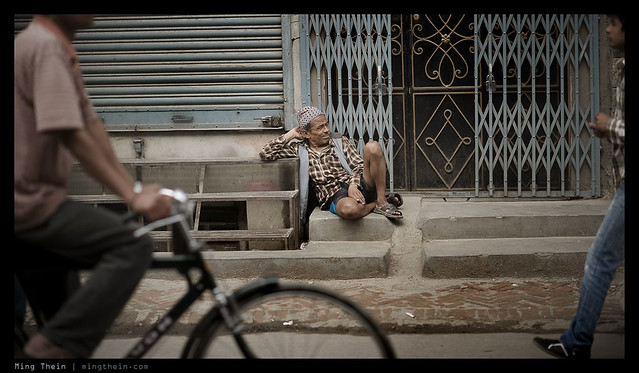
The final part of my ‘life in Kathmandu’ series. Shot in mid-2011 with a Nikon D700, 24/1.4 and 85/1.4 G. I think this set really epitomizes my ‘cinematic’ style of reportage. Enjoy! MT

_7031433 copy

_7031584 copy

_7032108 copy

_7032458 copy

_7032762 copy

_7035823 copy

_7032656 copy

_7030977 copy

_7030982 copy

_7030999 copy

_7031095 copy

Yours truly interviewed on radio again.

I was interviewed recently on photography for BFM 89.9 – listen to or download the whole podcast here. Damn it’s weird hearing your own voice recorded. MT

Photoessay: Kathmandu with the Fuji X100

A continuation of my Streets of Kathmandu series – this time in color, and shot with a Fuji X100. Sadly, the camera with the firmware at the time was too slow for tracking street work – I resorted to either trap focusing or hyper focal. Superb colors, though. Enjoy! MT

_DSF1553 copy

_DSF1421 copy

_DSF1409 copy

_DSF1454 copy

_DSF1558 copy

_DSF1443 copy

_DSF1538 copy

_DSF1402 copy

_DSF1516 copy

_DSF1463 copy

_DSF1453 copy

_DSF1405 copy

_DSF1551 copy

____________

Visit our Teaching Store to up your photographic game – including Photoshop Workflow DVDs and customized Email School of Photography; or go mobile with the Photography Compendium for iPad. You can also get your gear from B&H and Amazon. Prices are the same as normal, however a small portion of your purchase value is referred back to me. Thanks!

Don’t forget to like us on Facebook and join the reader Flickr group!

appstorebadge

Images and content copyright Ming Thein | mingthein.com 2012 onwards. All rights reserved