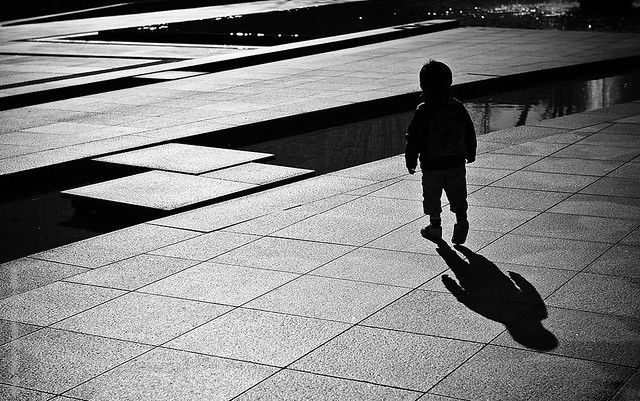
Photoessay: Summer in Geneva

The sun comes out in Geneva (apparently quite rare). A quick travel series using the Olympus OM-D and 45/2.8 Macro – my backup lens while on assignment.

Enjoy! MT

As usual, all images can be clicked on for larger versions.

_5004114 copy

_5004162 copy

_5004179 copy

_5004169 copy

_5004157 copy

_5004247 copy

_5004236 copy

_5004215 copy

_5004240 copy

_5004231 copy

_5004209 copy

_5004166 copy

____________

Enter the August 2012 competition: Compact Challenge – here!

If you enjoyed this post, please consider supporting the site via Paypal ([email protected]) or via Ming Thein’s Email School of Photography – learn exactly what you want to learn, when you want to learn it. You can also get your gear from Amazon.com via this referral link.  Prices are the same as normal, however a small portion of your purchase value is referred back to me. Thanks!

Don’t forget to like us on Facebook and join the Flickr group!

Inspirations from older cameras: the Nikon D3, part two

Part two of of this series. Part one was here.

_D3T1959 copy.jpg
Exclamation mark. D3, 300/2.8 VR

_3009420bw copy
Untitled. D3, 24-70

_3004568 copy.jpg
Rest. D3, 105VR

_3016416bw copy
Satay man. D3, 14-24

_3002491bw copy.jpg
Suggestions of a watch. D3, 105VR

_3035041 copy
Tour de Langkawi 2009. D3, 24-70

_3009669bw copy
The ‘hollywood’ shot. D3, 24-70

_3033285 copy
Virtual buildings. D3, 24-70

_3030120 copy
Blending in with nature. D3, 24-70

_3013397 copy
The proverbial rose. D3, 24-70

_3030678 copy
It can only be Fuji. D3, 24-70

_3035694 copy
Sunset. D3, 50/1.4 AFS

_3015669 copy
Children, Bangkok. D3, 14-24.

_3009001bw copy
Live retouching. D3, 24-70.

____________

Visit our Teaching Store to up your photographic game – including Photoshop Workflow DVDs and customized Email School of Photography; or go mobile with the Photography Compendium for iPad. You can also get your gear from B&H and Amazon. Prices are the same as normal, however a small portion of your purchase value is referred back to me. Thanks!

Don’t forget to like us on Facebook and join the reader Flickr group!

appstorebadge

Images and content copyright Ming Thein | mingthein.com 2012 onwards. All rights reserved

Inspirations from older cameras: the Nikon D3, part one

For me, the Nikon D3 is one of the cameras that revolutionized the way I shot – no longer was the camera the limitation in any way. It almost made things too easy; it forced me to rethink the way I shoot and stop trying to capture ‘everything’ in hyperreal detail and light (that was the previous challenge) and start moving myself to a more selective way of seeing. This was further reinforced by the Leica M8 that followed…

The D3 and D700 share the same sensor and much of their innards; the latter camera is still in service with me today, and used for things where I either don’t need the resolution or have to shoot under more demanding conditions than would be convenient with the D800E. And for anybody thinking of upgrading from an older DX camera, do it – you’re in for a treat.

Part one of the reinspiration is here. MT

_3031741 copy

Fushima-inarii, Kyoto. D3, 24-70

_3011285 copy

Hoan Kiem, Hanoi. D3, 70-300VR

_3036042bw copy

Rain. Kuala Lumpur. D3, 70-300VR

_3020442 copy

Scarlet ibis. D3, 70-300VR

_3014772 copy

Joy. D3, 24-70

_3009512bw copy

Detective in the city. D3, 24-70

_3004527 copy.jpg

Stamens. D3, 105VR

_3028702 copy

Imperial Palace moat, Tokyo. D3, 24-70.

_3028712bw copy

Shadows, Tokyo. D3, 24-70

_D3T0913 copy.jpg

Omega Dynamic. D3, 105VR

_3032473 copy

Daibutsu, Nara. D3, 24-70

____________

If you enjoyed this post, please consider supporting the site via Paypal ([email protected]) or via Ming Thein’s Email School of Photography – learn exactly what you want to learn, when you want to learn it. You can also get your gear from Amazon.com via this referral link.  Prices are the same as normal, however a small portion of your purchase value is referred back to me. Thanks!

Don’t forget to like us on Facebook!

Aspect ratios and compositional theory

_DL5T_L1000072 copy
Round plate in a square frame. The composition is ostensibly balanced, but a little randomization is created by the uneven lighting. Leica D-Lux 5

Aspect ratio: image width/ image height, with the long dimension first.

There are six common aspect ratios for cameras today (and as many as you like if you use the crop tool, but that’s another subject for another day):

1:1 – Square format, traditionally the realm of 6x6cm Hasselblads, and now popularized by various mobile apps.

5:4 – Large format and sheet film cameras, mainly 8×10″.

4:3 – Broadcast television and video used this aspect ratio, originally in 640×480 pixel resolution; small sensor cameras and compacts (which inherited early video CCD architecture) have been using this aspect ratio ever since. Four Thirds and Micro Four thirds are the larger consumer formats to use it; in medium format there’s also 645 which has the same aspect ratio for both film and digital.

3:2 – Double a movie frame; famously invented when Oscar Barnack rotated the film through 90 degrees and doubled the width of the frame to create the 24x36mm ‘full frame’ 35mm camera format. Almost all larger sensored DSLRs use this today.

16:9 – HDTV format; not a native aspect ratio for digital still cameras, but useful to provide a more cinematic feel to an image.

2.35/2.40:1 – Motion picture widescreen for feature films; very rarely used for still photography, and there are certainly no dedicated digital still cameras that offer exclusively this format. Not only is it extremely wide, if you’re cropping down from a 4:3 sensor you’re throwing away more than half of your image.

_7058625 copy
16:9 and cinematic. Note how the whole subject isn’t necessary for you to identify it. Nikon D700, AFS 85/1.4 G

Most modern cameras offer different image sizes in-camera, though all they really do is crop the top and bottom or sides. There are a few digital cameras that have sensors bigger than the lens’ image circle, which allow the diagonal angle of view for a given focal length to be maintained when changing crop; the main one of these is the Panasonic LX series of cameras. Put one of these on a tripod, slide the aspect ratio switch on the lens barrel and you’ll notice that the horizontal field of view gets wider than the 4:3 option, even though this is the native aspect ratio of the sensor. (It also means that you don’t suffer as much of a resolution decrease as you’d expect when changing aspect ratios). There is no point in shooting in another aspect ratio if all the camera does is throw away the extra pixels; you’re better off capturing as much information as you can at the time of shooting and then deciding later what crop would work best (assuming, of course, that you didn’t compose correctly at the time.)

_PM05696 copy
Filling the frame – native 4:3 of the Olympus E-PM1 Pen Mini, uncropped. 45/1.8

Now that’s out of the way, the aim of this article is to focus on understanding the compositional impact of different aspect ratios, and more importantly, how to pick the right aspect ratio for a given subject.

There are two ways to go about this – either you shoot only one aspect ratio (for instance 3:2 because you have a digital SLR) and arrange the contents of your frame around it, or you keep an open mind and match the aspect ratio to respect the subject and the dynamic of your composition. For instance, you might use a 1:1 square for a round object if you want a balanced frame, or you might use 16:9 and just focus on one curve if you want to highlight a particular detail in a cinematic manner – you never see movie shots showing the whole of Earth, for instance; it’s always a hemisphere with the sun rising in just the right place. This is not a coincidence!

_M9P1_L1002726 copy
(Nearly) symmetric, but visually balanced. The two are not the same thing. Leica M9-P

Most people will stick to the aspect ratio that is native to the camera, and either do nothing else, or crop to fit later. This is compositionally very, very sloppy – not only do you not get the best frame for the shape of your subject, there’s a very good chance that you probably won’t be able to fill the frame properly, either; 3:2 is a bit of a compromise aspect ratio that lacks the organic intimacy of 5:4 or 4:3 for portraits, or the drama of 16:9 for more expansive scenes.

_7051800 copy
Symmetry. Nikon D700, AFS 60/2.8 G

If you crop to fit the subject exactly, then chances are you’ll probably also land up with a very boring frame – this time, because the composition is too balanced. It seems counterintuitive, but the reality is that such compositions tend to use the space around the subject as a frame, and nothing else; there is no context, secondary subjects or points of interest added.

_7051447bw copy
Balanced, but not at all symmetric.

Don’t despair too much if this situation seems a bit damned if you do, damned if you don’t. The good news is that the one obvious remaining strategy usually works the best if done correctly: learn to fill your frame. For the most part, this is how I operate unless I know the final output (usually client work) is going to be of an certain aspect ratio, or if the scene itself just cries out for a certain shape.

What does filling the frame entail? Well, for one, you should be able to identify your subject – that’s composition 101. The remaining space should be filled with elements that either echo your subject, strengthen the story, or give the subject context. But in no way should they distract the eye from the primary subject. And each smaller element should be placed in the remaining space in a balanced manner.

_M9P1_L1006748 2 copy
The leading space of anticipation. Depth of field control and lighting make it clear what’s part of the foreground/ subject, and what’s part of the background and is context.

Here’s a visual example, using dots to represent compositional elements. The big red circle is the subject. The lighter color/ lower saturation dots are the secondary, tertiary and other filler.

First we place the main subject; where exactly in the frame is up to you, but in general, you leave leading space in front of the subject’s orientation if you want to create expectation (i.e. if a person is in profile, then put most of the space in front of their nose); trailing space if you want to create urgency or drama; or alternatively, let the supporting background elements dictate where to put the primary subject. For this example, let’s just pick an arbitrary starting location – all dots look pretty much the same. I’m going to pick 3:2 as our example aspect ratio.

3-2 composition example primary

Now the secondaries – put them in the white space, with balanced space around them to create both an isolating/ highlighting frame, and a buffer zone between them and the main subject so they don’t get confused or overlapped:

3-2 composition example secondary

And the same for the tertiaries.

3-2 composition example tertiary

The other filler rests wherever it rests, but just make sure that distracting elements – say a huge point highlight like the sun, in this case, the blue dot – don’t go in distracting places.

3-2 composition example fluff

There – a balanced composition. There isn’t any odd empty space that doesn’t have an equivalent mirror along a given horizontal or vertical (or for that matter, any other orientation) axis. Let’s try this again for 1:1 and the same size original subject:

1-1 compositional example complete

And finally, 16:9:

16-9 compositional example complete

Notice how for the 16:9 example I didn’t show the whole subject; you don’t always need to. Just so long as you can identify what the subject is, you’ll be fine. In fact, it’s quite easy to imagine this particular frame as say a sunrise over the edge of earth (using our previous example) with a fleet of spaceships in the foreground…
(Oops, I’m getting carried away. Perhaps I should take up modern art, or perhaps designing colorblindness tests.)

More seriously there’s a secondary subject intersecting the main subject – does it matter? Only if the intersection causes some perceived division of either, e.g. a horizontal line running through somebody’s head would tend to suggest decapitation to a view, and consequently looks rather odd for a portrait. However, there are also examples where such intersections or juxtapositions can create interesting images in their own right.

Notice how each composition is balanced, but you still instantly know what the main subject is.

Want to make this exercise more realistic? Okay, let’s go back to 3:2 and do one for wide angle, with emphasized perspectives and huge relative size differences in dots:

3-2 wideangle

And another one for telephoto, with the foreground and background dots blurred to replicate shallow depth of field:

3-2 telephoto

Once again, notice how your eye is still drawn to the main subject in each composition. Of course, real life isn’t quite this easy; subjects aren’t dots, the white spaces aren’t always uniformly white, and most of all, you almost never have any control over where to put anything else except your main subject; most of the time it’s about waiting for the secondaries to move, or you moving (for immobile subjects) to get the vantage point that works. The only time you have full control is when you’re shooting still life in a studio.

_7026879 copy
Note how the empty space serves to highlight the (highlighted) subject. Nikon D700, AFS 85/1.4 G

One interesting thing I’d like to bring up at this point is our very restricted use of verticals – almost always, verticals are in more square aspect ratios; 3:2 is about the slimmest vertical aspect ratio you see. You almost never see 16:9 or anything wider; my theory is that it’s both to do with how our eyes natively see, and how content is presented. Since human eyes are horizontally tandem, we tend to see in a wider horizontal field than vertical; a tall image forces our eyes to scan up and down its length, which means that such images are difficult to compose because they must be broken into zones with complimentary transitions for the composition to work. (The same is not true for horizontals, because we can take in the image at a glance and instantly recognize the surrounding areas as context.)

_7021180 copy
The secondary subject reinforcing the primary, empty space creates anticipation. Nikon D700, AFS 28-300VR

Making things worse, almost all displays are geared towards this ergonomic trend – as makes sense – when was the last time you saw a vertical monitor? Furthermore, we get subconscious reinforcement through other means that horizontal is the way to go: most cameras only have one grip, and even those that have two make shooting landscapes much easier than portraits; even after we shoot, when we view the images on a monitor, the verticals take up about a third of the space, but the horizontals nearly the entire area – obviously, the larger ones look better, so we tend not to be as influenced by the vertical images…

_7007311 copy
We needed to have at least one vertical in here. Nikon D700, Zeiss ZF 85/1.4 Planar

However, with practice, you’ll learn to see this way – and with more practice, you’ll learn to see this in the instant you identify what you want to have as your main subject; along with lighting, focus, exposure etc. Fortunately, visual pattern recognition is something that human brains are very good at, even for things that have zero fixed quantitative parameters. For example, we know something is a dog even if it’s in a different orientation, different size, a line drawing or a photograph, or a stylized graphic silhouette. Try programming a computer to do this, and you’ll soon realize both how impossible a task quantifying the distinguishing parameters of a dog is, and what an amazing piece of hardware our brains are. (If you disagree, what marks the difference between a wolf and a dog? Or a dog and a cat? Or a dog and a cow? They’re all four-legged with tails and pointy ears.)

Once again, it comes down to practice. The more you shoot and the more images your brain sees, the faster it becomes at picking out compositions in a live scene that work against ones that don’t. I know that isn’t a concrete answer, but shouldn’t you be out shooting now? 🙂 MT

____________

Visit our Teaching Store to up your photographic game – including Photoshop Workflow DVDs and customized Email School of Photography; or go mobile with the Photography Compendium for iPad. You can also get your gear from B&H and Amazon. Prices are the same as normal, however a small portion of your purchase value is referred back to me. Thanks!

Don’t forget to like us on Facebook and join the reader Flickr group!

appstorebadge

Images and content copyright Ming Thein | mingthein.com 2012 onwards. All rights reserved

Inspirations from older cameras: The Ricoh GR Digital III

The original Ricoh GR-Digital was a cult camera that was known for two things: its ability to produce interest B&W JPEGs directly out of camera that heavily resembled Tri-X, and it’s incredibly configurable user interface. A fixed 28/2.5 equivalent was just part of the package. To be honest, I never really got along with this camera; I bought it solely because I loved the way it felt, and hardly used it.

Somehow, I found myself finding the 28mm focal length more and more intuitive as I matured as a photographer, to the point where I would see 28mm frame lines around every scene suspended in midair. The ideal compact was therefore an easy choice – I acquired a Ricoh GR-Digital III in early 2010, and used it heavily – occasionally as a primary camera, too. Although it still produces excellent out of camera B&W JPEGs, its sensor has fantastic tonality in both color and monochrome, and conversions are best done in ACR to make the most of the files.

Suffice to say it’s given me a surprisingly large number of keeper and portfolio-grade images over the years. MT

_0010470bw copy
Self portrait

_0010675bw copy
Construction break

_0010881 copy
The Number 15 to Trafalgar Square

_0012640 copy
Inside your watch

_0012141 copy
After the rain

_0011326 copy
Untitled

_0011792 copy
There is a divergence in the force

_0012572bw copy
Untitled

_0010122 copy
Chinese New Year

_0011998bw copy
Bulbs

_0012213bw copy
Stubbornness

_0010522 copy
Reflections on people

____________

The inaugural mingthein.com photography contest closes 31 July 2012 – the more people entering, the larger the cash prize! Enter here

If you enjoyed this post, please consider supporting the site via Paypal ([email protected]) or via Ming Thein’s Email School of Photography – learn exactly what you want to learn, when you want to learn it. You can also get your gear from Amazon.com via this referral link.  Prices are the same as normal, however a small portion of your purchase value is referred back to me. Thanks!

Don’t forget to like us on Facebook!

Inspirations from older cameras: The Canon SD780IS/ IXUS 100 IS

Early 2009. I’d never really thought of the importance of the camera you have with you up til this point – I’d always gotten around that by always carrying the best camera I had. There were, however, situations where that wasn’t really suitable, so I went in search of a compact camera. I was taken by the overall stealthiness of the Canon IXUS SD780IS; it was matte black, rounded, and had a load of flush buttons. 33-100 wasn’t an ideal focal length range, but it did start somewhere reasonably acceptable for street photography and covert documentary work. It also produced a reasonably nice file that was easy to work with in photoshop. My mum inherited this camera and refuses any attempts on my part to give her an upgrade. MT

_780_IMG_2368b copy
Steampunk

_780_IMG_0282b copy
Liquid

_780_IMG_0457b copy
Abandoned

_780_IMG_0348b copy
Untitled

_780_IMG_0084b copy
Truth is found at the bottom of a glass

_780_IMG_0111b copy
Paradise found

_780_IMG_0444b copy
Sunset

_780_IMG_2668bw copy
Untitled

_780_IMG_2440b copy
Autumn in London

_780_IMG_2258bw copy
One of my favorite portraits ever

_780_IMG_2326bw copy
Untitled

_780_IMG_0743bw copy
All about the eyebrows

____________

The inaugural mingthein.com photography contest closes 31 July 2012 – the more people entering, the larger the cash prize! Enter here

If you enjoyed this post, please consider supporting the site via Paypal ([email protected]) or via Ming Thein’s Email School of Photography – learn exactly what you want to learn, when you want to learn it. You can also get your gear from Amazon.com via this referral link.  Prices are the same as normal, however a small portion of your purchase value is referred back to me. Thanks!

Don’t forget to like us on Facebook!

Inspirations from older cameras: the Nikon D200, part two

Part two of the Nikon D200 inspirations. Part one was here. MT

_N213335 copy.jpg
Bluetit

_M212668bw copy.jpg
Under the arch

_M201785 copy.jpg
Traffic flow

_N212539 copy.jpg
Hanging

_M227348 copy.jpg
Kinkakuji in summer

_N215298 copy.jpg
Town crier

_M217573bw copy.jpg
Suggestions of life

_M216645 copy.jpg
Observing the observatory

_M229484 copy.jpg
Pea soup

_N205510 copy.jpg
Echoes

_N211097 copy.jpg
The underside of a ladybug

_M222758 copy.jpg
Fingers

_N206589 copy.jpg
Distorted reality, II

_N206051bw copy.jpg
In a hurry

____________

The inaugural mingthein.com photography contest closes 31 July 2012 – the more people entering, the larger the cash prize! Enter here

If you enjoyed this post, please consider supporting the site via Paypal ([email protected]) or via Ming Thein’s Email School of Photography – learn exactly what you want to learn, when you want to learn it. You can also get your gear from Amazon.com via this referral link.  Prices are the same as normal, however a small portion of your purchase value is referred back to me. Thanks!

Don’t forget to like us on Facebook!

Inspirations from older cameras: the Nikon D200, part one

A pair of D200s replaced my D2H as my workhorses – I shot extensively with these cameras from around mid 2006 to early 2008, until I got a D3. They managed to improve on the low light performance of the D2H, while increasing resolution by a considerable amount; popularly thought of as ‘D2x lite’. The only issue was mediocre AF, and at best average battery performance – I’d have to carry five or six to feed the pair of monsters on a heavy day of shooting. MT

_N213150bw copy.jpg
The end of all things

_N215552bw copy.jpg
Movement

_N210302 copy.jpg
Morning fog

_M228918bw copy.jpg
Animals with personality

_N201289 copy.jpg
Fighting, passing on a message, embracing…only they know.

_M200464b copy.jpg
Lange 1815.

_M224254 copy.jpg
Mosaic

_M230553 copy.jpg
A Parisian in London

_M225091 copy.jpg
Alone

_N211182 copy.jpg
Time for a rest

_M226879 copy.jpg
Japan in a lantern

_N205015bw copy.jpg
Traffic

____________

The inaugural mingthein.com photography contest closes 31 July 2012 – the more people entering, the larger the cash prize! Enter here

If you enjoyed this post, please consider supporting the site via Paypal ([email protected]) or via Ming Thein’s Email School of Photography – learn exactly what you want to learn, when you want to learn it. You can also get your gear from Amazon.com via this referral link.  Prices are the same as normal, however a small portion of your purchase value is referred back to me. Thanks!

Don’t forget to like us on Facebook!

Inspirations from older cameras: the Nikon D2H, part 2

The second part of the inspirations series in tribute to the Nikon D2H…part one was here. MT

_MT70034bw copy.jpg
The ballet

_MT87548 copy.jpg
Out of place and time

_M103023 copy.jpg
Snowy echoes

_MT52800bw copy.jpg
Column wheel chronograph

_M101532bw copy.jpg
Fur

_MT76744 copy.jpg
Cattle egret

_MT25431bw copy.jpg
Something’s going on in the square

_MT98674bw copy.jpg
Wondering where to put it

_MT87306 copy.jpg
Temple spires

_MT90350 copy.jpg
A bird portrait

_MT68786 copy.jpg
Dragonflies

_MT51257bw copy.jpg
London through the gap

____________

The inaugural mingthein.com photography contest closes 31 July 2012 – the more people entering, the larger the cash prize! Enter here

If you enjoyed this post, please consider supporting the site via Paypal ([email protected]) or via Ming Thein’s Email School of Photography – learn exactly what you want to learn, when you want to learn it. You can also get your gear from Amazon.com via this referral link.  Prices are the same as normal, however a small portion of your purchase value is referred back to me. Thanks!

Don’t forget to like us on Facebook!

Inspirations from older cameras: the Nikon D2H, part 1

Possibly one of the most unpopular Nikons ever, and certainly the most derided professional DSLR – the D2H had a mere 4.2MP (the 0.2 mattered, when you only had 4.2 in total) when launched in 2004; its direct competition, the Canon 1D Mark II, had double that at 8MP. Worse still, Nikon’s much feted low noise JFET LBCAST sensor was in fact extremely noisy and pretty much unusable at ISO 1600 and above; an updated version – the D2Hs – actually had very good high ISO performance, but by then, the damage was done.

What the camera did do well was be insanely responsive – from the lighting-fast AF system, to 40ms shutter lag and hair trigger buttons, to 8fps shooting, it just felt alive. It was also a great teaching tool, precisely because it was so unforgiving of exposure or WB errors that you just had to learn to get it right, or not get a useable shot at all. When you did get it right, the D2H punched way above its pixel class – it resolved about the same amount of detail as my 6MP D70, and had very clean, high-acuity pixels; the unique sensor architecture also made for a beautiful tonal response, which doesn’t seem to exist in any camera today – the closest we get is the Leica M8 and M9.

I shot nearly two hundred thousand frames with this camera – picking the best few is going to be tough, so we’ll do this in a few parts. Part one is here, and part two follows. Enjoy! MT

_M102965 copy.jpg
Blue mountains

_MT52393 copy.jpg
Early watch work

_MT84782 copy.jpg
Scarlet ibis

_MT40136 copy.jpg
I wish it were real

_MT87546 copy.jpg
Umbrellas in Bangkok

_MT18359bw copy.jpg
Rush hour in London

_MT42076bw copy.jpg
It’s suspicious because the book is upside down

_MT98459 copy.jpg
Swords

_MT15600 copy.jpg
Inside the Arc de Triomphe

_MT77109 copy.jpg
Crowned pigeon

____________

The inaugural mingthein.com photography contest closes 31 July 2012 – the more people entering, the larger the cash prize! Enter here

If you enjoyed this post, please consider supporting the site via Paypal ([email protected]) or via Ming Thein’s Email School of Photography – learn exactly what you want to learn, when you want to learn it. You can also get your gear from Amazon.com via this referral link.  Prices are the same as normal, however a small portion of your purchase value is referred back to me. Thanks!

Don’t forget to like us on Facebook!