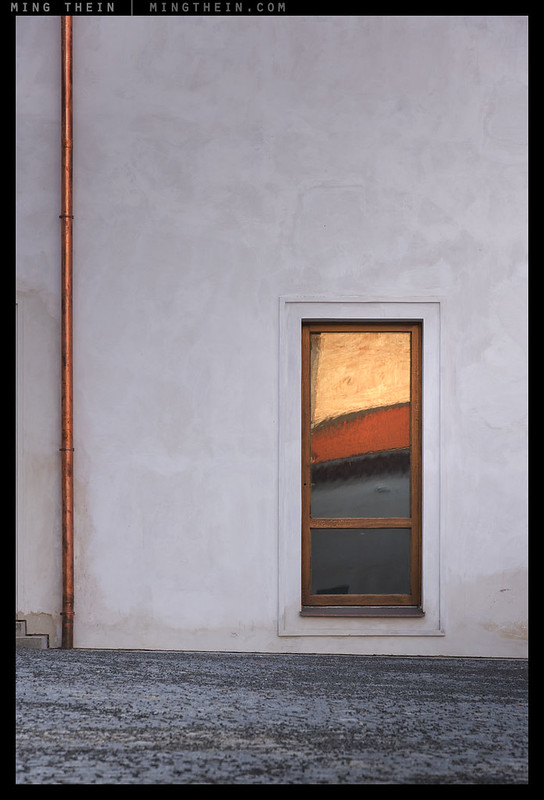
Inner fire
In the spirit of the subject and post, no words today. All images are available as Ultraprints on request; please shoot me an email if you’re interested. Enjoy! MT
reframing the world one picture at a time
Inner fire
In the spirit of the subject and post, no words today. All images are available as Ultraprints on request; please shoot me an email if you’re interested. Enjoy! MT

Choices, choices. Image from the Apple Malaysia homepage.
At some point early on in the digital era, the world decided that Apple was the way to go for serious photographers and graphics professionals – granted, there were applications that were Mac-specific or just worked so much better on a Mac than a PC that it made sense. I’m sure some of that was image and hubris, too pricing be damnmed, the hardware just looked sooo much cooler. There was also a point in not so distant history at which we weren’t held hostage by Apple’s upgrade options, either: you could buy the base version, and upgrade certain components yourself if you were handy with a screwdriver, which brought the cost of performance down. The cost of ownership wasn’t (and still isn’t) as bad because Macs maintain their resale value – probably because the new machines are never much cheaper than the old ones. But a) does Apple hardware still make sense for photographers, and b) if so, what hardware?
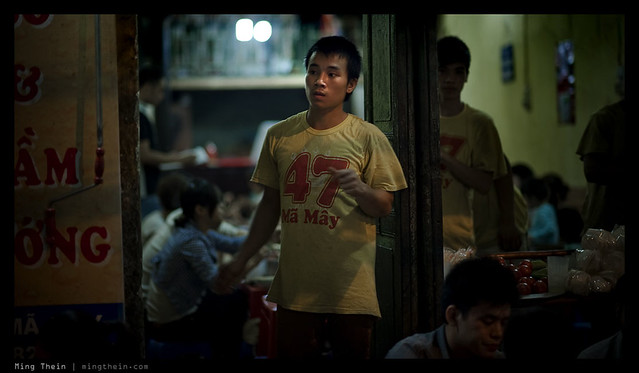
Due to popular demand, I’m taking bookings for the second session of the Cinematic Photography Masterclass with Carl Zeiss in Hanoi (click here to book and for more details) It will run from 28 July to 2 August and follow the same format as the first one – hope to see you there! MT
After the jump, a few snippets of thought from previous Masterclass participants…

Right after ‘what should I buy’ comes this series of questions: why don’t you use Lightroom? And what does Photoshop give me that Lightroom lacks? Moreover, is your workflow applicable to Lightroom? I received a slew of emails recently following the release of LR CC/6 and realised I’ve never really answered any of these questions. Today we’re going to fix that.
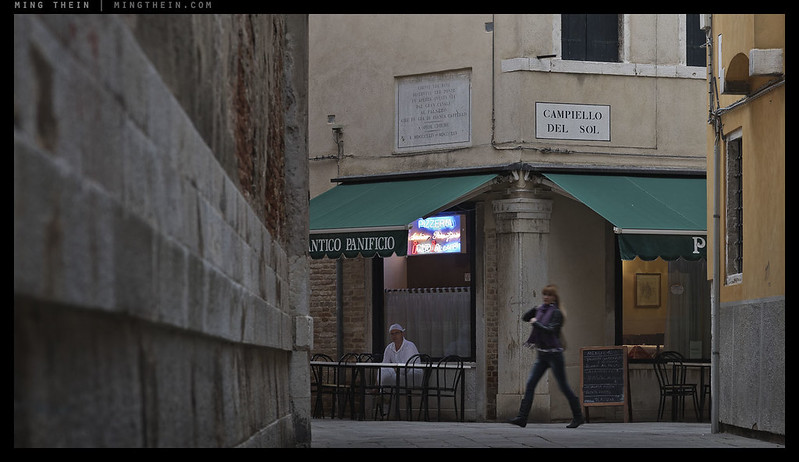
Tribute to an American painter
I’ve never really talked much about what is probably the most important process in photography other than conceptualisation and capture/execution of the image itself. Even though it isn’t directly part of the photographic process, curation has probably the greatest impact out of all of the possible things you can do to control the way your work is perceived. Coincidentally, we’ve been running for a little over three years now, and this is also post number 1,000 – excluding the reposts. At an average length of 1,500 words per post (and many well into 4,000-5,000 range, plus the mammoth Camerapedia), that means there’s around ~2,200,000 words of primary content on the site, not including the comments. Not bad considering an average paperback is in the 100,000 word range. I suppose it’s therefore also somewhat fitting (and perhaps a touch ironic) that I celebrate being prolific by discussing the opposite. It seems it’s simpler to do it than talk about it, but equally important to do so in order to understand why…
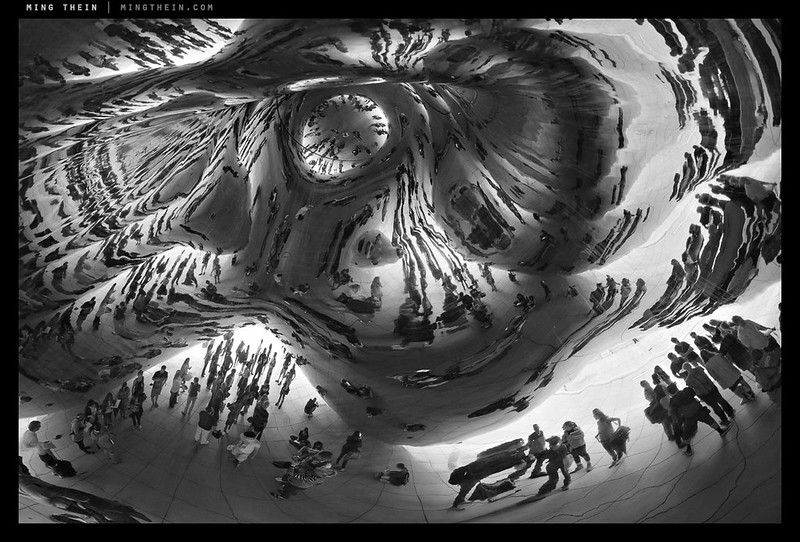
Only one place in Chicago…
I think without reflections, urban photography and architecture would be pretty boring. There’d certainly be no opportunity for the sort of ‘continuity errors’ that make for interesting juxtapositions and impossible geometries; the kind of thing that adds depth, complexity and texture to a scene. These were shot in Chicago with a GR, 645Z, D810 and Otus 85 and processed with PS Workflow II. Enjoy! MT
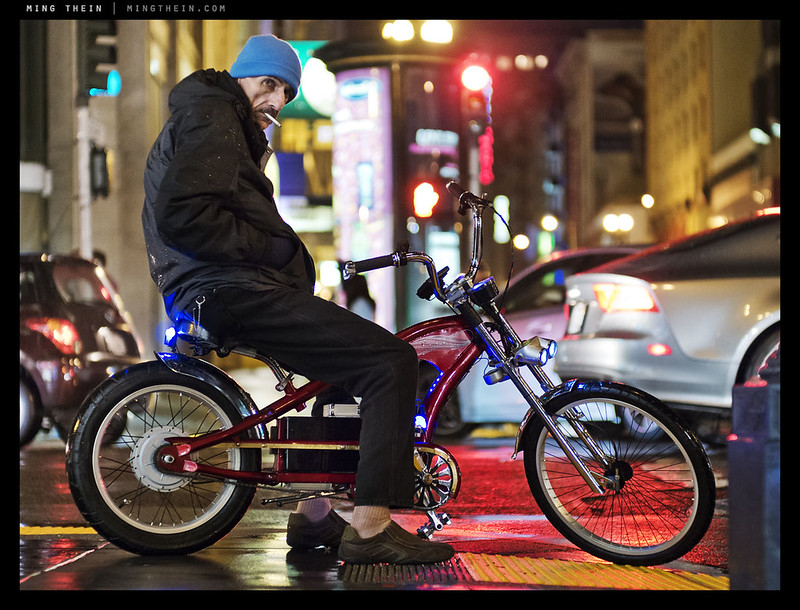
Chopper
In part one we looked at why images of people fascinate us, and the nature of portraiture. However, this only covers half of the possibilities for ‘images of people’: instances where the subject is a conscious and cooperative part of the process. What about the other possibility: where the subject is not aware the photographer, or only aware of them in the most fleeting of moments before any conscious self-image or rapport can be built?
The images in this article are all candid: unposed, unplanned, and with subject unaware. Even if it appears they may be looking at the camera in certain situations, it is a result of conscious timing, observation of something behind me, and/or a particular moment rather than catching a long stare. None of them showed any acknowledgement of my presence before or after the shot was taken, which was actually quite surprising in some situations. They saw me, but my presence didn’t register.
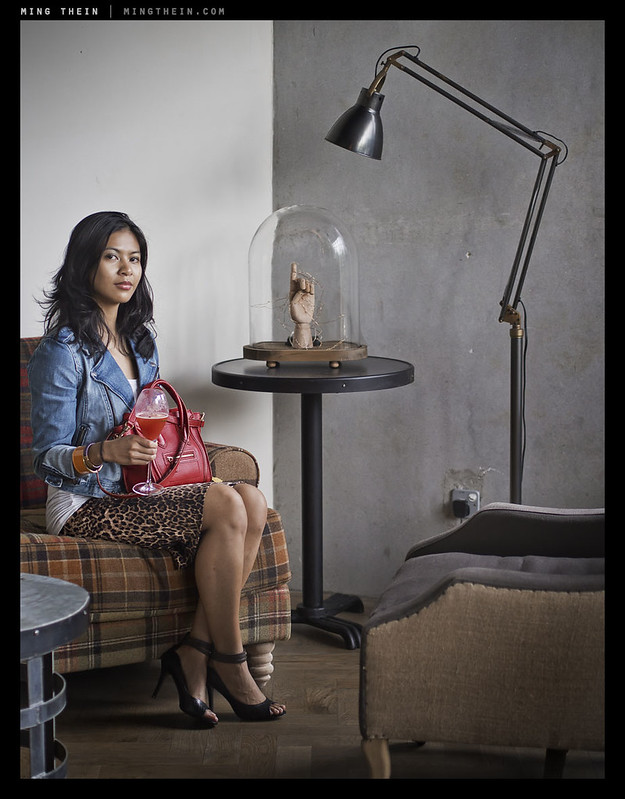
Style
Today’s article is the first of two parts focusing on portraiture and human subjects as the focus of an image. It is not something I’m normally associated with because I rarely choose to show my work here; it doesn’t mean I don’t engage in it for personal reasons (which are usually not shared, obviously) or professional ones (I do have clients whose mainstay subjects are primarily human). Whilst curating images for a recent assignment, I had a couple of little personal epiphanies which I’d like to share with you all.
The fifth Masterclass will also be the first specialised one, on a topic I’m frequently asked to teach: the cinematic style of photography. It will take place in Hanoi, Vietnam, from 21-26 of July 2015 inclusive. Better still, Zeiss has agreed to loan us with a suitcase of lenses*. As usual, the Masterclass is limited to just 8 participants, so please confirm early to avoid disappointment; read on to make a booking and for further information. For all of you who’ve been asking me for a Masterclass in Asia, here’s your opportunity 🙂
18/4 Updates: Taking standbys for the first session, second session (28/7-2/8) now open for booking. *More importantly, Zeiss have updated me on lenses – the really good news is we will get the 1.4/55 and 1.4/85 Otuses in Nikon and Canon mounts, along with the 2/135 APO and 2/28 Hollywood Distagon… 🙂 [Read more…]
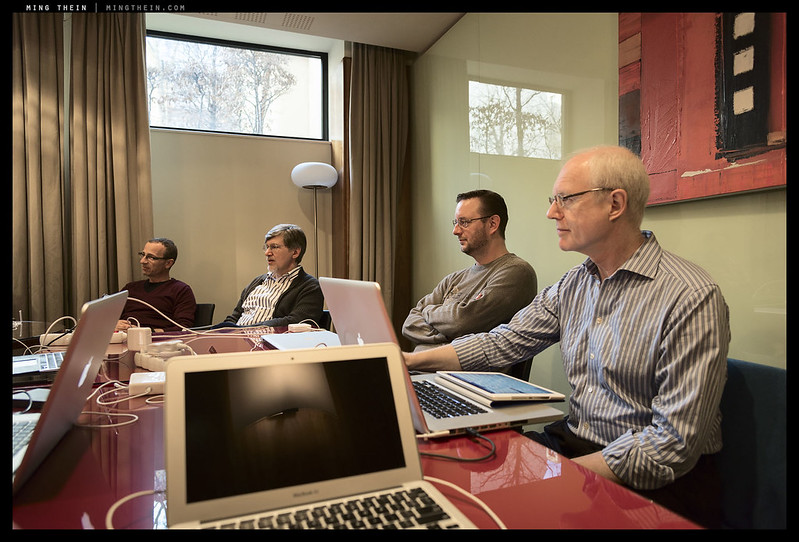
At the start of March, eight enthusiastic photographers gathered in Prague for the fourth Masterclass. Four even enjoyed the previous ones enough they came back again for a second or even third round 🙂 As has become a tradition, what follows is the Masterclass Report, which is not so much a bunch of photographs of people photographing and holding cameras, but instead a showcase of the participants’ work. Read on to see the kind of images we make.
Behind the scenes videos

If you enjoyed the content, please consider  -ing or subscribing - thanks for your support!

