The Maybank Photography Awards 2012

maybankphotoawards

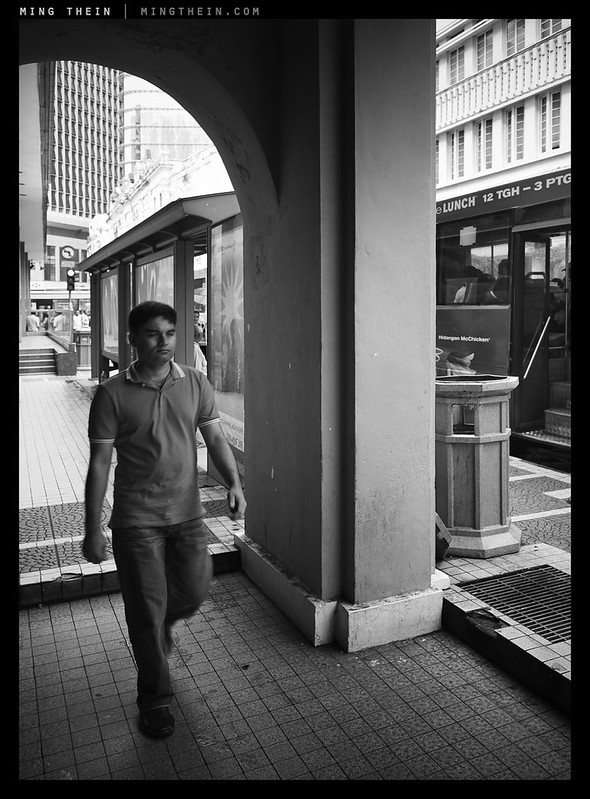
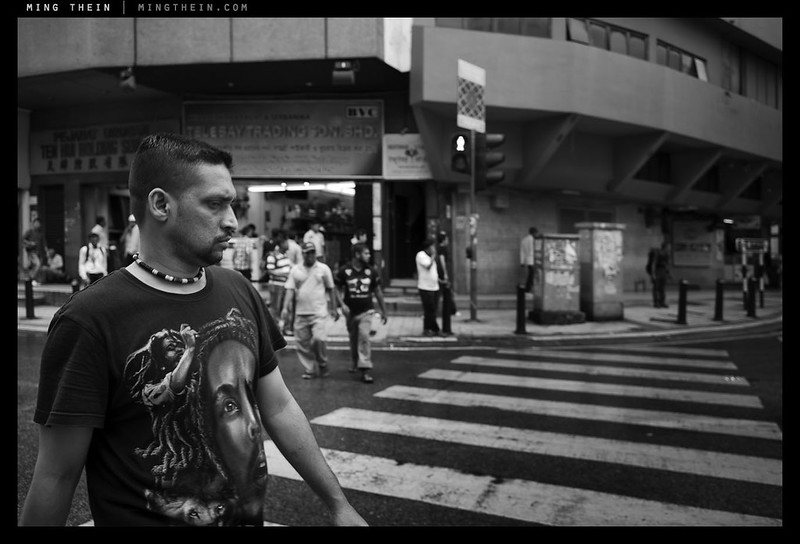
For readers living in Malaysia, I want to bring to your attention the 2012 Maybank Photography Awards – entries run from 3 September to 31 October, and there are five categories to enter around the theme of Being Human: Photographer of the year (portfolio), Street, Studio, Landscape and Press. Each category has an award, plus a bonus for People’s Choice. The contest is sponsored by Maybank, Leica, Profoto and HP; prizes include a total of RM16,000 cash, a custom Leica X2, a Profoto D1 Studio kit and a HP Designjet Z2100.

You’re probably wondering why I’m posting about this instead of entering it – aside from the rather impressive prizes, there are two other reasons. Firstly, I’m serving as head judge (Thorsten Overgaard is one of the category judges), so it would be more than a little nepotistic. 😛

More importantly, unlike almost every other photography competition where submission of an image constitutes transferral of rights to the image to the contest organizer, image ownership and IP remains with the photographer, with a limited license granted to the competition organizers for use related to the competition only. I wanted to create a contest which people would be comfortable submitting their best images to – this would obviously not be possible for the professional and press categories with anything involving rights transferral.

There are also no restrictions on when the images have to be captured, which means stuff from the archives is okay – we recognize that it isn’t always possible to produce your best work on demand in a short space of time, (even true pros have trouble with that; opportunities don’t always happen when you want them to) so long as the image fits the theme. So start shooting, looking through your back catalog, and sharing the competition with your friends. My personal advice with all competitions is not to enter until you’re sure you’ve got something you can’t improve on; don’t settle. If in doubt, enter at the end near the closing date, because you never know what you might shoot between now and then.

Finally, stay tuned for the results of the mingthein.com August Compact Challenge to be announced tomorrow! MT

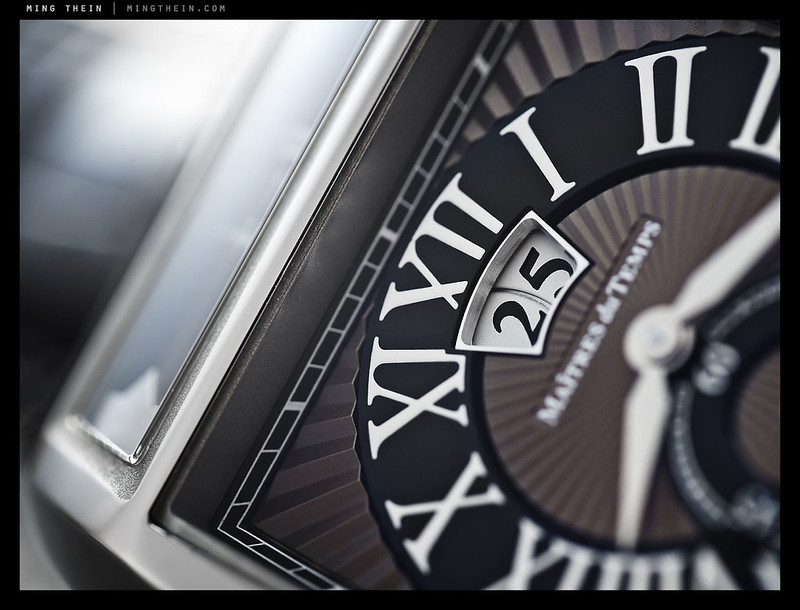
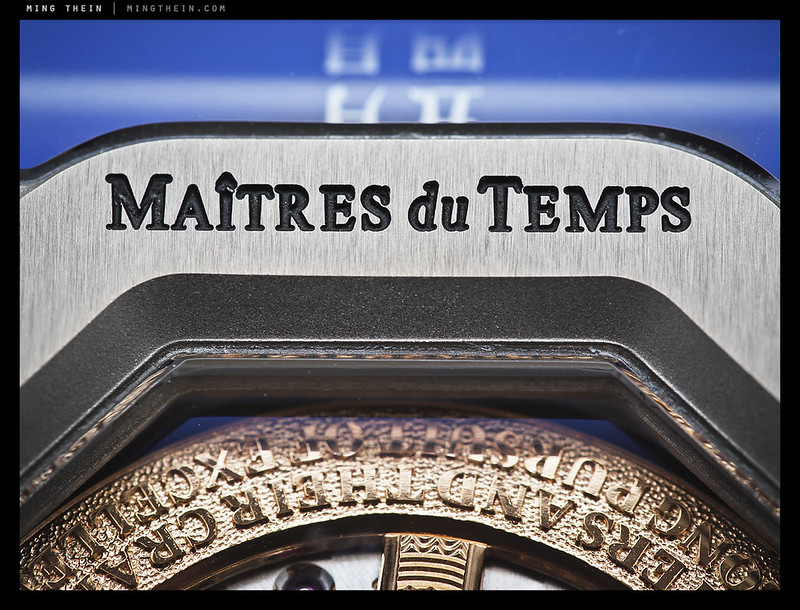
*You may recognize some of the placeholder images. They’ll all change once we’ve received entries worthy of shortlisting.

____________

Visit our Teaching Store to up your photographic game – including Photoshop Workflow DVDs and customized Email School of Photography; or go mobile with the Photography Compendium for iPad. You can also get your gear from B&H and Amazon. Prices are the same as normal, however a small portion of your purchase value is referred back to me. Thanks!

Don’t forget to like us on Facebook and join the reader Flickr group!

appstorebadge

Images and content copyright Ming Thein | mingthein.com 2012 onwards. All rights reserved

Review: The Panasonic Leica 45/2.8 Macro-Elmarit for Micro Four Thirds

_8015681 copy

One of the earliest lenses for the Micro Four Thirds system, the Panasonic Leica 45/2.8 Macro-Elmarit (hereafter known as just the 45 for the rest of the article) is also perhaps one of the most underrated. It acquired a reputation of being a slow focuser; that might have been as much due to the bodies available at the time as the lens mechanics. (The lens actually has a range limiter switch).

_8015687 copy
Square hoods are a very typically Leica thing – just look at the S lenses. Oddly, the hood for the 25/1.4 is much deeper than this one.

Something I’ve always wondered was whether this was a Panasonic design, a Leica design, or a mix of both. Turns out that the answer is that the optics are designed by Leica in Germany; they’re assembled at Panasonic’s factories in Japan, and QC’d by a Leica rep who’s based there. Regardless, the optics are pretty darn superb. The lens is very useable even wide open at f2.8; unsurprisingly, for a macro lens, every focus distance is sharp. Performance is slightly worse in the corners than the center, but even this slight degree of blurring is removed by stopping down to f4 or smaller.

_8015675 copy
The midsize lens balances well on the Olympus OM-D.

Don’t go any smaller than f11 though, because after this point there is clear diffraction softening visible on the OM-D’s sensor; fortunately due to the short real focal length, you’re unlikely to need to do so even if you require extended depth of field. f2.8-f8 is a good practical working range.

I’m pleased to report that the lens is also very low in chromatic aberrations of any kind; lateral CA is almost completely absent, and longitudinal CA (spherochromatism or ‘bokeh fringing’) is mild, and completely gone by f5.6. This suggests that the lens’ design is almost entirely tele centric, and definitely optimized for the M4/3 mount as we don’t see any evidence of purple fringing.

_5001658 copy
Study of a pepper, 1. OM-D and 45/2.8 Macro

Bokeh is a slightly different story. Whilst bokeh is superbly smooth and uniform with no ghosting or double images if you have enough distance between subject and out of focus area, there is a very odd transition zone immediately on either side of the focal plane that is both slightly nervous and displays bright edges on highlights. It’s worse at larger apertures and complex/ busy subjects. If you stop down to f5.6 or so, this property goes away.

_5004410 copy
Hublot Big Bang Ferrari Chronograph Magic Gold. OM-D and 45/2.8 Macro

Outside of macro work, in truth, a 45/2.8 as a multipurpose lens just isn’t that exciting because it’s a bit in no mans’ land. You have the equivalent FOV of 90mm, but none of the bokeh separation; it isn’t a sufficiently compressed perspective to be exciting or let you do something compositionally different with all-in-focus telephoto shots. In fact, it feels more like shooting with a 60-75mm lens in that regard. Yet you can’t be lazy with your shooting discipline, because it really needs about 1/100s for a consistently sharp image – providing you’ve got either one of the stabilizers off.

_5001346 copy
Maitres du Temps Chapter Two Tonneau. OM-D and 45/2.8 Macro

As with all of the Panasonic lenses on Olympus bodies, you have a choice of which stabilization system to use – either the moving-lens based system, controlled by a switch on the side of the lens, or the sensor-shift type built into the body. I did quite a lot of testing comparing the two systems – unfortunately there’s no real quantifiable way of doing this – and didn’t see any significant benefit of one over the other. As with all IS systems, you need to turn it off if the shutter speed is high enough otherwise you will actually land up with double images. The threshold is probably around 1/500s. I think this is because it can’t react fast enough to the high-frequency vibration caused by the shutter, but I’m sure there are others far more knowledgeable on this subject.

_5001978 copy
Doctor Zoidberg. OM-D and 45/2.8 Macro

There’s a second switch on the side of the barrel, and that’s to control the focus limiter. Like all M 4/3 lenses, manual focus is entirely fly-by-wire; I personally don’t like these systems because they don’t give you enough tactile feedback and lack hard infinity or near limit stops. Although I prefer to use manual focus when shooting close focus so I can set my magnification before focusing, this is one of the few lenses where I have no choice but to rely on autofocus.

_5004225bw copy
Street scene in Geneva. OM-D and 45/2.8 Macro

It will hunt a bit if you have the lens set to full range and aren’t focusing on a close subject; but for the most part, focusing is actually pretty swift if only small changes in focus distance are required. Switching on the limiter – near focus of 45cm – makes things much faster. (The full limit is 25cm, which gives 1:1 magnification and about 10cm or so of working distance from the front of the lens). I haven’t actually tried it on the E-PM1, but I don’t expect focusing performance to be much worse.

_5004606 copy
Hublot Ultra Thin. OM-D and 45/2.8 Macro, ambient light on location.

The 45 works much better as a dedicated macro lens, and will serve handily as a portrait lens in a pinch; however, my general purpose pick would be the Olympus 45/1.8. Image quality is superb; there’s a biting sharpness and fine microcontrast structure you’d expect from a lens with this price tag and implied heritage. It definitely renders in a very different way to the Olympus 45/1.8; I suppose the best way to describe it would be tight and controlled.

_5004169 copy
Geometry. OM-D and 45/2.8 Macro

It’s a midsize (for M 4/3, but about the same size as a 50/1.8 for any SLR mount) lens which balances well on an OM-D, with or without the optional grip. Sadly, the only metal parts in this lens appear to be the lens mount and screws; whilst the plastics are of high quality and the build quality and tolerances are tight, it just doesn’t have the feel of a precision instrument in the same way that say the Leica M or Zeiss ZF lenses do.

_5001673 copy
Study of a pepper, 2. The full size shot shows some nervousness of bokeh around the focus transition zone near the stem. OM-D and 45/2.8 Macro

I would personally prefer a bit more control over my depth of field in a macro lens. Having said that, the extended depth of field offered here can be useful for certain applications where you need to get a large amount of the subject in focus. Perhaps the forthcoming Olympus 60/2.8 macro will better suit my requirements. However, it does offer some advantages over my normal setup – at maximum magnification, it covers a 17x13mm frame, against 36x24mm for full frame, and without the need for any extension tubes and the accompanying degradation in quality*. I can also see some uses for it for macro video, though the fly-by-wire focus ring may prove to be a bit of a problem.

_5002024 copy
Grilled wagyu done right. OM-D and 45/2.8 Macro

*Extension tubes add another set of mount interfaces into the optical system; any slight deviations in planarity, or looseness, or give, will result in the optics being slightly off-axis. This is visible as softening, coma or astigmatism.

For now, though, the Panasonic Leica 45 retains a place in my bag, especially for use as part of my backup system on watch shoots. Don’t let the plastic exterior fool you: optically, this is a serious lens, and in the grand scheme of things it actually represents fairly good value for money despite being one of the more expensive lenses in the M 4/3 system. MT

The Panasonic Leica 45/2.8 is available from B&H and Amazon.

____________

Visit our Teaching Store to up your photographic game – including Photoshop Workflow DVDs and customized Email School of Photography; or go mobile with the Photography Compendium for iPad. You can also get your gear from B&H and Amazon. Prices are the same as normal, however a small portion of your purchase value is referred back to me. Thanks!

Don’t forget to like us on Facebook and join the reader Flickr group!

appstorebadge

Images and content copyright Ming Thein | mingthein.com 2012 onwards. All rights reserved

_5004452 copy
Hublot Diver’s Chronograph. OM-D and 45/2.8 Macro

Photoessay: The immigrants of Kuala Lumpur

Developing countries have just as much, or perhaps even more immigration going on than in developed ones. For starters, border controls are a lot more lax; as is visa enforcement. At a recent visa amnesty, the Malaysian government granted over 600,000 national identity cards – representing permanent residency or citizenship – to previously unregistered foreign workers or illegal immigrants. Put that in perspective for a moment: that’s nearly 2.5% of the people in the country who were previously operating under the radar. What do they all do? Well, mostly provide cheap labor or services for the jobs the locals don’t want to do; and as the immigrant community expands, many have started businesses providing a bit of home for their own people, too.

There’s one part of Kuala Lumpur that’s mostly home to the Bangladeshi, Burmese and Nepali immigrants of the city – it’s the area around Leboh Ampang and the older portion of the city. I took a walk around with a student a little while back, and this is a short series on the other side of Kuala Lumpur. Understandably, a lot of them are still nervous about being photographed, because I suspect some are not officially supposed to be here…MT

Shot with a Leica M9-P and Zeiss ZM 2.8/28 Distagon. Exif data is intact, click through to Flickr to view.

_M9P1_L1016307bw copy

_M9P1_L1016271bw copy

_M9P1_L1016214bw copy

_M9P1_L1016232bw copy

_M9P1_L1016198bw copy

_M9P1_L1016314bw copy

_M9P1_L1016303bw copy

_M9P1_L1016276bw copy

_M9P1_L1016249bw copy

_M9P1_L1016211bw copy

____________

Visit our Teaching Store to up your photographic game – including Photoshop Workflow DVDs and customized Email School of Photography; or go mobile with the Photography Compendium for iPad. You can also get your gear from B&H and Amazon. Prices are the same as normal, however a small portion of your purchase value is referred back to me. Thanks!

Don’t forget to like us on Facebook and join the reader Flickr group!

appstorebadge

Images and content copyright Ming Thein | mingthein.com 2012 onwards. All rights reserved

Last day to enter the August competition!

Full details here.

Remember, your entry fees go towards the pot – the more entries, the bigger the prize! MT

Watch photography with the Olympus OM-D, and thoughts on its use as a backup system

_5001608 copy
The Maitres du Temps Chapter Two Tonneau China special edition.

For a system to be able to serve as backup, it must fulfill one important function: the ability for me to continue working with it and delivering images if my main system should fail for any reason. And it should be able to cover all genres of what I shoot, without too many workarounds or compromises. The obvious choice would of course be to buy two of the same camera, but a) where’s the fun in that, and b) sometimes it’s also useful to have a different camera system to give you other shooting options not available from your primary.

_5001346 copy

For the past couple of months, I’ve been shooting with the Olympus OM-D for most jobs which do not require special purpose lenses (e.g. tilt shifts) or huge resolution; the Nikon D800E of course covers everything else. What I’ve found so far is that from a usability and image quality point of view, the camera has no problems delivering the goods consistently; the only exception being a peculiar lockup problem that only happens if you use the Fn1 button to zoom into an image after shooting, then hit the protect button if you’re in the screen with the zoom toggle slider on one side. Unfortunately that does seem to be part of my workflow, but I’m learning to avoid it.

_5001447 copy

The biggest question, in my mind, was whether the system was a viable alternative to the D800E for doing watch work – rather important, given that this is the majority of what I do commercially. I acquired a Panasonic-Leica 45/2.8 Macro Elmarit (yes, a review is in the works) for this purpose. Suffice to say – the lens isn’t the limiting factor at all, it’s pretty darned awesome (and one of the better macro lenses I’ve used, actually).

_5001632 copy

Although Olympus does have a wireless flash system (FL36R, FL50R and FL500R) which is IR-triggered like Nikon and Canon’s systems, I wasn’t about to buy another set of speedlights, and certainly not about to carry them around along with the primary system, too. Fortunately the Nikon SB900s I use have a SU4 optical slave trigger mode – with manual flash power, of course. I used this and manually set the output levels. Yes, it’s much slower than using iTTL and dialing in adjustments directly through the camera, but it works.

_5001532 copy

All in all, as you can see from the images here, I think the results are pretty darned good – my client didn’t say anything about the file quality, or lack of it; the OM-D’s files interpolated very cleanly to 25MP and their required resolution.

Depending on what I shoot, I’ll carry the OM-D body and 12mm and 45mm macro lenses, or just the 45; the 20/1.7 rides along as a body cap. One nice thing is its ability to use the Zeiss ZF glass I’ll normally carry for my D800E via an adaptor, so I don’t even have to carry the 45 and 20mms if I’ve got the 50/2 Makro-Planar and 21/2.8 Distagon.

One note of caution – during my recent Hong Kong workshop, the camera decided to stop working in a very humid environment (light rain, probably 90-95% humidity) and didn’t come back to life again until being dried out in air conditioning and with a few blasts from a hair dryer for good measure – so they’re probably not as well weather sealed as they claim. It continued to work intermittently for a few days afterwards, with menus self-navigating (as though one of the buttons was shorted out) before working normally thereafter. Odd. MT

The Olympus OM-D in various configurations is available here from B&H and Amazon.

____________

Visit our Teaching Store to up your photographic game – including Photoshop Workflow DVDs and customized Email School of Photography; or go mobile with the Photography Compendium for iPad. You can also get your gear from B&H and Amazon. Prices are the same as normal, however a small portion of your purchase value is referred back to me. Thanks!

Don’t forget to like us on Facebook and join the reader Flickr group!

appstorebadge

Images and content copyright Ming Thein | mingthein.com 2012 onwards. All rights reserved

Photoessay: Kowloon in color

Shot on a particularly rainy night in Kowloon, post-typhoon with a Leica M9-P and Zeiss ZM 28/2.8. Surprisingly, both functioned fine despite the moisture and humidity. I must be one of the few strange photographers who actually like shooting in the rain – it’s not masochism, despite what it might appear as. Three simple reasons: one, there’s a lot more texture and color from the water, reflections and umbrellas; two, the light is a bit more diffuse; three, nobody pays you any attention – everybody is simply too busy trying to keep dry. And this makes street photography significantly easier. MT

_M9P2_L1000628 copy

_M9P2_L1000463 copy

_M9P2_L1000492 copy

_M9P2_L1000609 copy

_M9P2_L1000567 copy

_M9P2_L1000554 copy

_M9P2_L1000518 copy

_M9P2_L1000490 copy

_m9p2_l1000481 copy

_M9P2_L1000473 copy

____________

Enter the August 2012 competition: Compact Challenge – here!

If you enjoyed this post, please consider supporting the site via Paypal ([email protected]); Ming Thein’s Email School of Photography – learn exactly what you want to learn, when you want to learn it or learn how to achieve a similar look with our Photoshop workflow DVDs.  You can also get your gear from Amazon.com via this referral link.  Prices are the same as normal, however a small portion of your purchase value is referred back to me. Thanks!

Don’t forget to like us on Facebook and join the Flickr group!

My thought process when shooting

One of the more common questions I’ve been asked recently (aside from what my Photoshop workflow looks like) is what my thought process is when shooting. This basically breaks down into two streams – am I in control of the situation photographically, or not?

By that I don’t mean whether I’m out of my depth or not; it’s about whether I have the ability to direct exactly the elements in my frame. The order doesn’t mean that one item is hugely prioritized over another; it isn’t. It’s more a case of if I have no choice,then which comes first?

In a controlled setting – studio, tripod, portrait, macro, landscape etc
Lighting
Perspective
Framing/ composition
Subject positioning
Reflections/ specular highlights
Edges
Exposure
Focus

The first things you’ll notice is that the subject doesn’t even enter into the equation – why? Well, it might as well be taken as given the there will be a clear subject to the image if I’m going to bother setting up lights to photograph it! This too, is the main reason why one would work in a controlled setting – the ability to perfectly light your subject, as well as control the composition precisely. You’ve got all the time in the world to perfect focus, and the exposure you select falls out of your lighting choices; this is why some minutae like reflections and subject positioning take precedence: simply because they can.

Perspective comes before framing, because you’re working in a situation where you have the luxury of choosing and fine tuning your perspective for every shot – no matter if that requires a ladder and telephoto. Your subject and light will wait for you.

It’s also worthwhile nothing that the processing I do in Photoshop for controlled images is very different to uncontrolled ones; I don’t have to use gradients to even out light; I don’t have to do shadow/ highlight recovery to control my dynamic range; I don’t have to spend time getting the color balance perfect. It simply isn’t necessary, because if you know what you’re doing, you should have gotten it right in camera in the first place.

In a non-controlled setting – photojournalism, street, travel
Lighting
Subject (interchangeable with lighting)
Framing/ composition/ perspective
Edges
Secondary subject
Exposure
Focus
Shoot a burst
Reset camera settings to a neutral position

Without light, your subject is invisible. And without a subject, framing is pointless; if your composition is poor, then the edges don’t matter; if you don’t have a clearly defined primary subject that’s supported by strong framing and well lit, then secondary subjects are meaningless.

There will be situations in which you’ll see the shot, and have not much time to react; this is where having a strong working process helps. I shoot aperture priority; I’m always adjusting aperture, exposure compensation and focus distance on the fly (if I’m using a manual focus camera) depending on the lighting conditions. When it gets dark, I frequently kick over to manual mode, take the camera out of auto-ISO and rely on my internal light meter. It’s not that difficult to get a consistent exposure when shooting manual; do it enough and you can usually judge the right exposure by eye – more often than not getting within 1/2 stop or so of the ideal exposure, which is well within the post-capture adjustment latitude of digital. This continual ‘fiddling of the dials’ does have the downside of making it look as though I’ve got some sort of obsessive-compulsive disorder, but it does result in my camera always being ready to shoot – and this makes me pretty quick on the draw.

This is why I place the technical execution – exposure and focus – last, because a strong composition will always be a strong composition, regardless of whether it’s tack sharp or somewhat grainy. If you capture something amazing, nobody will care what it was shot with because a) they’ll be too busy looking at the subject, and b) it’ll probably make the rounds via the internet, which as we all know, isn’t exactly a high-fidelity reproduction medium. When photographing under conditions where you are continually responding rather than being proactive, it’s better to get a shot with a strong idea rather than one with strong technical qualities but no idea. Nobody ever criticized Robert Capa for camera shake; but by the same token, I don’t think Annie Leibowitz was ever rushed on a shoot, either.

I want to add a note on the framing/ composition/ perspective portion – I do the majority of my work with just one or two focal lengths – 28/85mm; especially when it comes to travel and reportage. The simple reason is because I’m so familiar with the perspective and field of view of these lenses that I can frame without having to bring the camera to my eye; it’s as though I’m always walking around with the frame lines suspended in my field of vision. Sticking to one or two lenses and training yourself to see this way can also hugely improve your response time – being able to previsualize/ precompose the shot hugely improves your reaction time, and avoids having to waste time in framing. I then usually take a burst of a few images both to alleviate camera shake (the middle one is usually sharp because your shutter finger isn’t moving) and to perfect composition, especially around the edges.

In summary, controlled situations are all about getting the picture perfect – because you have the control and ability to do so. Reactive situations are about being always prepared and ready to get the shot – some things can be done in advance, such as setting exposure and anticipated subject distance, some things can be done in parallel, like looking for light, subject and framing; others you have to adjust for afterwards, for example, uneven exposure across the frame – there are gradients in Photoshop to take care of that.

How you choose to take care of the details is up to you; but the general advice is to make sure you take control of the things which have the biggest impact on the audience of your image first. MT

____________

Enter the August 2012 competition: Compact Challenge – here!

If you enjoyed this post, please consider supporting the site via Paypal ([email protected]); Ming Thein’s Email School of Photography – learn exactly what you want to learn, when you want to learn it or our Photoshop workflow DVDs.  You can also get your gear from Amazon.com via this referral link.  Prices are the same as normal, however a small portion of your purchase value is referred back to me. Thanks!

Don’t forget to like us on Facebook and join the Flickr group!

The magic million

_N8_L1002213 copy
Cheers. Leica M8, Zeiss ZM 2.8/21 Biogon

You read that right: one million hits since inception in late February 2012. Things didn’t really kick off til mid-March, so let’s call it about six months. It’s been one heck of a ride since then – crazy at times with all the email, but rewarding with all of the new friends I’ve made, new things I’ve been able to learn from all of you and the feeling of being able to contribute something back to the photographic community. I honestly didn’t think the site would take on quite as much of a life of its own ever, much less in half a year. (Now if only I had a dollar for every hit, heh) To date, there are 350+ posts and over half a million words of content – some monster articles like the Camerapedia! and 10×10 tips take up 30,000 and 10,000 on their own respectively. I’m proud to say that this wealth of information is something that few sites can claim, much less that it was all generated by one individual in their spare time.

When I started the site, my aim wasn’t to be the most popular, or have the most reviews, or the most images, or provide a user community for a particular camera…rather, it was to do two things: firstly, share my experience of the transition from full time corporate to full time photographer; secondly, create something that I would want to read – something that had a bit of everything. It would be the thinking man’s photography daily – there are plenty of sites catering to other needs, but few to this niche. It would need to talk about more than just the gear (though the gear is of course an important enabler) – it would have to go deeper into understand technique, subject, and beyond; into understanding philosophy and the psychology of the viewer to enable to photographer to reverse-engineer the desired emotional response to an image. There some topics I still haven’t even touched – lighting is one of them – and some that I’d like to explore in more detail – psychological responses, and why we consider art to be art, for instance – and these are things I’ll cover in future articles.

I don’t honestly know where the site will go in the the future, but I do hope you will all continue to be a part of it – and if you have suggestions for things you’d like to see me discuss or cover, or ways you think the site can be improved, please  share them. I can’t promise to be all things to all people, but I do promise to try to continually improve.

So, I would like to say a individual and enormous thank you to all of my readers, fans, subscribers, clients, partners, supporters, email school students, workflow DVD purchasers, competition entrants, rebloggers, groupies…without you all, none of this would have been possible, nor would it continue to be. You have my gratitude. Thank you again! MT

_DSF2435 copy
Celebratory self portrait, Fuji X100

Photoessay: Macau, part two

A continuation of the set from Macau. Shot in the tail end of a typhoon with a Leica M9-P, Zeiss ZM 2.8/28 Biogon and ZM 2/50 Planar lenses. MT

_M9P2_L1000693 copy

_M9P2_L1000923 copy

_M9P2_L1000971 copy

_M9P2_L1001019 copy

_M9P2_L1000967 copy

_M9P2_L1000801 copy

_M9P2_L1000918 copy

_M9P2_L1001042 copy

_M9P2_L1001011 copy

_M9P2_L1001032 copy

_M9P2_L1000927 copy

_M9P2_L1000840 copy

_M9P2_L1000755 copy

____________

Enter the August 2012 competition: Compact Challenge – here!

If you enjoyed this post, please consider supporting the site via Paypal ([email protected]); Ming Thein’s Email School of Photography – learn exactly what you want to learn, when you want to learn it or learn how to achieve a similar look with our Photoshop workflow DVDs.  You can also get your gear from Amazon.com via this referral link.  Prices are the same as normal, however a small portion of your purchase value is referred back to me. Thanks!

Don’t forget to like us on Facebook and join the Flickr group!

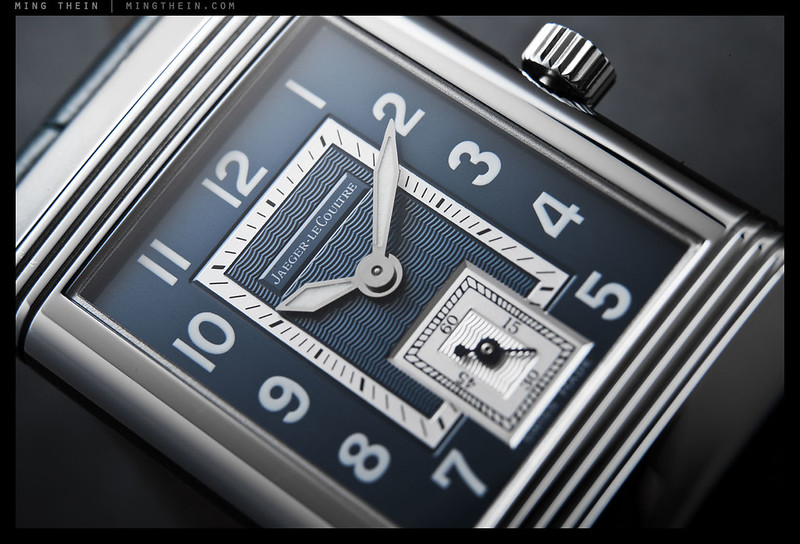
Photoessay: The Jaeger-LeCoultre Reverso Latitude

Not a commercial job, but one of those watches I’d personally encountered once, a long time ago in 2003, but was unable to afford at the time. Nevertheless, it left an impression on me, and from the time I did have the money to spare, I’ve been hunting one down. The problem is that they were very rare to begin with – I believe just 150 pieces were made – and with a very unique and beautiful dial; consequently, they’re rarer than hen’s teeth, and I’ve only ever seen one offered for sale new, and a grand total of zero on the secondary market. On my last trip to the factory, I did ask on the off chance that there was an unsold piece or two in the stockroom; there wasn’t.

On the way back to Kuala Lumpur, I passed by the watch shop in the airport without a second thought; after all, I was late for my flight at that point and had to run. Something compelled me to take a quick look; in a display case hiding behind a pillar was the very watch I’d been searching out for years. Some hasty negotiation ensued – it was obviously a new old stock piece bearing the marks of rough handling, but still sold as new with warranty – they were nice enough to give me a hefty discount and an additional strap. My wallet was suitably lightened, and I just managed to make my flight.

It’s a small watch by today’s standards, but is very thin (and of course mechanical) and pairs perfectly with a suit. The original Reversos were double sided with a blank metal case back, ostensibly to protect the watch while its wearer played polo; these days they’re either used as a second dial for complications, or a canvas for an engraving or art piece. I’m thinking of getting a Hokusai wave enameled on the back, but I’m in no hurry; these things are like tattoos; once it’s on, it’s for life.

If this story isn’t an example of fate and patience, I’m not sure what is. It seems that good things do come to those who wait. MT

This series shot with a Nikon D800E, SB900s, AFS 60/2.8 Micro and Zeiss ZF.2 2/50 Makro-Planar.

_8016093 copy

_8016078 copy

_8016036 copy

_8015995 copy

_8016086 copy

_8016060 copy

_8016089 copy

_8016014 copy

_8015972 copy

_8015953 copy

____________

Visit our Teaching Store to up your photographic game – including Photoshop Workflow DVDs and customized Email School of Photography; or go mobile with the Photography Compendium for iPad. You can also get your gear from B&H and Amazon. Prices are the same as normal, however a small portion of your purchase value is referred back to me. Thanks!

Don’t forget to like us on Facebook and join the reader Flickr group!

appstorebadge

Images and content copyright Ming Thein | mingthein.com 2012 onwards. All rights reserved