Photoessay: textures of earth

H51-B0007789 copy

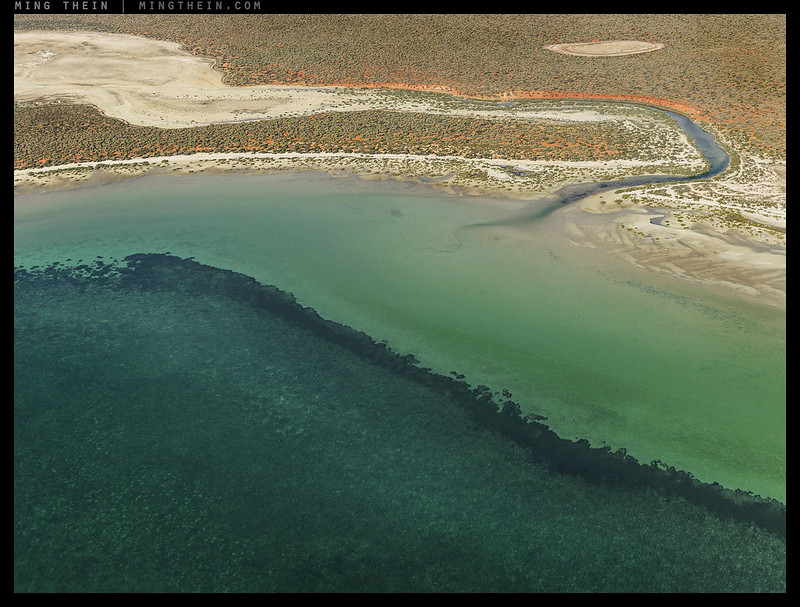
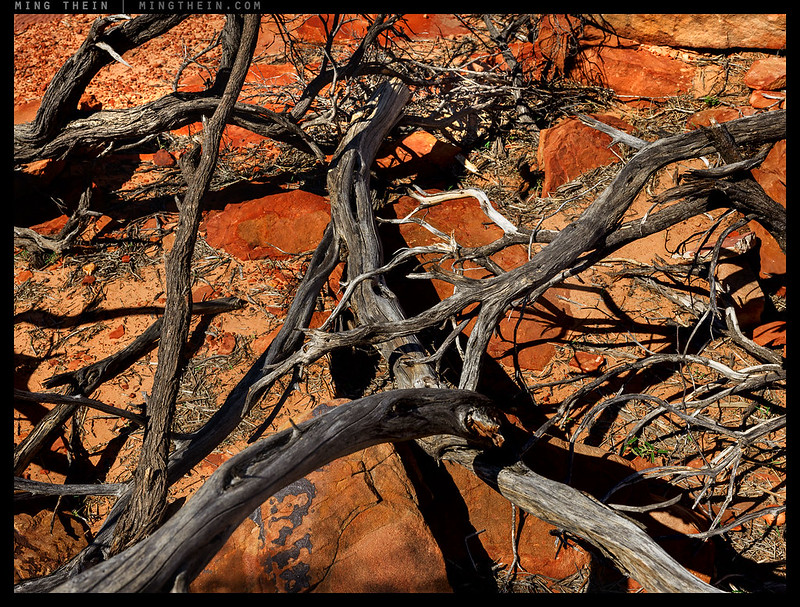
I think of this set as a fractal scale experiment: nature is self-same and self-replicating to some degree at different distances; what breaks this pattern is the presence of manmade elements of reference that provide a sense of size. Without those, it’s not so easy to tell if we’re looking at a bunch of very small bushes, or a mountain covered in massive trees. I was at varying heights for this series – everything from about 50cm to 40,000ft. Yet with the exception of some unremovable haze, the whole presentation is surprisingly consistent – which I find quite remarkable. MT

This series was shot over Francois Peron National Park in Western Australia, with a Hasselblad H5D-50c and processed with Photoshop and Lightroom Workflow III.
[Read more…]

The more you shoot, the harder it gets

H51-B0005367 copy

I’ll admit first off that this sentence is both somewhat disingenuous and incomplete: the more you shoot, the harder it gets to make something you’re happy with. Still confused? How about now: the more you shoot seriously, the harder it gets to make something you’re happy with. No, it’s not clickbait: it’s a personal observation from my own photography. And I think it’s both a good thing and a good barometer of whether the work you’re producing is really for you, or for somebody else. Knowing the normal demographics of this audience, the majority of readers are producing work purely for themselves – not for a client or crowd. (The actual/personal reasons for the production of images may be something else entirely, of course; none of us are beyond the siren’s lure of social validation and fame.)

[Read more…]

Photoessay: separation in Singapore

H51-B0012353 copy

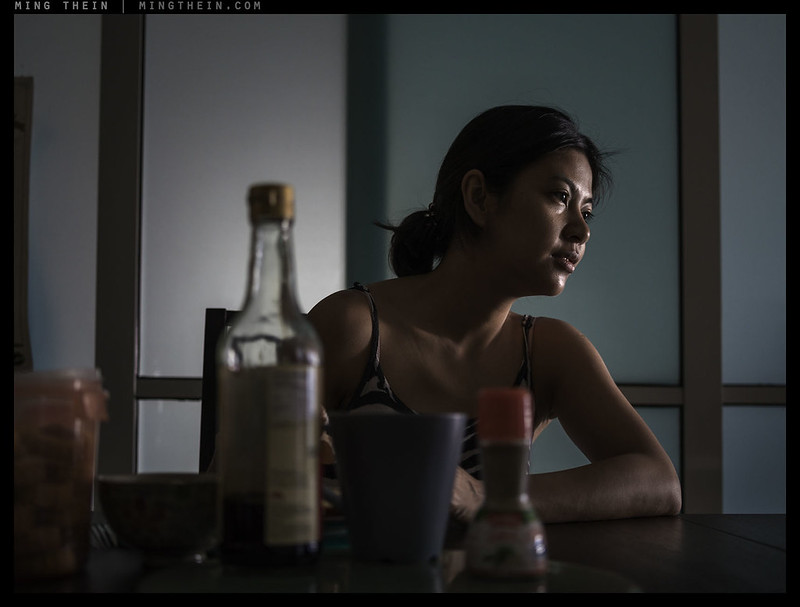
Big city, bright lights, teeming crowds…yet the quest for individuality is perhaps stronger than ever. Yet we’re social creatures, so we want to fit in. But where? How? Here more than ever, people felt transient, subservient, temporary. Native is not native and you’re on the way somewhere else. The stage stays; the actors change. Here more than ever, I’ve always felt like I was just passing through – even the times where I was based here for months. MT

This series was shot with a Hasselblad H5D-50c and processed with Photoshop and Lightroom Workflow III.
[Read more…]

The ultimate lens list, at Nov 2016 (part II)

IMG_9112b copy

Continued from part 1.

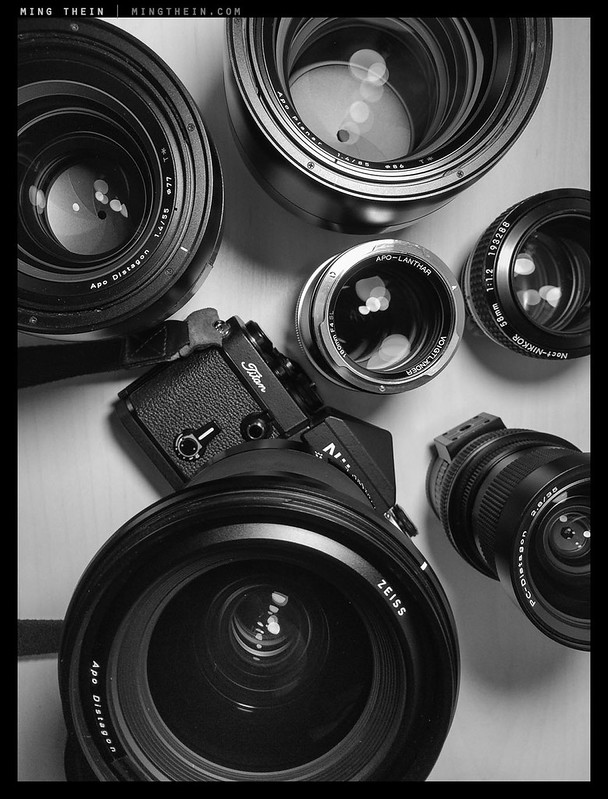
Remember: what constitutes ‘ultimate’ is actually highly subjective; some value smooth drawing quality and tonal transitions over outright resolution; others require zero distortion or high color accuracy or secondary color correction. If anything, my personal preferences tend to lean towards resolution and microcontrast; I can accept some vignetting, distortion, secondary lateral CA (but not longitudinal) – because these are easy to fix in post. Field curvature, smearing, coma etc. are not. Not all lenses on this list are here because of technical perfection or MTF chart performance, either. On top of that, there are two lenses that are not system options, but included anyway because they deserve honourable mentions. There are probably also better lenses I’ve not used yet (and so obviously can’t include them). I’ve tried to give justifications where possible. With that in mind, and in no particular order, here we go.

**Items denoted with two stars are lenses I currently own. *One star, lenses I’ve owned. Links are to reviews or affiliate suppliers. Images shot with the respective lenses mentioned.

[Read more…]

The ultimate lens list, at Nov 2016 (part I)

_8B36984 copy

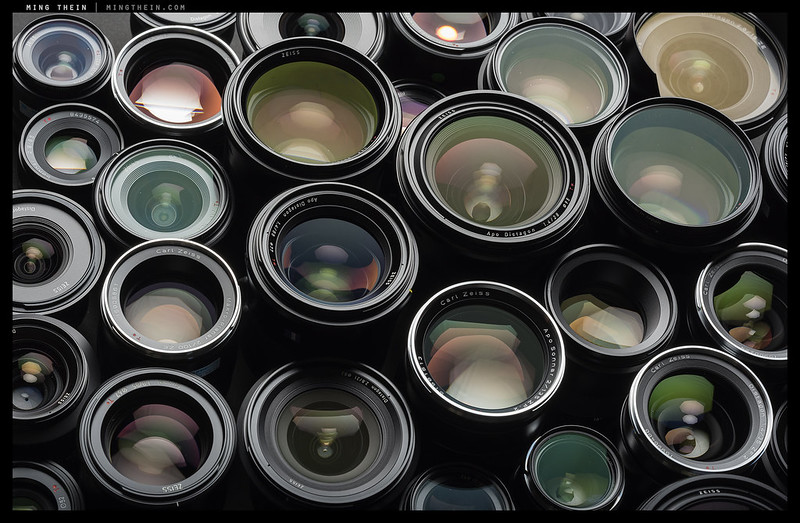
Following a couple of recent email exchanges I’ve had, I thought I’d tidy things up and publish them here for the benefit of the general readership. This is a list of what I consider to be the ultimate lenses, on their native systems (and irrespective of system, actually). Lenses also tend to have significantly greater longevity (especially if without electronics) especially compared to camera bodies; you could buy one set of Otuses and adapt it to just about everything now and to come. In that sense, whilst good glass is expensive – the long term cost of ownership is significantly less than cutting edge bodies, and given residuals are high, generally worth the investment.

Of course, what constitutes ‘ultimate’ is actually highly subjective; some value smooth drawing quality and tonal transitions over outright resolution; others require zero distortion or high color accuracy or secondary color correction. If anything, my personal preferences tend to lean towards resolution and microcontrast; I can accept some vignetting, distortion, secondary lateral CA (but not longitudinal) – because these are easy to fix in post. Field curvature, smearing, coma etc. are not. Not all lenses on this list are here because of technical perfection or MTF chart performance, either. On top of that, there are two lenses that are not system options, but included anyway because they deserve honourable mentions. There are probably also better lenses I’ve not used yet (and so obviously can’t include them). I’ve tried to give justifications where possible. With that in mind, and in no particular order, here we go.

**Items denoted with two stars are lenses I currently own. *One star, lenses I’ve owned. Links are to reviews or affiliate suppliers. Images shot with the respective lenses mentioned.

[Read more…]

Photoessay: a little urban entropy

IMG_9712b copy

Things often start off perfect, or at least ideal. They seldom stay that way. But there’s no reason why the process can’t be reversed into redevelopment and renewal. It happens all around us; most of the time, it’s so common we don’t even take notice of it; sometimes extreme wabi and the right light does result in an interesting image, but there’s a fine line between hope and desolation, I think. This set is a series of observations during the course of my travels, made with that ideal of visual scrapbooks – the omnipresent iPhone. MT

This series was shot with an iPhone 6+ and processed with Photoshop and Lightroom Workflow III.
[Read more…]

How social media has changed the way images are viewed

2622C22600000578-0-image-a-32_1425001827044
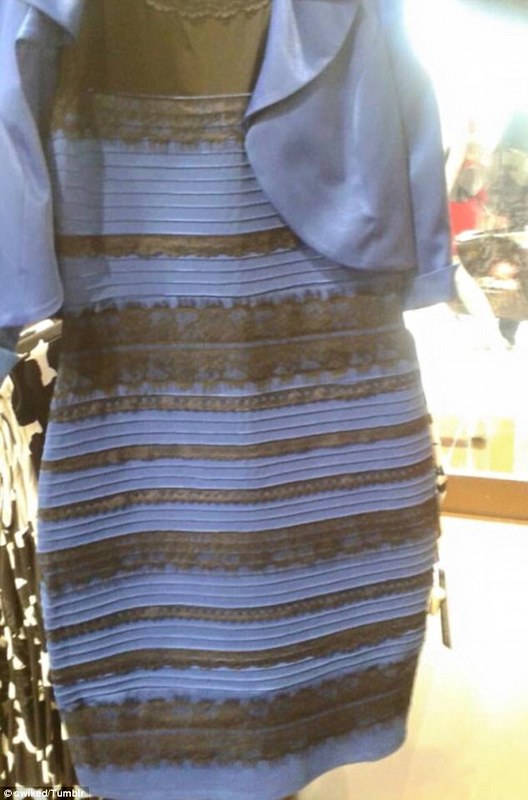
That infamous dress. Credit to whoever it was who originally shot the image.

It seems that the more images are in the publicly visible, the less time and attention any one individual image receives on average. This makes sense, given that we’re continually being bombarded by media and there’s a finite amount of time for consuming that media. On the other hand, we’ve got a disproportionate amount of attention being given to certain images – that blue/white/gold dress meme above being a good example*. These images are not necessarily deserving of that disproportionate attention, either. I have a theory about both why this is, and why despite the world becoming an even more visual place – overall quality of images has gone down, and with it the ability to distinguish between chocolate and pig poo.

[Read more…]

Photoessay: Estuary

H51-B0008090 copy

One more set of images from the ‘Over Australia’ series. These areas were not actually the primary focus of the trip, but rather something interesting overflown en-route – and when you’re chartering a plane, you want to squeeze out every single photographic opportunity possible. What caught my eye here was two things – the rather painterly patterns created by the typically Australian orange sand and water interspersing with oceanic sand, and the way the transparency of the water changed with the angle of the sun relative to our position – everything from milky to glassy to almost nonexistent (the water wasn’t very deep). There were also semi-evaporated pools that became isolated at low tide, both leaving interesting rim patterns and interesting colors from concentrated sediment suspensions. These were shot at low altitudes (1000-1500ft) from a light aircraft with the doors removed. (A helicopter both wasn’t available or possible because of the distances required.) It’s somewhat more challenging than working from a helicopter because the aircraft never stops; you need to have a high enough shutter speed and good panning technique to prevent any sort of camera shake ruining the transparency of the images – worse as the resolution increases.

This series was shot with a Hasselblad H5D-50c and processed with Photoshop and Lightroom Workflow III.

[Read more…]

Spouses and photography

AB0000036 copy

I recently had a conversation with a reader with a question that honestly surprised me: “How do I hide my photography obsession from my wife?” I have to admit this one stumped me for a while: I’ve never hidden it from Nadiah, nor do I think I could even if I tried to – partially because I’m a really bad liar, and partially because for as long as she’s known me, even in corporate – I’ve always been a photographer first and foremost. But it does bring up some interesting thoughts around photography and spouses…

[Read more…]

Photoessay: Dunes

H51-B0008489 copy

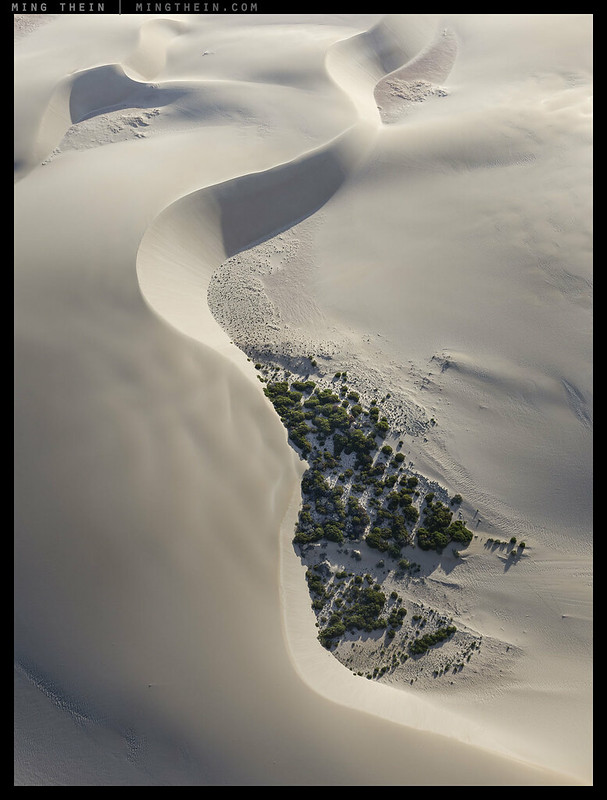
This series of images was never intended to be shot: this might seem like an odd thing to say, but it was not the intention for this particular aerial sortie. We had the option to overfly it en route to the intended target (to be the subject of a future presentation) – and when you’re pretty much burning money as fuel, then you shoot every single thing you can. It’s not hard, since the subject matter and presentation is so different to what one normally sees on the ground anyway. Like the rest of the series from over Australia, we were around the Dirk Hartog Island/ Useless Loop/ Francois Peron National Park area, at about 1200-1500ft with the doors off a Cessna 207. No question one should not even attempt shooting dunes at anything other than the start or end of the day – whilst they might be steep, there just isn’t enough relief otherwise to bring out any texture or shadow otherwise. MT

This series was shot with a Hasselblad H5D-50c and processed with Photoshop and Lightroom Workflow III.
[Read more…]