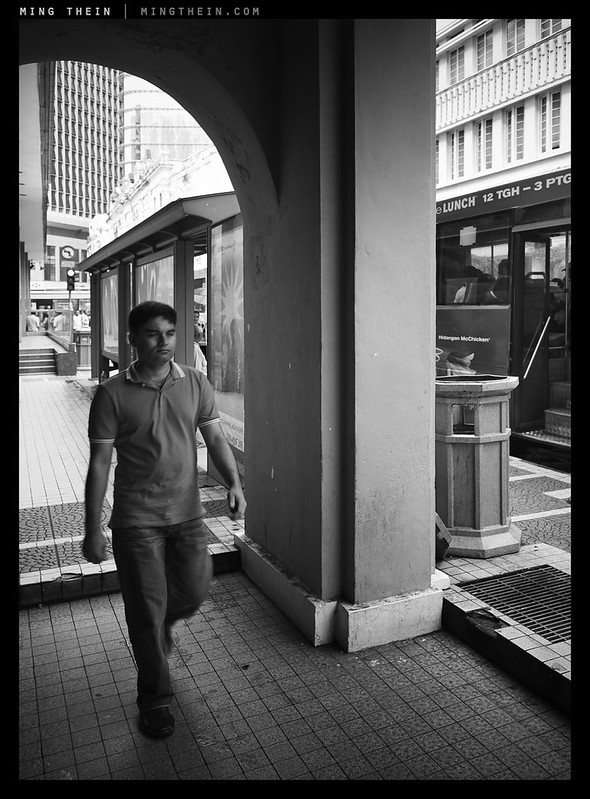
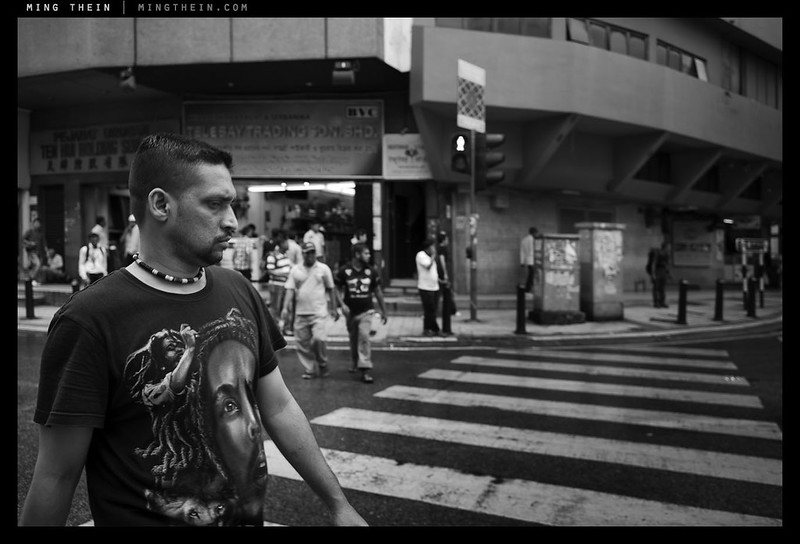
Diametric opposites: my upcoming exhibition

Leica Starhill exhibition poster v1 jan13

I’m happy to present my upcoming exhibition sponsored by Leica and Keat Camera at their Starhill Gallery store in Kuala Lumpur – starting from this Friday 18th of January, and running for a month til 18 Feb. If you’re in town, you’re welcome to join the opening reception on Friday 18th at 7.30pm; I’ll be there giving personal tours. Thanks! MT

Just got interviewed on the Leica blog…

…For those of you who might be a little curious about the person behind the site, the interview by Eric Kim can be found here. MT

Quick hands-on: The 2012 Leica M (Typ 240)

IMG_1958b copy

Update: my full review is here.

I finally had the chance to have some time alone with the new Leica M (2012 Typ 240) this evening at an event held by Leica Malaysia for the 2012 Maybank Photo Awards (you’ve got until the end of October to enter here; I’m serving as head judge). Advanced note: it was a pre-production prototype, with the SD card glued in because the image quality is nowhere near final. I’m told there will be some notable improvements between this version and the production version; it’s mostly to do with the firmware. I won’t be drawing any conclusions on image quality, because it’s simply impossible to tell at this stage. Please excuse the crappy product shots, I was using my old iPhone 4.

IMG_1963b copy

And that brings me to the first point: the LCD is now enormous. And a huge improvement on the old one; it’s now a 3″, VGA unit that’s on par with the rest of the market – it makes an massive difference to the whole experience. You can judge sharpness on it; exposure is still of course best done with blinking highlights and histogram. To go with the new LCD is a new, cleaner menu system with functions grouped into sensible clusters; there are more of them, but the M remains a camera that you pick up and shoot. M9 shooters will of course be at home after they figure out what the extra two buttons do – the one on the front is for focus peaking; the one at the top is to record a movie.

The M now has live view, and a neat focus peaking feature that only activates when you turn the lens, and disappears with a half-press of the shutter or when you leave it for a while. I presume it works based on a sensor interacting with the rangefinder cam. The next thing you notice is the loss of the RF frameline illuminator window; it’s now LED backlit in either red or pale blue-white; both are very visible. I actually miss the old frameline preview lever; perhaps I was one of the few. There isn’t any more information in the finder, though.

IMG_1965b copy

There are four things that make the new M feel much more polished: firstly, the shutter release action has lost the notchiness of the M8 and M9; it’s a light half press to lock exposure, and slightly more pressure with a clean break to exposure. The shutter itself is a lot quieter and lower vibration; it simply feels better damped. Secondly, the whole thing is just faster – shuttling around the large 24MP DNG files was fast, and there was no waiting for the camera to zoom in/ scroll around. It simply felt snappy; easily as fast as my D800E (!). Next up is selectable metering: you now have the old centerweight, but also spot and matrix; I didn’t get a chance to test matrix extensively but it seems a lot less prone than the M9’s meter to drastic underexposure when you have a bright point source in the frame. This is a good thing for night photographers; as is the new sensor. I could only judge off the rear LCD, but it appears that we’ve now gained some significant high ISO performance – 3200 looked pretty good, with 6400 being useable. Once again, without seeing actual files, this is far from conclusive.

Although the body seems larger than the M9, it’s in fact identical in size to the old one. To accommodate that larger LCD and keep the lines intact, the scroll wheel around the d-pad has now moved to the top right corner, partially hiding behind a thumb rest. I was a bit skeptical about the utility of such a small nub, but it does feel much more secure in the hand than a regular M without a ThumbsUp – which is a good thing, because with the hotshoe serving double duty as an EVF port (didn’t get to try this, unfortunately) you won’t be able to attach any grip accessories. The prototype I handled also had the optional handgrip and wrist loop. I didn’t particularly like the feel of the loop because it didn’t feel comfortable – quite possible I had the wrong size installed for my hands – but the grip definitely improves handling. This one was a blank dummy, but I believe the final versions will have functional ports.

The big question of image quality, and utility of other functions like video will have to wait until I have a final production sample to review – I’m told that will be sometime around December. I’m looking forward to a number of things: firstly, shooting wides without having to use an accessory finder; trying out some macro work without the Visoflex and bellows, and finally, putting my favourite Zeiss ZF.2 2/28 Distagon on the front in a useable way thanks to a Nikon F-Leica M adaptor I’ve had lying around for some time.

All the signs are extremely positive that the M is a huge step forward from the outgoing model. Feel is an important thing; the M feels a bit more ‘button-ey’ than the M9-P, but also more polished. That said, I do like the simplicity of the M9-P – with the ever increasing number of features, I can now see the sense in keeping the product lines separate; the more features the camera has, the more settings and menus are going to be required to tame it. This does somewhat dilutes the photographic purity of the M – but then again, I’m not a videographer and I’m perfectly happy shooting 28/50 on my rangefinders. Now if only they’d do a Hammertone M-E with the new sensor…MT

____________

Visit our Teaching Store to up your photographic game – including Photoshop Workflow DVDs and customized Email School of Photography; or go mobile with the Photography Compendium for iPad. You can also get your gear from B&H and Amazon. Prices are the same as normal, however a small portion of your purchase value is referred back to me. Thanks!

Don’t forget to like us on Facebook and join the reader Flickr group!

appstorebadge

Images and content copyright Ming Thein | mingthein.com 2012 onwards. All rights reserved

New: Photoshop Workflow DVD for the Leica M Monochrom!

m-monochrom photoshop opening

As the first batch of Leica M Monochroms begin to be delivered to their owners, I’ve received a surprisingly large number of questions and requests for info or  a DVD on how to handle the Monochrom files. More than enough to justify producing one. The DVD is in a similar format to the previous general Photoshop Workflow for Photographers but with 15 specific examples that consist of M-Monochrom files shot under various conditions, of various subjects.

The video takes you through my modified B&W workflow specifically for the Leica M-Monochrom, and is designed to be a useful starting place for photographers wanting to get that ‘pop’ out of their files. It’s 2h10min long, in low-compression Quicktime format at the native 1440x900px resolution of my screen to capture all of the subtle nuances. Building on feedback from the previous DVD, I’ve now got a before and after preview of the files processed as examples below, as well as further improved audio quality. I also address superscaling/ upsizing for making very large prints.

Feb 2013 Update: The Photoshop Workflow Video for the Leica M Monochrom is US$65 via paypal and digital delivery – please include the product you’re ordering and the email address you’d like the download link delivered to.

Checkout now via PayPal

Thank you again in advance for your support! MT

MM workflow examples 1

MM workflow examples 2

MM workflow examples 3

MM workflow examples 4

____________

Visit our Teaching Store to up your photographic game – including Photoshop Workflow DVDs and customized Email School of Photography; or go mobile with the Photography Compendium for iPad. You can also get your gear from B&H and Amazon. Prices are the same as normal, however a small portion of your purchase value is referred back to me. Thanks!

Don’t forget to like us on Facebook and join the reader Flickr group!

appstorebadge

Images and content copyright Ming Thein | mingthein.com 2012 onwards. All rights reserved

Review: The Panasonic Leica 45/2.8 Macro-Elmarit for Micro Four Thirds

_8015681 copy

One of the earliest lenses for the Micro Four Thirds system, the Panasonic Leica 45/2.8 Macro-Elmarit (hereafter known as just the 45 for the rest of the article) is also perhaps one of the most underrated. It acquired a reputation of being a slow focuser; that might have been as much due to the bodies available at the time as the lens mechanics. (The lens actually has a range limiter switch).

_8015687 copy
Square hoods are a very typically Leica thing – just look at the S lenses. Oddly, the hood for the 25/1.4 is much deeper than this one.

Something I’ve always wondered was whether this was a Panasonic design, a Leica design, or a mix of both. Turns out that the answer is that the optics are designed by Leica in Germany; they’re assembled at Panasonic’s factories in Japan, and QC’d by a Leica rep who’s based there. Regardless, the optics are pretty darn superb. The lens is very useable even wide open at f2.8; unsurprisingly, for a macro lens, every focus distance is sharp. Performance is slightly worse in the corners than the center, but even this slight degree of blurring is removed by stopping down to f4 or smaller.

_8015675 copy
The midsize lens balances well on the Olympus OM-D.

Don’t go any smaller than f11 though, because after this point there is clear diffraction softening visible on the OM-D’s sensor; fortunately due to the short real focal length, you’re unlikely to need to do so even if you require extended depth of field. f2.8-f8 is a good practical working range.

I’m pleased to report that the lens is also very low in chromatic aberrations of any kind; lateral CA is almost completely absent, and longitudinal CA (spherochromatism or ‘bokeh fringing’) is mild, and completely gone by f5.6. This suggests that the lens’ design is almost entirely tele centric, and definitely optimized for the M4/3 mount as we don’t see any evidence of purple fringing.

_5001658 copy
Study of a pepper, 1. OM-D and 45/2.8 Macro

Bokeh is a slightly different story. Whilst bokeh is superbly smooth and uniform with no ghosting or double images if you have enough distance between subject and out of focus area, there is a very odd transition zone immediately on either side of the focal plane that is both slightly nervous and displays bright edges on highlights. It’s worse at larger apertures and complex/ busy subjects. If you stop down to f5.6 or so, this property goes away.

_5004410 copy
Hublot Big Bang Ferrari Chronograph Magic Gold. OM-D and 45/2.8 Macro

Outside of macro work, in truth, a 45/2.8 as a multipurpose lens just isn’t that exciting because it’s a bit in no mans’ land. You have the equivalent FOV of 90mm, but none of the bokeh separation; it isn’t a sufficiently compressed perspective to be exciting or let you do something compositionally different with all-in-focus telephoto shots. In fact, it feels more like shooting with a 60-75mm lens in that regard. Yet you can’t be lazy with your shooting discipline, because it really needs about 1/100s for a consistently sharp image – providing you’ve got either one of the stabilizers off.

_5001346 copy
Maitres du Temps Chapter Two Tonneau. OM-D and 45/2.8 Macro

As with all of the Panasonic lenses on Olympus bodies, you have a choice of which stabilization system to use – either the moving-lens based system, controlled by a switch on the side of the lens, or the sensor-shift type built into the body. I did quite a lot of testing comparing the two systems – unfortunately there’s no real quantifiable way of doing this – and didn’t see any significant benefit of one over the other. As with all IS systems, you need to turn it off if the shutter speed is high enough otherwise you will actually land up with double images. The threshold is probably around 1/500s. I think this is because it can’t react fast enough to the high-frequency vibration caused by the shutter, but I’m sure there are others far more knowledgeable on this subject.

_5001978 copy
Doctor Zoidberg. OM-D and 45/2.8 Macro

There’s a second switch on the side of the barrel, and that’s to control the focus limiter. Like all M 4/3 lenses, manual focus is entirely fly-by-wire; I personally don’t like these systems because they don’t give you enough tactile feedback and lack hard infinity or near limit stops. Although I prefer to use manual focus when shooting close focus so I can set my magnification before focusing, this is one of the few lenses where I have no choice but to rely on autofocus.

_5004225bw copy
Street scene in Geneva. OM-D and 45/2.8 Macro

It will hunt a bit if you have the lens set to full range and aren’t focusing on a close subject; but for the most part, focusing is actually pretty swift if only small changes in focus distance are required. Switching on the limiter – near focus of 45cm – makes things much faster. (The full limit is 25cm, which gives 1:1 magnification and about 10cm or so of working distance from the front of the lens). I haven’t actually tried it on the E-PM1, but I don’t expect focusing performance to be much worse.

_5004606 copy
Hublot Ultra Thin. OM-D and 45/2.8 Macro, ambient light on location.

The 45 works much better as a dedicated macro lens, and will serve handily as a portrait lens in a pinch; however, my general purpose pick would be the Olympus 45/1.8. Image quality is superb; there’s a biting sharpness and fine microcontrast structure you’d expect from a lens with this price tag and implied heritage. It definitely renders in a very different way to the Olympus 45/1.8; I suppose the best way to describe it would be tight and controlled.

_5004169 copy
Geometry. OM-D and 45/2.8 Macro

It’s a midsize (for M 4/3, but about the same size as a 50/1.8 for any SLR mount) lens which balances well on an OM-D, with or without the optional grip. Sadly, the only metal parts in this lens appear to be the lens mount and screws; whilst the plastics are of high quality and the build quality and tolerances are tight, it just doesn’t have the feel of a precision instrument in the same way that say the Leica M or Zeiss ZF lenses do.

_5001673 copy
Study of a pepper, 2. The full size shot shows some nervousness of bokeh around the focus transition zone near the stem. OM-D and 45/2.8 Macro

I would personally prefer a bit more control over my depth of field in a macro lens. Having said that, the extended depth of field offered here can be useful for certain applications where you need to get a large amount of the subject in focus. Perhaps the forthcoming Olympus 60/2.8 macro will better suit my requirements. However, it does offer some advantages over my normal setup – at maximum magnification, it covers a 17x13mm frame, against 36x24mm for full frame, and without the need for any extension tubes and the accompanying degradation in quality*. I can also see some uses for it for macro video, though the fly-by-wire focus ring may prove to be a bit of a problem.

_5002024 copy
Grilled wagyu done right. OM-D and 45/2.8 Macro

*Extension tubes add another set of mount interfaces into the optical system; any slight deviations in planarity, or looseness, or give, will result in the optics being slightly off-axis. This is visible as softening, coma or astigmatism.

For now, though, the Panasonic Leica 45 retains a place in my bag, especially for use as part of my backup system on watch shoots. Don’t let the plastic exterior fool you: optically, this is a serious lens, and in the grand scheme of things it actually represents fairly good value for money despite being one of the more expensive lenses in the M 4/3 system. MT

The Panasonic Leica 45/2.8 is available from B&H and Amazon.

____________

Visit our Teaching Store to up your photographic game – including Photoshop Workflow DVDs and customized Email School of Photography; or go mobile with the Photography Compendium for iPad. You can also get your gear from B&H and Amazon. Prices are the same as normal, however a small portion of your purchase value is referred back to me. Thanks!

Don’t forget to like us on Facebook and join the reader Flickr group!

appstorebadge

Images and content copyright Ming Thein | mingthein.com 2012 onwards. All rights reserved

_5004452 copy
Hublot Diver’s Chronograph. OM-D and 45/2.8 Macro

Photoessay: The immigrants of Kuala Lumpur

Developing countries have just as much, or perhaps even more immigration going on than in developed ones. For starters, border controls are a lot more lax; as is visa enforcement. At a recent visa amnesty, the Malaysian government granted over 600,000 national identity cards – representing permanent residency or citizenship – to previously unregistered foreign workers or illegal immigrants. Put that in perspective for a moment: that’s nearly 2.5% of the people in the country who were previously operating under the radar. What do they all do? Well, mostly provide cheap labor or services for the jobs the locals don’t want to do; and as the immigrant community expands, many have started businesses providing a bit of home for their own people, too.

There’s one part of Kuala Lumpur that’s mostly home to the Bangladeshi, Burmese and Nepali immigrants of the city – it’s the area around Leboh Ampang and the older portion of the city. I took a walk around with a student a little while back, and this is a short series on the other side of Kuala Lumpur. Understandably, a lot of them are still nervous about being photographed, because I suspect some are not officially supposed to be here…MT

Shot with a Leica M9-P and Zeiss ZM 2.8/28 Distagon. Exif data is intact, click through to Flickr to view.

_M9P1_L1016307bw copy

_M9P1_L1016271bw copy

_M9P1_L1016214bw copy

_M9P1_L1016232bw copy

_M9P1_L1016198bw copy

_M9P1_L1016314bw copy

_M9P1_L1016303bw copy

_M9P1_L1016276bw copy

_M9P1_L1016249bw copy

_M9P1_L1016211bw copy

____________

Visit our Teaching Store to up your photographic game – including Photoshop Workflow DVDs and customized Email School of Photography; or go mobile with the Photography Compendium for iPad. You can also get your gear from B&H and Amazon. Prices are the same as normal, however a small portion of your purchase value is referred back to me. Thanks!

Don’t forget to like us on Facebook and join the reader Flickr group!

appstorebadge

Images and content copyright Ming Thein | mingthein.com 2012 onwards. All rights reserved

Photoessay: Kowloon in color

Shot on a particularly rainy night in Kowloon, post-typhoon with a Leica M9-P and Zeiss ZM 28/2.8. Surprisingly, both functioned fine despite the moisture and humidity. I must be one of the few strange photographers who actually like shooting in the rain – it’s not masochism, despite what it might appear as. Three simple reasons: one, there’s a lot more texture and color from the water, reflections and umbrellas; two, the light is a bit more diffuse; three, nobody pays you any attention – everybody is simply too busy trying to keep dry. And this makes street photography significantly easier. MT

_M9P2_L1000628 copy

_M9P2_L1000463 copy

_M9P2_L1000492 copy

_M9P2_L1000609 copy

_M9P2_L1000567 copy

_M9P2_L1000554 copy

_M9P2_L1000518 copy

_M9P2_L1000490 copy

_m9p2_l1000481 copy

_M9P2_L1000473 copy

____________

Enter the August 2012 competition: Compact Challenge – here!

If you enjoyed this post, please consider supporting the site via Paypal (mingthein2@gmail.com); Ming Thein’s Email School of Photography – learn exactly what you want to learn, when you want to learn it or learn how to achieve a similar look with our Photoshop workflow DVDs.  You can also get your gear from Amazon.com via this referral link.  Prices are the same as normal, however a small portion of your purchase value is referred back to me. Thanks!

Don’t forget to like us on Facebook and join the Flickr group!

Photoessay: Hong Kong life in monochrome

The first set from my recent Hong Kong and Macau workshop. Click for larger versions or EXIF data via the flickr landing page. Enjoy! MT

Images shot with a Leica M9-P, Zeiss ZM 2.8/28 Biogon, ZM 2/50 Planar, Olympus OM-D and 45/1.8.

_M9P2_L1000243bw copy

_M9P2_L1000655bw copy

_5006315bw copy

_5006438bw copy

_5006253bw copy

_M9P2_L1000041bw copy

_M9P2_L1000348bw copy

_M9P2_L1000288bw copy

_M9P2_L1000109bw copy

_M9P2_L1000005bw copy

_5006205bw copy

_M9P2_L1000310bw copy

____________

Enter the August 2012 competition: Compact Challenge – here!

If you enjoyed this post, please consider supporting the site via Paypal (mingthein2@gmail.com); Ming Thein’s Email School of Photography – learn exactly what you want to learn, when you want to learn it or learn how to achieve a similar look with our Photoshop workflow DVDs.  You can also get your gear from Amazon.com via this referral link.  Prices are the same as normal, however a small portion of your purchase value is referred back to me. Thanks!

Don’t forget to like us on Facebook and join the Flickr group!

Photoessay: portrait of a chef – Fergus Henderson

Perhaps best known for his use of offal, bones, tails and other normally discarded parts of the animal, chef Fergus Henderson is one of the innovators of modern cuisine. His dishes are derivatives of traditional British food, usually paired with French wines. However, perhaps the most impressive thing about him is that he’s actually an excellent trained architect (from no other institution than the AA) but one day decided he preferred food – and despite being awarded a Michelin star for St. John restaurant in 2009, he was entirely self taught as a chef and has never worked in anybody else’s kitchen.

Henderson was diagnosed with Parkinson’s in 1996, and has since undergone deep brain stimulation therapy which supposedly has increased his mobility in the kitchen – however, watching him work it’s clear that he wields most implements with difficulty (and in some cases, it’s just too dangerous) and relies on his deputy. However, when you talk to him, it’s clear that his disability has not diminished his ability, talent or passion for food – if anything, it’s enhanced it. He’s an animated, engaging speaker with a dry sense of humor and a disarming smile. I had the honor of running a food photography class with him once; it remains one of the most inspiring experiences of my photographic career to date.

All I can say is that I have enormous respect for the man, and his bone marrow and parsley salad (which he describes in strangely architectural terms) was quite excellent, too. MT

This series shot with a Leica M9-P, 35/1.4 ASPH FLE and Leica D-Lux 5 Titanium.

_DL52_L1000004 copy

_M9P1_L1015047 copy

_DL52_L1000029 copy

_M9P1_L1015029 copy

_M9P1_L1015066 copy

_M9P1_L1015054 copy

_M9P1_L1015056 copy

_DL52_L1000097 copy

_DL52_L1000091 copy

_M9P1_L1015089 copy

_M9P1_L1015088 copy

_DL52_L1000053 copy

____________

Enter the August 2012 competition: Compact Challenge – here!

If you enjoyed this post, please consider supporting the site via Paypal (mingthein2@gmail.com); Ming Thein’s Email School of Photography – learn exactly what you want to learn, when you want to learn it or our Photoshop workflow DVDs.  You can also get your gear from Amazon.com via this referral link.  Prices are the same as normal, however a small portion of your purchase value is referred back to me. Thanks!

Don’t forget to like us on Facebook and join the Flickr group!

Street photography – the ethics of photographing random strangers

_M8_L1025697bw copy
Paris, Leica M8, 21/1.4

Street photography is a genre that every photographer will try at least once in their career. Its broad appeal stems from the fact that you can do it anywhere; there’s a human element to the images that captivate the viewer, and if done well, can make for some extremely arresting images. However, it also requires balls. You have to get close enough to your subjects; and with people, invading personal space is uncomfortable (and possibly hazardous to health) for both photographer and subject. There’s a slight snobbishness about shooting with a longer lens, too – it isn’t seen as being hard core enough. In fact, these days, it seems if you’re not at f8, hyperfocal distance and sticking your camera and flash right up to somebody’s nose, then you’re not really doing street photography.

_N8_L1001710bw copy
London, Leica M8, Zeiss 21/2.8

There’s another approach, though. I think it’s much, much harder to shoot wide open with a relatively wide lens – say nothing longer than 35mm – and shoot without your subject knowing you’re there. This is what I like to call the stealth method – you don’t want to draw attention to yourself, and better yet, shoot without even bringing the camera to your eye. It takes a huge amount of skill and practice to nail shots this way, because you must be able to both guess focus correctly (if manually focusing) or know where your AF box is going to go – and at the same time know your lens well enough to visualize the field of view. You also have to be incredibly fast about it, because moments are fleeting and not repeatable. I’m not going to name names, but there are a number of popular ‘street photographers’ who don’t and can’t do this because it’s extremely difficult to do, and the yield rate is quite low for ‘perfect’ shots.

_N8_L1001358bw copy
London, Leica M8, Zeiss 21/2.8

*Shameless self plug: all of the images in this post, and all of my street photography, is done using the stealth method. When I was in practice and shooting hundreds of frames daily, I could zone focus accurately with my M8 and 21/1.4 at f2. Not anymore, sadly.

_M8_L1024264bw copy
Oxford, Leica M8, 21/1.4

However, the biggest benefit to this approach is the fact that you don’t intimidate or scare your subjects. If you don’t make somebody angry, they’re far less likely to be unhappy or actively object to you taking a photograph. And if people do notice, don’t stare back or give a stern look – though it’s usually human nature – wave and smile, and you’ll be surprised how many people wave and smile back at you. They may even strike up a conversation and let you get a few more interesting images.

_M8_L1026034bw copy
Paris, Leica M8, 21/1.4

There’s also the more subtle issue of quantum mechanics**. Basically, you as the observer won’t interfere with the scene – if you become a participant in the image, then the reaction you provoke from your subjects will necessarily disrupt whatever it was you initially wanted to capture. Bottom line: be anonymous, unmemorable, and blend in. If you’re in a touristy area, this might mean pretending to take random photos of everything and anything, whilst actually being very specific about what you’re looking for. Or it may mean using a compact and holding it in your hand, always being aware, and getting a grab frame in whenever you can. It means having to be both anticipative and reactive; you’ve got to be a bit of a psychologist to figure out who’s going to do what when, so you can visualize the scene in advance and be ready to capture it.

_M9P1_L1006592bw copy
Prague, Leica M9-P, 50/1.4 ASPH

**I deal extensively with the Schrodinger paradox and its application to photography here.

This brings me to the real meat of this article: what are the rights and wrongs of street photography? A comment by one of my readers on another post inspired the post; yes, I do shoot a lot of random strangers, especially when traveling, and there are often shots I see but may not take for various reasons. I don’t think it’s so much lack of chutzpah as the feeling that it may not be socially acceptable or ethically appropriate in various situations; photographing beggars and cripples is one of those things. Using people to portray contrasts or as anonymous human-scale elements in a frame is fine, but the one golden rule I stick to is that I’ll never take a shot that’s demeaning or potentially defamatory. You wouldn’t want the somebody to do the same to you, would you?

_M9P1_L1007473bw copy
Prague, Leica M9-P, 28/2.8 ASPH

Then there’s the issue of where and when – in most countries, you’re allowed to photograph in public effectively without restriction. There may be certain rules on tripod use because of obstruction or perceived ‘commerciality’ of the images, but that varies from place to place; in any case, most of the time I don’t use a tripod because of the weight and inconvenience. However, private property is exactly that: private. So if you’re told not to photograph, then you probably shouldn’t. And never use images for commercial or stock use if you don’t have the agreement of any identifiable individuals in the image. (Editorial use is different; you don’t need releases for people in news stories, but you also can’t really sell the images for anything else other than news.) Finally, I would be careful in politically sensitive countries or around police or other law enforcement agencies – they may have good reason for you not to photograph something, and ignorance isn’t a defense in court.

_M9P1_L1001602bw copy
Kuala Lumpur, Leica M9-P, 50/0.95

Finally, remember that in an increasingly connected world, we aren’t anonymous. It’s entirely possible for somebody to see themselves on another site somewhere; in fact, it’s happened to me a few times. It may be because I just look at more images than the average person and thus have a higher chance of seeing myself somewhere, but I’ve also had people message or email and say they were the person in the shot. I usually just send the person a copy of the image by way of thank you; in any case, you can’t do anything commercially with it, so there’s no harm in releasing a copy.

_M9P1_L1007421bw copy
Prague, Leica M9-P, 28/2.8 ASPH

I think if you stick to what your gut tells you about common sense and public etiquette, then you should be safe. Unless you’re a photojournalist, it isn’t worth getting the shot and then getting in trouble for it – there are exceptions, but they’re far and few between. Practice being fast and stealthy, but also courteous and friendly; and you’ll find that street photography isn’t so difficult after all. MT

____________

Visit our Teaching Store to up your photographic game – including Photoshop Workflow DVDs and customized Email School of Photography; or go mobile with the Photography Compendium for iPad. You can also get your gear from B&H and Amazon. Prices are the same as normal, however a small portion of your purchase value is referred back to me. Thanks!

Don’t forget to like us on Facebook and join the reader Flickr group!

appstorebadge

Images and content copyright Ming Thein | mingthein.com 2012 onwards. All rights reserved

Don’t forget to like us on Facebook!

_M8_L1025077bw copy
London, Leica M8, 21/1.4 ASPH