Creator or consumer?

_8B34682 copy
Entropy is the way of all things

I have a theory: there are only two kinds of people in this world when it comes to content and creative output. Either you are primarily a consumer, or primarily a creator. We also have to take two other parameters into account: quantity and reach; total impact is determined by both – little quantity and widespread reach is probably about the same as high quantity and narrow reach, with high quantity and high reach of course having the greatest net output. A consumer is a person who has little quantity or reach; certainly less than the media they consume. A creator is a person whose output exceeds their input (reflagging and distribution doesn’t count; that’s not creating anything new). Of course, a much simpler way of looking at this is by time: do you spend more time reading and watching, or making/ shooting/ posting/ writing/ sharing?
[Read more…]

Tension and balance

_7R2_DSC0483 copy

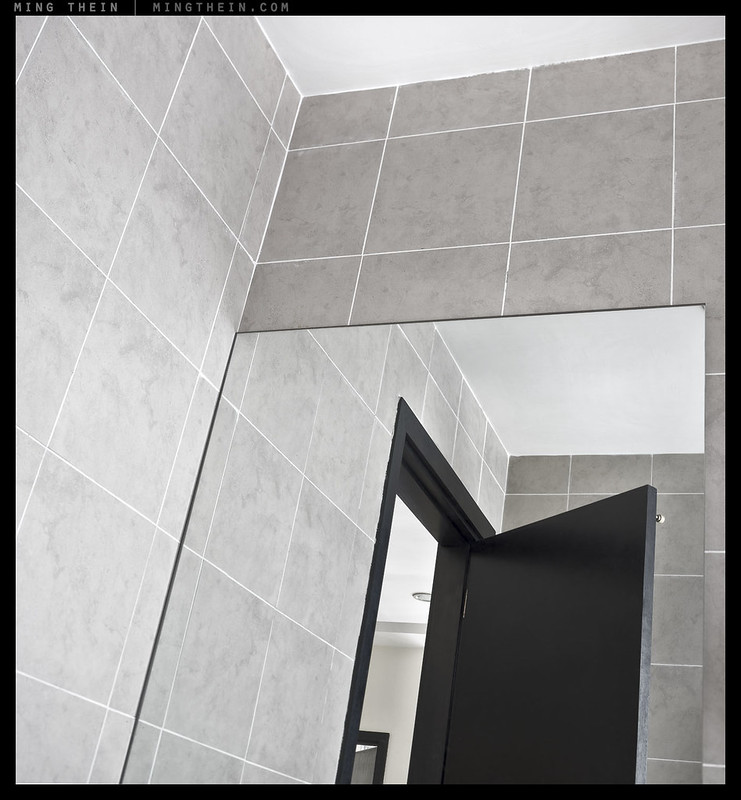
Two of the most common words I hear used when describing images are ‘tension’ and ‘balance’. I’ve got a good idea what the latter means, and how to translate it into an image – but the former is much more nebulous. A brief look around online also showed that they’re both not that well understood, or badly defined, too. At the risk of putting my neck on the block, I’m throwing my contribution into the ring, too. Feel free to add your thoughts in the comment section…

[Read more…]

Photographic étiquette, part two

_7R2_DSC3376 copy

Following the lighter post on the topic, I felt it’s probably a good idea to discuss some of the more serious grey areas as a photographer; especially when it comes to photographing people, locations or property that might well be private. In general, in most countries, if you can see it from a public location, photographing something is fair game. However, there are exceptions and degrees: anything with security or government links is probably a bad idea. Getting too close to anything without permission is probably also a bad idea. Crossing lines – even if they’re arbitrary – is potentially a bad idea, and might land you in more trouble than the shot is worth. Bearing these things in mind, I’ve generally managed to stay off toes and still get the images I want…

[Read more…]

The what-if game

_7R2_DSC2935 copy

In workshops and correspondence with readers over the past six months or so, there’s been a lot of discussion around what constitutes an exceptional image – the kind of thing which (at very least) you remember for the rest of your photographic career, and preferably more than that. It’s the sort of image that stands out as being exceptional by virtue of a combination of things – aesthetics, clarity of idea, and to my mind the ‘just-so-ness’ of every single element in the frame – both subject and background. And this of course assumes suitability of technical execution to the subject matter at hand; sophisticated enough to look deliberate and suit the mood/style/idea, but not over the top for the sake of it. We’ve discussed this before, of course – in the thoughts around the idea of a ‘5’. But I think I may have nailed down one very important element of the undefinable. Or if not that, at very least a technique.

[Read more…]

Creative development for working pros

_8B27355 copy
The Crawick Multiverse, Scotland. Part of one of my most satisfying commissions from 2015

Here’s a serious consideration for all working professional photographers: how do you ensure your work stays fresh? We face several challenges. Firstly, unlike those in conventional employment, there is no obvious career development path; no HR department or performance review officer to ensure you attend the right courses to (supposedly) give you the right skill set for the next position up the ladder. Secondly, our clients almost always hire us on the basis of our portfolios: this is work we’ve already done, i.e. historical. It would be nice to be hired on the basis of imagining what we could do, but for obvious reasons, this is unfeasible. At very best, we are hired based on what we might do for a client in a given situation which might be outside our current scope of experience, but still based on an extrapolation of what have previously done.

[Read more…]

State of play: the business of photography today

IMG_5154b copy
A less literal selfie. Selfies are a huge part of photography today: but there’s no business model here. And the underlying reason is inextricably linked to why we find photography appealing in the first place.

The game is changing, yet again – faster than ever. In today’s post I’d like to address the current state of play of the industry, and where I see it moving in the next year or two. Unlike just about every other industry, most of photography is unique in that there are no real benefits to scale anymore – even if you are a creative design house, there are good reasons to have a larger team such as specialisation. But instead we are seeing larger studios cut staff and run lean, and production houses giving way to collectives who band together as required for projects, but do not carry an aggregate P&L. Blogging has become an industry, though saturated. And the lack of regulation and standards is once again affecting all of us in the long run. Is there hope in dark corners? Perhaps, but we’re going to have to be brave, masochistic and resourceful to take advantage of it. I’ve broken it down by category for ease of analysis; usually multiple categories apply.

[Read more…]

Photoessay: Window seat

_5501281 copy

On the last two overseas trips of 2015, I lucked out on the airplane: not only did I have some spare air miles to put me in the front of the plane, but the aircraft itself had what appeared to be new windows marked with ‘DO NOT POLISH: CRYSTALVUE COATED’. Interestingly, whatever coating they did apply to the windows appears to have worked: very little dirt stuck, there were almost no swirly marks, and transmission – even at an angle when shooting downwards to the ground – was remarkably good. Less color correction than usual was required. Please put your seats upright and stow your tray tables… MT

Side note: in case you’re wondering why months go past between the time I shot something and the time it’s published here, it’s because I find that that duration is optimal for me when it comes to improving objectivity of curation. Unless it’s something very time-sensitive, I generally like to have some ‘sitting time’ to be sure that the final set presented is really what I want.

This series was shot with a mix of the Canon 5DSR and 40/2.8 STM Nikon D5500 and Zeiss 1.4/55 Otus, and post processed with Intro to Photoshop Workflow (not Workflow II: reason being above average color correction is always required for aerial work, necessitating reversion to the previous workflow that incorporates this). You can also look over my shoulder at the underlying postprocessing in the Weekly Photoshop Workflow series.

[Read more…]

To filter or not to filter?

_5504364 copy

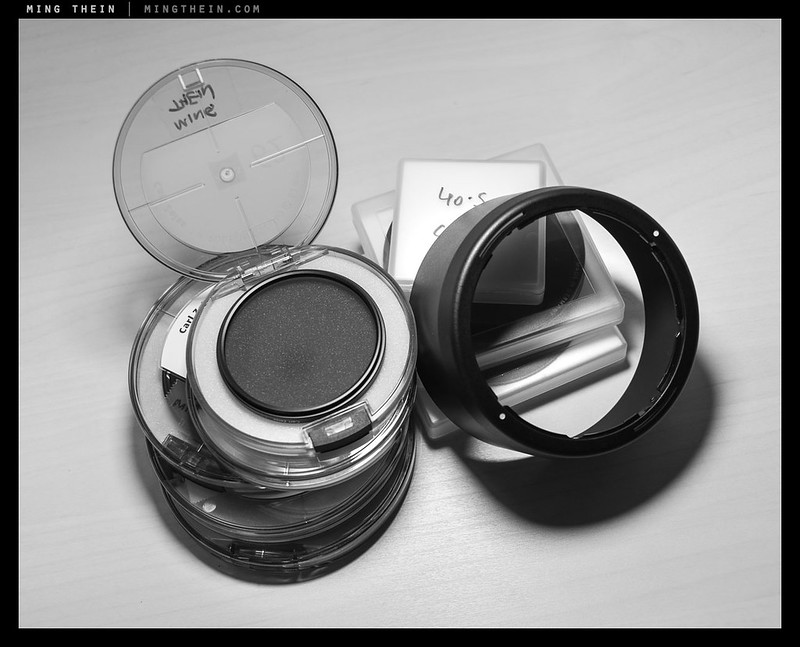
For some odd reason, one of the most frequently asked questions I encounter is which, if any, filters I use on my lenses. “Especially to protect the Otuses and other rare glass”, I’m asked. I would point such questions to an article here, except I found I didn’t have one – today’s post is to rectify that oversight. The answer might surprise you somewhat…

[Read more…]

Photography on the brain

_8B13983-4 copy
Obsession is when you find something new to photograph even while sitting on the can in your own house, which you’ve done every morning for the last five years.

There are few subtle but distinct divisions in what one would classify as interests: curiosity, enthusiasm, passion, and finally, obsession. Curiosity gets you in; enthusiasm keeps you going; the line to passion is a bit harder to define, but obsession is simple: you’re thinking about it 24/7. I think for most activities, obsession is probably one step away from certifiable madness and some sort of institutionalisation. But I’d actually argue that it’s necessary to even have a sniff of success given the current state of the industry.

[Read more…]

Why photography satisfies

45_7R2_DSC4523 copy

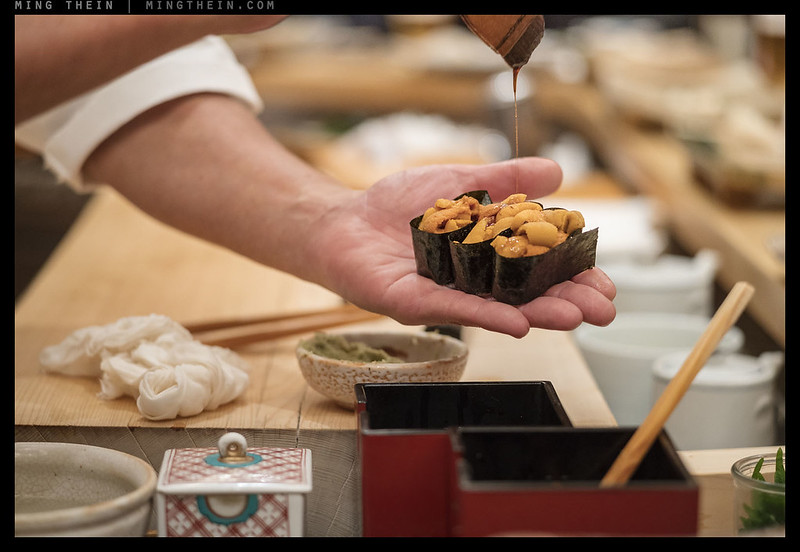
A photograph is like food: endless in variety, universally appealing or an extremely acquired taste; easily obtainable and available at a different level to suit every preference and budget. You can cook eat the same thing several days in a row and still enjoy it, or you can do something completely different every day. You can make it yourself or subcontract. There are no rules about what is ‘good’ or ‘bad’. Moreover, both photography and food are something relatively limitless for us humans: both in the creation, and the consumption. Just as we need nutrition on a daily basis, we need regular visual stimulation – and though you can manage just fine if you never cook yourself, at some point, curiosity is likely to motivate you to create. The more effort we put in, the more likely we are likely to be satisfied with the result: many techniques or dishes are deceptive in simplicity: the fewer elements present, the more perfect they have to be. I frequently think of analogs like minimalist photography being similar to sushi: there are just four ingredients (fish, rice, wasabi, soy sauce) – yet each one can affect the final outcome drastically. An uneducated diner might not be able to say why a particular piece of sushi (or photograph) works, a skilled one will be able to say why. But both will appreciate it. And just as with food, good ingredients and good equipment help, but at the end, it’s still down to the skill and imagination of the chef.

*Masterclass alumni will know I use the cooking analogy a lot: if a finished print is like a plated meal, then the planning and ingredient-gathering process and pre-prep is scouting and seeing; cooking is capture; plating is post processing.

[Read more…]