Creative development for working pros

_8B27355 copy
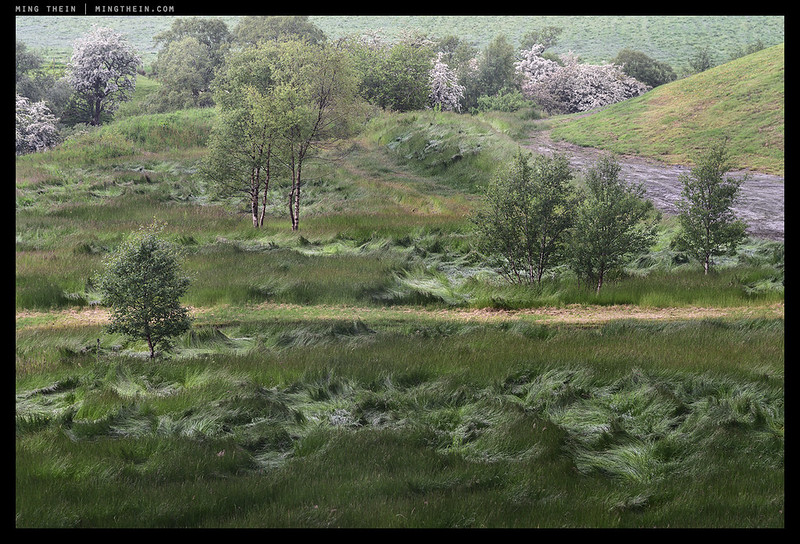
The Crawick Multiverse, Scotland. Part of one of my most satisfying commissions from 2015

Here’s a serious consideration for all working professional photographers: how do you ensure your work stays fresh? We face several challenges. Firstly, unlike those in conventional employment, there is no obvious career development path; no HR department or performance review officer to ensure you attend the right courses to (supposedly) give you the right skill set for the next position up the ladder. Secondly, our clients almost always hire us on the basis of our portfolios: this is work we’ve already done, i.e. historical. It would be nice to be hired on the basis of imagining what we could do, but for obvious reasons, this is unfeasible. At very best, we are hired based on what we might do for a client in a given situation which might be outside our current scope of experience, but still based on an extrapolation of what have previously done.
[Read more…]

Photoessay: 28mm in Tokyo

_Q116_L1070166 copy
Camouflage (urban jailbreak)

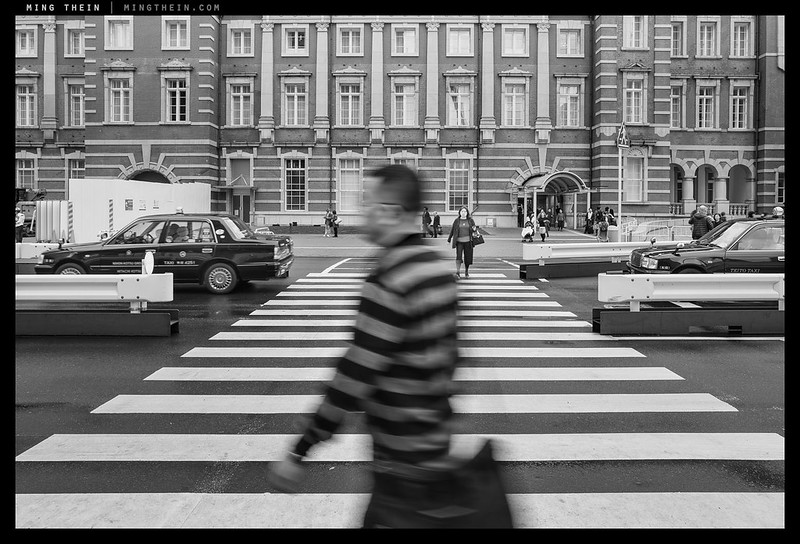
People, an urban centre, 28mm, and monochrome – is there a more ‘classical’ recipe for what might be traditionally classified as street photography? Perhaps, perhaps not. The whole genre is so fluid that I think it is impossible to define anyway; I instead think ‘snippets from the quotidian’ is probably more accurate in this case. They are vignettes and observations of the repeated, the mundane, and the boring. But the pace of the world changes so fast that who knows what the same activities will look like in twenty or fifty years? MT

This series was shot with a Leica Q and post processed with The Monochrome Masterclass. You can also look over my shoulder at the underlying postprocessing in the Weekly Photoshop Workflow series.

[Read more…]

State of play: the business of photography today

IMG_5154b copy
A less literal selfie. Selfies are a huge part of photography today: but there’s no business model here. And the underlying reason is inextricably linked to why we find photography appealing in the first place.

The game is changing, yet again – faster than ever. In today’s post I’d like to address the current state of play of the industry, and where I see it moving in the next year or two. Unlike just about every other industry, most of photography is unique in that there are no real benefits to scale anymore – even if you are a creative design house, there are good reasons to have a larger team such as specialisation. But instead we are seeing larger studios cut staff and run lean, and production houses giving way to collectives who band together as required for projects, but do not carry an aggregate P&L. Blogging has become an industry, though saturated. And the lack of regulation and standards is once again affecting all of us in the long run. Is there hope in dark corners? Perhaps, but we’re going to have to be brave, masochistic and resourceful to take advantage of it. I’ve broken it down by category for ease of analysis; usually multiple categories apply.

[Read more…]

Photoessay: Window seat

_5501281 copy

On the last two overseas trips of 2015, I lucked out on the airplane: not only did I have some spare air miles to put me in the front of the plane, but the aircraft itself had what appeared to be new windows marked with ‘DO NOT POLISH: CRYSTALVUE COATED’. Interestingly, whatever coating they did apply to the windows appears to have worked: very little dirt stuck, there were almost no swirly marks, and transmission – even at an angle when shooting downwards to the ground – was remarkably good. Less color correction than usual was required. Please put your seats upright and stow your tray tables… MT

Side note: in case you’re wondering why months go past between the time I shot something and the time it’s published here, it’s because I find that that duration is optimal for me when it comes to improving objectivity of curation. Unless it’s something very time-sensitive, I generally like to have some ‘sitting time’ to be sure that the final set presented is really what I want.

This series was shot with a mix of the Canon 5DSR and 40/2.8 STM Nikon D5500 and Zeiss 1.4/55 Otus, and post processed with Intro to Photoshop Workflow (not Workflow II: reason being above average color correction is always required for aerial work, necessitating reversion to the previous workflow that incorporates this). You can also look over my shoulder at the underlying postprocessing in the Weekly Photoshop Workflow series.

[Read more…]

To filter or not to filter?

_5504364 copy

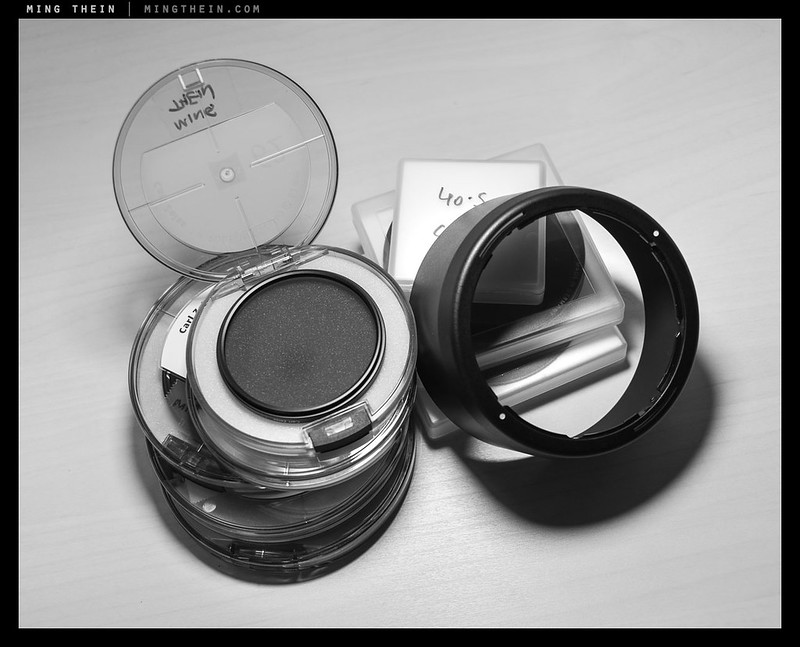
For some odd reason, one of the most frequently asked questions I encounter is which, if any, filters I use on my lenses. “Especially to protect the Otuses and other rare glass”, I’m asked. I would point such questions to an article here, except I found I didn’t have one – today’s post is to rectify that oversight. The answer might surprise you somewhat…

[Read more…]

Photoessay: Autumn near Bandai

_7R2_DSC4830 copy

Today’s photoessay is a quick landscape reminiscence from the end of last year; and I mean quick in both execution and conception. I captured these in approximately an hour, from two locations – one, not far from the ryokan at which I stayed during my visit to the Sigma factory outside Aizu, Japan; two, at a bridge overlook again very close to the Sigma factory (for which I requested a quick vehicle stop after seeing what was underneath it, and the unique perspective afforded by the height of the bridge). Nevertheless, I find we often encounter these single very strong locations that yield a large number of views and images (something similar happened in the Arrow River Delta outside Queenstown, New Zealand); they feel like brief chance encounters with random strangers with whom you just ‘click’ and promise to keep in touch with again; whether or not that transpires is another matter entirely. Many are in fact a sort of portrait of the location (even if ‘landscape portrait sounds rather odd). But for those moments, it was fun. I can only hope that in this series some of that magic of the cool breeze, clear sky and rustle of dry leaves carries through. MT

This series was shot with a Sony A7RII and Zeiss FE 1.8/55, and a Leica Q. Postprocessing via Photoshop Workflow II. You can also look over my shoulder at the underlying postprocessing in the Weekly Photoshop Workflow series.

[Read more…]

Photography on the brain

_8B13983-4 copy
Obsession is when you find something new to photograph even while sitting on the can in your own house, which you’ve done every morning for the last five years.

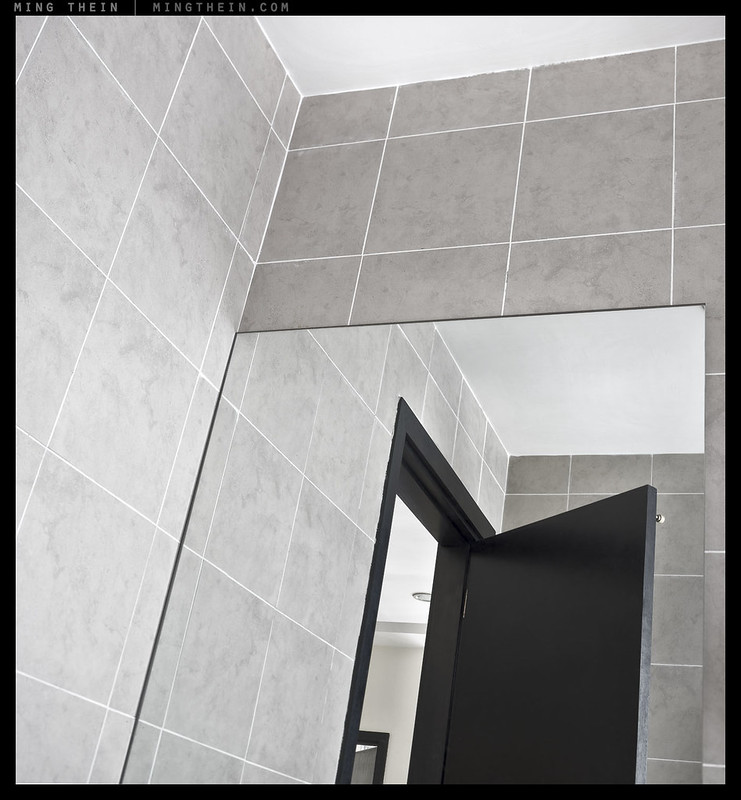
There are few subtle but distinct divisions in what one would classify as interests: curiosity, enthusiasm, passion, and finally, obsession. Curiosity gets you in; enthusiasm keeps you going; the line to passion is a bit harder to define, but obsession is simple: you’re thinking about it 24/7. I think for most activities, obsession is probably one step away from certifiable madness and some sort of institutionalisation. But I’d actually argue that it’s necessary to even have a sniff of success given the current state of the industry.

[Read more…]

Photoessay: Aizu nights

_7R2_DSC4727 copy

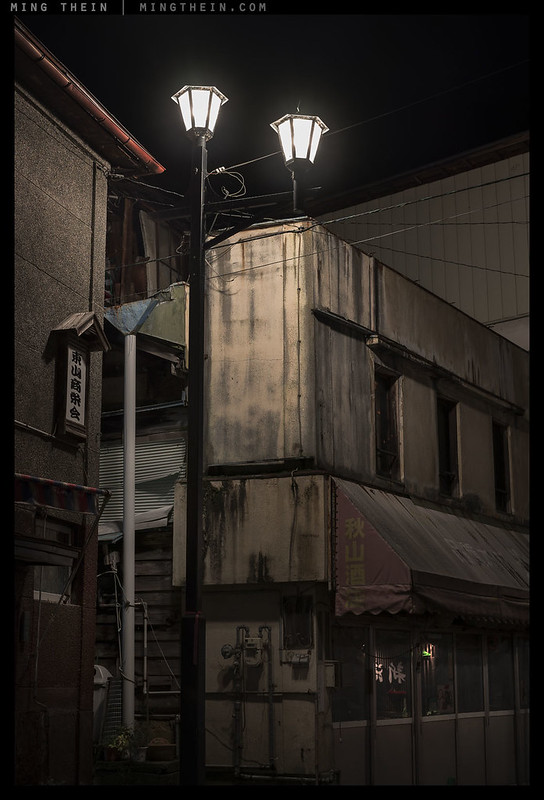
Aizu-wakamatsu is a relatively small town in the northern part of Honshu, Japan, that at one point was the seat of power of a regional military force before changing power after several civil war struggles. Whilst the town proper including the castle (destroyed in the the late 1800s and rebuilt in concrete in 1965) has seen several cycles of prosperity and decline, the hot spring resort area nearby of Aizu Higashiyama has seen relatively little change for several centuries – being popular with all. It is this little area which we explore in today’s photoessay – by night, because that was the only free time I had during this trip. Sometimes you feel like a walk after dinner, and happen to bring a tripod…MT

This series was shot with a Sony A7RII, Zeiss 2.8/21 Loxia and 1.8/55 FE and post processed with Photoshop Workflow II. You can also look over my shoulder at the underlying postprocessing in the Weekly Photoshop Workflow series.

[Read more…]

On Assignment: Film noir

H51-B0000691 copy

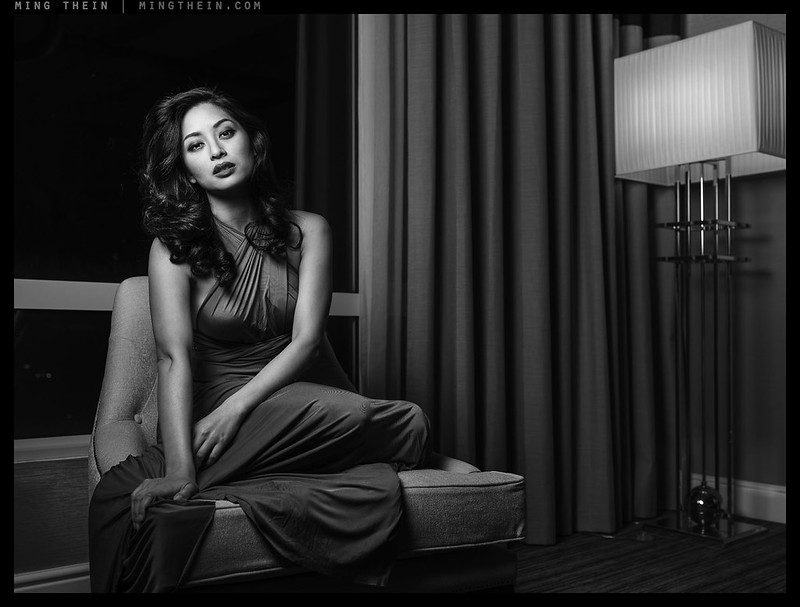
Today’s images are from a recent shoot – and shakedown test – of my recently acquired Hasselblad H5D-50C and some other bits of new lighting equipment. The brief: film noir. The model is a local actress. Those of you who frequent my site will know that portraiture – especially of the posed and lit kind – is not something I do often (but at the same time, I do more of it than you might think) mainly because it’s somewhat outside my usual focus of corporate documentary and architecture/ interiors. That said, when everything comes together it can be rather satisfying; I’ve always viewed portraiture as a conversation during which you might just happen to have the lights set up and a camera handy – very few people are aware of the way they look, body position etc. to a degree that they can control it to produce a desired result. It’s much easier to talk to your subject and try to elicit the desired responses without them quite being fully aware of it – that way, the results turn out natural, too.

Images in this series were shot with the H5D-50c, 50/3.5 II and 100/2.2 lenses, and post processed with the Monochrome Masterclass workflow. Lighting with six speedlights in two Lastolite Ezybox IIs.

[Read more…]

Photoessay: After the establishing shot

_5203648 copy

You might think the title for this post is curious: that’s because it is. In cinematography, a wider angle is used as an establishing shot to provide the overall context for the scene, location and any human dialogue that is to follow. The tighter head shots are frequently interspersed with equally tight cutaways to detail: it is a deliberate device to focus the attention of the audience very specifically on whatever specific object or action that is desired by the director. These cutaways always serve a purpose as they typically contain explanations or clues to the later storyline. In a way, they form a narrative or logical bridge of sorts. Compositionally/ visually, they are tricky to get right: too much visual texture and the scene is too busy for the audience to instantly register only one thing; too plain and it’s a starkly boring scene. It’s even more difficult to pull off as a candid still for the simple reason that the action is not planned; you have to anticipate and hope you’re in roughly the right place at the right time, then rely on instinct and experience to make any last-minute changes to composition as it happens. It is a slightly lighter photoessay than usual for the simple reason that these images are very difficult to make in practice…Enjoy! MT

Images shot mostly with a Olympus E-M5 II, Zeiss Otus 1.4/85, Zeiss ZM 1.4/35, and Canon 5DSR, post processed with the Cinematic workflow from Making Outstanding Images Ep.5. You can also look over my shoulder at the underlying postprocessing in the Weekly Photoshop Workflow series.

[Read more…]