Creative integrity – or, the Struggling Artist Myth explained

H51-B0006603 copy

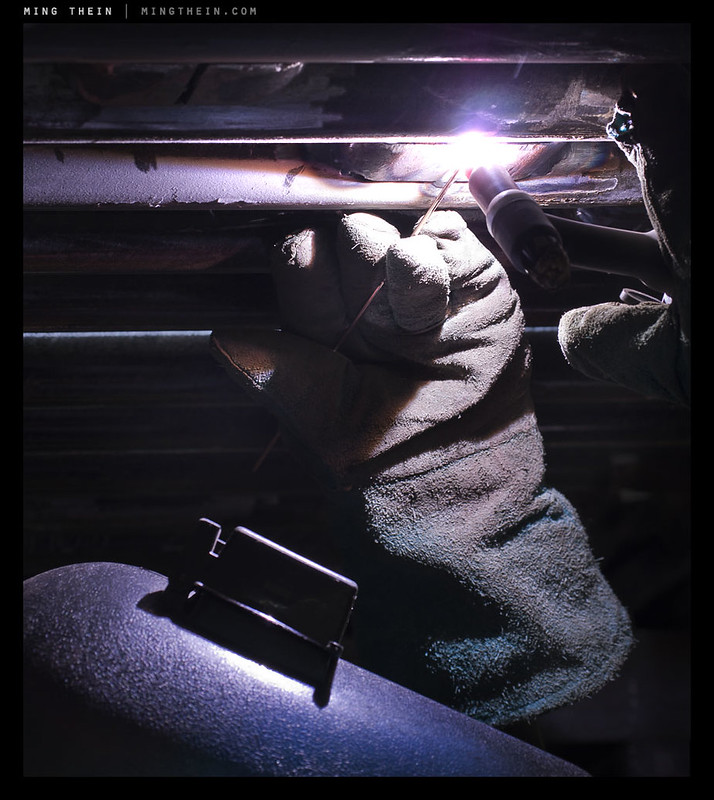
For the past six years, I’ve shot for pay full time, and occasionally for the better part of the preceding ten years before that. During the last six, the proportion of images of any sort shot with my own creative vision as primary motivation vs those shot with somebody else’s – i.e. for a client or as part of a commercial assignment – has swung from 100-0 to perhaps 5-95. This is expected, and both good and bad. It’s what actually had me stumped in my early pro days: every time I met a successful or established photographer, they almost never had a camera with them – or if they saw something spontaneous, they’d use their phone to shoot it. I wondered why, especially given their access to ‘better’. I think I know the answer to this, and to be honest: I’m not sure I or anybody else is going to like it. Read on if you dare.
[Read more…]

Favorite images of 2017 (or The Year in Review), part II


GX85_1000452 copy
June, Ginza, Tokyo. GX85, 35-100mm

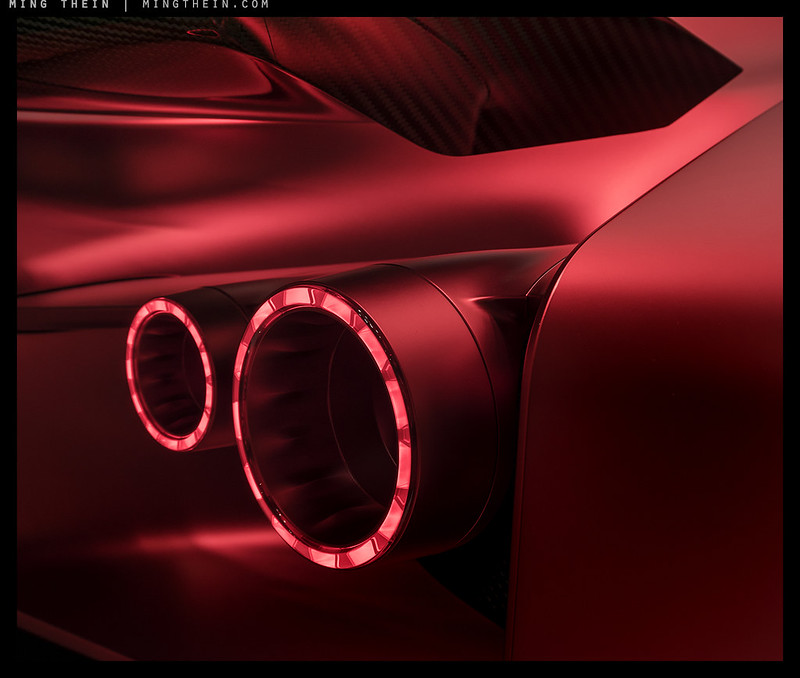
Though this looks like part of a Koenigsegg from the previous post, it’s pure coincidence – I shot this through a window at the Nissan salon in Ginza whilst walking past on the way to another meeting. The textures and shades of red really appealed – and I’m actually surprised the M4/3 sensor didn’t cook the color channel.

(Continued from Part I)

[Read more…]

Favorite images of 2017 (or The Year in Review), part I

X1D3-B0002093 copy
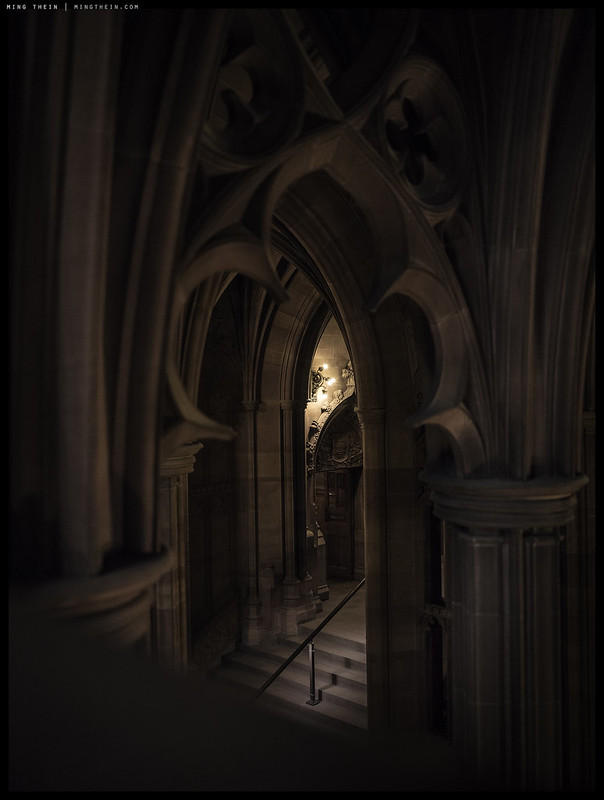
January. John Rylands Library, Manchester. X1D-50c, 45mm – place aside, think of the concept of a library: the preservation and sharing of knowledge – which itself needs to be nuanced, detailed, solid, and illuminating at the end of the visit: this scene translates all of that into architecture, and subsequently a physical location. What could be more appropriate?

Let’s indulge in a little retrospective curation today. Being the start of the new year, I generally find it useful to review my output from the previous year for a couple of reasons: firstly, to see how things have moved in general (often, you have the intention to shoot something but not necessarily the opportunity or discipline) and secondly, to determine where to go from here. It always makes sense to know one’s strengths and weaknesses, not to mention an awareness of just how much of photography is down to serendipitous luck. I suspect we’ll find that the planned/ commissioned work is pretty much as expected with few wildcards, but the spontaneous stuff is both less in overall volume (simply due to not having time or opportunity) but higher in spontaneity (because the few opportunities that remain are really NOT planned.) It also doesn’t help that the more you shoot – the higher the thresholds get. There’s simply a lot more history to overcome: what you produce now needs to be ‘better’ than what you did previously in the same subject or style category; yet it’s precisely this sort of precuration that kills experimentation. And we’re not even counting what I think of as the ‘craftsman’ type jobs where the client defines precisely what they want, and there isn’t much scope for creativity – those of course almost never hit the radar.

Interestingly, I landed up with more images from more recent shoots – which suggests that there’s definitely temporal bias even after a few months; either that or I’ve simply forgotten work from earlier in the year. Even so, there are only 29 images in this set, each of which I think would pass the ‘would I print and hang it’ test. With that preamble out of the way, let’s go to some images. I won’t leave much commentary other than precisely what appeals to me in the image and a little context. Even so, it’s going to be a fairly long post – so I’ve broken it into two parts. MT

[Read more…]

Discussion points: photographic rules

_RX100_DSC1102bw copy

Much has been written about photographic guidelines or rules that are supposed to guarantee you – or at least lead to a high chance of success – an interesting or balanced image. I’m not about to reinforce those, but neither am I about to dismiss them completely. Instead: let me offer you an alternative take on The Pantheon of Photographic Dogma like ‘the rule of thirds’ and ‘best light at dawn and dusk’ and ‘blur only your backgrounds’ etc. Important: it is not to be confused by the limitations imposed by the physiology of the way we see: we cannot help notice bright colours because this is the way our brains and eyes are wired. We cannot help but notice abrupt highlight clipping (but not black shadows) – because we cannot change the way the cells in our retinas are laid out. Apply some scepticism to internet pundits who can’t differentiate between man-imposed rules and those which are physiologically limited. With that, let’s move on to the discussion background.

[Read more…]

Photoessay: Icelandic seascapes

X1D5_B0002289 copy

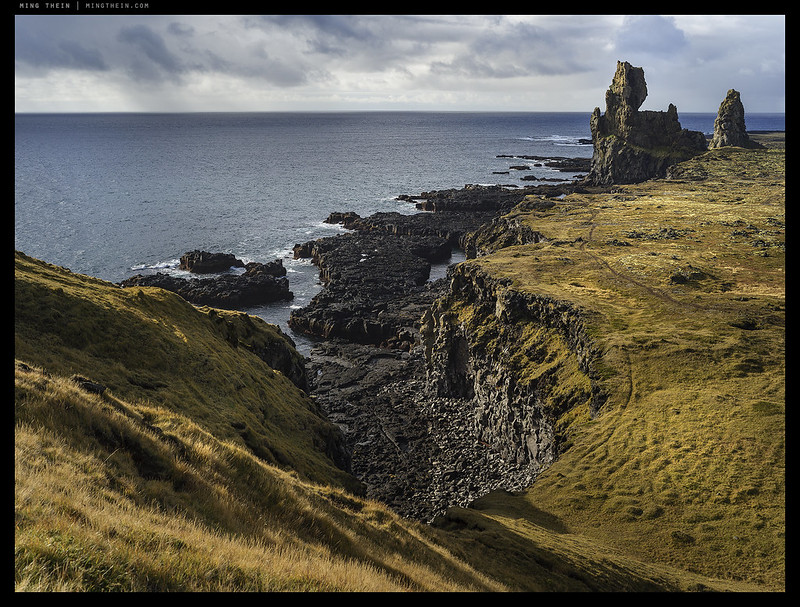
Today’s series of images are some of the ones that stuck from my trip to Iceland a few months back – specifically, the seascapes. I was only there for a week, so seasonal weather variations were minimal. Nevertheless, we did get some drama in the skies (though no truly bad storms, thankfully). That said, I’m still one of those people who believes there’s no such thing as light that’s impossible to work with; better/worse, yes, but even the crummiest weather conditions can yield something visually interesting. Oddly, I have to admit that one of the scenes that spoke the most to me was the stones on the beach: constantly moist from spray and waves, they glistened, jewel-like. At a macro level, they look pretty perfect; at the micro level, despite being polished for years by the waves – none of them are quite. The closer you look, the harder it is to find perfection. I’m sure there’s probably a photographic moral in there somewhere. MT

Shot with the Hasselblad X1D Field Kit and processed with PS Workflow III.

[Read more…]

Photoessay: An hour at the Blue Mosque

H61C-B0001632 copy

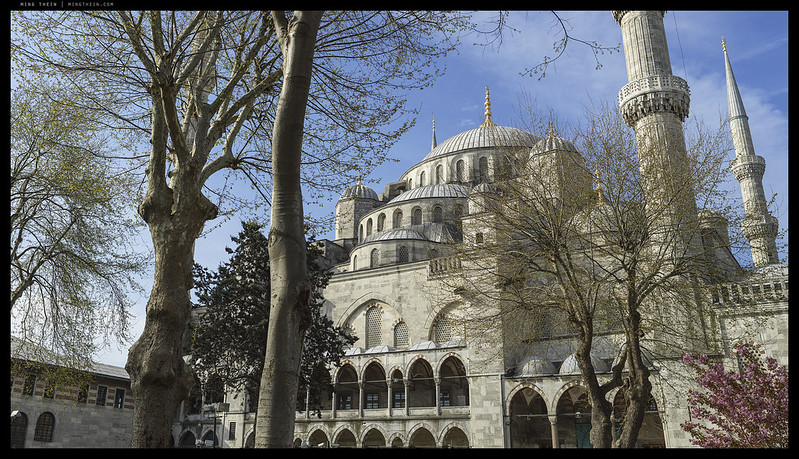
Disclaimer: I spent a cumulative hour in total shooting it, hence the different times of day. It’s one of those buildings that – much like Hagia Sophia – dominates and encroaches into every frame and vista in the Sultanahmet district. You can’t avoid it, but like all large buildings – there’s a curious effect of perspective that occurs as you get closer; the upper tiers appear to recede (probably because the upper tiers are stepped in pyramid form to better transfer the roof’s weight through the half domes). Construction started in 1609 and reflects the predominant architectural styles of the time: nested domes and half domes to create a largely free-standing internal volume, but still a rather stocky rectangular/square base profile. I’ve always thought of this ‘hemisphere on a square’ type of architecture of being a very distinctive characteristic of medieval Turkey. Unusually, the mosque has six minarets instead of the usual four – folklore puts this down to the architect mishearing the Sultan’s request for gold minarets. Internally, a rather low chandelier provides illumination but diminishes the perception of lofting space because of the weight of the ironwork; the very warm incandescent lights largely negate the effect of the blue tiles cladding the entire internal space – you have to look hard to see them, and the impression is a ceramic rather than blue one. As with most of these (relatively) ancient buildings – I’m left amazed that something with such delicacy and intricacy could have been constructed that long ago, whilst my five year old apartment has a habit of springing random leaks. I’m left humbled and wondering if it’s cost, care/pride in work, or something else. MT

This series was shot in Istanbul with a Hasselblad H6D-100c, 50, 100 and 150mm lenses, and post processed with Photoshop and LR Workflow III (and the Weekly Workflow). Get more out of your voyages with T1: Travel Photography.

[Read more…]

Working with multiple systems and formats in the field

_Q116_L1120373 copy H51-B0003003 copy
Q, H5D

A typical assignment for me may involve a) quite a variety of objectives, and b) quite a variety of hardware. Whilst the obvious solution would be to go with one complete system and suitable backups, this isn’t always possible for any number of reasons – from weight to lack of coverage in that system to cost or practical versatility. I had a recent email discussion with a reader and fellow pro over how to manage this in the most efficient way possible – both from a cost and logistic standpoint, but also a creative one. Often, suitable equipment for a broad range of optimal coverage* may require a significant shift in shooting mindset between different bits of hardware; for obvious reasons this becomes quite a bit more challenging when you’re working under pressure. I thought it might be an interesting topic to examine further…

[Read more…]

To be a specialist, you have to be a good generalist

_5016957 copy

Here’s today’s provocation of the day: there is really no such thing as a specialist. I’m going to explain why, using photography as the background context. The general expectation is a specialist in one particular topic or subject or tightly defined discipline should be familiar with and understand how to handle the vast majority of variations encountered around that topic or subject. They would probably have to keep up to date with new developments or changes and do enough experimentation to answer any self-doubt or uncertainty: an expert sports photographer, for instance, would know how to deal with indoor arena lighting, outdoor high noon and night games – and still produce an image that would pass muster for their clients. An aerial photographer would know how to deal with haze – either to minimise in post, or to use as a feature of the image. Yet I keep encountering this odd resistance…even amongst supposedly educated and image-savvy people. Why?

[Read more…]

The shooting experience

H61C-B0004180 copy

In the past, I’ve written about our own emotional/ personal motivations, concepts of idealised hardware and even why hardware itself can be a strong creative motivator. I’ve also talked about the appliance-camera and the ideal format. We’ve defined the concept of a shooting envelope – i.e. the breadth of scenarios under which a camera can deliver most or all of its maximum image quality potential – and the degree to which that’s operator dependent (i.e. heavily). I’ve even talked a lot about what makes sense from a commercial and business standpoint, but I don’t think I’ve ever really examined the experience of the process as a whole – as an enthusiast and hobbyist and somebody seeking enjoyment in both the journey and the results. That’s the purpose of this article.

[Read more…]

Photoessay: life in Istanbul

H61C-B0002307 copy

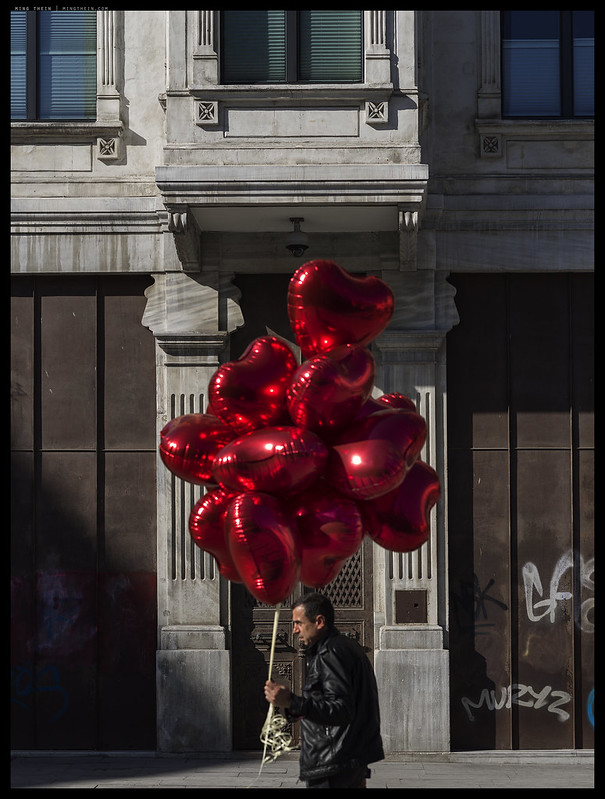
I did a little curation experiment with this set: it’s been more than six months since I shot these images in Istanbul, and perhaps four or more since I last looked at them. What’s interesting is that my memory has definitely warped over time: both in terms of what left the strongest impressions, and what I felt made the strongest images. This far away from the time of capture, we are definitely over what I think of as the ‘objective’ period – it’s so long ago you might as well almost be an independent observer. This means the immediate contextual bias is gone and emotion doesn’t drive selection – but rather the reverse; i.e. the image serves as an emotional mnemonic. I do notice now that the majority of the images seem to carry a very bittersweet feeling – there’s a suggestion of positivity through light, color or something else – but the posture of the people seems tense and at odds with that. I can’t say if that was an accurate portrayal of society at the time of my visit (it may well have been, given the referendum was happening at the same time) or merely a reflection of my own mental state. MT

Series shot in Istanbul with a Hasselblad H6D-100c and various lenses, and processed with Photoshop Workflow III.

[Read more…]