Photoessay: Paris part two: the streets, in B&W

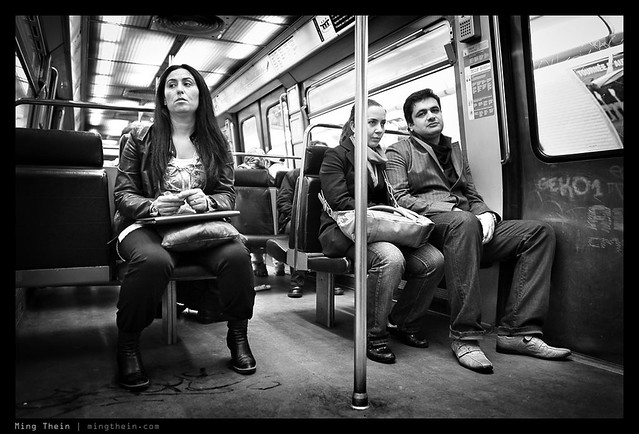
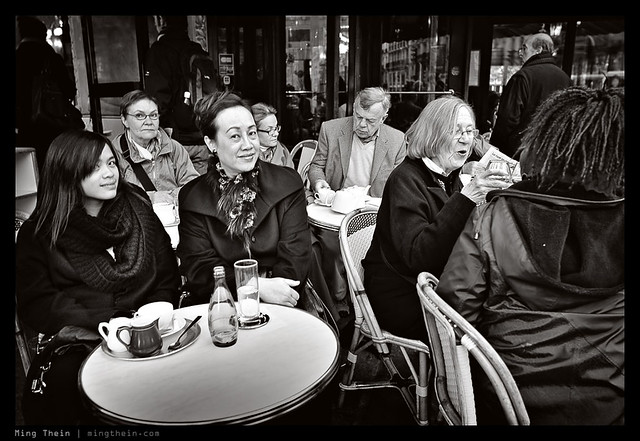
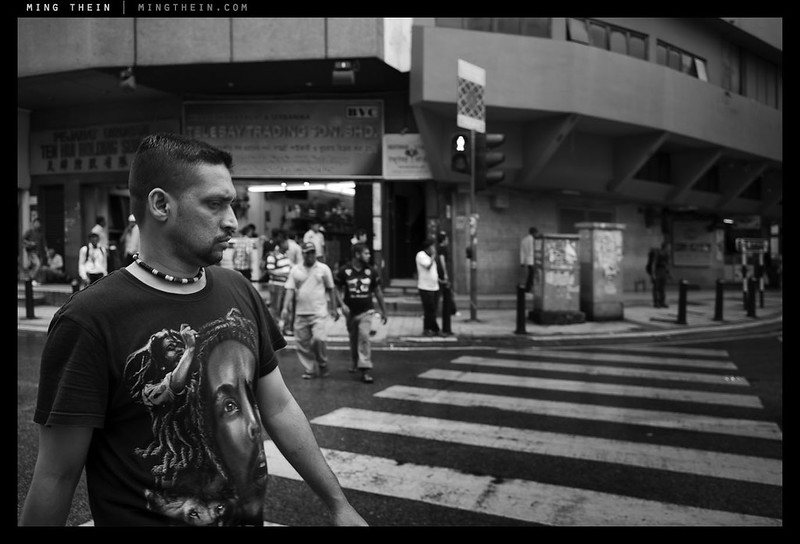
Part two continues with a series from my last visit; focusing on the people of Paris. This is a place where hyperfocal shooting, honing your distance-estimation skills and shooting like a stealth ninja are the order of the day.

This series shot in 2009 with a Leica M8, the 21/1.4 ASPH and Voigtlander 50/1.1.

_M8_L1025697bw copy

_M8_L1026180bw copy

_M8_L1025793bw copy

_M8_L1025458bw copy

_M8_L1025280bw copy

_M8_L1025308bw copy

_M8_L1026056bw copy

_M8_L1025558bw copy

_M8_L1025296bw copy

_M8_L1026350bw copy

_M8_L1025617bw copy

_M8_L1025748bw copy

_M8_L1025435bw copy

_M8_L1025455bw copy

_M8_L1026132bw copy

____________

Visit our Teaching Store to up your photographic game – including Photoshop Workflow DVDs and customized Email School of Photography; or go mobile with the Photography Compendium for iPad. You can also get your gear from B&H and Amazon. Prices are the same as normal, however a small portion of your purchase value is referred back to me. Thanks!

Don’t forget to like us on Facebook and join the reader Flickr group!

appstorebadge

Images and content copyright Ming Thein | mingthein.com 2012 onwards. All rights reserved

Street photography in context: diversion, documentary or nuisance?

_M9P1_L1006378 copy
The Police are everywhere. Prague. Leica M9-P, 28/2.8 ASPH

After spending some time thinking about it, I’ve come to the conclusion that street photography – I prefer to think of it as ‘reporting on life – is an increasingly popular genre of photography for several reasons:

1. It’s easy to do, and accessible to all – the barriers to entry are low. Wildlife or say automotive photography, for instance, is not. There isn’t any setup involved beyond remembering to take your camera with you when you leave the house, no matter where you live.
2. The definition of the genre is extremely broad; to the point that you could probably almost say there was no definition at all. This means it’s both open to much creative interpretation, and also an excuse for anybody whose generic images have no specific idea or subject in mind.
3. As humans, we are psychologically drawn to other people: no man is an island. Street photography lets us get our fill of humans without having the tread the social minefield of heaven forbid, actually having to interact with them. (It’s a bit like the internet in this regard.)
4. Everybody likes to play documentary photojournalist once in a while.
5. Building on from #4, some photographers have a burning need to record everything and everybody around them – I’m one of these people – and sometimes we just shoot out of compulsion, because our compositional minds just simply do not turn off. Having trained yourself to see workable frames in the most unlikely of places, it’s difficult to un-learn this skill (or curse, depending on whether you’re the photographer or the one waiting for the photographer to hurry up).

I believe the sum of these things is that street photography falls into one of three categories for the vast majority of photographers and audiences – diversion, documentary, or nuisance.

Diversion
For the unafflicted photographer, it can be a nice genre to experiment with when you have the desire to shoot something, but you have no clear subject in mind. Taking a walk with a camera allows you to go in with a blank but receptive mind, and just wait for an endless parade of subjects to pass you by. They’re all time-sensitive, however; if you don’t react fast enough, they’re gone. This doesn’t matter, however, because there are always more subjects where they came from, and you weren’t going out shooting with something specific in mind anyway. Serendipity is probably the best way to sum up your overall attitude towards it.

Similarly, for casual viewers, street photography can provide an interesting window into the lives of others; an unusual or otherwise missed moment preserved for posterity. You see it, appreciate it for a little longer than the actual fleeting instance of the moment, and move on. It doesn’t really stick in your mind.

Of course, this all depends on the strength of one’s compositions; of chief importance for all images, street or otherwise, is having a prominent subject and a clear idea of what the image is supposed to achieve or say. Purely aesthetic images are fine, too; but the execution must obviously support the idea.

Documentary
Those who take street photography a bit more seriously start to tip over into the documentary category – they view the images they capture as preserving a slice of life, or singling out an interesting instant from the constant flow of life around them. This is of course a continuum; you can be looking for just that little bit more over your normal street photographer, or you could be very, very serious about the decisive moment like HC-B. These photographers don’t always have a clear idea of what they want in an image, but they recognize an interesting scene when it happens and are ready to respond and capture the shot.

I think I fall into this category. Whilst I still make some images that I consider to be aesthetically pleasing rather than saying anything strong or documenting a particular moment of life, I do look for something out of the ordinary in my images; I think it’s probably the natural progression for all street photographers as they eventually land up with far too many ordinary looking images. This leads to seeking the common theme that separates out the strong images from the weak ones – and it always comes back to idea, subject, and execution (which covers framing, light, processing etc.)

To some extent, as a competent photographer, I feel that we have a moral duty to record life for posterity – especially so in fast-changing environments such as developing countries. I’ve lived in the same neighbourhood of downtown Kuala Lumpur for the last seven years; in that time the landscape and flow of people has changed so much that there are things I don’t even remember seeing, much less capturing, in my old images from just a few years ago. If we, the first hand observers, don’t even remember – how are any future generations going to manage? I’ve shown images to fellow residents, and will inevitably be told at least once or twice something along the lines of ‘I’ve never seen that before’, or ‘Where’s this? So nearby, really?’.

The observer must therefore be an impartial one, with an abstract but fixed idea of what is ‘ordinary’ in their minds. This is something that gets harder and harder the longer you live in a place, or the more familiar you get with it; the foreign soon becomes the commonplace and soon you won’t notice anything at all. Observation and recognition of differences is an innate human skill; but continuous observation and attentiveness is very much a trained one.

The nuisance
In trying to be both observers and recorders, we must endeavour not to become public nuisances. In a previous article, I talked about the ethics of street photography and the importance of maintaining basic human standards of politeness and courtesy; something that many modern photographers choose to ignore behind the pretence of anonymity, or simply choose to ignore. It’s true that we feel less inhibited as photographers when we are not in our own comfort zones or cities of residence; at the same time, this is when we are also at our most observant and probably least culturally sensitive state. It’s worth remembering that what we might not find culturally offensive at home could well be the opposite overseas.

Often, the most interesting things happen well within the boundaries of polite personal space; intruding that makes me (personally) feel uncomfortable; it’s important to remember that we as photographers have both our personal and group reputations to maintain – it certainly won’t help anybody if street photographers are eventually perceived as being at the same level as paparazzi.

So where does this all leave us?

My personal opinion – and I stress this is highly subjective – is that those of us who have the ability and inclination, should go beyond the realm of causal snapping and treat street photography as social documentary/ reportage; try to say something with every shot, but at the same time, do this in an ethical way that doesn’t intrude on the privacy, rights or personal space of the subject(s). The overarching goal should be to preserve these little vignettes on present-day life for posterity; this also means making the work accessible and viewable to as great an audience as possible, which is one of the reasons why I use flickr.

I’ve noticed that my personal street photography style has evolved over the years from – get a worthwhile composition, to get people in frame, to get as close as possible, to cinematic style with plenty of OOF areas, to get close but retain context. It seems that today I’m working towards a style that documents man in the context of his environment, natural or built; I don’t specify a man and his individual, personal characteristics as much as use that figure as an abstract for the idea of humans in a particular situation. Where you choose to take it (and if you even bother with street photography or reporting on life) is very much a function of personal style – something you will have to discover and define for yourself, if you haven’t already done so. I just thought it might be interesting to throw another perspective out there. MT

____________

Visit our Teaching Store to up your photographic game – including Photoshop Workflow DVDs and customized Email School of Photography; or go mobile with the Photography Compendium for iPad. You can also get your gear from B&H and Amazon. Prices are the same as normal, however a small portion of your purchase value is referred back to me. Thanks!

Don’t forget to like us on Facebook and join the reader Flickr group!

appstorebadge

Images and content copyright Ming Thein | mingthein.com 2012 onwards. All rights reserved

Photoessay: Paris part one: color vignettes

One of the spiritual homes of street photography, Paris is actually quite a challenging environment to shoot in – partially because the people are rather unfriendly, and because the urban space itself isn’t really human scale. The left bank is much more conducive to shooting.

This series is a mix of images from 2007 and 2009; shot with a Leica M8, 21/1.4 ASPH, 50/1.1 and Nikon D200 with 17-55/2.8.

_M8_L1025466 copy

_M8_L1026299 copy

_M8_L1026229 copy

_M8_L1026085 copy

_M8_L1025241 copy

_M8_L1025305 copy

_M212811 copy.jpg

_M8_L1025260 copy

_M212319 copy.jpg

_M8_L1025741 copy

_M8_L1026176 copy

_M8_L1025475 copy

____________

Visit our Teaching Store to up your photographic game – including Photoshop Workflow DVDs and customized Email School of Photography; or go mobile with the Photography Compendium for iPad. You can also get your gear from B&H and Amazon. Prices are the same as normal, however a small portion of your purchase value is referred back to me. Thanks!

Don’t forget to like us on Facebook and join the reader Flickr group!

appstorebadge

Images and content copyright Ming Thein | mingthein.com 2012 onwards. All rights reserved

New: Photoshop Workflow DVD for the Leica M Monochrom!

m-monochrom photoshop opening

As the first batch of Leica M Monochroms begin to be delivered to their owners, I’ve received a surprisingly large number of questions and requests for info or  a DVD on how to handle the Monochrom files. More than enough to justify producing one. The DVD is in a similar format to the previous general Photoshop Workflow for Photographers but with 15 specific examples that consist of M-Monochrom files shot under various conditions, of various subjects.

The video takes you through my modified B&W workflow specifically for the Leica M-Monochrom, and is designed to be a useful starting place for photographers wanting to get that ‘pop’ out of their files. It’s 2h10min long, in low-compression Quicktime format at the native 1440x900px resolution of my screen to capture all of the subtle nuances. Building on feedback from the previous DVD, I’ve now got a before and after preview of the files processed as examples below, as well as further improved audio quality. I also address superscaling/ upsizing for making very large prints.

Feb 2013 Update: The Photoshop Workflow Video for the Leica M Monochrom is US$65 via paypal and digital delivery – please include the product you’re ordering and the email address you’d like the download link delivered to.

Checkout now via PayPal

Thank you again in advance for your support! MT

MM workflow examples 1

MM workflow examples 2

MM workflow examples 3

MM workflow examples 4

____________

Visit our Teaching Store to up your photographic game – including Photoshop Workflow DVDs and customized Email School of Photography; or go mobile with the Photography Compendium for iPad. You can also get your gear from B&H and Amazon. Prices are the same as normal, however a small portion of your purchase value is referred back to me. Thanks!

Don’t forget to like us on Facebook and join the reader Flickr group!

appstorebadge

Images and content copyright Ming Thein | mingthein.com 2012 onwards. All rights reserved

August 2012 Competition: Compact Challenge Results!

aug12competition-all

The point of August’s challenge was to remove several of the commonly-overused crutches for most photographers: depth of field, extreme perspectives, and producing useable images in low light thanks to modern killer sensors. Point and shoots are in a way, a devolution to a much simpler kind of photography that focuses almost solely on composition, exposure, and to a lesser extent, perspective. You simply don’t have the same toolkit as you would with a larger sensor. The upshot of this is that if you can consistently make an image that works with a compact, you can do it with something larger: it’s the composition that stands out as being strong, over everything else. Similarly, if you have no problems representing your subject in 8-9 stops of dynamic range, you should be able to do even better with 12, 13 or even 14. With that in mind, the contest was limited to small sensors only.

All in, we got 70 entries – I think there was a degree of saturation after the last challenge, or perhaps this one was uncomfortable and unfamiliar territory for many photographers. Nevertheless, a decent showing. Thank you also for those who submitted multiple entries. This means a total of US$350 received, with a first prize pool of $175 and one of my Photoshop Workflow DVDs to the winner and $70 to the honorable mention.

Without further ado, let’s move on to the finalists – in no particular order. For each shot, I’ll go through what works, what doesn’t, and how it could be improved.

Runar Nielsen – Small shoes (Fuji X10)

Runar Nilsen

Nice use of chiaroscuro and a strong single light source to give the subject both depth and texture; there’s good vertical balance to the image too. The technical qualities – tonality, exposure, sharpness – are also excellent. However, the weak point of the shot is empty space – I feel there’s a lot of blank foreground front-left that feels like it’s not really contributing to the shot. There’s also some color dissonance here – the shoes have a feel of something old, weathered and vintage; best represented by warm tones; this doesn’t jive with the cool tone of the background. One final possible improvement: a little highlight kicker on the back of the shoes to define the back edge against the background. A separate light would do it, or alternatively a strategic reflector. See my upcoming series on lighting…

Samsudin Mohd Ali – Looking down on the big boys looking up (Leica D-Lux 4)

samsudin mohd ali

There’s a degree of consistent chaos to the subjects here that I like – nobody has their lenses aimed in quite the same direction, but yet the shot makes you wonder what it is they’re looking at. There’s nice tonality to this image; despite the obviously bright day (note shadows) and restrictions of small sensors, whites and blacks are managed well. What doesn’t work is the huge empty space in the sky. I would have either excluded most of the sky and focused on the people, perhaps holding the camera higher above my head to get a slightly top-down perspective, or try to include whatever it is they were photographing (if at all possible).

Jesse Estes – Send off (Canon Powershot SD550)

JesseEstes01

I think what struck me about this image was that it had the feel of a Salgado in color. It has that particular textural look and feel created by mostly backlit subjects, dodging and burning and some atmospheric haze; I think the subject didn’t do any harm either. There may be a little too much of this, though; the deep shadow areas never really hit black. What I don’t know is whether it works better horizontally or vertically – I feel perhaps including some more of the window and  the foreground woman might feel more balanced, especially if there was a little dark space left around the edge to form a natural frame to the image. There’s also a part of me that just can’t help wondering what it would look like as a B&W, though the tonal palette here does give the scene life.

Larry Gebhardt – Light at the courthouse (Panasonic LX5)

Larry Gebhardt1

This image is a good example of one of the strengths of small sensor cameras: the ability to create abstraction through combining very compressed perspectives with high depth of field. This is rarely possible at close distances with a larger sensor, because the apertures required become unfeasible. Nice tones, nice metering, and a clear subject which is well-isolated by natural frames. What isn’t so strong here is balance: the whole right side and top-right corner is empty and dark, and lacks the texture of the left side. I would crop this one to end just before the shadow starts on the right for a much stronger composition.

Robert Symonds – untitled (Canon S95)

robert symonds

I don’t know for sure what this subject is (I presume it’s a vintage hood ornament) but I do know that I like the fluidity and texture of it, and the way it contrasts against the blue and white; once again, the technical aspects of the image are perfect, but what’s missing is balance. It feels as though there’s too much white in the bottom half, though if you start playing around with crops, you find that any less looks top-heavy. The solution is rotation. The subject here is a bit like a snow-covered mountain against the sky; you need to have an ‘up’ side and a ‘down’ side to the slope – without it, the mind is a bit confused because it can’t place a sense of scale to the object. So, the conclusion here is a bit of rotation of the camera anticlockwise, and a little more subject on the right – bingo.

Carlos Paturzo – untitled (Canon G10)

carlospaturzo

Compression of perspectives is used here to good effect also. This image is all about texture; the ripples in the water are well-defined and sharp, yet abstract enough to be impressionistic. I think if the water was calmer, I would go with inverting the image to make the reflection appear as reality instead; however, this is the best orientation given the current subject. The problem area for me is the top right corner – which is a bit of a shame, because this is where  most of the subject definition happens. There’s a huge hotspot on the hull of the boat, which means losing some of the texture of the reflections in the hull; I find this visually very distracting. The only solution would have been to underexpose some more and bring it up again in postprocessing, at the expense of some shadow noise – which I can already see creeping into the foreground.

Andrew Marerro – Bridge (Apple iPhone 4S)

Andrew Marrero 1

Though the image doesn’t really give any landmark cues as to where it was shot, it screams ‘old New York’ to me – I think it’s the strong lighting and B&W treatment. Only the modern cars in the foreground give away the time period. I would have said the right side looks empty, but the shadow itself is the subject, and that portion of the frame still feels balanced. The only place where it doesn’t is at the top left and right corners. With strongly geometric subjects like this one, it’s important to take care that there are no obviously imbalanced areas – look at the white gap top left and top right where the verticals meet the horizontal trusses Also, the curve that runs across the top edge of the fame make it feel as though the horizontal alignment of the shot is off – even though it isn’t. The solution would be to dodge the curved portion at the right and left, to visually separate that part of the subject from the main, symmetric subject and have it serve as a natural frame. Otherwise, this is a well-executed shot that could probably only be improved by say a horse and carriage team in the right-hand foreground. 🙂

Boris Giltburg – Saker Falcon (Canon G12)

Boris Giltburg (3)

Wildlife and compacts don’t go together. Most of the time, the lenses are either not long enough, not bright enough, or image quality is just downright horrible. Even though I’m guessing this was a tame bird, it probably wasn’t an easy shot to pull off; the strength of this image is in the fact that I look through the photo and see the subject – it’s almost like a posed portrait of a person rather than a bird. One thing you have to be very, very careful with is metering – natural feathers etc reflect light to the extreme, and can often be two or more stops brighter than you’d expect. In this case, I’d say take a leaf out of Majoli’s book and meter for the highlights; let the shadows fall wherever they may. I can’t say I’m a fan of the toning, either – I think it’d be a stronger shot with either accurate color, or pure B&W.

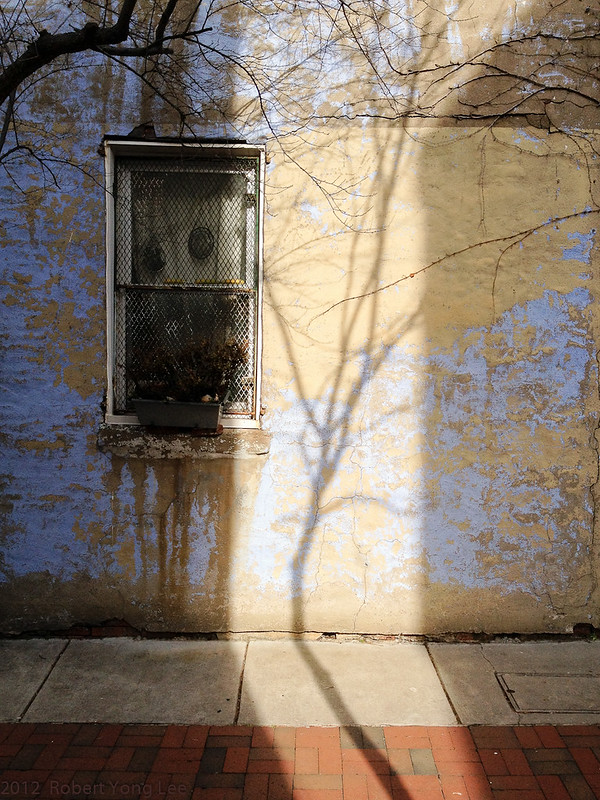
Robert Yong Lee – Solstice #11 (Apple iPhone 4S)

Robert Lee

Last month’s winner has produced another one of those painterly images that appeals to me – here comes the personal bias – it’s well-balanced, mostly well-exposed, and makes a subject of texture itself. What I don’t like about it is how dominant the dark window and window box are; they take visual prominence over the shadow of the tree. This is as processing issue: shadow recovery and a little more contrast about the center would improve this image by several notches. Note that there are no blown highlights, so there’s still a bit more dynamic range that could have been brought into play at the time of capture.

Fritz Niemann – Blue night (Canon S100)

Fritz Niemann

Last but not least, Fritz’s image is one that captures the energy of the scene. This was a technically difficult shot for two reasons: firstly, compacts blown the blue channel very quickly (note the piece of plastic with the huge hotspot) and secondly, it was probably very dark – I’m guessing there’s a reason why it appears that almost nothing in the scene was static, even things that should probably be fixed. These are both the strong and weak points of the image: the hue shift due to the blue channel overexposure produces an interesting, otherworldly atmosphere, but also hot spots that are hugely distracting because they draw the eye in and keep it there. Images with movement should have a visual anchor – a static point – somewhere in the frame to cue the mind that there’s life here, not camera shake. Unfortunately, there isn’t a clear visual anchor here anywhere.

I’m sure after reading all of these critiques, you’re probably thinking that none of the images made the cut; far from it. The finalists were all of a very high standard, but we’re all perfectionists, otherwise we wouldn’t be here reading this, right? In the grand scheme of things, these are excellent images. The suggestions are there to make them outstanding.

It’s now time to decide the winner. Cue drumroll. First prize goes to Jesse Estes with Send Off; you win $175 and a mingthein.com Photoshop Workflow DVD. The honorable mention goes to Andrew Marerro, with Bridge – your prize is $70. I’ll be sending both of you email in a short while to sort out your prizes. Congratulations to both of the winners!

In the meantime, we’ll be taking a break from competitions for this month – to be honest, I’m too busy to take care of the administration – but what you can do is please leave as message at the end of this post with suggestions for themes or topics for the next one – don’t worry, we’ll be back with another round soon. Thanks again everybody for taking part! MT

____________

Visit our Teaching Store to up your photographic game – including Photoshop Workflow DVDs and customized Email School of Photography; or go mobile with the Photography Compendium for iPad. You can also get your gear from B&H and Amazon. Prices are the same as normal, however a small portion of your purchase value is referred back to me. Thanks!

Don’t forget to like us on Facebook and join the reader Flickr group!

appstorebadge

Images and content copyright Ming Thein | mingthein.com 2012 onwards. All rights reserved

The Maybank Photography Awards 2012

maybankphotoawards

For readers living in Malaysia, I want to bring to your attention the 2012 Maybank Photography Awards – entries run from 3 September to 31 October, and there are five categories to enter around the theme of Being Human: Photographer of the year (portfolio), Street, Studio, Landscape and Press. Each category has an award, plus a bonus for People’s Choice. The contest is sponsored by Maybank, Leica, Profoto and HP; prizes include a total of RM16,000 cash, a custom Leica X2, a Profoto D1 Studio kit and a HP Designjet Z2100.

You’re probably wondering why I’m posting about this instead of entering it – aside from the rather impressive prizes, there are two other reasons. Firstly, I’m serving as head judge (Thorsten Overgaard is one of the category judges), so it would be more than a little nepotistic. 😛

More importantly, unlike almost every other photography competition where submission of an image constitutes transferral of rights to the image to the contest organizer, image ownership and IP remains with the photographer, with a limited license granted to the competition organizers for use related to the competition only. I wanted to create a contest which people would be comfortable submitting their best images to – this would obviously not be possible for the professional and press categories with anything involving rights transferral.

There are also no restrictions on when the images have to be captured, which means stuff from the archives is okay – we recognize that it isn’t always possible to produce your best work on demand in a short space of time, (even true pros have trouble with that; opportunities don’t always happen when you want them to) so long as the image fits the theme. So start shooting, looking through your back catalog, and sharing the competition with your friends. My personal advice with all competitions is not to enter until you’re sure you’ve got something you can’t improve on; don’t settle. If in doubt, enter at the end near the closing date, because you never know what you might shoot between now and then.

Finally, stay tuned for the results of the mingthein.com August Compact Challenge to be announced tomorrow! MT

*You may recognize some of the placeholder images. They’ll all change once we’ve received entries worthy of shortlisting.

____________

Visit our Teaching Store to up your photographic game – including Photoshop Workflow DVDs and customized Email School of Photography; or go mobile with the Photography Compendium for iPad. You can also get your gear from B&H and Amazon. Prices are the same as normal, however a small portion of your purchase value is referred back to me. Thanks!

Don’t forget to like us on Facebook and join the reader Flickr group!

appstorebadge

Images and content copyright Ming Thein | mingthein.com 2012 onwards. All rights reserved

Review: The Panasonic Leica 45/2.8 Macro-Elmarit for Micro Four Thirds

_8015681 copy

One of the earliest lenses for the Micro Four Thirds system, the Panasonic Leica 45/2.8 Macro-Elmarit (hereafter known as just the 45 for the rest of the article) is also perhaps one of the most underrated. It acquired a reputation of being a slow focuser; that might have been as much due to the bodies available at the time as the lens mechanics. (The lens actually has a range limiter switch).

_8015687 copy
Square hoods are a very typically Leica thing – just look at the S lenses. Oddly, the hood for the 25/1.4 is much deeper than this one.

Something I’ve always wondered was whether this was a Panasonic design, a Leica design, or a mix of both. Turns out that the answer is that the optics are designed by Leica in Germany; they’re assembled at Panasonic’s factories in Japan, and QC’d by a Leica rep who’s based there. Regardless, the optics are pretty darn superb. The lens is very useable even wide open at f2.8; unsurprisingly, for a macro lens, every focus distance is sharp. Performance is slightly worse in the corners than the center, but even this slight degree of blurring is removed by stopping down to f4 or smaller.

_8015675 copy
The midsize lens balances well on the Olympus OM-D.

Don’t go any smaller than f11 though, because after this point there is clear diffraction softening visible on the OM-D’s sensor; fortunately due to the short real focal length, you’re unlikely to need to do so even if you require extended depth of field. f2.8-f8 is a good practical working range.

I’m pleased to report that the lens is also very low in chromatic aberrations of any kind; lateral CA is almost completely absent, and longitudinal CA (spherochromatism or ‘bokeh fringing’) is mild, and completely gone by f5.6. This suggests that the lens’ design is almost entirely tele centric, and definitely optimized for the M4/3 mount as we don’t see any evidence of purple fringing.

_5001658 copy
Study of a pepper, 1. OM-D and 45/2.8 Macro

Bokeh is a slightly different story. Whilst bokeh is superbly smooth and uniform with no ghosting or double images if you have enough distance between subject and out of focus area, there is a very odd transition zone immediately on either side of the focal plane that is both slightly nervous and displays bright edges on highlights. It’s worse at larger apertures and complex/ busy subjects. If you stop down to f5.6 or so, this property goes away.

_5004410 copy
Hublot Big Bang Ferrari Chronograph Magic Gold. OM-D and 45/2.8 Macro

Outside of macro work, in truth, a 45/2.8 as a multipurpose lens just isn’t that exciting because it’s a bit in no mans’ land. You have the equivalent FOV of 90mm, but none of the bokeh separation; it isn’t a sufficiently compressed perspective to be exciting or let you do something compositionally different with all-in-focus telephoto shots. In fact, it feels more like shooting with a 60-75mm lens in that regard. Yet you can’t be lazy with your shooting discipline, because it really needs about 1/100s for a consistently sharp image – providing you’ve got either one of the stabilizers off.

_5001346 copy
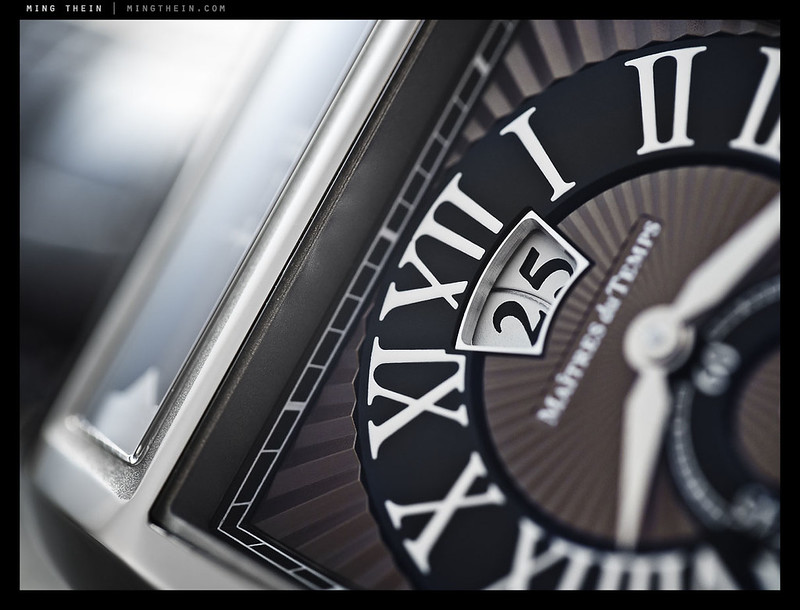
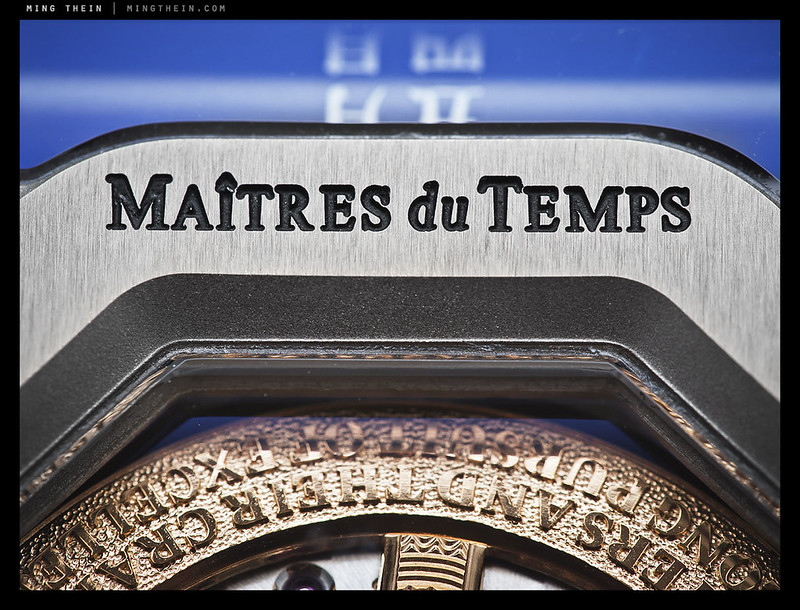
Maitres du Temps Chapter Two Tonneau. OM-D and 45/2.8 Macro

As with all of the Panasonic lenses on Olympus bodies, you have a choice of which stabilization system to use – either the moving-lens based system, controlled by a switch on the side of the lens, or the sensor-shift type built into the body. I did quite a lot of testing comparing the two systems – unfortunately there’s no real quantifiable way of doing this – and didn’t see any significant benefit of one over the other. As with all IS systems, you need to turn it off if the shutter speed is high enough otherwise you will actually land up with double images. The threshold is probably around 1/500s. I think this is because it can’t react fast enough to the high-frequency vibration caused by the shutter, but I’m sure there are others far more knowledgeable on this subject.

_5001978 copy
Doctor Zoidberg. OM-D and 45/2.8 Macro

There’s a second switch on the side of the barrel, and that’s to control the focus limiter. Like all M 4/3 lenses, manual focus is entirely fly-by-wire; I personally don’t like these systems because they don’t give you enough tactile feedback and lack hard infinity or near limit stops. Although I prefer to use manual focus when shooting close focus so I can set my magnification before focusing, this is one of the few lenses where I have no choice but to rely on autofocus.

_5004225bw copy
Street scene in Geneva. OM-D and 45/2.8 Macro

It will hunt a bit if you have the lens set to full range and aren’t focusing on a close subject; but for the most part, focusing is actually pretty swift if only small changes in focus distance are required. Switching on the limiter – near focus of 45cm – makes things much faster. (The full limit is 25cm, which gives 1:1 magnification and about 10cm or so of working distance from the front of the lens). I haven’t actually tried it on the E-PM1, but I don’t expect focusing performance to be much worse.

_5004606 copy
Hublot Ultra Thin. OM-D and 45/2.8 Macro, ambient light on location.

The 45 works much better as a dedicated macro lens, and will serve handily as a portrait lens in a pinch; however, my general purpose pick would be the Olympus 45/1.8. Image quality is superb; there’s a biting sharpness and fine microcontrast structure you’d expect from a lens with this price tag and implied heritage. It definitely renders in a very different way to the Olympus 45/1.8; I suppose the best way to describe it would be tight and controlled.

_5004169 copy
Geometry. OM-D and 45/2.8 Macro

It’s a midsize (for M 4/3, but about the same size as a 50/1.8 for any SLR mount) lens which balances well on an OM-D, with or without the optional grip. Sadly, the only metal parts in this lens appear to be the lens mount and screws; whilst the plastics are of high quality and the build quality and tolerances are tight, it just doesn’t have the feel of a precision instrument in the same way that say the Leica M or Zeiss ZF lenses do.

_5001673 copy
Study of a pepper, 2. The full size shot shows some nervousness of bokeh around the focus transition zone near the stem. OM-D and 45/2.8 Macro

I would personally prefer a bit more control over my depth of field in a macro lens. Having said that, the extended depth of field offered here can be useful for certain applications where you need to get a large amount of the subject in focus. Perhaps the forthcoming Olympus 60/2.8 macro will better suit my requirements. However, it does offer some advantages over my normal setup – at maximum magnification, it covers a 17x13mm frame, against 36x24mm for full frame, and without the need for any extension tubes and the accompanying degradation in quality*. I can also see some uses for it for macro video, though the fly-by-wire focus ring may prove to be a bit of a problem.

_5002024 copy
Grilled wagyu done right. OM-D and 45/2.8 Macro

*Extension tubes add another set of mount interfaces into the optical system; any slight deviations in planarity, or looseness, or give, will result in the optics being slightly off-axis. This is visible as softening, coma or astigmatism.

For now, though, the Panasonic Leica 45 retains a place in my bag, especially for use as part of my backup system on watch shoots. Don’t let the plastic exterior fool you: optically, this is a serious lens, and in the grand scheme of things it actually represents fairly good value for money despite being one of the more expensive lenses in the M 4/3 system. MT

The Panasonic Leica 45/2.8 is available from B&H and Amazon.

____________

Visit our Teaching Store to up your photographic game – including Photoshop Workflow DVDs and customized Email School of Photography; or go mobile with the Photography Compendium for iPad. You can also get your gear from B&H and Amazon. Prices are the same as normal, however a small portion of your purchase value is referred back to me. Thanks!

Don’t forget to like us on Facebook and join the reader Flickr group!

appstorebadge

Images and content copyright Ming Thein | mingthein.com 2012 onwards. All rights reserved

_5004452 copy
Hublot Diver’s Chronograph. OM-D and 45/2.8 Macro

Photoessay: The immigrants of Kuala Lumpur

Developing countries have just as much, or perhaps even more immigration going on than in developed ones. For starters, border controls are a lot more lax; as is visa enforcement. At a recent visa amnesty, the Malaysian government granted over 600,000 national identity cards – representing permanent residency or citizenship – to previously unregistered foreign workers or illegal immigrants. Put that in perspective for a moment: that’s nearly 2.5% of the people in the country who were previously operating under the radar. What do they all do? Well, mostly provide cheap labor or services for the jobs the locals don’t want to do; and as the immigrant community expands, many have started businesses providing a bit of home for their own people, too.

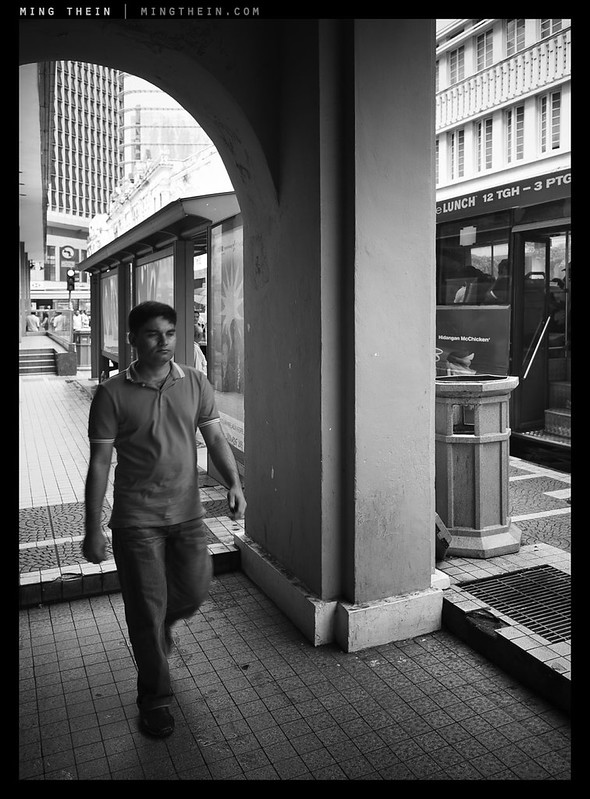
There’s one part of Kuala Lumpur that’s mostly home to the Bangladeshi, Burmese and Nepali immigrants of the city – it’s the area around Leboh Ampang and the older portion of the city. I took a walk around with a student a little while back, and this is a short series on the other side of Kuala Lumpur. Understandably, a lot of them are still nervous about being photographed, because I suspect some are not officially supposed to be here…MT

Shot with a Leica M9-P and Zeiss ZM 2.8/28 Distagon. Exif data is intact, click through to Flickr to view.

_M9P1_L1016307bw copy

_M9P1_L1016271bw copy

_M9P1_L1016214bw copy

_M9P1_L1016232bw copy

_M9P1_L1016198bw copy

_M9P1_L1016314bw copy

_M9P1_L1016303bw copy

_M9P1_L1016276bw copy

_M9P1_L1016249bw copy

_M9P1_L1016211bw copy

____________

Visit our Teaching Store to up your photographic game – including Photoshop Workflow DVDs and customized Email School of Photography; or go mobile with the Photography Compendium for iPad. You can also get your gear from B&H and Amazon. Prices are the same as normal, however a small portion of your purchase value is referred back to me. Thanks!

Don’t forget to like us on Facebook and join the reader Flickr group!

appstorebadge

Images and content copyright Ming Thein | mingthein.com 2012 onwards. All rights reserved

Last day to enter the August competition!

Full details here.

Remember, your entry fees go towards the pot – the more entries, the bigger the prize! MT

Watch photography with the Olympus OM-D, and thoughts on its use as a backup system

_5001608 copy
The Maitres du Temps Chapter Two Tonneau China special edition.

For a system to be able to serve as backup, it must fulfill one important function: the ability for me to continue working with it and delivering images if my main system should fail for any reason. And it should be able to cover all genres of what I shoot, without too many workarounds or compromises. The obvious choice would of course be to buy two of the same camera, but a) where’s the fun in that, and b) sometimes it’s also useful to have a different camera system to give you other shooting options not available from your primary.

_5001346 copy

For the past couple of months, I’ve been shooting with the Olympus OM-D for most jobs which do not require special purpose lenses (e.g. tilt shifts) or huge resolution; the Nikon D800E of course covers everything else. What I’ve found so far is that from a usability and image quality point of view, the camera has no problems delivering the goods consistently; the only exception being a peculiar lockup problem that only happens if you use the Fn1 button to zoom into an image after shooting, then hit the protect button if you’re in the screen with the zoom toggle slider on one side. Unfortunately that does seem to be part of my workflow, but I’m learning to avoid it.

_5001447 copy

The biggest question, in my mind, was whether the system was a viable alternative to the D800E for doing watch work – rather important, given that this is the majority of what I do commercially. I acquired a Panasonic-Leica 45/2.8 Macro Elmarit (yes, a review is in the works) for this purpose. Suffice to say – the lens isn’t the limiting factor at all, it’s pretty darned awesome (and one of the better macro lenses I’ve used, actually).

_5001632 copy

Although Olympus does have a wireless flash system (FL36R, FL50R and FL500R) which is IR-triggered like Nikon and Canon’s systems, I wasn’t about to buy another set of speedlights, and certainly not about to carry them around along with the primary system, too. Fortunately the Nikon SB900s I use have a SU4 optical slave trigger mode – with manual flash power, of course. I used this and manually set the output levels. Yes, it’s much slower than using iTTL and dialing in adjustments directly through the camera, but it works.

_5001532 copy

All in all, as you can see from the images here, I think the results are pretty darned good – my client didn’t say anything about the file quality, or lack of it; the OM-D’s files interpolated very cleanly to 25MP and their required resolution.

Depending on what I shoot, I’ll carry the OM-D body and 12mm and 45mm macro lenses, or just the 45; the 20/1.7 rides along as a body cap. One nice thing is its ability to use the Zeiss ZF glass I’ll normally carry for my D800E via an adaptor, so I don’t even have to carry the 45 and 20mms if I’ve got the 50/2 Makro-Planar and 21/2.8 Distagon.

One note of caution – during my recent Hong Kong workshop, the camera decided to stop working in a very humid environment (light rain, probably 90-95% humidity) and didn’t come back to life again until being dried out in air conditioning and with a few blasts from a hair dryer for good measure – so they’re probably not as well weather sealed as they claim. It continued to work intermittently for a few days afterwards, with menus self-navigating (as though one of the buttons was shorted out) before working normally thereafter. Odd. MT

The Olympus OM-D in various configurations is available here from B&H and Amazon.

____________

Visit our Teaching Store to up your photographic game – including Photoshop Workflow DVDs and customized Email School of Photography; or go mobile with the Photography Compendium for iPad. You can also get your gear from B&H and Amazon. Prices are the same as normal, however a small portion of your purchase value is referred back to me. Thanks!

Don’t forget to like us on Facebook and join the reader Flickr group!

appstorebadge

Images and content copyright Ming Thein | mingthein.com 2012 onwards. All rights reserved