Photographing Pulau Ketam on two wheels

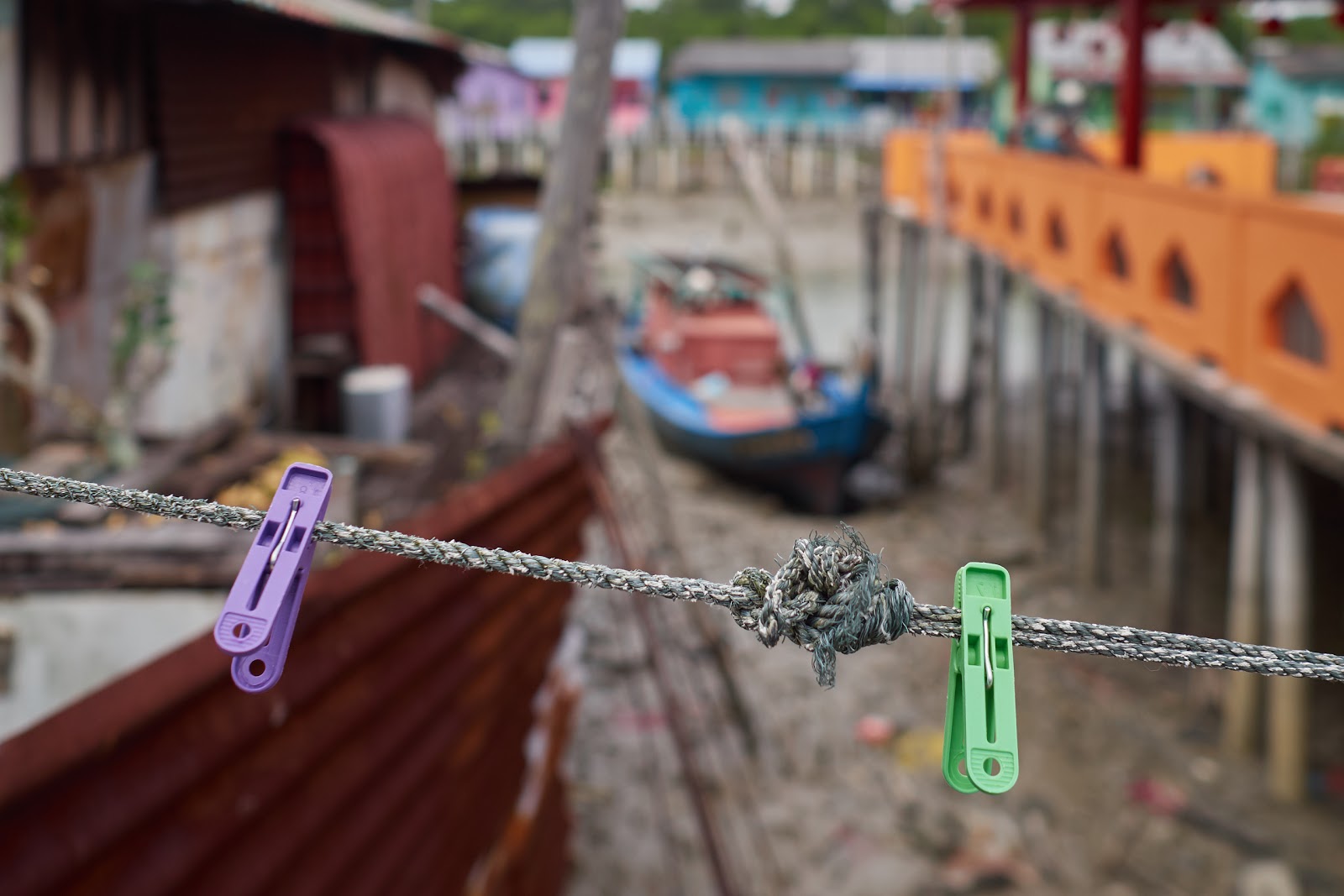
I had a quick photowalk at Pulau Ketam recently, an idyllic fishing village island near Port Klang. Since the entire village is built on floating platforms with narrow walkways, the only way to get about is bicycles or electric bikes. I found it interesting to observe everyone going about their daily routine and chores on two wheels. Therefore – I narrowed down my choice of subject to just people on their bikes. It was a huge challenge to shoot when scenes may appear repetitive – due to similar backgrounds and subjects on similar looking rides.

In order to achieve an adequate variety of shots to form a cohesive series, I played with slow shutter speeds to induce motion blur, panning shots as well as portraits of the locals still on their bike while running errands. I only used the M.Zuiko 17mm F1.8 on my Olympus PEN E-P5 for these shots. This is part of an on-going exercise to improve my use of 35mm (equivalent) focal length.
[Read more…]

Photoessay: Workaday life

X1D3-B0001662 copy

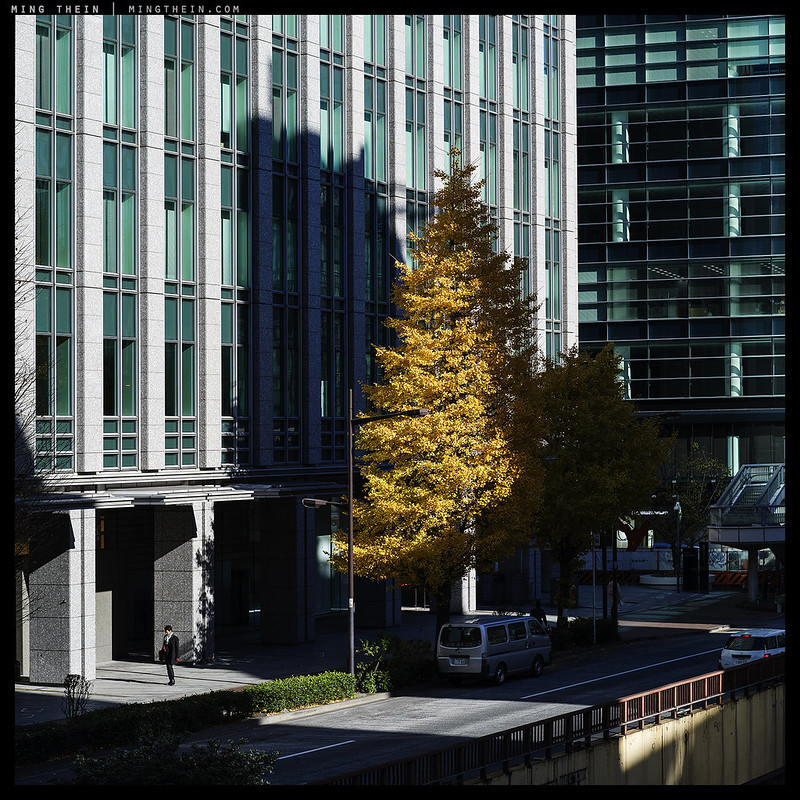
Alternate title: another day, another dollar. As otherworldly as some bits of Tokyo might be to the casual visitor, like every city – there are more than the fair army of salarymen keeping everything running below the surface. The job is thankless, uncelebrated, mostly unnoticed, but necessary to keep the big wheel turning. We do it because we have to, and in doing so, a sort of Stockholm syndrome emerges: not exactly love or affection, but we still take pride in our work. Are they happy? Sad? Indifferent? Perhaps the sort of bittersweet melancholy that comes from celebrating small triumphs and mourning little losses. Individually our problems are our own; collectively, they’re the mood of a society. Every time I visit Tokyo, the word that sticks in my head is ‘stoicism’ – even if there are little escapes here and there. MT

This series was shot with a Canon 100D, 24STM and 55-250STM lenses, an X1D-50c and 90mm, and a H6D-100c and 100mm. Post processing was completed using the techniques in the weekly workflow and PS Workflow III. Travel vicariously and make the most of your trip with How To See Ep.2: Tokyo, or T1: Travel Photography.

[Read more…]

Format equivalence, engineering and practical envelope

_8B41029 copy
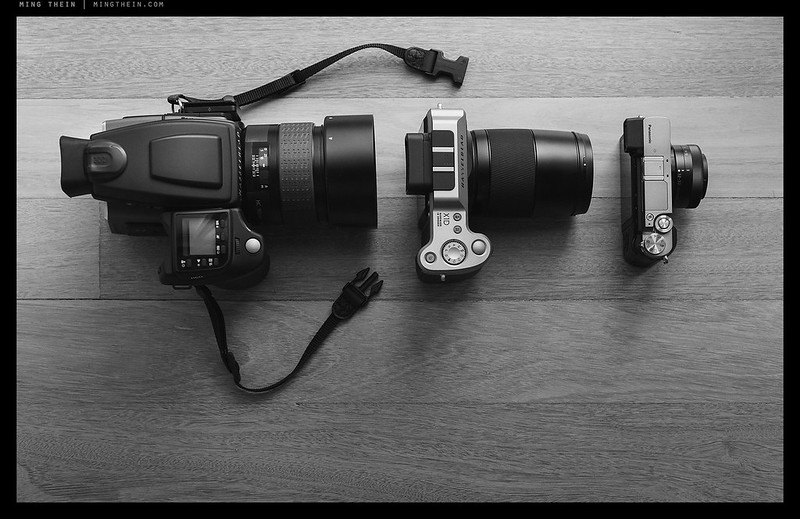
So which one has the biggest practical shooting envelope? They’re all the same; read on to find out why***.

Much has been written about depth of field, angle of view etc. equivalency for the various common sizes – I won’t repeat that. What I’m more interested is what consequences it has in practical terms on shooting envelope limitations, and how the apparent multitude of choices aren’t really choices at all – with a very few exceptions. To complicate things further, just because something can be done from an engineering standpoint doesn’t mean that it’s desirable from a marketing standpoint, and that’s before we even attempt to factor in how other things like haptics, controls, build quality etc. affect the overall shooting experience. Two examples: a consumer APS-C-sized camera with weather sealing and no feature or control compromises (think D5600 or 200D size); or a 1″ camera with really top class interchangeable optics (well, Nikon tried, but the market didn’t accept it). Or a rugged ‘professional’ compact, sensor size irrelevant. See what I mean?

[Read more…]

Postcards: My quiet hometown, Kuching

I was born and raised in Kuching, the City of Cats situated in Borneo. Kuching is a small city and drastically different from Kuala Lumpur – where I am based currently. There are no extensive highways, skyscrapers or excessive concrete structures. The air is cleaner, the sky is always blue and people there are generally friendlier as well. Many photographer friends are willing to pay good money to travel far to see and shoot different places and cultures. While I always encourage them to travel, I also remind them to slow down and look at what they have around them. I love my hometown, I grew up there and I know it well. Knowing your subject is critical in improving your photography. What place would you know better than your own roots?

[Read more…]

Second take – the Sigma 16mm f1.4 in the field

As mentioned in my initial review of the Sigma 16mm F1.4 DC DN Contemporary lens, I had the lens for a few more days – enough for a quick round of weekend shutter therapy. Considering I shot mostly at night/low-light for the review, I took this opportunity to test the lens under more favorable light conditions. I also shot images with human subjects as I normally do for my street shooting.

[Read more…]

Off topic photoessay: a new chapter for Malaysia

IMG_2146b copy

I have never been interested in politics – mostly because the same party has been in power in my country since independence; more than 60 years. A change of government is no big deal in most democracies; but the concept of democracy had been largely theoretical until two days ago – the incumbents ensured there was simply no credible opposition to vote for even if you were inclined to. I – and many others – had come to the conclusion that democracy was merely an illusion. We were proven wrong two days ago when the opposition was elected into power by a surprisingly large margin; never mind that the opposition was lead by a 93-year old former prime minister who switched sides, and the supporting cast of actors was largely the same as before. Never mind that Malaysians voted for fundamentally the same thing as we had 20 years before (if that’s not a pervasively conservative attitude, I don’t know what is). And never mind that some of the promises made (as with every election) may not make complete rational sense – the real news is that we actually had a choice. At the very least, this gives us hope that things can change: and from now on, change will happen if the people aren’t happy.

[Read more…]

Photoessay: Urban vignettes, Osaka

_8511719 copy

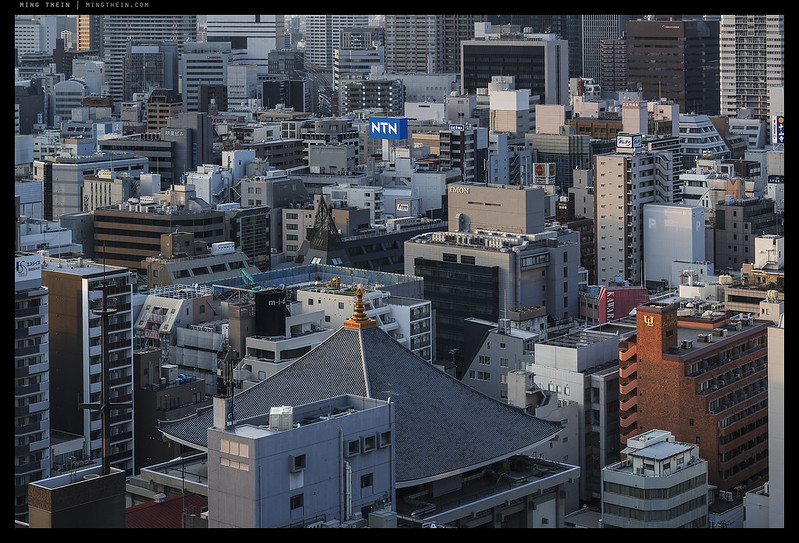
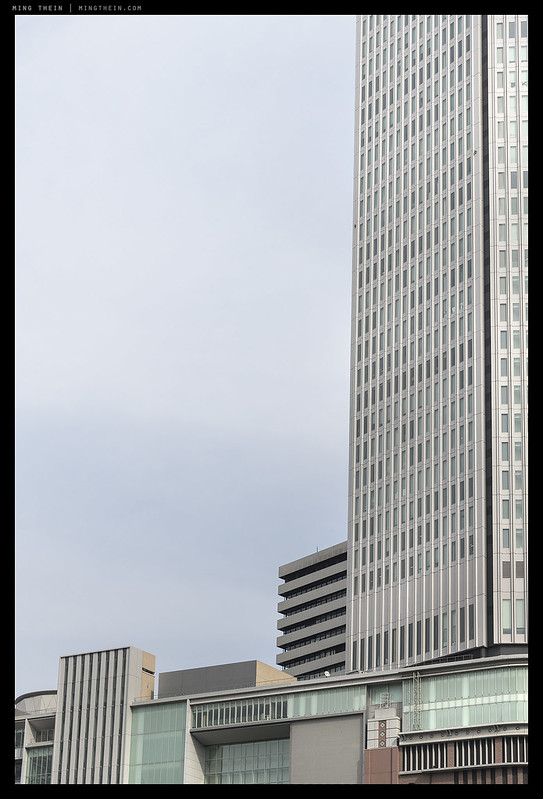
Today’s photoessay is a short series of vignettes from Osaka. I found it a strange place because the visually appealing bits – photographed here – were pretty empty most of the time; the not so nice bits, not photographed, were buzzing wit activity. A strange paradox and one I couldn’t really reconcile with the city’s place as an industrial hub and one of the largest cities in Japan. One thing that didn’t appeal so much was the omnipresent overhead highways; not so much the fact that they were used (understandably, to preserve real estate yet create efficient arteries directly through the heart of the city) – but the fact that they blocked out so much natural light at street level, leaving the place feeling somewhat post-apocalyptic-Blade-Runner-esque even during bright sunshine. Further adding to the challenge is the layout of the city itself: a grid without much light at ground level is really not very conducive to photography, hence the relatively low yield (which dropped off even further after the last few months of maturation time). MT

These images were shot with a Nikon D850, 24-120/4 VR and Canon G1X Mark III, and post processed with Photoshop Workflow III.

[Read more…]

Experiments with stereoscopic photography

GX85_1020927-8 4k

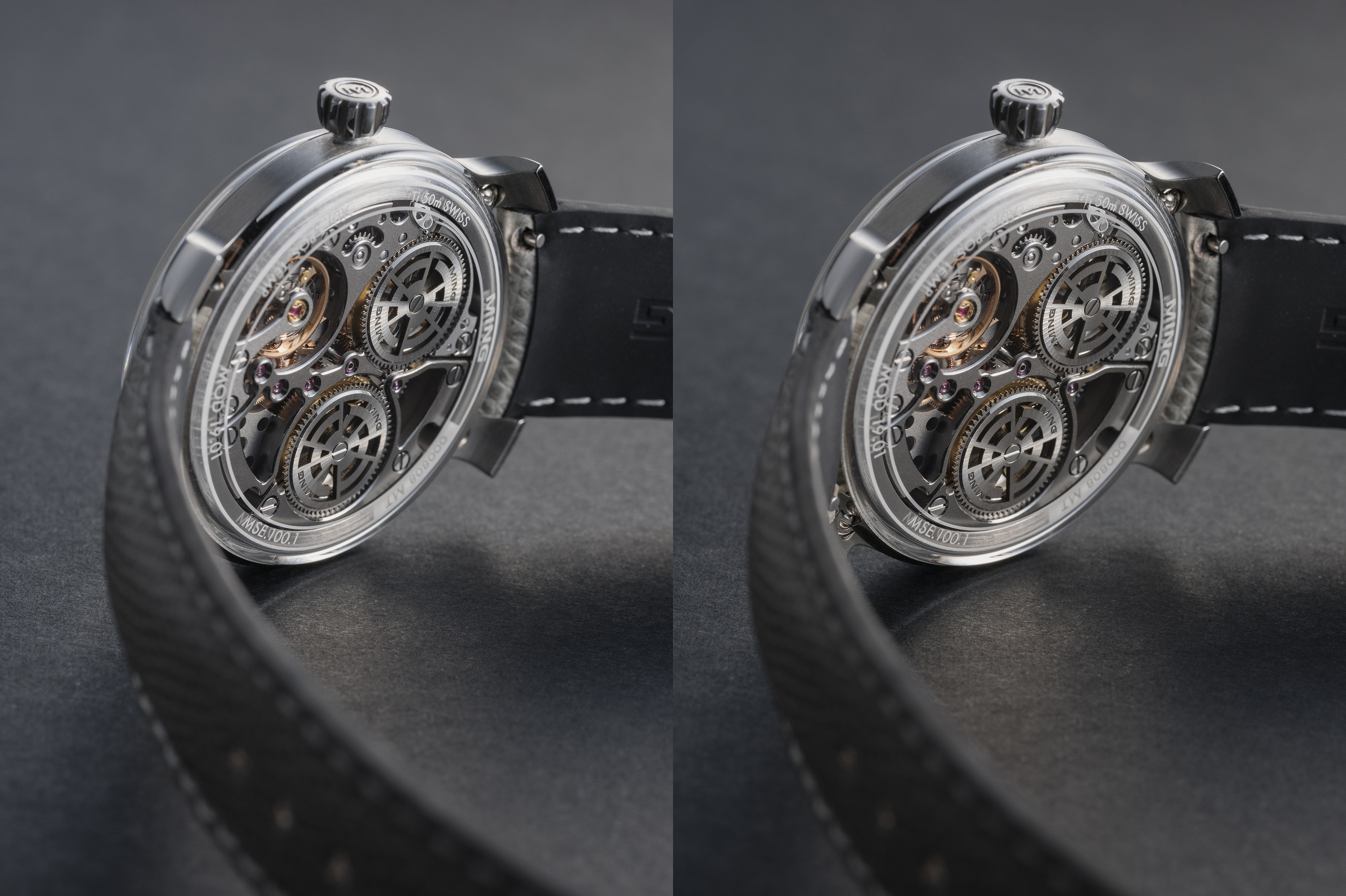
What’s old is new again, history goes in cycles etc. – is all true. One of the earliest widespread experiments in photography – dating to the mid 1800s or earlier – was that of stereoscopy: the making of a three-dimensional image from two normal flat images but shot from a relatively offset position. Though there are many methods of varying complexity that can be used to create the illusion of three dimensions, they all fall back to the same fundamental theory: we humans physiologically have stereoscopic vision because we perceive an object from two slightly different positions; our brains interpret both the difference in images and probably also the physical position of eyeball, focus muscles, iris etc. to gauge relative spatial position and absolute distance. Without this – two dimensional images are reliant on cues such as overlap, shadows, fade/haze etc. to create suggestions of distance and position. Photography itself is the projection of a three dimensional world onto a two dimensional recording medium: this brings about significant limitations in reproduction and fidelity, but at the same time opens up great possibilities for artistic interpretation that a person with normal vision simply cannot see with their naked eyes. In essence, we are forcing both eyes to see the same image at the same time.

[Read more…]

Photoessay: XPAN-eriments, part I

X1D5_B0003188 copy

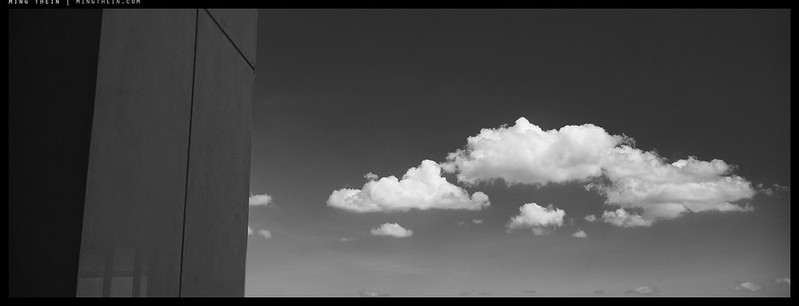
…Or, evolutions of a scene. I admit to having more than a passing curiosity towards the original XPAN cameras* – mainly because of the very unusual panoramic format, and the relatively accessibility compared to say a 6×17 with movements. Whilst I work a lot in 16:9 for a more cinematic feel and a perspective that perhaps matches natural human vision more closely than the taller 3:2 and 4:3 formats – going wider is rare and either requires stitching or throwing away so many pixels you are limited in your printing options. The latter is less of an issue with the latest generation of 35mm cameras and MF, but one simple problem remains: it’s very difficult to compose for this aspect ratio if you have no means to visualize it. Few cameras have 16:9 previews or lines, and almost none have wider. My H6D-100c has 16:9 and Cinema 2.4:1, but only because I sacrificed a focusing screen and scored it with a razor blade. Other than that, it’s pure guesswork. Given that focusing screens are not readily available for any of my other cameras, I didn’t want to add any more confusing lines to the H6D’s finder, and scoring lines on an EVF is probably a bad idea, experiments had not really progressed further – until recently, when we got a whole slew of aspect ratios with the most recent firmware. This of course means it’s time for some experiments.

*For those unfamiliar – a 35mm rangefinder in two versions co-developed with Fuji and also sold as the TX1 and TX2, but with a 65x24mm film gate for a 2.7:1 aspect ratio; close enough to 6×17’s 2.83:1. There were native 30, 45 and 90mm lenses – no coincidence we also have these on the X1D. It took normal 35mm roll film to give 20-21 panoramic frames per 36 exposure roll, and could also shoot normal 24x36mm frames – but why on earth would you buy the camera to do that? They are fairly rare now and finding a lab to do the development, even rarer. Of course there’s always DIY, but for reasons explained earlier here it’s no longer really an option for me.

[Read more…]

Working with difficult subjects

_8511685 copy
Negative space in pastel

…Or, “how to shoot without inspiration”.

Pessimistic? Depressing? I’d see it as the opposite: this line of thinking wouldn’t even exist if that was the case. We’d have packed up the camera and gone home otherwise. But sometimes: we’re either masochistic, or working pros*, and we want/need/must make an image. Example: you’ve finally manage to scrape together the leave and spousal permission for a photography trip…and it rains all week, or worse, it’s overcast and rain is threatened but not implicit. It’s Alanis Morissette’s updated Ironic. Or you sign up for a job that turns out to have quite different subjects in reality to what the client claims; or the model arrives and let’s say heavy photoshop is probably insufficient and one should consider illustration. Consider today’s post not quite a tale of woe, not quite an instruction manual, not quite a catalog of humour, but perhaps a little of all three. What all situations have in common though is that some (well, quite a lot) of creativity managed to squeeze out images the client and photographer were happy with, but at the time – all early in my career – they were the cause of a lot of stress…

*Arguably, the former group also includes the latter.

[Read more…]