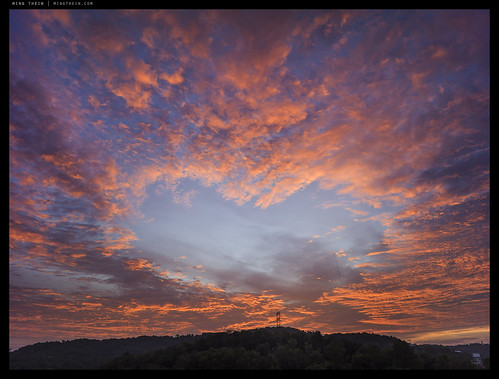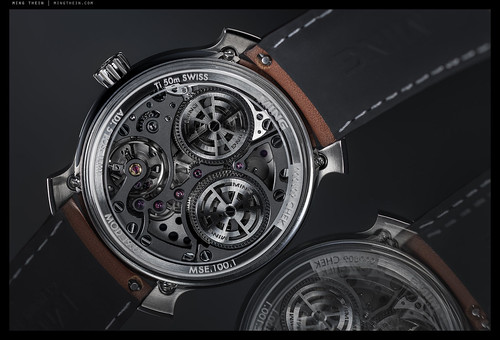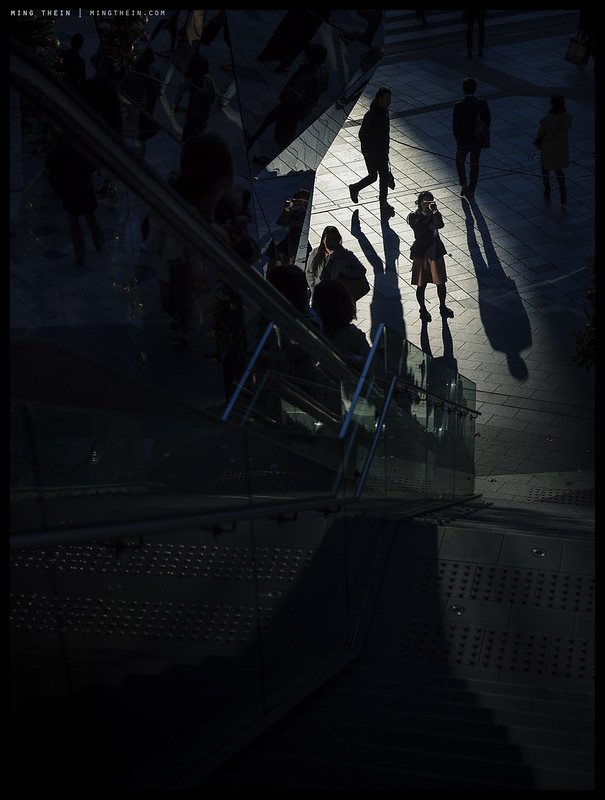
A little while ago, a reader sent me an email with a question (and great idea for a post): what’s the best method image viewing and presentation, especially when considering different audiences? It’s not an easy one to answer, and honestly, perhaps something that’s given very little to no consideration by most photographers. This is obviously problematic because it’s the final, critical link in the creative chain: if the audience isn’t seeing what you captured, much less what you intend – why are you bothering to show it at all? I would personally rather not show an image than show one that conveys the wrong overall impression. Perhaps the differentiation isn’t quite so clear cut, but I think you get my drift.
Concert photography: Robin’s view
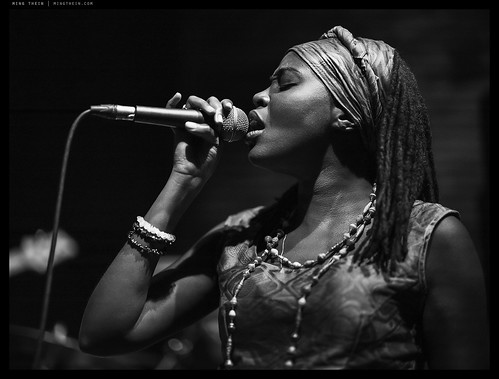
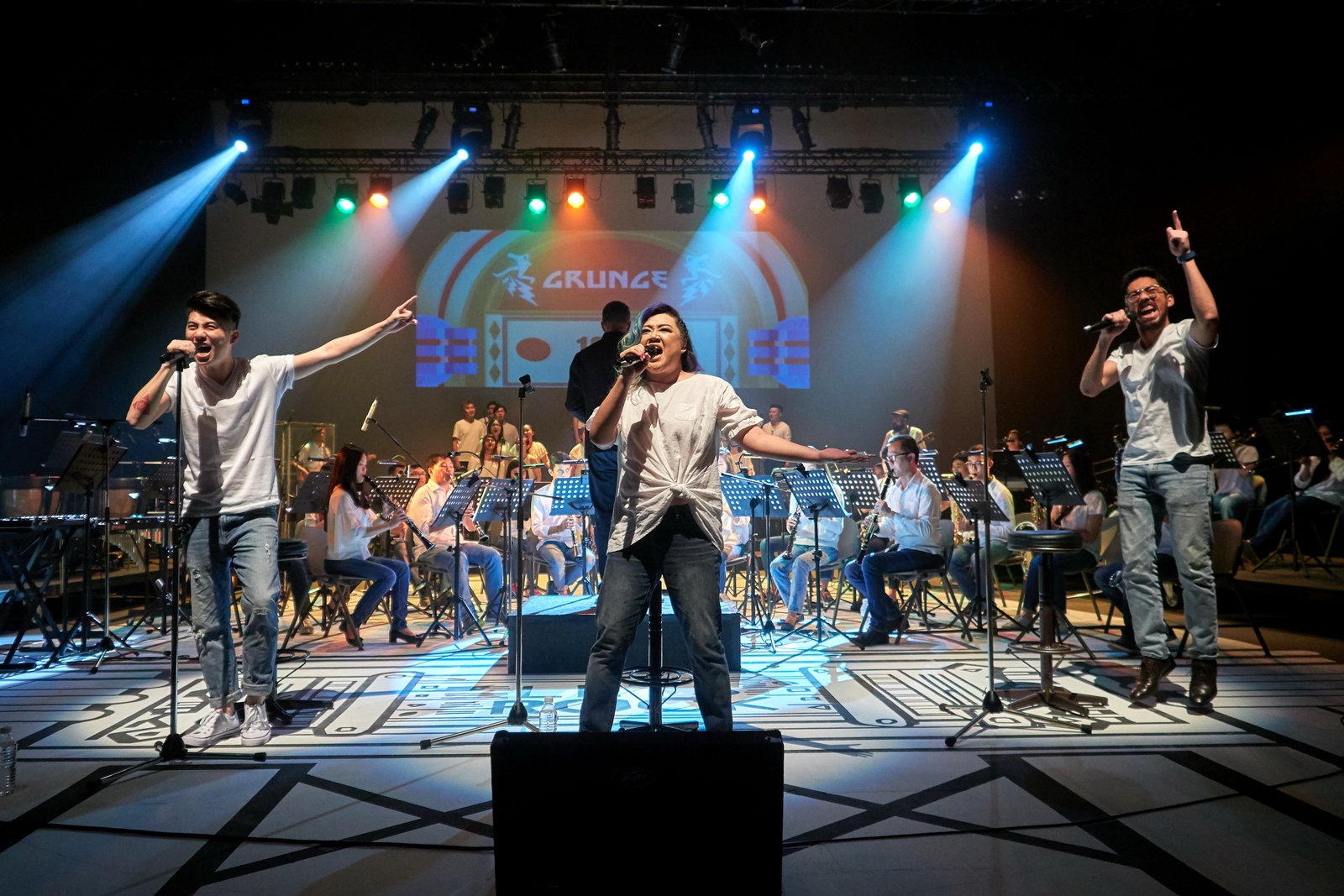
Just as I was returning from my short holiday to Phnom Penh, I was invited to shoot the dress rehearsal of an unusual rock concert, Let’s Rock, at KLPAC (Kuala Lumpur Performing Arts Centre). The concert featured lead vocal performances from three prominent local singer-songwriters, Nick Davis, Bihzhu and Fuad (from Kyoto Protocol) and was backed by the KLPAC Symphonic Band orchestra, a 20 member strong choir group from the Young Choral Academy and a 4-piece band. They covered iconic rock songs from the 50s all the way to the present day hits: such as Elvis Presley, Beatles, Queens, Guns and Roses, U2, Coldplay and many more legendary rock artists! I was privileged to be there at the dress rehearsal and was blown away by the concert. The photographs have been unexpectedly well received and are circulating around. In this article, I wanted to share some crucial tips on managing a challenging live stage shoot.
Note: MT previously wrote about concert photography here.
On emotion and images


The previous image post with leftover single images from Iceland got me thinking: what exactly makes it so difficult to let go of them? The simple answer is one of emotion: they appeal to us at some level which is irrational and defies explanation. It is almost certainly experiential: the images trigger a memory of the surrounding events and conditions, or the making of the image is the memory – you’re far more likely to be attached to an image if you had to climb a mountain to get it, even if the image itself is nothing particularly special. The more effort and emotional investment in the subject and making of, the less objective we can be as curators. Notice I didn’t say photographers: I think there has to be emotional investment at some level as a photographer otherwise it’s too easy to treat the subject with cold dispassion and land up with the resulting image simply being purely an image of record and nothing more.
Create or document?

From the series ‘Gravitation is relative’
I’ve come to believe that all photography falls into one of two categories: created, or documented. It’s also rather difficult to switch between the two, and people tend to find either one or the other more intuitive. I suspect this may well have something to do with left brain-right brain dominance, too. This underlying split is important because it dictates the kind of photographer you are, and the kind of work that best suits one’s intuitive vision. It isn’t a continuum, because the one thing that splits the two sides of the divide is binary: was something in the scene added or removed at the control of the photographer, presumably for the express intent of translating and communicating the vision of the photographer to the audience?
The rise and decline of popular photography

I don’t normally write counterpoint articles, because honestly, you’re not going to change people’s minds most of the time; nor do I write ones in agreement because most of what can be said has been by the original author. However, Paul Perton’s post on DearSusan about the world hitting ‘peak photo’ – in much the same sense as ‘peak oil’ – struck a chord for a few reasons. First and foremost – I think it’s true, but not necessarily for the reasons stated in the original article. Secondly, I have to correct some inaccurate assertions made about myself. I’m also selecting my post title very carefully here, too: decline, not fall, because we’re in a period where interest in pictures, picture-making, picture-showing and the photographic ecosystem for the vast majority of people* seems to have dropped off; it’s not a case of decreased growth; everybody I speak to at all points of the value chain says the market** is actively contracting, has been for some time, and will continue to do so in future. What I’m interested in understanding is why, and what this means for the rest of us who instead doubled down and got more serious.
*Audience, creators, consumers. **Pros, manufacturers, retailers, studios etc.
Creative integrity – or, the Struggling Artist Myth explained

For the past six years, I’ve shot for pay full time, and occasionally for the better part of the preceding ten years before that. During the last six, the proportion of images of any sort shot with my own creative vision as primary motivation vs those shot with somebody else’s – i.e. for a client or as part of a commercial assignment – has swung from 100-0 to perhaps 5-95. This is expected, and both good and bad. It’s what actually had me stumped in my early pro days: every time I met a successful or established photographer, they almost never had a camera with them – or if they saw something spontaneous, they’d use their phone to shoot it. I wondered why, especially given their access to ‘better’. I think I know the answer to this, and to be honest: I’m not sure I or anybody else is going to like it. Read on if you dare.
Working with multiple systems and formats in the field
A typical assignment for me may involve a) quite a variety of objectives, and b) quite a variety of hardware. Whilst the obvious solution would be to go with one complete system and suitable backups, this isn’t always possible for any number of reasons – from weight to lack of coverage in that system to cost or practical versatility. I had a recent email discussion with a reader and fellow pro over how to manage this in the most efficient way possible – both from a cost and logistic standpoint, but also a creative one. Often, suitable equipment for a broad range of optimal coverage* may require a significant shift in shooting mindset between different bits of hardware; for obvious reasons this becomes quite a bit more challenging when you’re working under pressure. I thought it might be an interesting topic to examine further…
Macro redux: Getting lost in the insect world
When I want an escape from the world, I simply pick up my macro gear and indulge in some insect macro photography. I find the process to be both physically and mentally challenging and lose my myself quite easily in the tiny world of bugs. The little creatures often hide in the most unexpected places that require me to flex and stretch my body in impossible ways while holding the camera and the flash steady. The mind must be entirely focused on getting the shot and doing it quickly because insects do not stay still for very long. All kinds of calculations and considerations come to play, as you juggle between lighting, getting closer for better magnification, ensuring critically sharp focus and not to forget, composition! There is just so much the mind and body needs to coordinate and execute to achieve one simple insect macro shot. In that brief moment, I find myself entering a different universe where only getting the shot matters to me.
For today’s set of images, I hiked the trails of the Bukit Gasing Forest Park to find the critters. Half of the fun was in the hunt for the bugs. All the images shown in this article were shot with Olympus OM-D E-M1 Mark II and M.Zuiko 60mm F2.8 Macro lens. I used the FL-50R flash off camera. If you have questions about my technique, I’ve shared those in detail in a previous article here.
To be a specialist, you have to be a good generalist
Here’s today’s provocation of the day: there is really no such thing as a specialist. I’m going to explain why, using photography as the background context. The general expectation is a specialist in one particular topic or subject or tightly defined discipline should be familiar with and understand how to handle the vast majority of variations encountered around that topic or subject. They would probably have to keep up to date with new developments or changes and do enough experimentation to answer any self-doubt or uncertainty: an expert sports photographer, for instance, would know how to deal with indoor arena lighting, outdoor high noon and night games – and still produce an image that would pass muster for their clients. An aerial photographer would know how to deal with haze – either to minimise in post, or to use as a feature of the image. Yet I keep encountering this odd resistance…even amongst supposedly educated and image-savvy people. Why?
The shooting experience
In the past, I’ve written about our own emotional/ personal motivations, concepts of idealised hardware and even why hardware itself can be a strong creative motivator. I’ve also talked about the appliance-camera and the ideal format. We’ve defined the concept of a shooting envelope – i.e. the breadth of scenarios under which a camera can deliver most or all of its maximum image quality potential – and the degree to which that’s operator dependent (i.e. heavily). I’ve even talked a lot about what makes sense from a commercial and business standpoint, but I don’t think I’ve ever really examined the experience of the process as a whole – as an enthusiast and hobbyist and somebody seeking enjoyment in both the journey and the results. That’s the purpose of this article.