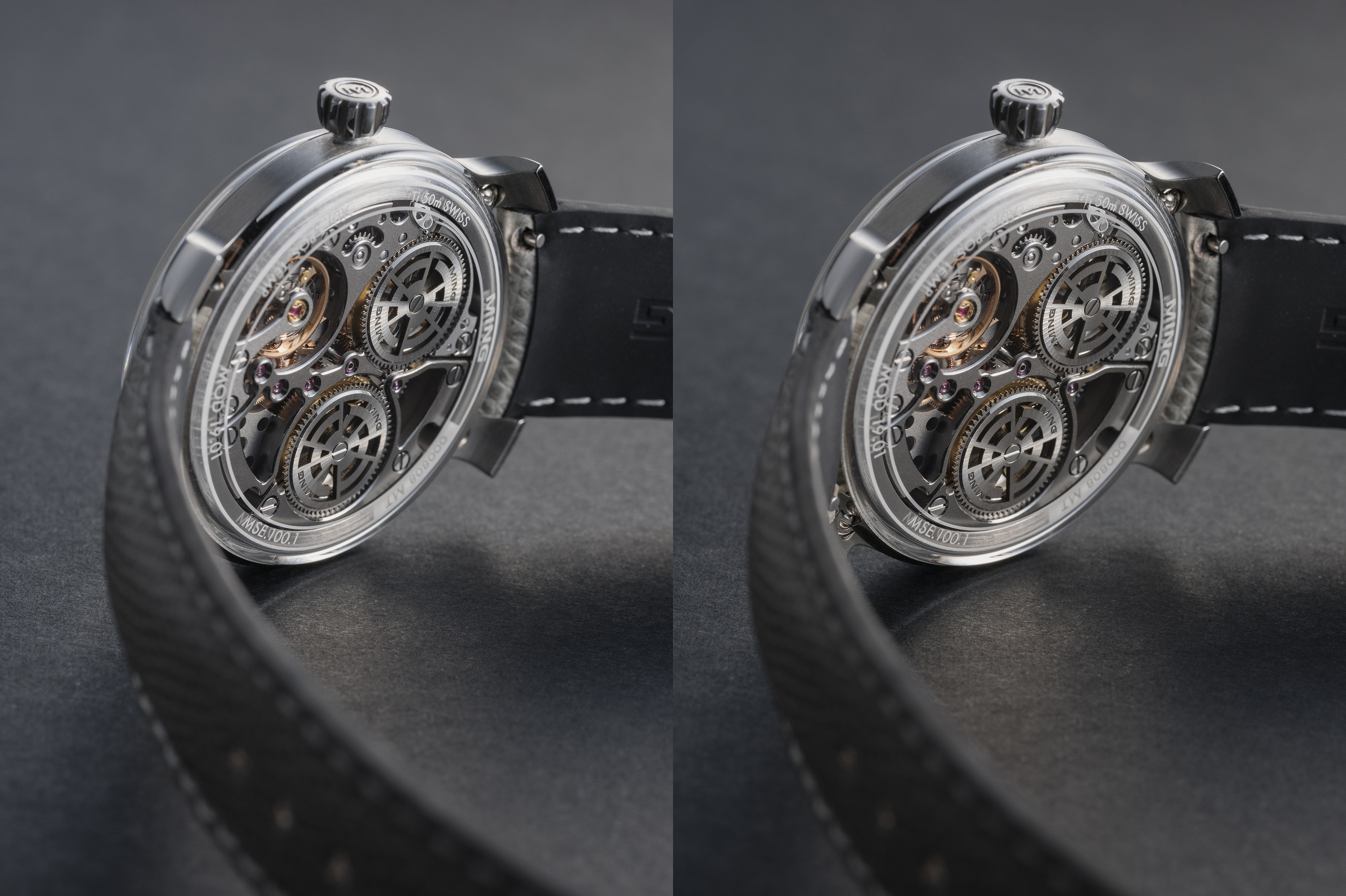
What’s old is new again, history goes in cycles etc. – is all true. One of the earliest widespread experiments in photography – dating to the mid 1800s or earlier – was that of stereoscopy: the making of a three-dimensional image from two normal flat images but shot from a relatively offset position. Though there are many methods of varying complexity that can be used to create the illusion of three dimensions, they all fall back to the same fundamental theory: we humans physiologically have stereoscopic vision because we perceive an object from two slightly different positions; our brains interpret both the difference in images and probably also the physical position of eyeball, focus muscles, iris etc. to gauge relative spatial position and absolute distance. Without this – two dimensional images are reliant on cues such as overlap, shadows, fade/haze etc. to create suggestions of distance and position. Photography itself is the projection of a three dimensional world onto a two dimensional recording medium: this brings about significant limitations in reproduction and fidelity, but at the same time opens up great possibilities for artistic interpretation that a person with normal vision simply cannot see with their naked eyes. In essence, we are forcing both eyes to see the same image at the same time.
Photoessay: XPAN-eriments, part I
…Or, evolutions of a scene. I admit to having more than a passing curiosity towards the original XPAN cameras* – mainly because of the very unusual panoramic format, and the relatively accessibility compared to say a 6×17 with movements. Whilst I work a lot in 16:9 for a more cinematic feel and a perspective that perhaps matches natural human vision more closely than the taller 3:2 and 4:3 formats – going wider is rare and either requires stitching or throwing away so many pixels you are limited in your printing options. The latter is less of an issue with the latest generation of 35mm cameras and MF, but one simple problem remains: it’s very difficult to compose for this aspect ratio if you have no means to visualize it. Few cameras have 16:9 previews or lines, and almost none have wider. My H6D-100c has 16:9 and Cinema 2.4:1, but only because I sacrificed a focusing screen and scored it with a razor blade. Other than that, it’s pure guesswork. Given that focusing screens are not readily available for any of my other cameras, I didn’t want to add any more confusing lines to the H6D’s finder, and scoring lines on an EVF is probably a bad idea, experiments had not really progressed further – until recently, when we got a whole slew of aspect ratios with the most recent firmware. This of course means it’s time for some experiments.
*For those unfamiliar – a 35mm rangefinder in two versions co-developed with Fuji and also sold as the TX1 and TX2, but with a 65x24mm film gate for a 2.7:1 aspect ratio; close enough to 6×17’s 2.83:1. There were native 30, 45 and 90mm lenses – no coincidence we also have these on the X1D. It took normal 35mm roll film to give 20-21 panoramic frames per 36 exposure roll, and could also shoot normal 24x36mm frames – but why on earth would you buy the camera to do that? They are fairly rare now and finding a lab to do the development, even rarer. Of course there’s always DIY, but for reasons explained earlier here it’s no longer really an option for me.
Working with difficult subjects
…Or, “how to shoot without inspiration”.
Pessimistic? Depressing? I’d see it as the opposite: this line of thinking wouldn’t even exist if that was the case. We’d have packed up the camera and gone home otherwise. But sometimes: we’re either masochistic, or working pros*, and we want/need/must make an image. Example: you’ve finally manage to scrape together the leave and spousal permission for a photography trip…and it rains all week, or worse, it’s overcast and rain is threatened but not implicit. It’s Alanis Morissette’s updated Ironic. Or you sign up for a job that turns out to have quite different subjects in reality to what the client claims; or the model arrives and let’s say heavy photoshop is probably insufficient and one should consider illustration. Consider today’s post not quite a tale of woe, not quite an instruction manual, not quite a catalog of humour, but perhaps a little of all three. What all situations have in common though is that some (well, quite a lot) of creativity managed to squeeze out images the client and photographer were happy with, but at the time – all early in my career – they were the cause of a lot of stress…
*Arguably, the former group also includes the latter.
Photoessay: Transient glimpses
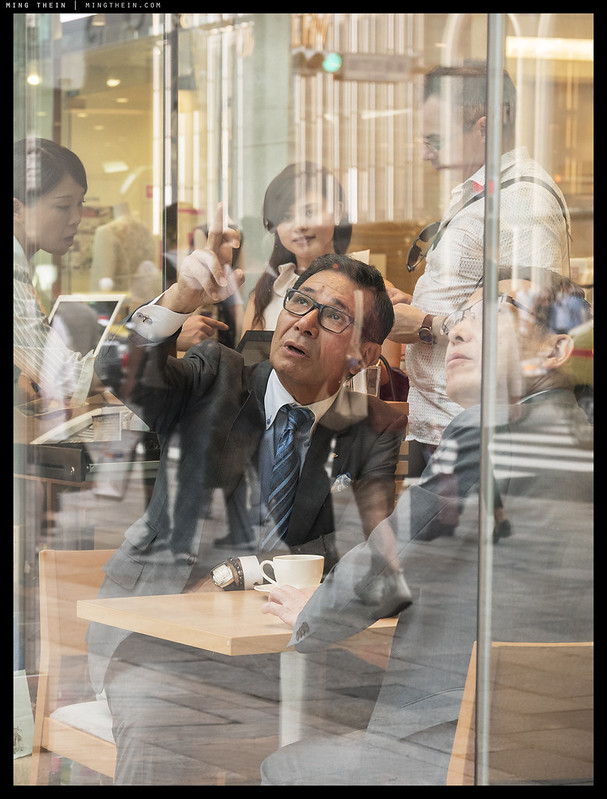
All photography is of course transient; most of it is nothing more than a vicarious disconnected glimpse into the life of somebody else or timeline of another object’s point of view – other than self-documentary, there really isn’t such a thing as a continuous statement simply because a photograph lacks causality when viewed in isolation. Yet something about the people and subjects featured in this set – shot in the rain and winter in Tokyo and Kyoto – seemed to me especially poignant and fragile. It’s as though there’s both a sort of contemplative melancholy brought on by the season (and probably also lack of sun), but simultaneously an appreciation of the fleeting fragility of the moment. Perhaps introspection is the most appropriate description of the mood here. MT
This set was shot with a Nikon D850, 24-120/4 VR and processed with the Monochrome Masterclass Workflow. Experience Japan vicariously in How To See Ep.2: Tokyo.
The best value in photography today?
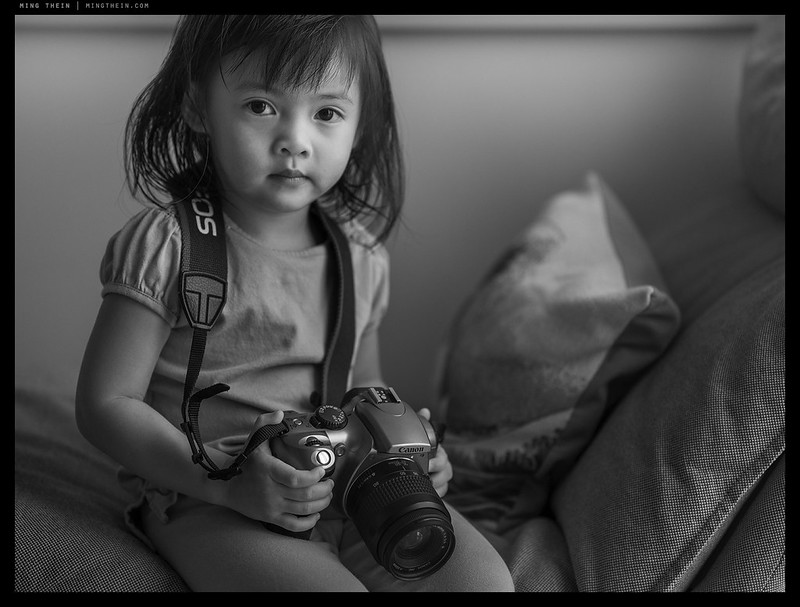
Fighting words. When your three year old decides she wants to be like daddy and bugs you pretty much every day for a couple of months for a ‘real camera, not a toy one’ – what do you do? It seems a little painful to sacrifice a new camera to what will almost certainly be death by something that makes perfect sense only in the mind of a toddler, but at the same time I’d really rather she not start helping herself to the Hasselblads. Cue every photographer’s favourite activity: gear shopping*. Initially, I considered something shockproof, waterproof and submersible; but the good ones weren’t cheap, the cheap ones were really quite painful to use, and the controls were oddly not very small-finger friendly – requiring a lot of force to press and cryptic icons to decipher. She recognises ‘on’ and ‘play’ icons thanks to iPads and youtube, and that’s about it. Perhaps the big silver button too, since that makes a noise to take a picture. By now you’ve probably seen the header image and figured out my solution…
*To be read with extra sarcasm.
Creativity by the yard
I’ve heard it said more than once that the world is divided into three kinds of people: those who create, those who support, and those who criticise. The former see the world differently and as a result land up being mostly societal misfits; at least until you become successful (which is nearly never, since the deck is stacked against you for reasons I will explain later). The corporate world wants to have the output and the commercial results, but is unprepared to support the infrastructure and requirements. The second group forms the majority of the population: ‘support’ can mean anything from consumption and patronage to supplier of key enablers such a services, environment or tools. And the latter – some serve as useful moderating reality checks and balances, but most just become bitter and jealous internet trolls. Today’s post is several things: an exploration of these roles, a series of suggestions from the point of view of a creative, and perhaps an apology (excuse?) for my wandering attention.
Photoessay: a slight dystopia
This set of images is one that’s once again benefitted from some significant curation: at the time of capture, I didn’t quite see the common thread that must have been running through my subconscious. There is, however, a definitely dystopian undertone in all of the images: it’s almost as though the aliens are about to arrive, have arrived, and then zombified the population. Timing matters: I seems to have caught some rather unflattering decisive moments. I’d like to think unintentionally, but static woman in the stream of people was very much a deliberate curation choice. Or maybe it’s not zombification so much as choose your own adventure: you see whatever you wish to project, and isn’t that where the fun lies in interpreting an image? MT
Shot on a Panasonic GX85, 42.5/1.7 and 35-100/4-5.6 and processed with Photoshop Workflow III.
Experiments with ring lights and insects
I am currently experimenting with an alternative lighting solution for my insect macro work – LED ring lights. My usual insect macro technique of using wireless off-camera flash (as seen in this article) may be effective in shooting bugs hiding in difficult to reach places, but it is also physically challenging to execute. Holding the camera and macro lens steady with just one hand with the flash on the other can be tiring for hikes in the forest hills – where these insects are usually found. The LED ring light, in theory, should be much easier to use. Let’s see if my hypothesis was correct.
Photoessay: Architectural vignettes of Constantinople
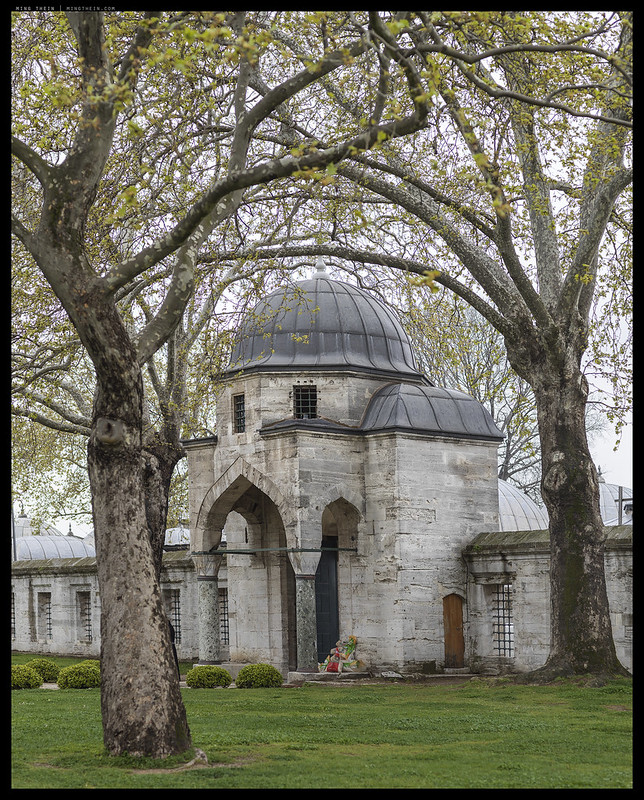
There’s a deliberate choice to the title of this post: my guess is that all of these structures were in existence when Istanbul was still Constantinople, and they’ll continue to exist beyond whatever the next name change might be (if at all). The people change, society changes, the administration does too – but for the most part, the urban landscape remains for pragmatic reasons: both because there’s another level of civic/cultural pride that extends back through history, because it’s impossible to imagine a city without some of them, and because many still serve practical functions today. This is probably the very best of architecture: the kind of edifice that continues to serve far beyond the originally intended purpose of its creators and architects – even if only to serve as a reminder of identity. MT
This series was shot in Istanbul with a Hasselblad H6D-100c, 50, 100 and 150mm lenses, and post processed with Photoshop and LR Workflow III (and the Weekly Workflow). Get more out of your voyages with T1: Travel Photography.
Tips from street photography workshops
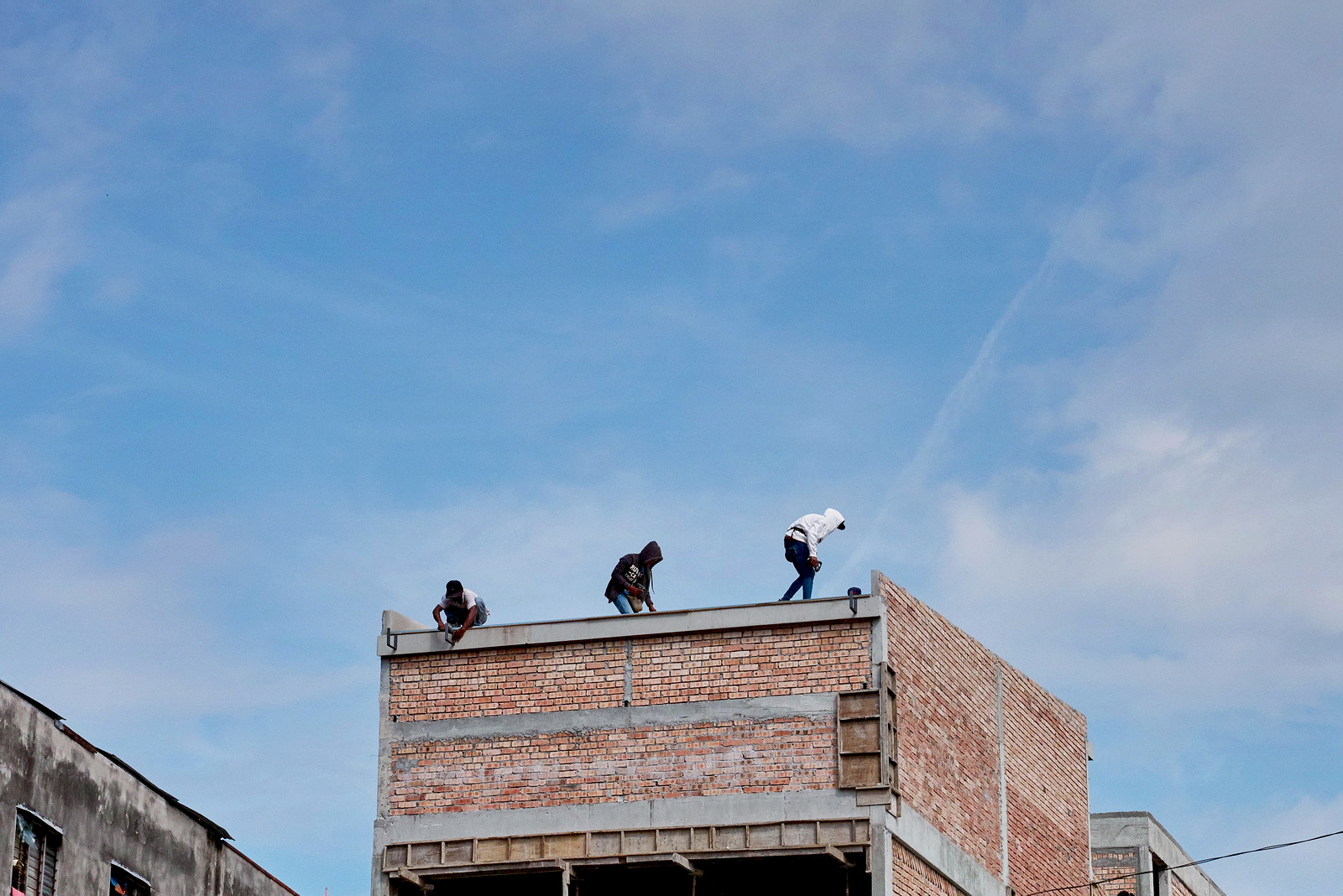
One of the more rewarding experiences as a photographer is the opportunity to conduct photography workshops. I have been conducting workshops for Olympus Malaysia, and recently Panasonic Malaysia, that focus primarily on an introduction to photography – conducted in the form of a photowalk. Workshop participants are usually new-comers to photography and are looking to learn how to use their newly purchased cameras. Not only do I have to share photography tips and tricks, but I also have to be able to walk the talk and demonstrate, on the spot, how certain shots are executed. It is easy to talk, but shooting and showing instantaneous results is the challenging part. I’ve compiled a series of photographs below that were shot over the course of a few workshops, and used to demonstrate certain techniques live.