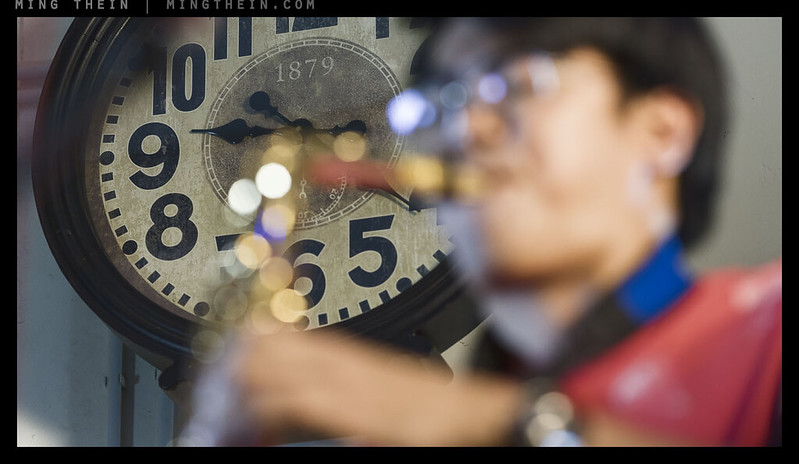
I believe good photographs can be divided into two camps: the literal and the ambiguous. (There’s a third kind, which you cannot really classify into either because they are lacking something fundamental like a clear subject – these land up as being ambiguous by default, but not intentionally.) From an interpretative/ artistic standpoint, a photograph is perhaps the most literal of all art forms; assuming minimal postprocessing, the translation between reality and finished interpretation is predictable and consistent across all subjects and capture conditions. The resultant image has to obey the laws of physics, after all – and these are generally quite consistent. But then how can we use ambiguity to our advantage to make a stronger image?
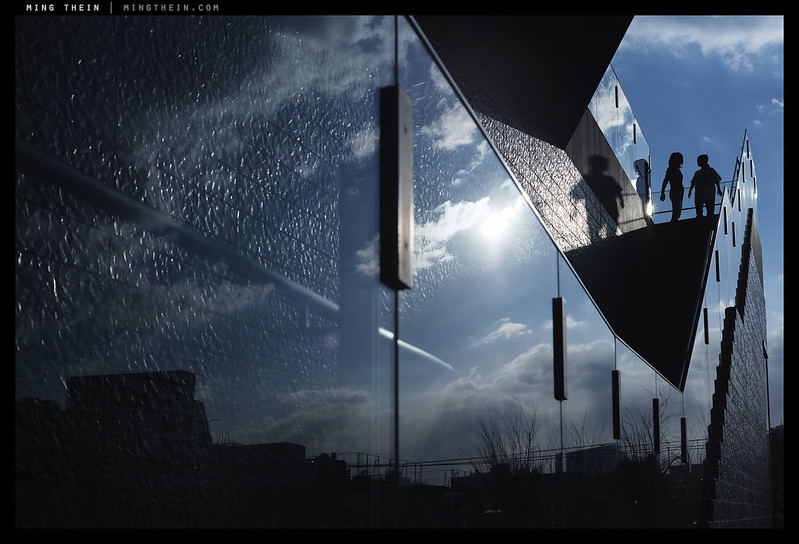
The emperor’s new clothes

Illusion and infinite possibility – from The Idea of Man project
Newer isn’t always better.
More isn’t always better.
Limitations can be creatively liberating.
Equipment isn’t the solution to 99% of problems.
The sense of entitlement and lack of objectivity is deafening.
Does any of this sound familiar?
OpEd: The camera as a luxury item – or, a tale of two cameras
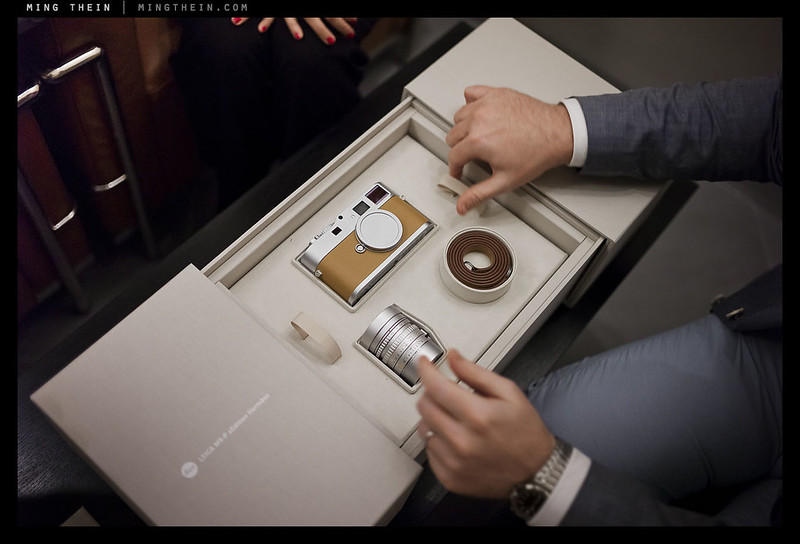
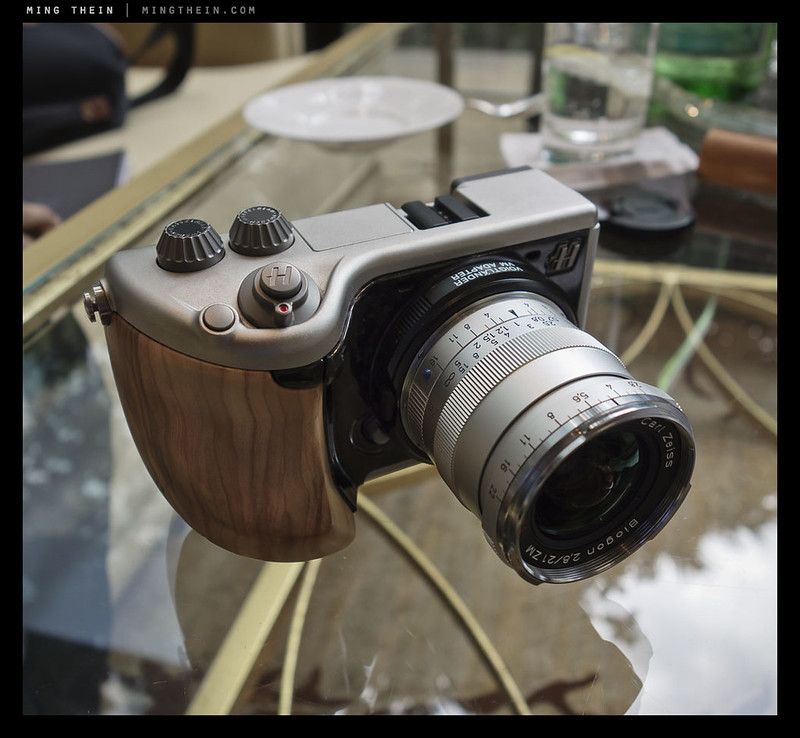
Here’s a question I’ve been pondering for some time: how is it possible that these cameras (and others) are so similar in some ways, yet wildly different in terms of commercial success? And moreover, what can we deign from our crystal balls about the state of the camera industry? Read on for a little analysis from a photographer and a businessperson’s point of view.
On not being a photographer

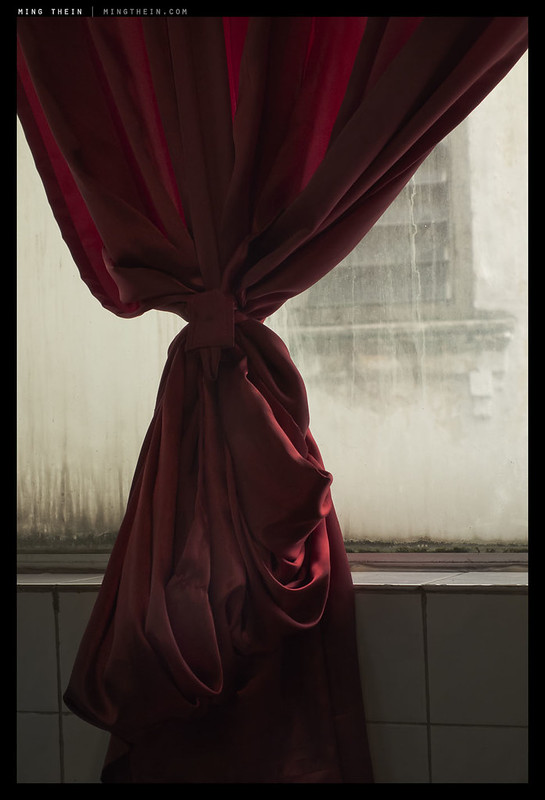
Red drapes. This post is quite deliberately illustrated with images from times when a) I wasn’t actively shooting or looking for images, and b) have been rather thankful to have a camera of any sort on me.
I struggled a little with the title for this essay. In essence, how many times have you found yourself without the primary aim of photography, but still shooting anyway – or worse, wishing you could be? The kinds of situations I’m talking about are when your primary purpose isn’t photography. You’ve gone out to run some errands, or fulfil family obligations, or rush to some work-related meeting (assuming photography isn’t your primary occupation). But these are the times you inevitably come across that interesting patch of light, that unexpected scene, or just…something that makes you pause and wish you didn’t have to be somewhere in the next ten minutes. Then what?
OpEd: The career you really want
26
Virtual banking, from The Idea Of Man series
A couple of weeks ago, I had dinner with some friends. One of them was in a senior role at a traditionally well-paid and respectable firm. He was contemplating a move to a new firm and a new position, with more responsibility, a bigger title and presumably also more pay. But the hesitation was palpable. In an unsolicited attempt to be helpful, I asked a slightly pointy question: what is it you really want to do? What would you do with your time and life if you had no other responsibilities or financial commitments? There was a pause, and then: ‘be a jazz bassist’. Changing firms in a similar role is already difficult enough at the best of times; changing industries is harder; doing a 180 degree turn out of finance into music is something else entirely. As somebody who’d done something similar, I felt it my moral duty to offer my completely unsolicited advice.
The output disconnect and the future of image viewing

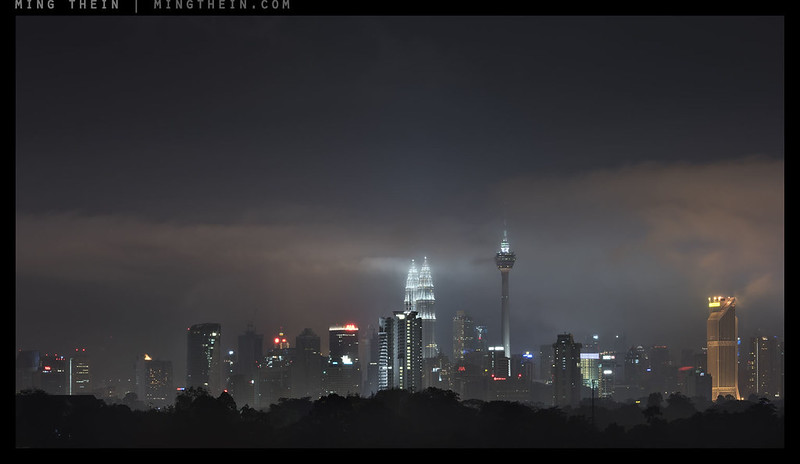
Kuala Lumpur skyline after rain. An example image for which there is no perfect output medium at present: web sizes we don’t need to talk about. Full resolution screens lack the tonal resolution to render the clouds in a transparent manner; print comes closest, but ultimately is a reflective medium and so lacks the dynamic range to represent the difference between the foreground trees in deep shadow and the light in the buildings.
Let’s take stock of where we are at the moment in terms of viewing options for images: there’s basically still only digital and print. On the digital side, displays have been steadily increasing in resolution and information density – and to some extent also size; we have 4K monitors in some laptops at 14″ and under, 8K in some televisions with an enormous jump to 50″+, and the majority of devices sit in the 2-4MP range somewhere between 12″ and 30″. There are also mobile devices with HD, QHD or even 4K (the recently announced Sony Z5) resolutions in sub-6″ screens; that’s an absurdly huge range of pixel densities. Everything from about 100PPI to 800+PPI. Clearly, preparing content for this is not going to be easy; viewing distances don’t necessarily have anything to do with perceived information density (say pixels per degree of observed FOV), either. You can hold your mobile at such a distance that it subtends the same angle as your 27″ 5K iMac, but the problem is the iMac will actually have double or more of the information density – just look at the number of pixels along the long axis. Or the converse might be true. As image makers, how do we manage this?
The test of time

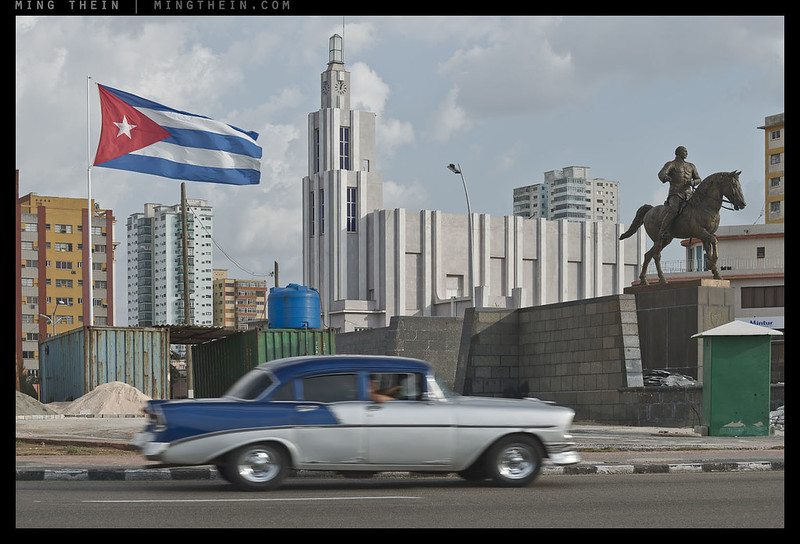
1957, from the Havana series
A little while ago, I wrote an article on images for posterity and what we would want to be remembered for vs what we might actually be remembered for. I’ve been wondering about why certain images are remembered and tend to stick in the minds of the viewers, or better yet, in common culture. I’ve had a hypothesis or two on that since, and wanted to share those thoughts. Though it isn’t the objective or necessity of every person taking pictures to make a different image for every single shot, I’m sure we all want to make something memorable. And some of us have to because well, that’s our job – and we wouldn’t have it any other way.
OT guest contribution: The pathology of ‘fanboyism’ and a little advice to MT

A representation of photographer logic; image suggested by MT.
A first for me: today’s post is an article courtesy of guest contributor, psychologist and photographer Dr. P.L., a London-based practitioner of some note who wishes to remain anonymous to avoid spam from said fanboys. I have asked him to keep the terminology as readable to the non-psychology layperson as possible.
I write this piece as a concerned reader and friend of MT: of late, I’ve started to notice a lot of hostility starting to creep into the comments, which must be addressed lest it be to the ultimate detriment of all.
Photography is a pursuit that is attractive to individuals who a) are creative, or believe they are creative; b) tend to be somewhat analytical; c) in general prefer to operate somewhat independently. As much as teamwork is required for a Crewdson-style production, ultimately there is still only one creative vision and one person aiming the camera. A) is necessary to be able to distil scenes of interest from the common. B) tends to be the case because some technical proficiency is required for the degree of control required to reliably translate vision to output. Photography is also an anthropological and psychological pursuit: we are reflecting ourselves in our observations, whether we share them with others or not. And more often than not we are observing others, too. I believe herein lies an explanation as to why photography seems to generate so many fanboys – and so much irrationality.
An exclusive interview with Kazuto Yamaki, CEO, Sigma
I recently had the opportunity to spend some time with Sigma global CEO Kazuto Yamaki during his visit to Kuala Lumpur for the dp0 Quattro launch, courtesy of regional distributors APD. What followed was a most interesting and candid discussion during which it became clear to me that he has a very adroit handle on things and a remarkable philosophy. I believe Sigma is going to be one of the companies that not just survives the market slowdown, but may well come out benefitting from it. Here’s why.


A visit to Zeiss and thoughts on the Milvus line
The mothership
I was fortunate enough to spend the last three days at Zeiss with Lloyd Chambers (update: his blog entry is here) – with a level of access that I suspect that has never been granted before to independent external parties. They were gracious and first class hosts – I don’t think I’ve had that many types of non-alcohlic beer before. We asked every question we could think of and more, and received answers which we had never expected and at a level of depth that has left me deeply, deeply impressed with what the lens team is doing out in Oberkochen. This may seem like a strange way to talk about the new announcement, but bear with me for while; there is method to the madness. 🙂
[Read more…]