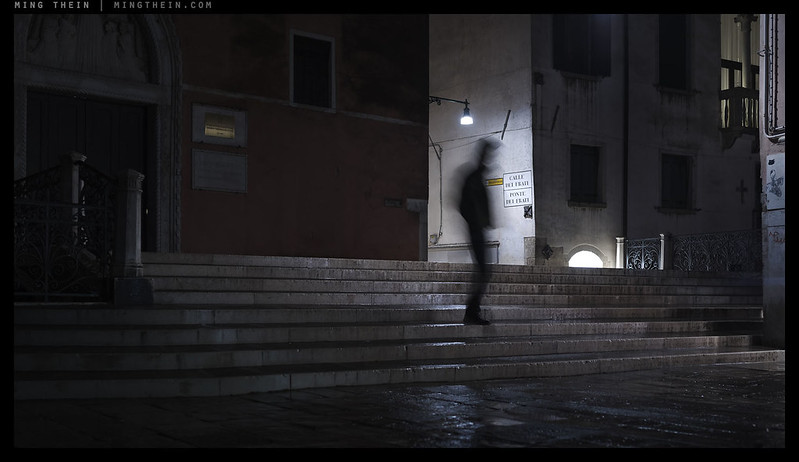
On-Assignment photoessay: Welders

_8525290bw

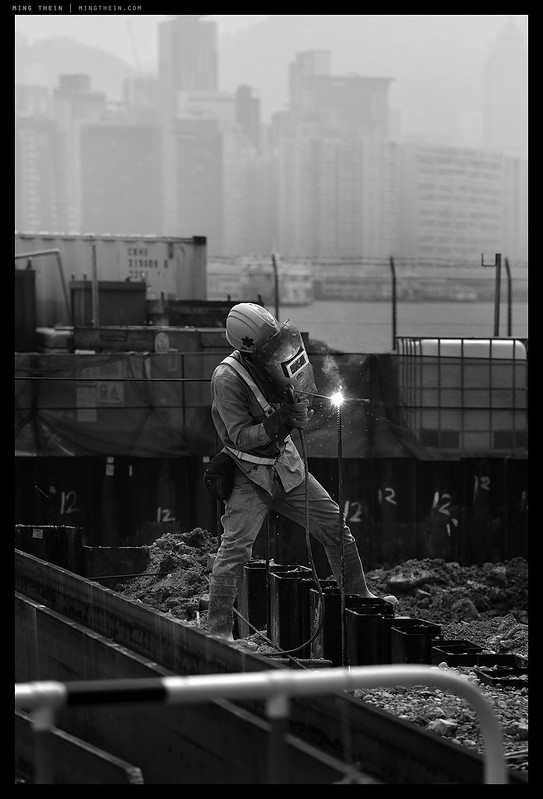
I am pathologically attracted to welding. It’s the photographers’ analog to a moth being drawn to a flame, or in this case either an oxyacetylene torch or plasma arc. My theory is that it has to do with a) light and b) unusual light. How often do you see somebody focusing intently on what is essentially a continuously powered, almost unidirectional flash? You can’t help but look. The radiating shadows created by that harsh light create all sorts of leading lines that force your eyes to the source: man and fire. It’s visually epic in a Metropolis sort of way; the Rocketman-esque helmets do nothing to detract from this, making the whole thing simply impossible to turn away from. It’s probably the reason my eyes have floaters, and some of my sensors have burn marks. But in monochrome it also tells a timeless story of man’s desire to build something great from the sum of much lesser components. And for nothing if that reason, we must bear witness to these things coming to life. MT

Shot over a very long period of time over a large number of construction and heavy engineering assignments, with various hardware from 6×6 film to micro 4/3 to MF digital and everything in between…
[Read more…]

Back to basics: Cut points and edges

IMG_7281b copy
Symmetry and clean termination points – lowered contrast at the edges helps, too.

Judging from the correspondence and comments flying around recently, it’s about time we did a refresher course here on the fundamentals of composition and image-making. As usual, there’s far too much obsession over hardware and not enough thought about what it’s actually being used for. This will be the first of several posts from the archives in this theme. That said, those people are unlikely to read these posts anyway…

In the past, I’ve written about the importance of conscious exclusion in the process of composition: you don’t want to confuse your audience by including elements that are irrelevant or worse, distracting and visually stronger than the main subject. As we know, the very act of composition itself is one of both cropping and curation: we are choosing what not to show as much as what to show, based on our own preferences and biases. How we structure the rest of the composition around that is very much up to us, and of course the intended story or message of the image. But where do we end things – and in what situations is a little trimming necessary? How can we achieve a clean frame and a clean idea?

[Read more…]

Photoessay: At the food trucks, under the power lines

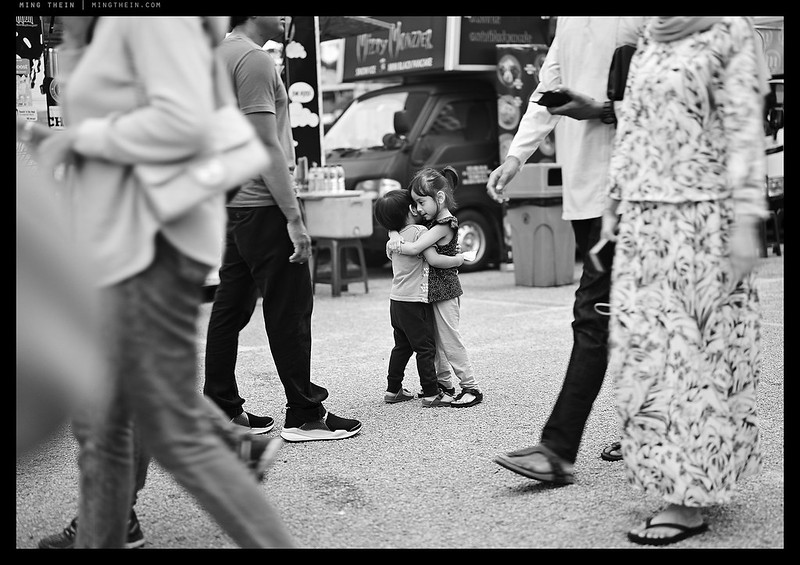
_Z718612 copy

I realise this is an exceptionally strange title for a post; almost whimsically offbeat Murakami in flavour. But sometimes you go to try something different for diner, and come back with a full memory card instead of a full stomach. Something about the atmosphere struck me as poignant: a little sad and wannabe hip, but still with distant threads of aspiration and hope. (I suspect the reason for this is as with everything, Malaysia is late to the party: we criticise anything new that’s of local origins, but will be the second people to jump onto a hot overseas trend – go figure.) Mostly though, there are a lot of vignettes of waiting and going through the motions – what are the people waiting for, I wondered? What epiphanies were they hoping would come? Perhaps the enjoyment promised by social media wasn’t quite up to expectations, but everybody wondered if it was just them who didn’t ‘get it’. Ironically, the only people who actually seemed to be really having fun in that group were the two young kids dancing amongst the milling adults…MT

This series was shot with a Nikon Z7 and 50/1.8 S. SOOC JPEG using my custom profiles, available here.

[Read more…]

Back to basics: subject isolation

_64Z5755 copy
The man: color, texture, contrast, motion. We’re not really missing shallow DOF, are we?

Judging from the correspondence and comments flying around recently, it’s about time we did a refresher course here on the fundamentals of composition and image-making. As usual, there’s far too much obsession over hardware and not enough thought about what it’s actually being used for. This will be the first of several posts from the archives in this theme. That said, those people are unlikely to read these posts anyway…

Regular readers will know that I’ve distilled down four common traits of a strong image: quality of light, clarity of subject, balance of composition and ‘the idea’. The first is very simple: does the light present the subject in a flattering way or as you would desire? Is it directional (i.e. are there shadows) so that it’s possible to determine spatial layout of the scene? The last two require some practice, and the final one is really an never-ending quest for every photographer because there is no limit to the complexity of message that can be conveyed. Today, we will look at the easiest yet most commonly overlooked one of the four: subject isolation.

[Read more…]

Photoessay: Over water, from above

_Z705579 copy

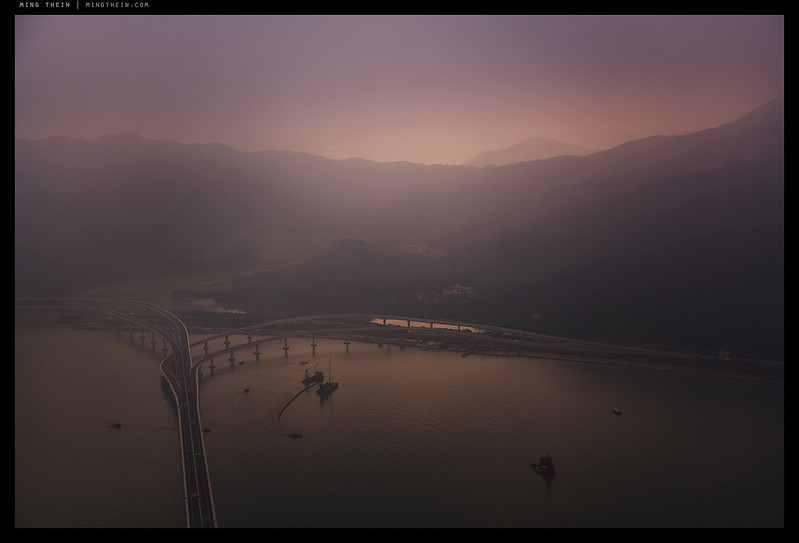
A set like this takes a long, long time to come together – you are at the mercy of both situational opportunity and the weather. On top of that, sometimes you don’t realise you’re seeing things in a particular way until you’ve done it for a very long time and then start to recognise patterns in the images you prefer, and the images you keep taking the next time you’re in the same situation. Whilst most of these were shot from passenger aircraft (also putting you at the mercy of window cleaners and seat allocations at check in), some used drones, helicopters or charters. All of these have one thing in common: none of them were deliberate captures, as in I didn’t make a dedicated trip just to shoot for this project or make this kind of image. They’re the b-roll and the extras we get on the way because something touches us at a subconscious level and we feel compelled to capture it. What I do notice common to the images of this set is a sort of distant dreamy calm; I have to admit this is a very foreign feeling to me, but not unpleasant… MT

Shot with a wide variety of hardware. Mostly processed with Photoshop Workflow III

[Read more…]

Back to basics: Rules of vision – part II

H51-B0003481 copy
Upside down, or?

Judging from the correspondence and comments flying around recently, it’s about time we did a refresher course here on the fundamentals of composition and image-making. As usual, there’s far too much obsession over hardware and not enough thought about what it’s actually being used for. This will be the first of several posts from the archives in this theme. That said, those people are unlikely to read these posts anyway…

Continued from part I – hopefully the first part has had time to settle and digest; let us press on…

We draw temporal inferences from direction of shadows
The length and direction of shadows also suggests time of day: this is one of the indelible subconscious rules dating back to the very beginning. It is a consequence of observing sunrises and sunsets and being able to judge approaching darkness accordingly, by both overall luminance of a scene and the shadows cast by the sun. Sadly, for a lot of us, this is somewhat academic as there are far too many offices with hours that extend beyond daylight and further have no natural light whatsoever…

[Read more…]

Review: The 2019 Sony RX0 Mark II, as a still photographer

_Z725204 copy

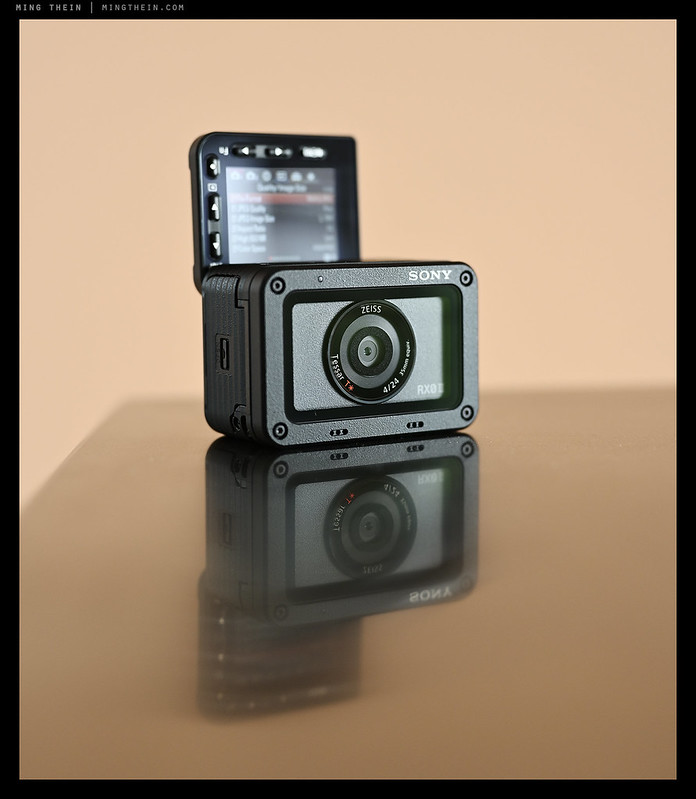
I admit to several things. Firstly, serious curiosity about the shooting experience of a tiny waist-level device (the RX0 Mark II has a flip screen). Secondly, the desire of every photographer to have hardware that’s small and of good quality. Finally, the usual healthy scepticism about the cost-to-value equation of such a device given Sony’s track record for a) price inflation and b) extremely short lifecycles. At $700, this is both the most expensive camera by volume I’ve ever bought, and one with one of the narrowest shooting envelopes (though not that far off the original APSC Ricoh GR, actually). So: why?

[Read more…]

Back to basics: Rules of vision (or, things we can’t help seeing) – part I

H51-B0003019 copy
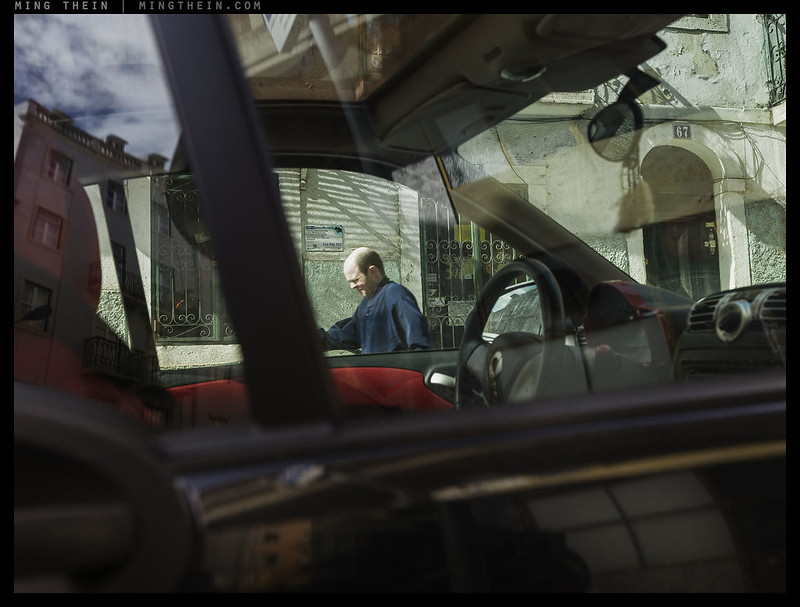
Did you notice the sign above the man’s head? What about the house number? Or what appears to be a Cuban flag in the doorway? Or was the moving man the first ‘anchor’?

Judging from the correspondence and comments flying around recently, it’s about time we did a refresher course here on the fundamentals of composition and image-making. As usual, there’s far too much obsession over hardware and not enough thought about what it’s actually being used for. This will be the first of several posts from the archives in this theme. That said, those people are unlikely to read these posts anyway…

Regular readers will know that I hate arbitrary maxims labelled as ‘photographic’ rules simply because there is no such thing as a ‘universal scene’ or universal set of parameters for every image. Every composition is different, and every creative intention is different, which means the whole premise of there being a fixed set of laws that make a ‘good’ image or ‘image that works’ can only be nonsense. However, I do think there are some fundamental principles of human vision – and consequently psychological response to elements in an image – that we cannot ignore since they directly influence the response of our audience to the ideas we are trying to present. That is what I wish to address today: what are the autonomous/ subconscious/ reflex/ automatic – pick your preferred term – visual responses that we should be aware of and seek to utilise when we compose an image? Think of this post as the predecessor to The Four Things: it’s the underlying reason why some of the Things have to be the way they are.

[Read more…]

Photoessay: Tropical skies

_Z701136 copy

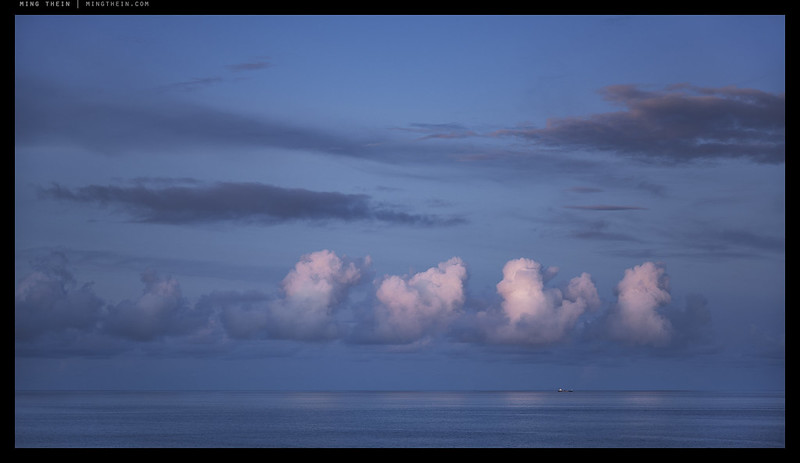
Dreamlike is probably the best description for this series: evocative of palm trees, sea breezes, long drinks and days of doing not very much. (I wish!) I find more than ever I need a break to disconnect and plan the next move, but there’s less and less time available in which to do so. So the only solution is to at least try to create the same feeling through reviewing images with those subjects – after all, if I’ve done a decent job at the time of capture, I should have managed to freeze and translate the way I felt at the time. And if it doesn’t work for me, then it’s doubtful it’d work for anybody else: but I feel myself relaxing already… MT

This series was shot with a Nikon Z7 and 24-70/4 S. No post processing, just the custom color picture control from the Z7/D850 profile pack…

[Read more…]

Adventures of the travelling audiophile: Endgame (nearly)

_Z708371 copy

First confession: I’m listening to them now.
Second confession: I seem to have come full circle; it isn’t the first time I’ve heard them. Not by a long shot; in fact, they may well have been the first
really exceptional bits of hifi I’ve heard.
Third confession: I don’t know when to stop; there’s the beginnings of diminishing returns, and then there’s $1,000 cables. I’m not quite there yet, thankfully. And I admit I’ve tried to find something better, but fortunately, failed miserably.

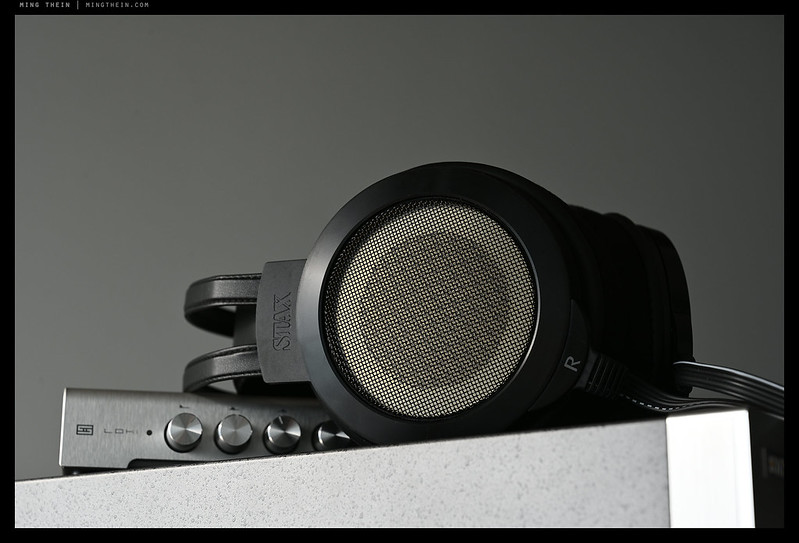
You might have noticed I’ve abandoned the in-ear setup from the previous instalments; part of the problem is one of prolonged comfort/sensitivity – namely my ears’ inability these days to feel good about something crammed in tightly for more than an hour or so – and part of the problem is sonic. In-ears also tend to have a very forward presentation that feels like MAXIMUM ATTACK all of the time, and moreso if you have a detailed, hard-hitting monitor. You don’t get the spatial separation and airiness of an open, over-ear can; much less the coherence of just one driver doing all of the sound generation. The problem with in-ears is they either require you to accept some fuzziness and interstitial connections between the notes and the accompanying lack of definition and precision (if a single driver), or have multiple drivers to cover multiple frequencies, then risk tonal imbalance and coherence issues. It’s not easy to get anywhere up to 12 (!!) drivers per ear to play nice with each other. And that doesn’t even start on the 2018 setups that use as many as three types of drivers – miniature dynamic, balanced armature and electrostatic – in each earpiece. I can’t help but think that’s a reliability nightmare waiting to happen too, given the number of tiny components in there. Having gone off the deep end here (to the point of commissioning my own monitors with their own configuration and tuning, and a modest six drivers per ear) – I’ve gone the over-ear route for the aforementioned reasons of coherence and comfort.

There’s only one problem with all of this: the travelling part. I just can’t do it with this setup, but I have the most amazing static listening experience short of probably some six figure speakers.

[Read more…]