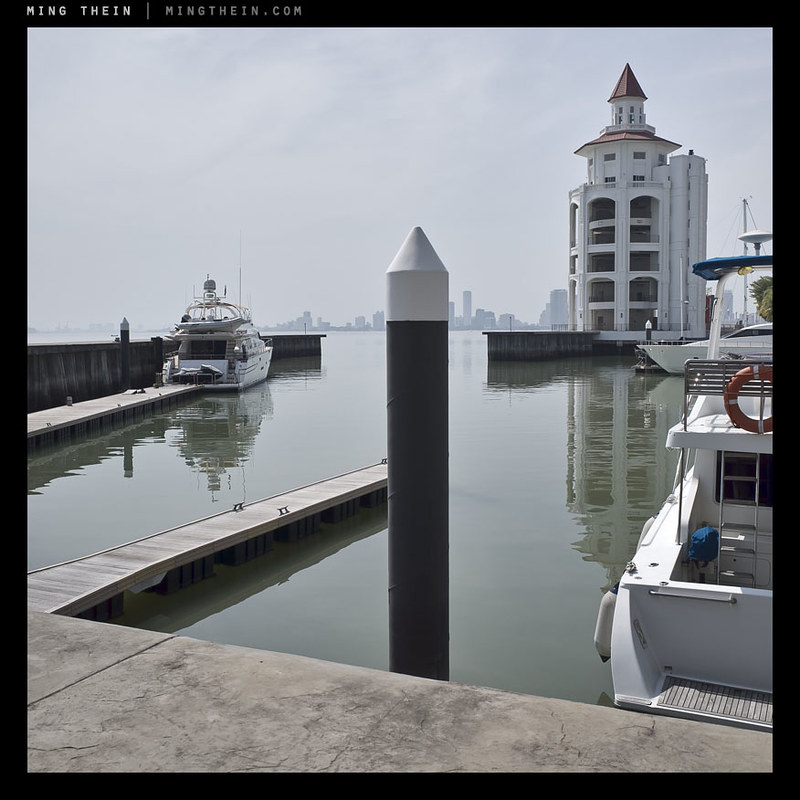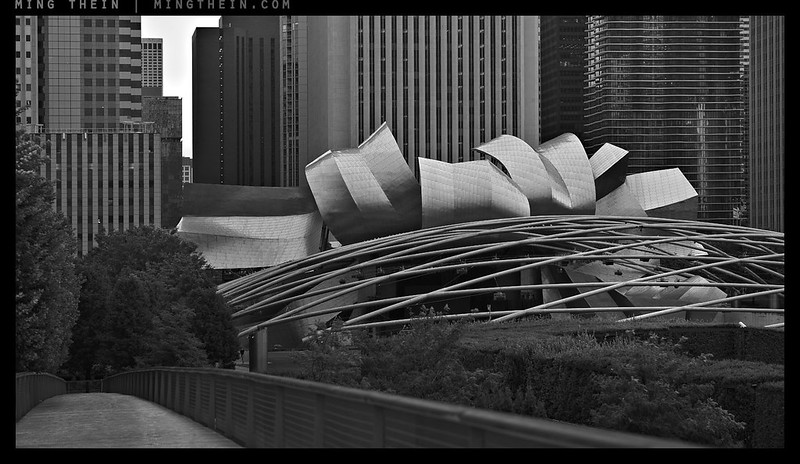
Chicago can be considered both a city of architects and in a way, a city for architects; despite the huge number of other famous buildings in the city, I found myself particularly taken by the form and execution of the Jay Pritzker Pavilion in Millennium Park. Perhaps it was because it was my first encounter in person with a Frank Gehry building – they’re understandably somewhat thin on the ground in Asia. It probably didn’t do any harm that I also happened to go on a day where the sky was throwing up a fantastic assortment of clouds and light; if you didn’t like the arrangement of cumulus, just wait a few minutes for a fresh one. And of course late September in Chicago means that the light is never directly overhead, because the sun sweeps over the horizon in an arc – making any time of day fair game to shoot.
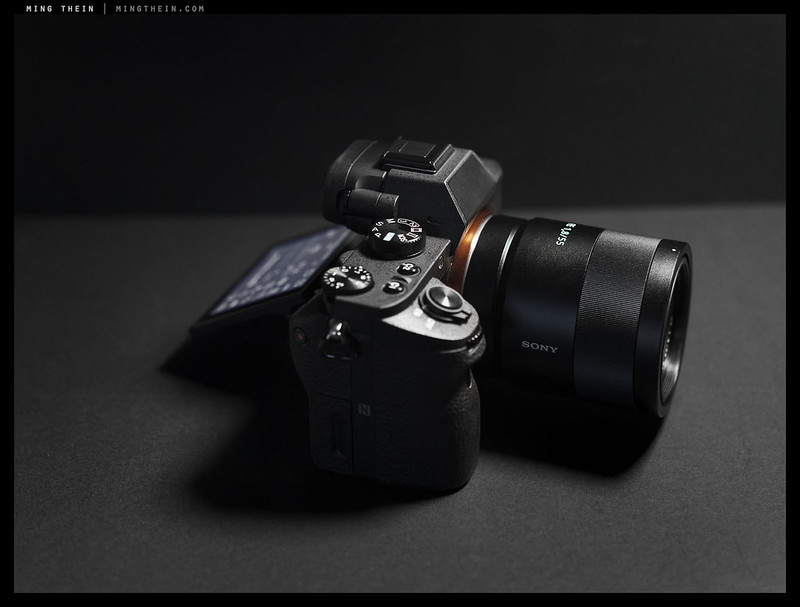
Review: The Sony A7 Mark II; nearly there…(Updated, 21 Jan)
We now have no less than four full frame mirrorless options from Sony; the A7R (previously reviewed here); the A7, the A7S, and now the A7II. This appears to be typical Sony strategy: rather than making a product that’s a definite improvement on the previous model, we get many attempts hoping that each one will find its’ own niche. The A7II brings one thing that makes me curious enough to give it a try despite an uninspiring experience with its predecessor: the first full-frame mirrorless camera to have in body stabilization.
I reviewed a production A7II with the Zeiss 55/1.8 and 24-70/4 OSS lenses, running firmware 1.10. Unfortunately, the 24-70 was either a poor sample or just optically a dog – very soft off-axis and with significant CA, so all of these images were shot with the 55/1.8. I will upload more to this flickr set in due course.
Photoessay: Nautical still life
Earlier this year, I was commissioned to shoot a documentary set for the International Lutheran Seamans’ Mission; an organisation that has stations around the world tending to the spiritual and more pedestrian needs of seafarers. I thought the brief was interesting – follow and document one of their mission leaders, on vessels of various sizes ranging from small wooden fishing boats to new 1000ft container ships – whilst interacting with the seafarers and looking for interesting vignettes. That will be the subject of a future On Assignment – the client has not yet published the annual report it was commissioned for.
Being prolific
The images in this article are unconventional compositions: products of long periods of experimentation, sometimes the result of a single fast grab, or several iterations of adjustment and refinement. I think they suit the theme well.
Today’s essay is a slightly odd one. Consider for a moment: is it better to be a prolific photographer, or a slow, methodical, considered one? No matter how you slice it, there are advantages and disadvantages to both. And I honestly haven’t been able to figure outs which works best, so I’m hoping the comments are going to spark an interesting discussion depending on the approach of my readers.
Picking a tripod
This article continues from a discourse of why a tripod is the most underrated piece of photographic equipment.
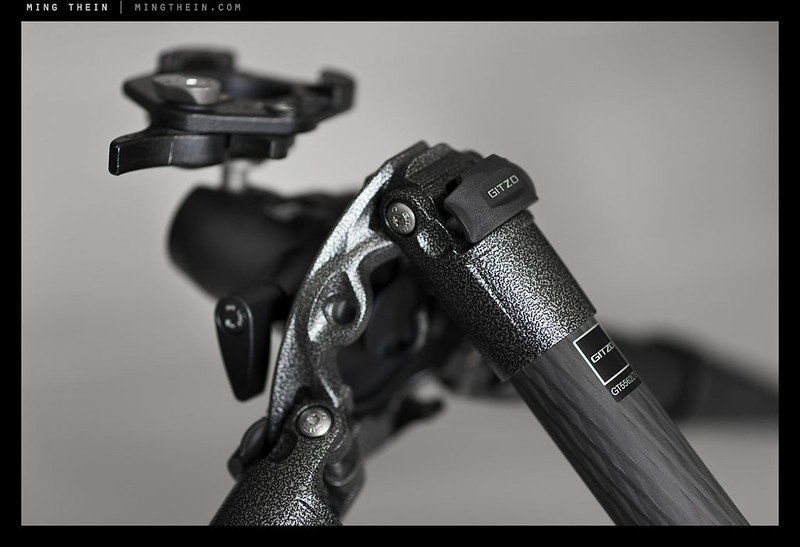
There is a lot of obsession online over whether camera and lens A is better than camera and lens B – forgetting entirely that the creative vision and shot discipline of the photographer using the equipment is not just a great equaliser, but can very well turn the tables entirely. Tripods and heads are one of the very few areas in which this is not actually true – i.e. better equipment is better equipment and there are no equalisers – and are almost completely ignored. No amount of creativity or technique can make up for a poor tripod, but poor technique can certainly spoil a good tripod.
Why the tripod is the most underrated piece of photographic equipment

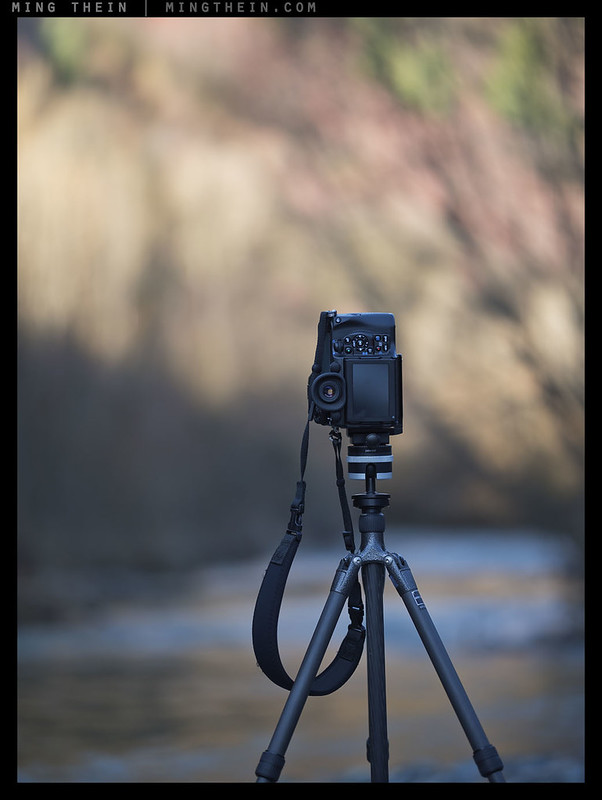
Pentax 645Z with L bracket on Gitzo 1542T and Arca-Swiss P0.
Chances are, a tripod is actually one of the first bits of gear you got at the start of your photographic journey: they’re usually given away free with DSLR ‘kits’ as ‘value added’ freebies (you’re actually charged for them, of course). Like most people, you probably even carried it with you on every photographic excursion for a while, and then eventually got lazy or frustrated with it and gave up. At that point, you probably also wouldn’t have been able to tell the difference between a good tripod and head and a poor one. I’m fully guilty of this, of course. I even bought my tripod – a relatively cheap Velbon thing for all of about $60 that included a head, and was light and relatively small but tall enough to be reasonably ergonomic and not induce too much back pain – jackpot! Of course, I would later learn that the only thing that’s worse than no tripod at all is a bad tripod.
Photoessay: last of the Queenstown landscapes
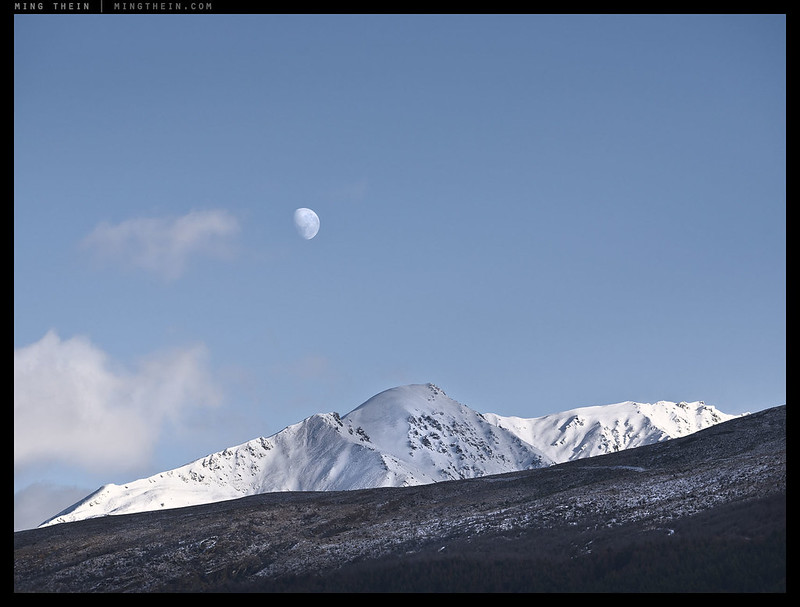
We leave Queenstown today with my favourite images from the trip – a few you’ve seen before, most you haven’t, and all I feel evoke some sort of emotion – for me, at any rate. I don’t always think photoessays need a lot of description, sometimes they can just be appreciated as-is. Of course, one has to bear in mind the limitations of the web and the fact that for most of these, you’re looking at 1% or less of the total image…an Ultraprint or very large conventional print is really the only way to appreciate all of the information at once. Of course, these images are available as Ultraprints (except Tree and River, which is sold out from a previous edition) – please drop me an email or comment if you’re interested. Enjoy! MT
This series was shot with a Ricoh GR, Pentax 645Z, and Nikon D810 with Zeiss 1.4/85 Otus APO-Planar. Files were processed with the techniques covered in Outstanding Images 5: processing for style and The Monochrome Masterclass
I will shoot what I want
On the face of it, this seems like a very obvious statement of intention. For most people, this is not even something that gets called into question (see this article on why we photograph). Perhaps it’s an odd issue I’m personally facing, but the discussion of all things photographic and creative is the purpose of this site after all. Of late, I’m stuck between four places: photographing the commercial, as specified by the client; photographing what appeals to me personally, which is almost always not commercially viable at all; photographing what the audience of this site wants to see and photographing what the art world dictates I should be doing.
The fast compact normal conundrum
I’ve been receiving a lot of email lately. This in itself is not unusual, but it appears that something I quietly bought has stirred the pot somewhat. You see, I’m now a Fuji user (again; I owned the first original X100 in Malaysia, and an X20 and XF1 and XQ1 since). The Fuji fanboys have always said I was biased and paid by the other companies not to use Fuji; the other fanboys have now started emailing me saying I sold out. Sorry guys, the simple truth is nothing so exciting. I bought an X-T1 at retail from my usual dealer in KL with my own money. Two things changed: firstly, ACR in its very latest iteration appears to have changed something in the soup to make X-trans file workflow at least acceptable, if not perfect; secondly, the fast compact normal conundrum demanded a solution.
New year’s resolutions: 2015

2014 ending, 2015 beginning, or both, depending on your point of view?
Setting personal photographic and creative goals for the forthcoming year has become a bit of a tradition for this site – so far, I think I’ve done reasonably well in hitting my targets. Perhaps it’s a holdover from my corporate days when you had to set targets for the projects or divisions under your purview for planning, or worse, so you could later be judged against them. When it comes to running your own business and that overlaps with where you personally want to go with your own creative development, a little more careful thought is required.