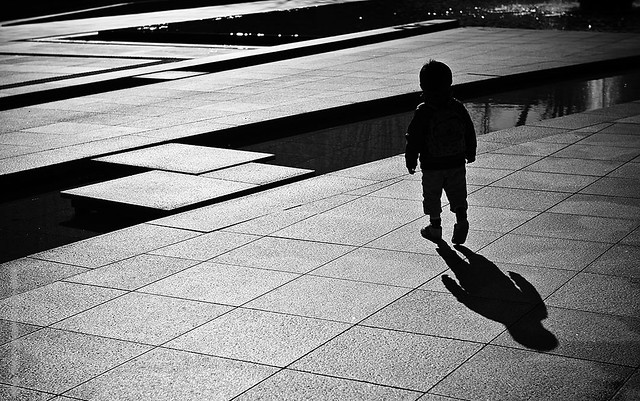
What it means to be a professional

Ostensibly, professional photographers are people who make their living – or the majority of it – from photography or related activities. A profession is a vocation: you take pride in your work, and don’t dabble. Clients rely on you to deliver what was agreed in the contract or letter of engagement, and there is always a letter of engagement with clear terms. Bottom line: money changes hands for services rendered.

You’ll notice that I haven’t mentioned anything about skill. This isn’t to say that there is no skill required to be a good professional photographer, but rather than it really doesn’t seem to be the determining factor in whether one gets the job or not – I’ve been learning this the hard way over the last few months. An event photographer who just randomly aims his camera at groups of people and blasts them with flash can be a professional if all he does is that, and pays his rent with the proceeds. Similarly, perhaps one of the members of Magnum might be an investment magnate on the side; clearly he doesn’t need the photojournalism income, and this doesn’t make him a professional.

Do you see something wrong with those sweeping statements? I certainly do. Yet this is the perception of the industry, and the public at large – and most importantly, that of the majority of clients, too. I’ve always thought of honesty as the best policy – there’s no point in pretending you’re a pro if you’re not. I’ve always told my clients (at least until March this year) that I’m not a full time photographer, but I do deliver professional results.

What does this mean? One thing above all else: consistency. Anybody who takes enough photographs can pull together a portfolio of 10 decent ones; or even 10 excellent ones; however, that may be all they’ve gotten out of say 100 or 200 tries*. On the other hand, if you see similar quality across the board, in every shoot, and the portfolio just happens to be full of slightly better images than the rest – you’ve found a true professional. It doesn’t matter what the subject is, or who the client is, or what conditions they’re working under, they deliver the goods every time. This is particularly important for photojournalists, who must be conditioned to react instantly or miss the shot. And the gear doesn’t matter: a pro will use the right tool for the job, but you could give him a box brownie and the image wouldn’t be that fundamentally different: composition, lighting etc should not change. (Image quality is a different matter altogether, of course).

In every every other industry, being a professional implies that there is a minimum standard that you can expect – a professional dentist or doctor would have a degree, and some years of housemanship, for instance; a professional electrician would be able to wire something without electrocuting themselves (or you); a professional accountant would be able to file your taxes without landing you in trouble with the authorities**. I say ‘implies’, because like with all things, there are varying standards of service. But for the most part, the vast majority of people charging money for that service do know what they’re doing.

*One try would be one event, one wedding, one set of watch images, etc. – with several dozen, if not several hundred images per try.
**Taxation is perhaps the only branch of accountancy where creativity is not only encouraged, but rewarded.

The creative sector is a bit more of a minefield, because everything is subjective. Value is relative – if what you want is a reproduction, then shallow depth of field and soft focus isn’t going to cut it for you – similarly, portraits don’t generally flatter if they’re shot so as to optimize for resolution. Although there are general rules as to what constitutes a good image, and what constitutes a bad one, one can push the envelopes so far that there no longer becomes any clear lines – ultimately, it’s up to whoever is paying the bills. And this is the second thing that differentiates a true professional from an amateur: they deliver what the client wants. This implies a few things: they have the technical ability to execute; they may or may not require the creative ability to translate the client’s vision into a frame, and endow with with their own touch; or they may be required to create an execute the entire concept and shoot. I’ve had the whole spectrum; we must be prepared to wear many hats. Even if the client’s idea may not be the best possible solution you can see for that particular problem (e.g. the lighting is boring, or the framing or angle is too conventional) – we still execute as best we can, and try to tweak it to put our mark of individuality on it – after all, the work will eventually become an advertisement for ourselves, so we must put some pride into it. And it’s also for this reason that inevitably professionals will also try a few creative variations that aren’t on the shot list, in the hope that the client goes for them over or in addition to the original images.

The next distinction is choice: for most working professionals, there is no choice: we take all the jobs we can, partially because volume correlates directly to our income, and partially because you never know what contacts or leads an assignment now may open up in the future. In an increasingly tough photographic market, the reality is that most pros cannot afford to turn down jobs; for every well-paying assignment with a good amount of creative freedom, there are plenty of run-of-the-mill ‘shot factory’ type jobs; though we try, standard pack-shot images from these shoots will never be portfolio-grade material; these clients will probably never make our CV or be publicized; but as much as we don’t like these jobs, we still accept them because they pay the bills, and keep us afloat until the next dream assignment comes along. We know how to price jobs to take into account contingencies, equipment, bad weather, things we need to hire for the job. We understand licensing, intellectual property, and how to protect our image rights***. People who do not make their living from photography do not need to do this, and have the luxury to shoot only the subjects that interest them – consequently, this gives risen to a lot of highly skilled amateurs, and a lot of jaded, creatively-stagnated professionals. However, put the amateur outside his comfort zone, and the results will be decidedly mixed. The pro will soldier on and deliver the expected level of quality, but there’s a good chance that he won’t produce anything exceptional, either.

***Using images without permission is theft, people. A jeweler makes rings for a living – you wouldn’t take one without paying for it. A photographer makes photographs for a living – yet plenty of people either expect images for free, or just help themselves…this is not cool.

And that brings me to the final easily quantifiable distinction: being prepared. Even if something outside the normal course of work happens, the pro is prepared and ready to continue; an example could be as simple as having a spare body, extra lighting equipment if the client changes their mind and wants an outdoor shoot, or even being ready to work under pressure with an audience.

So where is the happy medium? If you can make some of your living from photographic assignments, and some of it elsewhere, perhaps. I don’t know because I’m still trying to figure out what the balance is; the months where I’ve got plenty of commercial work tends to end with a very drained, tired, uninspired feeling; but the months where I’ve got time to be creative also tend to be financial black holes.

Above all, though, I believe that ‘being professional’ should mean something beyond just making your living off it – it should be an embodiment of the term when taken out of context, as in “he acted professionally in that situation”. In summary, here’s my opinion of what makes a true professional photographer (and you’re welcome to differ):
– Doesn’t have any other occupations to distract his/her commitment.
– Consistently delivers the same quality shown in his/her portfolio, i.e. the portfolio is representative of the person, not an exceptional set of outliers.
– Accepts assignments out of financial necessity, but gives them 100% effort and commitment regardless of whether they are interesting or not.
– Continually seeks to improve their personal development and skill level
– Is always prepared for any conceivable eventuality, and has the experience to deal with it and still fulfill the contract.
– Should always act with the client’s best interests in mind, in a fair, ethical an honorable manner. What does this mean? Price equally, don’t discriminate. If you make a mistake, fix it. You’ll be surprised how many photographers don’t do this****.

Now to work on increasing the income bit. MT

****The infamous wedding photography fiasco that’s been making the rounds across the Singaporean forums over the last month or so, for instance.

____________

Enter the August 2012 competition: Compact Challenge – here!

If you enjoyed this post, please consider supporting the site via Paypal ([email protected]); Ming Thein’s Email School of Photography – learn exactly what you want to learn, when you want to learn it or our Photoshop workflow DVDs.  You can also get your gear from Amazon.com via this referral link.  Prices are the same as normal, however a small portion of your purchase value is referred back to me. Thanks!

Don’t forget to like us on Facebook and join the Flickr group!

Photoessay: portrait of a chef – Fergus Henderson

Perhaps best known for his use of offal, bones, tails and other normally discarded parts of the animal, chef Fergus Henderson is one of the innovators of modern cuisine. His dishes are derivatives of traditional British food, usually paired with French wines. However, perhaps the most impressive thing about him is that he’s actually an excellent trained architect (from no other institution than the AA) but one day decided he preferred food – and despite being awarded a Michelin star for St. John restaurant in 2009, he was entirely self taught as a chef and has never worked in anybody else’s kitchen.

Henderson was diagnosed with Parkinson’s in 1996, and has since undergone deep brain stimulation therapy which supposedly has increased his mobility in the kitchen – however, watching him work it’s clear that he wields most implements with difficulty (and in some cases, it’s just too dangerous) and relies on his deputy. However, when you talk to him, it’s clear that his disability has not diminished his ability, talent or passion for food – if anything, it’s enhanced it. He’s an animated, engaging speaker with a dry sense of humor and a disarming smile. I had the honor of running a food photography class with him once; it remains one of the most inspiring experiences of my photographic career to date.

All I can say is that I have enormous respect for the man, and his bone marrow and parsley salad (which he describes in strangely architectural terms) was quite excellent, too. MT

This series shot with a Leica M9-P, 35/1.4 ASPH FLE and Leica D-Lux 5 Titanium.

_DL52_L1000004 copy

_M9P1_L1015047 copy

_DL52_L1000029 copy

_M9P1_L1015029 copy

_M9P1_L1015066 copy

_M9P1_L1015054 copy

_M9P1_L1015056 copy

_DL52_L1000097 copy

_DL52_L1000091 copy

_M9P1_L1015089 copy

_M9P1_L1015088 copy

_DL52_L1000053 copy

____________

Enter the August 2012 competition: Compact Challenge – here!

If you enjoyed this post, please consider supporting the site via Paypal ([email protected]); Ming Thein’s Email School of Photography – learn exactly what you want to learn, when you want to learn it or our Photoshop workflow DVDs.  You can also get your gear from Amazon.com via this referral link.  Prices are the same as normal, however a small portion of your purchase value is referred back to me. Thanks!

Don’t forget to like us on Facebook and join the Flickr group!

Book review: Vivian Maier, Street Photographer

_5006150 copy

One of the more interesting, and popular, new photography books this year is a collection of street photographs from the 1950s and early ’60s, shot by (until very recently) unknown photographer Vivian Maier. She would have remained unknown, too, had a box of her negatives not been fortuitously purchased by local historian John Maloof. The circumstances of even this purchase were even more random: the contents of Maier’s storage locker were auctioned off by the company due to non-payment of account, raising all sorts of interesting issues over copyright and image ownership. Interestingly, the back of the book’s credits list ‘Photographs © Vivian Maier 2011’, even though the photographer herself died in 2009.

Aside from the images, perhaps the most compelling thing about Maier’s story is the fact that if it were not for a couple of very lucky chance occurrences, she would have remained completely unknown and forgotten as a photographer – definitely not for lack of talent, but simply because she did not get a lucky break, nor did she even go out and seek one. Born in 1926, in New York, Maier lived in both New York and Chicago; she worked for most of her adult life as a nanny and caretaker of a family, carrying a camera everywhere she went, and photographing everything and everybody she saw – however, the crucial point to note is that she didn’t show her images to anybody. This of course meant that nobody saw them.

_5006152 copy
I’m guessing these images are from her earlier body of work.

All sorts of questions immediately come to mind, the foremost being, why? Every photographer with the slightest hint of self-pride would love to have their work exhibited, and for much less, frequently hold court with an iPad long after their audience has fallen asleep or started browsing pornography sites on their mobile phones out of boredom. Perhaps it was a confidence issue; maybe Maier didn’t think she was good enough compared to the photographers of the day – don’t forget, she was shooting in the Life/ Magnum-dominated era of photojournalism and reportage; technical limitations meant that the distinguishing factors between your images and the next guy’s were just light, timing and composition; never mind color, extreme DOF or perspective effects. There were few film emulsions available, and as a rule, everything looked like a television test pattern once it got dark.

Or perhaps it’s that crisis of self-confidence that got Maier out shooting in the first place. Unfortunately, due to the curation afterwards, it’s impossible to know what chronological order the images were shot in; but there are two or three clear styles visible in the book – from where she photographs scenes with people in them, to people, but furtively, and finally, people and nothing else. In the latter style, there’s an intensity of gaze from the subject into the camera, and it’s clear that at very least they were all aware of her photographing them; even this last category can perhaps be subdivided further into grab shots, and those where she had some relationship with the subject. The former are often filed with disapproving, suspicious or surprised expressions – this wasNew York, after all; the latter have intensity, soul, and an openness about them that only comes with familiarity.

_5006153 copy
A later, more confident Vivian Maier?

One of the most difficult things for any photographer to do is edit their own images – and by edit, I don’t mean run through Photoshop. I know this feeling intimately; your photographs are like your children, and you don’ts ant to let them go. The problem is that objectively, like all children, there are better behaved ones than others…and without a certain level of detachment, it’s impossible to decide which one of them gets the scholarship to Harvard and which has to make do with the local polytechnic.

Over the course of her lifetime, Maier must have shot thousands of images – yet the book contains no more than about a hundred. As a curious, process-oriented photographer, I wonder what her outtakes look like – were there a lot of disasters? Did she work the scene in the style of the Magnum photographers, or was she a walking one-shot wonder? Or was it hard for Editor Maloof to choose what to leave out? Maybe there’s enough for a second book. I suppose we’ll just have to wait and see.

In the meantime, Street Photographer is a hugely engaging book that everybody who’s ever attempted the genre can enjoy and appreciate; in fact, today’s ‘street photographers’ could definitely learn a thing of two from Maier. At the same time, it’s also a slightly sad tale of how you can be really quite talented at something, but either not realize it, or not have the opportunity to develop it. Like all satisfying narratives, however, there is a happy ending – Maier got her lucky break in the end, even if it she didn’t get to see it herself (Maier died in 2009, but the book was published in late 2011). Moral of the story: images need to be seen. Don’t leave it too late. MT

Vivian Maier, Street Photographer is available here on Amazon.

____________

Visit our Teaching Store to up your photographic game – including Photoshop Workflow DVDs and customized Email School of Photography; or go mobile with the Photography Compendium for iPad. You can also get your gear from B&H and Amazon. Prices are the same as normal, however a small portion of your purchase value is referred back to me. Thanks!

Don’t forget to like us on Facebook and join the reader Flickr group!

appstorebadge

Images and content copyright Ming Thein | mingthein.com 2012 onwards. All rights reserved

Photoessay: A Swiss landscape or two

On a recent assignment in Switzerland, I had the occasional break, and the even more occasional bit of interesting weather – fog or sun, it was either 5 C or 25 C with nothing in between – so I made the most of it by doing a spot of landscape work. I was surprised to discover that the Swiss countryside in summer really does look like the postcards – intensely blue skies, emerald meadows, and lots of cows. It’s positively bucolic, but in a good way.

Landscape photography is tough without a car or sufficient time to do some hiking. Part of the time was spent outside Geneva in the very scenic Vallee du Joux, home to a number of the old watchmaking manufactures. The big body of water is the Lac du Joux, which is as still as a mirror in the early mornings, but can get quite choppy once the mid-afternoon breezes start to blow. I’m told that as idyllic as it seems in summer, it hits -20 C at times in winter, and there’s nothing to see but white. I suspect I might have some problems with the small buttons on the OM-D in that weather, though.

This was the second time I’ve used Zeiss lenses on M4/3 – I actually find the ZF2s work better than the ZMs because they’re mostly telecentric designs. The 21/2.8 is particularly good, actually – it has very refined contrast that the Panasonic 20/1.7 lacks. (You’re probably wondering why I didn’t use that lens – I can put the 21 on the D800E and the 85 on the OM-D, swap them, and have a very nicely spaced set of 21, 42, 85 and 190mm 🙂 I still maintain that so far, the best color I’ve seen comes from Olympus bodies and Zeiss lenses…now if only they’d make some M4/3 AF glass. Preferably a fast 28mm equivalent…MT

This series was shot with an Olympus OM-D, Panasonic 20/1.7, Zeiss ZF.2 21/2.8 Distagon and ZF.2 85/1.4 Planar via adaptor.

_5004014 copy

_5003601 copy

_5003885 copy

_5003575 copy
One of those trees that fell in the forest which we never hear about

_5003560 copy

_5003499 copy

_5003470 copy

_5003884 copy

_5003770 copy

_5003511 copy

____________

Visit our Teaching Store to up your photographic game – including Photoshop Workflow DVDs and customized Email School of Photography; or go mobile with the Photography Compendium for iPad. You can also get your gear from B&H and Amazon. Prices are the same as normal, however a small portion of your purchase value is referred back to me. Thanks!

Don’t forget to like us on Facebook and join the reader Flickr group!

appstorebadge

Images and content copyright Ming Thein | mingthein.com 2012 onwards. All rights reserved

Observations and commentary on the state of the photographic industry

The photography industry as we know it is changing. In this article, I want to examine some of the dynamics of the ‘old’ industry, and the ‘new’ industry – and how we as photographers can survive commercially. In some ways, this is the state of how I perceive the actual roles of the various job titles in the past, and how they’ve now evolved to fit the new ecosystem.

In the pre-digital era, and up to the transition point – oh, I suppose 2004 or so, when DSLRs became accessible to the mainstream:

Camera companies – Made cameras and lenses only. Made money from both of these; product generations were long (10+ years!).

Camera shops – Made money from selling photographic equipment to individual consumers.

Film companies – Made film for those cameras, and sometimes cameras and lenses too. Made money from this.

Amateur photographers – Bought mid-level cameras and film, used services of labs, publishers, photo schools etc.

Professional photographers – Bought cameras and film, especially the aspirational products; used services of labs, publishers, galleries, taught at photo schools. Made money by charging for images and prints.

Stock agencies – Held large collections of high-grade images for licensing; made money through royalties. License fees in the same order of magnitude of cost as hiring a professional for the job (usually).

Printing companies/ labs/ developers – Processed film, made prints, made money from this.

Publishers – Produced books, magazines, etc; made money through advertising and sales.

Galleries – Exhibited and sold prints.

Photo schools – Made money through selling courses to amateurs.

Today, the landscape looks very different (old guard remains in bold):

Camera companies – Made cameras and lenses only. Some now make sensors and electronics, too; have begun a battle of attrition killing each other on price in the hopes of increasing market share. We’re in the odd position of having CSCs that cost less than some compacts, and CSCs that cost more than some DSLRs. Money is made on the lenses and accessories, rarely on the camera bodies, and almost never on the compacts. The smaller players who can’t compete on price or incredibly short-lived generations have and will die or merge (e.g. Ricoh Pentax, Sigma).

Camera shops – A lot of the larger brick and mortar chains have gone; sunk by huge overheads that can no longer be sustained by narrow margins or price wars with online companies. In developed markets, people go to fondle, but not to buy – the prices are poor, and the service is abysmal – usually, nobody has any clue what they’re selling. In developing countries – like Malaysia, for example – only the large volume dealers survive; again, it’s a price thing; we are an even more price-sensitive environment than the US. RM50 ($15) can often make the difference between selling an M9, or not. Even the rich here – perhaps especially the rich – are very, very price sensitive. To make things worse, the local distributors give bonus payouts if a certain volume threshold is met; in order to meet the volume, you have to lower prices…you can see where this destructive spiral goes. It’s possible that these places may form small chains, but unlikely because it doesn’t make sense to have multiple physical locations if you can serve a lot of customers via the internet. Basically: the days of your corner pro shop are long gone. Interestingly, the lack of availability for niche models means that even more attention is paid to what’s written on the internet by pros and so-called ‘experts’.

Film companies – Kodak has gone under, and sold off the digital business – need I say any more? Although it seems that film is making something of a revival in amateur circles, I don’t see the businesses supporting it – there are only two proper pro labs left in Kuala Lumpur that can handle slide film well; even finding a minicab that can handle normal color negs is becoming challenging. The reality of professional work these days means that it is not a viable option because of falling rates and increasingly demanding throughput and deadlines.

Amateur photographers – Now represent more sales of ‘pro grade’ equipment than professionals; photography has become in vogue again. Consumers of content, makers of content, some excellent, some utter rubbish; supporters of the voracious demand for teaching and new product. Often swayed by marketing gimmicks – first it was more pixels, now it’s higher ISO numbers and ‘art filters’ or ‘scene modes’. This market is by far what keeps the camera companies in business.

Professional photographers – There are many breeds of pros these days – assuming the definition of pro is ‘makes all or most of their living from photography or related activities’. There are those who work for studios, or as press photographers – i.e. drawing a salary. There are those who shoot weddings and events; in this part of the world, they are mostly amateurs who charge for their work, but do not deliver consistency of quality or reliability. Unfortunately these people are the group the public interact with the most, and frankly, give the true pros a bad name – even those in the same industry. There is a small group who shoot for stock, or international agencies. Finally, there are the commercial photographers and studio owners, whose jobs are increasingly being supplanted by the huge quantity of stock out there, or worse, being taken by the amateurs who vastly undercharge, do a poor job, and generally threaten the sustainability and image of the industry. The reality is that the jobs that pay well – commercial work, advertising – are both shrinking and being heavily guarded by the established photographers; and the portion of the work that’s evergreen is becoming commercially unviable – there are event photographers in Malaysia who charge about RM50 an hour (that’s US$15) including processing (assuming they do any at all) for a huge number of images. In this price sensitive environment, that’s death. Needless to say, at those rates, it takes you 20 hours of work to pay off a D3200 kit; you’re not going to be having backup bodies in case things fail, nor are you going to be able to produce anything indoors except with direct flash.

The upshot of all of this is that the smart pros are doing many other related things – notice the increasing number of workshops and seminars offered; product endorsements; sponsored or ad-driven blogs; etc. You can’t just produce photos for money anymore. About a third of my income is from teaching; I’m staying away from advertising because it affects my credibility; but I will use other unique tools like the Email School of Photography, paid competitions and Amazon referral links.

Stock agencies – The old guard of stock agencies is still charging an arm and a leg, for (admittedly) higher quality images; however, they’re also giving the photographers a rather lousy deal. Getty takes between 60 and 80% of the royalties for each of my images it sells; ouch! The alternative is no money, or micro stock – where you get 20-30 cents, and hope like hell you sell a lot of images. The question is, would you rather have nothing, a bit of a lot, or next to nothing?

Printing companies/ labs/ developers – Almost dead, at least in this part of the world; the labs that survive are focused on digital printing; there are good ones, and bad ones, and few who really understood the transition well enough to be considered master printmakers. I’m lucky to have one here in Kuala Lumpur who takes care of my printing and is also a HP Master Printer. (Wesley Wong @ Giclee Art). Online print-on-demand bookmakers like Blurb are doing very well – there have been more and more of these emerging, though quality is somewhat hit and miss – even with Blurb, who appear to subcontract the actual print work to many different vendors. Getting replacements usually isn’t too difficult, though. And you can now print small runs instead of hundreds, as was the norm for offset printing.

Publishers – While amateur photography magazines have proliferated with the increase in interest in the hobby, they’ve also suffered stiff competition from websites, who can put out more content in a more timely manner – and offer things like full size files to play with – that the magazines simply can’t compete with. The magazines are trying to maintain their edge based on content quality, but I feel even that’s eroding. (I used to be Editor of a photography magazine here; finding people to produce quality content was so difficult that in the end I was writing and shooting nearly 90% of the magazine myself.)

Galleries – I can’t speak for overseas, but there just isn’t a market for photographic prints in Asia. While there seem to be a lot of galleries in Europe (at least there were on my last trip there) – I don’t know how they make money; it isn’t from print or ticket sales. I suspect that most are sponsored by camera makers or wealthy patrons.

Photo schools – Nothing much has changed here, but there are now more of them – though a lot of the ‘photo schools’ in Asia are just one-man shows who hire some seminaked models, set up some lights, and charge for entry. Needless to say, you’ll learn nothing. On the other hand, there are a number of very good pro shooters who’ve now turned to teaching to supplant their dwindling professional income; I’m one of them. You have the opportunity to learn from people who perhaps five or ten years ago, would have jealously guarded their secrets and techniques. Choose wisely, is all I can advise – looking at the quality of the person’s portfolio is an excellent way of doing this.

Photography blogs and news sites (like this one) – The majority of sites exist to satisfy the desire for content – reviews, validations of personal equipment choices, or information on whether one should buy camera X or camera Y. Preferably yesterday. Traffic spikes are huge when exclusives are in play (from experience, here) – and advertisers and referral fees are how these sites are supported. Some of us try to be a bit more esoteric in our choice of topics and deal with other photography-related things beyond equipment, but that’s not always the case. And it’s clear that while a lot of these sites still respect IP – I’m fine with people syndicating my articles/ posts with proper credit, and it does happen – but there are an equal number who frankly just don’t give a shit about IP, image rights or NDA agreements.

Rumor sites – They exist only because human nature wants the latest and greatest. I’ve been asked on more than one occasion to break NDA and reveal what I know; I can’t think why anybody would violate their position of trust for…well, precisely nothing. No money, (obviously) no credit, and nothing else whatsoever. I can’t help but wonder if some of the camera companies are leaking things directly to stir up interest in advance of product launches, though. They support themselves with referral links, of course.

Image sharing/ hosting sites – While most are free in some form – basic services of Flickr, Picasa, etc – the premium services for serious photographers are charged. Though how Flickr makes any money off me is baffling; I more than get my annual subscription worth through hosting and server bandwidth alone. I suppose there must be others who don’t have 14,000 uploads, though. Notably some have folded, though – Kodak’s PictureGallery, for instance.

Computer companies, software companies (e.g. Apple, Adobe) – I’m sure part of Apple’s meteoric success in the last few years is due to digital photography and the support/ processing requirements – actually, I’m surprised that there isn’t an Apple camera yet. Without the support ecosystem – photoshop, a decent machine to run it on – digital is pretty worthless, because I still haven’t seen a single out of camera jpeg that I’d be happy to present to a client. I don’t know how many iPads were sold for use solely as portfolio devices, but I’m sure it’s a lot; if I hadn’t won one in a contest, I’d probably buy it solely for that purpose. Beats carrying around a print portfolio, and it’s cheaper, too.

Mobile phone companies – The fact that we’re seeing innovation in this space – the Nokia 808 PureView comes to mind – says that photography is being taken seriously even by non-camera makers. Coupled with internet connectivity and social media, picture sharing has skyrocketed – however, it’s unclear who on the hosting end is making money out of this. I’m sure Facebook will eventually find a way to charge us for sharing our images using its platform – never mind that it’s one of the worst image sharing platforms ever, between compression, sRGB color spaces and horrible interfaces – but we still use it anyway, because it’s the easiest way to ensure that all your friends see something.

Microstock agencies – Microstock only works with volume – high numbers of purchases for newly-minted content and websites; and high numbers of eager photographers to make some money out of their images, even if it’s only cents. Without that huge amount of content to trade in, the micro stock model just doesn’t work. I don’t know how sustainable this is in the long term, either.

Accessory companies – The burgeoning increase in amateurs also means a bigger market for what would formerly have been very niche accessories – there are businesses making nothing but stick-on grips, or replacement rubbers, for instance. I welcome diversity, cottage industries and craftsmen in general – I hope these are sustainable, and honestly, given current camera sales volumes, see no reason why they wouldn’t be.

Self-proclaimed ‘experts’ – People with no clients, a crap (or worse, nonexistent) portfolio of work, no credentials but very, very loud voices have come out of the woodwork in recent years; the problem is that the louder the voice, the more they get heard – especially on the internet. Controversy is seen as a good thing, even if there’s no substance behind it – because it gets traffic, and traffic is directly proportional to advertising revenue. The problem is not that they exist, but that they’re assigned far too much weight by both consumers and camera companies alike. I would be very, very weary of any opinions by ‘experts’ who obviously are incapable of taking a halfway decent photograph. This of course assumes one can tell the difference at all; perhaps a better litmus test is to look at the proportion of disparaging or negative comments received: in over 700,000 views, I’ve had no more than 5 negative emails/ comments. I know you can’t please everybody, but I try hard to have the bases covered.

Online retailers – Almost all of today’s successful brick-and-mortar retailers also have an online presence; not necessarily the opposite. And the unsuccessful brick-and-mortar retailers simply don’t exist in cyberspace. Correlation? I think so; the online portion of a physical retailer’s business gives them enough volume to be competitive on price regardless of the sales channel; this is self-reinforcing in that you’re more likely to buy from say, the B&H Superstore in NYC if you’re there, since you know the prices are the same as on their website. But if your local camera shop is more expensive or can’t afford to keep the inventory range in stock because of lack of volume, the chances of you making a purchase there decrease dramatically. And there may be a store on the other side of the country (or even in another country) that does mail order – but if you don’t know about it, how are you going to make a purchase at all?

Online bulk retailers (e.g. Amazon) – Photographic equipment is a natural progression for existing retailers of electronics and other consumer goods – the one thing you have to be careful of is that descriptions are accurate, and goods are in stock. What we consider to be important differences – kit lens types, for instance – probably get overlooked by the clerk doing the data entry into the system. And not always having a number to call to confirm (or having the number, but a person who obviously can’t remember the details of the hundreds of thousands of products they sell) can sometimes make things risky. The flip side, of course, is that the enormous volumes and lack of sales tax can make these a very attractive option price-wise. They’re also often the first to receive new product in any significant quantity, simply because initial order volumes are so huge that manufacturers allocate priority stocks to them.

So what does this all mean? When the dust settles, we’re going to see a lot of consolidation in some areas – manufacturers, retailers – and a lot of proliferation in others – blogs, self-proclaimed ‘experts’, workshops, etc. I think we’re not quite done with the change yet; the shift to digital has killed or nearly killed a lot of industries, but at the same time opened up entirely new sectors to the enterprising individual or company. If you’d asked me even five years ago whether I thought there was any other way to make a photography-related living than from selling images or perhaps sales referrals through blogging, I would have said no. But here we are today – who knows where my income in another five years will originate. All I do know is that as photographers, we’ve got a whole load of new tools at our disposal to master, but once we do, we can always improve the quality of our images and broaden the shooting envelope. I may not be making most of my living from my commercial clients in future, but I do know that I’m going to continue using everything available to up the standard of my work, and help those who are interested to do the same. MT

____________

Visit our Teaching Store to up your photographic game – including Photoshop Workflow DVDs and customized Email School of Photography; or go mobile with the Photography Compendium for iPad. You can also get your gear from B&H and Amazon. Prices are the same as normal, however a small portion of your purchase value is referred back to me. Thanks!

Don’t forget to like us on Facebook and join the reader Flickr group!

appstorebadge

Images and content copyright Ming Thein | mingthein.com 2012 onwards. All rights reserved

Photoessay: Summer in Geneva

The sun comes out in Geneva (apparently quite rare). A quick travel series using the Olympus OM-D and 45/2.8 Macro – my backup lens while on assignment.

Enjoy! MT

As usual, all images can be clicked on for larger versions.

_5004114 copy

_5004162 copy

_5004179 copy

_5004169 copy

_5004157 copy

_5004247 copy

_5004236 copy

_5004215 copy

_5004240 copy

_5004231 copy

_5004209 copy

_5004166 copy

____________

Enter the August 2012 competition: Compact Challenge – here!

If you enjoyed this post, please consider supporting the site via Paypal ([email protected]) or via Ming Thein’s Email School of Photography – learn exactly what you want to learn, when you want to learn it. You can also get your gear from Amazon.com via this referral link.  Prices are the same as normal, however a small portion of your purchase value is referred back to me. Thanks!

Don’t forget to like us on Facebook and join the Flickr group!

Inspirations from older cameras: the Nikon D3, part two

Part two of of this series. Part one was here.

_D3T1959 copy.jpg
Exclamation mark. D3, 300/2.8 VR

_3009420bw copy
Untitled. D3, 24-70

_3004568 copy.jpg
Rest. D3, 105VR

_3016416bw copy
Satay man. D3, 14-24

_3002491bw copy.jpg
Suggestions of a watch. D3, 105VR

_3035041 copy
Tour de Langkawi 2009. D3, 24-70

_3009669bw copy
The ‘hollywood’ shot. D3, 24-70

_3033285 copy
Virtual buildings. D3, 24-70

_3030120 copy
Blending in with nature. D3, 24-70

_3013397 copy
The proverbial rose. D3, 24-70

_3030678 copy
It can only be Fuji. D3, 24-70

_3035694 copy
Sunset. D3, 50/1.4 AFS

_3015669 copy
Children, Bangkok. D3, 14-24.

_3009001bw copy
Live retouching. D3, 24-70.

____________

Visit our Teaching Store to up your photographic game – including Photoshop Workflow DVDs and customized Email School of Photography; or go mobile with the Photography Compendium for iPad. You can also get your gear from B&H and Amazon. Prices are the same as normal, however a small portion of your purchase value is referred back to me. Thanks!

Don’t forget to like us on Facebook and join the reader Flickr group!

appstorebadge

Images and content copyright Ming Thein | mingthein.com 2012 onwards. All rights reserved

Inspirations from older cameras: the Nikon D3, part one

For me, the Nikon D3 is one of the cameras that revolutionized the way I shot – no longer was the camera the limitation in any way. It almost made things too easy; it forced me to rethink the way I shoot and stop trying to capture ‘everything’ in hyperreal detail and light (that was the previous challenge) and start moving myself to a more selective way of seeing. This was further reinforced by the Leica M8 that followed…

The D3 and D700 share the same sensor and much of their innards; the latter camera is still in service with me today, and used for things where I either don’t need the resolution or have to shoot under more demanding conditions than would be convenient with the D800E. And for anybody thinking of upgrading from an older DX camera, do it – you’re in for a treat.

Part one of the reinspiration is here. MT

_3031741 copy

Fushima-inarii, Kyoto. D3, 24-70

_3011285 copy

Hoan Kiem, Hanoi. D3, 70-300VR

_3036042bw copy

Rain. Kuala Lumpur. D3, 70-300VR

_3020442 copy

Scarlet ibis. D3, 70-300VR

_3014772 copy

Joy. D3, 24-70

_3009512bw copy

Detective in the city. D3, 24-70

_3004527 copy.jpg

Stamens. D3, 105VR

_3028702 copy

Imperial Palace moat, Tokyo. D3, 24-70.

_3028712bw copy

Shadows, Tokyo. D3, 24-70

_D3T0913 copy.jpg

Omega Dynamic. D3, 105VR

_3032473 copy

Daibutsu, Nara. D3, 24-70

____________

If you enjoyed this post, please consider supporting the site via Paypal ([email protected]) or via Ming Thein’s Email School of Photography – learn exactly what you want to learn, when you want to learn it. You can also get your gear from Amazon.com via this referral link.  Prices are the same as normal, however a small portion of your purchase value is referred back to me. Thanks!

Don’t forget to like us on Facebook!

Aspect ratios and compositional theory

_DL5T_L1000072 copy
Round plate in a square frame. The composition is ostensibly balanced, but a little randomization is created by the uneven lighting. Leica D-Lux 5

Aspect ratio: image width/ image height, with the long dimension first.

There are six common aspect ratios for cameras today (and as many as you like if you use the crop tool, but that’s another subject for another day):

1:1 – Square format, traditionally the realm of 6x6cm Hasselblads, and now popularized by various mobile apps.

5:4 – Large format and sheet film cameras, mainly 8×10″.

4:3 – Broadcast television and video used this aspect ratio, originally in 640×480 pixel resolution; small sensor cameras and compacts (which inherited early video CCD architecture) have been using this aspect ratio ever since. Four Thirds and Micro Four thirds are the larger consumer formats to use it; in medium format there’s also 645 which has the same aspect ratio for both film and digital.

3:2 – Double a movie frame; famously invented when Oscar Barnack rotated the film through 90 degrees and doubled the width of the frame to create the 24x36mm ‘full frame’ 35mm camera format. Almost all larger sensored DSLRs use this today.

16:9 – HDTV format; not a native aspect ratio for digital still cameras, but useful to provide a more cinematic feel to an image.

2.35/2.40:1 – Motion picture widescreen for feature films; very rarely used for still photography, and there are certainly no dedicated digital still cameras that offer exclusively this format. Not only is it extremely wide, if you’re cropping down from a 4:3 sensor you’re throwing away more than half of your image.

_7058625 copy
16:9 and cinematic. Note how the whole subject isn’t necessary for you to identify it. Nikon D700, AFS 85/1.4 G

Most modern cameras offer different image sizes in-camera, though all they really do is crop the top and bottom or sides. There are a few digital cameras that have sensors bigger than the lens’ image circle, which allow the diagonal angle of view for a given focal length to be maintained when changing crop; the main one of these is the Panasonic LX series of cameras. Put one of these on a tripod, slide the aspect ratio switch on the lens barrel and you’ll notice that the horizontal field of view gets wider than the 4:3 option, even though this is the native aspect ratio of the sensor. (It also means that you don’t suffer as much of a resolution decrease as you’d expect when changing aspect ratios). There is no point in shooting in another aspect ratio if all the camera does is throw away the extra pixels; you’re better off capturing as much information as you can at the time of shooting and then deciding later what crop would work best (assuming, of course, that you didn’t compose correctly at the time.)

_PM05696 copy
Filling the frame – native 4:3 of the Olympus E-PM1 Pen Mini, uncropped. 45/1.8

Now that’s out of the way, the aim of this article is to focus on understanding the compositional impact of different aspect ratios, and more importantly, how to pick the right aspect ratio for a given subject.

There are two ways to go about this – either you shoot only one aspect ratio (for instance 3:2 because you have a digital SLR) and arrange the contents of your frame around it, or you keep an open mind and match the aspect ratio to respect the subject and the dynamic of your composition. For instance, you might use a 1:1 square for a round object if you want a balanced frame, or you might use 16:9 and just focus on one curve if you want to highlight a particular detail in a cinematic manner – you never see movie shots showing the whole of Earth, for instance; it’s always a hemisphere with the sun rising in just the right place. This is not a coincidence!

_M9P1_L1002726 copy
(Nearly) symmetric, but visually balanced. The two are not the same thing. Leica M9-P

Most people will stick to the aspect ratio that is native to the camera, and either do nothing else, or crop to fit later. This is compositionally very, very sloppy – not only do you not get the best frame for the shape of your subject, there’s a very good chance that you probably won’t be able to fill the frame properly, either; 3:2 is a bit of a compromise aspect ratio that lacks the organic intimacy of 5:4 or 4:3 for portraits, or the drama of 16:9 for more expansive scenes.

_7051800 copy
Symmetry. Nikon D700, AFS 60/2.8 G

If you crop to fit the subject exactly, then chances are you’ll probably also land up with a very boring frame – this time, because the composition is too balanced. It seems counterintuitive, but the reality is that such compositions tend to use the space around the subject as a frame, and nothing else; there is no context, secondary subjects or points of interest added.

_7051447bw copy
Balanced, but not at all symmetric.

Don’t despair too much if this situation seems a bit damned if you do, damned if you don’t. The good news is that the one obvious remaining strategy usually works the best if done correctly: learn to fill your frame. For the most part, this is how I operate unless I know the final output (usually client work) is going to be of an certain aspect ratio, or if the scene itself just cries out for a certain shape.

What does filling the frame entail? Well, for one, you should be able to identify your subject – that’s composition 101. The remaining space should be filled with elements that either echo your subject, strengthen the story, or give the subject context. But in no way should they distract the eye from the primary subject. And each smaller element should be placed in the remaining space in a balanced manner.

_M9P1_L1006748 2 copy
The leading space of anticipation. Depth of field control and lighting make it clear what’s part of the foreground/ subject, and what’s part of the background and is context.

Here’s a visual example, using dots to represent compositional elements. The big red circle is the subject. The lighter color/ lower saturation dots are the secondary, tertiary and other filler.

First we place the main subject; where exactly in the frame is up to you, but in general, you leave leading space in front of the subject’s orientation if you want to create expectation (i.e. if a person is in profile, then put most of the space in front of their nose); trailing space if you want to create urgency or drama; or alternatively, let the supporting background elements dictate where to put the primary subject. For this example, let’s just pick an arbitrary starting location – all dots look pretty much the same. I’m going to pick 3:2 as our example aspect ratio.

3-2 composition example primary

Now the secondaries – put them in the white space, with balanced space around them to create both an isolating/ highlighting frame, and a buffer zone between them and the main subject so they don’t get confused or overlapped:

3-2 composition example secondary

And the same for the tertiaries.

3-2 composition example tertiary

The other filler rests wherever it rests, but just make sure that distracting elements – say a huge point highlight like the sun, in this case, the blue dot – don’t go in distracting places.

3-2 composition example fluff

There – a balanced composition. There isn’t any odd empty space that doesn’t have an equivalent mirror along a given horizontal or vertical (or for that matter, any other orientation) axis. Let’s try this again for 1:1 and the same size original subject:

1-1 compositional example complete

And finally, 16:9:

16-9 compositional example complete

Notice how for the 16:9 example I didn’t show the whole subject; you don’t always need to. Just so long as you can identify what the subject is, you’ll be fine. In fact, it’s quite easy to imagine this particular frame as say a sunrise over the edge of earth (using our previous example) with a fleet of spaceships in the foreground…
(Oops, I’m getting carried away. Perhaps I should take up modern art, or perhaps designing colorblindness tests.)

More seriously there’s a secondary subject intersecting the main subject – does it matter? Only if the intersection causes some perceived division of either, e.g. a horizontal line running through somebody’s head would tend to suggest decapitation to a view, and consequently looks rather odd for a portrait. However, there are also examples where such intersections or juxtapositions can create interesting images in their own right.

Notice how each composition is balanced, but you still instantly know what the main subject is.

Want to make this exercise more realistic? Okay, let’s go back to 3:2 and do one for wide angle, with emphasized perspectives and huge relative size differences in dots:

3-2 wideangle

And another one for telephoto, with the foreground and background dots blurred to replicate shallow depth of field:

3-2 telephoto

Once again, notice how your eye is still drawn to the main subject in each composition. Of course, real life isn’t quite this easy; subjects aren’t dots, the white spaces aren’t always uniformly white, and most of all, you almost never have any control over where to put anything else except your main subject; most of the time it’s about waiting for the secondaries to move, or you moving (for immobile subjects) to get the vantage point that works. The only time you have full control is when you’re shooting still life in a studio.

_7026879 copy
Note how the empty space serves to highlight the (highlighted) subject. Nikon D700, AFS 85/1.4 G

One interesting thing I’d like to bring up at this point is our very restricted use of verticals – almost always, verticals are in more square aspect ratios; 3:2 is about the slimmest vertical aspect ratio you see. You almost never see 16:9 or anything wider; my theory is that it’s both to do with how our eyes natively see, and how content is presented. Since human eyes are horizontally tandem, we tend to see in a wider horizontal field than vertical; a tall image forces our eyes to scan up and down its length, which means that such images are difficult to compose because they must be broken into zones with complimentary transitions for the composition to work. (The same is not true for horizontals, because we can take in the image at a glance and instantly recognize the surrounding areas as context.)

_7021180 copy
The secondary subject reinforcing the primary, empty space creates anticipation. Nikon D700, AFS 28-300VR

Making things worse, almost all displays are geared towards this ergonomic trend – as makes sense – when was the last time you saw a vertical monitor? Furthermore, we get subconscious reinforcement through other means that horizontal is the way to go: most cameras only have one grip, and even those that have two make shooting landscapes much easier than portraits; even after we shoot, when we view the images on a monitor, the verticals take up about a third of the space, but the horizontals nearly the entire area – obviously, the larger ones look better, so we tend not to be as influenced by the vertical images…

_7007311 copy
We needed to have at least one vertical in here. Nikon D700, Zeiss ZF 85/1.4 Planar

However, with practice, you’ll learn to see this way – and with more practice, you’ll learn to see this in the instant you identify what you want to have as your main subject; along with lighting, focus, exposure etc. Fortunately, visual pattern recognition is something that human brains are very good at, even for things that have zero fixed quantitative parameters. For example, we know something is a dog even if it’s in a different orientation, different size, a line drawing or a photograph, or a stylized graphic silhouette. Try programming a computer to do this, and you’ll soon realize both how impossible a task quantifying the distinguishing parameters of a dog is, and what an amazing piece of hardware our brains are. (If you disagree, what marks the difference between a wolf and a dog? Or a dog and a cat? Or a dog and a cow? They’re all four-legged with tails and pointy ears.)

Once again, it comes down to practice. The more you shoot and the more images your brain sees, the faster it becomes at picking out compositions in a live scene that work against ones that don’t. I know that isn’t a concrete answer, but shouldn’t you be out shooting now? 🙂 MT

____________

Visit our Teaching Store to up your photographic game – including Photoshop Workflow DVDs and customized Email School of Photography; or go mobile with the Photography Compendium for iPad. You can also get your gear from B&H and Amazon. Prices are the same as normal, however a small portion of your purchase value is referred back to me. Thanks!

Don’t forget to like us on Facebook and join the reader Flickr group!

appstorebadge

Images and content copyright Ming Thein | mingthein.com 2012 onwards. All rights reserved

Inspirations from older cameras: The Ricoh GR Digital III

The original Ricoh GR-Digital was a cult camera that was known for two things: its ability to produce interest B&W JPEGs directly out of camera that heavily resembled Tri-X, and it’s incredibly configurable user interface. A fixed 28/2.5 equivalent was just part of the package. To be honest, I never really got along with this camera; I bought it solely because I loved the way it felt, and hardly used it.

Somehow, I found myself finding the 28mm focal length more and more intuitive as I matured as a photographer, to the point where I would see 28mm frame lines around every scene suspended in midair. The ideal compact was therefore an easy choice – I acquired a Ricoh GR-Digital III in early 2010, and used it heavily – occasionally as a primary camera, too. Although it still produces excellent out of camera B&W JPEGs, its sensor has fantastic tonality in both color and monochrome, and conversions are best done in ACR to make the most of the files.

Suffice to say it’s given me a surprisingly large number of keeper and portfolio-grade images over the years. MT

_0010470bw copy
Self portrait

_0010675bw copy
Construction break

_0010881 copy
The Number 15 to Trafalgar Square

_0012640 copy
Inside your watch

_0012141 copy
After the rain

_0011326 copy
Untitled

_0011792 copy
There is a divergence in the force

_0012572bw copy
Untitled

_0010122 copy
Chinese New Year

_0011998bw copy
Bulbs

_0012213bw copy
Stubbornness

_0010522 copy
Reflections on people

____________

The inaugural mingthein.com photography contest closes 31 July 2012 – the more people entering, the larger the cash prize! Enter here

If you enjoyed this post, please consider supporting the site via Paypal ([email protected]) or via Ming Thein’s Email School of Photography – learn exactly what you want to learn, when you want to learn it. You can also get your gear from Amazon.com via this referral link.  Prices are the same as normal, however a small portion of your purchase value is referred back to me. Thanks!

Don’t forget to like us on Facebook!