Inspirations from older cameras: The Canon SD780IS/ IXUS 100 IS

Early 2009. I’d never really thought of the importance of the camera you have with you up til this point – I’d always gotten around that by always carrying the best camera I had. There were, however, situations where that wasn’t really suitable, so I went in search of a compact camera. I was taken by the overall stealthiness of the Canon IXUS SD780IS; it was matte black, rounded, and had a load of flush buttons. 33-100 wasn’t an ideal focal length range, but it did start somewhere reasonably acceptable for street photography and covert documentary work. It also produced a reasonably nice file that was easy to work with in photoshop. My mum inherited this camera and refuses any attempts on my part to give her an upgrade. MT

_780_IMG_2368b copy
Steampunk

_780_IMG_0282b copy
Liquid

_780_IMG_0457b copy
Abandoned

_780_IMG_0348b copy
Untitled

_780_IMG_0084b copy
Truth is found at the bottom of a glass

_780_IMG_0111b copy
Paradise found

_780_IMG_0444b copy
Sunset

_780_IMG_2668bw copy
Untitled

_780_IMG_2440b copy
Autumn in London

_780_IMG_2258bw copy
One of my favorite portraits ever

_780_IMG_2326bw copy
Untitled

_780_IMG_0743bw copy
All about the eyebrows

____________

The inaugural mingthein.com photography contest closes 31 July 2012 – the more people entering, the larger the cash prize! Enter here

If you enjoyed this post, please consider supporting the site via Paypal ([email protected]) or via Ming Thein’s Email School of Photography – learn exactly what you want to learn, when you want to learn it. You can also get your gear from Amazon.com via this referral link.  Prices are the same as normal, however a small portion of your purchase value is referred back to me. Thanks!

Don’t forget to like us on Facebook!

Inspirations from older cameras: the Nikon D200, part two

Part two of the Nikon D200 inspirations. Part one was here. MT

_N213335 copy.jpg
Bluetit

_M212668bw copy.jpg
Under the arch

_M201785 copy.jpg
Traffic flow

_N212539 copy.jpg
Hanging

_M227348 copy.jpg
Kinkakuji in summer

_N215298 copy.jpg
Town crier

_M217573bw copy.jpg
Suggestions of life

_M216645 copy.jpg
Observing the observatory

_M229484 copy.jpg
Pea soup

_N205510 copy.jpg
Echoes

_N211097 copy.jpg
The underside of a ladybug

_M222758 copy.jpg
Fingers

_N206589 copy.jpg
Distorted reality, II

_N206051bw copy.jpg
In a hurry

____________

The inaugural mingthein.com photography contest closes 31 July 2012 – the more people entering, the larger the cash prize! Enter here

If you enjoyed this post, please consider supporting the site via Paypal ([email protected]) or via Ming Thein’s Email School of Photography – learn exactly what you want to learn, when you want to learn it. You can also get your gear from Amazon.com via this referral link.  Prices are the same as normal, however a small portion of your purchase value is referred back to me. Thanks!

Don’t forget to like us on Facebook!

Inspirations from older cameras: the Nikon D200, part one

A pair of D200s replaced my D2H as my workhorses – I shot extensively with these cameras from around mid 2006 to early 2008, until I got a D3. They managed to improve on the low light performance of the D2H, while increasing resolution by a considerable amount; popularly thought of as ‘D2x lite’. The only issue was mediocre AF, and at best average battery performance – I’d have to carry five or six to feed the pair of monsters on a heavy day of shooting. MT

_N213150bw copy.jpg
The end of all things

_N215552bw copy.jpg
Movement

_N210302 copy.jpg
Morning fog

_M228918bw copy.jpg
Animals with personality

_N201289 copy.jpg
Fighting, passing on a message, embracing…only they know.

_M200464b copy.jpg
Lange 1815.

_M224254 copy.jpg
Mosaic

_M230553 copy.jpg
A Parisian in London

_M225091 copy.jpg
Alone

_N211182 copy.jpg
Time for a rest

_M226879 copy.jpg
Japan in a lantern

_N205015bw copy.jpg
Traffic

____________

The inaugural mingthein.com photography contest closes 31 July 2012 – the more people entering, the larger the cash prize! Enter here

If you enjoyed this post, please consider supporting the site via Paypal ([email protected]) or via Ming Thein’s Email School of Photography – learn exactly what you want to learn, when you want to learn it. You can also get your gear from Amazon.com via this referral link.  Prices are the same as normal, however a small portion of your purchase value is referred back to me. Thanks!

Don’t forget to like us on Facebook!

Depth of field and the importance of achieving critical focus

_7053043 copy
Reference polar bear and Noctilux. Nikon D700, AFS 60/2.8 G Micro

Your plane of focus determines more than just what’s sharp and what isn’t: it directs the eye of the viewer to the subject, too. The shallower your depth of field, the more exaggerated this becomes – to the point that with a very shallow DOF lens, a close subject and far background, you really won’t be able to identify what the background actually is.

_M8_L1012158bw copy
Jazz time. Leica M8, 35/2 ASPH

All the more important that you choose the right plane of focus, then.

From a compositional point of view, the obvious thing would be to ensure all of your subject in focus – or is it? Not necessarily – sometimes you need just enough of it to be identifiable, and the rest can be merely a suggested impression. Take the eyes in a portrait, for instance. You don’t need to have the ears and hair in perfect focus, too. Less obvious is the need for context: today’s photographers seem to be fixated on achieving ever shallower depth of field, not knowing that in the past, achieving sufficient depth of field was a huge struggle that required the use of camera movements, long exposures, enormous lights and tiny apertures (I don’t know if any readers remember or have heard of Ansel Adams’ f.64 club – so much for ‘f8 and be there’). Part of the problem was the insufficient image quality of smaller media; the other part of the problem was the psychological conditioning of observers and viewers: before photography there was drawing and painting, and neither of those had any such thing as bokeh.

_M9P1_L1000019 copy
Rain and traffic. Leica M9-P, 50/0.95 ASPH

I used to be one of those chasing ever faster lenses – for the simple reason that earlier digital cameras were frankly pretty crap when it started to get dark – higher ISOs were all but unusable. If you couldn’t use an tripod (reportage work, for instance) then you had no choice but to accept grain (compromising image quality), use a flash (compromising ambience and context) or use a faster lens.

Fortunately, we now have sensors good enough that we don’t always have to shoot at f1.4 the minute it gets dark; we can do so because we like the look, but not because we have to – and that’s important, because it means we can choose just how much context* to include in the shot. Moral of the story: think very carefully about how much of the image needs to be in focus to tell the story effectively: too little, and you lose context because the subject has no stage; too much, and you lose focus and isolation, because the subject may not longer be as separated from it environment.

*By ‘context’, I mean background that isn’t subject. If your entire shot is subject, then there’s no context, of course.

_7015246bw copy
At the crossing. Nikon D700, AFS 85/1.4 G

This brings me to the second portion of this article: focus. It might sound obvious, but ensure your subject is in focus. The non-obvious bit is that there’s in focus, and in focus. The difference is obvious at the pixel level: are you seeing single-pixel detail (or near enough, to the resolving limits of your lens/ sensor combination)? If you’re not, go back and try again.

It matters for two reasons: there’s nothing more annoying than looking at a slightly OOF image, and you yourself will probably look at the photo later and think ‘if only…’; and then there’s the ever-increasing pixel density that makes it more and more difficult to achieve critical sharpness at the pixel level. The higher the resolving power of a camera, the more finely geared the focus mechanism has to be in order to achieve critical focus. In the film days, this wasn’t so much of an issue because the ‘sensor’ had some thickness to it – the emulsion was of a fixed depth – however, with digital sensors, this ‘depth’ is all but nonexistent – so an image tends to snap in and out of focus fairly abruptly, with very little acceptable transition zone – a zone that gets increasingly narrow as your depth of field decreases.

_M9P1_L1011571 copy
Just enough context. Leica M9-P, 35/1.4 ASPH FLE

The reality is that with modern lens and camera designs, camera shake aside, your ability to focus has by far the greatest impact on the resolution and perceived sharpness of an image. It’s actually much more difficult to achieve critical focus with a fast wide lens than a fast long one – reason being that the transition zone between in and out of focus is far more gentle; an increasing reliance on contrast detect AF rather than phase detect AF does’t help, either.

Fortunately, there are many things you can do to maximize your chances of getting a positive hit. I’ll go through them for each of the common camera types.

_M9P1_L1001181 copy
Afternoon cigar. Leica M9-P, 50/0.95 ASPH

Compacts

1. Half press to focus, and gently release. You’d be surprised how many people just jab at the shutter button and wonder a) why their camera is slow and b) why images are blurry. The former is because the camera will take some time to find focus; the latter is because either it didn’t find focus properly (the electronics told it to trip the shutter when focus was acceptable or because of the jerk caused by the finger-jabbing motion and recoil.
2. Pick a high contrast subject. All compacts (except the Nikon 1 and some Ricohs, but those are all hybrid systems anyway) use contrast detection to determine when the image is in focus or not. The lens is racked back and forth until the portion of the image under the selected AF box reaches maximum contrast; this may or may not correspond to what you’ve selected. So, to be safe, select a subject with good contrast.
3. If in doubt, stop down a little – but not too much. Stopping down gives you more depth of field to cover focusing errors; on a compact with very short real focal lengths, you’ll find that f4 (or f5.6 at maximum for larger sensored cameras or longer focal lengths) is probably enough to ensure everything is in focus; any more than that and you’ll be seeing a reduction in sharpness due to diffraction.
4. Turn off that AF assist light. Not only is it hugely annoying and conspicuous at night, I find that it also tends to give a lot of false positives.
5. For moving subjects, continuous AF is nearly useless. The only way to reliably hit a moving subject is either to rely on your extended DOF and hope single AF is quick enough to nail it, or use trap focus by pre focusing on a certain point, and waiting for your subject to arrive.

_3100_DSC0957 copy
Crossing. Nikon D3100, AFS 85/1.4 G

DSLRs

1. I repeat again: half press to focus, and gently release. The same applies for DSLRs and compacts.
2. And again: pick a high contrast subject. Phase detect AF sensors also like high contrast subjects – preferably something with either horizontal or vertical lines, depending on the orientation of your AF sensors.
3. Don’t let the camera do the choosing. Pick your AF boxes manually. If you don’t, you have no idea what the camera will focus on – it’s generally the closest thing in the frame, but that might not be what you want it to do. Especially if you’re shooting with a very shallow DOF lens.
4. Use continuous AF mode. Again, especially for shallow DOF lenses, a few millimeters of subject movement or photographer movement to or from the subject can affect sharpness greatly – to avoid this problem, use continuous AF mode and only lock focus if you’re absolutely certain you’ve got what you want. (A popular alternative is to put AF-ON on a separate button. I personally use that button to lock focus, because generally it’s easier to use one finger to activate AF and shoot off the shutter button alone, rather than two) And without saying, you HAVE to use continuous AF on moving subjects; make sure the focus box always tracks the subject.
5. Check your focus calibration. Set up the camera on a tripod, with an angled static target (I recommend the LensAlign) that lets you see if you’re focusing on your intended point or not. Adjust your AF Fine Tune settings if you have them, until you can reliably achieve critical focus. Do this for every lens you’ve got.
6. Get your mirror aligned. If you’re manual focusing a lot, you’ll want to get your mirror aligned so that what you see in the finder is the same as what the sensor sees – what this effectively does is adjust the rest position of the mirror so that the distance from mount to sensor is exactly the same as mount to focusing screen, over the whole frame.
7. Use a split prism or micro prism screen. Remember the half-circles in the middle of manual focus film SLR viewfinders? Those were focusing aids called split prisms, which let you see very quickly if something was in focus or not – all you had to do was turn the focusing ring until the verticals aligned. Why they’re no longer standard equipment on DSLRs these days is beyond me. Why they’re no longer available even as accessories, except for some third party companies, is even more mind boggling. The standard screens have a very narrow scatter angle, which means that there isn’t much difference in brightness between slow and fast lenses – great for kit zooms, but not so great for determining critical focus with very fast lenses; they lack the required snap. If you don’t believe me, try using the DOF preview button at f1.4, f2 and f2.8 – you’ll probably see no difference in the viewfinder.
8. Don’t trust the focus confirmation aids. The dot (Nikon) or beep (Canon) is somewhat misleading because there’s a range to ‘acceptably in focus’ – and the extremes of that range are pretty wide. It’s a guide only, not an absolute.
9. Use magnified live view and a tripod for absolutely critical images.

_7025654 copy
Untitled. Nikon D700, AFS 28-300/3.5-5.6 VR

Rangefinders

1. The most critical portion of the focusing system is the rangefinder. It is impossible to emphasize how important a perfectly aligned rangefinder is – especially when using fast lenses. Remember also that you have no way to visualize the focus plane. So: make sure your rangefinder is properly calibrated for the lenses you use – each lens will be slightly different because of cam wear, alignment and a whole load of other factors. Do not attempt to do this yourself, because there are four adjustment points – one each for near and far limits, one for travel, and one for vertical alignment. Not knowing which one does what can result in a bit of a disaster. Since there’s a feeler cam that always interacts with the focusing cam on the lens, the calibration can, and does, drift after a while, so check it annually or so if you use the camera frequently.
2. Clean the RF and VF windows! Dirt + smudges + oil = low contrast = difficulty in focusing.
3. Use a magnifier over the viewfinder if you’re using longer lenses. This helps by enlarging the central portion of the frame that contains the RF patch (at the expense of the outer portions) – you’ll find that since the RF patch occupies a large portion of the frame, it’s difficult to see exactly what’s in focus and what isn’t without the magnifier.

_7037622bw copy
Waving to the stars. Nikon D700, AFS 85/1.4 G

Finally, remember the higher the resolution camera you’re using, the more critical focusing becomes – don’t go out for an upgrade of either camera or lenses until you’re sure that you’re getting all you can out of your current one. MT

For readers in Kuala Lumpur (and Singapore, when I’m there), I offer a Rangefinder Calibration Service for Leica M cameras.

____________

The inaugural mingthein.com photography contest closes 31 July 2012 – the more people entering, the larger the cash prize! Enter here

If you enjoyed this post, please consider supporting the site via Paypal ([email protected]) or via Ming Thein’s Email School of Photography – learn exactly what you want to learn, when you want to learn it. You can also get your gear from Amazon.com via this referral link.  Prices are the same as normal, however a small portion of your purchase value is referred back to me. Thanks!

Don’t forget to like us on Facebook!

Street photography – the ethics of photographing random strangers

_M8_L1025697bw copy
Paris, Leica M8, 21/1.4

Street photography is a genre that every photographer will try at least once in their career. Its broad appeal stems from the fact that you can do it anywhere; there’s a human element to the images that captivate the viewer, and if done well, can make for some extremely arresting images. However, it also requires balls. You have to get close enough to your subjects; and with people, invading personal space is uncomfortable (and possibly hazardous to health) for both photographer and subject. There’s a slight snobbishness about shooting with a longer lens, too – it isn’t seen as being hard core enough. In fact, these days, it seems if you’re not at f8, hyperfocal distance and sticking your camera and flash right up to somebody’s nose, then you’re not really doing street photography.

_N8_L1001710bw copy
London, Leica M8, Zeiss 21/2.8

There’s another approach, though. I think it’s much, much harder to shoot wide open with a relatively wide lens – say nothing longer than 35mm – and shoot without your subject knowing you’re there. This is what I like to call the stealth method – you don’t want to draw attention to yourself, and better yet, shoot without even bringing the camera to your eye. It takes a huge amount of skill and practice to nail shots this way, because you must be able to both guess focus correctly (if manually focusing) or know where your AF box is going to go – and at the same time know your lens well enough to visualize the field of view. You also have to be incredibly fast about it, because moments are fleeting and not repeatable. I’m not going to name names, but there are a number of popular ‘street photographers’ who don’t and can’t do this because it’s extremely difficult to do, and the yield rate is quite low for ‘perfect’ shots.

_N8_L1001358bw copy
London, Leica M8, Zeiss 21/2.8

*Shameless self plug: all of the images in this post, and all of my street photography, is done using the stealth method. When I was in practice and shooting hundreds of frames daily, I could zone focus accurately with my M8 and 21/1.4 at f2. Not anymore, sadly.

_M8_L1024264bw copy
Oxford, Leica M8, 21/1.4

However, the biggest benefit to this approach is the fact that you don’t intimidate or scare your subjects. If you don’t make somebody angry, they’re far less likely to be unhappy or actively object to you taking a photograph. And if people do notice, don’t stare back or give a stern look – though it’s usually human nature – wave and smile, and you’ll be surprised how many people wave and smile back at you. They may even strike up a conversation and let you get a few more interesting images.

_M8_L1026034bw copy
Paris, Leica M8, 21/1.4

There’s also the more subtle issue of quantum mechanics**. Basically, you as the observer won’t interfere with the scene – if you become a participant in the image, then the reaction you provoke from your subjects will necessarily disrupt whatever it was you initially wanted to capture. Bottom line: be anonymous, unmemorable, and blend in. If you’re in a touristy area, this might mean pretending to take random photos of everything and anything, whilst actually being very specific about what you’re looking for. Or it may mean using a compact and holding it in your hand, always being aware, and getting a grab frame in whenever you can. It means having to be both anticipative and reactive; you’ve got to be a bit of a psychologist to figure out who’s going to do what when, so you can visualize the scene in advance and be ready to capture it.

_M9P1_L1006592bw copy
Prague, Leica M9-P, 50/1.4 ASPH

**I deal extensively with the Schrodinger paradox and its application to photography here.

This brings me to the real meat of this article: what are the rights and wrongs of street photography? A comment by one of my readers on another post inspired the post; yes, I do shoot a lot of random strangers, especially when traveling, and there are often shots I see but may not take for various reasons. I don’t think it’s so much lack of chutzpah as the feeling that it may not be socially acceptable or ethically appropriate in various situations; photographing beggars and cripples is one of those things. Using people to portray contrasts or as anonymous human-scale elements in a frame is fine, but the one golden rule I stick to is that I’ll never take a shot that’s demeaning or potentially defamatory. You wouldn’t want the somebody to do the same to you, would you?

_M9P1_L1007473bw copy
Prague, Leica M9-P, 28/2.8 ASPH

Then there’s the issue of where and when – in most countries, you’re allowed to photograph in public effectively without restriction. There may be certain rules on tripod use because of obstruction or perceived ‘commerciality’ of the images, but that varies from place to place; in any case, most of the time I don’t use a tripod because of the weight and inconvenience. However, private property is exactly that: private. So if you’re told not to photograph, then you probably shouldn’t. And never use images for commercial or stock use if you don’t have the agreement of any identifiable individuals in the image. (Editorial use is different; you don’t need releases for people in news stories, but you also can’t really sell the images for anything else other than news.) Finally, I would be careful in politically sensitive countries or around police or other law enforcement agencies – they may have good reason for you not to photograph something, and ignorance isn’t a defense in court.

_M9P1_L1001602bw copy
Kuala Lumpur, Leica M9-P, 50/0.95

Finally, remember that in an increasingly connected world, we aren’t anonymous. It’s entirely possible for somebody to see themselves on another site somewhere; in fact, it’s happened to me a few times. It may be because I just look at more images than the average person and thus have a higher chance of seeing myself somewhere, but I’ve also had people message or email and say they were the person in the shot. I usually just send the person a copy of the image by way of thank you; in any case, you can’t do anything commercially with it, so there’s no harm in releasing a copy.

_M9P1_L1007421bw copy
Prague, Leica M9-P, 28/2.8 ASPH

I think if you stick to what your gut tells you about common sense and public etiquette, then you should be safe. Unless you’re a photojournalist, it isn’t worth getting the shot and then getting in trouble for it – there are exceptions, but they’re far and few between. Practice being fast and stealthy, but also courteous and friendly; and you’ll find that street photography isn’t so difficult after all. MT

____________

Visit our Teaching Store to up your photographic game – including Photoshop Workflow DVDs and customized Email School of Photography; or go mobile with the Photography Compendium for iPad. You can also get your gear from B&H and Amazon. Prices are the same as normal, however a small portion of your purchase value is referred back to me. Thanks!

Don’t forget to like us on Facebook and join the reader Flickr group!

appstorebadge

Images and content copyright Ming Thein | mingthein.com 2012 onwards. All rights reserved

Don’t forget to like us on Facebook!

_M8_L1025077bw copy
London, Leica M8, 21/1.4 ASPH

Inspirations from older cameras: the Nikon D2H, part 2

The second part of the inspirations series in tribute to the Nikon D2H…part one was here. MT

_MT70034bw copy.jpg
The ballet

_MT87548 copy.jpg
Out of place and time

_M103023 copy.jpg
Snowy echoes

_MT52800bw copy.jpg
Column wheel chronograph

_M101532bw copy.jpg
Fur

_MT76744 copy.jpg
Cattle egret

_MT25431bw copy.jpg
Something’s going on in the square

_MT98674bw copy.jpg
Wondering where to put it

_MT87306 copy.jpg
Temple spires

_MT90350 copy.jpg
A bird portrait

_MT68786 copy.jpg
Dragonflies

_MT51257bw copy.jpg
London through the gap

____________

The inaugural mingthein.com photography contest closes 31 July 2012 – the more people entering, the larger the cash prize! Enter here

If you enjoyed this post, please consider supporting the site via Paypal ([email protected]) or via Ming Thein’s Email School of Photography – learn exactly what you want to learn, when you want to learn it. You can also get your gear from Amazon.com via this referral link.  Prices are the same as normal, however a small portion of your purchase value is referred back to me. Thanks!

Don’t forget to like us on Facebook!

Inspirations from older cameras: the Nikon D2H, part 1

Possibly one of the most unpopular Nikons ever, and certainly the most derided professional DSLR – the D2H had a mere 4.2MP (the 0.2 mattered, when you only had 4.2 in total) when launched in 2004; its direct competition, the Canon 1D Mark II, had double that at 8MP. Worse still, Nikon’s much feted low noise JFET LBCAST sensor was in fact extremely noisy and pretty much unusable at ISO 1600 and above; an updated version – the D2Hs – actually had very good high ISO performance, but by then, the damage was done.

What the camera did do well was be insanely responsive – from the lighting-fast AF system, to 40ms shutter lag and hair trigger buttons, to 8fps shooting, it just felt alive. It was also a great teaching tool, precisely because it was so unforgiving of exposure or WB errors that you just had to learn to get it right, or not get a useable shot at all. When you did get it right, the D2H punched way above its pixel class – it resolved about the same amount of detail as my 6MP D70, and had very clean, high-acuity pixels; the unique sensor architecture also made for a beautiful tonal response, which doesn’t seem to exist in any camera today – the closest we get is the Leica M8 and M9.

I shot nearly two hundred thousand frames with this camera – picking the best few is going to be tough, so we’ll do this in a few parts. Part one is here, and part two follows. Enjoy! MT

_M102965 copy.jpg
Blue mountains

_MT52393 copy.jpg
Early watch work

_MT84782 copy.jpg
Scarlet ibis

_MT40136 copy.jpg
I wish it were real

_MT87546 copy.jpg
Umbrellas in Bangkok

_MT18359bw copy.jpg
Rush hour in London

_MT42076bw copy.jpg
It’s suspicious because the book is upside down

_MT98459 copy.jpg
Swords

_MT15600 copy.jpg
Inside the Arc de Triomphe

_MT77109 copy.jpg
Crowned pigeon

____________

The inaugural mingthein.com photography contest closes 31 July 2012 – the more people entering, the larger the cash prize! Enter here

If you enjoyed this post, please consider supporting the site via Paypal ([email protected]) or via Ming Thein’s Email School of Photography – learn exactly what you want to learn, when you want to learn it. You can also get your gear from Amazon.com via this referral link.  Prices are the same as normal, however a small portion of your purchase value is referred back to me. Thanks!

Don’t forget to like us on Facebook!

Clients from hell (or, some light partial humor)

I think a lot of working pros will be able to relate to this list, see the satire in it, and then commiserate with me that I was only partially joking…

Without further ado, in no particular order:

– Those who ask for endless retouching revisions, all of which creep increasingly outside scope – masking out figures to place from a location shot to garnish a text page in a brochure

– Those who haggle price with you til the last cent, then pay late (big companies are notorious for this; it’s as though there’s an internal KPI for creditor days – the higher the better)

– Those who haggle price with you til the last cent, and don’t pay at all

– Those who haggle price with you til the last cent, agree, then question every item on the bill again at payment date whilst of course contesting half of them

– Those who after agreeing price and scope, sneak something in under the pretense of ‘oh, can you also help me out with something small?’ (which is of course neither small nor easy)

– Those who pay for a fixed number of shots but ask for all of the raw files or expect at least 50% more final delivery shots, knowing you’ll produce far more than agreed to ensure the scope is completely met

– Those who ask for uncompressed maximum resolution 16bit CMYK TIFF files, then complain they can’t open them because their computers have ‘insufficient system resources’

– Those who don’t actually pay your work more than a cursory glance before finding one shot they didn’t like in the 200 you delivered, then demanding a discount even though they loved everything else

– Those who specifically look for one image they don’t like, so they can complain to you non-stop about it afterwards so they can get a discount

– Those who think their problems with other unrelated contractors are your fault, and either use that as an excuse as to why they can’t pay, or why they expect more from you

– Those who ask for your style, then hand you a book/ magazine/ menu and say ‘copy this’

– Those who approve every single shot on the camera review screen, then complain that you didn’t give them what they asked for afterwards

– Those who don’t supply any of the agreed props or items

– Those who supply you with objects or food to be photographed that are obviously unpresentable – they may be scratched, dented, cracked, partially eaten, or generally used

– Those who complain that your make the food look overcooked, when in fact that was the way it came out of the kitchen – identifiable by the fact that only the roast looks too dark, but every other object on the plate looks fine

– Those who don’t supply any of the agreed equipment/ props/ garnishes/ sauces/ spare parts

– Those who aren’t on time, and worse still, don’t tell you that they’re running late

– Those who want fully processed and retouched images the day after the shoot

– Those who expect you to reschedule all of your other shoots to accommodate them

– Those who leave all decisions to their creative agency, whose vision is substantially different to their own…you can imagine what happens after that

I’ve just realized that this list isn’t that funny after all, I’ve had some clients who qualify for almost every single item…MT

____________

Visit our Teaching Store to up your photographic game – including Photoshop Workflow DVDs and customized Email School of Photography; or go mobile with the Photography Compendium for iPad. You can also get your gear from B&H and Amazon. Prices are the same as normal, however a small portion of your purchase value is referred back to me. Thanks!

Don’t forget to like us on Facebook and join the reader Flickr group!

appstorebadge

Images and content copyright Ming Thein | mingthein.com 2012 onwards. All rights reserved

Inspirations from older cameras: The Panasonic TZ3

This will be the first in a series of photoessays dedicated to showcasing older equipment: don’t bury those dinosaurs just yet! In all seriousness, I hope it will both go do its part to convince you that the equipment doesn’t matter; and at the same time, show you my evolution as a photographer (to be the subject of a future article; one of the hardest things to write are the introspective, self-assessment genres).

First up is the Panasonic TZ3, a 2007 vintage compact ‘travel zoom’ camera that combined a very good 28-300mm equivalent zoom with a multi-aspect ratio sensor; I particularly enjoyed 16:9 mode on this camera. It shot fast, too – 4-5fps depending on the shutter speed, with large bursts and fast buffer clearing, making it ideal for capturing sequences of expressions. The lens-based stabilizer was also excellent. Its main handicap? A sensor that was dodgy at ISO 400 and above. I’m not 100% sure what happened to the camera, but I think it’s probably with my brother in law somewhere.

Enjoy! All images can be clicked on for larger versions, or EXIF information. MT

P1020707b copy.jpg
Moon and ships

P1040071b copy.jpg
The bits of the chicken we don’t eat

P1040305b copy.jpg
Paradise found

P1070363b copy
Sunset in the city

P1030661b copy.jpg
Heavy metal

P1020718b copy.jpg
Singapore by night

P1070145b copy.jpg
Koi pond

P1030744bw copy.jpg
The need for air conditioning

P1030208b copy.jpg
Race time

P1070114bw copy.jpg
A tudor story – in Malaysia

P1020998b copy.jpg
Advertising in your fridge

P1040458bw copy.jpg
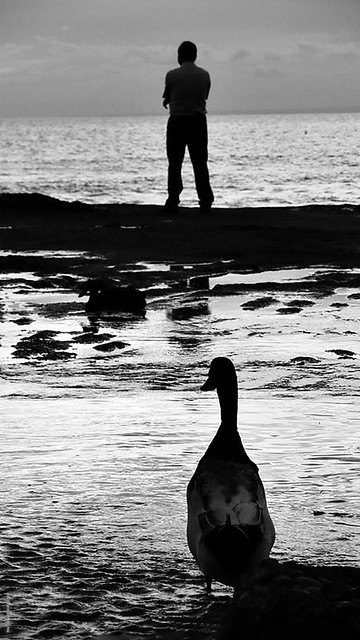
Man and duck

P1070101b copy.jpg
Cameron highlands fog

____________

The inaugural mingthein.com photography contest closes 31 July 2012 – the more people entering, the larger the cash prize! Enter here

If you enjoyed this post, please consider supporting the site via Paypal ([email protected]) or via Ming Thein’s Email School of Photography – learn exactly what you want to learn, when you want to learn it. You can also get your gear from Amazon.com via this referral link.  Prices are the same as normal, however a small portion of your purchase value is referred back to me. Thanks!

Don’t forget to like us on Facebook!

We now have a flickr group!

Come join and submit your images here: http://www.flickr.com/groups/mingthein/

The objective is to create an interactive place for all of the readers and contributors to share their images and receive community feedback – let’s call it constructive critiques – in a safe, friendly environment. I would love to be able to do this personally, but time simply does not permit. However, the most important thing is that the group is all about the images; everything else is secondary. I don’t care what gear you use, but I will moderate the pool for minimum standards of composition/ visual quality and technical quality.

Looking forward to seeing all of your images! MT