A compact death

IMG_0626b copy

In the last few years, our ‘serious’ compact (larger than tiny sensor) options have dwindled to just a small handful: the Ricoh GR, Canon GX, Panasonic TZ and LX, and the Sony RX100. I don’t know if the RX0 qualifies, but I suppose since it has a 1″ sensor – and anything else is thin on the ground. But that’s really about it – what used to be an abundance has now turned into a paucity. Even at the low end, other than all-weather mild-submersible things – it’s been quiet. I don’t think it’s entirely the fault of smartphones, either – because there are some capabilities unique to larger sensor compacts that mean there’s probably an opportunity here to a camera brand willing to take a small risk*. Here’s my thinking…

*That unfortunately probably means nobody, in the current market.

[Read more…]

Where will all the photos go?

H51-B0014513 copy

Every day, billions upon billions of new images are made; one recent statistic put forth that there were more images made in the last year or two than the entirety of human history before that. It shows, too – in the early days of photography the bar for both content and technical quality was pretty low, given that it was amazing that there was an image at all; these days, there are so many repeats of ‘iconic’ images that they have become cliched and passé. Even though the rise of social media and broadband has enabled content to be consumed at a faster than ever rate, the math only goes one way: the rate of content being generated is increasing faster than the population, and the number of hours per day remains fixed – it is therefore easy to see that either less time is spent viewing a single image, or eventually people will get nothing done except scrolling instagram*. We already know the effect this has had on both the hardware market (positive, then saturated, then people get bored faster) and the professional market (terrible) – so the question I’d like to discuss today is a more fundamental one: what will happen to all of these images in the long term?

*Arguably, this is already happening.

[Read more…]

Creative anxiety

_Z723166 copy

You’ve just spent a ton of money on a large, shiny new lens. The one youtube and the rumours sites have been on fire about for the last few months, proclaiming it better than caviar on truffle on foie gras. Gilded. You managed to actually get one in your hands, ahead of most of the mere hoi polloi. You found an ideal location by trawling instagram and looking at the number of amazing images that came out of that particular geotag. You booked a flight to the ends of the earth with a company specialising in adventure photography travel, endorsed by the gurus themselves. And just in case that wasn’t enough, there was a whole bunch of other ancillary support gear you had your eye on that you added – new SSDs, a kickass backpack that’s bulletproof, that compact tripod that folds to the size of a stick of gum but can hold an elephant, raised twenty million dollars on kickstarter in two minutes AND managed to save a schoolroom full of burning children whilst winning miss universe.

Yet when you step off the van into that sunrise…you can’t make a picture worth spit. Why?

[Read more…]

At the risk of losing your customers…

_Z702308 copy
Build it and they will come…for a while, and then it becomes an antiquated and cancerous white elephant. First published in the May issue of Medium Format Magazine.

Advance doom and gloom warning: If the photographic industry continues in its current trends (turning spec sheets up to 11; increasing launch prices then decreasing them dramatically over a product’s lifecycle; being inconsistent/imbalanced with design intent – tiny bodies, enormous lenses; ever shrinking ‘incremental’ improvements between generations; poorly implemented software UI/UX; launching of what is basically beta hardware; influencers who produce rubbish images but have large numbers of “followers” “likes” etc.) – expect to see some serious contraction and consolidation soon. In fact, the hard financial numbers suggest this has already begun. The reasons why are not rocket science, but pretty much every company is acting like a paralysed ostrich hoping that if they continue as they have been and pretend it’s all okay, it will be. It won’t, and the ones who survive are going to need to find some cojones.

[Read more…]

Stream of consciousness

_Z702542 copy

Thoughts, truths and insights from the years presented in no particular order…

[Read more…]

Computational photography: what ‘format’ is it?

IMG_5107b copy
Gratuitous header; moment of enlightenment.

One of the unavoidable buzzwords of the last couple of years has been ‘computational photography’. Besides sounding slightly oxymoronic and insulting to the ‘real’ photographer who presumably represents what they see and doesn’t attempt to manipulate objects into (or out of) being that aren’t physically there, the reality is that it’s unavoidable and has been unavoidable since the start of the digital era. Everything that requires photons to be converted into electrical signals and back to photons again (whether off a display or reflected off a print) – must be mathematically interpreted and altered in some form before output. It is not possible to avoid this: the Bayer interpolation, in-camera JPEG conversions, any file format saving, conversion to print color space – a ‘computation’ has to be performed to translate the data. Hell, there’s already an implicit computation in the analog to digital stage (although arguably photons are already ‘digital’ since they represent discrete quanta of energy, but that’s another discussion for another time). However, what I’d like to discuss today* is something one step further down that road, and following on from the previous posts on format illusions: in light of the broader possibilities of computational photography, what does ‘format’ even mean?

*I.e. excluding things like subject recognition for tracking, depth mapping and simulated shallow DOF transitions etc. for the time being; we’ll revisit that later.

[Read more…]

OT: Hobbies and diversions

_3502180 copy

Photography for me started off as a diversion – just as it probably did for many of you. It was the ideal hobby for a busy corporate person: without predictable chunks of free time, looking for something piecemeal that could be satisfying in a ten minute gap or stretched to fill an unexpected day. It combined elements of unpredictability, reward for improvement in skill, as well as instant gratification (between instant results and gear lust). As I developed my skills and found other things I wanted too communicate, it turned into a tool to let me express ideas in a way that could be understood by others. And then it became both a calling and a career. But at some point in the last couple of years, it also became all-consuming – to the point that there was no longer any boundary between work and not-work, and thus between photography for creative fulfilment and photography (and related activities) for a living. Photography used to be a break that forced me to refocus my thoughts and allow for creative experimentation; inspiration would flow between different kinds of photography, different approaches for different subjects (i.e. client-subjects and personal-subjects) and different creative processes – photography and non-photography. But without the break: how does one you find inspiration?

[Read more…]

Back to basics: Turning an idea into an image

H51-B0017943 copy
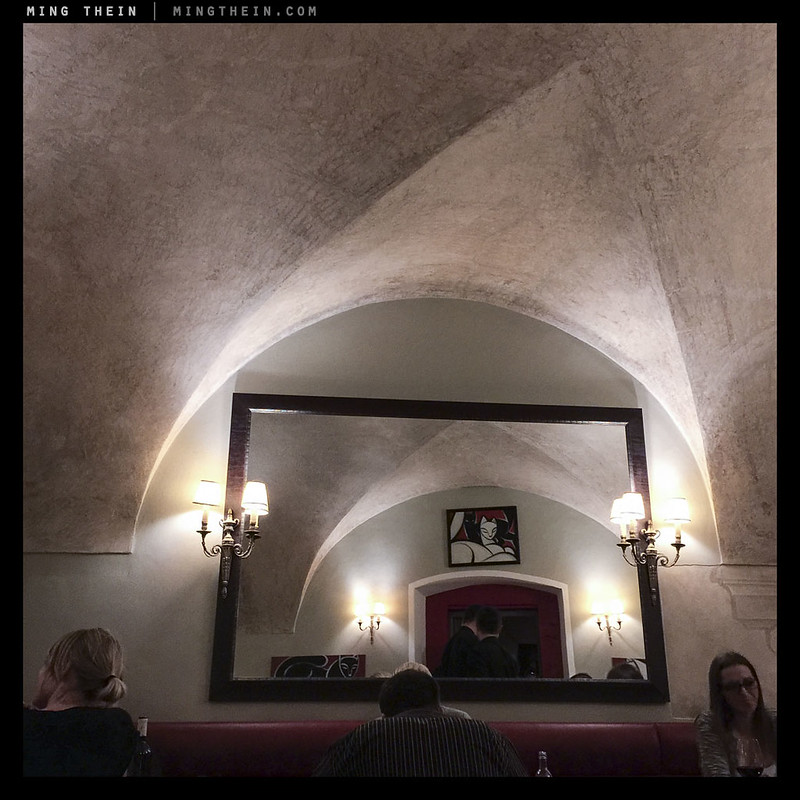
Alienation and transience in Prague, I

Judging from the correspondence and comments flying around recently, it’s about time we did a refresher course here on the fundamentals of composition and image-making. As usual, there’s far too much obsession over hardware and not enough thought about what it’s actually being used for. This will be the first of several posts from the archives in this theme. That said, those people are unlikely to read these posts anyway…

Today’s article has proven to be another one of those significant challenges to write, once again for reasons of limitations of language to describe visual elements. On top of that, there are three conceptual leaps that have to be made: abstract idea, to descriptive language/ elements to characterise and quantify the specific unique traits of that idea so we conceptually understand it, then the final translation to a visual idea that can be understood by a wider audience than just the creator. There are really two questions at hand here: firstly, what is the idea, and secondly, what’s needed to convey it – and what do we need to avoid overdoing that results in dilution or confusion?

[Read more…]

Back to basics: Cut points and edges

IMG_7281b copy
Symmetry and clean termination points – lowered contrast at the edges helps, too.

Judging from the correspondence and comments flying around recently, it’s about time we did a refresher course here on the fundamentals of composition and image-making. As usual, there’s far too much obsession over hardware and not enough thought about what it’s actually being used for. This will be the first of several posts from the archives in this theme. That said, those people are unlikely to read these posts anyway…

In the past, I’ve written about the importance of conscious exclusion in the process of composition: you don’t want to confuse your audience by including elements that are irrelevant or worse, distracting and visually stronger than the main subject. As we know, the very act of composition itself is one of both cropping and curation: we are choosing what not to show as much as what to show, based on our own preferences and biases. How we structure the rest of the composition around that is very much up to us, and of course the intended story or message of the image. But where do we end things – and in what situations is a little trimming necessary? How can we achieve a clean frame and a clean idea?

[Read more…]

Back to basics: subject isolation

_64Z5755 copy
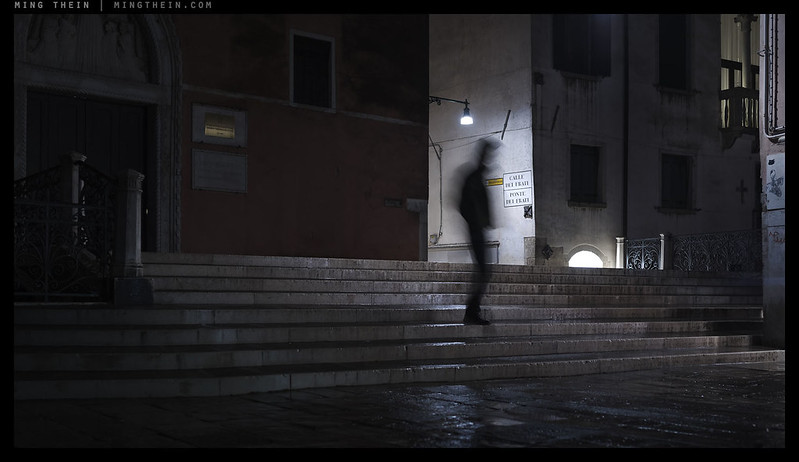
The man: color, texture, contrast, motion. We’re not really missing shallow DOF, are we?

Judging from the correspondence and comments flying around recently, it’s about time we did a refresher course here on the fundamentals of composition and image-making. As usual, there’s far too much obsession over hardware and not enough thought about what it’s actually being used for. This will be the first of several posts from the archives in this theme. That said, those people are unlikely to read these posts anyway…

Regular readers will know that I’ve distilled down four common traits of a strong image: quality of light, clarity of subject, balance of composition and ‘the idea’. The first is very simple: does the light present the subject in a flattering way or as you would desire? Is it directional (i.e. are there shadows) so that it’s possible to determine spatial layout of the scene? The last two require some practice, and the final one is really an never-ending quest for every photographer because there is no limit to the complexity of message that can be conveyed. Today, we will look at the easiest yet most commonly overlooked one of the four: subject isolation.

[Read more…]