It’s my birthday – so I’m giving you all a present

_8014866 copy
Sharing is caring. Nikon D800E, Zeiss ZF.2 1.4/85 Planar

Product of the labors of the last few weeks, the observant of you will notice that there’s now a new tab on the second line called CAMERAPEDIA! It’s a 22,000+ word monster that contains a concise opinion on every piece of equipment I’ve ever used (and can remember) – that’s a lot of gear, folks. I figure instead of asking me if X or Y is any good, I might as well put all of the info in one easy to access place. It also links to my detailed reviews, where I have one. It’s a live document, which will be updated as I use more stuff. The best way to use it is use your browser’s built in search function – either command-F or ctrl-F – and type in the name of whatever it is you’re looking for. For lenses, just the focal length should be enough. Everything is in alphanumeric order.

It can be found here, and also accessed via the CAMERAPEDIA! button next to ‘Contact/ Ask a question’.

Enjoy! MT


Quick update – the competition is coming along nicely; we’ve got 20+ great entries so far, but come on folks, I see plenty of great images in the newly-minted Flickr pool that would qualify and do well – but no corresponding entries! Remember, the more people entering, the larger the cash prize. Entry details can be found here.

____________

Visit our Teaching Store to up your photographic game – including Photoshop Workflow DVDs and customized Email School of Photography; or go mobile with the Photography Compendium for iPad. You can also get your gear from B&H and Amazon. Prices are the same as normal, however a small portion of your purchase value is referred back to me. Thanks!

Don’t forget to like us on Facebook and join the reader Flickr group!

appstorebadge

Images and content copyright Ming Thein | mingthein.com 2012 onwards. All rights reserved

Clients from hell (or, some light partial humor)

I think a lot of working pros will be able to relate to this list, see the satire in it, and then commiserate with me that I was only partially joking…

Without further ado, in no particular order:

– Those who ask for endless retouching revisions, all of which creep increasingly outside scope – masking out figures to place from a location shot to garnish a text page in a brochure

– Those who haggle price with you til the last cent, then pay late (big companies are notorious for this; it’s as though there’s an internal KPI for creditor days – the higher the better)

– Those who haggle price with you til the last cent, and don’t pay at all

– Those who haggle price with you til the last cent, agree, then question every item on the bill again at payment date whilst of course contesting half of them

– Those who after agreeing price and scope, sneak something in under the pretense of ‘oh, can you also help me out with something small?’ (which is of course neither small nor easy)

– Those who pay for a fixed number of shots but ask for all of the raw files or expect at least 50% more final delivery shots, knowing you’ll produce far more than agreed to ensure the scope is completely met

– Those who ask for uncompressed maximum resolution 16bit CMYK TIFF files, then complain they can’t open them because their computers have ‘insufficient system resources’

– Those who don’t actually pay your work more than a cursory glance before finding one shot they didn’t like in the 200 you delivered, then demanding a discount even though they loved everything else

– Those who specifically look for one image they don’t like, so they can complain to you non-stop about it afterwards so they can get a discount

– Those who think their problems with other unrelated contractors are your fault, and either use that as an excuse as to why they can’t pay, or why they expect more from you

– Those who ask for your style, then hand you a book/ magazine/ menu and say ‘copy this’

– Those who approve every single shot on the camera review screen, then complain that you didn’t give them what they asked for afterwards

– Those who don’t supply any of the agreed props or items

– Those who supply you with objects or food to be photographed that are obviously unpresentable – they may be scratched, dented, cracked, partially eaten, or generally used

– Those who complain that your make the food look overcooked, when in fact that was the way it came out of the kitchen – identifiable by the fact that only the roast looks too dark, but every other object on the plate looks fine

– Those who don’t supply any of the agreed equipment/ props/ garnishes/ sauces/ spare parts

– Those who aren’t on time, and worse still, don’t tell you that they’re running late

– Those who want fully processed and retouched images the day after the shoot

– Those who expect you to reschedule all of your other shoots to accommodate them

– Those who leave all decisions to their creative agency, whose vision is substantially different to their own…you can imagine what happens after that

I’ve just realized that this list isn’t that funny after all, I’ve had some clients who qualify for almost every single item…MT

____________

Visit our Teaching Store to up your photographic game – including Photoshop Workflow DVDs and customized Email School of Photography; or go mobile with the Photography Compendium for iPad. You can also get your gear from B&H and Amazon. Prices are the same as normal, however a small portion of your purchase value is referred back to me. Thanks!

Don’t forget to like us on Facebook and join the reader Flickr group!

appstorebadge

Images and content copyright Ming Thein | mingthein.com 2012 onwards. All rights reserved

Odds and ends

I just wanted to say that I’ve been seriously impressed by the caliber of photos submitted to our reader portfolio group on Flickr – there is some absolutely stunning work in there, so well done! Please keep up the good work everybody, and keep the contributions coming. If you haven’t already checked out the pool, I highly recommend a look – and with the objective of this site and its various tentacles being learning, please feel free to leave constructive comments and criticism on the images, too.

Secondly, my favorite cheap CSC appears to be on sale at Amazon – the Olympus E-PM1 Pen Mini with 14-42 kit lens is now US$399 in black and silver, as opposed to US$499 for the other colors. Click here for black and here for silver**.

Finally, a gentle reminder to enter the competition – there are plenty of great photos in the reader flickr pool that would qualify, but they’re not entered! (hint hint.)

**As usual, ordering via these referral links doesn’t cost you any more, but it does help support the site as Amazon sends a portion of your purchase back to me.

Inspirations from older cameras: The Panasonic TZ3

This will be the first in a series of photoessays dedicated to showcasing older equipment: don’t bury those dinosaurs just yet! In all seriousness, I hope it will both go do its part to convince you that the equipment doesn’t matter; and at the same time, show you my evolution as a photographer (to be the subject of a future article; one of the hardest things to write are the introspective, self-assessment genres).

First up is the Panasonic TZ3, a 2007 vintage compact ‘travel zoom’ camera that combined a very good 28-300mm equivalent zoom with a multi-aspect ratio sensor; I particularly enjoyed 16:9 mode on this camera. It shot fast, too – 4-5fps depending on the shutter speed, with large bursts and fast buffer clearing, making it ideal for capturing sequences of expressions. The lens-based stabilizer was also excellent. Its main handicap? A sensor that was dodgy at ISO 400 and above. I’m not 100% sure what happened to the camera, but I think it’s probably with my brother in law somewhere.

Enjoy! All images can be clicked on for larger versions, or EXIF information. MT

P1020707b copy.jpg
Moon and ships

P1040071b copy.jpg
The bits of the chicken we don’t eat

P1040305b copy.jpg
Paradise found

P1070363b copy
Sunset in the city

P1030661b copy.jpg
Heavy metal

P1020718b copy.jpg
Singapore by night

P1070145b copy.jpg
Koi pond

P1030744bw copy.jpg
The need for air conditioning

P1030208b copy.jpg
Race time

P1070114bw copy.jpg
A tudor story – in Malaysia

P1020998b copy.jpg
Advertising in your fridge

P1040458bw copy.jpg
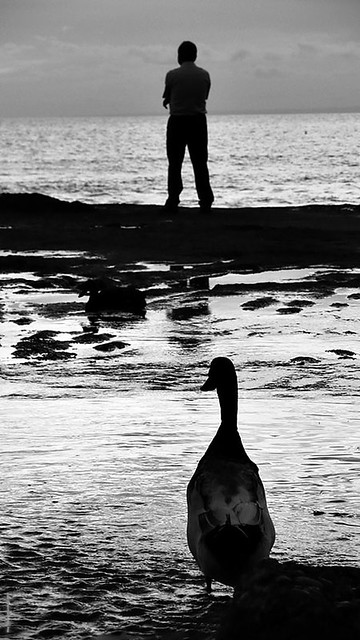
Man and duck

P1070101b copy.jpg
Cameron highlands fog

____________

The inaugural mingthein.com photography contest closes 31 July 2012 – the more people entering, the larger the cash prize! Enter here

If you enjoyed this post, please consider supporting the site via Paypal ([email protected]) or via Ming Thein’s Email School of Photography – learn exactly what you want to learn, when you want to learn it. You can also get your gear from Amazon.com via this referral link.  Prices are the same as normal, however a small portion of your purchase value is referred back to me. Thanks!

Don’t forget to like us on Facebook!

We now have a flickr group!

Come join and submit your images here: http://www.flickr.com/groups/mingthein/

The objective is to create an interactive place for all of the readers and contributors to share their images and receive community feedback – let’s call it constructive critiques – in a safe, friendly environment. I would love to be able to do this personally, but time simply does not permit. However, the most important thing is that the group is all about the images; everything else is secondary. I don’t care what gear you use, but I will moderate the pool for minimum standards of composition/ visual quality and technical quality.

Looking forward to seeing all of your images! MT

Thoughts on Instagram and similar apps

IMG_0923b copy
No instagram, just careful exposure. iPhone 4

It seems that there are several distinctive ‘looks’ that amateur photographers recognize and try to replicate:

– High contrast black and white, sometimes with extra grain, usually all in focus
– Solarized/ retina-searing color, usually all in focus
– Partial bleach-bypass cross-processed color, usually with uneven depth of field or obvious lens flaws (Holga-with-expired-film)
– Very shallow depth of field of any sort
– The ‘miniature effect’ – pseudo tilt-shift

Originally, these styles were either conscious artistic decisions, or the consequences of not enough money and using expired film. They were chosen precisely because they looked unique – either because it was a difficult thing to execute well (using tilt-shift lenses, for instance) or because nobody else did it (cross-processing). The only exception to this is the high contrast black and white style, which was more a consequence of the limitations of the film chemistry at the time, and the requirements a picture of any recognizable description under difficult lighting conditions over fine grain.

However, now that we have a choice of how we process our images – and there’s sufficient latitude even in files from point and shoot cameras – a proliferation of either in-camera modes, filters or apps has taken hold of the photography industry, each claiming to be all you need produce one or all of the above styles.

I’ve got mixed feelings about this. On one hand, it takes the skill out of actually having to do any of these things (learn to process B&W properly, either chemically or in Photoshop, for instance); on the other, it does make crappy camera phone shots a lot more pleasant to look at. Until you’ve seen perhaps five, after which they’re all the same anyway – you might as well just have say five or ten random images that come out of the filter, regardless of what you actually shot – after all, you want your grab shot to look like a HC-B, right?

Yes and no. While filters and apps are great for improving the ease of getting the look you want and promoting the general democratization of photography, it’s also sad to see that the vast majority of people can’t tell the difference between a sloppily applied filter, an Instagram shot, and something that was actually done intentionally with full control. It’s even sadder to see that there are a lot of internet ‘photographers’ and bloggers who claim to be the best thing since sliced bread, but would be completely lost without Silver Efex or similar. Strip the artifice away, and what are you left with? A shot with extremely weak composition.

This isn’t so say that mobile phones are useless as capture devices; far from it. My previous article on using the iPhone as a camera is very much in support of it. If you learn the limitations of your device, you don’t need to resort to overcooked processing to mask its inherent limitations – blown highlights or blocked up shadows, for example. There are definitely undoubted advantages – instant connectivity, the ability to share and abundant abundant processing power all come to mind. Apps that come close to replicating the functionality and control of Photoshop – PhotoForge is a good example – make a very good argument for what an intelligent camera can do.

I’ve long maintained that all of these post-capture applications – be they photoshop or filters – cannot materially add to or take away from the composition of the image, because that’s the one thing that’s baked in at the time of capture. No matter how badly you botch the processing, if it’s a strong shot, it will always remain a strong shot whether in B&W, or color, or run through the Holgarize filter on your iPhone. However, the reverse of course applies: garbage in, garbage out. Composition aside, everything else is merely distraction. The problem is when the distraction portion is so great that the viewer can’t tell the difference, or worse, is drawn in at first by the distraction then disappointed by the lack of substance – I admit it happens to me a lot when browsing through images on flickr.

Put it this way: putting effort into learning how to compose properly will pay off in a much bigger way than putting effort into figuring out which button does what on the app. Or if you want to do both, then at least your image will have some substance to it.

If I sound a bit cynical and bitter about the whole thing, it’s not because I see people doing things with ease that I do the manual way – far from it; if there is an easier, faster workflow I’m usually the first to adopt it. What bothers me is that there are plenty of these ‘photographers’ who are not only ignorant about what they’re doing – ‘oh, I’ll use the Velvia filter’ – without actually knowing what Velvia is, or how it’s actually meant to look. Worse still, they get preachy about it and suddenly become an authority on slide film because they have an app or a button that says so. Never mind the fact that some of us shot commercial product jobs with multiple lights on slide, back in the day when you had to calculate guide numbers manually…man, I sound old.

Remember: it’s a tool, not a religion, and before you spout opinions, make sure you can back them up – it’s quite possible the other person you’re talking to has forgotten more than most people ever learn about the particular topic you’re talking about, but is just too polite to say anything about it. With that, I stand ready to be corrected. MT

____________

Visit our Teaching Store to up your photographic game – including Photoshop Workflow DVDs and customized Email School of Photography; or go mobile with the Photography Compendium for iPad. You can also get your gear from B&H and Amazon. Prices are the same as normal, however a small portion of your purchase value is referred back to me. Thanks!

Don’t forget to like us on Facebook and join the reader Flickr group!

appstorebadge

Images and content copyright Ming Thein | mingthein.com 2012 onwards. All rights reserved

Photoessay: Geneva monochromes with the Olympus OM-D

Some street photography from Geneva with the Olympus OM-D andy 45/2.8 Macro. I didn’t use the 45/1.8 (my choice for this kind of thing) because I was decompressing with my backup lenses after being on assignment…

Enjoy! MT

As usual, all images can be clicked on for larger versions.

_5004225bw copy

_5004177bw copy

_5004129bw copy

_5004200bw copy

_5004086bw copy

_5004146bw copy

_5004111bw copy

_5004102bw copy

_5004097bw copy

_5004088bw copy

____________

The inaugural mingthein.com photography contest closes 31 July 2012 – the more people entering, the larger the cash prize! Enter here

If you enjoyed this post, please consider supporting the site via Paypal ([email protected]) or via Ming Thein’s Email School of Photography – learn exactly what you want to learn, when you want to learn it. You can also get your gear from Amazon.com via this referral link.  Prices are the same as normal, however a small portion of your purchase value is referred back to me. Thanks!

Don’t forget to like us on Facebook!

Good news and bad news

Good news #1: There’s a firmware update available for the OM-D that’s supposed to correct the sleep lockup problem.

Good news #2: It appears that there are huge discounts on the Pansonic GX1, available here from Amazon in kit form for $492 (with the 14-42) and body only for $395. That’s cheaper than a Pen Mini in most parts of the world…and as much as I like the Pen Mini, the GX1 is a much more full-featured camera – and a no-brainer at this price.

Bad news: 43rumors.com has jacked my image without permission to use as their post centerpiece, which is how I found out about the firmware update. You can see the original here. Please do me a favor and leave a comment of support under my comment on their fb page (http://www.facebook.com/pages/43rumors/154271467964575) or on the original post. Thanks! MT

Revisiting the Leica M8: a cheap entry into digital rangefinders?

_M8_L1024673bw copy
Latte Ninja. Leica M8, 21/1.4 ASPH

In the last few years, rangefinders (effectively only the Leica M system) have experienced something of a renaissance; I think partially due to the market being over saturated with DSLRs to fill every niche, and partially due to the full frame M9 which so many Leica shooters had been clamoring for. A frequently asked question is ‘why is DRF technology lagging so far behind its DSLR counterparts?’ After all, the innards are pretty much the same – sensor development and fabrication is so horribly expensive and complex that it can only be undertaken by a handful of either very large or very specialized companies; the electronics are largely FGPA-based (i.e. with reconfigurable chips) and there are plenty of good software coders out there – just look at the proliferation of Apple apps. Micro 4/3 has arguably pushed miniaturization of the electronic components even further – so it can’t be the body size that’s holding back DRF development.

_M8_L1022658bw copy
Yin Yang. Leica M8, Voigtlander 50/1.1

Aside from the M9 and its derivatives (full review of the Leica M9-P here, and the M-Monochrom here), the only other digital true range finders that have made their way to market in the past were the Epson RD1 and RD1s (both using the same 6MP Sony APS-C sensor) and of course the Leica M8. All of these cameras have been M-mount, a sensible choice because it’s the most versatile and open of the RF systems – and of course has the greatest selection of lenses, from second hand $200 Voigtlanders to $12,000 Noctiluxes.

_M8_L1025381bw copy
A Parisian cliche. Leica M8, Voigtlander 50/1.1

No, I suspect the reality is that what’s preventing us from seeing a DRF with competitive specifications isn’t technology, but the economics of market sizing: Leica sold about 30,000 M9s in the two-and-a-half years after launch; by comparison, Nikon makes about that many D800s every month. To invest such levels of R&D spending into a very niche product doesn’t make economic sense – even if you are charging three or four times what a comparable spec DSLR goes for.

_D90_DSC7260bw copy

Having said all that, you’re probably wondering about the title of the article: Leica M8? Is that a typo? No. Even with the technological, sensor and usability limitations (manual focus and built in frame lines for 28-90mm only, for instance) there are still good reasons why you might want a rangefinder. And even more reasons why you might consider technology that’s now realistically nearly seven years old – which is an entire geological epoch in the digital era.

_M8_L1021682bw copy
Contemplating the journey. Leica M8, Zeiss 21/2.8

For a start, rangefinders are far less intimidating to your subject than DSLRs. They’re also smaller. Yes, there’s Micro 4/3 and all of its different flavors: but which one of them gives you a proper optical finder? None*. If you want an optical finder, and a responsive focusing system, a rangefinder is the only way to go. The lenses are also smaller, because they don’t have to house AF components or retrofocus/ telecentric designs to clear an SLR’s mirror mechanism.

*I’m deliberately leaving out the Fuji X100 and X-Pro1 cameras here; I don’t consider them to be rangefinders, and they have their own entire set of issues – slower AF than manual focusing a rangefinder being the biggest of them.

_M8_L1025023bw copy
Cloister. Leica M8, 21/1.4 ASPH

Let’s assume for now that your priorities are to be inconspicuous, travel light, have an optical finder, and do documentary work in the 28-90mm range – let’s not bother with flash for now. That basically puts an M as your only option. You could buy a new M9 and lenses, but that’ll be painfully expensive; with three fast lenses (28/2, 35/1.4, 50/1.4 or 75/2) you’re already looking in the vicinity of US$30,000. And that might not even be your primary system, because if you want macro, precise framing for your ultra wide, or telephoto, you’re out of luck.

_N8_L1002520 copy
Compact. Leica M8, Zeiss 21/2.8

This is where a second hand M8 starts to make some sense: you can find clean, low-mileage examples in the US$2,000-2,500 range; pair that with some Zeiss ZM or Voigtlander glass, and you’re in business. Some of the Zeiss lenses like the 21/2.8 and 50/2 are outstanding in the own right, and the Voigtlanders offer unique options that aren’t available natively to Leica M (12mm and 15mm pancakes, or an affordable 50/1.1 anybody?). Let’s say we do the same system with equivalent fields of view (i.e. 28mm, 35mm, and 50 or 75mm) – I’d pick the Zeiss ZM 21/2.8 Biogon, the Zeiss ZM 35/2 Biogon and Zeiss 50/2 Planar or Voigtlander 50/1.1 Super Nokton. You could easily do that around the US$8,000 range, even if you buy all the lenses new. And if you decide for whatever reason that you don’t like the rangefinder experience, selling it on isn’t going to cost you very much, or be very difficult. Think of it as a rental.

_M8_L1026630bw copy
One of those moments. Leica M8, Voigtlander 50/1.1

But what about the sensor and electronics? It is, after all, seven year old technology. The reality is that the M8 was a bit on the noisy side even when it was new; that hasn’t changed. However, it was also capable of excellent images at that time – that also hasn’t changed. (All of the images in this article were shot with a Leica M8 and a variety of lenses.) So long as you understand the inherent limitations of rangefinders, and those of the camera itself, you’ll be fine. Even if you have to shoot in low light. The sensors of the M8 and M9 are CCDs. CCD technology delivers a rich tonal response in the shadows and highlights that is very difficult to achieve with a CMOS; the tradeoff is noise and color accuracy.

_N8_L1000327bw copy
Looking for information. Leica M8, Zeiss 21/2.8

Let’s talk a bit about the limitations of rangefinders in general, and the M8 specifically:
– Built-in frame lines for 24-90mm only, with a 1.3x crop factor – 32-120mm equivalent. Use an external finder if you need wider.
– 10MP CCD, ISO range of 160-2500, but I’d stick to 640 and lower for optimal image quality, and 1250 in a pinch. Either use fast lenses, or meter for the highlights.
– Realistically, it’s a single frame advance camera. The continuous modes are not worth talking about. Anticipate your shots!
– 6 DNG frames when the barrel is hot. Overshoot this and you’re going to run into card corruption and buffer dumping issues – which will require pulling the battery to unlock the camera.
– Inaccurate frame lines. They’re calibrated for 1m, instead of something that makes more sense like say 2m. The M8.2 had its frame lines updated to correspond to the view at 1.5m instead, which is an improvement, but no idea. Just frame with the outside of the frame lines. A little practice will help you to visualize what will be in-frame and what won’t.

_M8_L1026180bw copy
A very friendly Parisian. Leica M8, 21/1.4 ASPH

– Poor battery life. Carry a spare.
– Crappy LCD. No point chimping on this camera, because the LCD is so poor it’s impossible to tell what’s in focus and what isn’t – just save it for the PC. You’ll save a bit of battery life, too.
– Metering issues with strong point light sources. The M8’s center weighted meter gets easily confused by strong point light sources in the frame; it’s very important to keep an eye on the meter reading. If it looks too high to make sense, then you probably want to override manually by using the shutter speed dial directly.
– No easy exposure compensation. Move the camera a bit until you find the exposure you want, then half press until the little dot between the left numbers appears – this locks exposure.

_M8_L1024556bw copy
Turbine. Leica M8, 21/1.4 ASPH

– Manual focus. I’ve left the biggest issue for last. It isn’t manual focus per se that’s the issue, but focus calibration: if it’s out, it’s out, and you can kiss goodbye to sharp images. The rangefinder interacts with the lens through a series of very sensitive and precisely calibrated cams, and in my experience with several digital M bodies, they do drift – more so with frequent mounting and dismounting of lenses. It’s highly recommended that you get the body calibrated to the lenses you intend to use on the camera, and this goes for any digital M body.

_M8_L1023548 copy
Children. Leica M8, 35/2 ASPH

The M cameras tend to be extremely polarizing cameras. They’re either intensely refreshing, and offer a very different shooting experience, or they’re extremely frustrating due to their lack of flexibility. Rangefinders are cameras that force you to adapt to their way of working, not the other way around. If the way you see happens to fit this, then you’re in for a great experience. Unfortunately, the only way to find out is if you have a particularly generous friend who’ll loan you theirs, or by going down the used M8 route.

_M8_L1024904 copy
Canterbury Cathedral. Leica M8, 21/1.4 ASPH

I highly recommend sticking to one lens and getting to know it well; it will help in both keeping costs down as well as improving the quality of your images because it trains your eye to pre visualize. And there’s no harm in buying second hand Leica glass either; thanks to the recent trend of continual price increases, the lenses have been holding their value better than most blue chip equities. In fact, it’s probably the only class of photographic equipment that might even be considered an investment – certainly not the bodies, however. MT

____________

Visit our Teaching Store to up your photographic game – including Photoshop Workflow DVDs and customized Email School of Photography; or go mobile with the Photography Compendium for iPad. You can also get your gear from B&H and Amazon. Prices are the same as normal, however a small portion of your purchase value is referred back to me. Thanks!

Don’t forget to like us on Facebook and join the reader Flickr group!

appstorebadge

Images and content copyright Ming Thein | mingthein.com 2012 onwards. All rights reserved

_M8_L1024320 copy
Spiral. Leica M8, 21/1.4 ASPH

A gentle reminder: three weeks to go until the first Mingthein.com photography contest closes!

If you haven’t started shooting, now’s the time to do so. Remember, the more people who enter, the larger the pot…

Full details here.