Photoessay: Estuary

H51-B0008090 copy

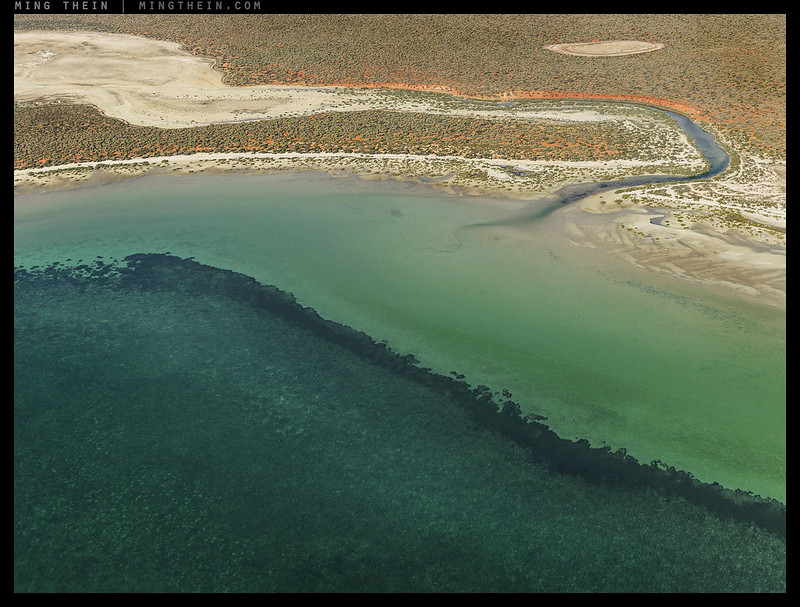
One more set of images from the ‘Over Australia’ series. These areas were not actually the primary focus of the trip, but rather something interesting overflown en-route – and when you’re chartering a plane, you want to squeeze out every single photographic opportunity possible. What caught my eye here was two things – the rather painterly patterns created by the typically Australian orange sand and water interspersing with oceanic sand, and the way the transparency of the water changed with the angle of the sun relative to our position – everything from milky to glassy to almost nonexistent (the water wasn’t very deep). There were also semi-evaporated pools that became isolated at low tide, both leaving interesting rim patterns and interesting colors from concentrated sediment suspensions. These were shot at low altitudes (1000-1500ft) from a light aircraft with the doors removed. (A helicopter both wasn’t available or possible because of the distances required.) It’s somewhat more challenging than working from a helicopter because the aircraft never stops; you need to have a high enough shutter speed and good panning technique to prevent any sort of camera shake ruining the transparency of the images – worse as the resolution increases.

This series was shot with a Hasselblad H5D-50c and processed with Photoshop and Lightroom Workflow III.
[Read more…]

Spouses and photography

AB0000036 copy

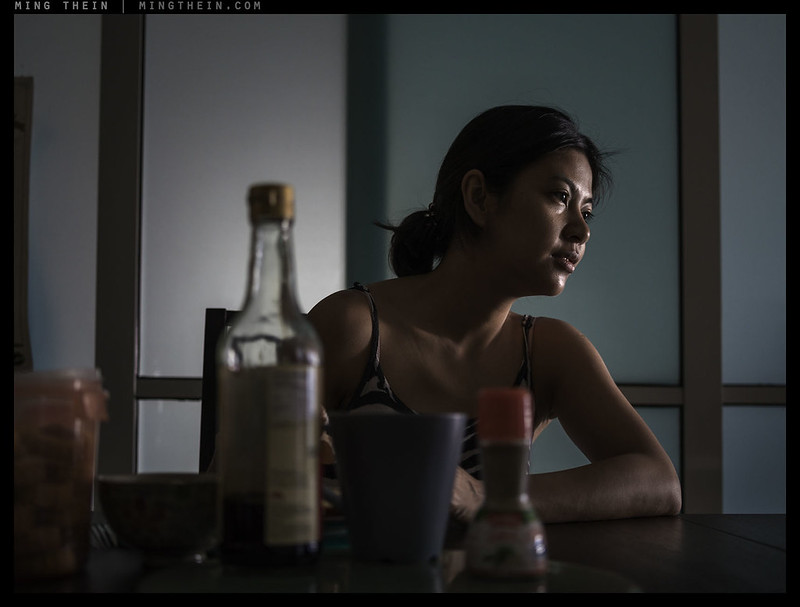
I recently had a conversation with a reader with a question that honestly surprised me: “How do I hide my photography obsession from my wife?” I have to admit this one stumped me for a while: I’ve never hidden it from Nadiah, nor do I think I could even if I tried to – partially because I’m a really bad liar, and partially because for as long as she’s known me, even in corporate – I’ve always been a photographer first and foremost. But it does bring up some interesting thoughts around photography and spouses…

[Read more…]

Photoessay: Dunes

H51-B0008489 copy

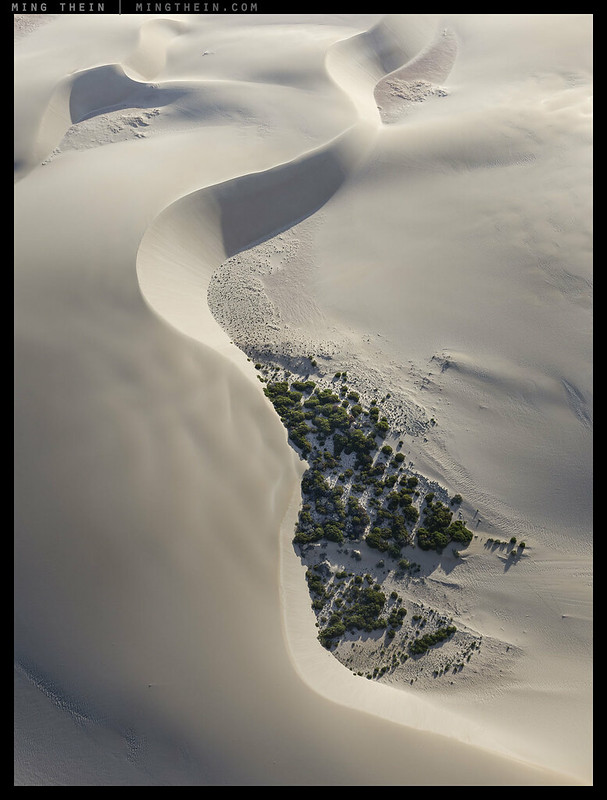
This series of images was never intended to be shot: this might seem like an odd thing to say, but it was not the intention for this particular aerial sortie. We had the option to overfly it en route to the intended target (to be the subject of a future presentation) – and when you’re pretty much burning money as fuel, then you shoot every single thing you can. It’s not hard, since the subject matter and presentation is so different to what one normally sees on the ground anyway. Like the rest of the series from over Australia, we were around the Dirk Hartog Island/ Useless Loop/ Francois Peron National Park area, at about 1200-1500ft with the doors off a Cessna 207. No question one should not even attempt shooting dunes at anything other than the start or end of the day – whilst they might be steep, there just isn’t enough relief otherwise to bring out any texture or shadow otherwise. MT

This series was shot with a Hasselblad H5D-50c and processed with Photoshop and Lightroom Workflow III.
[Read more…]

The concept of ‘visual weight’

H51-B0007349 copy
Heavy, but with light inside bits. Translation: transparency

We acknowledge that every medium of expression has its strengths and limitations relative to others. Yet our basis for discussion and understanding of concepts and ideas is very much a written/spoken language-based one, this remains our benchmark – more so when the concepts become more complex and less intuitive – or the opposite, so simple and basic they’re entirely intuitive and not at all logical. There are of course severe limitations of language when it comes to describing the visual properties of expression and composition, yet it’s usually easy for us to see when something isn’t quite right. Why, how, and what do proportions, weight, balance, composition and aesthetics have to do with each other? Is there a somewhat more objective way to handle these concepts? I’m not certain, but today were going to try.

[Read more…]

Review: The Olympus E-M1 Mark II

100D_MG_1685 copy

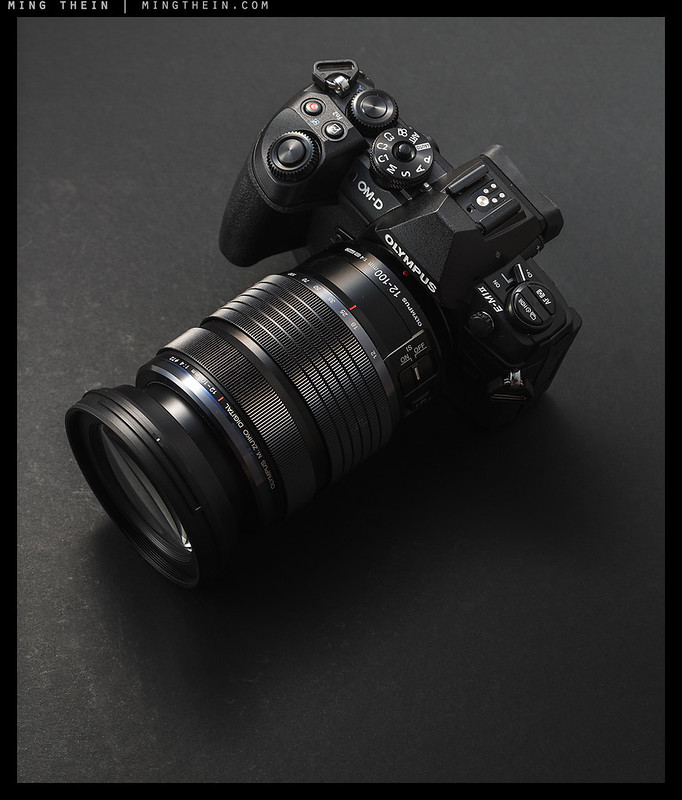
I’ve had the chance to use a final preproduction (i.e. should be no difference to shipping units) Olympus E-M1 Mark II for the last couple of weeks, thanks to Olympus Malaysia*. The camera was supplied with the new 12-100/4 IS PRO and the 25/1.2 PRO lenses. What follows will be not so much the traditional ‘review’ as series of thoughts on the camera (hereby abbreviated to EM1.2); I’ve previously made my current position on hardware and reviews clear and will again state upfront that this evaluation is performed in the context of the images I usually make, not every possible photographic situation. There are some subjects I just don’t shoot, and it would not be very useful for me to comment on the camera’s performance in these areas anyway. With that aside, let’s proceed.

Important note (and you’ll see why, later): all accompanying images were shot handheld, and edited from camera JPEGs – there is no ACR support for the E-M1.2 yet. This of course means tonality and color will likely deviate from my ideal output intention. Images are clickable for larger versions. I’ll also be adding more images to the flickr gallery here.

*Though some people were apparently paid by the mothership to go to Iceland…

[Read more…]

Repost: Differences between eye and camera: practical implications

_G008000 copy
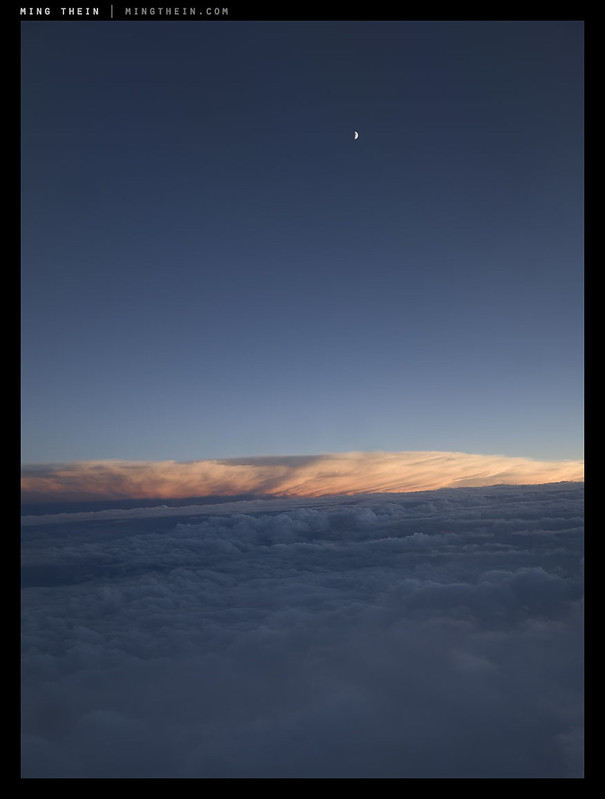
Why is it so difficult to get sunsets to appear ‘right’? Read on for the answer.

Following the last two articles on rules of vision, it seemed very appropriate to finish the mini-series with this little reminder from 18 months ago…

Many photographs do not work. Subsequently, we find out they do not work because there is a difference between what you saw and what your audience sees in the image. Sometimes this comes down to lack of skill in translating an idea, but often it’s more subtle than that: the camera doesn’t see what we see, and we need to be both highly aware of that and how to compensate for it. Yesterday’s photoessay is a good example: it’s no big deal to make a monochrome image, but our eyes only perceive a lack of color under very exceptional circumstances. Yet it’s these differences that make some images stand out, and others not really ‘work’.

[Read more…]

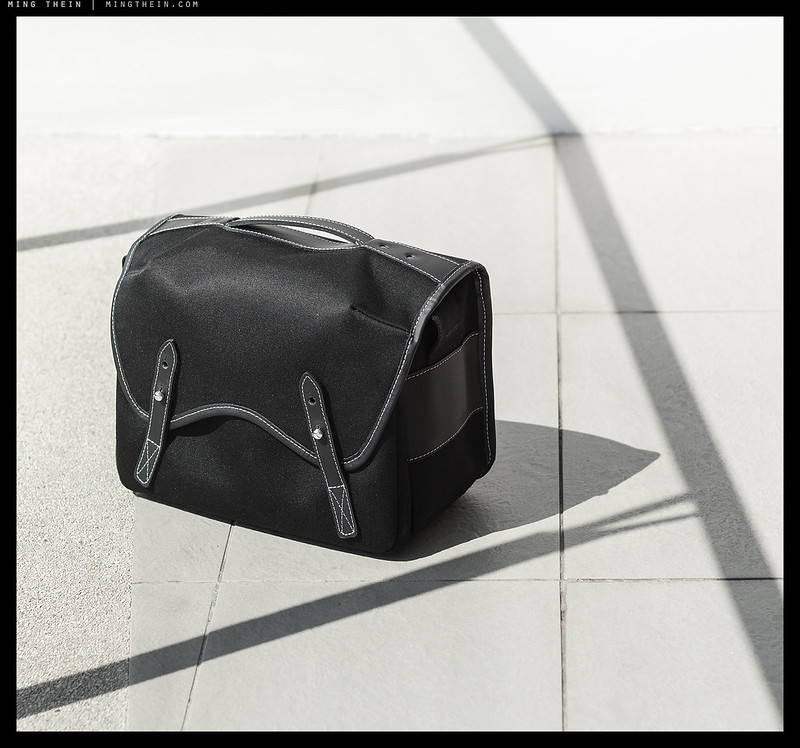
Last day left to order the ultimate photographers’ daybag

100D_MG_1083 copy

Quick update: the first batch of orders went out last late last week. Thank you to all for the strong support so far; there were far more orders than planned for, though we do expect to still ship everything by the end of November.

Please note that we’ll be closing the order book for the ultimate photographers’ daybag – designed by me, handmade in England by Frankie Falcon – tomorrow night. So, this is your final chance – please get your orders in here if you’d like one. 🙂 Thanks! MT

Some images of the first and second batches coming together at the workshop care of FF after the break.

[Read more…]

Photoessay: Urban detail, Lisbon

H51-B0002637 copy

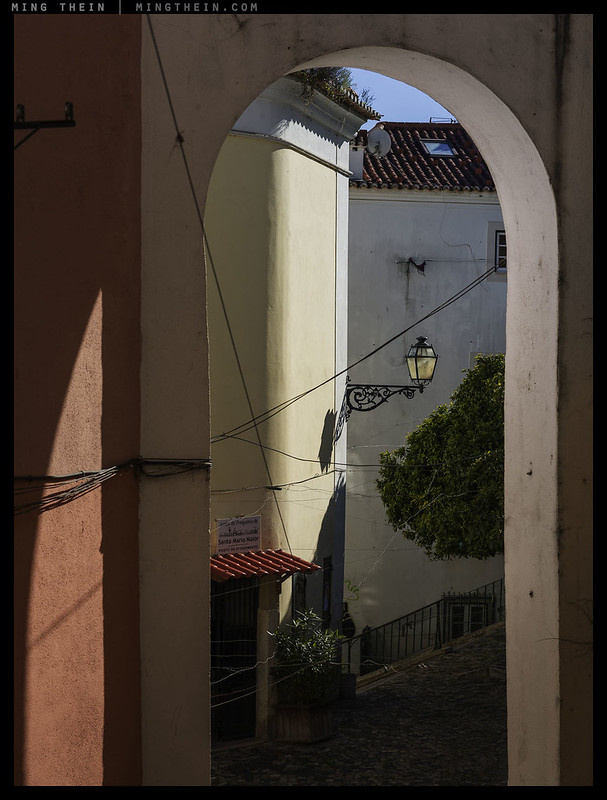
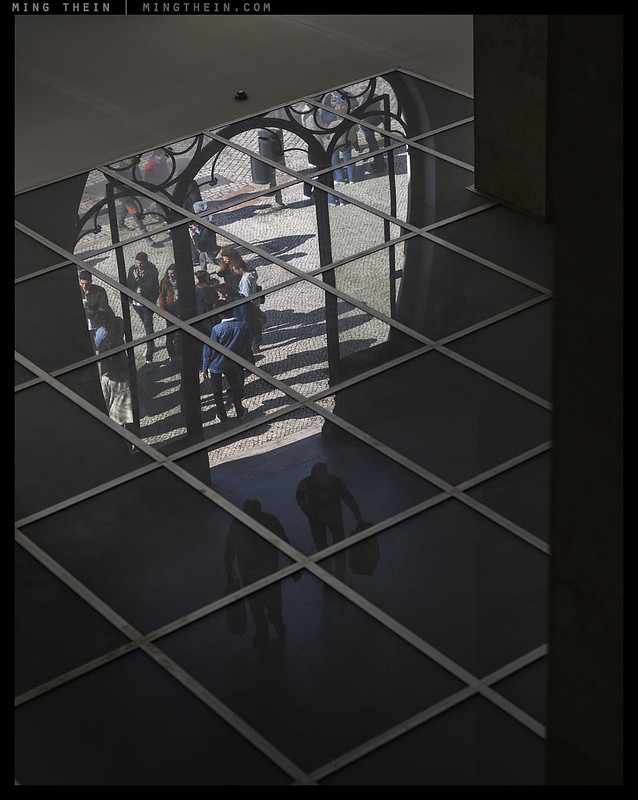
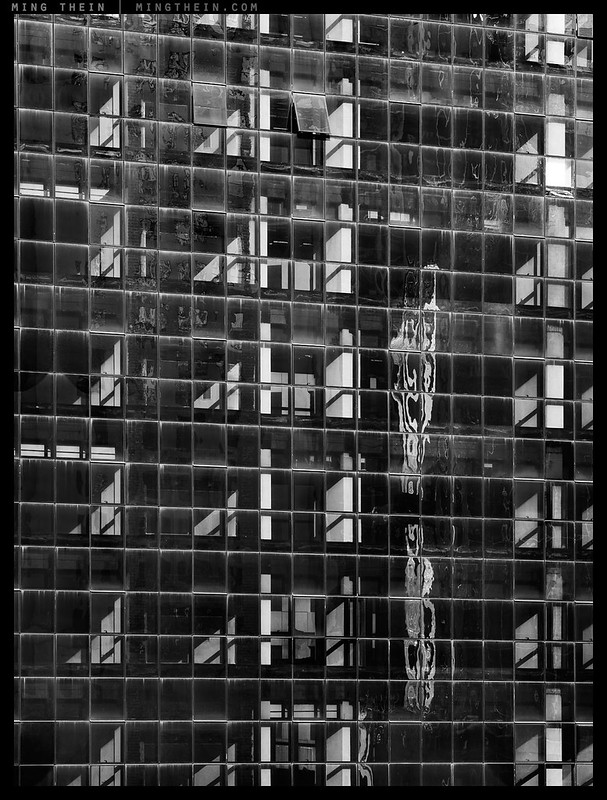
Today’s photoessay is a series of detail images from Lisbon – small vignettes and scenes which I feel give a reasonably representative flavour of the older parts of the city. Yes, there’s a modern surprise in there about halfway in, but in many ways, this is also typical: there’ll often be an unexpected bit of architecture or facade tucked away in amongst the antiques, too. I’m sure more than a week here would have yielded a tighter distillation, and there are almost certainly interesting local pockets I’ve missed out on, but I also felt I had the benefit some pretty exceptional light; interesting how those light coloured buildings tend to bounce, reflect and fill each other so there are actually very few really deep shadows – even in narrow alleyways. Lots of textures, too, ranging from what I think of as ‘cheery Mediterranean tile’ to ‘Eastern European patina’. Enjoy! MT

This series was shot with a Hasselblad H5D-50C, HC 24, 50 and 100mm lenses and post processed with Photoshop and Lightroom Workflow III.
[Read more…]

Rules of vision – part II

H51-B0003481 copy
Upside down, or?

Continued from part I – hopefully the first part has had time to settle and digest; let us press on…

We draw temporal inferences from direction of shadows
The length and direction of shadows also suggests time of day: this is one of the indelible subconscious rules dating back to the very beginning. It is a consequence of observing sunrises and sunsets and being able to judge approaching darkness accordingly, by both overall luminance of a scene and the shadows cast by the sun. Sadly, for a lot of us, this is somewhat academic as there are far too many offices with hours that extend beyond daylight and further have no natural light whatsoever…

[Read more…]

Rules of vision (or, things we can’t help seeing) – part I

H51-B0003019 copy
Did you notice the sign above the man’s head? What about the house number? Or what appears to be a Cuban flag in the doorway? Or was the moving man the first ‘anchor’?

Regular readers will know that I hate arbitrary maxims labelled as ‘photographic’ rules simply because there is no such thing as a ‘universal scene’ or universal set of parameters for every image. Every composition is different, and every creative intention is different, which means the whole premise of there being a fixed set of laws that make a ‘good’ image or ‘image that works’ can only be nonsense. However, I do think there are some fundamental principles of human vision – and consequently psychological response to elements in an image – that we cannot ignore since they directly influence the response of our audience to the ideas we are trying to present. That is what I wish to address today: what are the autonomous/ subconscious/ reflex/ automatic – pick your preferred term – visual responses that we should be aware of and seek to utilise when we compose an image? Think of this post as the predecessor to The Four Things: it’s the underlying reason why some of the Things have to be the way they are.

[Read more…]