One of my readers (thank you) brought this to my attention earlier today. It is with great disappointment that I have to do this, because clearly the company involved – AW Photo, unclear whether they are distributor or subsidiary or something else to do with Pentax Ricoh but claiming to be ‘Pentax Ricoh Indonesia’ – has used one of my images for commercial promotion purposes without permission or credit, from my review here. Note how the watermark is still in place – how could their web designer have failed to notice that? On top of that, the page was apparently last updated in October 2013 – that’s eight months of unauthorised use, and eight months in which HQ could have done something.
Images to be remembered for
Name any one of the most famous and prolific photographers, and chances are you can probably remember only a small handful of their images. Even more surprisingly, if you spend a bit of time digging into their published collections, you’ll find that there are dozens more that you probably like better than their famous ones; photography is, after all, personal and subjective. But think about this for a moment: assuming that what you see is only what they choose to show you (being the effect of conscious exclusion at work again) – it makes you wonder exactly what didn’t make the cut.
Photoessay: Living the Australian Dream, part II: signs of life
This set continues my ‘Australian Dream’ mini series – think of it as a small exhibition in instalments, or a little series of observations on the Australian psyche from an outsider’s point of view – well, not a total outsider because I did live there during my childhood. Today we add the protagonists. To quote Shakespeare: “All the world’s a stage, and all the men and women merely players”.
Photoessay: Living the Australian Dream, part I: the landscape
Interestingly, the notion of the ‘Australian Dream’ is much like the American one: a land of opportunity, space, freedom, big skies, friendly people and a relaxed, laid-back lifestyle. Though I grew up in Melbourne until I was 9, I haven’t been back in nearly 18 years; I was surprised by how much the place had changed, and at the same time, how much it hadn’t. There was a sense of international polish about it that wasn’t there before, or perhaps I hadn’t noticed it.
Defining the shooting envelope

The latent consultant in me emerges.
I’ve gotten a number of emails recently asking for me to define the meaning of ‘shooting envelope’ – it’s a term which I use quite a lot in my articles and reviews, and it appears I’ve been rather remiss in explaining exactly what I mean by it. We’ll remedy that today, and explain why it matters.
Achieving visual consistency
One of the questions I’m asked also (unsurprisingly) happens to be one of the biggest challenges for a lot of people: how to achieve visual consistency across multiple systems/ cameras/ media, and across multiple subjects. Though the latter is really getting into the question of what constitutes style and how can one consistently apply it, there are still things you can do to ensure that you are in control of the final presentation: not your camera. I certainly cannot tell a client ‘sorry, it looks different because I used two different cameras.’
Photoessay-review: A rainy evening, and summary thoughts on the Nikon D4
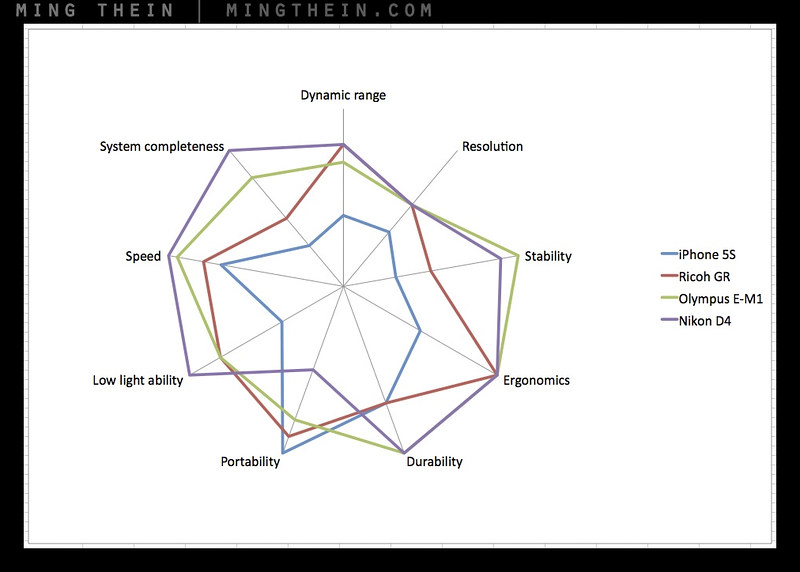
The Nikon D4 might be old news now that the D4s has been around for a couple of months, but given the diminishingly incremental improvements between each cycle, there’s less of a penalty for opting for an older camera than you might think. And even less again once we consider that for most applications, the point of sufficiency was passed a long time ago. A nearly-new D4 made its way into my hands a couple of months ago during the Melbourne workshop. At a shade over US$3,800, it was just too good a deal to pass up. Read on for my summarised thoughts after spending a couple of months taming the beast.
The limitations of language
I have a bit of a problem. In fact, it’s becoming an increasingly large one. Put simply, I’m running out of words to describe the things I’m seeing and the visual concepts I’m trying to explain; and I don’t know if the vernacular even exists. I suspect it doesn’t, but then again, I’m sure there are English speakers with greater vocabulary than me for whom it does. A large portion of you probably think this is stating the obvious; it is. But we reach a point beyond which it becomes impossible to progress further without some sort of common baseline accurately and consistently describe what it is we’re intending to convey; or more specifically, to ensure that what I’m saying and imagining are the same things as what you’re hearing and seeing in your own mind.
Photoessay: architectural minimalism
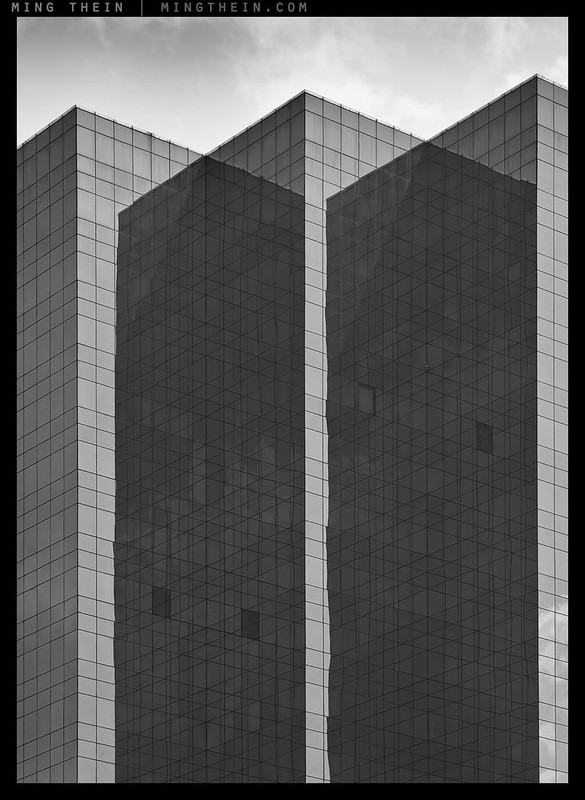
Time to present a little minimalism of my own today, in the form of some architecture.
Photoessay: Havana cityscapes, part II
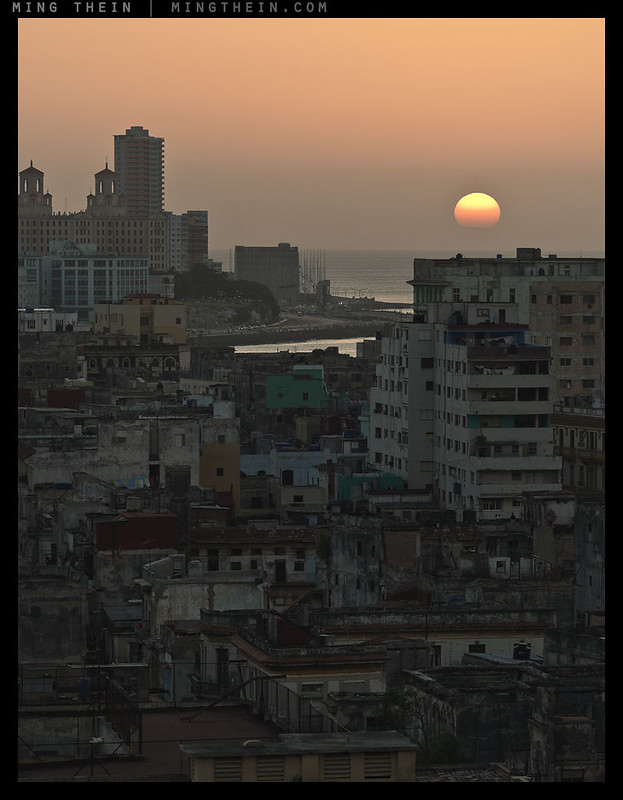
Today’s photoessay is the second part and conclusion of the previous photoessay-review. It’s a little broader in scope and less human-scale than the previous one; this is deliberate as there’s definitely an element of the brutalist in Cuban architecture; my theory is that it’s the influence of socialism. You may find the majority of these images to feel toned; that’s mostly a consequence of atmospheric conditions: the best hours of the day to shoot proved to be early morning and late afternoon/ evening, both of which were extremely warm. In any case, I believe it fits the feel and mood of the city well: it’s just a lazy afternoon kind of place, even when it’s ten in the morning. I’m going to stop looking for excuses why I was lighting up a cigar at 9.30 now.
This series shot with a Nikon D800E and 70-200/4 VR. Enjoy!