It’s actually quite rare we get a) an eclipse visible from tropical latitudes and b) a solar one that happens during daytime. I personally have actually never seen an eclipse despite both trying and having some background training as an astrophysicist many moons ago; the last time was stymied by heavy cloud around sunset, and basically landed up indistinguishable from a normal sunset (albeit a few minutes earlier). So the event of the 26th of December was something I was rather looking forward to when I found out both a) and b) would be satisfied, and weather patterns of late have tended towards relatively clear days up to early afternoon. So how did it go?
Image licensing 101, redux
A recent correspondence with a debutant pro photographer prompted me to revisit the whole topic of intellectual property and licensing vs pricing: it was clear that he had no idea what he was getting himself into, assuming a job is a job with a fixed price and then handover of images. Whilst this is for the most part true and can be true even for extended commissions, it would be silly to leave revenue on the table and undermine the value of one’s own work. In short, if a client commissions work for a certain purpose but wishes to use it beyond at a later stage – you are within your rights to seek additional licensing fees but only providing you set that out clearly to begin with, and there is documented evidence of parties’ agreement. But before we discuss licensing, we should spend some time on the basics of intellectual property.
Brave new world: the surprising iPhone 11 Pro
Field dispatch, Berlin, December 2019: I normally don’t write things on the road, both because I prefer to see where I’m going and because I find observations on anything need some sitting time; think of it as a curation of thoughts. But I’ve been slapped upside the head a little bit on this trip. Firstly, it isn’t a photographic one – it’s a spend-time-with-the-family one; even so, I’ve been paring down gear more and more of late to the point that a Nikon Z7 and two lenses is about the most I’ll do. In this case, the 24-70/4 S and the 85/1.8 S. Both are excellent but I find myself hardly using both the camera, and when I do, the 24-70 is left feeling lonely. Why? Well, I picked up the iPhone 11 Pro shortly before I left.
A massive (but silent) change
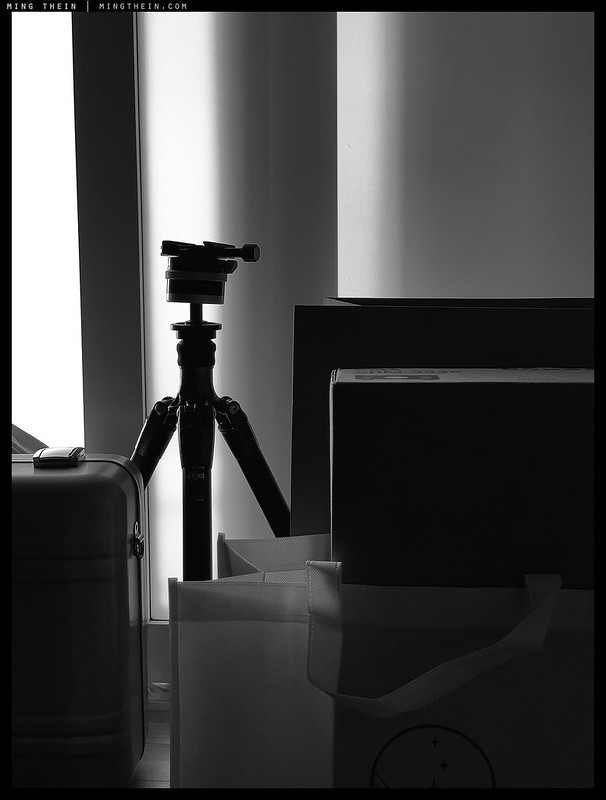
I’ve long been one of the strongest proponents of tripod use for the simple reason that doing so forces you to slow down. This slowing down has the combined benefits of making you spend more time observing your subject and its surroundings to increase awareness and in turn create a stronger or more interesting implied story; it forces you to spend more than a breath looking at the composition in the viewfinder and being aware of elements that might be imbalanced or distracting or intrusive, or that should be included. In fact, I almost always land up working off the rear LCD rather than the finder as it has the convenience of touch functions, the precision of live view focus, and tends to be larger*. So why is it that I actually haven’t used a tripod outside of macro and product work in the studio for over a year now?
*My preference still remains for an eye level finder when working quickly, though – both for immediacy and stability of having the camera braced against your face; arms’ length with an LCD is not stable and such situations usually don’t yield time for another try if you happened to shake. We have recently seen the jump from ‘good enough’ EVFs to very good EVFs that have improved resolution, color accuracy, black point and dynamic range enough to be quite transparent; once again with the benefit of focusing on the sensor as well as magnification for manual focus. I’d say we’re about on par at this point, at least in FF-land. But I digress.
A compact death

In the last few years, our ‘serious’ compact (larger than tiny sensor) options have dwindled to just a small handful: the Ricoh GR, Canon GX, Panasonic TZ and LX, and the Sony RX100. I don’t know if the RX0 qualifies, but I suppose since it has a 1″ sensor – and anything else is thin on the ground. But that’s really about it – what used to be an abundance has now turned into a paucity. Even at the low end, other than all-weather mild-submersible things – it’s been quiet. I don’t think it’s entirely the fault of smartphones, either – because there are some capabilities unique to larger sensor compacts that mean there’s probably an opportunity here to a camera brand willing to take a small risk*. Here’s my thinking…
*That unfortunately probably means nobody, in the current market.
Where will all the photos go?

Every day, billions upon billions of new images are made; one recent statistic put forth that there were more images made in the last year or two than the entirety of human history before that. It shows, too – in the early days of photography the bar for both content and technical quality was pretty low, given that it was amazing that there was an image at all; these days, there are so many repeats of ‘iconic’ images that they have become cliched and passé. Even though the rise of social media and broadband has enabled content to be consumed at a faster than ever rate, the math only goes one way: the rate of content being generated is increasing faster than the population, and the number of hours per day remains fixed – it is therefore easy to see that either less time is spent viewing a single image, or eventually people will get nothing done except scrolling instagram*. We already know the effect this has had on both the hardware market (positive, then saturated, then people get bored faster) and the professional market (terrible) – so the question I’d like to discuss today is a more fundamental one: what will happen to all of these images in the long term?
*Arguably, this is already happening.
The quest for tactility

No, the header image isn’t meant to be some abstract representation of touch; it can’t be, since physiological visual and tactile pathways aren’t the same. However, it is a demonstration of why we prefer object or image A over B when they are both conceptually similar (for example: one person over another; one car over another; one meal over another), and I suspect also why some things trigger certain responses in certain people – and moreover, why we are driven to seek out certain qualities of things over others. Today’s post is the distillation of some self-examination over the last year or so – I think I understand my own personal motivations better; hopefully you might take away something, too.