Crystal ball gazing – have we reached a plateau?

_8501581 copy
The split, redux: all will be explained in the article…

In the late 90s/early 2000s, film photography arguably reached its zenith in many ways: you could get all sorts of hardware in all sorts of form factors; emulsion technology peaked in both proliferation and quality, and it was easy to get anything developed and printed, and developed well. There were high end pro compacts, super fast DSLRs, consumer megazooms, large format folders, sub-frame cameras…films varying in speed, look, positive/negative, and even crossover-types like C41 process black and white. I’d even argue that since then, film emulsions have not really improved (undoubtedly due to the vanishingly poor business proposition created by the emergence of digital) – and we’ve lost most of the major manufacturers and choices. (To say nothing of the labs.) The core technology reached a balanced plateau: lenses were matching emulsions in resolving power; AF systems were matching the rest of the system in precision required to consistently deliver the aforementioned resolution. On film, there’s not much difference between one of the better 50mms of the time (say a C/Y 1.7/50 MM, A Leica 50/2 Summicron, or a ZF.2 2/50 Makro-Planar) and arguably the best of today – the Zeiss 1.4/55 Otus APO-Distagon. I tried this experiment on an F6 some time back, with Fuji Acros: I couldn’t really see much of a difference in resolving power. Drawing style, yes, but not resolving power. Your ability to focus made far more of a difference. And running the same film through my 1979 F2 Titan or the 2005 F6 made no difference at all, of course. Ultimately, during the film era: image quality was proportional to format size. How is this relevant to now?
[Read more…]

Heresy and sacrilege: MT and SOOC experiments

IMG_2716 copy

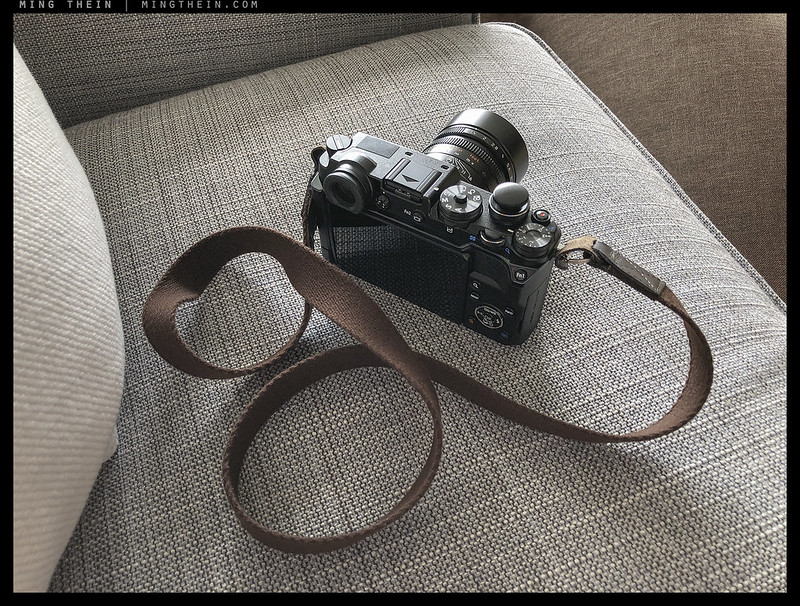
Due to an idle browser, more idle hands and pre-Raya* specials, the un-camera is no more. I traded in the GX85 for an Olympus PEN-F (previously reviewed here), available now at just half of its original launch price (at least in Malaysia) and with bonus goodies of grip with built in Arca rail and extra battery. For a modest supplement, it seemed like a good deal. I’m getting a bit ahead of myself: firstly, why? Well, a couple of things: if I’m going to shoot something serious, then I’ll break out one of the ‘Blads. If I’m not, then managing a three year old and the associated peripherals means that you don’t really have a lot of payload left over for hardware, let alone time to use it. But there are still opportunities to be had, and often single interesting grabs that require something quick**. On top of that, I admit the un-camera had a couple of serious deficiencies: firstly, the body was plastic and felt like it – grip it with moderate force and you’d be rewarded with a squeak or three. The back control dial was a bit recessed to access easily, and turned stiffly. Default color needed serious help (more on this later) – and lastly, I just didn’t like the fact that despite having a very comprehensive feature set (4K, dual IS etc) it felt like an appliance and had nigh on zero emotional value to shoot.

*end of Ramadan
**I’ll be the first to admit this does not describe the current generation of Hasselblads; but we
are working on it.

[Read more…]

Robin’s less obvious street photography tips…

Despite the recent explosion of street photography related content and images, there are very few new and original ideas being explored. Phrases like “the decisive moment”, “if your photograph is not good enough, you are not close enough”, and “F8 and be there” have become clichés in articles on street photography tips and tricks. There is no dearth of self-proclaimed gurus or street photography masters, all offering wise advice, suggestions and must-do checklists to magically guarantee you an upgrade to the next level of artistic progression. I, on the other hand, take a more practical and no nonsense approach to street shooting. In this article, I share my thoughts on street photography – thoughts which may not be considered mainstream.

[Read more…]

Repost: Avoidable photographic errors

_2E90162 copy

Rule number one: there are no rules. A ‘mistake’ may not necessarily be a mistake if it helps convey the message or story or feeling intended by the photographer. I can easily think of multiple examples that go against every scenario described below. That said, for the most part, I’ve found these ‘mistakes’ to hold true. And if you want to achieve something very specific, then you either won’t be reading this article in the first place, or you’ll know when to bend the rules. The general viewing public probably has some preformed opinions of what is right/good, but these are born out of as much ignorance as conditioning by companies trying to sell more software or lenses or something else. There are rational reasons why these opinions may not necessarily be right in the context of fulfilling creative intention.

The previous article covered the differences between eye and camera, and what this means in practical photographic implementation.

[Read more…]

Repost: Practical differences between cameras and human vision

H51-B0019280 copy
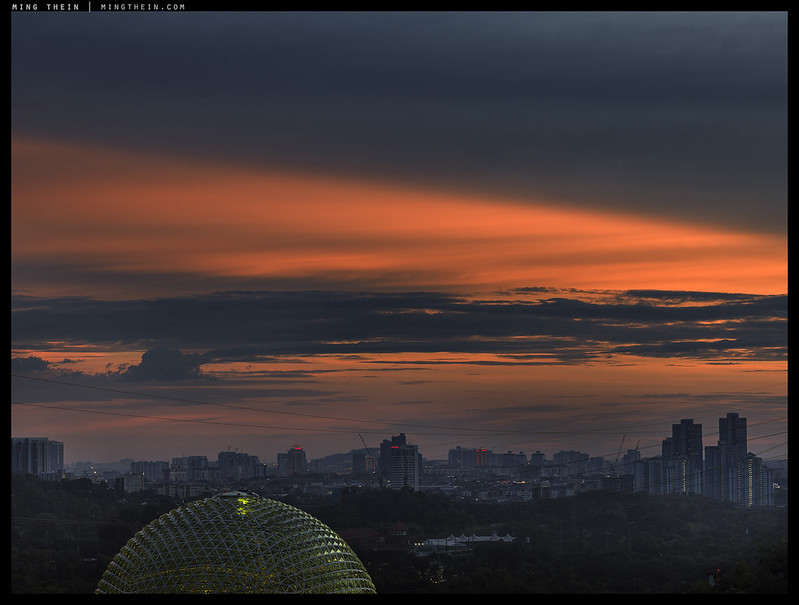
Synthetic moon rising. Why is it so difficult to get sunsets to appear ‘right’? Read on for the answer.

Many photographs do not work as we intended. Subsequently, we find out they do not work because there is a difference between what you saw and what your audience sees in the image. Sometimes this comes down to lack of skill in translating an idea, but often it’s more subtle than that: the camera doesn’t see what we see, and we need to be both highly aware of that and how to compensate for it. For instance: it’s no big deal to make a monochrome image, but our eyes only perceive a lack of color under very exceptional circumstances. Yet it’s these differences that make some images stand out as being exceptional, and others not really ‘work’.

[Read more…]

Format equivalence, engineering and practical envelope

_8B41029 copy
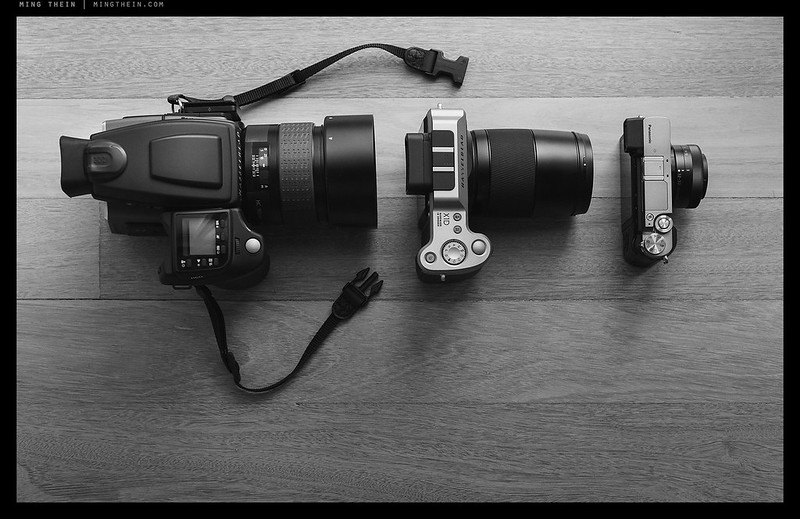
So which one has the biggest practical shooting envelope? They’re all the same; read on to find out why***.

Much has been written about depth of field, angle of view etc. equivalency for the various common sizes – I won’t repeat that. What I’m more interested is what consequences it has in practical terms on shooting envelope limitations, and how the apparent multitude of choices aren’t really choices at all – with a very few exceptions. To complicate things further, just because something can be done from an engineering standpoint doesn’t mean that it’s desirable from a marketing standpoint, and that’s before we even attempt to factor in how other things like haptics, controls, build quality etc. affect the overall shooting experience. Two examples: a consumer APS-C-sized camera with weather sealing and no feature or control compromises (think D5600 or 200D size); or a 1″ camera with really top class interchangeable optics (well, Nikon tried, but the market didn’t accept it). Or a rugged ‘professional’ compact, sensor size irrelevant. See what I mean?

[Read more…]

Experiments with stereoscopic photography

GX85_1020927-8 4k

What’s old is new again, history goes in cycles etc. – is all true. One of the earliest widespread experiments in photography – dating to the mid 1800s or earlier – was that of stereoscopy: the making of a three-dimensional image from two normal flat images but shot from a relatively offset position. Though there are many methods of varying complexity that can be used to create the illusion of three dimensions, they all fall back to the same fundamental theory: we humans physiologically have stereoscopic vision because we perceive an object from two slightly different positions; our brains interpret both the difference in images and probably also the physical position of eyeball, focus muscles, iris etc. to gauge relative spatial position and absolute distance. Without this – two dimensional images are reliant on cues such as overlap, shadows, fade/haze etc. to create suggestions of distance and position. Photography itself is the projection of a three dimensional world onto a two dimensional recording medium: this brings about significant limitations in reproduction and fidelity, but at the same time opens up great possibilities for artistic interpretation that a person with normal vision simply cannot see with their naked eyes. In essence, we are forcing both eyes to see the same image at the same time.

[Read more…]

Working with difficult subjects

_8511685 copy
Negative space in pastel

…Or, “how to shoot without inspiration”.

Pessimistic? Depressing? I’d see it as the opposite: this line of thinking wouldn’t even exist if that was the case. We’d have packed up the camera and gone home otherwise. But sometimes: we’re either masochistic, or working pros*, and we want/need/must make an image. Example: you’ve finally manage to scrape together the leave and spousal permission for a photography trip…and it rains all week, or worse, it’s overcast and rain is threatened but not implicit. It’s Alanis Morissette’s updated Ironic. Or you sign up for a job that turns out to have quite different subjects in reality to what the client claims; or the model arrives and let’s say heavy photoshop is probably insufficient and one should consider illustration. Consider today’s post not quite a tale of woe, not quite an instruction manual, not quite a catalog of humour, but perhaps a little of all three. What all situations have in common though is that some (well, quite a lot) of creativity managed to squeeze out images the client and photographer were happy with, but at the time – all early in my career – they were the cause of a lot of stress…

*Arguably, the former group also includes the latter.

[Read more…]

The best value in photography today?

X1D5_B0003142 copy

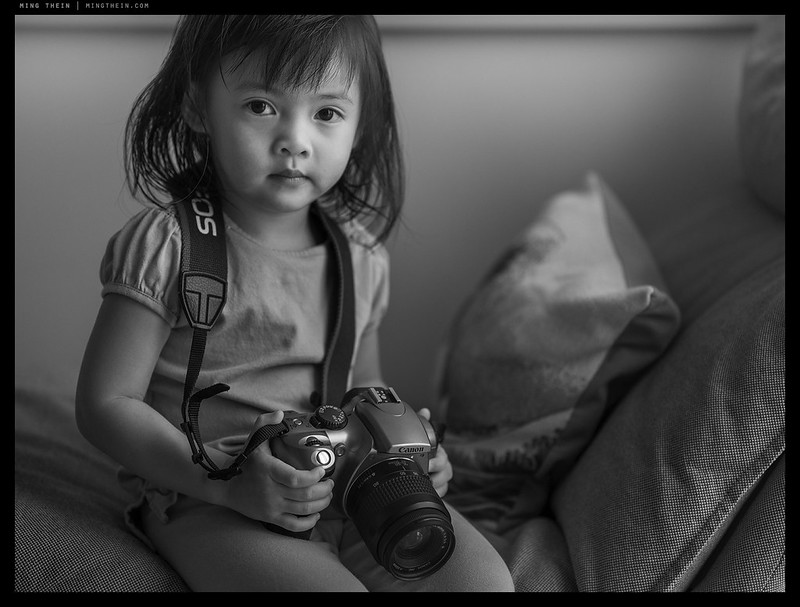
Fighting words. When your three year old decides she wants to be like daddy and bugs you pretty much every day for a couple of months for a ‘real camera, not a toy one’ – what do you do? It seems a little painful to sacrifice a new camera to what will almost certainly be death by something that makes perfect sense only in the mind of a toddler, but at the same time I’d really rather she not start helping herself to the Hasselblads. Cue every photographer’s favourite activity: gear shopping*. Initially, I considered something shockproof, waterproof and submersible; but the good ones weren’t cheap, the cheap ones were really quite painful to use, and the controls were oddly not very small-finger friendly – requiring a lot of force to press and cryptic icons to decipher. She recognises ‘on’ and ‘play’ icons thanks to iPads and youtube, and that’s about it. Perhaps the big silver button too, since that makes a noise to take a picture. By now you’ve probably seen the header image and figured out my solution…

*To be read with extra sarcasm.

[Read more…]

Creativity by the yard

_8501433 copy
The split

I’ve heard it said more than once that the world is divided into three kinds of people: those who create, those who support, and those who criticise. The former see the world differently and as a result land up being mostly societal misfits; at least until you become successful (which is nearly never, since the deck is stacked against you for reasons I will explain later). The corporate world wants to have the output and the commercial results, but is unprepared to support the infrastructure and requirements. The second group forms the majority of the population: ‘support’ can mean anything from consumption and patronage to supplier of key enablers such a services, environment or tools. And the latter – some serve as useful moderating reality checks and balances, but most just become bitter and jealous internet trolls. Today’s post is several things: an exploration of these roles, a series of suggestions from the point of view of a creative, and perhaps an apology (excuse?) for my wandering attention.

[Read more…]