Photoessay: Tokyo solos

_Q116_L1070004 copy

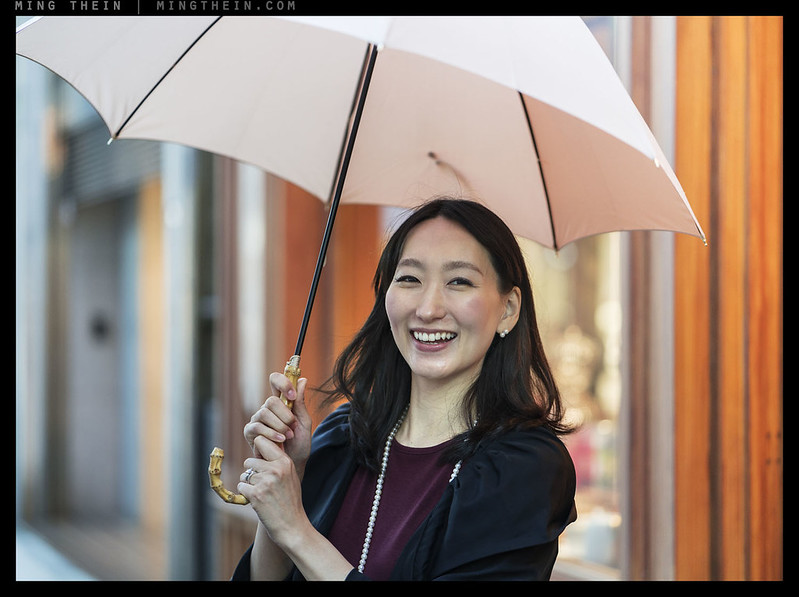
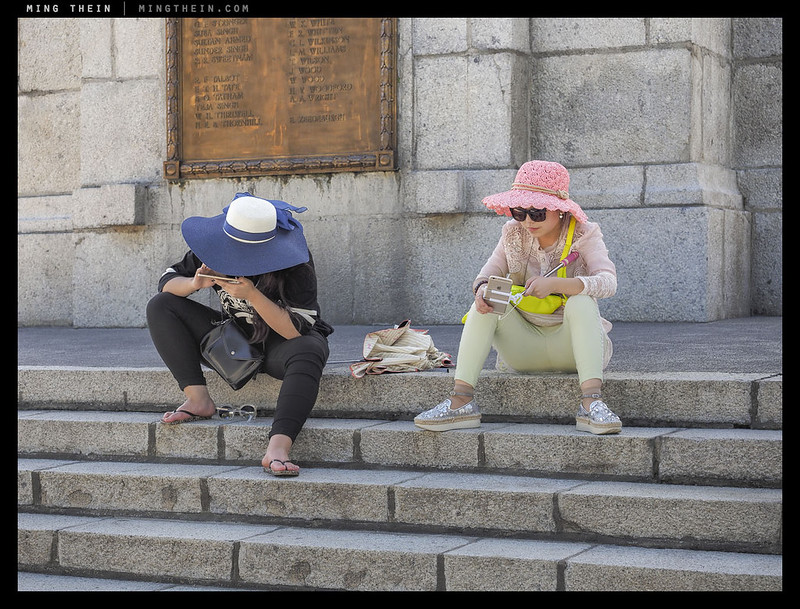
There are times when you shoot to push the envelope; others when you need to work to an objective, and still others when you feel like but shooting with no particular objective in mind in more of a meditative state. We tend to default back to habit – which can result in some very similar images to ones we’ve made before, but also a sort of liberation where you shoot ‘in flow’ and almost let the environment do the driving. This was one of those times – I present nothing too serious or deep today: just a series of individual (or are they?) Tokyoites. Enjoy! MT

This series was shot with a Leica Q, Nikon D5500 and Sony A7RII and post processed with PS Workflow II.
[Read more…]

Photoessay: Urban jungle, Tokyo

_Q116_L1070562 copy

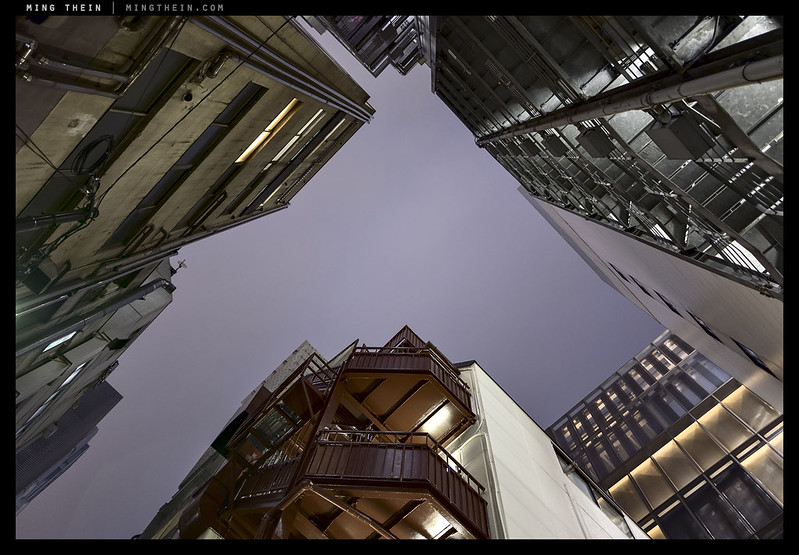
One of the things that I think strikes every visitor to Tokyo is the sheer density of the place: no space is wasted, and every single available nook and cranny fully utilised – and then some. I find this makes for a very chaotic appearance on the surface – and of course a huge number of quasi-abstract photographic opportunities – but with a little more contemplation some underlying semblance of order begins to poke through – you can almost see what they were thinking when they built bits of the city.

[Read more…]

Photoessay: melancholy and longing in Hanoi

_5203442 copy

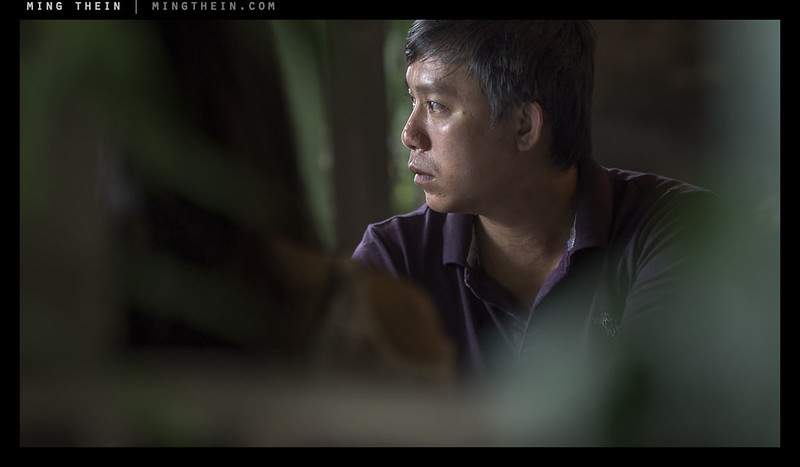
Words and thoughts flow from left to right, at least for those who think and read and write in western languages – a glance to the left in an image is an acknowledgement of origin, or perhaps one of longing depending on the expression of the protagonist. In the east, it might be interpreted as looking ahead in anticipation; except the expressions say otherwise. I have no idea why so many of my images from the Hanoi Cinematic Masterclass were of people looking melancholy and to the left, but there you go – perhaps there was something missing, or perhaps it was my subconscious curating something I wasn’t aware of at the time. MT

This set was shot with various equipment including an E-M5 II, 5DSR, Zeiss Otus 85, Zeiss Otus 55 and Contax Zeiss 100-300 using the Cinematic technique in Outstanding Images Ep.4 and processed with Outstanding Images Ep.5. You can also look over my shoulder at the underlying postprocessing in the Weekly Photoshop Workflow series. [Read more…]

Tension and balance

_7R2_DSC0483 copy

Two of the most common words I hear used when describing images are ‘tension’ and ‘balance’. I’ve got a good idea what the latter means, and how to translate it into an image – but the former is much more nebulous. A brief look around online also showed that they’re both not that well understood, or badly defined, too. At the risk of putting my neck on the block, I’m throwing my contribution into the ring, too. Feel free to add your thoughts in the comment section…

[Read more…]

Photoessay: Waking Coonoor

_Q116_L1100369 copy

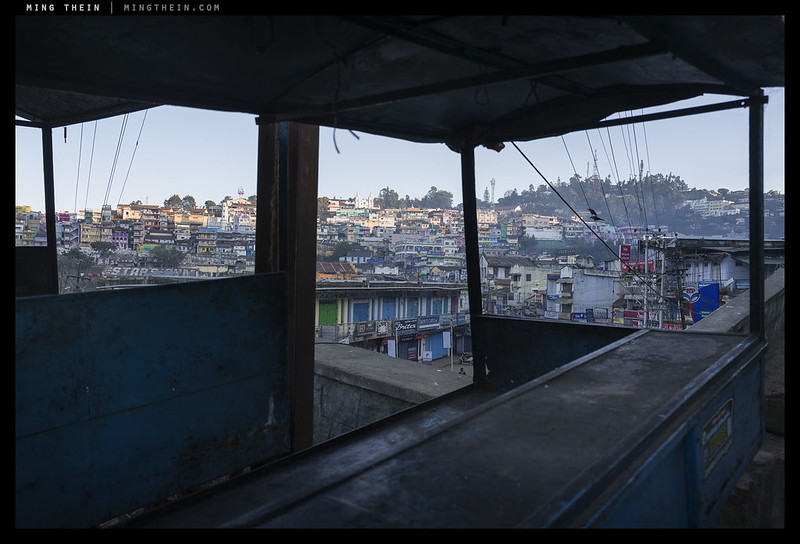
Half an hour before we were to meet our contact from the wildlife preservation department, we arrived in Coonoor, the Nilgris range, India, to find the town sleepy and barely stirring. Sunlight was just hitting the very tops of the highest buildings upslope, and the few residents stirring were dragging their feet – a massive contrast to the scene a couple of hours later, which was so different you could not imagine the place empty. As we did a quick walk through, I felt like I was observing the aftermath of the night before…a sort of crime scene worker, if you will. What follows is from the body of evidence, filed under ‘environmental context’. MT

This series was shot with a Leica Q, and post processed with PS Workflow II.
[Read more…]

Photographic étiquette, part two

_7R2_DSC3376 copy

Following the lighter post on the topic, I felt it’s probably a good idea to discuss some of the more serious grey areas as a photographer; especially when it comes to photographing people, locations or property that might well be private. In general, in most countries, if you can see it from a public location, photographing something is fair game. However, there are exceptions and degrees: anything with security or government links is probably a bad idea. Getting too close to anything without permission is probably also a bad idea. Crossing lines – even if they’re arbitrary – is potentially a bad idea, and might land you in more trouble than the shot is worth. Bearing these things in mind, I’ve generally managed to stay off toes and still get the images I want…

[Read more…]

Photoessay: Minimalist Lisboan architecture

_Q116_L1110943 copy

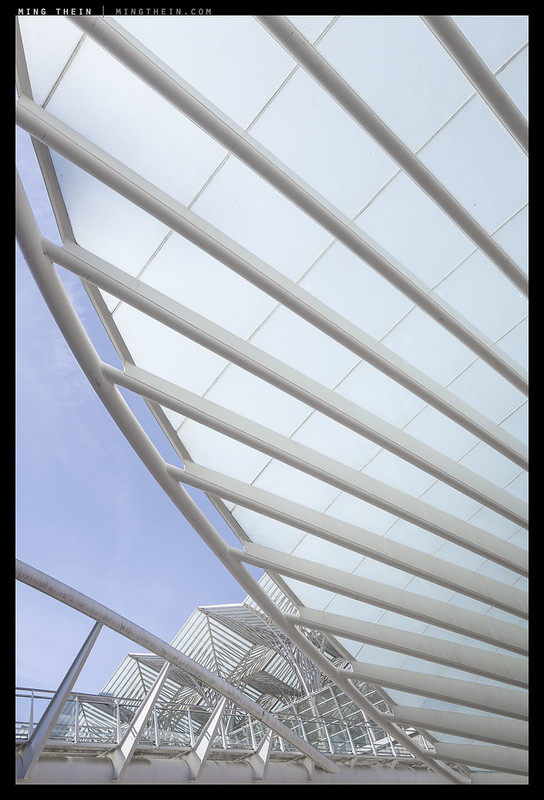
Clean and colourful – this is modern Lisboan architecture in a nutshell, I think. There’s an element of brutalism to it; perhaps that’s the result of minimalism when scaled up. Still, on a sunny day the bright/ light colours go a long way to softening things, and the simple forms are relatively unthreatening. A few traditional references remained, too – the new cobblestones, the tiled walls; I suspect the more ornate ironwork and mouldings were simply too expensive to replicate. Can’t help but wonder whether the whole mood changes in winter, though – there were already hints of it at the Calatrava-designed Oriente station, which has perhaps not fared as well as expected – elegant from a distance, but overly massive at anything other than platform level, and with rusting pillars and a leaky roof above. MT

This series was shot mostly with a Hasselblad H5D-50c, with some from the Leica Q 116. Postprocessing with Photoshop Workflow II. For a more in-depth architectural photography experience, there’s also the Singapore Architectural Photography Masterclass from 1-7 July.

[Read more…]

Photoessay-project WIP: Anatomy of the quotidian

_Q116_L1060002-18 bw bathtime redux copy

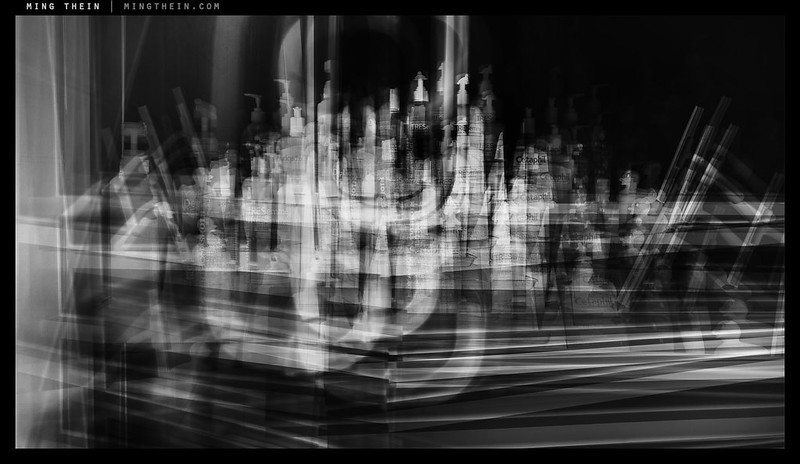
Today’s photoessay is something a little different – a work in progress, if you will. An idea occurred to me several months ago: we see the same objects every day, in slightly different light and from slightly different angles. This is what contributes to our overall impressions and memories of the object: it isn’t a single encounter but a series of experiences. I wanted to figure out the best way of translating this visually. There was no question it would have to be a composite of some sort; however, it would also have to be done in a way that would leave the identity of the object clear, but simultaneously indistinct. I played around a bit further with that idea and the concepts of definition and then anatomy arose; taking that one step further, I thought it might be interesting to present these as virtual x rays. It’s a very different approach to my normal photography since I almost never work with composites, and even less with this degree of postprocessing (which I’m happy to cover in a future episode of Weekly PS Workflow if anybody’s interested). I’d be curious to hear your thoughts…MT

This series was with a Leica Q, heavily composited and the final leg done with the Monochrome Masterclass workflow.

[Read more…]

Photographic étiquette, part one

Untitled-1

There are some things you must just do, or must not do, as a photographer. Today’s post is to help all of you navigate that minefield…

[Read more…]

Photoessay: Ethereal forms in Tokyo

_5501547 copy

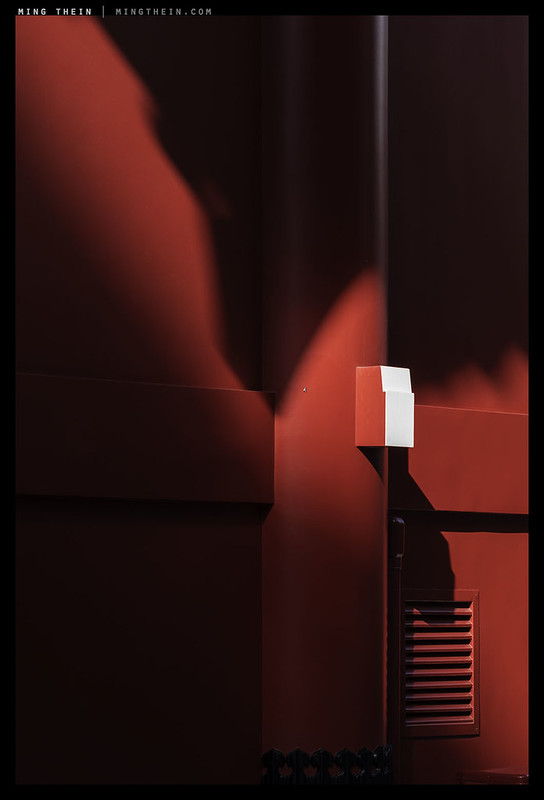
Every time I visit Tokyo, I can’t help but think the city’s districts tends to take two very divergent forms: either a sort of incredibly dense chaos born of years of layering without any possible initial foresight, with some entropic decay thrown in for character –  or a very precise order that’s almost identical to what was laid out by the architect’s draftsman. The first sort of neighbourhood is interesting because of the history literally layered in. The second sort is both dystopic and utopic in a way; are we looking at an impersonal bad dream that’s become reality, or something else? Moreover: where do the humans fit? There is a sort of stark minimalist beauty in the abstractions of form created by transient light, too. The shadows must have their time in the sun, too. MT

This series was shot with a Leica Q, Sony A7RII, Zeiss 85 Batis, Contax-Zeiss 2.8/85 MMG, Nikon D5500 and 55-200/4-5.6 VR II. You can learn the underlying postprocessing in the Weekly Photoshop Workflow series.

[Read more…]