Photoessay: Urbanscapes and details, Prague

H61-B0000212 copy

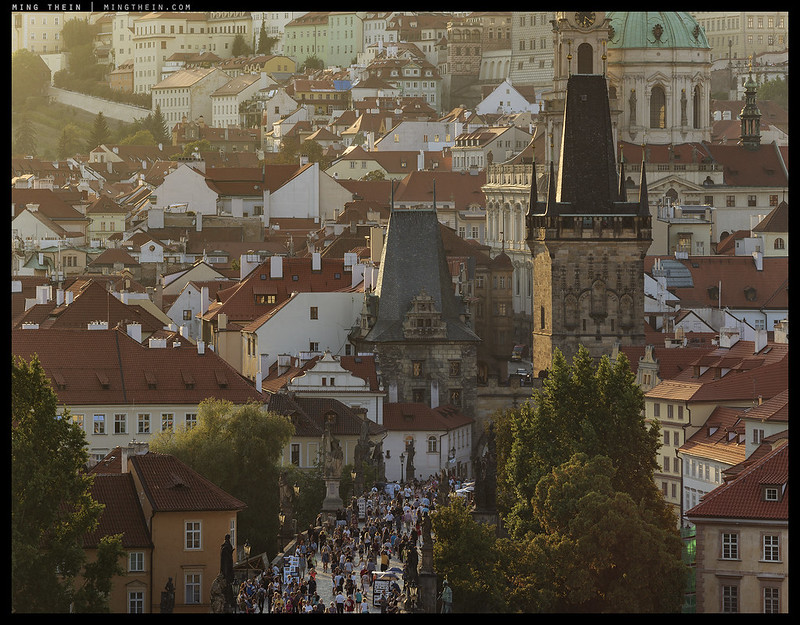
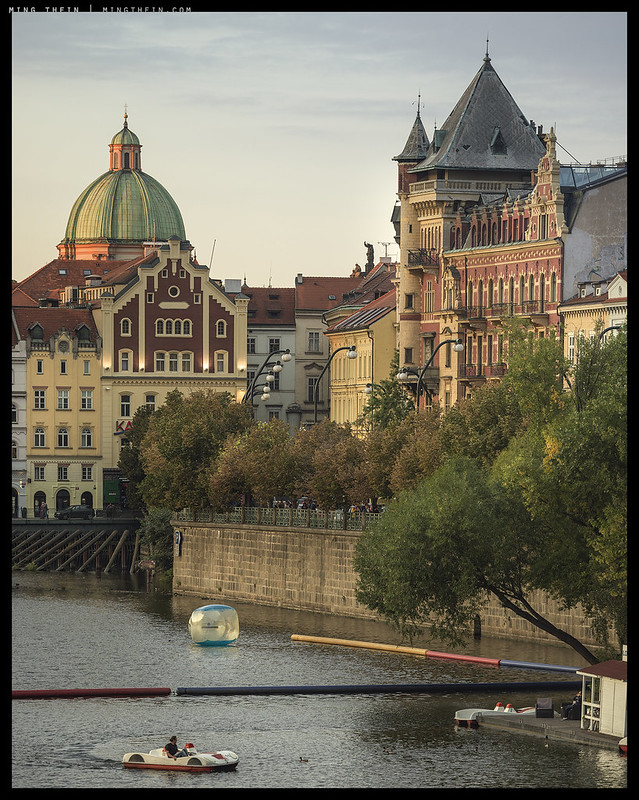
Just a few urban vignettes from Prague for today’s post; for the most part, they have a warm, summery mood (albeit shot towards the end of autumn), though you may find a few exceptions. Despite having visited and shot here in every season, I personally find the city really only ever has two moods – gloomy, wintery and very Soviet-bloc Eastern Europe, or warm and bohemian, and dare I say it, just a little quirky and fun. Both have their charms. Of late there’s been this odd giant theme park feel about the place, probably not helped by the massive influx of visitors. I think that must have been kicking around in my subconscious when I shot the first two images – at least that’s the only explanation I have for the inclusion of slightly incongruous foreground and the great wall… MT

This series was shot with a Hasselblad H5D-50C and H6D-50C, various lenses and post processed with Photoshop and Lightroom Workflow III. You can also travel to Prague vicariously with T1: Travel Photography.
[Read more…]

Drone diaries: Watch out, he’s got an aircraft…

_2E50271 copy

“Oh no, he’s gone and done it now…”

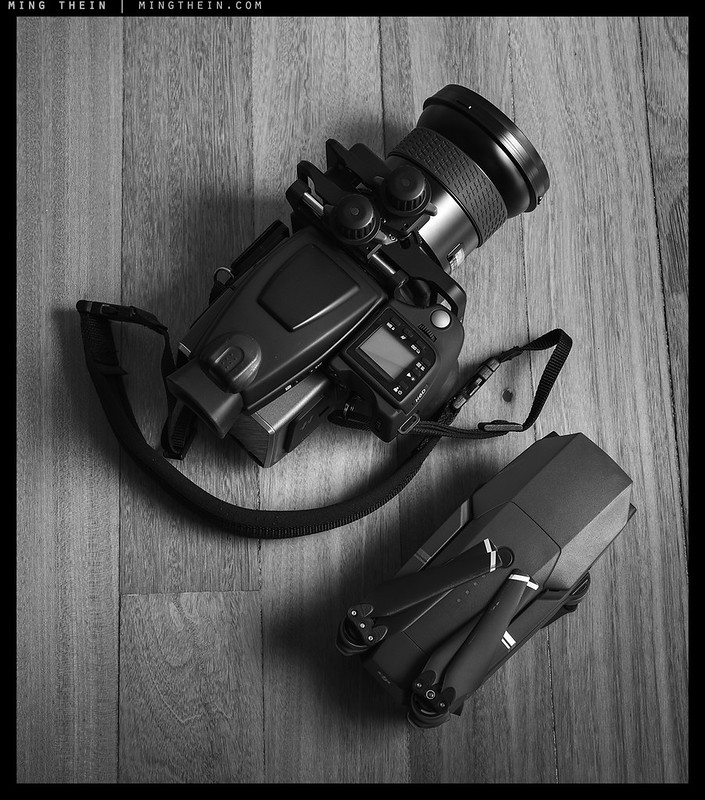
For a long time, I resisted. For two reasons: firstly, the flight technology hasn’t quite matured to the point that I’m comfortable enough with my own flying abilities to not crash or injure something or destroy the aircraft; secondly, the camera quality really wasn’t worth bothering with – especially when you’re used to something with let’s say, a little larger sensor. The first problem has recently been solved; the current generation of consumer-level drones packs so much guidance technology in (GPS positioning, radar, obstacle avoidance cameras, subject tracking and recognition cameras etc., inertial navigation gyros) that it’s really quite difficult to crash or hit something: it just won’t let you, unless you decide to turn all of the aids off. The second has also been solved to some degree, though not in the Mavic Pro I’ve started flying recently.

[Read more…]

Photoessay: Entropy from a distance in Porto

H51-B0005003 copy

And to put into practice yesterday’s theory on wimmelbild: some images from Porto which I think best illustrate the concept. Porto itself is a curious city, because it looks very different from a distance vs. close up, and in ‘good’ sunlight vs overcast cloud. From further away – ideally, the opposite bank of the river – and in the evening sun, the romance is present. You can imagine the traders and merchants and intrigues over your glass of wine from the terrace on the side of the hill; but when it rains and you’re in the middle of the old city being panhandled by people who look as though they match the state of the buildings, it’s quite another matter entirely. Parts of the town felt as though the inhabitants were the last of their tribe, passed on and were never replaced; children went elsewhere or simply never existed. Many of the buildings do not appear straight because they were not actually straight – who knows how many are structurally unsound. Restoration is possible, and has happened in places, but within the limits of conservation set out by UNESCO – and the limits of the current Portugese economy. Chaos? Entropy? Decay? Wimmelbild? Perhaps all of the above. MT

This series was shot with a Hasselblad H5D-50C, HC 24, 50 and 100mm lenses and post processed with Photoshop and Lightroom Workflow III.

[Read more…]

Optical finder or EVF?

_7R2_DSC3097 copy IMG_2153b copy

Continuing on from the ‘right tool’ discussion, I thought I’d address one of the recurring topics amongst photographers: optical finder, or EVF? Both have their advantages and disadvantages, and oddly they seem to be converging towards the middle of late. That’s to say: optical finders on the whole are getting worse, and electronic finders are getting better. Where does this game end? Is there an ideal solution for you? Let’s take a look…

[Read more…]

Photoessay: hardware

_8B36984 copy

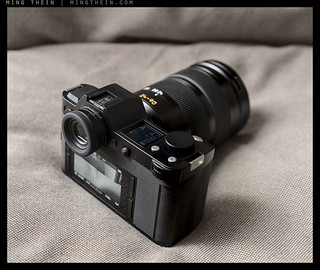
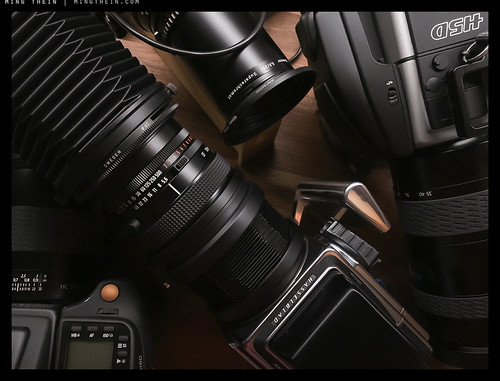
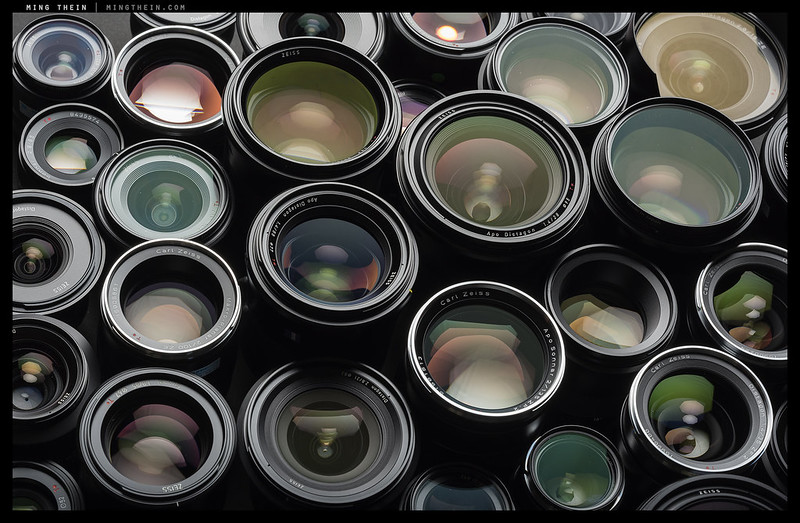
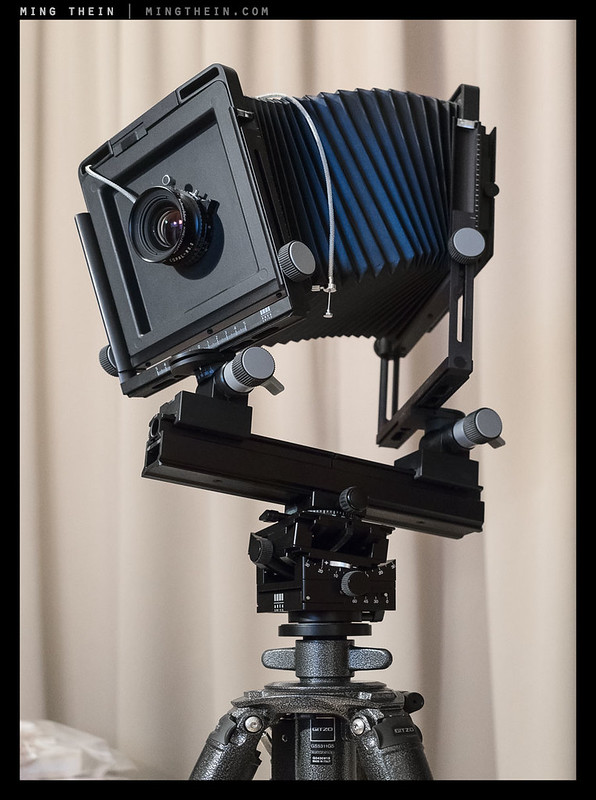
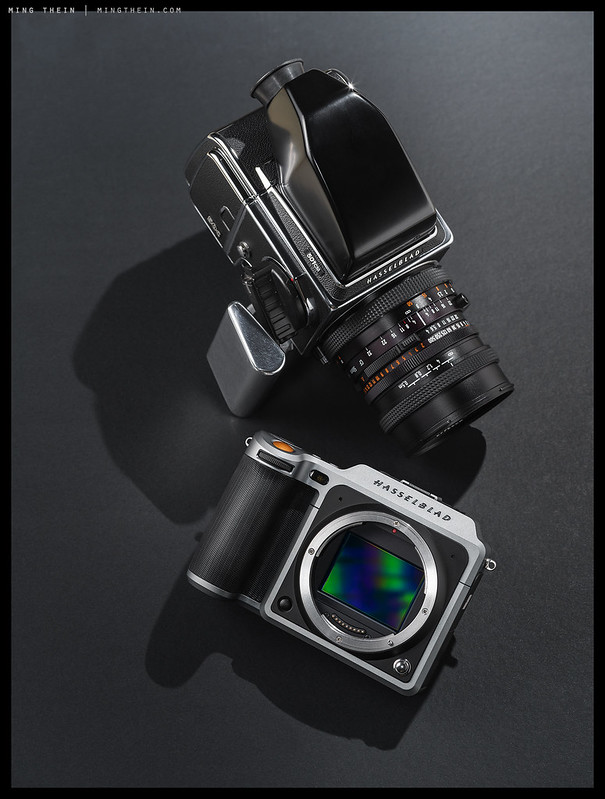
This post is a shameless gear p*** interlude, made with mostly recent but also some older images from the archives. I like my hardware as much as the next photographer, and have no problem admitting that some designs are more beautiful than others. Product photography is as much my thing as any other discipline – why not make them a legitimate subject in their own right, too? MT

Shot with various cameras and processed with Photoshop and LR Workflow III.

[Read more…]

Discussion points: An ideal format?

_1M01225 copy
Flexible? yes. Practical? Not exactly…

Today’s post will be the first in the experimental ‘discussions’ theme proposed a little while back.

We all know there is no such thing as the ‘perfect’ format or system – there are myriad considerations for selection, based on creative properties and technical ones – for example, depth of field, dynamic range, ‘graphic-ness’, color depth, shooting envelop, ability to deploy under certain conditions that might be weight restricted, system completeness for specialised lenses, camera movements etc. And this is before we even get into any thoughts around cost (for hobbyists) or return on investment (for pros). In most cases, we’re left either stuck with a single system that fills all needs but perhaps not perfectly, or multiple systems and formats and the inconvenience of both overlap and lack of it. For example – I love to create graphic images with a lot of compression and infinite depth of field, but this requires a narrow angle of view and thus longer equivalent focal length. I could do it with my H6D-100c, but the sensor on that is so large that I can clearly see a difference in focal plane at f8 and just 150mm-e, with a subject 100m away. Clearly, this is not workable – so I also have an E-M1.2 and Canon 100D with their respective telephotos for that kind of work. The graphic intent of the output means that limited dynamic range and crushed blacks aren’t so much a problem as desired most of the time.

[Read more…]

Photoessay: Nightfall, Prague

H51-B0017819 copy

I don’t believe this city ever sleeps. When it gets dark, it’s simply a change of mood; in fact, some parts look better when you don’t see the less salubrious bits. When you get a good evening though, it feels as though you are walking in a fairy tale at American theme park sizes – really quite surreal. The challenge is of course how to not make another tourist cliche; I think I got too caught up by the obvious beauty at times and consequently failed abjectly with this set. Perhaps it will require another visit to rectify. MT

This series was shot with a Hasselblad H5D-50C and H6D-50C, various lenses and post processed with Photoshop and Lightroom Workflow III.

[Read more…]

Why the right hardware is liberating

B7022734 copy

It might actually be better to start off with the corollary: why the wrong gear is frustrating, or at best, obstructive. First principle: what’s good for you isn’t necessarily good for somebody else, and vice versa. This may seem obvious, but the number of people who are chasing and lusting after hardware that simply doesn’t make sense for them is quite mind boggling – the internet seems to be full of them. Of course, it’s highly likely that those who have found camera nirvana are simply out there making pictures and have stopped thinking about the whole gear train – it seems much more productive to me to spend time making pictures instead of scouring fora for obscure solutions and rumour sites hoping for magic bullets. It boils down to this: most people make different images. Considering this objectively, it means that for different objectives, different tools are required. Yet what I can’t understand is the obsession with finding a one-size-fits-all; the manufacturers want to do this because it makes economic sense, but the whole point of having choice is so we as consumers do not have to.

[Read more…]

Photoessay: Night falls on the coast

H61C-B0000087 copy

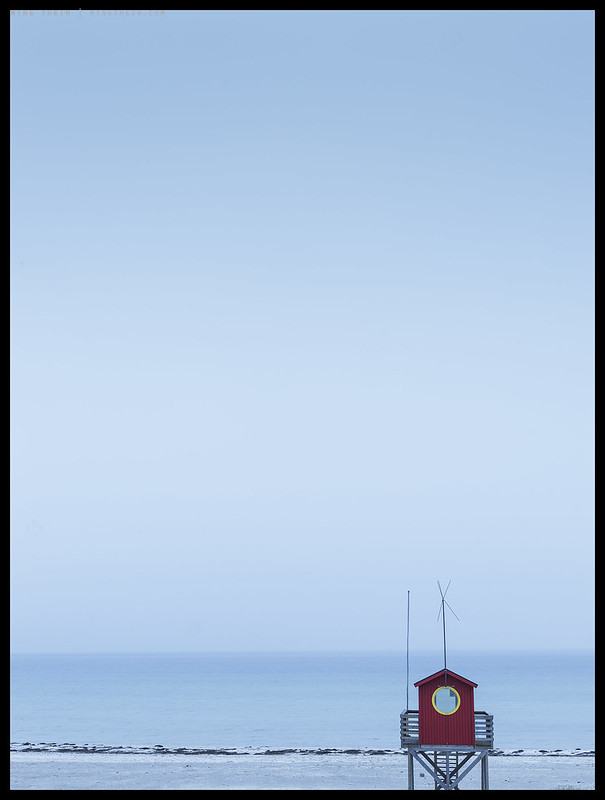
A Scandinavian winter. A dark afternoon with rapidly disappearing light and heavy skies. A new/old photographic-related friend, and a camera you’ve just had time to take out of the box and verify works at all – what do you do? Find something to shoot, of course: anything will do. I would say this short set is not so much a proper photoessay as a breaking in experiment: you have to do something that’s sufficiently valid from a creative standpoint that you can accurately assess whether the tool is working for you or not. What I have now is a problem of presentation: the test worked better than expected, but raised a whole different challenge because it now feels as though every medium except the very best monitors can’t quite convey the tonal/hue subtlety; and certainly not at web sizes or data rates. It probably means a catch 22 for future image-making: the transparency and subtlety that I find so beguiling doesn’t translate well to the most common display medium, discouraging such images. But at the same time, we’re not covering any new ground by repeating what’s already been done…frustrating, no? MT

This series was shot with a Hasselblad H6D-100c, 35-90 and 100mm lenses, and post processed with Photoshop and Lightroom Workflow III. We cover more edge cases in the Weekly Workflow, and you can travel vicariously with T1: Travel Photography or the How To See series.

[Read more…]

The paradox of all creative professions

_8B38969 copy

Imagine you’re hired to do something on the basis of the work you’ve previously done: the client likes your previous work, and wants you to do the same for their brief – within limitations, of course. You have of course taken care to show only the kind of work you want to do, so that there’s no possibility for misunderstandings. But yet the inevitable happens: as the job progresses, the scope changes, and suddenly you’re being asked to do something that’s either a duplicate of what’s been done before – by somebody else – or worse, a mishmash of incoherent ideas that were clearly a case of design by committee and completely unsuitable for the original subject or brief. Sound familiar? Sadly, this is far too often the state of play in most creative industries, not just photography.

[Read more…]