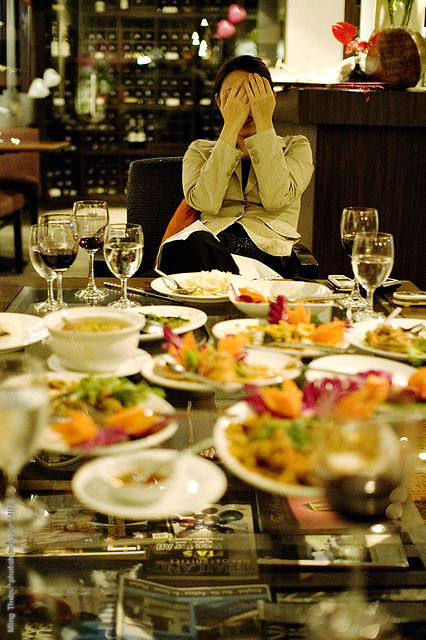
POTD: Reflections and reflections on reflection

_VL31_L1010141 copy
Reflections. Leica V-Lux 3.

I still haven’t found a camera that can quite capture the luminous nature of reflections in glass – they all either seem to make it look too ‘solid’, or too transparent; I suspect it has something to do with the sensor filtration or the transmission properties of the lenses used.

Here’s a second interesting thought: why don’t camera makers match the spectral response of the sensor to that of the human eye, rather than limit it to an arbitrary range of wavelengths? Our eyes don’t work that way, and that’s probably why it’s so darned difficult to capture exactly what we see. MT

On assignment and studio review: Watch photography with the Leica M9-P

We photographers are a strange lot: sometimes we make our lives difficult when there’s absolutely no need to. I recently shot a watch photography assignment using a Leica M9-P, of all things. (This setup has been the subject of another post, here)

You probably know that my usual rig for this is a Nikon with a whole bunch of extension tubes. Why did I do it, you might ask? See the end of the post for the answer.

Let’s start back-to-front, with a few highlights from the results:

_M9P1_L1013948 copy
Deep Sea Chronograph.

I would conservatively say that this was the most difficult shoot I’ve ever done, and the only one that required the services of an assistant – normally, I find they just get in the way and it’s much faster for me to do what needs to be done rather than have to explain it. Firstly, this rig is one which does not focus to infinity, is entirely manual, and is both heavy and unwieldy. Put one finger wrong and you’re liable to make a hole in the bellows, which being the better part of half a century old, is extremely fragile. (The mechanical parts are still in amazingly good condition though, and operate very smoothly.) You need to set magnification first – also restrictive, between about 2.5:1 to 1:2 only (with the Visoflex and 90/4 only) – then move the entire rig to frame – and because it’s unwieldy, you can’t do this handheld. I made a kind of gimbal head out of a Manfrotto 468RC0 Hydrostat head tilted at 90 degrees, to which was vertically mounted a Manfrotto geared focusing rail, with the rail on the Bellows II attached at right angles to that – which allowed me tilt and yaw motion, and precise front/back and up/down movements. Slow going – there were ten adjustment points on support system alone, to say nothing of photographic controls – but accurate.

_M9P1_L1013352 copy
Duometre a Quantieme Lunaire 40.5

Secondly, the Visoflex prism obviously blocks the M9-P’s hotshoe, ruling out the use of flashes – at least by any conventional means. With a custom-fabricated cable (read: a hotshoe cover with holes made in it to thread through speaker wire, which was then soldered to the contact points of a donor slave – in this case, a Nikon SB700), it was possible. The slave flash would fire at minimum power and trigger the other flashes in SU4 optical slave mode. Optical slave mode is a polite way of saying 100% manual – so it’s either light meter (which I don’t have) or experience (which I do have, from shooting the same thing with slide film). My assistant would run from flash to flash poking buttons and turning wheels in response to cryptic instructions like “top, up one; back, thirty-two and fifty millimeters, up ten degrees; kill the right one.”

[Translation: Top flash, increase power by one stop. Back flash, change power to 1/32 and zoom head to 50mm, tilt the head up ten degrees. Turn off the right flash.]

_M9P1_L1014200 copy
Amvox World Chronograph

It was a near thing. The entire job relied on a single critical part: that sync cable. At one point, there was an internal short somewhere which either kept the flash firing frequently enough to trigger epilepsy, or not firing at all. And to compound things, I suspect the trigger voltage of the hotshoe and flash didn’t agree, which would occasionally cause the M9-P to not fire its shutter at all. And then the Visoflex jammed…let’s just say the Victorinox earned its keep on that day.

_M9P1_L1013260 copy
Duometre a Quantieme Lunaire 40.5

It took me just over nine hours to make a final cut of 80 photographs – which is excruciatingly slow, considering I’ll normally do three times that number in two thirds of the time. Most of the delay was due to moving and setting the camera, or fine-tuning the flashes.

_M9P1_L1013409 copy
Duometre a Spherotourbillon

However, I think this conclusively proves that the Leica M system is a lot more versatile than most people think. Now, if only Leica would produce modern versions of these accessories – and perhaps something to trigger a flash. I don’t think most people have any idea how difficult it is to find a Bellows II-screwmount to Leica M adaptor until you look…

_M9P1_L1014513+28 copy
Master Ultra Thin Reserve de Marche

One quick comment on image quality: the 90/4 Macro-Elmar is a superbly sharp lens with great micro contrast, if you use it in the optimal range. At maximum aperture (f4), there is very visible chromatic aberration – both longitudinal and lateral. Stopped down between f5.6 and f11, it’s superb. At f16, diffraction suddenly kicks in – there’s a huge difference between f13 and f16, it’s as though somebody has run a Gaussian filter over the entire image. (I think at this magnification it’s probably closer to f32, though). I wouldn’t even go near f22. I had to pay careful attention to lighting with the M9, for the simple reason that its dynamic range is probably 2-2.5 stops less than the D800 at base ISO. All in all though, I think you’ll agree that the combination is capable of some spectacular results – even more impressive considering that it was never designed for this.

leicamacro01

Because we photographers have a particularly odd fascination with checking out other people’s equipment, I’m going to leave you with some gear shots. I will also say that if anybody is in the market for a tripod head, the Manfrotto Hydrostat series is truly excellent – it’s the only head I’ve ever used that doesn’t exhibit any ‘droop’ when locking down the head, no matter the weight or magnification of the camera and lens combination attached. It’s rock solid.

leicamacro02

leicamacro05

Yours truly at work. (You’ll notice I’m not using the tripod here; I put it aside for the further-away shots of whole watches.)

leicamacro06

My exhibition of fine art horology sponsored by Jaeger Le-Coultre and Leica will be on display at Starhill Gallery, Bukit Bintang, Kuala Lumpur from 3 May onwards – please drop by if you’re in town! If you let me know in advance, I’ll try to give you a personal tour. MT

____________

Visit our Teaching Store to up your photographic game – including Photoshop Workflow DVDs and customized Email School of Photography; or go mobile with the Photography Compendium for iPad. You can also get your gear from B&H and Amazon. Prices are the same as normal, however a small portion of your purchase value is referred back to me. Thanks!

Don’t forget to like us on Facebook and join the reader Flickr group!

appstorebadge

Images and content copyright Ming Thein | mingthein.com 2012 onwards. All rights reserved

POTD: Vacation time

_7004158bw copy
Tanjung Jara beach, Kuala Terengganu, Malaysia. Nikon D700 and 85/1.4 D

I’m off to the beach for a few days for a short vacation (the same beach in the image, coincidentally) and to practice my hommages a Daido Moriyama Hiroshi Sugimoto (I have no idea how I got that one mixed up). I’ll still have internet access though, so please keep commenting. There’s also a couple of very interesting posts completed and scheduled, including an On Assignment covering shooting watches with the Leica M9-P system – I wouldn’t leave you guys without something to read, would I? 🙂 MT

Finding inspiration, or the lack of it

We’re all familiar with the feeling: sometimes you go to a place or an event and there’s just no end to the photographic opportunities you see. At other times, life is an artistic desert: there’s just nothing inspiring you to shoot at all, and all subjects are too familiar, too uninteresting, or just plain flat and boring.

_M9P1_L1012712 copy
Shadow crossing. Leica M9-P, 35/1.4 ASPH FLE

I thought of the idea for this article on a recent business trip to Bangkok (last month). Ostensibly, I was there for a conference but did have some down time between sessions, some of which was spent socializing with my group, some of which was spent trying to shoot.

_M9P1_L1012732 copy
Untitled. Leica M9-P, 35/1.4 ASPH FLE

Bangkok is familiar ground for me. I worked there (in something non-photographic) for just over a year in 2006, right up until the first round of protests against the government. The photojournalist in me wishes I’d been stationed there during the action, but the rest of me is happy that I didn’t have to do my day job with everything severely disrupted. During that year, I did find things to shoot, but looking back I realize that most of it was social – there was very little documentary photography or travel photojournalism going on.

_M9P1_L1012673 copy
More traffic. Leica M9-P, 35/1.4 ASPH FLE

I put that down to two things: it really isn’t a city made for walking; it’s too big, for one; the climate is too hot to spend much time outdoors, for two; and the public spaces are predominantly malls and shopping complexes, with the exception of the 500 various temples and shrines that dot the city. It’s also a concrete jungle, with overpasses and highways and monorail lines arcing high overhead even downtown. Unlike Tokyo, where there’s plenty of money left over for beautification, there is nothing of the sort in Bangkok – anything new becomes grey and grimy and coated with a layer of urban dust after not much time at all.

_M9P1_L1013094bw copy
Concrete jungle. Leica M9-P, 35/1.4 ASPH FLE

The upshot of all this is that when walking, you feel like you’re in some sort of canyon – everybody who can afford to, drives. And there’s not really a lot of things you can do with people in cars, or trying to shoot from cars – except perhaps traffic.

_M9P1_L1012658 copy
Interesting light, and yet more traffic. Leica M9-P, 35/1.4 ASPH FLE

There is of course the adult entertainment industry, which does advertise on the streets (even if the transactions take place behind closed doors) – but that’s not something advisable to shoot casually, or without a local guide. I was told by a reliable source that there are a lot of underworld figures involved, and they don’t take too kindly to the seedier aspects of their business being documented. It is not something that interests me, in any case.

_M9P1_L1012660 copy
The relentless pace of progress. Leica M9-P, 35/1.4 ASPH FLE

So we return to the initial point of this article: there will be times when you’re stuck in a photographic or inspirational desert; it happens. But what can you do to get out of it?

_MT87548 copy.jpg
The monk. I was in Chinatown for this one; off my normal circuit but good enough to get something different. 2006. Nikon D2H, 80-200/2.8

1. The obvious thing to do would be to change location.

2. If you can’t do that, look specifically for things within your location that do interest you – I landed up doing a lot of abstract geometry and architecture – Bangkok does really have some nice buildings.

3. Change something in the mechanics of how you shoot: in other words, run an experiment. Reality is that something different will increase your chances of wanting to get out and shoot – it could be forcing yourself to work with maximal or minimal depth of field; getting a new piece of equipment, or using one that’s been neglected for a while; or simply trying to replicate a different style or trying a new idea. It’s because it forces you to change the way you perceive the world (or the world through the viewfinder) – which in turn makes you have to consciously focus on looking for shots or adjusting your composition to make it work; you can’t just run on autopilot anymore.

_M80_DSC3030 copy.jpg
Zap. Through the office windows, long exposure. 2006. Nikon D80, 17-55/2.8

And this is where a modicum of self-reflection and assessment is useful: I didn’t change anything, but in hindsight I realized I should have, which is the genesis of this article. I did initially go with only one lens in an unfamiliar and un-intuitive – to me, anyway – focal length of 35mm; but I don’t think it was different enough to force the creativity out. I should have tried shooting with only my iPhone or something. Or perhaps painting the camera pink, just to disarm the public to provoke some interesting reactions from street photography subjects.

_1_DSC0620 copy.jpg
The embarrassment of gluttony. 2006. Nikon D50, Sigma 30/1.4

By the opposite logic, it’s also worth making conscious observation of what does inspire you – what do your favorite subjects or images have in common? It might be one simple thing – I’m drawn to the mechanical intricacy of watches, for instance – or something much more complex; like the juxtaposition between man and environment; dramatic lighting; harmonious geometry – or a mix of all three.

_MT92533 copy.jpg
Seafood seller. 2006. Nikon D2H, Sigma 30/1.4

The underlying moral of the story is action: don’t wait until afterwards to change things, it might be too late. I’ll never know what shots I’ll have missed, but you can bet next time I won’t wait to find out. MT

Bonus points to those who noticed the difference between the first set of images in this series – shot this year with an M9-P – and the second set, from my first long stint in Bangkok, shot with various other equipment? Why is this? Many things have changed: location (different parts of the city), equipment, most of all, experience, and the benefit of a lot more experimentation in the intervening years.

Photoessay: St. Vitus Cathedral, Prague

A fantastic piece of gothic architecture, St. Vitus is arguably the centerpiece of Prague Castle – itself at the northern part of the old Malastranska district and overlooking the rest of the city itself. I’ve been inside a number of famous cathedrals – St. Paul’s, Canterbury, Notre Dame, St. Vitus, the Sagrada Familia, and Stefansdom – and the one thing that always amazes me is that we humans could build such structures as early as nine hundred years ago, when the majority of people were living in shacks and huts without sanitation or any other modern infrastructure. Even more amazing is the degree of architectural finesse involved in building these structures in stone – remember, there were no structural members that could take tensile loads, let alone pre formed or pre stressed panels. Everything was reliant on gravity to stay in place. Construction took generations; even with modern building techniques, the Sagrada Familia began in 1882 and isn’t expected to be complete until 2026 – that’s <em>144 years</em>. Frankly, it doesn’t look very different today than when I first visited in 2003. Glass <em>had</em> to be made with lead frames holding together small pieces, simply because there was no way to make big sheets. But the craftsmen of the day found a way to make that beautiful, creating the incredible stained-glass mosaics that survive to this day; a lasting testament to their devotion to their faith. MT

Series shot with the Leica M9-P, 28/2.8 ASPH and 50/1.4 ASPH

_M9P1_L1006136 copy

_m9p1_l1006504 copy

_M9P1_L1006161 copy

_M9P1_L1006470 copy

_M9P1_L1006548 copy

_M9P1_L1006458 copy

Breaking news: Leica + Apple partnership!

A recent, reliable source has told me that the much hyped Photokina announcement for Leica won’t be a new M, but instead a further step towards documentary photography: to put better tools in the hands of citizen photojournalists, they have decided to finally give in to collaboration requests from mobile phone makers. Apple – probably the only design equal of Leica in the phone world – has decided to take on Nokia’s Carl Zeiss partnership and gone to Leica. It’s not exactly surprising after Jobs’ launch of the iPhone 4 – which compared the design gestalt as aspiring to the Leica philosophy.

The announcement makes a lot of sense as it will also tie in with the iPhone 5’s arrival, which has traditionally been around Q3. It’s also time for a redesign of the iPhone 4, which has now seen two generations of service – much like the plastic design of the 3G/3GS.

No concrete details on the sensor – my contact was very tight-lipped about that – other than ‘it will be more than 8MP, but not as many as that ridiculous Nokia 808 thingy; image quality will be fantastic because it will be bigger than most cellphone sensors and have no anti-aliasing filter.’ The real killer, however, will be the lens: an f0.95, 35mm equivalent. It will have AF with limited (10cm, I suppose?) macro functionality, is a Leica design, and will carry the NOCTILUX-C ASPH 0.95 inscription – presumably C stands for ‘compact’? I have no idea how thick this is going to be though – maybe there’s a lens protrusion, or folded optics, or a similar trick to keep the thickness down. Hopefully it won’t be too much of a pocket lump.

What excites me the most, however, is that they apparently got Apple to cave in an offer not only a physical, two-stage shutter button, but the option of saving a DNG file too – hooray! MT

Review: The Leica X1

_3100_DSC1318 copy

Why write about this camera now? The X1 may not be a new camera by any means, but curiously I think if anything it has become relevant again, now that large sensor compacts are all the rage (I can only hope for a digital full frame Ricoh GR1v or Olympus Mju II). I owned one of these for the second half of 2010 and into early 2011, before swapping it for the much-vaunted (and somewhat disappointing) Fuji X100 – to be the subject of another review.

What is interesting is that X1s are popping up used here and there at quite reasonable prices – though like most Leicas, they seem to resist extreme depreciation quite well. At the time, I couldn’t resist, and I was getting impatient waiting for the X100, so I traded in my Sony NEX-5 and bit the bullet.

_3100_DSC1400 copy

A little background: early attempts at mirrorless cameras seemed like a great idea to me – but also somewhat half-baked; here was a camera large enough to be inconvenient, but not large enough to do the job properly. And slow enough to make you want to tear your hair out. But yes, the image quality was definitely better than a small sensor compact. So I persevered. Early micro four thirds attempts weren’t just terrible, they were utterly dire. The Olympus E-P1 was so slow as to be unusable. And the control layout from the Panasonic G1 somehow just didn’t work well – despite being just fine on the LX3. Hmmm. The Sony NEX-5 was next; decently fast, getting smaller, but oh boy the interface was utterly horrible. And none of them had a good EVF, let alone a nice optical finder. Like every other equipment fanboy, the X100 seemed to be the perfect fix – EVF, OVF, manual controls, nice fast lens.

But the X1 got in the way.

_X1_L1000849 copy Hood reflections. Leica X1

First impressions: whoa, it’s light. There really isn’t that much inside the camera – although it’s metal, it gives the impression of being hollow rather than solidly packed like the Ms. It’s also nice and simple: the limited menu from the M8/9 made it over, keeping the important things and not adding anything superfluous. Shutter speed and aperture control dials are nicely obvious and pleasantly tactile, although they could perhaps be a bit stiffer to prevent accidental knocking. I’d ask for a lock button, but that isn’t part of the Leica gestalt. In fact, it looks and feels like nothing so much as a Barnack camera – especially if you put a compact finder on top. I like the Ricoh GV-2 28mm bright line – yes, it’s a 36mm equivalent lens, but if you use the insides of the 28mm bright line, it actually provides more accurate framing than a dedicated 35/36mm finder, which tends to be a bit too conservative for my liking. (I’m one of those people who composes their shots with the outside of their M’s frame lines.)

_X1_L1000782 copy
KLPAC. Leica X1

So, a digital Barnack – that’s a good thing, right? Well, yes and no. Let’s get the bad out of the way first: it’s slow; not in the control/ UI interface, but AF and MF were positively glacial. MF required too many turns of the little wheel to use accurately for zone focus; AF was just slow, period – even with the fastest ‘single point HI’ setting chosen. And it doesn’t focus closer than 30cm, though at times it seems even that’s a little generous. A firmware update improved things somewhat, but still doesn’t bring this camera into ‘this feels fast’ territory. I’m faster with an M9. And let’s not even talk about the Olympus Pen Mini. While I’m griping, I want to bring up two more issues: the battery life is abysmal – I mean I can exhaust a battery in an hour or two of shooting. Perhaps 300 frames and it’s flashing at me. Finally, in low light, the LCD doesn’t gain up enough; maybe it can’t without being grainy and unusable. It also doesn’t have enough pixels to manual focus easily. There are a few other niggles too – like peeling leatherette, which I was told is a tropical climate + glue compatibility issue and has been fixed on newer cameras; the flash sometimes not popping up…a bigger buffer would be nice, too.

_X1_L1001362 copy
Corporate sponsored roaring 40s party. Leica X1

With that done, let’s talk about the good things.

1. The sensor’s image quality is really excellent. For a 12MP camera using a last generation sensor. I understand it’s a derivative of the Sony sensor used in the Nikon D90, which was excellent but very much a first generation product for large sensor live view and video, and certainly without a fast enough refresh rate to be used for contrast detect autofocus – which is what the X1 does. ISO 3200 is definitely useable, and produces crisp results – with compromised dynamic range, of course; but the grain is nice and random, and mostly in the luminance channels. The tonal response of the sensor makes it excel at black and white work, even at higher ISOs. I believe the X1 also has a very weak (or possibly no) AA filter – and it shows.

_X1_L1001345bw copy
Shadow of the photographer. Leica X1

2. The lens’ image quality is also excellent. I was told that the optics are identical to the discontinued but highly regarded 24/2.8 Elmarit-M ASPH – except in a collapsible, autofocus version with an extended helicoid to allow focusing to 30cm instead of 70cm. It’s sharp corner to corner, and at every aperture. The lens clearly out resolves the sensor – aperture control is for depth of field control only, not improving optical performance. Microcontrast structure, flare resistance and chromatic aberration performance are all exemplary. Moreso when you remember that the lens is collapsible, with all of the various small potential alignment errors introduced by moving tubes and the like.

_X1_L1001184 copy
Redhead. Leica X1

3. The camera seemingly never fails to focus. Wait a minute, didn’t I say before that AF was terrible? I said slow: not inaccurate. It might take several seconds, but the camera will find focus. And that will be on the money. It doesn’t seem to get confused by point light sources, unlike most other compact system cameras I’ve used.

_X1_L1001273 copy
The mysterious oval in the mountains. Very, very low contrast – but no focusing problems. Leica X1

4. Flash sync speed is…1/2000s! Really? Yes, really. Say thank you to the leaf shutter. That means you can do a lot of creative work with it because you can sync at outdoor daylight speeds, as well as freeze motion very well. Oh, and there’s that handy built in flash: it’s quite useless for social work and as a primary, but as an optical slave trigger when manually set to minimum power, it’s great. One other benefit of the leaf shutter is that it’s an incredibly low-vibration camera – the release is just a smooth, quiet ‘snick’. I wish the Ms had a shutter like this – and the nice-feeling shutter button to go with it.

_X1_L1000998 copy
Hair flick. Leica X1, 1/2000s, Nikon SB900s in umbrellas.

Does it deliver the ‘Leica look’? Yes and no. These days, with enough processing, you can make a image shot from any camera look like it was shot using another one; however, there are some subtle differences like tonal accuracy and dynamic range that you can’t easily fake. The X1 feels to me like a half-Leica: the sensor is a CMOS, which by definition will have a very different – much more linear in the shadows and highlights – tonal response to a CCD, which is what is used in the M8/M9/S2 (and responds much more similarly to film, i.e. non-linearly). However, the lens definitely imparts some Leica DNA; you can see it in the way the images ‘pop’, but the color and palette might not be quite what you expect – that’s the sensor.

_X1_L1000466bw copy
Looking down. Leica X1

The bottom line is that this camera delivers what it’s supposed to: image quality. Ease of use is there, but speed could be seriously improved. And I’d like to see either a short zoom version (a 28-35-50 Tri-Elmar style lens arrangement could be interesting too) or a telephoto – say an 85/2 – which would be great for studio work.

_X1_L1000845 copy
More building color. Leica X1. I actually really liked this camera for architectural work; more than my Ms because of the precise framing afforded by the LCD. Wider would be nice, though.

I’m still trying to figure out who this camera is aimed at, though: it’s not automatic enough for a novice-who-wants-a-Leica to use and appreciate without feeling frustrated; you do need to know something about photography to get the most out of it by working around its limitations. (Hint: pre focusing is your friend). I think it’d make a good backup camera for an M user – if they sorted out manual focus; the wheel should be a bit more responsive, and it needs virtual DOF scales, I think – or an upgrade camera for a D-Lux 5 owner; but they might still want to keep the D-Lux around for the added focal length flexibility. It might also make the perfect weekend toy for the jaded SLR owner who wants to try something different.

_X1_L1001167 copy
Ferrari 430. Leica X1

One final word: as with all of the large sensor compacts I’ve used so far, don’t expect to shoot it the same way you shoot your SLR – it’s not designed for that. Instead, think of it more as an introduction to M-style photography – slower, more contemplative and more anticipative – and I believe the results will come. MT

_X1_L1001174bw copy
Lamborghini Gallardo. Leica X1

POTD: One of those strange inexplicable things that happens from time to time

_M9P1_L1009159 copy
A windfall for a small gorilla. Leica M9-P, Zeiss ZM 2.8/28 Biogon

I just remembered I hadn’t posted an image today. This image has been sitting in the upload queue for some time – it reminds me that sometimes, you don’t need technical perfection for something to work; a sense of fun and whimsy can do wonders, too. MT
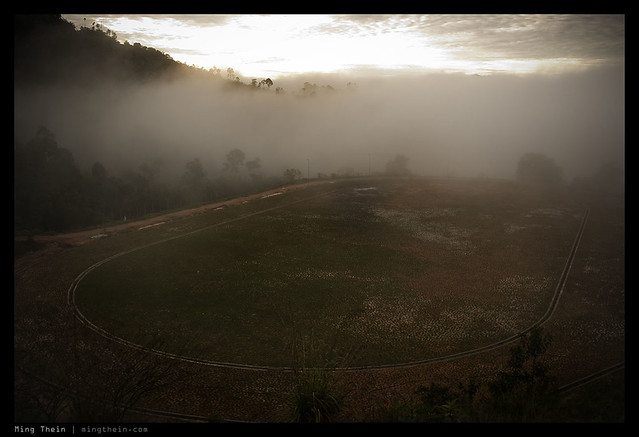
Quick tip for the Leica M9: toggling images while zoomed in

I just discovered that if you hold down the play button and press the left or right arrow simultaneously, you can quickly toggle to compare successive images while zoomed in. I previously thought this was something only Nikons had – glad to see this handy review feature on the M9 and M9-P, too. Should make assessing images on the fly a lot faster. MT

POTD: Sunset clouds over the sea

_M9P1_L1013197 copy
Sunset clouds over the sea. Over Hat Yai, Gulf of Thailand. Leica M9-P, 35/1.4 ASPH FLE