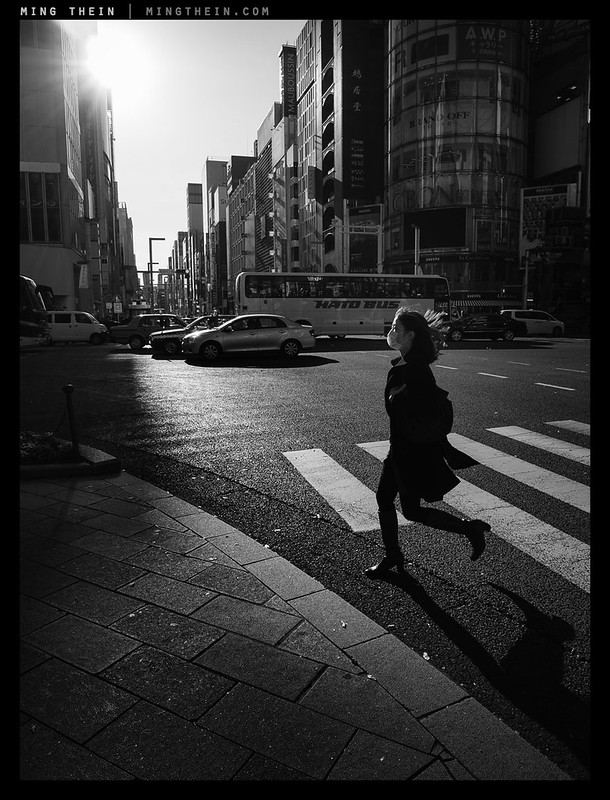
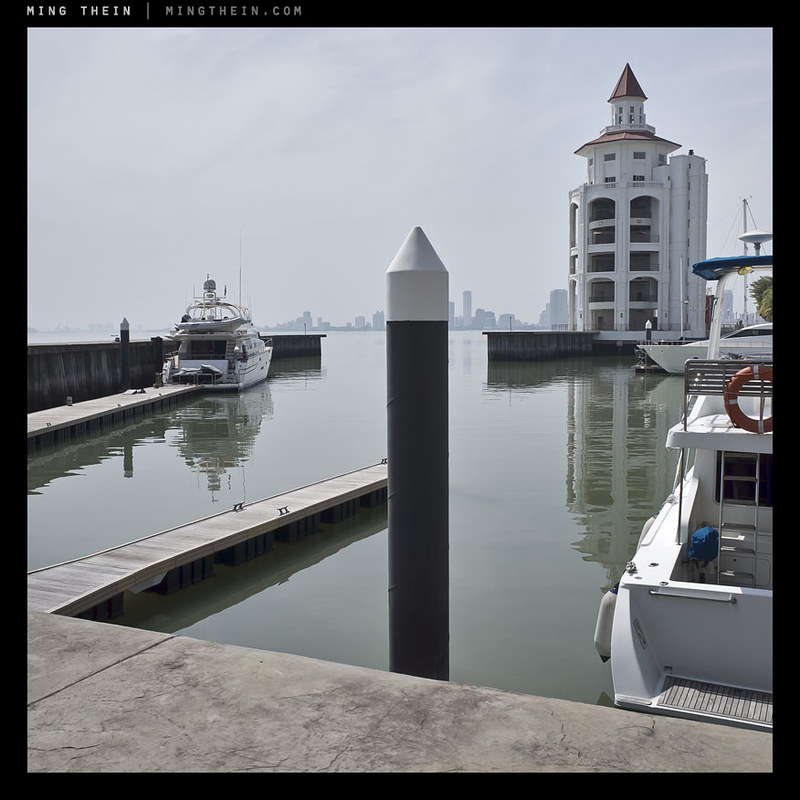
On my recent trip to New Zealand, I spent some time exploring an aspect of photography which I hadn’t really done much work in up til now: long exposures, night work and astrophotography. Unfortunately there was only one clear night for the latter, and the duration of exposures + noise reduction meant not a whole lot of individual shot opportunities; still, I’m fairly pleased with the outcome – definitely something I’ll have to revisit in future.
One place left for the March 2015 Prague masterclass
Prague
Prague, Czech Republic, 9-14 March 2015 (best suited to urban, architecture and street)
Duration: 6 days, four practical and two classroom
Tuition cost: US$2,300; $2,600 special bundle including Outstanding Images Ep. 1-5 and Intro to PS Workflow (required, but most participants usually have some or all of these already)
Want to be challenged? Inspired? Push yourself to take your images to the next level? The Masterclasses are aimed squarely at you. They are for the photographer who already understands the fundamentals and is looking at developing their own style, evolving creatively and spending some time with like-minded individuals. The aim is no longer about building core fundamentals by exercises, but to work on vision, the ability to assess and curate one’s work, application of style, postprocessing, and being able to put together a coherent set of images to an objective.
Click here for detailed information, and to book. Testimonials from prior workshops are here. Thanks and see you in Prague! MT
It’s all about light: making mood and strong images in monochrome
A couple of days ago, we looked at the inexact science of color and emotion: I don’t think anybody is going to argue that the mood and feeling of an image is influenced heavily by the dominant color palette, both in terms of the color of incident/reflected light and the color of the subject elements themselves. But how does this translate to black and white images? Obviously, it’s very possible to do since not every monochrome image feels the same. Even within the same sort of general lighting – say low key – it’s possible to produce variations in mood. How?
Repost: The inexact science of color and emotion

What makes this photo identifiable as dawn instead of sunset? Hint: it’s the color. We expect sunsets to be warm, but mornings to be cool and clear.
Today’s post is one from the archives; back nearly to the beginnings of the site. I’m pulling it out again to set you up for what comes next.
A series of experiments was done many years ago that showed humans have been conditioned to expect certain things in the way of color: blue ketchup just doesn’t fly, for instance. The theory is that it’s a primeval subconscious response to warn us of danger. Think of it this way: rancid meat looks a certain way, and has a certain color. Even if we can’t smell it – looking at a photograph of vomit or something decomposing makes us go ewwww. Such examples are to be found in nature all the time – think of those brightly colored poisonous beetles, for instance. In fact, the link between color and range (and thus emotion) is so strong that many species mimic the coloring of more dangerous species to warn away predators, but at the same time rely solely on that as protection because they pack no venom or toxicity. (Toxicity is energy-consuming to produce, and in food-scarce environments, you want to waste as little of your nutritional intake as possible producing something that’s only going to help you if you’re eaten – and thus probably going to die anyway.)
Photoessay: the Jay Pritzker Pavilion, Chicago
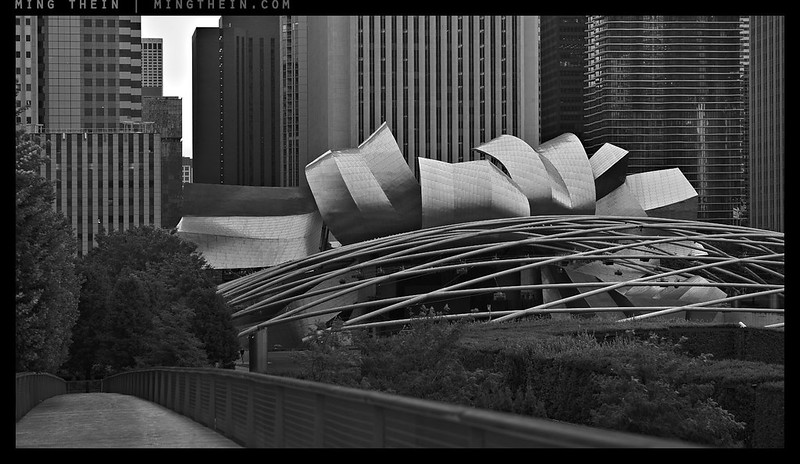
Chicago can be considered both a city of architects and in a way, a city for architects; despite the huge number of other famous buildings in the city, I found myself particularly taken by the form and execution of the Jay Pritzker Pavilion in Millennium Park. Perhaps it was because it was my first encounter in person with a Frank Gehry building – they’re understandably somewhat thin on the ground in Asia. It probably didn’t do any harm that I also happened to go on a day where the sky was throwing up a fantastic assortment of clouds and light; if you didn’t like the arrangement of cumulus, just wait a few minutes for a fresh one. And of course late September in Chicago means that the light is never directly overhead, because the sun sweeps over the horizon in an arc – making any time of day fair game to shoot.
Review: The Sony A7 Mark II; nearly there…(Updated, 21 Jan)
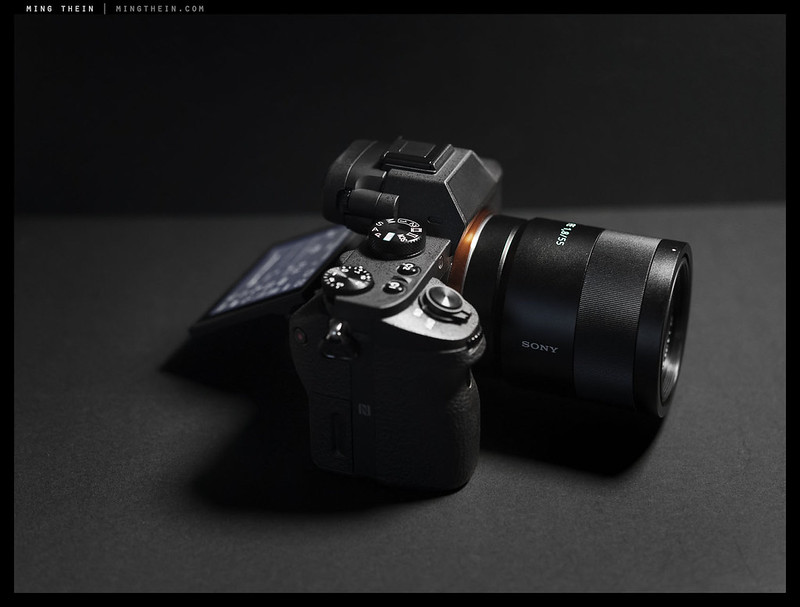
We now have no less than four full frame mirrorless options from Sony; the A7R (previously reviewed here); the A7, the A7S, and now the A7II. This appears to be typical Sony strategy: rather than making a product that’s a definite improvement on the previous model, we get many attempts hoping that each one will find its’ own niche. The A7II brings one thing that makes me curious enough to give it a try despite an uninspiring experience with its predecessor: the first full-frame mirrorless camera to have in body stabilization.
I reviewed a production A7II with the Zeiss 55/1.8 and 24-70/4 OSS lenses, running firmware 1.10. Unfortunately, the 24-70 was either a poor sample or just optically a dog – very soft off-axis and with significant CA, so all of these images were shot with the 55/1.8. I will upload more to this flickr set in due course.
Photoessay: Nautical still life
Earlier this year, I was commissioned to shoot a documentary set for the International Lutheran Seamans’ Mission; an organisation that has stations around the world tending to the spiritual and more pedestrian needs of seafarers. I thought the brief was interesting – follow and document one of their mission leaders, on vessels of various sizes ranging from small wooden fishing boats to new 1000ft container ships – whilst interacting with the seafarers and looking for interesting vignettes. That will be the subject of a future On Assignment – the client has not yet published the annual report it was commissioned for.
Being prolific
The images in this article are unconventional compositions: products of long periods of experimentation, sometimes the result of a single fast grab, or several iterations of adjustment and refinement. I think they suit the theme well.
Today’s essay is a slightly odd one. Consider for a moment: is it better to be a prolific photographer, or a slow, methodical, considered one? No matter how you slice it, there are advantages and disadvantages to both. And I honestly haven’t been able to figure outs which works best, so I’m hoping the comments are going to spark an interesting discussion depending on the approach of my readers.
Picking a tripod
This article continues from a discourse of why a tripod is the most underrated piece of photographic equipment.
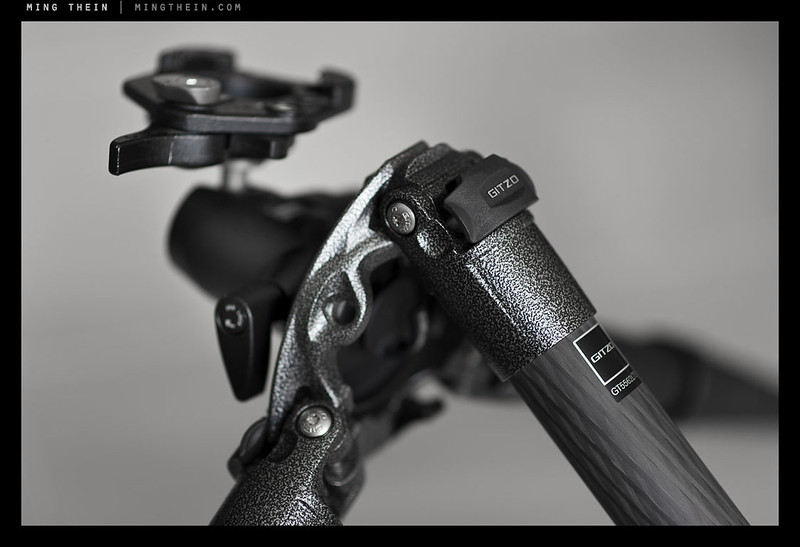
There is a lot of obsession online over whether camera and lens A is better than camera and lens B – forgetting entirely that the creative vision and shot discipline of the photographer using the equipment is not just a great equaliser, but can very well turn the tables entirely. Tripods and heads are one of the very few areas in which this is not actually true – i.e. better equipment is better equipment and there are no equalisers – and are almost completely ignored. No amount of creativity or technique can make up for a poor tripod, but poor technique can certainly spoil a good tripod.
Why the tripod is the most underrated piece of photographic equipment

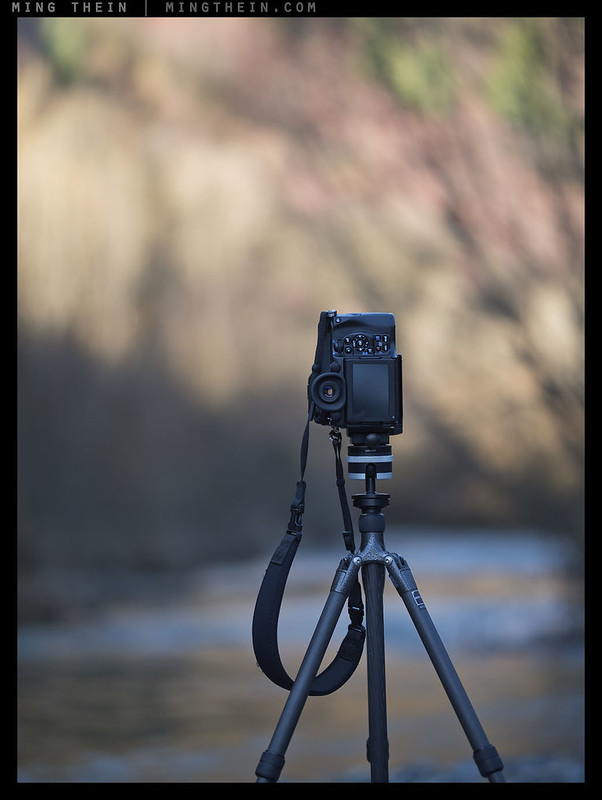
Pentax 645Z with L bracket on Gitzo 1542T and Arca-Swiss P0.
Chances are, a tripod is actually one of the first bits of gear you got at the start of your photographic journey: they’re usually given away free with DSLR ‘kits’ as ‘value added’ freebies (you’re actually charged for them, of course). Like most people, you probably even carried it with you on every photographic excursion for a while, and then eventually got lazy or frustrated with it and gave up. At that point, you probably also wouldn’t have been able to tell the difference between a good tripod and head and a poor one. I’m fully guilty of this, of course. I even bought my tripod – a relatively cheap Velbon thing for all of about $60 that included a head, and was light and relatively small but tall enough to be reasonably ergonomic and not induce too much back pain – jackpot! Of course, I would later learn that the only thing that’s worse than no tripod at all is a bad tripod.