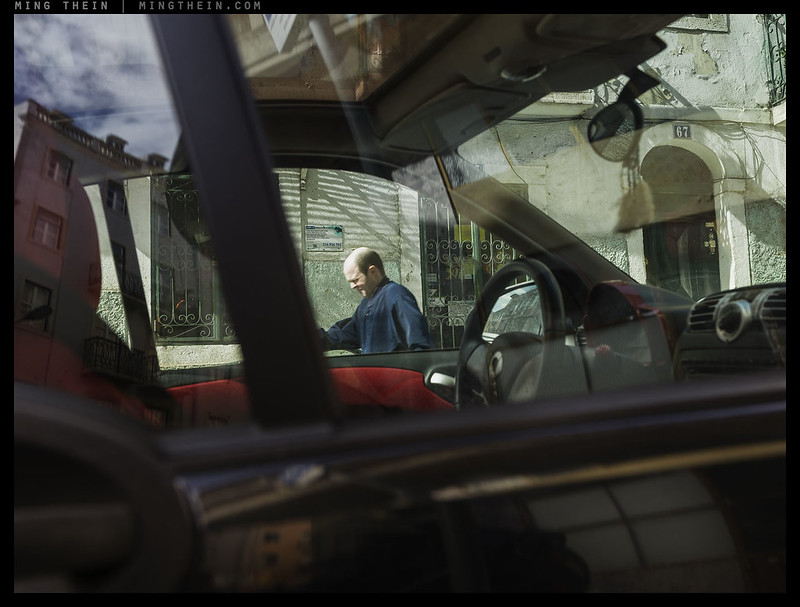
Did you notice the sign above the man’s head? What about the house number? Or what appears to be a Cuban flag in the doorway? Or was the moving man the first ‘anchor’?
Regular readers will know that I hate arbitrary maxims labelled as ‘photographic’ rules simply because there is no such thing as a ‘universal scene’ or universal set of parameters for every image. Every composition is different, and every creative intention is different, which means the whole premise of there being a fixed set of laws that make a ‘good’ image or ‘image that works’ can only be nonsense. However, I do think there are some fundamental principles of human vision – and consequently psychological response to elements in an image – that we cannot ignore since they directly influence the response of our audience to the ideas we are trying to present. That is what I wish to address today: what are the autonomous/ subconscious/ reflex/ automatic – pick your preferred term – visual responses that we should be aware of and seek to utilise when we compose an image? Think of this post as the predecessor to The Four Things: it’s the underlying reason why some of the Things have to be the way they are.