
1/11/20: Final update to the recommended gear list
Almost 20 years ago to the day, a teenager made an unwise camera choice* to record what he was experiencing in case he might later forget. In reality, the choice was really to consciously notice the world around him and single out the bits that mattered – starting immediately with the things he was involved in, which at the time was the crazy period of growing up known as ‘university’. He’d used the family camera before, of course – for the obligatory vacation and landmark images and with the admonition not to ‘waste film on pictures without people in them.’ University represented freedom and the first time he could decide what to aim the camera at – back then, merely his friends’ silly poses and an image or two without people that he felt compelled to take, but wasn’t sure why. It wouldn’t be until much, much later that the process was a conscious one and more importantly, transcended the medium.
*APSC Fuji 1010 Tiara, if you must know. It was battery hungry, the film was expensive and the image quality was questionable. But hey, it was small and unobtrusive, and the really cool looking Ricoh GR1v was way too expensive for a student, even then.

I had no idea that the decision to start seeing the world around me would not just sustain me through the creative depression of the corporate wilderness for the better part of a decade, but take me to places I’d never even dreamed of. It would give me a respite in lunch-hour sized chunks from the sheer mind numbing boredom of audit. It would bring me to the attention of the watch collecting community – in lieu of actually being able to afford anything at the time – and brand principals in the early days of online forums, and later supply my first professional job. It would take me through a part time contributor position at a magazine that would lead to editor, disagreements over commercial/editorial integrity and the formation of this site, to write the truth and present it how I felt was right, independent of influence or dependency on advertising. It would lead me to make ‘pictures without people in them’ for companies and individuals I’d never thought I’d be involved with, let alone creatively contributing to. It would put me in a position to take user feedback and personal experience to directly develop better products with just about all of the major camera manufacturers – and it would leave a lot of things tainted in the harsh light of reality. It would train me to think like an entrepreneur and be self sufficient, and give me the ability to present the best face of my projects to the world. It would give me a meditative reprieve from times when I didn’t want to dwell too much on my immediate situation. It would lead me to question and seek to understand art, human psychology, my own motivations, and what truly motivates us; it would help me to understand the meaning of balance in more ways than one. Above all, it would make me close friends around the world. For all of that, I’ll always be thankful.

It hasn’t always been an easy ride, as anybody close to me will confirm. I’ve had my fair share of uncertain income, business mistakes, taking on jobs I wasn’t entirely sure I could pull off and unpleasant surprises from clients, unrelated individuals, industry peers and entities and everything in-between. I’ve been the target of jealousy and smear campaigns and entitlement and copyright infringement. Some of that frustration I’ve shared here before. Months of drought alternated – often back to back – with months so full I barely had time to sleep and was running on pure adrenalin. I’ve held anywhere between three and six ostensibly full time jobs at any given time, for most of my full time professional photographic career since 2012 – a close friend once joked that I was doing the work of six for the pay of two and a half, which is not far from the truth. I entered professional photography at a rapidly changing time and probably the last period to really make a run of things before fragmentation into quantity, the whole social media influencer mess; my guess at the time was I’d have 3-5 years before I’d have to figure out what to do next.

During the times I’d previously dabbled in trying to turn pro, I’d figured out that I would have to have a diversified approach: a professional portfolio that was focused enough to look specialised but with enough skills to take on pretty much any job; a public presence to build reputation and audience; something with more consistent income like teaching or education (which turned into workshops and videos); and something to put all of the pieces together to deliver unique value: this would be the consulting side for the camera companies. It seems that the strategy worked a little too well, because to this day people seem to assume all I do is reviews – even though that’s less than 5% of the content of this site. But they played an important part since validation is by far the most commonly searched-for thing photographically. Why that’s the case, I’ll never know – everybody has different objectives and opinions are therefore of at best relative value.

As it turns out, my workload split itself pretty much equally between professional work, education, consulting, and this site. In the last eight and a half years, I shot 202 assignments excluding those for my own watch company; led nearly 50 workshops around the world including smuggling six Americans into Cuba in 2014; produced close to 200 hours of educational video and two years of the weekly photoshop workflow series; wrote 1,815 posts (and owe Robin Wong a big thanks for another 80+) and replied to nearly 100,000 of your comments. At peak, there were nearly a quarter of a million unique visitors every month, and there have been just shy of 30 million visitors to date. I had half a dozen exhibitions internationally and nearly fell out of a plane making a series that in the end, never got shown. I worked with Hasselblad, DJI, Zeiss, Olympus, Leica, Sigma, Sony, was ambassador for three of those brands and nearly started my own camera company. I wore out three keyboards writing this site, and a further four Wacom tablets in retouching and post processing. Lastly: I don’t have an exact number, but my best guess is I shot more than two million images.
That’s a lot of work – an entire lifetime, for some; certainly a career’s worth for me. (And for increasing numbers of dishonest others, a place to steal content to farm ad revenue.)

If things are starting to take on a tone of finality, that’s because this is the point at which I confirm the suspicions you’ve been having: MT the writer and mingthein.com are both going into retirement. Between the demands of my ‘other’ job, not being able to travel, and trying not to repeat myself – I’ve run out of things to say. There really isn’t anything meaningful which we have not covered on this site in the usual rational, systematic fashion with plenty of images – there are certainly subtleties on subtleties about approach and theory and philosophy that we could continue to debate, but at that point, I’d be writing dissertations for an audience of at best, one. The truth is, I’ve said everything I wanted to say and more; I’ve done enough thinking and dissection about how and why I shoot that the whole enormous mass has become intuitive – and I want to go back to applying that and shooting the things that interest me, for me, without feeling the need to create content for the entertainment of somebody else. The internet has a nasty habit of a short attention span: they tend to look at things in tl;dr terms and not bother to use the search function. There is admittedly quite a lot of frustration in having a comment taken out of context and applied without relativity; a really good example is the inability to decouple equipment from process from creative objective. Yes, I go through a lot of gear. No, it isn’t for the sake of having the Next Best Thing or some sort of placebo – it’s because I’m in search of what I think of as envelope; the ability to achieve very specific creative objectives, which change – and therefore so must the tools.

But it does get tiring having to explain this all the time. I’ve always said that the very best position to be in as a photographer is an amateur: a person who engages in the activity for the love of it, without the constraints of shooting to a client’s expectation – be that a social media audience or a paying employer. This is my chance to go back to being an amateur, at least for a little while. The whole COVID situation has enforced a strange motivation on us creatives: at the start, I had one of my most productive periods because there wasn’t a lot else to do being under lockdown and unable to leave the house. But it was productivity in a different avenue – I did a lot of designing, and almost no writing or photographing. I’ve long come to accept that creativity needs multiple outlets; a single medium isn’t enough to fulfil one’s vision. But for photographers, the last few months has been a bad period not just professionally but also creatively: when you’re constrained to the same familiar environment you’ve probably already photographed to death within the first few months of moving in, what’s left? You’re forced to either not shoot, reshoot the same images, or try to see something different in the familiar. Many documented the personal process of lockdown, including myself; but after a while, routine looks the same. But the process of doing it felt oddly familiar: it was like starting to shoot all over again, and I kinda liked it.

The first time you do anything creative is difficult, because you’re not just grappling with trying to get the desired outcome from the building blocks you’ve got, but also the entire mechanical process of things. There are experiments that yield results that move you for reasons you don’t quite understand, and unfortunately cannot repeat; and others that fail completely. It was really that feeling of challenge and constraint again, and with the very same initial backdrop of documenting my personal sphere: it’s very easy to make different images of different subjects you’ve never seen before; it isn’t so easy to make different images of subjects you see all the time, but likely fail to notice. I found myself being forced to real see again, and in the process realised how much I’d been stuck in my comfort zone. The weight of experience becomes a tangibly corporeal thing that can sometimes hold you back from experimenting because of the expectations attached. Ironically, it seems the task of exiting my comfort zone would happen within the most comfortable of zones.

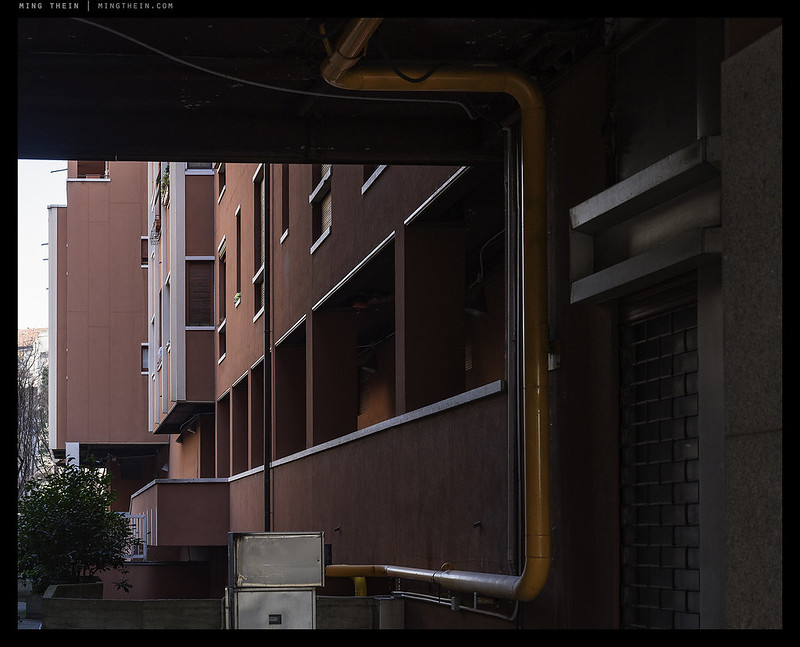
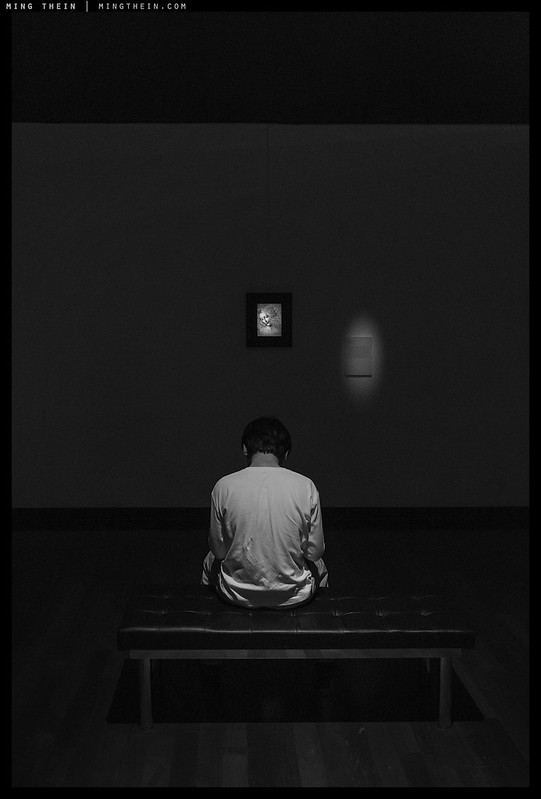
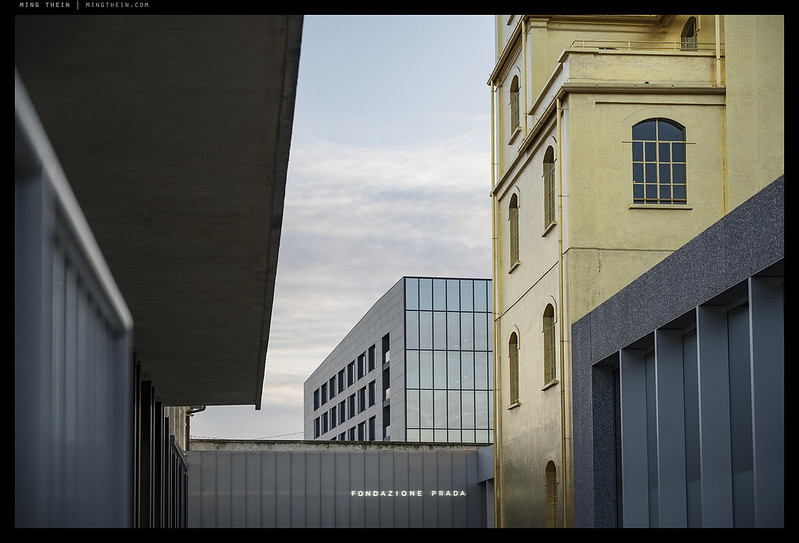
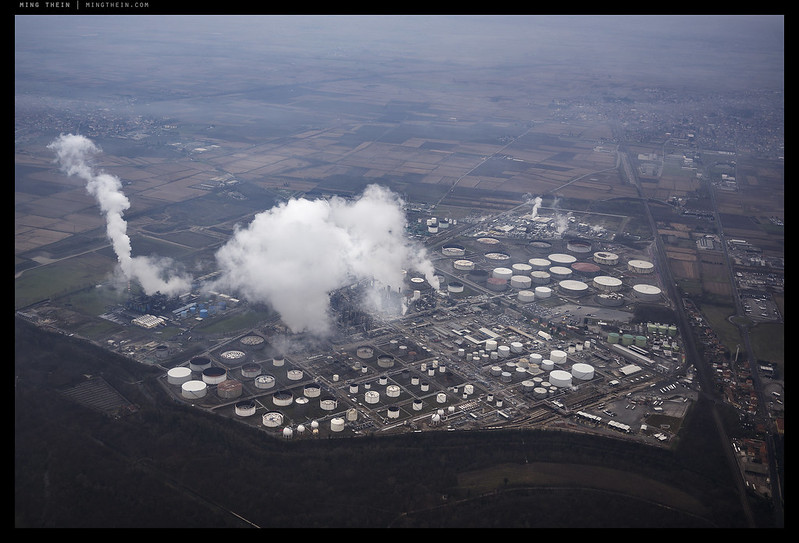
Except this time I had the vocabulary and technique to get the images I saw in my mind’s eye; but I just need that eye to see differently. I needed to not care about who would see the images (i.e. nobody); what I would use them for; what else I had to do with my time – in short, nothing more than whether I liked the result or not. All of the rational means of assessing and curating I use like the four things aren’t so much ignored as practiced and internalised to the point of becoming intuitive. I have had, and can have, pretty much whatever hardware I want; I can extract the full potential from that hardware. I needed an irrational, emotional thing to match an irrational, emotional process – something limited and constrained, but not constraining; something tactile and encouraging but not emotionless and functional. Yes, I did buy something; no, I’m not going to say what it is so I can avoid the risk of having it ‘spoiled’; I don’t need the affirmation of the internet that I made the right choice – I know I made the right choice for me. I enjoy the process of using it and it enables and encourages the kind of images that I’m making now – the images in this post – that move me but require no justification to anybody else. Odd as it may sound, the lack of negative emotional connotations for my tools is very important to me. It’s one of the reasons I have very few holdovers from previous collaborations/jobs/engagements; the creative in me needs a new, clean tool for a new job, and the businessman needs fiscal efficiency and low wastage.

There will always remain the need for dichotomy and contrast, however: I will still continue to produce work for my long-standing clients, and I’m fairly sure this creative loop will result in better work than before. I will still produce all of the images for my watch company because there’s a certain nice continuity between seeing a design that doesn’t exist, to translating it through physical process into an object, to being able to highlight detail and intent. As much as I hate retouching dust (now worse than ever with the kind of resolution media asks for and the insensitive cropping that accompanies it) – we aren’t going to move to CG imaging. Hell, I don’t even composite images – I’ve had more than one client surprised when they find out all of the watch images are a single shot in-camera and you can really see the same thing with your own eyes if the lights are set up right. It is a hard-won and exceptionally masochistic lost art that I have no intention of relinquishing.

At the same time as the world around us is changing and I’m grateful for having had the opportunity to travel to the places I have with the freedom we had previously – the immediate world around me is also changing. My daughter is growing up, and as much as I never quite understood the obsession and lack of objectivity that comes with photographing one’s children – it’s starting to make a little more sense to me. The last coupe of years have seen less photography and documentary of the younger one, offset against being busy with other things or directly involved and not having free hands or mental space to shoot – but I have the sudden realisation that time has skipped a gear and now seems to be progressing faster again. It’s certainly time to for me to put a bit more effort once again into trying to freeze her personality in a defining moment or two. She’s also turned into a bit of a camwhore, but I guess the outcome was always binary with a photographer father: either comfortable with being in front of the lens, or avoiding it entirely. At times I’m probably almost more self-conscious than she is about the camera.

In a post-pandemic world, I’m left wondering if faces are going to become a very personal thing; a mask lends a degree of not just immunological protection but also personality protection; it’s almost like the anonymity of the internet. We’re seeing a lot of bad behaviour that’s a lot harder to do if you know the person in front of you, and they know you; it’s just no longer personal anymore. Maybe if we go back to being able to travel again, we’re never quite going to have the same experience because people won’t look different; the subtle cues we get from the faces and expressions around us will be lost behind the mask. It makes me really want to take up portraiture; not just of the people I know or posed models, but a wide variety of subjects – almost more to feel what’s really going on at the present moment than to make an interesting image. I’ve said previously that portraiture is really the record of the relationship between the photographer and subject; but perhaps it can be more – it’s also the unspoken thoughts and emotions behind what was held back.
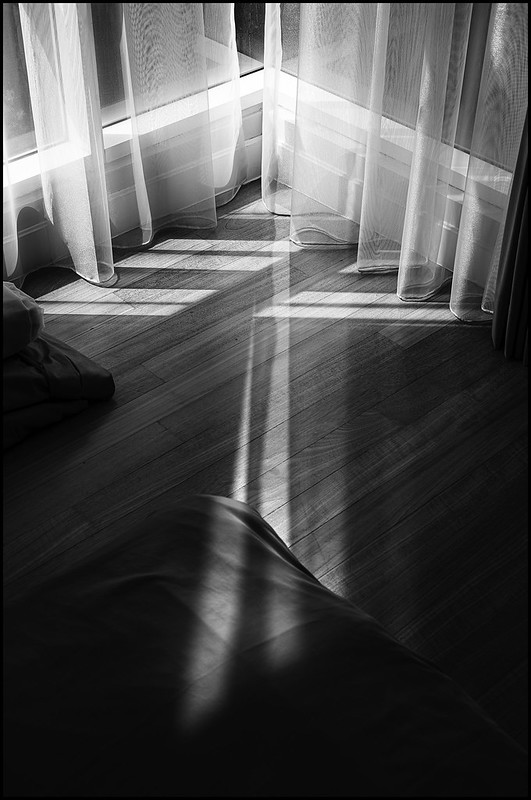
There are professions that are always going to be a bit morose no matter how you view them – an undertaker, for example – but photography isn’t one of them. Anything creative (except perhaps accounting) should come with a sense of liberation and the satisfaction of having made order and beauty out of incoherent parts. When that joy is no longer present, then I sincerely believe you’re doing it wrong. There is a tricky balance between focusing entirely on photography and not having any meaning to photograph and focusing on other things and failing to see; the pro almost inevitably errs on the former side, and the majority of the population, the latter. The hobbyist gets lost in the camera store. I look back at the highlight reel of my own work, and realise the images that spoke to me then and still speak to me today are almost all spontaneous, and produced during those fleeting periods where curiosity balanced opportunity – the last day of a work trip set aside for personal meandering; the free afternoon of a workshop; the time when the weather was crap and we shot documentary on the assembly line instead of on location.

Planned images are limited by one’s means and imagination. Serendipitous ones are unlimited by chance and one’s subconscious. I need to travel again, but not hold any preconceptions about what I’m going to see, or inhibitions against photographing it. Development of any kind – creative or otherwise – can only happen if the right things are broken down in the process. It means leaving your comfort zone and trying something new; of not being afraid that the next step may lead down a dead end. Professional photography, this site, teaching, consulting – has gone from being dangerously scary with a side of doki-doki excitement to business as usual; nobody told me what I was supposed to do, but I eventually found a comfortable process. It’s probably going to be harder to break those habits than anything.

I feel like the only obvious thing left is the question of what’s next – Horologer MING is now no longer a new venture; at some point in the last year I got the distinct feeling we’d transitioned from being the new kids to having our own defined niche in the industry establishment. The plan was already brewing during peak photography for me; by 2016 the wheels were in motion and in 2017, our first model was released to much nail biting and eventually success. In the three years since our public debut, we’ve released 16 models, been shortlisted for and won the industry’s biggest award, and become both commercially viable and sought after. We won’t make the mistake of growing too fast and being unable to uphold the level of collector engagement we started off with; instead, we’ll aim for a sustainable point that lets us have meaningful conversations with our buyers, make watches that continue to interest us personally and have the resources, time and mental overhead to make interesting images and drive engaging cars. I’ve come to realize that the spark required to keep one’s enthusiasm alive is maintained both by not fixating too much on one thing and being open to cross-disciplinary inspiration; it’s hard to keep an open mind if you can’t see beyond your immediate situation.

I’m not ruling out another publicly shared/photographic project in future, but right now I have no idea what form that might take – or if it will happen at all. I’ve been so caught up in the ‘business as usual’ of keeping this site/ client commitments/ teaching/ consulting etc. running that I’ve frankly not had a lot of time to think about a major change in format or direction. Perhaps it will eventually come after some time off, and probably like most inspiration – come at the least expected point. The truth is, I’ve been a photographer for so long at this point – longer than I haven’t been one – I can’t stop being one. It isn’t possible to turn off the seeing, it isn’t possible to completely lose that impulse to frame and capture – even if it diminishes from time to time. I do know this, however – it’ll have to be something that lets me make images in line with my creative and personal benchmarks first and foremost; I will always be the “client”. The curation thus remains simple and there is nothing to defend, apologise or make excuses for – or be overly sensitive of an external opinion about.

I started off wanting to record my experiences. At around the same time, I acquired more than a passing interest in watches and cars; I got a ‘real’ job to pay for that and realised it wasn’t at all what I wanted to do, even if I was quite successful at it. I didn’t really become ‘me’ until I accepted that I would have to take some risks and do an unlikely combination of things to make the puzzle work; it came back to photography, and then watches. Even my watch collecting journey has gone in a circle from affordable to knowledgable and off the deep end to back to now producing accessible pieces with the benefit of knowledge obtained after coming back from the abyss – it is somehow therefore fitting that the ‘retirement camera’ is also the descendant of the one that resulted in my biggest previous creative shift, and a company I’d worked with previously. My fate indeed has as strong sense of deja vu about it – but I’m okay with that, because it feels like I got a second chance. Some of you may be disappointed that this post doesn’t contain a sort of retrospective ‘best of’; I’d argue the opposite because it’s instead a glimpse into what’s to come. I’ll leave a clue: it’s really about photographing light first, transients second, and everything else as a supporting actor. Light and timing transcend the subject from what it is most of the time, into what it could be.

It’s been an intense eight and a half years. Thank you to all of you for the support*, encouragement, challenges and friendship – it’s time for me to start making pictures for myself again, and I hope you all continue to do so too. New comments will be disabled from the end of September and I will no longer be replying, but the archive listings will be updated and site itself will remain active for the foreseeable future – producing it was a huge undertaking and there’s a lot of emotional attachment here. It only makes sense to leave it up as a resource – perhaps inspiring some people, perhaps rewarding others with a kernel or two of insight. If it accomplishes that much – I’ve achieved far more here than I set out to do. MT
*And a special thank you to the patrons who’ve donated monthly to keep the site running – I will manually cancel the subscriptions on 1 September. I will continue to remain online in a more stream of consciousness format @mingthein on Instagram.
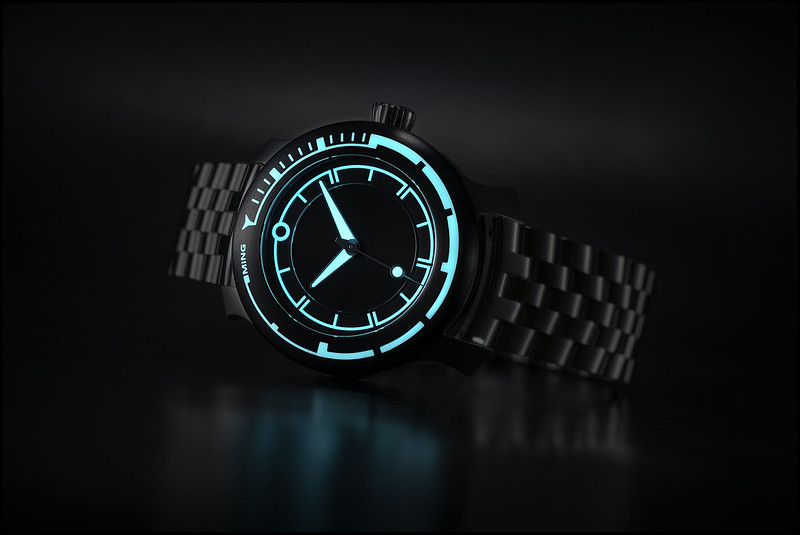
MING 18.01 H41 diver, August 2020 / 3rd anniversary release. In a 40×12.9mm grade 5 titanium case with matching bracelet, synthetic diamond coated bezel, ceramic superluminova X1 and 1km depth rating. Available while stocks last at www.ming.watch
__________________
Images and content copyright Ming Thein | mingthein.com 2012 onwards unless otherwise stated. All rights reserved




 Ming Thein | Photographer