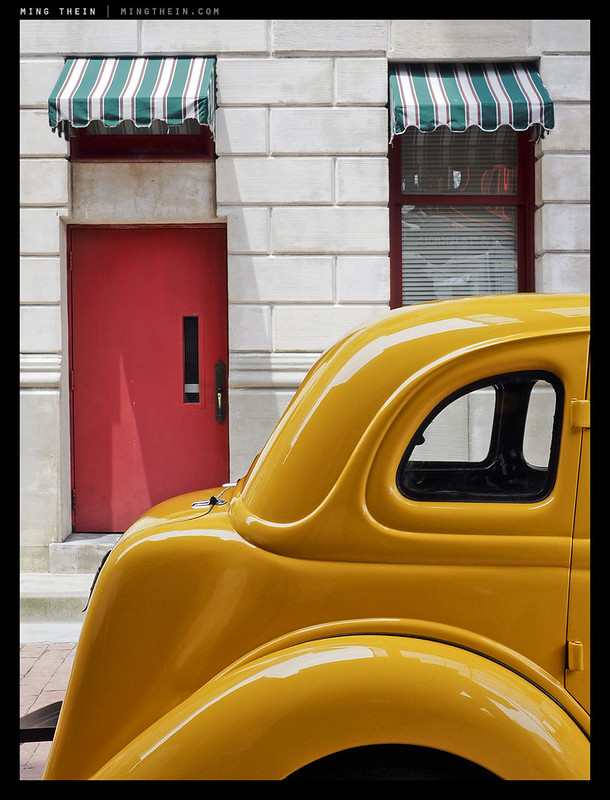
Timing is key, but patience is a virtue for every photographer. Very often, we see some rather stunning images of a place we’ve been to before – and wonder how on earth we managed to miss the shot; the reality is even for a static location, there’s at least one factor in play – light – and often more. But I find it often goes beyond that: we ourselves change, and this plays a part in how we perceive the world at any given moment in time. If we’ve only got the opportunity to be in a given location or shoot a certain object once – how can we ensure we at least get a shot we’re happy with, and better yet, something defining?
Managing the creative commercial populist disconnect
What a mouthful of a title. It should really also have the subtitle “what pays isn’t always what’s popular or what I want to shoot” – but that would have exceeded the string length for post titles, run off onto three lines on the title, and completely ruined the front page design aesthetic of the site.
But I think there’s really no simple or concise way to express it. What sells/ what clients pay for is not always what is popular with the viewing public; in fact, it’s usually completely uncorrelated since the commercial side of things seldom elicits an emotional response in the way personal photographs do. And on top of that, what photographers actually enjoy photographing is seldom what pays – sometimes also because the nature of the subject matter means that it has no commercial value in the first place. So, as a commercial photographer, what do we do?
Artificial environments and ‘tourist’ photography
A couple of months ago, I spent some time in a theme park – not because I particularly wanted to go on any of the rides or because I felt like I needed a little escapism, but because I was teaching a workshop as part of the Maybank Photo Awards 2013, and Universal Studios Singapore was a sponsor. Being there made me realize a number of things.
Why photography satisfies

Photography is like food: the variety is endless, and it can satisfy on many levels. But how many of us can make world-class, award-winning food in seconds with minimal equipment?
My earlier article on why we photograph led me to spend a little more time thinking specifically about what it is about the photographic process that is enjoyable. It seems that it’s engaging on many levels – firstly, there’s the anticipation of buying new equipment, and continually pursuing gear – I suppose you could call that the ‘collectors’ itch’. As much as I see cameras as tools, I admit there’s a certain satisfaction in finding, acquiring and owning/ using something rare; the F2 Titan, for example. Like every other accessory or object we choose to use – it signals something about the tastes of the owner. (There’s also the ego-stroking fact that it promotes jealousy amongst other photographers, but I’m going to ignore that and say it really is all about the image.
Photography and psychology, part two: how we view images

Woman, umbrella and street scene 1 – think for a moment, how does it make you feel?
Today’s article is the conclusion of the previous article on photography, psychology and why it’s all a mind game; we’ll explore how our subconscious and conscious mind views images, and how the photographer can exploit that to gain control over the way an image is interpreted. Understanding how your audience views an image is critical to determining how that image should be optimally constructed to deliver the right message, and in a way that’s memorable and impactful.
Photography and psychology, part one: it’s all a mind game

This is one of my more successful recent images: on Flickr alone, 2,500+ views and 125 favourites: but why? After this pair of articles, I think all will be clear.
Today’s article is one I’ve wanted to write for a very, very long time. Such a long time, in fact, that it’s taken me several months to condense my thoughts into some semblance of order. I’m going to start with a question: how many times have you seen an image that provokes an unexpectedly strong emotional response in you – either good or bad – and you haven’t been able to figure out why? How many times have you looked at the work of a photographer and thought – not only is there something remarkably consistent about his or her style that makes the creator instantly identifiable, but also makes me as the viewer feel a certain way? Wonder no longer. As ever, these articles are written to first and foremost, make us think a bit more about why we shoot the way we do, and in doing so, hopefully become much better photographers. We all have the tendency to get caught up in the technical side, the equipment, and lose sight of the end objective: the images.
Photoessay: New York City in colour
I’m guessing you’re probably sick of seeing NYC, so this will be the last one for the time being: somewhere between street photography and the observations of a flaneur, but above all, a view at how I see a new environment. Shot with the Fuji X20 and Nikon Coolpix A; two very capable and enjoyable cameras I reviewed some time back while in the US. Enjoy! MT
FD Photoessay: Life in Amsterdam
Sometimes, the film photography gods deign to make life easy for you: you happen to be in the right place at the right time, with the right light, interesting subjects, lots of opportunities, carrying the right camera and lens combination, just enough film to get you through a day with a roll left over as insurance, and even airport security guards who’ll hand check your film so they don’t have to make multiple passes through x-ray machines. The last European trip and workshop tour was one of those occasions for me. I went with my usual small digitals (OM-D, Ricoh GR) for teaching, and the Hasselblad 501C with one magazine, a few boxes of Acros 100, and the 80/2.8*. And I came back with a huge number of keepers. It’s interesting to note that despite its size, shutter noise and conspicuity, the Hasselblad never attracted negative attention – usually curiosity or nostalgia. In that sense, it’s actually an excellent street photography tool in the modern age. No more words are required, I think – other than for me to say ‘enjoy!’ MT
*Some of the rolls were pushed to ISO 200 due to lack of light; with Acros this also has the benefit of deepening your shadow tones. There doesn’t seem to be any grain penalty that I can discern, though – anything up to ISO 800 is fine, but the shadows just keep getting denser and denser. Digitized with a D800E, 60/2.8 macro and my custom rig.
Photoessay: Look up, New York
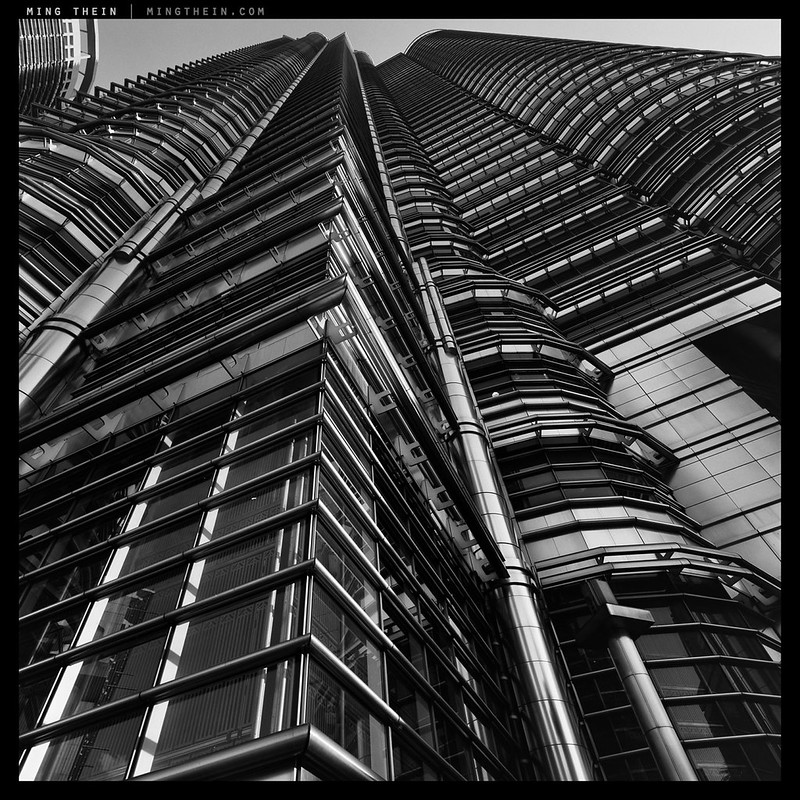
One of the things I enjoyed most about New York was the architecture; the pace of development and abundant funds in the city meant that a walk through any of the districts was almost like stepping through the pages of a history of modern architecture. In particular, I was quite captivated by the more modern buildings and their interaction with the environment around them; most sought to give the impression of transparency and lightness by heavy use of mirrored glass, but in the end landed up standing out as somewhat soulless monoliths. Yet at the same time, they also blend in with their own kind. Even though each building is pretty much the same functionally, constrained only by dimensions and the need to maximize usable floor plate for a given land area, if you look carefully, you can still see the stamp of individuality of the designers. MT
How camera choices influence your image
A little while back, I made an offhand comment about a certain camera being my choice for ‘serious’ work which spurred a lengthy subsequent discussion offline with a reader; it got me thinking: what exactly constitutes ‘seriousness’? But beyond that, how does a photographer’s choice of camera, or format, or medium, influence the final image? More importantly, is there any way we can use that to make stronger images – because ultimately, that’s what photography is all about. We’ll explore that in some detail in today’s article.