Photoessay: Autumn near Bandai

_7R2_DSC4830 copy

Today’s photoessay is a quick landscape reminiscence from the end of last year; and I mean quick in both execution and conception. I captured these in approximately an hour, from two locations – one, not far from the ryokan at which I stayed during my visit to the Sigma factory outside Aizu, Japan; two, at a bridge overlook again very close to the Sigma factory (for which I requested a quick vehicle stop after seeing what was underneath it, and the unique perspective afforded by the height of the bridge). Nevertheless, I find we often encounter these single very strong locations that yield a large number of views and images (something similar happened in the Arrow River Delta outside Queenstown, New Zealand); they feel like brief chance encounters with random strangers with whom you just ‘click’ and promise to keep in touch with again; whether or not that transpires is another matter entirely. Many are in fact a sort of portrait of the location (even if ‘landscape portrait sounds rather odd). But for those moments, it was fun. I can only hope that in this series some of that magic of the cool breeze, clear sky and rustle of dry leaves carries through. MT

This series was shot with a Sony A7RII and Zeiss FE 1.8/55, and a Leica Q. Postprocessing via Photoshop Workflow II. You can also look over my shoulder at the underlying postprocessing in the Weekly Photoshop Workflow series.
[Read more…]

Photography on the brain

_8B13983-4 copy
Obsession is when you find something new to photograph even while sitting on the can in your own house, which you’ve done every morning for the last five years.

There are few subtle but distinct divisions in what one would classify as interests: curiosity, enthusiasm, passion, and finally, obsession. Curiosity gets you in; enthusiasm keeps you going; the line to passion is a bit harder to define, but obsession is simple: you’re thinking about it 24/7. I think for most activities, obsession is probably one step away from certifiable madness and some sort of institutionalisation. But I’d actually argue that it’s necessary to even have a sniff of success given the current state of the industry.

[Read more…]

Photoessay: Aizu nights

_7R2_DSC4727 copy

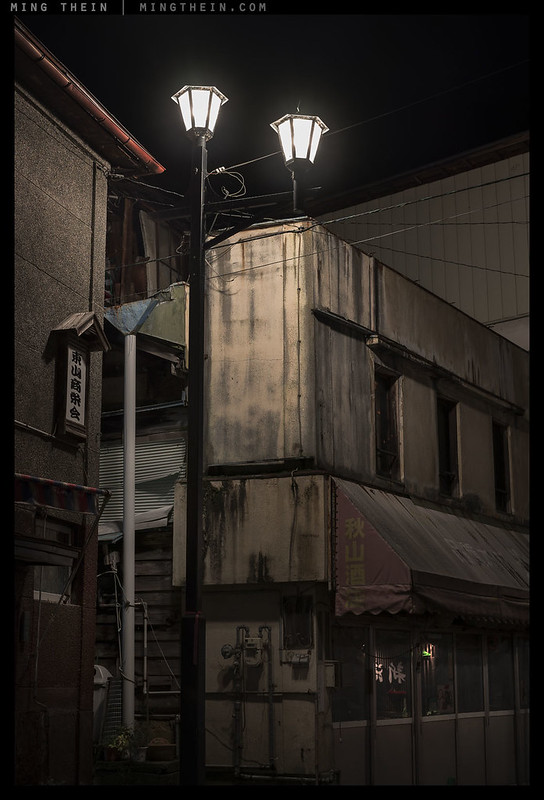
Aizu-wakamatsu is a relatively small town in the northern part of Honshu, Japan, that at one point was the seat of power of a regional military force before changing power after several civil war struggles. Whilst the town proper including the castle (destroyed in the the late 1800s and rebuilt in concrete in 1965) has seen several cycles of prosperity and decline, the hot spring resort area nearby of Aizu Higashiyama has seen relatively little change for several centuries – being popular with all. It is this little area which we explore in today’s photoessay – by night, because that was the only free time I had during this trip. Sometimes you feel like a walk after dinner, and happen to bring a tripod…MT

This series was shot with a Sony A7RII, Zeiss 2.8/21 Loxia and 1.8/55 FE and post processed with Photoshop Workflow II. You can also look over my shoulder at the underlying postprocessing in the Weekly Photoshop Workflow series.
[Read more…]

On Assignment: Film noir

H51-B0000691 copy

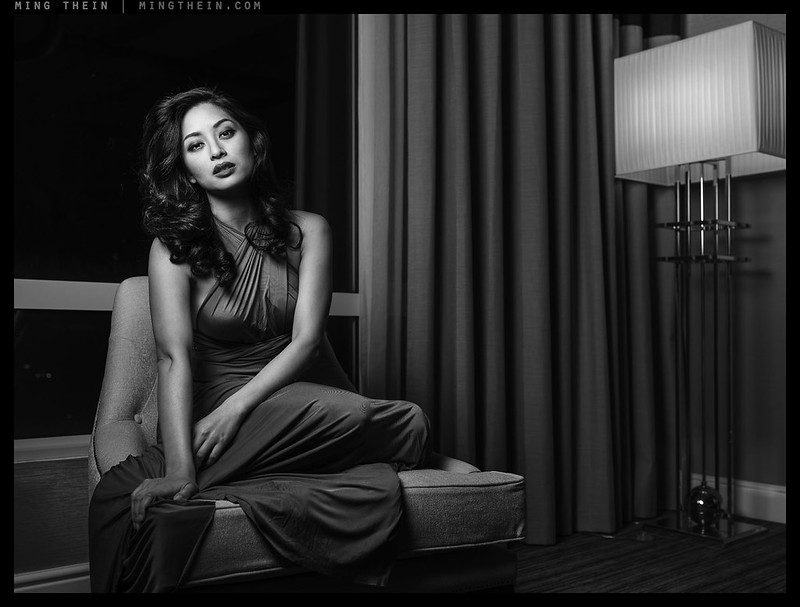
Today’s images are from a recent shoot – and shakedown test – of my recently acquired Hasselblad H5D-50C and some other bits of new lighting equipment. The brief: film noir. The model is a local actress. Those of you who frequent my site will know that portraiture – especially of the posed and lit kind – is not something I do often (but at the same time, I do more of it than you might think) mainly because it’s somewhat outside my usual focus of corporate documentary and architecture/ interiors. That said, when everything comes together it can be rather satisfying; I’ve always viewed portraiture as a conversation during which you might just happen to have the lights set up and a camera handy – very few people are aware of the way they look, body position etc. to a degree that they can control it to produce a desired result. It’s much easier to talk to your subject and try to elicit the desired responses without them quite being fully aware of it – that way, the results turn out natural, too.

Images in this series were shot with the H5D-50c, 50/3.5 II and 100/2.2 lenses, and post processed with the Monochrome Masterclass workflow. Lighting with six speedlights in two Lastolite Ezybox IIs.

[Read more…]

Photoessay: After the establishing shot

_5203648 copy

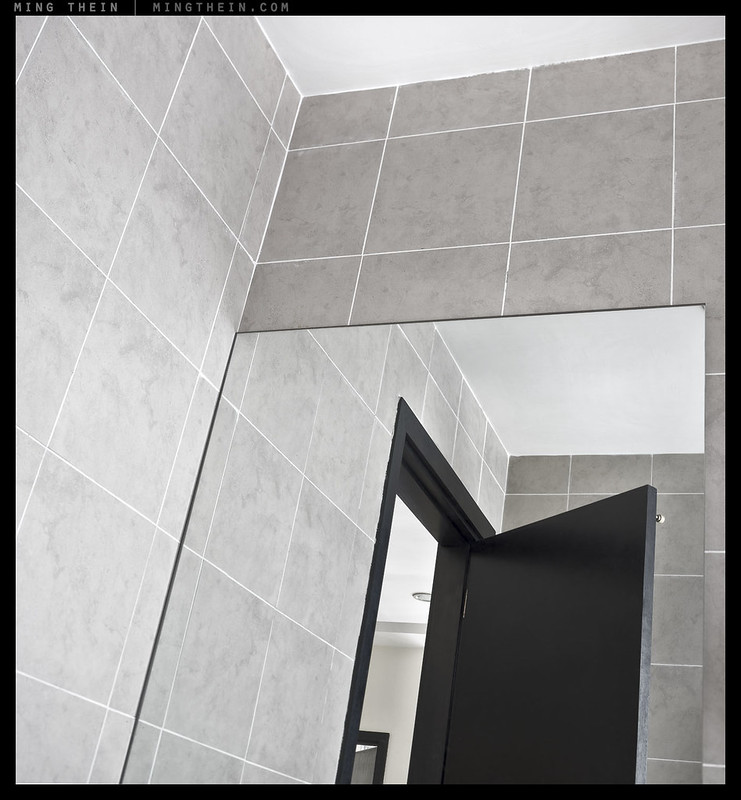
You might think the title for this post is curious: that’s because it is. In cinematography, a wider angle is used as an establishing shot to provide the overall context for the scene, location and any human dialogue that is to follow. The tighter head shots are frequently interspersed with equally tight cutaways to detail: it is a deliberate device to focus the attention of the audience very specifically on whatever specific object or action that is desired by the director. These cutaways always serve a purpose as they typically contain explanations or clues to the later storyline. In a way, they form a narrative or logical bridge of sorts. Compositionally/ visually, they are tricky to get right: too much visual texture and the scene is too busy for the audience to instantly register only one thing; too plain and it’s a starkly boring scene. It’s even more difficult to pull off as a candid still for the simple reason that the action is not planned; you have to anticipate and hope you’re in roughly the right place at the right time, then rely on instinct and experience to make any last-minute changes to composition as it happens. It is a slightly lighter photoessay than usual for the simple reason that these images are very difficult to make in practice…Enjoy! MT

Images shot mostly with a Olympus E-M5 II, Zeiss Otus 1.4/85, Zeiss ZM 1.4/35, and Canon 5DSR, post processed with the Cinematic workflow from Making Outstanding Images Ep.5. You can also look over my shoulder at the underlying postprocessing in the Weekly Photoshop Workflow series.
[Read more…]

Why photography satisfies

45_7R2_DSC4523 copy

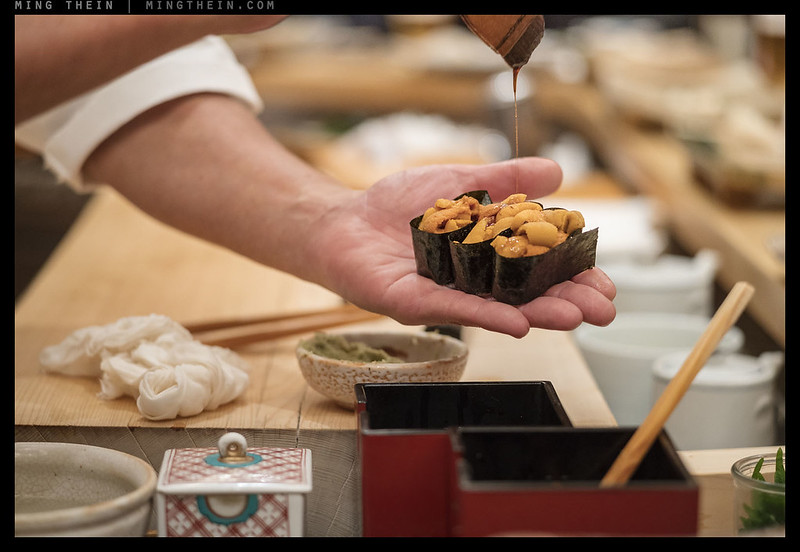
A photograph is like food: endless in variety, universally appealing or an extremely acquired taste; easily obtainable and available at a different level to suit every preference and budget. You can cook eat the same thing several days in a row and still enjoy it, or you can do something completely different every day. You can make it yourself or subcontract. There are no rules about what is ‘good’ or ‘bad’. Moreover, both photography and food are something relatively limitless for us humans: both in the creation, and the consumption. Just as we need nutrition on a daily basis, we need regular visual stimulation – and though you can manage just fine if you never cook yourself, at some point, curiosity is likely to motivate you to create. The more effort we put in, the more likely we are likely to be satisfied with the result: many techniques or dishes are deceptive in simplicity: the fewer elements present, the more perfect they have to be. I frequently think of analogs like minimalist photography being similar to sushi: there are just four ingredients (fish, rice, wasabi, soy sauce) – yet each one can affect the final outcome drastically. An uneducated diner might not be able to say why a particular piece of sushi (or photograph) works, a skilled one will be able to say why. But both will appreciate it. And just as with food, good ingredients and good equipment help, but at the end, it’s still down to the skill and imagination of the chef.

*Masterclass alumni will know I use the cooking analogy a lot: if a finished print is like a plated meal, then the planning and ingredient-gathering process and pre-prep is scouting and seeing; cooking is capture; plating is post processing.

[Read more…]

Last call…(UPDATED – server fixed)

4th anniv bundle badge

We’re nearly out of vouchers for the anniversary sale – there are a few more coupons left, so if you would like to take advantage of the birthday sale, now’s the time 🙂 The offer ends once we hit the magic number…

Update (14:55 GMT+8): there was a small hiccup with the server this morning preventing the code from working that’s now been resolved, and there are still a couple of coupons left.

In the interests of the site’s original goal of furthering photographic education – which I think I’ve made inroads into with the 1,150 articles published here – we’re offering a special sale on the core six-vide Making Outstanding Images video series (D: Fundamentals, Ep. 1-5). The normal price for the set is $412; it is now 40% off at $247. Just add the D, E1-5 videos to your cart and use the voucher code 40OFF4YEARS at checkout; there are a small and limited number of vouchers. Proceeds go towards a) educating you photographically; b) keeping the site running and c) making more videos. Please note that this offer is a standalone and not valid with other video bundles.

Thanks for your support! MT

Photoessay: student portraits

11_7R2_DSC3489 copy
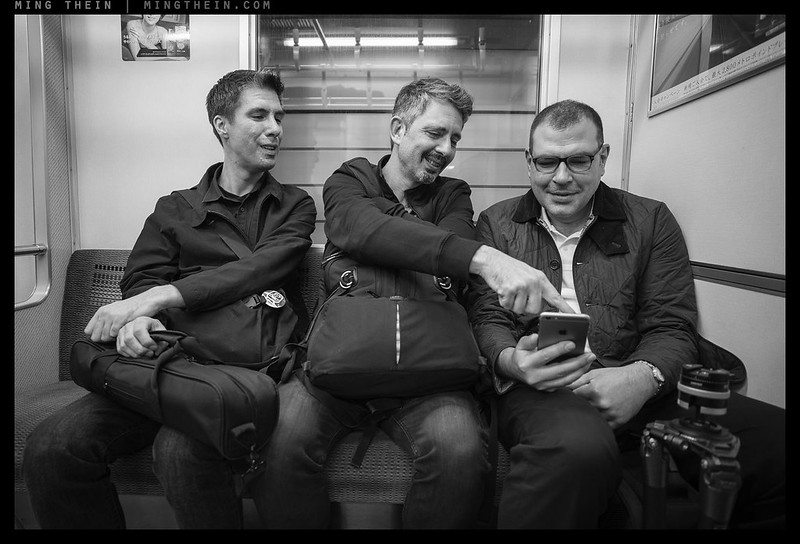
JJ, Latchezar and Pavel, Tokyo

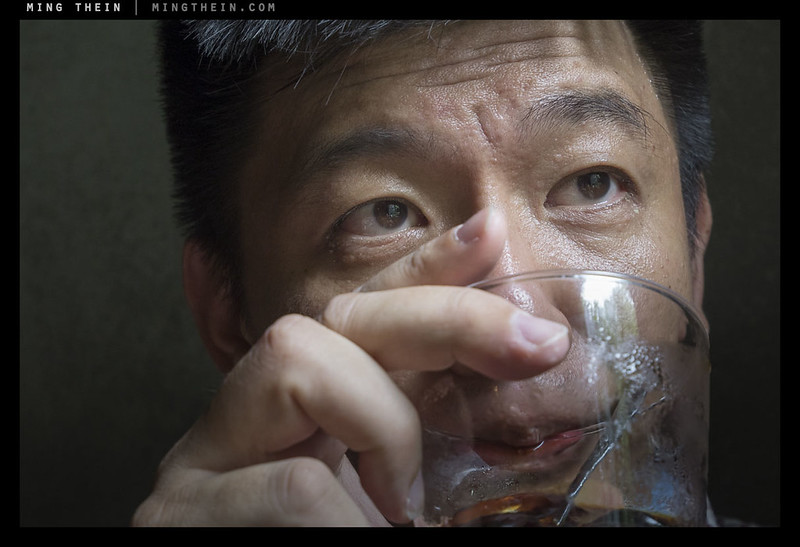
I set myself a little project during the course of the last few Masterclasses: whilst my students are photographing, I’m photographing my students. I think of it as an exercise to hone environmental portraiture to some degree, and to keep my people-photography skills in practice. Portraiture is not something I talk much about because I think it’s far less about technique and execution than it is about building a relationship with your subject and then somehow translating that intangible into something visual. It is one of the few types of photography that perhaps relies more heavily on the subject than the quality of light – body language is far more critical than shadow direction; even if we can’t see the details, we have a feel for what the person’s posture might mean. The photographer must therefore be doing three things at once: keeping up the real connection between themselves and the subject – even if nothing is being said; being conscious of body language at a level higher than the casual observer, and beyond that, taking care of the four things. This series has been curated from the Tokyo, Chicago and Hanoi sessions. Enjoy! MT

Images shot with various equipment and processed with The Monochrome Masterclass workflow or Photoshop Workflow II. You can also look over my shoulder at the underlying postprocessing in the Weekly Photoshop Workflow series.
[Read more…]

The eyes of a baby

_Q116_L1020754 copy
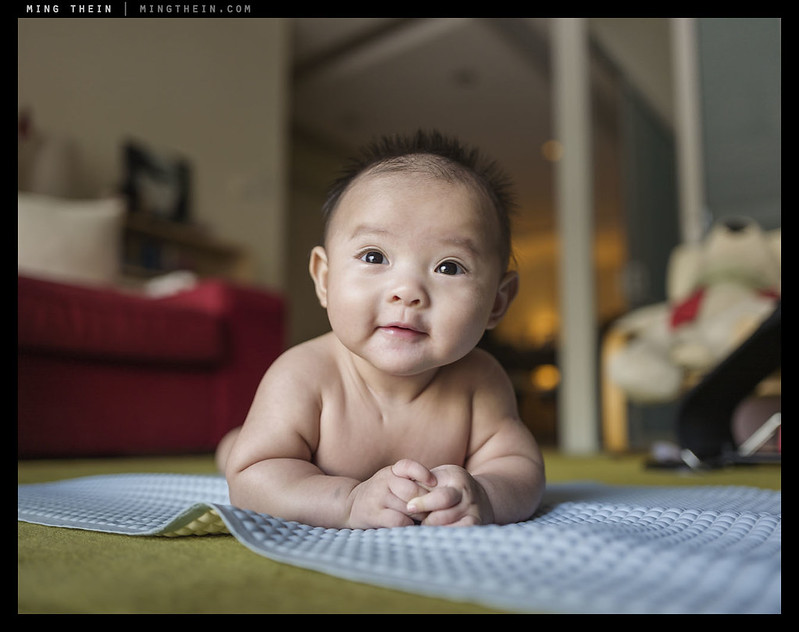
Insert gratuitous infant photo here.

As many of you know, I have a 11-month old daughter. This is not going to be a scientific attempt at trying to replicate infant vision; far from it. Think of it more as a series of observations from the perspective of a photographer observing and observer. All in all: as anybody who’s had children will know, sometimes they have just as much to teach us (or remind us of) as we do them.

[Read more…]

Photoessay: People of Tokyo II

_5502278 copy

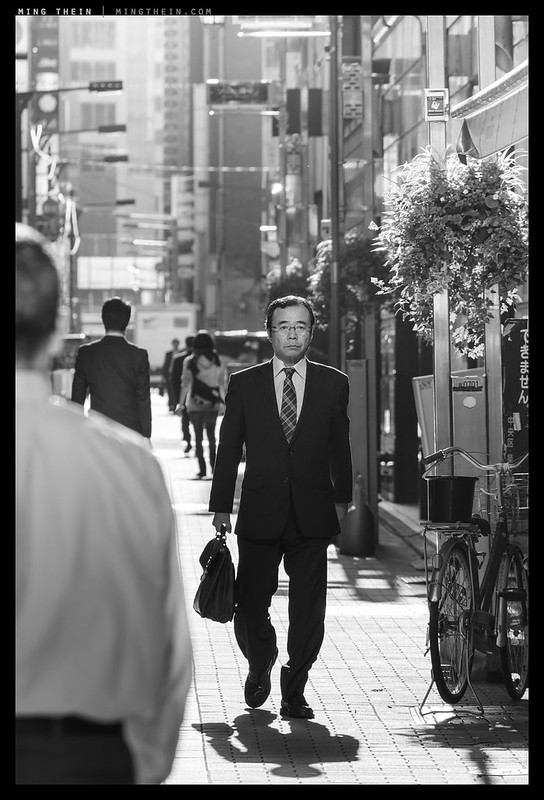
As usual, it is impossible not to be in a place like Tokyo and do at least some street photography; the very difference in the way people act and the things they do already attracts our attention because it breaks the pattern which we’re used to seeing. Furthermore, Japan’s tolerance for photography in general as a society and the close proximity in which people usually find themselves makes things even easier. It is however impossible to avoid people on phones: I still think this is the ‘hat-and-newspaper’ of the 21st century; just as life-documenting photographers eighty years ago could not avoid that cliche – which now seems quaint to us – we are locked into the era of the cellphone. It is harder to find somebody not using one. I’ve always said the best street work should be pretty close to documentary in nature, though much more personal in significance. If phones are the nature of reality today, so be it. That of course doesn’t mean there isn’t plenty else going on. I did get a feeling of longing and melancholy I didn’t observe the last time I was there; the usual conspicuous isolation was even stronger on this visit. A sign of the times for society, perhaps? MT

This series was shot with a Leica Q 116, Nikon D5500 and 55-200/4-5.6 DX VR II, Sony A7RII and Zeiss 2.8/21 Loxia and 1.8/85 Batis lenses and post processed with The Monochrome Masterclass workflow. You can also look over my shoulder at the underlying postprocessing in the Weekly Photoshop Workflow series.
[Read more…]