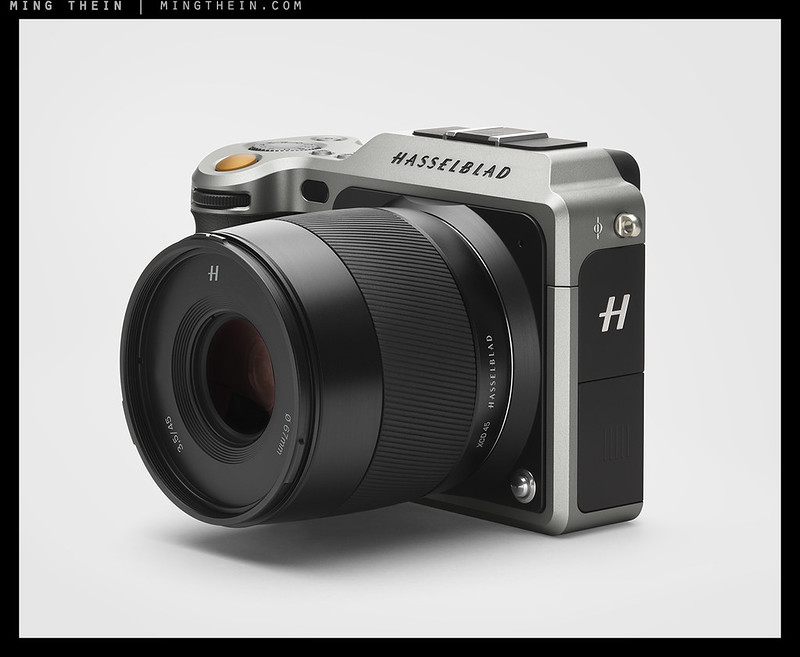
Announcing the Hasselblad X1D-50c: medium format mirrorless is here.

X1D_Front34_B_Grey_v011_g copy

The teaser said game changer; those fighting words have been used before and left something wanting. I think now that the dust has somewhat settled after the X1D announcement, clearer heads may prevail in the analysis. For those who missed it: Hasselblad have just announced a 50MP medium format (44x33mm) mirrorless camera with a 2.36MP EVF, new lenses and full back compatibility with existing H system lenses, at a price point that’s bringing the fight to Pentax and making 35mm DSLRs look physically bloated.

It’s now time for a little of my customary analysis, and in a few weeks, an extended shooting report.
[Read more…]

Photoessay: the monochrome Nilgiris

B0001577 copy

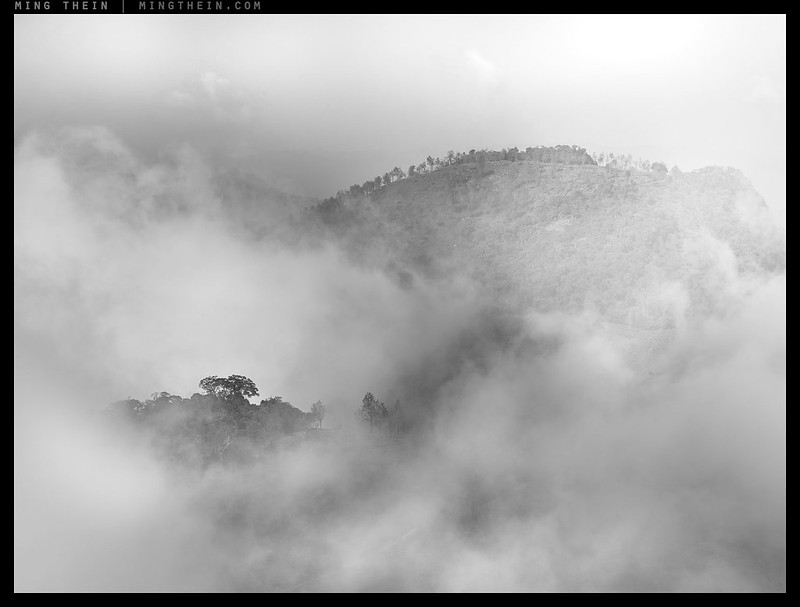
I was having a discussion about the presentation of landscape and color use the other day with one of my students – which in turn got me thinking about why we see so few modern landscapes that work in monochrome, typically unless the shooter is trying to imitate Ansel. My theory is that it’s much, much harder to make a compelling image of nature without color – there is the tendency for the scene to look dead, rather than vibrant and alive. You also lose all of the delicate color gradients in skies and the like – which further deadens the scene. But as with all monochrome, surely we could also use these properties to imply a sense of timelessness, surreality or detachment?

[Read more…]

Photoessay: Layers of dusk to dawn

B0001733 copy

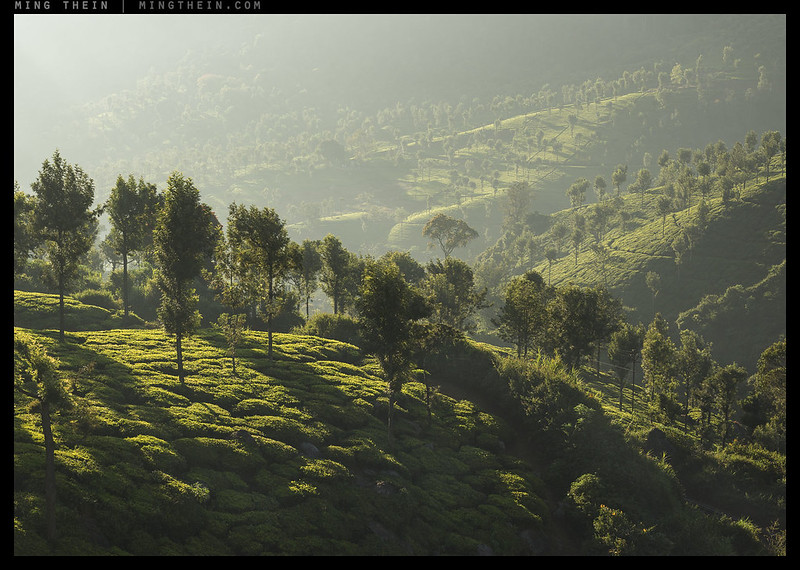
I have this habit of shooting against the sun at dawn and dusk – I think it must be a natural aversion to having the light source directly behind me, which it otherwise would have been had I been facing the other way. I didn’t consciously curate the images this way, but it turns out pretty much everything from the early morning and late night sessions in Ooty were shot contra-jour; there’s something about the light hitting the mist or dust or other particulates trapped between hills and creating nicely recursive (and slowly vanishing) layers into the distance. I could probably have used an EVF in some of these situations to avoid going temporarily blind… Enjoy! MT

This series was shot with a Hasselblad 501CM, CFV-50C and processed with Photoshop Workflow II.

[Read more…]

Mid term review: The Hasselblad H5D-50c and CFV-50c

IMG_0929b copy
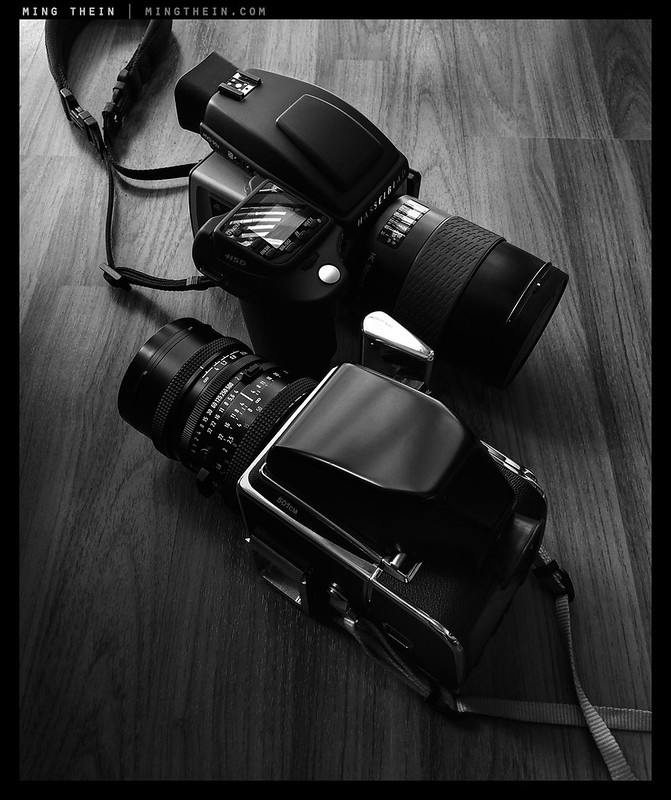
H5D-50c with HC 3.5/50 II; 501CM with 4/50 CF T* FLE, HC1 prism and custom grip. The design lineage between the V and H cameras is very clear in this configuration…

Today’s report is a twofer, for the simple reason that both cameras share the same electronics and imaging pipeline: the backs are effectively the same apart from a power button and battery holder, plus some communication points with the camera body in the case of the H mount version. For all intents and purposes, image quality and performance are identical. I’ve owned the CFV-50c since early December 2015, and have had a H5D-50c firstly as a loaner in January and then from February onwards as part of the Hasselblad Ambassador program. I’m going on six months and norhtof 12,000 frames with Hasselblad medium format as my primary system, which makes now a good time to pause and see if I made the right choice. This will be a calmer analysis in the same vein as my long term reports on the D700, D800E, D810, 645Z and 5DSR. Since switching, I can count the number of occasions I shot with my other cameras on the fingers of one hand; I have to make sure my batteries are still charged before taking them out – which is something that has never previously happened. I suppose this is a good sign…read on if you wish to put your wallet at risk.

In the interests of full disclosure, I am a Hasselblad Ambassador, so my objectivity may be in question. But I do have a significant amount of skin in the game, too – all of the V system (including CFV) was acquired prior to my appointment, and good chunk of the H system was purchased by me at retail.

[Read more…]

Alternate presentations: cinematic Thaipusam 2016 photoessay

B8411893 copy

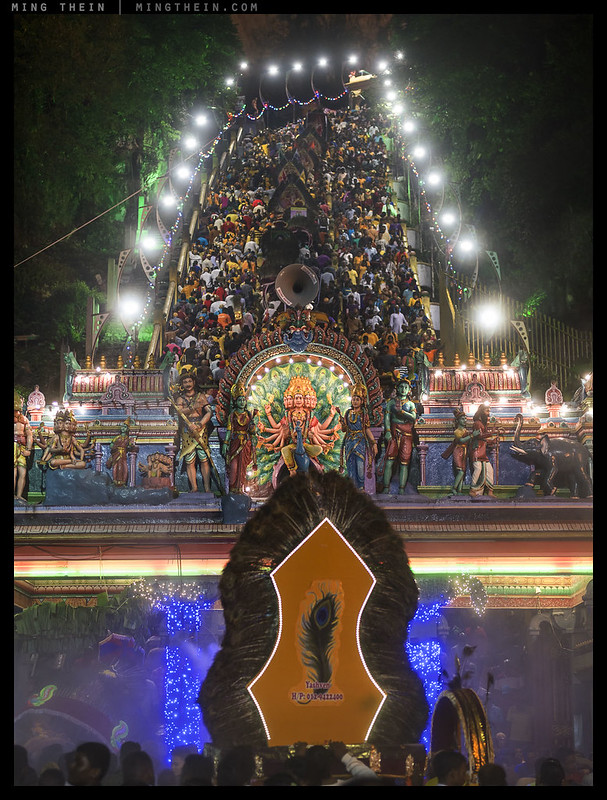
As a follow on to the article a few days ago about my experiences shooting medium format for low light reportage work, I’m presenting the promised cinematic set from Thaipusam 2016. I deliberately left a few articles’ gap between them rather than presenting them back to back; this allows a bit of settling time and objectivity between the two sets of images. It also brings up the question of stylistic choices: how do you decide?

[Read more…]

Reportage and medium format: Thaipusam 2016 with a Hasselblad H5D-50C

_B8411275bw copy

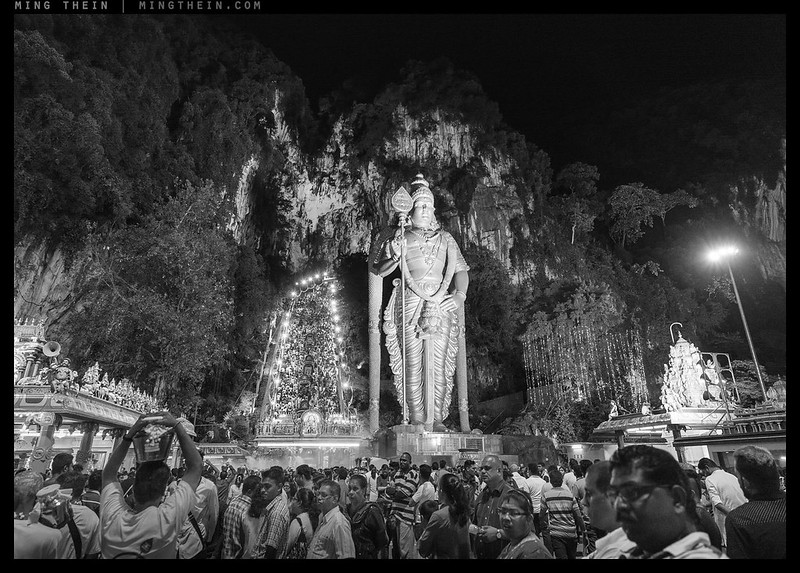
Thaipusam is a Big Deal for those involved religiously* – but also quite an amazing experience as an observer. One of, if not the largest of these festivals takes place in a cave temple about 15km outside of Kuala Lumpur every year at the Batu Caves. I’ve photographed the event previously in 2008, 2011 and 2012. This year’s festival happened just a couple of days ago on the 23rd-24th of January, and I went back for the fourth time. I’ll be the first to admit that it’s a very special experience even as a non-participant and not really understanding the significance of the ceremony to the believers. There really is some energy there from the sheer number of participants and general positive and hopeful thoughts that are going around at the time.

*Wikipedia does a much better job of explaining it than I can.

[Read more…]

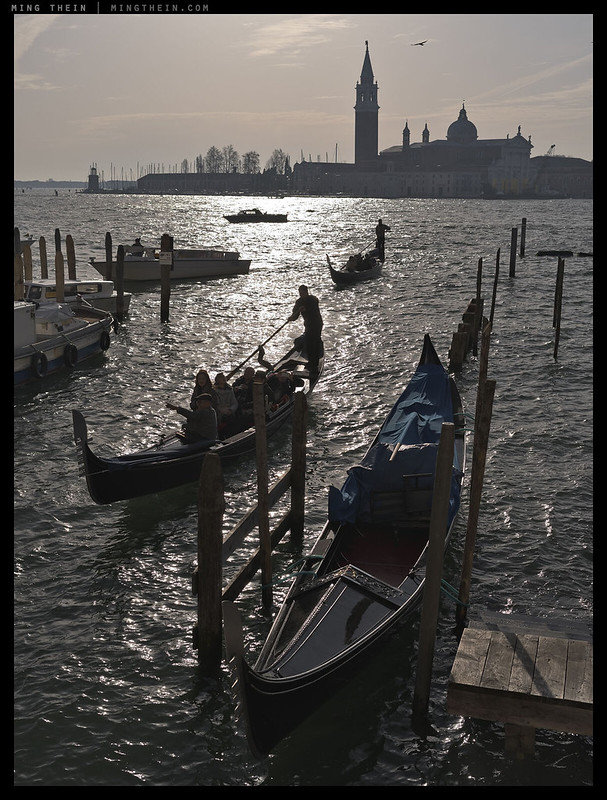
Photoessay: Venetian nights

_64Z5363 copy
An alternative to the Venetian Cinematics

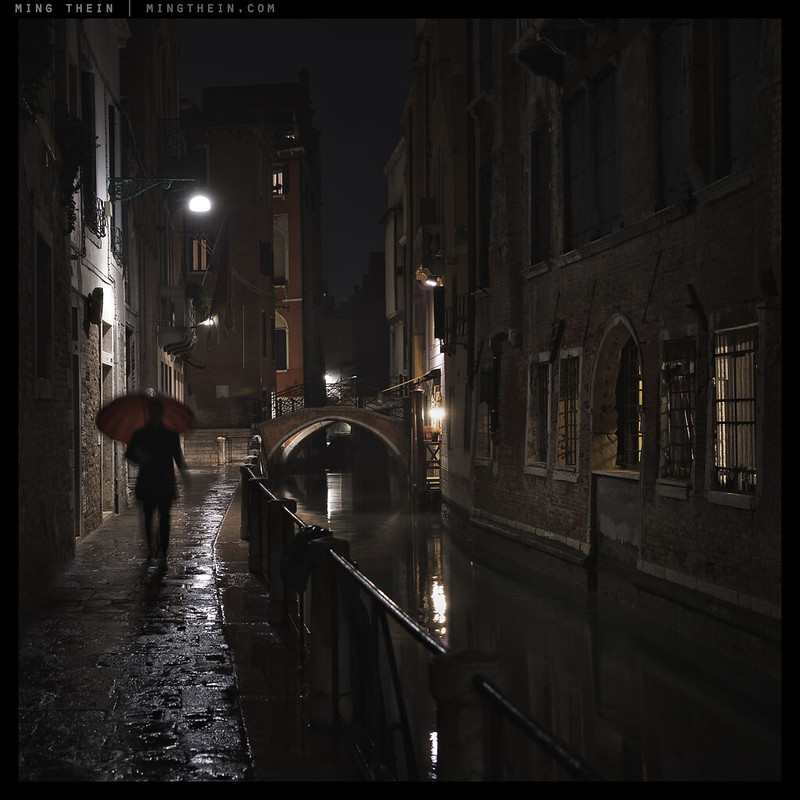
Evening falls early in Venice in the winter; on a grey day, you can start thinking about blue hour come half past three in the afternoon. Coming from a country where sunset and sunrise vary very little through the course of the year (I’m pretty much on the equator), it’s a little disorienting – but very productive for photography once you get used to the time difference. I always find one of the more interesting things about higher latitudes the fact that changing daylight hours result in the visually unexpected: everything closed and empty streets with sun out, for instance (late in the evening) or normal activity in what appears to be the dead of night. There is a progression here from the active to the inactive and empty; the difference is in the presence or absence of people – not the light. I admit it was difficult to resist a cliche or two, but for the most part, I stuck to the brief…MT

This series was shot with a Pentax 645Z, 55/2.8 SDM and A 150/3.5 lenses.

[Read more…]

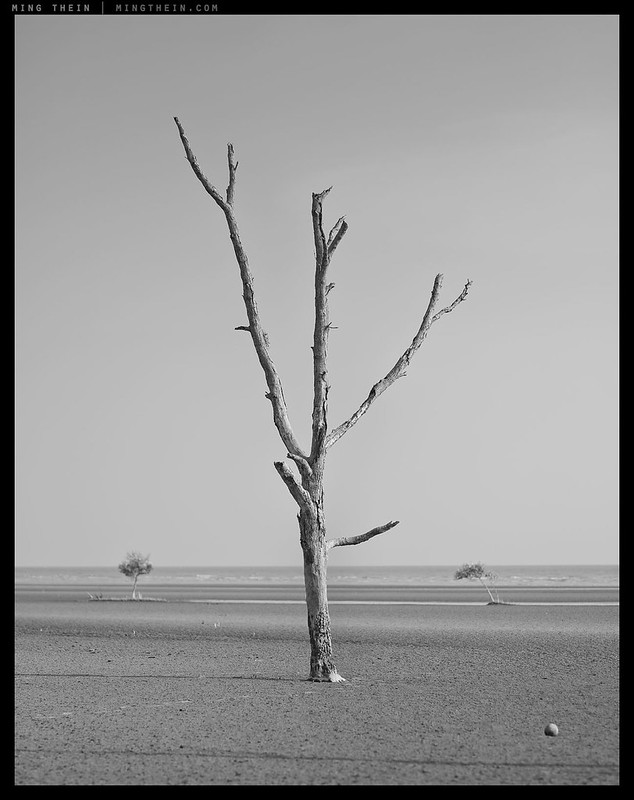
Photoessay: dead tree beach

_64Z4466bw copy
Skeleton and ghosts. The monochromes in this set were processed to be as natural as possible using my ‘balanced’ workflow in The Monochrome Masterclass.

Today’s photoessay comes from a beach near Banting, on the west coast of Peninsula Malaysia and about an hour and a half’s drive out of Kuala Lumpur. I’ve been to this location in the past; those of you with exceptional memories might remember it from the Panasonic GM1 review and early large format landscapes. Truth is, I’d been meaning to come back to this location for a long time, earlier in the day, to have some more time to work with it before the fast-moving tide ended play*.

*It’s a mangrove beach, which means extremely shallow gradients and even quicker tides – I’ve seen it come in at about a foot every three to four seconds. Not somewhere you want to be stuck in the middle of a long exposure!

[Read more…]

Photoessay: The boats of Venice

_64Z4888 copy
Endless repetition

Venice is a city of water. Perhaps the city of water. And in such a city, a boat is a necessity, not a luxury – today’s photoessay is a little celebration of the the Riva, a tribute to the workhorse vaporetto, a nod to the cruise liner that dwarfs the city it arrives at, and a grudging acknowledgement of the ubiquitous gondola. They’re so ubiquitous that it’s near impossible to make an image of Venice that doesn’t have one in it somewhere, in some form – whether literal or represented only – and even more difficult to have that image not turn into a cliche. Enjoy! MT

This series was shot with a Pentax 645Z and Ricoh GR.

[Read more…]

That medium format ‘look’: what is it?

_64Z1343 copy
Four

Today’s article attempts to answer a question which I’ve been asked quite a few times, both in comments and offline correspondence: what is the ‘medium format look’, and why do we find it attractive?

We must first assume that the output medium is sufficient to identify differences. Beyond the obvious very large print or Ultraprint, if you’re judging images at web sizes on a computer – or worse, a phone – sorry, you’re just not going to see it. A typical web image is less than 1% by area of a 40-50MP medium format camera. There is simply no way you can oversample that much resolution information in a meaningful way to those sizes, unless you’re heavily, heavily cropping, I suppose. How large would you have to go to see the difference? I’d say at least ~4MP (2560×1440, most 24”-30” monitors) or better yet, 4K. And that assumes the downsizing has been done in an optimal way, of course. It’s quite possible that some methods will completely throw away any resolution advantage whatsoever (line skipping, for instance).

What I’m going to attempt to do is break it down into five main categories – for digital – and please feel free to add your thoughts in the comments if you feel I’ve missed anything.

[Read more…]