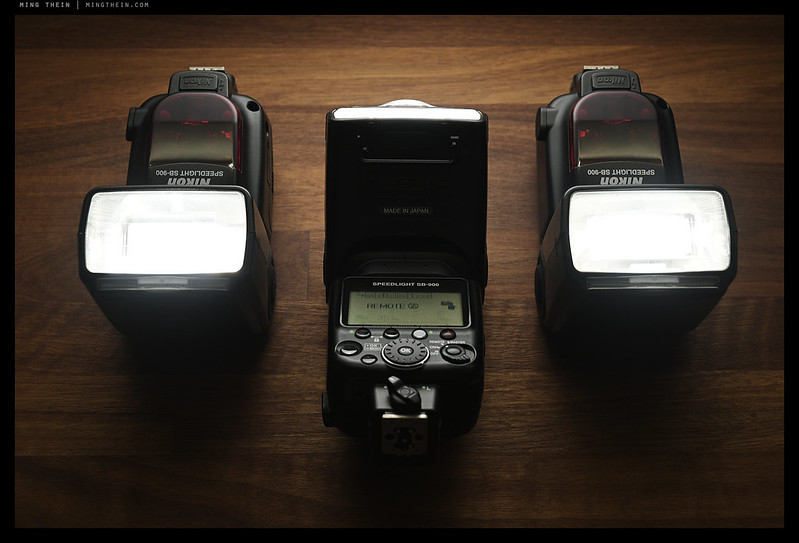
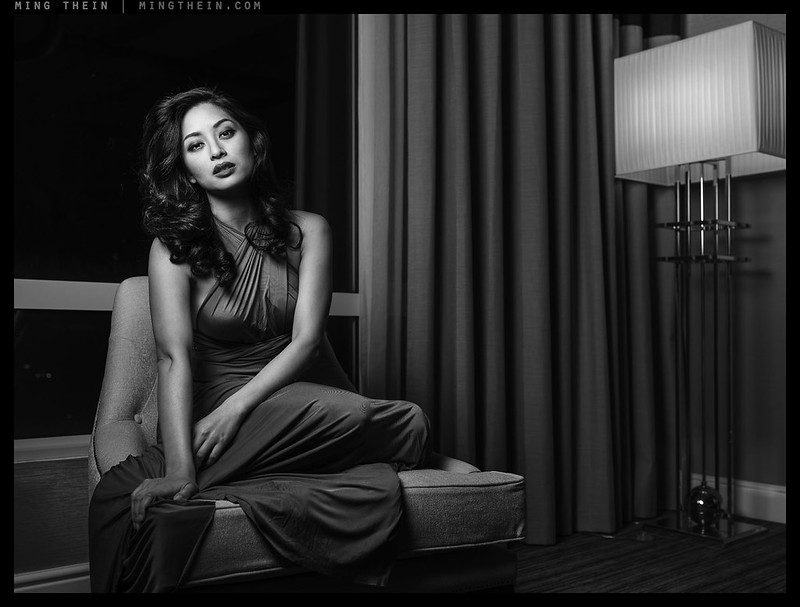
I frequently get asked about lighting: specifically, how does one best approach the daunting challenge of knowing where to put what lights, how to set them up, use modifiers etc. I’ve written about some of this in the past but realise that I never tackled conceptually where to start. Fear not: in true Ming style, it’s now a list of Five Things 😉 Though the whole process of conceptualisation and setup becomes increasingly intuitive over time and practice, I still find that this list helps quite a lot when you’re either a) working with very complex setups where multiple lights can start creating interference with each other, or b) trying to simplify. Remember, a shadow does several things: it provides spatial context for three dimensional placement of subjects in a two dimensional presentation; it creates texture; and it provides separation and definition from the background. The more complex the lighting setup, the less well defined the shadows are going to be. Ultimately, the purpose of any controlled lighting setup is to place the shadows where you want them to go, and control the relative brightness of the subject elements, allowing you to precisely manipulate the structure of your image so that it is ‘read’ by your audience in a certain way.


 Prices are the same as normal, however a small portion of your purchase value is referred back to me. Thanks!






 Ming Thein | Photographer