Repost: Achieving visual consistency

_8510238 copy

Cue one from the archives, with updated images: tomorrow’s post will make more sense when viewed in context after this…

One of the questions I’m asked also (unsurprisingly) happens to be one of the biggest challenges for a lot of people: how to achieve visual consistency across multiple systems/ cameras/ media, and across multiple subjects. Though the latter is really getting into the question of what constitutes style and how can one consistently apply it, there are still things you can do to ensure that you are in control of the final presentation: not your camera. I certainly cannot tell a client ‘sorry, it looks different because I used two different cameras.’
[Read more…]

MT’s Scrapbook: Sunday afternoons

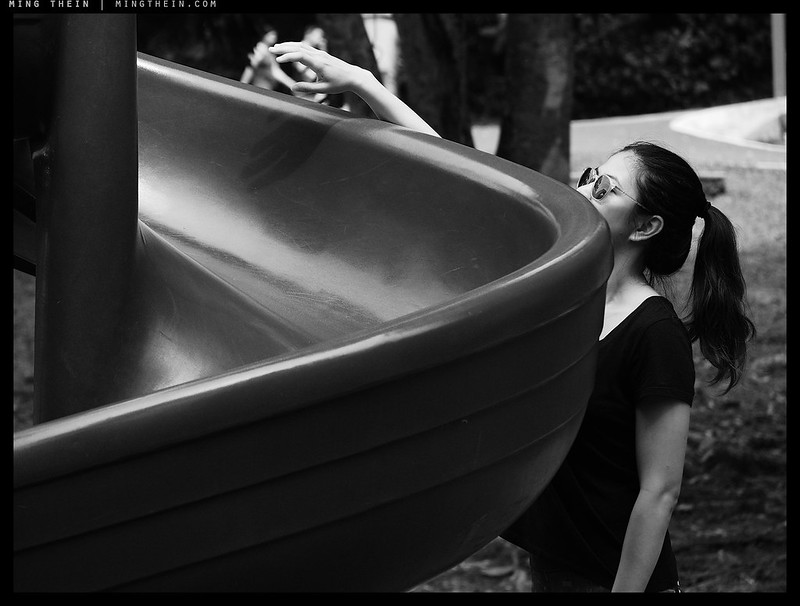
_PF90367 copy

The first entry in the Scrapbook is a quasi-narrative one from a lazy Sunday – the perfect kind of thing for which to test the entire pretext of the exercise. There was enough photographic content to keep me challenged and in practice, but not so much as to turn into the primary purpose of the day – oddly, not something I’ve had to worry about too much in the past, pre-family. Finding that balance again is challenging. Definitely not perfect, but more importantly – with enough verisimilitude that it’s pretty much as we remember it, which oddly, reminds me a bit of shooting film on family holidays when I was much, much younger (and pre-serious-photography). MT

The Scrapbook series is shot on an Olympus PEN F, with unedited JPEGs straight from camera bar resizing (and of course some choice settings).

[Read more…]

The continued adventures of the traveling audiophile: going wireless

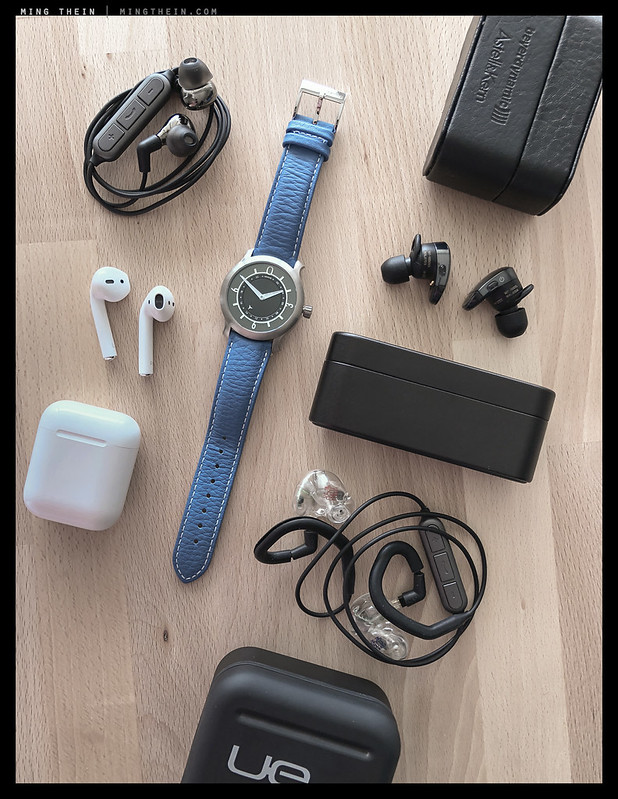
IMG_0513b copy

As with everything, it’s very easy to go off the deep end with audio – even personal, in-ear audio – and land up in a position where you have an extremely expensive piece of hardware that has zero secondary value (anything custom, for instance) and feel compelled that you have to make that decision before trying all options. And even if you’re lucky enough to be able to try all feasible options, 10-15 minutes of listening and A-B comparisons in an often less that representative (let alone ideal) location simply aren’t enough to make an informed decision. It also doesn’t help that you (I, at least) hit fatigue after perhaps half a dozen samples and can’t really hear the difference anymore – even if I might have fairly acute hearing on a normal day. But, I digress before I’ve even started. Last year’s move to the iPhone 7 and its forced choices of a) no charging with music if you use the Lighting to 3.5 adaptor, b) charging if you use the bulky as hell USB multiport thing and a small amp such as an AudioQuest Dragonfly Red, or c) wireless – has left me with a messy solution when travelling, which with involvement in three businesses in four countries and international clients, I seem to be doing even more of these days.

[Read more…]

On-assignment photoessay: the face of construction

_8513695bw copy

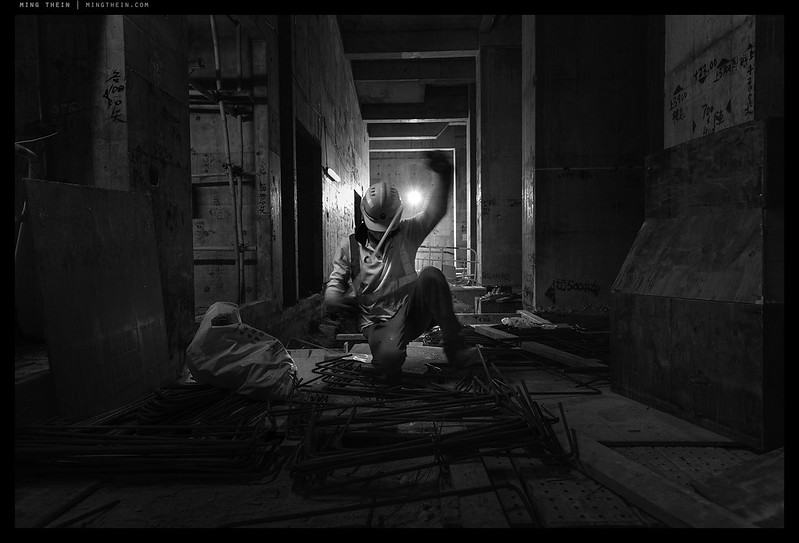
Over the course of the last few years, I’ve had the chance to shoot quite a number of contextual portraits of the people behind construction – some I’ve presented previously, and thus are not shown here. Almost all of the images in this set are new, and the result of a much larger curation project I’ve been meaning to do for some time. Even as extensive as a single shoot for this client tends to be – thousands of images over a week or so – the subject matter and light conditions are so diverse that you seldom have a chance to shoot a thematically and visually consistent sequence; thus the only way to make a project like this work is over a longer period of time. It also ties in nicely with some monochrome portrait experiments I’ve been doing over the last couple of months. Interestingly, the main challenge with this body of work overall was not opportunity, but the fact that construction workers in Hong Kong seem to all be exceedingly shy… MT

Images shot with various hardware over the last three years, but all post processed with The Monochrome Masterclass workflow.

[Read more…]

Crystal ball gazing – have we reached a plateau?

_8501581 copy
The split, redux: all will be explained in the article…

In the late 90s/early 2000s, film photography arguably reached its zenith in many ways: you could get all sorts of hardware in all sorts of form factors; emulsion technology peaked in both proliferation and quality, and it was easy to get anything developed and printed, and developed well. There were high end pro compacts, super fast DSLRs, consumer megazooms, large format folders, sub-frame cameras…films varying in speed, look, positive/negative, and even crossover-types like C41 process black and white. I’d even argue that since then, film emulsions have not really improved (undoubtedly due to the vanishingly poor business proposition created by the emergence of digital) – and we’ve lost most of the major manufacturers and choices. (To say nothing of the labs.) The core technology reached a balanced plateau: lenses were matching emulsions in resolving power; AF systems were matching the rest of the system in precision required to consistently deliver the aforementioned resolution. On film, there’s not much difference between one of the better 50mms of the time (say a C/Y 1.7/50 MM, A Leica 50/2 Summicron, or a ZF.2 2/50 Makro-Planar) and arguably the best of today – the Zeiss 1.4/55 Otus APO-Distagon. I tried this experiment on an F6 some time back, with Fuji Acros: I couldn’t really see much of a difference in resolving power. Drawing style, yes, but not resolving power. Your ability to focus made far more of a difference. And running the same film through my 1979 F2 Titan or the 2005 F6 made no difference at all, of course. Ultimately, during the film era: image quality was proportional to format size. How is this relevant to now?

[Read more…]

Photoessay: the ever-present scrapbook, mid-2018 edition

IMG_9546b copy

I’ve written several times in the past about the legitimacy of phones as photographic tools My main assumptions have always been the same: that a) one does not compose any differently; a 28mm-e FOV is a 28mm-e FOV and does not change with recording format; b) you are aware of and shoot within the limits of the hardware, i.e. dynamic range, light, ability to handle motion, stability etc; c) you’ve almost always got it with you, so the opportunities are simply greater – especially the larger your primary hardware becomes. The number of excuses have gotten fewer too, as phone camera hardware has improved – but not as much as the processing software behind it. I’m currently on an iPhone 8 Plus, which has dual cameras (primary, 28mm-e, stabilised; secondary, 56mm-e, unstabilized, and a stop slower). I find that I use the tele camera a lot less than I’d have expected – probably given that its working envelope is very small due to the lack of stabilisation and what appears to be diffraction limits (not surprising given the extremely tiny pixels – in the 1um range or so). I’m also finding that whilst images look great at normal output sizes – say up to a moderate monitor – they really fall apart at full resolution, with perhaps even less pixel-level integrity than the earlier generation of phone sensors. I suspect this is because there’s a lot more processing going on to optimise things for straight out of camera use; blame the social media generation. They also won’t print well. These images either look okay as they are, or are going to present nigh on zero latitude for post processing – a fact confirmed by the surprising gulf between raw files and JPEG. Shooting RAW is a pain, requiring you to do it in LR Mobile (and very slow) – so I’ve only ever tried this on an experimental basis. I can’t help but feel though in some ways the limitations are somewhat part of the stylisation; mostly to do with handling of deep shadows and contrast. The camera’s limits do nudge you unsubtly towards shooting in a certain way; all devices do this to some extent, I suppose. Presented today is what I think of as a “scrapbook of experiments from the last six months I didn’t think you could get away with doing more seriously”; somehow the compositions are a bit more minimalist or stark or whimsical than what I’d do with a larger camera, though that’s not to say the results aren’t interesting…MT

[Read more…]

Heresy and sacrilege: MT and SOOC experiments

IMG_2716 copy

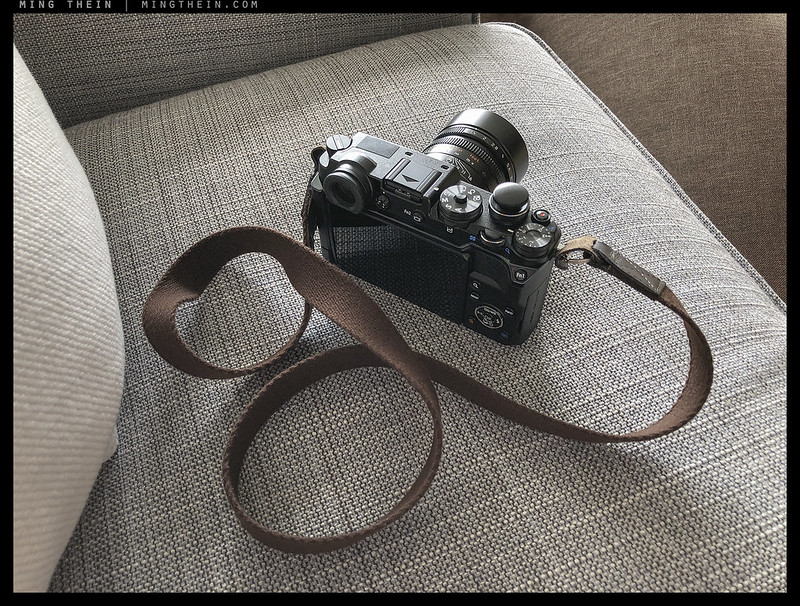
Due to an idle browser, more idle hands and pre-Raya* specials, the un-camera is no more. I traded in the GX85 for an Olympus PEN-F (previously reviewed here), available now at just half of its original launch price (at least in Malaysia) and with bonus goodies of grip with built in Arca rail and extra battery. For a modest supplement, it seemed like a good deal. I’m getting a bit ahead of myself: firstly, why? Well, a couple of things: if I’m going to shoot something serious, then I’ll break out one of the ‘Blads. If I’m not, then managing a three year old and the associated peripherals means that you don’t really have a lot of payload left over for hardware, let alone time to use it. But there are still opportunities to be had, and often single interesting grabs that require something quick**. On top of that, I admit the un-camera had a couple of serious deficiencies: firstly, the body was plastic and felt like it – grip it with moderate force and you’d be rewarded with a squeak or three. The back control dial was a bit recessed to access easily, and turned stiffly. Default color needed serious help (more on this later) – and lastly, I just didn’t like the fact that despite having a very comprehensive feature set (4K, dual IS etc) it felt like an appliance and had nigh on zero emotional value to shoot.

*end of Ramadan
**I’ll be the first to admit this does not describe the current generation of Hasselblads; but we
are working on it.

[Read more…]

Photoessay: Indirectly Mondrian

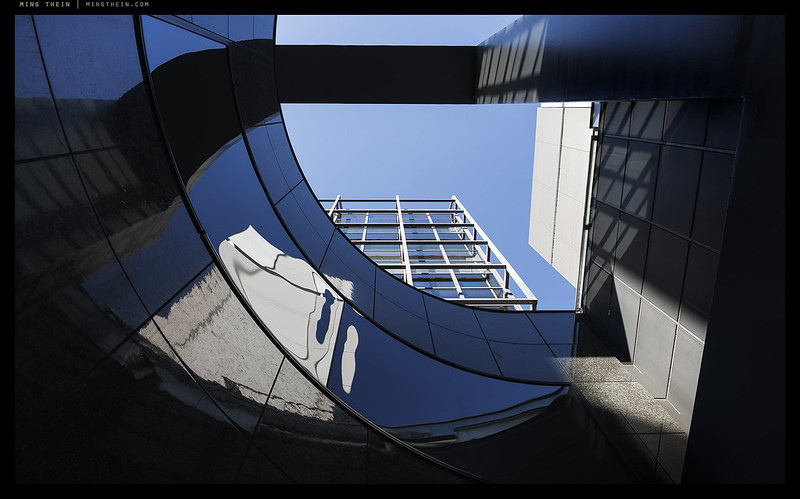
_8B21656 copy

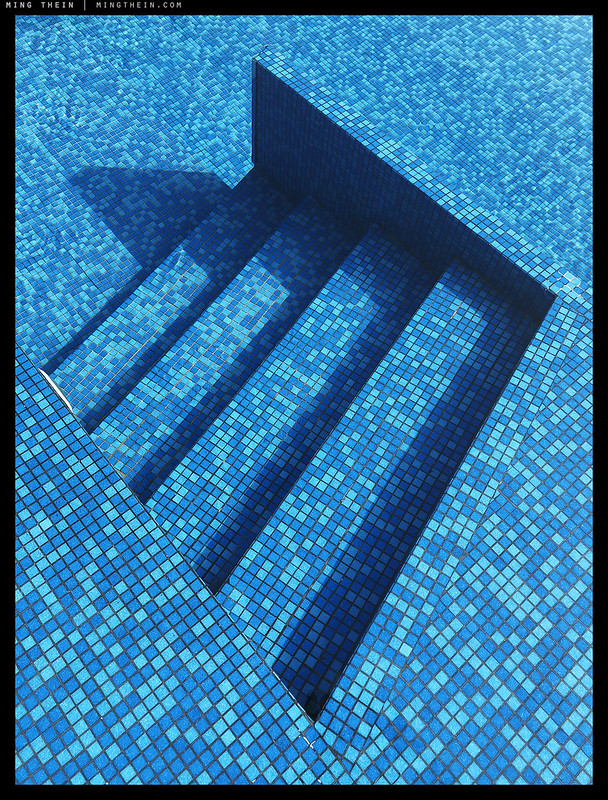
Today’s set is a curation of images accumulated over the last couple of years – somewhere in my subconscious, I think there must be a cubist/surrealist influence that probably has something of the Mondrian about it. Every so often, there’s a rectangular compositional arrangement that makes itself known, compels me to photograph it, and then file it away – almost always the composition will pop up as a visual non-sequitur when I’m busy shooting something else. It isn’t always colourful, rectangular, drippy and delineated – but there’s usually at least two of these properties that show. Visual work may be derivative, but it doesn’t have to be outright duplicative; there also seems to be quite a lot of recursion and crossover with other obsessions of mine – mostly wimmelbild. Perhaps it’s a merging of an underlying desire to seek visual structure, but preserve an underlying intricacy and detail that holds your attention as you try to figure out exactly what you’re looking at In any case – I’ve processed these, filed them away for later and whilst clearing my archive – here they are. Perhaps it’ll be worth revisiting in another year or two as a long term project – sometimes these underlying themes only emerge with time and some degree of detachment at the actual time of execution… MT

Shot with a variety of cameras over the last few years, and post processed with Photoshop Workflow III.

[Read more…]

Robin’s less obvious street photography tips…

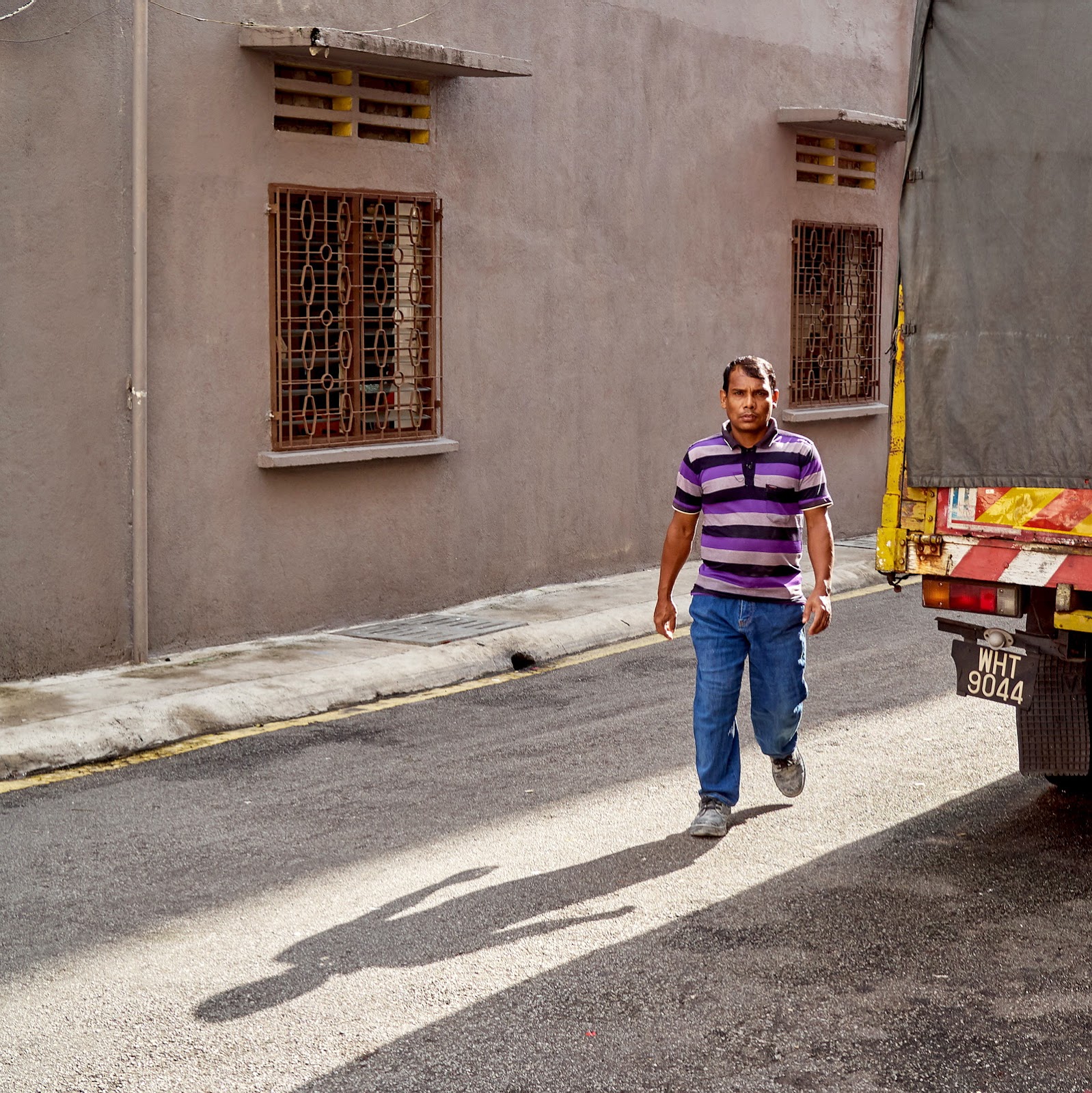
Despite the recent explosion of street photography related content and images, there are very few new and original ideas being explored. Phrases like “the decisive moment”, “if your photograph is not good enough, you are not close enough”, and “F8 and be there” have become clichés in articles on street photography tips and tricks. There is no dearth of self-proclaimed gurus or street photography masters, all offering wise advice, suggestions and must-do checklists to magically guarantee you an upgrade to the next level of artistic progression. I, on the other hand, take a more practical and no nonsense approach to street shooting. In this article, I share my thoughts on street photography – thoughts which may not be considered mainstream.

[Read more…]

Repost: Avoidable photographic errors

_2E90162 copy

Rule number one: there are no rules. A ‘mistake’ may not necessarily be a mistake if it helps convey the message or story or feeling intended by the photographer. I can easily think of multiple examples that go against every scenario described below. That said, for the most part, I’ve found these ‘mistakes’ to hold true. And if you want to achieve something very specific, then you either won’t be reading this article in the first place, or you’ll know when to bend the rules. The general viewing public probably has some preformed opinions of what is right/good, but these are born out of as much ignorance as conditioning by companies trying to sell more software or lenses or something else. There are rational reasons why these opinions may not necessarily be right in the context of fulfilling creative intention.

The previous article covered the differences between eye and camera, and what this means in practical photographic implementation.

[Read more…]