Mid term report: The Nikon D800E

_DL5T_L1000927bw copy

I’d long ago intended to post a full review of the Nikon D800E, but somehow that got lost in a flurry of work, left-side AF problems, and repeatedly having to answer the question of ‘which camera should I buy?’ – note that this has now gotten even less straightforward now that the D600 is an option, too. And then there was the fact that it wasn’t really that different to the original D800, which I already reviewed here (I believe it was the first complete one up on the internet, actually). But now, I think enough time has passed, and I’ve used the camera under enough situations (and somewhere in the region of 20,000 images – almost all of them on-assignment) that I think it’s about time for a mid-term report card. This won’t follow the form of my historical reviews; rather it will take the form of a series of annotated comments. Some apply to both the D800 and D800E.

_8016610 copy
Apples. D800E, Zeiss ZF.2 2/100 Makro-Planar

One general observation is that it seems Nikon got the product mix wrong – most of the photographers I know bought the D800E over the D800, figuring that if they were going to go all out with resolution, they might as well really go for broke. I suspect this is contributing to the limited availability of the camera, despite the D800 being in stock – Nikon’s facilities were probably geared up to produce more D800s, but the demand is in favor of the D800E. I was recently told by NPS in Malaysia that while the D800 is readily available, the D800E is still back-ordered for a month or more.

I’m going to start with the bad first, to get all the negativity out of the way upfront.

_8016861 copy
Dragonfly. D800E, Zeiss ZF.2 2/100 Makro-Planar

Something still doesn’t feel right with the autofocus system.
Although my camera no longer exhibits any asymmetry with its focus points following the recalibration and fix by Nikon Malaysia, it just doesn’t seem to be as positive or accurate as the D700 was (or D600 is now). There are situations in which the camera nails everything perfectly, and situations under which it just seems to miss by a hair; far more of the latter exist than the former. And no combination of AF settings seems to work; this means that the D800 is effectively an unviable proposition to me as a documentary/ reportage camera. Bottom line: I’m not 100% confident that it’s going to focus where I tell it to.

_8015135bw copy
Up or down? D800E, 28/1.8 G

The viewfinder is nearly useless for manual focusing.
Sure, it’s big and bright and covers 100% of the frame, but the problem is that it just doesn’t have enough focusing ‘snap’; it’s very difficult to tell when things are in critical focus or not, which is made doubly critical by the extremely high resolution of the sensor. It seems that all modern focusing screens are really just optimized for brightness with slow zooms. I would have done the same thing I did to my D700 – namely, cut and fit a custom screen from one of the other cameras I like – the F6 type J and FM3A type K3 are my favourites. However, the D800’s focusing screen is so enormous that this simply isn’t an option – I think it actually has the largest focusing screen of any Nikon to date, which means there are no suitable donors. I’m trying to get hold of an original screen to see if I can make it more matte on my own, perhaps by grinding it down with 1200 grit sandpaper. (You’re probably wondering how I use the camera at all without AF and a good finder – since most of my work with this camera is tripod-based anyway, live view comes to the rescue.)

_8015235 copy
The ZR012. D800E, 60/2.8 G Micro

Demands on lenses and technique are high.
It’s not the pixel density, but the pixel density for a given angle of view – this is the highest it’s been for any consumer/ prosumer level camera (i.e. non-medium format) to date. I think a lot of people confuse this with pixel pitch. The bottom line is that if your lens covers say 90 degrees horizontally, then the D800E puts much more resolving power per degree in the hands of the average photographer than they’re used to; this places corresponding demands on lens quality and technique (focusing, camera shake etc) than the vast majority people can manage handheld except under good light. I can’t even get a consistently sharp image unless I’m over 1/2x focal length – and I’m certain I’ve got better technique than average. This, and the size of the files (a throughput issue) make it impractical for a documentary/ travel/ journalism camera. Oh, and you’ve got to use good lenses too, which tend to be large and heavy – not ideal for walking around with.

_8014881 copy
Eleven. D800E, 28/1.8 G

The live view exposure implementation needs work.
If you shoot manual exposure, live view mode always shows you a preview of the actual exposure. Guess what this means if you’ve got things set up for a studio strobe exposure with zero ambient: a black frame! You’ll have to toggle back and forth between P and M modes to focus, which wastes time and is unnecessary – especially since they fixed this on the D600. I hope it’s something that gets addressed in a future firmware update. Or, at least give us an option…

_8013241 copy
Bored. D800E, 28-300VR

There are a few ergonomic fails.
The mode button is more and more annoying the more I use the camera – it’s just impossible to reach without contorting your grip, and muscle memory from using every other Nikon pro body means that you will almost inevitably try to change exposure with the video record button and back dial. The D-pad lock switch is too loose, and easy to activate, meaning that you may not be able to change focus point at a critical moment – and then be left wondering why, while your shot disappears. By a similar token, the metering mode switch is too stiff, and difficult to operate with the edge of your thumb. Aside from that, ergonomics are spot on. What I don’t understand is why Nikon seems to make minor changes between generations to both things that need fixing, and things that work fine as they are…

_8013166 copy
Polo. D800E, 28-300VR

The shutter appears to have a vibration issue around 1/30s or so.
I’ve noticed a strange blurring/ double image that occasionally pops up in the 1/20-1/40s range; even with everything locked down on a heavy – Gitzo 5 series systematic – tripod and studio lights; the only conclusion I can come to is that somewhere in the shutter or mirror mechanism, something is vibrating at that natural frequency and creating a bit of camera shake. The solution around this has been to use live view and the self timer when required; it of course doesn’t require the mirror to cycle.

_8018601 copy
3T MRI. D800E, Zeiss ZF.2 2.8/21 Distagon

File handling is…chunky.
This isn’t a flaw of the camera. But the increased amount of detail means even larger files than the D800; you’re looking at 40-50MB routinely for a compressed NEF. It would be a waste to shoot jpeg with this camera, of course. This is one of the reasons why I tell prospective buyers to think very, very carefully about whether they really need such large files: it has a knock-on effect on everything else from processing to storage. I usually open my raw files in batches; with the D700, my current laptop can happily handle 20; for M9, OM-D and RX100, it’s about 15; for the D800E…I think a threshold has been crossed somewhere, because it’s more like five.

_8018214 copy
Sarpaneva Korona K0. D800E, 85/2.8 PCE

Now for the good news:

Visible diffraction is offset somewhat by the lack of an AA filter.
My work requires small apertures on a regular basis; the diffraction limit for the D800 was visibly between f8 and f11, with all other things equal. The lack of an AA filter allows you to claw back some perceptual sharpness (though remember that diffraction is a property of the pixel pitch, and still sets in at the same point for both cameras) – all other things being equal, this allows a D800E image at f16 to have the same perceptual sharpness as a D800 one at f11 or thereabouts. Handy. Needless to say, at smaller apertures, the D800E provides a noticeably crisper image – there isn’t necessarily more resolution, but the pixel acuity is definitely higher.

_8021674bw copy
All about the hair. D800E, Zeiss ZF.2 2/100 Makro-Planar

Moire is a non-issue for the majority of circumstances.
I don’t shoot a lot of fabrics or repeating patterns, but on the occasions I have done, I’ve seen very, very little moire. And these tend to be studio situations anyway, which means that I’m at small apertures; I can always have the option of removing any aliasing by stopping down a little bit more and letting diffraction take care of things for me should the situation arise. Conversely, I can’t add the acuity back to the D800’s files.

_8011276 copy
Jaeger-LeCoultre Master Ultra Thin Moon detail. D800E, 60/2.8 G Micro

Image quality is impeccable.
After working regularly with good D800E files, it makes me feel as though my other cameras are all lacking something; however, the knowledge that you really have to have all your ducks lined up in a row to make the D800E sing is enough for me to remain happy with the image quality from the rest. That said, the D800E is easily the best DSLR at the moment for any form of controlled lighting or tripod work; color accuracy and dynamic range are both superb; pixel acuity is beyond reproach (with the right lenses, of course) and – barring the aforementioned issues – usability is excellent.

_8017807 copy
Spiral. D800E, Zeiss ZF.2 2.8/21 Distagon

Battery life is outstanding.
Both the D800 and D800E have excellent battery life – easily 2000+ shots per charge without use of flash, or 1500+ if the built-in is used as a CLS trigger – which means that I only have one spare battery. This is a first for me: even my D3 had two spares. In fact, I think the real-world battery life of this camera is bested only by the D600.

_8019332 copy
Omega Speedmaster 9300. D800E, 85/2.8 PCE

It doesn’t feel that heavy.
Even though the camera isn’t much lighter than the D700, you do notice the difference after a day of shooting with it – my hands just don’t feel as tired as they did when I was using the D700. Perhaps it’s also a function of grip shape. I don’t know if this has negative consequences for camera shake and stability, though – probably not, since the D600 is even lighter and seems fine (though admittedly it also has a much lower-vibration and slower shutter).

_8015136 copy
How the other half live. D800E, 28/1.8 G

Overall, the impressions are good: very seldom is there a camera which I would consider perfect or close to it (the D700 was probably the last one) – the D800E pushes the image quality envelope forward by a significant margin, and with this necessarily comes compromises. The mistake I think most people make is in thinking that if you used the D700 with great results, you should be able to do the same with the D800E; no. Even for somebody who pays constant attention to shot discipline, you will find situations under which the demands of the sensor exceed your ability at that moment to achieve a pixel-level, critically sharp image. I know, because it’s happened to me several times.

This brings me to the final portion of this report card: I want to conclusively answer the ‘what should I buy?’ question once and for all.
_8016078 copy
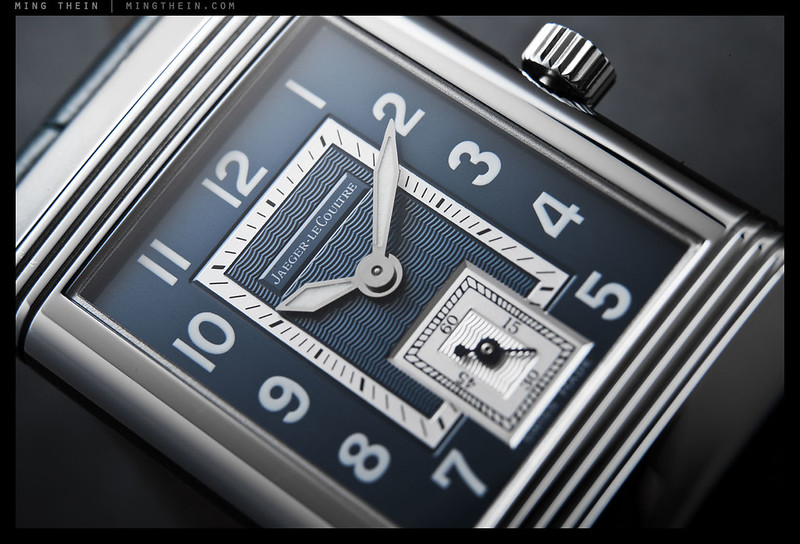
Jaeger-LeCoultre Reverso Latitude. D800, 60/2.8 G Micro

Buy the D600 if:

  • Size and/or weight is a priority.
  • You are coming from a DX body that doesn’t have the same controls as the pro bodies (anything except the D2H/D2x/D300/D200)
  • You just want a general purpose FX body, and getting the large sensor ‘look’ is your priority.
  • You want resolution for large prints but can’t afford a D800E.
  • You shoot mostly handheld
  • You shoot a lot of live view work in the studio
  • You don’t print larger than 40×60″ or so

Buy a (or keep your) D700 if:

  • Budget is a priority – second hand D700s are abundant now, and cheaper than new D600s. They’re still capable of producing excellent images – I still use mine for reportage work.
  • You need speed or AF tracking ability – it has more coverage than the D600, and (I feel) higher precision than the D800E. It also runs at up to 8fps, which none of the others can.
  • You do a lot of low light or marginal shutter speed work – it’s just more forgiving for handholding.
  • You shoot in hostile environments
  • You don’t print larger than 20×30″ or so
  • Workflow throughput is a priority – events, weddings, sport etc.
  • You shoot mostly handheld
  • You don’t need video or live view

Buy the D800E if:

  • You need to have the absolute best image quality in a DSLR available now (due to lenses, or budget vs MF, or whatever)
  • You don’t mind using studio lights and/ or a tripod to maximize image quality
  • You don’t mind re-evaluating your lens lineup
  • You shoot a lot of video – it has manual exposure controls and power aperture than none of the other cameras do
  • You need to print larger than 60″ wide
  • You don’t mind (and have the hardware to) handle enormous files

_8012864bw copy
Nadiah. D800E, 45/2.8 P

And what about the D800? Well, I honestly can’t see why anybody would bother unless money is super-critical, or you shoot a lot of fabric –  the price difference to the D800E isn’t big enough to be a factor if you’re already committed to spending that much money, and it requires almost as much shot discipline and lens quality anyway. Finally, if you do a lot of long lens work – wildlife or similar – then you should probably look at a DX body instead; cropping isn’t going to up your frame rate much, or improve AF ability; the D600 and D700 probably won’t have enough resolution for demanding applications in DX crop mode, either.

I think what says the most about this camera is the fact that I only use it on assignment – it isn’t my first choice when I’m shooting personal work, or teaching (except in studio), or just going out for a while and feeling like I want to do some photography; something’s missing. And I don’t know if it’s the file sizes and processing that subconsciously puts me off, or something AF-related, or perhaps I’ve just moved on from feeling the need to carry a big camera for reassurance. Bottom line – I’m just not bonding with it in the same way I did with my D700, or even D2H for that matter – and those were even larger and heavier cameras. All of that said, I wouldn’t dream of using anything else for critical commercial work. MT

The Nikon D800E is available here from B&H and Amazon and the D600 here from B&H and Amazon.

____________

Visit our Teaching Store to up your photographic game – including Photoshop Workflow DVDs and customized Email School of Photography; or go mobile with the Photography Compendium for iPad. You can also get your gear from B&H and Amazon. Prices are the same as normal, however a small portion of your purchase value is referred back to me. Thanks!

Don’t forget to like us on Facebook and join the reader Flickr group!

appstorebadge

Images and content copyright Ming Thein | mingthein.com 2012 onwards. All rights reserved

Quick review: The Olympus 15/8 Body Cap Lens

_5009287 copy
At left: body cap. At right: Lens. Not much difference.

_5009306 copy
Lens mounted on the E-LM5.

Disclaimer: if you came here looking for optical perfection, you should probably stop reading now.

On the other hand, if you came here because you were curious about this little pancake, then read on. I admit that although I’m usually squarely in the former category, for some odd reason, the 15/8 got me intrigued – I suppose it was the size, or the fact that it suits the whole ‘fun’ ethos of the smaller PEN cameras. I think it’s the photojournalist in me that very much likes the idea of having the camera ready to go at all times, even if it’s in storage; the Olympus BCL-15 lets you do just that. It’s effectively the same depth as the supplied standard body cap (maybe a millimetre or two thicker, but nobody’s counting) – making the smaller bodies like the E-PL5 and E-PM1 very pocketable indeed. The lens was launched together with a number of other items at Photokina 2012 – notably the E-PL5, E-PM1 Pens, 60/2.8 Macro and the wireless SD card system.

_5L20198 copy
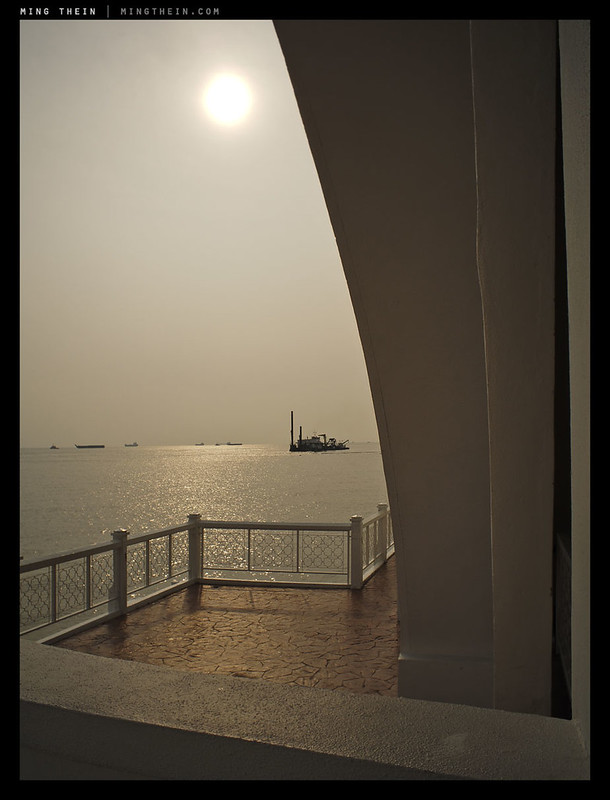
The mosque by the sea. E-PL5, 15/8

_5L20198 crop
100% crops.

It isn’t anything special in terms of construction: the lens has just three elements (supposedly glass), all-plastic construction, and a clever little lever that both doubles as a shutter to protect the front element, as well as a focusing lever; on the subject of focusing, you can get as close as 30cm to your subject. The lever is light and doesn’t really stay in place if bumped, but then again, precision isn’t that important in a lens that both has an extremely great depth of field – being a 15mm f8 and all – and optics that aren’t exactly highly-corrected. In fact, it’s a wonder that it isn’t just fix-focused.

_5L20165 copy
Book spirals. E-PL5, 15/8

_5L20165 crop
100% crops.

Needless to say, there’s no electronic communication of any sort between camera and lens, so EXIF data is not recorded, and since there’s only one aperture, you’ve effectively got a point and shoot. Curiously though, it appears Olympus has put a small baffle between two of the elements to only use the central portion of the lens in a bid to keep image quality reasonably high; I suspect that if one could somehow separate the elements and remove this, you’d find the lens to be closer to f4 or thereabouts – at the expense of optical quality and depth of field, of course. It might be something I’d be willing to try as a rainy day project…

_5L20156 copy
Staircase. E-PL5, 15/8

_5L20156 crop
100% crops.

So how does it perform optically? Well, it’s surprisingly sharp in the center, even though the 16MP M4/3 sensors are already hitting diffraction limits at f5.6 and smaller; the lens might well be a bit sharper if it was a stop faster due to this. The edges and corners are another story – let’s just say they’re not very sharp anywhere, and rather smeary in places. No doubt this is due to the limited optical correction possible with just three non-aspherical elements. (That said, this lens reminds me of the MS-Optical Perar Triplet 35/3.5 and 28/4 lenses for the Leica M mount; I wonder how they perform optically.) So long as you keep your subjects in the central third or so of the the frame, and take a little time to ensure focus is just about at the right distance, optical results are better than expected.

Although you might think that some of the crops are soft because of the focus distance, let me assure you that at f8 and a 15mm real focal length, the depth of field is more than sufficient to cover where I placed the focal point – and that was verified with live view magnificaiton for the purposes of this test; in real life, I don’t think I’d bother.

_5L20188 copy
Minaret. E-PL5, 15/8

_5L20188 crop
100% crops.

Simple lens designs like this one tend to have very high contrast and transmission because there aren’t a lot of surfaces and air-glass interfaces inside the lens to lose light at; the 15/8 renders with very high macrocontrast indeed; microcontrast is much less impressive, though (and has a lot to do with resolving power – you weren’t surprised about that result, were you?). Color is saturated, brilliant and actually quite pleasing.

_5L20200 copy
Sunset. E-PL5, 15/8

I can see photographers buying this for several reasons – as a fun walk around lens; as an impulse buy when you go to the camera shop with itchy fingers but perhaps not enough money or not finding anything that really catches your eye; the blogging crowd will probably find it fun and conveniently compact. I actually used it a lot while reviewing the E-PL5 (which all of these images were shot on) simply because it made the camera very pocketable and immediately responsive – not having AF and all – and being very close to my preferred 28mm focal length, an interesting street photography option (at least in good light; f8 means that you’re hitting ISO 3200 even in the shade, and forget about using it indoors).

_5L20217 copy
Amusement park dusk. E-PL5, 15/8

Conclusion: At just US$60, it’s a no-brainer recommendation for anybody who owns a M4/3 camera, especially if you’ve got a older or spare one lying around. Mine now lives on my E-PM1 Pen Mini, which has seen little use since the OM-D and Sony RX100 entered the stable. put this on, stick the camera in your pocket, and go for a walk. You’ll be glad you did. MT

The Olympus BCL-15mm f8 Body Cap lens is available here from B&H or Amazon.

____________

Visit our Teaching Store to up your photographic game – including Photoshop Workflow DVDs and customized Email School of Photography; or go mobile with the Photography Compendium for iPad. You can also get your gear from B&H and Amazon. Prices are the same as normal, however a small portion of your purchase value is referred back to me. Thanks!

Don’t forget to like us on Facebook and join the reader Flickr group!

appstorebadge

Images and content copyright Ming Thein | mingthein.com 2012 onwards. All rights reserved

_5L20162 copy
Abandoned, I. E-PL5, 15/8

_5L20150 copy
Abandoned, I. E-PL5, 15/8

The Olympus E-PL5 PEN Lite review: a mini-OM-D

_5009231 copy

I make no secret of the fact that I’m a huge fan of the original Olympus E-PM1 Pen Mini (full review here); it brought big-camera speed and image quality to a very compact package. However, the OM-D clearly demonstrated that the image quality potential of Micro Four Thirds could be taken quite a bit further without entailing any compromises. After enjoying a period of exclusivity to that body, the same sensor and imaging processor has now made its way into Olympus’ lower end offerings – the E-PL5 Pen Lite and E-PM2 Pen Mini, both recently announced at Photokina. I was given the opportunity to try out a final production E-PL5 recently by Olympus Malaysia.

_5009281 copy

_5009276 copy
Removable grip.

The two cameras retain their original differentiation – a tilting screen and a few buttons. But the E-PL5’s screen now pivots through 170 degrees for self-portrait narcissists (I can’t personally imagine ever using this feature, though tilting it up for waist-level shooting is great for stealthy capture or a better angle without having to bend over). Both also gain the same capacitative touch screen capability of the E-P3 and OM-D, which I’m find increasingly useful and missing on my Nikons. Sadly though, the LCD on the two smaller cameras remains as a 3″, 16:9 aspect ratio unit, which is great for video but leaves a lot of unused real estate in the form of black bars when you’re shooting in the native 4:3 aspect ratio of the sensor. Useable area is probably closer to 2.5″.

_5L20165 copy
Bookstore abstract. E-PL5, 15/8 body cap

Aside from the 15MP sensor of the OM-D, the E-PL5 also gains a few additional art filters, and compatibility with Olympus’ new OI.Share SD card and app for smartphones and tablets (currently, Apple iOS and Android are supported). There are also interchangeable grips – similar to the E-P3. There are also some minor cosmetic changes that give the camera a slightly blockier, more textured appearance. Personally, I prefer the smooth look of the older cameras. Sadly, Olympus still hasn’t moved the strap lugs – they still dig into your hands in the normal shooting position. I can’t help but feel a narrow loop would be a much better solution for a camera of this size, as well as being silent during video recording.

_5009239 copy
It’s grown in size a little, but it’s still roughly in the same ballpark as the original (and Pen Mini, in background.)

In use, the camera is snappy and responsive for all normal operations; AF speed remains excellent, if perhaps fractionally faster than the last generation. (I’m comparing it with my Pen Mini, since I don’t have an E-PL3 handy – they share the same innards anyway.) The menu system is redesigned and now looks very similar to the OM-D, complete with most of the custom functions and extensive customizability that is unusual for a camera in this class, which has become one of Olympus’ hallmarks. It also gains 8fps shooting, though without AF, of course. I use it as a single-shot camera, or at most in bursts of two or three shots to gain some added stability.

_5L20204 copy
Closed for the weekend. E-PL5, 15/8 body cap

On the subject of stability, the in-body sensor-shift stailization system is improved over the last generation; I actually turned it off on my Pen Mini because it tended to give odd double images under some conditions. I left it on on the E-PL5, but it’s worth noting that it still isn’t as effective as the 5-axis gyro system in the OM-D.

_5L20365 copy
Pirates can still be found in some parts of Malacca. E-PL5, 45/1.8

One of the things I missed from the OM-D was the configurable single-button magnify option that allowed one-touch enlargement of either live view or the playback image to your desired ratio at the focus point (10x is actual pixels) – until I discovered that you could just double-tap the screen to achieve the same result. Needless to say, score one for the touch screen. You can of course also use it to select the focus point and release the shutter; speaking of focus points, you can now select a smaller point size by default, which the camera remembers when turned off – something I sorely miss on the OM-D as the large boxes often aren’t precise enough. A good number of the other buttons are user-configurable, too.

_5L20184 copy
Sunset over the straits. E-PL5, 15/8 body cap

Something I had trouble getting used to was the feel of the shutter button. Since it’s probably the single most important control on the camera, the way it feels is actually quite critical in how you feel towards shooting it; in this respect, the pro Nikons and Canons get it right – a soft but distinct half-press, and no clicky transition but a firm increase in resistance to release. There’s enough travel between positions to avoid accidental releases, but not so much to induce lag. The OM-D feels pretty good, too. Other cameras get it wrong – the Sony RX100’s shutter release is far too soft; I’m always accidentally firing off a frame when I meant only to focus. The digital Leica Ms are far too notchy and difficult to press smoothly; it’s as though there’s something rough inside the button’s housing or something; perhaps to do with the three positions. Shame, since the mechanical Ms were fantastic. Unfortunately, the E-PL5 just falls on the wrong side of soft – it isn’t so much the pressure required, but the near-zero difference in travel between half and full press that feels off. And to make things worse, even though the travel is short, the pressure required is very firm – making it difficult to hold the camera steady when releasing. Lack of an eye-level finder only compounds this.

_5L20353 copy
Determination in the face of choices. E-PL5, 45/1.8

I don’t’ have a lot to say about image quality – if you’ve used the OM-D, you can safely skip this section. The files look exactly the same, and deliver the same amount of flexibility in postprocessing. Colors are typical Olympus – slightly warm, reasonably saturated, and biased towards delivery of very pleasing skin tones. Dynamic range is around 11-12 stops from a carefully processed raw file at base ISO, which also remains at 200. The tonal range tends to be somewhat midtone and shadow biased; the relatively small pixel pitch of the sensor makes itself known in the highlights; expose with care because there isn’t a whole load of recoverable headroom – perhaps a stop at most. Fortunately, there is a live shadow and highlight clipping display option, which allows for precise exposure adjustment at the time of capture. Noise is minimal to ISO 800, and I feel the camera is useable up to ISO 3200, or ISO 5000 under certain lighting conditions.

_5L20257 copy
Just your average chaotic street scene. E-PL5, 45/1.8

At this point it’s worth talking a bit about the Olympus Viewer software – I’ve never had to use it before since ACR always supported the files of cameras I’d purchased. This time, I use the built in raw converter to make a relatively low-contrast TIFF with accurate white balance and exposure, which I’d then take into Photoshop. The native environment is very familiar – it looks a lot like Bridge, from which you can develop and save your files in…you guessed it, something that looks a lot like ACR – or at least an early version of it, without the huge number of options the current version has.

_5L20175 copy
Late afternoon. E-PL5, 15/8 body cap

Previews are fast, and general responsiveness and usability was good. This is easily amongst the better own-brand pieces of software out there. (Nikon, I’m looking at you. For shame.) In fact, the only critical things I can find missing are shadow/ highlight recovery sliders and a gradient tool. I’m not so happy with the output, though – the files seem to have a decidedly magenta cast to them which is both difficult to remove, and renders color not as accurately as the JPEGs – especially skin tones, which I find my Olympus cameras generally excel at even via ACR.

_5L00051 copy
Harley after the rain. E-PL5, 45/1.8

Battery life is excellent; I estimate around 500-600 shots with moderate LCD use and power-off between shots. It uses the same battery as the E-PL3 and E-PM1, too, which is nice if you’ve got a few spares already lying around. Note that there are two models of battery and charger, some of which are compatible and some of which aren’t – the light gray model is the latest version of both.

_5L20346 copy
Where Elmo does his shopping. E-PL5, 45/1.8

Throughout the review period, I kept asking myself who this camera was aimed at; the DSLR user/ enthusiast/ amateur looking for a second, more compact body, or the compact upgrader? I personally think it fits the latter better, much like the original Pen Mini. Although it’s compatible with the various accessories that connect to the accessory port under the hotshoe (including an EVF) – the lack of a built-in viewfinder means that if youre going to keep the camera compact, you’re restricted to arms-length style shooting. The huge number of art filters – also useable in movie mode at the expense of reduced frame rate – and in-camera processing options offers a relatively simple (if slightly lacking in control) method for the amateur user to achieve their desired look without resorting to Photoshop. I personally don’t use any of these, but I do know plenty of friends and family who might. What I did really enjoy was using it with the new 15/8 body cap lens as a hyperfocal snapshot camera; in this configuration it’s lag-free, and lets you focus solely on timing and composition. It’s also just about pocketable.

Ultimately, success at this end of the market will depend heavily on the camera’s price point. The rich feature set and overall refinement in operation make me curious to see what will succeed the E-P3; now if only they’d make one with a built-in EVF like the NEX-6…

The Olympus E-PL5 PEN Lite is available here from B&H and Amazon.

____________

Visit our Teaching Store to up your photographic game – including Photoshop Workflow DVDs and customized Email School of Photography; or go mobile with the Photography Compendium for iPad. You can also get your gear from B&H and Amazon. Prices are the same as normal, however a small portion of your purchase value is referred back to me. Thanks!

Don’t forget to like us on Facebook and join the reader Flickr group!

appstorebadge

Images and content copyright Ming Thein | mingthein.com 2012 onwards. All rights reserved

_5L20396 copy
Where are my customers? E-PL5, 45/1.8

_5L20255 copy
Somewhere in here is a human being. E-PL5, 45/1.8

_5L10109 copy
Abstract Kuala Lumpur skyline. E-PL5, 15/8 body cap

The Nikon D600 review: full frame for the masses?

_5010018 copy

Some cameras launch with a huge amount of anticipation and fanfare, some are surprises from far left field, and some are simply such poorly kept secrets that the manufacturer might as well just have skipped the announcement. Although the Nikon D600 falls squarely into the last category, I think photographers in the world were pleased when it finally broke official cover. The camera itself breaks almost zero new ground technically – it doesn’t push boundaries in any way. Not quite what you expected me to say in the first paragraph, I bet. This is not to say that it’s a bad camera; far, far from it.

_5010025 copy

_5010029 copy
Smaller than the D800, but you’ve got to put them side by side to see it. Subjectively, it’s lighter but you don’t really notice in use; it feels about the same weight because the square handgrip design requires you to exert more pinky pressure, which makes the whole thing feel a bit heavier than it is…

I think two questions were on the mind of the Nikon enthusiasts and pros after the launch of the D800 (full review here) and D800E (which curiously, I’ve never actually reviewed): firstly, was this the D700 replacement, and why the enormous resolution? The D800 snuck in at the same price point as the D700 back in 2008; subsequent erosion of the D700 saw prices fall to the US$2200 level or thereabouts, at least for street prices in this part of the world. The older model continued in the lineup together with the higher spec (and higher priced) D800 pair. At this point, however, the technology inside the D700 was five years old – an age in the digital world, and possibly the oldest sensor architecture still purchasable new (with the exception of the Leica M9, whose photosite design was inherited from the 2006 M8).

_6000322b copy
Awaiting departure. Nikon D600, 85/1.8 G

The D700 and D3 were turning points in Nikon’s history: first full frame, and first time in recent memory the noise advantage shifted decisively away from Canon. Even today, the D700 remains an excellent camera – mine has over 70,000 frames under its belt and hasn’t missed a beat. I still use it on reportage assignments or where the client doesn’t require 36MP and the associated enormous files. (My long term review of the D700 is here.) This review will be written from the point of view of a long-term D700 (100,000+ frames on two bodies) and D800E (20,000 frames between the D800 and D800E) user, with comparisons and references to both.

_6001223b copy
Man in blue. Nikon D600, 85/1.8 G

Over the last few months, I’ve received no end of emails from prospective upgraders asking if the D800 was the camera for them; my answer is a resounding no. If you need the level of image quality this camera can deliver, you’ll know it, and you won’t need to ask me. If you don’t, and you buy it, you might be surprised that it doesn’t quite deliver the same pixel-level crispness as the D700 or D3. It’s an excellent machine, supplanting low-end medium format gear, but it also requires the rest of the support (lenses, processing workflow) to go along with it.

_6000586b copy
Car lust. I make no secret of the fact that I’m a huge BMW fan. Nikon D600, 28/1.8 G

Note: this review, as with all of my other camera reviews, is written from the point of a working professional. Images are edited through my usual Photoshop workflow as this is how I’ll be using the camera normally; I don’t shoot JPEG SOOC other than for client previews. For those who think it skews results, Photoshop benefits all images equally: it can make a great shot even better, but it can’t fix something that should have been there at the time of capture. EXIF data is intact and can be viewed by clicking through the image to its Flickr hosting page.

_6000098b copy
Rain = traffic, Kuala Lumpur. Nikon D600, 85/1.8 G

Enter the D600. I think it’s best described as a hybrid of the D7000 and D800; it inherits the feel, construction, AF system and controls of the former, with most of the innards of the latter. It falls between the two in size, too, but it closer to the D7000 in ergonomics and weight. It also has a similar shutter/ mirror feel to the D7000 – well damped, and much quieter than D700 or D800, but is limited to 1/4000s instead of 1/8000s. Mirror blackout feels about the same as the D7000, which is still excellent. You won’t notice shutter lag with any of these cameras, which are all in the 40-50ms range. All three share the same EN-EL15 battery. The rest of the spec falls squarely in the middle, too: 24MP, 5.5fps (no boost with the optional EN-EL14 battery grip, and no provision for taking the larger/ higher capacity battery from the D4); 1080p30 or 720p60 video, native ISO range from 100-6400 with extension to 50 or 25.6k.

_6000476b copy
Selat Mosque, Malacca. Nikon D600, 28/1.8 G

It uses the same EXPEED 3 processor as the D800, which means shunting around those largish 14bit files with relative abandon; the 14-bit lossless compressed RAW buffer is 10 frames. (Despite the files being smaller, it doesn’t feel any faster, though.) You also get a 100% finder with 0.7x magnification, but not the round eyepiece or eyepiece shutter; it’ll take the DK21M magnifier, and has a reasonably high eyepoint – I can see the whole frame just fine with my glasses. Sadly, the focusing screen has become even less snappy than the D800; it’s nearly impossible to use for manual focus without the focus assist dot. Fortunately, live view works the same way as on the D800, with a button to enable it surrounded by the still/ movie mode switch. It’s also inherited the record button placed behind the shutter, and the slightly difficult to reach second button – except now it controls metering mode, with exposure modes placed on a lockable dial – together with the fully customizeable U1 and U2 memory positions from the D7000. You also get IR remote receiver ports on the front and the back in lieu of the 10-pin connector on the front, which neither the D700 nor D800 have.

_6001053b copy
Pick’n’mix for grown ups. Nikon D600, 85/1.8 G

It definitely doesn’t feel as solid or dense as the D800, let alone the D700; but if you haven’t handled either, you probably won’t be able to tell the difference. Nikon claims a magnesium-alloy top panel, polycarbonate bottom section and magnesium frame, although the only way you’ll really be able to tell you paid a bit less is the feel of the rubber grips – it’s definitely D7000 semi-slippery and not D800/ D700 sticky. I personally don’t find the shape that comfortable either; it’s too square around the bottom portion where you little finger rests. The body has environmental seals to about the same level as the D7000; the gaskets don’t look as robust as those on the D700 or D800, and certainly not the D4. Curiously, I don’t feel either the D600 or D800 are true replacements for the D700; neither will do 8fps, and the model that shares the same build (D800) has such a high pixel count that it isn’t really suitable for some applications such as photojournalism or low light work. The D700 line has thus bifurcated into a more serious and less serious option.

_6000870b copy
Slurp. Nikon D600, 85/1.8 G

There is one huge improvement in usability that’s worth mentioning: in manual exposure mode and live view, the camera now shows a usable/ visible image rather than the actual shooting exposure, which means that you can easily manual focus with a flash setting (say 1/200s, f8, ISO 100) in ambient light rather than having to change exposure or switch between aperture priority and manual to be able to see your image. The image is also a lot sharper than the D800 and not blocky – it’s much easier to tell what is in focus, and what isn’t. Needless to say, we don’t need to talk about usability of the D700’s live view function – putting it on the drive mode dial was just clunky, and precluded the use of the self timer or mirror lockup to minimize vibration.

_6001030b copy
The surprise joy of finding you just might be in love. Nikon D600, 85/1.8 G

On the other hand, the D600 lacks a few controls that I’ve come to rely on in my normal workflow with the D700 and D800E, and as a result feels a bit more amateur than I’d like, mainly due to the number of button presses required for some things. Once again, if you’ve never used either D700 or D800, you probably won’t know or won’t miss them: specifics that come to mind are single-button zoom to a desired magnification level in playback using the center multi-selector; having the metering switch around the AE-AF-L button, and a separate AF-ON button. There are also fewer custom settings, though, notably around control configurability and autofocus. It’s also worth noting that although the camera has the same levelling display as the D800 in live view mode, it lacks the two-axis overlay in the viewfinder; instead, it uses the exposure meter to show left-right tilt, at the expense of the other shooting information which subsequently disappears. The LCD also appears to be less accurate for judging exposure than before; it appears much brighter and more contrasty than the actual image, which is something I haven’t seen on Nikon’s typically accurate LCDs.

_6000992b copy
Untitled. Nikon D600, 85/1.8 G

You get the 39-point MultiCAM 4800FX autofocus module in this camera, not the wide-field CAM3500FX system in the D700 and D800 – and the cause of much consternation amongst D800 owners for the notorious ‘left side AF’ issue. I’m pleased to report that after extensive testing and specifically looking for the problem, autofocus on the D600 is fast, accurate and positive even with moving subjects; perhaps feeling a little more ‘solid’ than the D800 – more like the D700, in this sense. My particular example required no AF fine tune adjustment with most of my lenses, and -5/20 on the 28/1.8. CAM4800 has been tried, tested and proven in the D7000, and performs equally well here; it’s even been tweaked a bit to be able to focus consistently with lenses as slow as f8 to allow reliable use with 2x teleconverters.

_6000817b copy
A glimpse into home and family. Nikon D600, 28/1.8 G

The one bad piece of news regarding autofocus is that the points are now even more clustered around the center of the frame than the CAM3500FX cameras; it seems that the base AF sensor itself has been taken from the D7000 and used without adaptation to the field of coverage. The overall coverage area is similar to the Canon 5DII, and it doesn’t cover the rule of thirds points, meaning that you’re almost always going to have to focus and reframe with off-center subjects, whereas the outermost row of five points would cover these subjects on the D700 and D800. Still, I’d rather have reliable accuracy over wider coverage, but ideally we should have both. The AF mode controls now use the new Nikon system of button plus command dial; rear to select AF-S or AF-C, and front to choose the number of points or 3D tracking.

_6000688b copy
Stall proprietors sometimes remind me of thespians. Nikon D600, 28/1.8 G

In some ways, I miss the physical switches of the last generation, but having these settings electronically selectable means that you can save all settings, including AF configuration, to the U1 and U2 mode dials – I’ll probably keep one set up for regular reportage-style shooting with 11-point AF-C, aperture priority and auto-ISO, and the other for studio/ flash work at the X-sync speed (1/200s), manual exposure mode, base ISO, and 39-point AF-C. I wish my D800E had this option. That said, I’ll probably leave the D600 set up for reportage, and the D800E for studio work.

_6000573b copy
Lantern and Dunlop. Nikon D600, 85/1.8 G

The D600 uses Nikon’s tried and tested RGB metering sensor (which also feeds color information to the AF system for subject tracking, as well as face recognition); it appears to be less biased to the active focus point than in the consumer cameras, but not quite as accurate for the overall scene like the D700; the camera seems to meter a bit hot in dark scenes, and a bit under for light/ white scenes – it seems we’ve taken a step backwards here. I feel the D700 generation had the most reliable metering of the lot; the D800 falls somewhere between the two. Auto white balance is accurate, and can safely be used for most situations.

_6000104b copy
A curious symmetry. Nikon D600, 28/1.8 G

I believe the D600 shares the same base Sony sensor as the A99 (previewed here). It’s a 24MP CMOS design, apparently customized for Nikon – in the process losing the A99’s 10fps capability (or perhaps deliberately, to protect the D4’s position in the line as flasgship). Uncompressed RAW is no longer an option, but the whole workflow is 14bit. In any case, I remember testing the difference between lossless compressed and uncompressed NEF with the D3 and not being able to see any difference. The sensor delivers the same color palette as all of the other modern 14-bit Nikons; no surprises here. It’s worth noting that despite the larger pixel pitch, the D600 only matches it for dynamic range – somewhere around 13.5 stops useable at base ISO, which is on par with the leading DSLRs at the moment.

_6000022 copy
Full test scene.

D600-D700-D800E low iso comparison
Low ISO crops. Click here for 100% version. As usual go by what I say, not what you see; you’re looking at an artefacted JPEG, not the original file.

D600-D700-D800E high iso comparison
High ISO crops. Click here for 100% version.

Both D600 and D800E produce slightly cleaner images at the pixel level than the D700 at identical print sizes; they’re also cleaner at the pixel level. The D600 doesn’t seem to gain anything over the D800E though; if anything, there appears to be more chroma noise at a lower, blotchier frequency. There’s also some softening going on; it seems that NR OFF isn’t really NR OFF on the D600 in the same way that it is on the D700 an D800E. The D600 also isn’t holding anywhere near as much detail – the AA filter no doubt has some bearing on that. What’s surprising is that at ISO 6400 and above, I’m not sure it’s outresolving the D700, either – look at the numbers in the purple swatch. The D700 also has noticeably less chroma noise; the amplitude is higher, but the grain pattern appears tighter and almost entirely monochromatic. Overall, I wouldn’t hesitate to use ISO 6400 under normal conditions, and perhaps 12800/HI1 under duress with a significant amount of postprocessing. One important caveat: Adobe Camera Raw does not yet support the D600, so I couldn’t put the files through my usual workflow. I used the default Neutral picture control with sharpness at 7 and HIGH ISO NR off from all three cameras; though it seems that sharpening 7 means different things on the different bodies I believe I’ll probably gain another incremental bit of image quality once I can run the files through my normal workflow. Such are the downsides of early adoption. For now though, a flat JPEG is eminently useable, if lacking in some of the tonal plasticity of a good NEF. The lens used was a Zeiss 2/50 Makro-Planar at f5.6, focused at high magnification with live view. The cameras were locked down on a Gitzo 5-series Systematic tripod and Manfrotto Hydrostat head.

_6000827b copy
Inside the ‘kitchen’. Nikon D600, 28/1.8 G

Overall, it’s safe to say the D600 shoots with the dynamic and tonal range of the D800, with the low light usability of the D700 – in part due to the lower pixel density sensor, and in part due to the very low vibration shutter. The large pixel pitch also means that it’s more forgiving when it comes to lens quality; needless to say anything that performs well on the D800E is going to perform well on the D600; I’m primarily using my AFS 28/1.8 G and 85/1.8 G without issue. Image quality is definitely closer to the D800 than the D700, and under circumstances where you can’t achieve sufficiently high shutter speeds, I suspect the D600 may well yield a better image than the D800 can, simply because it’s less demanding on the photographer.

_6000542b copy
Feeling the emptiness and abandonment. Nikon D600, 85/1.8 G

Battery life may well be the best of all of the current Nikons – I’m estimating around 2,000+ frames per charge with my normal shooting pattern (400 frames with a mix of CLS, live view and regular CH reportage/ street cost 20% in battery life). No flash and short bursts of 2-3 shots yielded the results below – without a photo, I don’t think any of you would have believed it. I certainly wouldn’t – that extrapolates to about 3,400 frames/ charge! If that’s still not enough for you, there’s an optional MB-D14 vertical grip that allows addition of another EN-EL15 battery; the grip is physically smaller to match the size of the camera, so it can’t physically fit the larger battery from the D4, and consequently doesn’t get a frame rate boost with the grip installed.

_5L20426 copy
I don’t remember seeing this even on my D3. Whatever they’re doing with that new sensor, it’s very, very power-frugal. Also, the test was done with an older battery from my D800E which had been cycled a few times – so it’s not a new cell anomaly. The screen appears monochrome because the highlights are blown; it was a very dark scene and shot for illustrative purposes only.

I don’t have much to say about the camera’s video capabilities – I’m leaving that for persons more knowledgeable than myself; I’m absolutely not a videographer. However, on the few quick panning test videos I’ve done, I see minimal rolling shutter and to my eyes, it looks slightly more fluid overall than the D800’s video. This isn’t entirely surprising given the sensor’s shared origins with Sony’s heavily video-centric A99; video has traditionally been one of the company’s strengths. I believe the D600 also has the same capability as the D800E to stream uncompressed video out to an external recorder via HDMI, which will make it an interesting option for videographers on a budget.

The D600 didn’t receive anywhere near the same fanfare or hype as the D800/ D800E at introduction; perhaps it was the long rumour train, or perhaps it was the fairly conservative spec sheet. However, I think this is going to be one of those cameras that enjoys a long burn in much the same way as the D70 and D700 did – it brought a decent feature set with a sizeable leap in image quality at a new low price point. The D600 body retails at US$2,100 or thereabouts. In that respect, I feel in the long term it will do for full frame what the D70 did for DSLRs in general: it made it accessible. It’s more than enough camera for the average user, yet not so much that getting the most out of it becomes a challenge, like the D800/ D800E. The D600 is full frame for the masses; if you’re not a pro but you’re itching for an upgrade from your D700 or D7000, this is probably what you’ve been waiting for.

_6000779b copy
Untitled. Nikon D600, 28/1.8 G

You’ll notice I haven’t said much about its nearest immediate competition, the Canon 6D – that’s because I haven’t handled one. But I’d be surprised if there was any dramatic difference in image quality; photographers will pick one or the other based on the lenses they already own. Both of these cameras would make excellent travel outfits. Personally, I’m currently trying to decide if I’ll stick with the OM-D or go with a D600 and a couple of pancake primes. Both are capable of delivering excellent image quality in the right hands, have a few tradeoffs, but neither would be taxing to carry and shoot for an extended period of time in the same way a D800 and suitable lenses would. It’s the first big camera I’ve bought that didn’t feel like it was a dramatic upgrade in some way to what I had previously (think D200 to D3, or D700 to D800E) ; but a solid, incremental upgrade in all directions.

In conclusion: the Nikon D600 may not be the D700 replacement or make waves like the D3 did, but for most users it’s going to be like Goldilocks: just right. MT

The Nikon D600 is available here from B&H and Amazon (body only or kit (with 24-85 VR lens).

____________

Visit our Teaching Store to up your photographic game – including Photoshop Workflow DVDs and customized Email School of Photography; or go mobile with the Photography Compendium for iPad. You can also get your gear from B&H and Amazon. Prices are the same as normal, however a small portion of your purchase value is referred back to me. Thanks!

Don’t forget to like us on Facebook and join the reader Flickr group!

appstorebadge

Images and content copyright Ming Thein | mingthein.com 2012 onwards. All rights reserved

Photokina 2012 commentary and opinions

The rush of product announcements is over, the collective giddy fanboy-like enthusiasm has died down somewhat, and presumably some serious business is being discussed in the back meeting rooms and dingy service hallways of the exhibition hall in Cologne, or over giant pretzels at the local bierhaus. It’s about the right time for a bit of serious reflection and commentary on some of the more interesting announcements from the last week.

The beginning of full frame for the masses.
The Nikon D600 and Canon 6D are squarely aimed at the space which the Nikon D70 and Canon 300D battled over nearly eight years ago; enthusiast-level cameras with serious image quality and a reasonably good feature set. Granted, the price point is a bit higher, but then again, inflation has moved things along somewhat, too. I actually think both of these cameras are far more capable than the average user needs, but people will buy them anyway. Commendably, Nikon actually had cameras in stock, and for sale at dealers on the day that was announced; this seems to be a rare exception in days of ‘pre-announcements’ months ahead of actual availability. And there weren’t any shortages, either – my dealer (admittedly one of the largest in Malaysia) got 60 bodies, compared to two(!) D800s. The D600 is an extremely refined camera that has no major issues anywhere – and I’m pleased to see that QC is much better this time, too; even though the camera comes from Nikon’s Thailand plant instead of Sendai. I’ll be doing a full review the D600 in the coming days, so stay tuned.

Breaking away from the traditional fixed limitations to camera software.
Nikon’s S800C is the first attempt by a large, traditionally-camera (I don’t count Samsung) manufacturer at doing quasi-open firmware; I think its success will depend on two things – the ecosystem around apps, and the level of integration with normal photographic functions. I don’t think it makes sense to have a camera that’s touch-screen only, which requires you to navigate some menus before you can even take a picture; instead, perhaps the ‘camera app’ could be loaded and running over the base OS by default, with other functional configurations loaded as required. They’ll need to retain buttons, too. And I have no idea how Android handles image processing, especially for very large files.

Wireless, wireless, wireless
Nikon, Canon and Olympus have gone big on wireless file transfer this year, each taking slightly different approaches. Nikon’s is dongle based, and allows ftp of files to any server, which is great for working professionals; Canon’s is built into camera (why aren’t they all like this?) – I haven’t used one, so I can’t comment on functionality. Olympus is card-based and requires an app on a tablet or smartphone to work, but is very well integrated with social media. I think the strategies actually represent their respective companies quite well; Nikon is still conservative and photographic-focused; Canon is a bit gadgety, and Olympus’ target market is very much the blogger and casual user. I hope that at some point the wireless standards will be sufficiently fast and well-defined enough to allow transfer of any file to any other device, or direct upload from the camera itself; Olympus’ implementation seems to work the best of the lot (as far as speed and multiple users go) – unfortunately there’s no way of having it send anything other than a jpeg to a tablet.

More mirrorless
There were a slew of offerings here: the Fuji X-E1, Panasonic GH3, Sony NEX-6/ NEX-5R, Olympus E-PL5 and E-PM2. It’s clear that smaller sensors are here to stay – remember sufficiency for the masses – and viewfinders are becoming an increasingly rare spec. The X-E1 is probably what the X-Pro should have been in the first place; I honestly found the hybrid finder in the X100 gimmicky after a while, and landed up using the EVF most of the time for more precise framing. If AF is improved as much as they claim, Leica will have competition on its hands, but then again, they probably won’t mind because they’ll just sell more lenses. The GH3 now occupies top spot in the M4/3 pyramid, and appears to be a notch above the OM-D in both spec and price. The asking money – $1299 – isn’t cheap at all. Fortunately, sensor quality in the new M4/3 cameras more than justifies it. Sony is more of the same – a cheaper NEX-7, and an evolution of the NEX-5. The hybrid AF technology with phase detect points in the imaging sensor itself was surprisingly low-key; I would have thought that something this useful would be deserving of more fanfare. Olympus’s lower-end cameras have been updated with the innards of the OM-D (though not the 5-axis gyro stabilizer). The E-P3 remains in the lineup for now, though I don’t see why anybody would buy one given the price and older sensor. I’ve got an E-PL5 here for testing, and it’s a pretty impressive camera – this is what the original E-P1 should have been. It’s fast, responsive, very nicely built, and pocketable with the body cap lens; I’ll have a full review up in the coming days.

Sony A99
Sony’s different approach to mirrorless has meant some unique value propositions at the low and mid range, and a slightly odd product at the high end – the A99 shares a base sensor with the D600, but is positioned at the price point of the D800E. At that level, you get higher fps than either camera, an excellent EVF, but a slightly odd control layout and user interface. General operation is fast enough, but I have no idea whether tracking AF is up to speed with conventional DSLRs or not; this has traditionally been a weak point of Sony cameras. I don’t think the package is compelling enough to attract new photographers to the brand, but videographers might be convinced by the quality of the output; the RX100 is seriously impressive, and that sensor is a fraction of the size of the A99’s. I still don’t think EVF’s are anywhere near good enough for critical applications, though; it’s not so much about resolution as dynamic range. I previously had a hands-on preview here.

Carl Zeiss
It seems that they’ve come back with a vengeance: first the 2/135 APO, and then the 55/1.4 Distagon, not to mention AF lenses for the X-Pro and E mount – a 12/2.8, 32/1.8 and 50/2.8 macro. It seems odd that they would skip over the much larger M4/3 market at first, though the relationship with Sony might have something to do with it. On the SLR front, although most of the lenses are capable of excellent results on even the D800E, the 50/1.4 Planar and 85/1.4 Planar have left much to be desired. It’s interesting to see that the 55/1.4 adopts their wide-angle Distagon formula; I suspect this is going to be an outstandingly good lens – it had better be, given the size (82mm filter!) and likely price. It’s apparently the first in a range of very high resolution DSLR lenses that will sit above the current ZF.2/ ZE line.

More M4/3 lenses
Olympus 60/2.8 Macro, 15/8 body cap lens and 17/1.8 announcement; Schneider’s 14, 30 and 60mm primes and Panasonic’s 35-100/2.8 were all announced. Serious glass is a good sign for system maturity. Whilst I won’t be buying the 17, Schneider 30/ 60 or Panasonic 35-100, the Olympus 60/2.8 macro has proven to be one of, if not the best lens I’ve used on M4/3, and one of the best macro lenses ever, period. I’ve acquired one for myself, along with the 15/8 body cap – it’s a fun toy, makes my E-PM1 an interesting pocket option, and is a very good street shooter thanks to huge DOF and a mechanical focus lever. Being a 28mm lover, the Schneider 14mm is definitely on my list, though the expected price tag is eye-watering. I think they will have to lower prices for this range of optics to be a success; I simply can’t see any quantity of people willing to pay this much for lenses relative to the cost of the rest of the system.

Enthusiast compacts with small sensors are still going strong
There were several announcements in this category: the Olympus XZ-2, Canon S110/ G15, Nikon P7700, Panasonic LX7, and Fuji XF1. All were evolutionary rather than revolutionary; the most exciting thing was the mechanical lens on the rather compact (and surprisingly large 2/3″ sensored) XF1. I think for this category of camera to survive, they’re going to have to get smaller and more versatile with lenses, or cheaper; Sony’s RX100 makes for stiff competition given its much larger sensor and reasonably fast lens – and it’s compact. I see the Canon S110 and Fuji XF1 doing reasonably well because of their size; the LX7 has that f1.4 lens; the rest are probably going to wither.

Leica
Aside from the new, confusing naming, Leica did what we expected them to do (and probably should have done quite some time ago) – brought live view to the M, along with a much improved LCD. Although I’m sure they’ll sell in droves anyway, what will make or break this camera as a professional tool won’t be price – rather, the quality of the sensor from the new Belgian supplier, as well as the reliability of the electronics and other parts. At least we don’t have to worry so much about rangefinder alignment; however the EVF makes things somewhat ungainly and also impossible to use flash or a thumb grip (not that that will work anyway, with the ergonomic modification and extra control dial). The M also loses one of its windows – frame lines are now LED illuminated, which is a big deal because it means much easier viewing under difficult light conditions. The M-E is a stripped down M9; I suppose there were a lot of leftover components to use up. I’m curious about the color, but that’s about it. The S has received a supposedly new sensor, though the pixel count remains the same; let us hope image quality is improved, then.

The wildcards: Sony RX1 and ‘that Hasselblad’
Perhaps this section should have been called ‘the good, the bad and the ugly’; or ‘beauty and the beast’. The RX1 appears to be a masterpiece of innovation, even though the camera isn’t as small as it appears to be, and the price is rather high. I think it’s now only a matter of time before we see great compact full frame cameras in the vein of the older Ricoh GR1v and Olympus Mju II. That can only be a good thing for those of us who don’t always want or need to carry around a D600. The Hasselblad Lunar, on the other hand, is either a masterpiece of capitalistic genius which will make them a boatload of money from the taste-challenged Middle Eastern and Chinese markets, or the beginning of the end for the brand. I suppose this is what happens when a bunch of financiers who don’t understand photography take over a camera company; for shame. Granted, Leica is doing the same thing with its rebranded Panasonics, but at least they look better than the original versions. The Lunar is so hideously ugly that it appears to have been designed by a five-year-old, rendered by a fifth form graphics design student, and then posted on April 1st. Except, it wasn’t, and it seems that nobody within Hasselblad can see that the emperor’s new clothes are missing. Having said that, a technology partnership with Sony makes perfect sense: look at the technical prowess required to create the RX100 and RX1. If anything, they could breathe new life into medium format. However, rebranding the company’s existing cameras is definitely NOT the way to go.

A note on marketing strategy
For whatever reason, companies seem to choose to announce all of their products at the same time – this is stupid. As a result, none of the products individually get the attention they could otherwise have managed if the announcements were spread throughout the year; Photokina should be an industry show where things are on display and the reps are there to answer questions and do business. I’d consider myself a fairly avid follower of the industry in general, and yet I keep finding things that I simply overlooked in the deluge of announcements – the Nikon P7700 was something I wasn’t even aware of until today, for instance. And the Zeiss and Schneider announcements got lost against the noise against the Hasselblad Lunar. Fifteen minutes of fame, yes – it just doesn’t make sense to fight with your competitors for the same fifteen minutes so that everybody at best gets five seconds each. Leica did it right with their May 10 event; I suspect the impact was much stronger than at Photokina, and they certainly got more attention in the blogosphere.

Overall, the theme for this year has been evolution and lenses; there are a lot of solidly interesting products out there, some of which I’ll review, some of those in turn which I’ll buy – but the list isn’t that long, probably just the Schneider 14/2, Zeiss 1.4/55 Distagon and 2/135 APO. I don’t see anything dramatically different or improved over what we’re currently using, but better lenses are always worth lusting after. MT

____________

Visit our Teaching Store to up your photographic game – including Photoshop Workflow DVDs and customized Email School of Photography; or go mobile with the Photography Compendium for iPad. You can also get your gear from B&H and Amazon. Prices are the same as normal, however a small portion of your purchase value is referred back to me. Thanks!

Don’t forget to like us on Facebook and join the reader Flickr group!

appstorebadge

Images and content copyright Ming Thein | mingthein.com 2012 onwards. All rights reserved

Macro shootout on Micro Four Thirds: four lenses, one winner

_5009894 copy

Today’s post is a continuation of yesterday’s review of the new Olympus M.Zuiko Digital 60mm f2.8 Macro; aimed at answering two questions: what is the best macro lens for Micro Four Thirds, and just how much better are the system-specific lens designs? Firstly, a bit of background logic. I’ve selected lenses around the same focal length range – 50mm+/- – in mounts that can easily be adapted to fit M4/3; this pretty much means native lenses and Nikon; Canon and Sony do not have mechanical aperture control, and thus no way of stopping down; besides, Zeiss makes the same lens in multiple mounts. I haven’t used conventional lenses with extension tubes* as these are not real macro lenses; their optics have not been designed with optimization for close range performance in mind. Exotic optics and things that aren’t easily available such as the Coastal Optics 60/4 APO-UV-VIS-IR were also excluded for obvious reasons.

*With one exception, explained later

This left us with four practical contenders: the Panasonic Leica 45/2.8 Macro-Elmarit (PL45), the Carl Zeiss ZF.2 2/50 Makro-Planar, the Nikon AFS 60/2.8 G Micro, and of course the Olympus M.Zuiko Digital 60/2.8 Macro (ZD60). Some are going to cry foul at not having the older Zuiko Digital 50/2 Macro present, but there’s a good reason for that – I didn’t have one handy, and the newer lens has a much higher MTF. Basically, we have here the best short focal length macros available for the respective systems – I might have missed one, but the test would be meaningless unless repeated with all lenses at the same time.

These tests would be useless without consistent methodology – so a quick note on that is necessary to provide some background context to the tests. The camera used was an Olympus OM-D, the highest resolution camera available for Micro Four Thirds, and with a pixel pitch equivalent to a 64MP full-frame sensor; this was shot RAW, converted in ACR with identical settings and zero sharpening. I used a Manfrotto 468MGRCO Hydrostat head and Gitzo GT 5562 GTS legs with no center column; this combination is rock-solid and rated to far higher loads than I can even physically carry. To completely rule out camera shake, the test subjects were illuminated with flash – in this case, a pair of Olympus FL-600Rs, triggered wirelessly using the supplied flash for the OM-D. The lens was defocused serveral times for each shot and the best image selected.

Focusing was performed with either AF and checked with 10x live view, or manually with 10x live view, at the intended point of comparison. A G-compatible adaptor was used to mount the Nikon and Zeiss lenses; the aperture on the 60mm was set to the same approximate size (as viewed from the front, object side) as the Zeiss when stopped down. The magnification of each scene was matched between the different lenses by moving the tripod.

The test scenes were artificial constructs to investigate specific properties: resolution at center, border and corner wide open; bokeh, longitudinal and lateral chromatic aberrations and distortion. The lenses were tested in the range they would be typically used – moderately close distances down to the 1:1-1:2 magnification range. All use floating elements, and infinity performance is excellent across the board – it isn’t difficult to design a normal lens that performs well at infinity.

With regards to the commentary, please go off what I say and not what you see: even though these are low-compression jpegs of screen shots of 100% crops, there will inevitably be some differences in color and resolution compared to the actual files which I’ve viewed on a calibrated monitor, at full resolution. Clicking on the ‘full resolution’ links takes you to the original screen shot file.

1. Center resolution at mid distance, f2.8

_5009081 copy
Full frame

ZD60 comparison center mid distance
Click here for the full resolution 100% screen crop.

Wide open, the ZD60 has both the best resolution and microcontrast here, taking the crown from the PL45 by a hair; there seems to be just a tiny bit of CA or bleed on the edge of the lettering of the PL45 that’s robbing the lens of crispness. You can also see that the lens doesn’t seem to be resolving on as fine a level as the ZD60  – note the fiber in the right hand center edge black portion. Neither the Nikon nor the Zeiss are anywhere near in the running here; both have internal veiling flare that clearly lower contrast and resolution, especially in the texture of the label. The Zeiss is a bit better than the Nikon, but then again it should be; it’s the only lens in this group that’s been stopped down by a stop. The legacy lenses are a little disappointing but not entirely surprising; even on the larger pixel pitch D800E they require some stopping down to reach optimum resolution.

2. Bokeh and longitudinal CA, f2.8

ZD60 comparison loca-bokeh
Full resolution. From the previous frame. A set of keys was lit directly with another flash to provide a bright, contrasty and reflective background subject.

Bokeh is pretty good in all of these, but not perfect in any of them. If I had to choose one, I’d say my vote is betweens the Nikon and the Olympus; the Nikon appears the smoothest of the bunch, but also suffers from significant longitudinal chromatic aberration. The Olympus has almost no longitudinal CA, but it does have some texture in the OOF highlight area, as well as a bright edge to the same area. The PL45 is clearly the worst of the bunch, with uneven highlights, bright edges, and longitudinal CA to top things off; it seems that it might also be prone to double imaging with certain out of focus subjects. The Zeiss falls somewhere in the middle for smoothness, but has the worst longitudinal CA. Remember that the relative merits of bokeh are very subjective – what might be to my taste may not be to yours. CA, however, is CA, and can require significant postprocessing work to fix if present in the OOF areas.

3. Corner resolution at approx. 1:3 magnification, f2.8

_5009115 copy
Full frame

ZD60 comparison corner
Full resolution

As with the initial center crop, it’s a very close race between the PL45 and the ZD60; both appear to have contrast, but the ZD60 has slightly higher resolving power and microcontrast. I see a small amount of CA on the PL45 image too; the top edge of the white line has a slight green fringe. The Nikon lags behind both for resolution, and has some visible CA; note the top edge of the white line. The Zeiss is the worst here – there’s visible CA, a tiny bit of coma, low contrast, some flare, and markedly lower resolution than the others. It also has the warmest rendition of the lot (WB was manually set to the same Kelvin temperature for all images).

4. Center resolution at 1:2 magnification, f2.8

_5009132 copy
Full frame

ZD60 comparison center 1-2mag
Full resolution

Things haven’t changed much in the center and at closer distances; the two legacy lenses are closer in resolving power to the native M4/3 lenses, but both still lack microcontrast. In overall resolution, there’s little to choose between the Nikon and Zeiss, the PL45 is only a bit better. It’s actually surprising how much crisper the ZD60 appears here.

5. Border resolution at 1:1.2 magnification and distortion, f5.6

_5009170 copy
Full frame; a 20mm extension tube was required for the Zeiss ZF.2 2/50 MP to achieve this magnification as it’s normally limited to 1:2.

ZD60 comparison edge 1-1
Full resolution

A more practical application – for me, at any rate. None of the lenses had any noticeably distortion, so I didn’t bother to include full crops from them. For all intents and purposes, it’s a non-issue. The focus point of this image was the center pinion of the second hand of the watch (the round thing), not the 60 text. Note that the hand is very dark blue, and the left-edge blue highlight is the color of the hand. The color fringing visible on the high contrast edge of the steel pinion itself, on the other hand, is chromatic aberration. On stopping down a little, the Zeiss has caught up with the PL45 and ZD60 in both resolution and microcontrast; there’s very, very little to choose between the three. The PL45 appears to have the most contrast overall, followed by the Zeiss; the ZD60 still seems to be resolving slightly more than the other two (note micro-machining marks in the highlights of the silver guilloche pattern) but with lower contrast; perhaps its coatings cannot deal with the reflections from the silvered pattern as well as the Zeiss T* or Leica coatings. The Nikon is clearly struggling to deliver the same macro- and microcontrast, though resolution appears to be only a hair behind the other three. I think the PL45 looks the best here, with the Zeiss and Olympus tied for second, but it is very, very close indeed.

Conclusions

Given that you’ll have to shoot all of these lenses at relatively large apertures (for a macro lens) to avoid diffraction, wide open performance and close to it are both very important. Although both the Zeiss and Nikon are relatively modern designs, it’s clear that the legacy mount lenses simply don’t do as well as the dedicated designs, which isn’t surprising. As a practical option, although image quality is more than acceptable – we are very much into the realm of pixel peeping here – the dedicated M4/3 lenses are simply much easier to use thanks to autofocus; it’s nearly impossible to nail critical manual focus wide open and handheld, though quite doable on a tripod. If resolution is your priority, then your choice should be either the ZD60 or PL45; however, if it’s bokeh, you might want to think about an adaptor. Bottom line: if you have these lenses around, and work in a controlled environment, you could quite happily make do with an adaptor.

All of these lenses are capable of producing stellar images technically; the artistic content is of course very much down to the photographer. I don’t think it’s difficult to pick a winner here; although the PL45 and ZD60 are both excellent lenses, the ZD60 simply has far fewer optical shortcomings than the PL45, and a transparency about it that makes it look as though the other lenses have a veil or film or something pulled over them. I own all of these lenses, and have extensive experience with them. The Nikon has been my mainstay lens for watch photography since its release several years ago; the Zeiss I use for food, and the PL45 has increasingly been my lens for both product and food shoots because of the extended depth of field available with an 45mm real focal length and the M4/3 system. I’ve generally avoided shooting wide open with the Nikon and Zeiss at close distances, though. However, this test (and the preceding review of the Olympus ZD60) is seriously making me reconsider the position of the former two lenses; the Olympus is so much better on M4/3 than the other two even on the Nikons, let alone adapted to M4/3.

I think you don’t need me to tell which lens is the clear winner here…MT

The various lenses tested are available here from Amazon: Olympus ZD 60/2.8 Macro, Panasonic-Leica 45/2.8 Macro-Elmarit, Nikon AFS 60/2.8 G Micro, Zeiss ZF.2 2/50 Makro-Planar.

____________

Visit our Teaching Store to up your photographic game – including Photoshop Workflow DVDs and customized Email School of Photography; or go mobile with the Photography Compendium for iPad. You can also get your gear from B&H and Amazon. Prices are the same as normal, however a small portion of your purchase value is referred back to me. Thanks!

Don’t forget to like us on Facebook and join the reader Flickr group!

appstorebadge

Images and content copyright Ming Thein | mingthein.com 2012 onwards. All rights reserved

Review: The Olympus ZD 60mm f2.8 Macro and FL-600R wireless flash system

_5009896 copy

Although ‘development announced’ (i.e. officially leaked) several months ago together with the 75/1.8, Olympus’ newest macro lens – the M.Zuiko Digital 60mm f2.8 (hereafter known as the ZD60) was formerly announced at Photokina 2012, and should be available sometime in October 2012 at a price of around RM2,000. It’s also only the second macro lens available natively with a Micro Four Thirds mount (and autofocus), the other one being the Panasonic-Leica 45/2.8 Macro-Elmarit, which I reviewed earlier here. Being an OM-D shooter, and heavily product-photography oriented, I was invited by Olympus Malaysia to review the ZD60 together with the new PEN Lite E-PL5 (review coming in the next week or so). The macro work I do almost always involves flash, so I had them loan me a set of their most recent flashes – the FL-600R. This review will therefore be approached from the point of view I’m most familiar with: photographing watches with speedlights, in a pretty much identical manner to how I do it with my main Nikon system. There will be comparative notes throughout, and no pictures of flowers, cats, eyes, coins, trinkets or other typical macro subjects. Let us begin.

_5009907 copy

All images in this review were shot with an Olympus OM-D and FL-600R wireless flashes; the images are all from the ZD60, except the images of the ZD60, which were shot with the PL 45/2.8.

Let’s talk about the lens first: it offers 1:1 reproduction ratio at a minimum distance of 19cm from the sensor plane, which translates into a healthy 7-8cm of working distance at maximum magnification. This is great news for people who want tight frame coverage; by comparison, if I try to get the same subject coverage (i.e. 2:1 on full frame) with my D800E and Nikon 60 macro, I’m down to around 4 of working distance, which makes even lighting control much more difficult. The optical design has 13 elements in 10 groups, with one ED element, two HR elements and one E-HR element (I presume these are different types of optical glass).

Optical design and MTF chart. From Olympus Malaysia

Three of the groups float and perform focusing functions. This is not a simple optical design! There are traces of a double-Gauss base design in there, but it looks as though heavy modifications and extra elements were added to optimize resolution and close range performance. By comparison, the excellent Nikon AFS 60/2.8 G Micro – which has been my mainstay lens up til now – has one less element and one less group.

_5009904 copy

Size-wise, it’s similar to the 12-50 kit lens for the OM-D; build quality is definitely better, but still plastic and nowhere near as nice as the 12/2 and 75/1.8 lenses. The plastic used is matte, feels reasonably robust, but curiously has visible moulding lines in several places – I’ve not noticed this on any of the polycarbonate-shelled Nikon or Canon lenses before, but it may be because those tend to have a spatter-finish paint that hides the seams better. It’s also weather sealed, with ‘SPLASH PROOF’ in big letters on the bottom of the lens barrel. The lens is made in China.

_5009558 copy

Omega Speedmaster 9300.

_5009558 crop
100% crop of the above.

Two small points of interest on the ergonomics of the lens itself – firstly, although the (optional, shame on you, Olympus) hood is a bayonet fit, it telescopes in and out; neat, but I found it annoying after a while as if you support the lens by the hood and put too much pressure on it, the hood will easily shift or start to collapse back in. Second is the little rotary knob to control the focus range, accompanied by a pointer scale showing the subject distance and corresponding magnification level. The switch has several settings – full range, 0.4m to infinity, 0.19m to 0.4m, and a sprung detent to take the lens to 1:1. It sounds clunky but is actually very practical in use – selecting the right range keeps focusing fast and positive, and the 1:1 position is very helpful in traversing the focusing range when you don’t have a full-time mechanically coupled focusing ring. Overall, ergonomics are excellent.

_5009726 copy

_5009726 crop
100% crop of the above.

Once in a while, (though increasingly frequently with today’s computer-designed optics) you come across a lens that is truly outstanding – the last two that come to mind were the Olympus ZD 75/1.8 and Leica 50/2 APO-Summicron-M ASPH. I’ve used a number of competent, but imperfect, lenses in the meantime, none of which were that memorable for their optics. Fortunately, the ZD60 is another one of those lenses that falls into the ‘truly outstanding’ category – I’ve tried hard under many varied test conditions to find fault with the optics, and come up with an extremely short list. If you want the short answer, you can skip the next few paragraphs: this lens offers excellent optical performance at every aperture and focus distance.

_5009610 copy

The lens has an even more impressive MTF chart than its highly-regarded predecessor, the ZD 50/2 macro for Four Thirds; granted, both designs only have to cover the small Four Thirds frame, and they used a lot of elements to do it, but still: it clearly outresolves the OM-D’s sensor, even wide open. On my copy, I simply didn’t see any improvement in stopping down – you get increased depth of field, and sharpness stays constant (i.e. outstanding) at every part of the frame. There’s diffraction beyond f8, and that’s about it. The plane of focus is also flat, as far as I can make out, and there’s almost zero distortion present. Let’s just say that the ZD60’s resolving power is not going to be the reason for any soft images. Like most of the extremely sharp lenses, the ZD60 also has very high microcontrast – these characteristics are related because high resolving power is required to differentiate between subtle tonal differences in the subject. In fact, it’s amongst the best lenses I’ve ever seen; deserving of the superlative classification (for lenses, at any rate) – of transparent.

_5009812 copy

For reference, the screws on the right are about 1.5mm across.

Although overall resolution would support a much higher-density sensor, it wouldn’t be practical in use: on the OM-D’s 16MP sensor, you already have minor diffraction from f8, and visible diffraction at f11 and up (even though the lens can stop down to f22, I really wouldn’t recommend it; you might as well use a pinhole at that point). I suppose it would have been nice if it had tilt control too, but I think given the target market for Micro Four Thirds, that option might be a long time coming. I believe Novoflex has a T/S bellows system, which might be worthy of investigation at some point in the future.

_5009392 copy

Jaeger-LeCoultre Reverso Latitude.

As for the other optical qualities of the lens – bokeh, chromatic aberration, color rendition and transmission – there are very few flaws. The only one I could find was some slight texture in the bokeh, and even then only in a couple of frames with circular out of focus highlights at a certain brightness level – one of the signatures of a moulded hybrid aspherical element somewhere in the construction. To keep things in perspective, even the Panasonic Leica 45/2.8 Macro exhibits this trait, and more obviously. Aside from that, bokeh is smooth and pleasant, with very minimal bright edges on defocused highlights. Chromatic aberration was nonexistent laterally, and more commendably, almost completely absent longitudinally, too, even wide open. I have not seen this level of CA performance in any macro lens I’ve used to date, even the Leica 120/2.5 APO-Summarit-S. Color rendition is neutral and pleasingly saturated, and taken in tandem actually quite reminiscent of the Zeiss lenses. Olympus uses their new ZERO coating on the lens, which keeps transmission high – I would estimate the lens to be around T3.0.

The ZD60 uses Olympus’ MSC system, which has the elements moving linearly on a rail; it’s not as fast as the 12/2 or 45/1.8, but with the limiter in the 0.4m-infinity position, it’s similar in speed to the 75/1.8, and definitely faster than the Panasonic-Leica 45/2.8.

_5010037 copy

FL-600R compared to the Nikon SB900. One would fit in your pocket; pocket the other and you’d probably be arrested on a public indecency charge.

Next up, we have the FL-600R flash; it has a guide number of 50m at ISO 200, or 36m at ISO 100, running off four AA batteries, with a wide panel and zoom head covering from 16 to 85mm. Full-power cycle time is claimed to be 2.0s with NiMH batteries; it didn’t feel any slower than my Nikon SB900s or SB700s, which I find to be pretty fast. In addition to the usual TTL and manual modes, the flash can also act as both wireless commander and slave using Olympus RC system. It’s also got a bright single LED in the base portion – ostensibly for video use, but I actually found it to be a useful modelling light for macro work, making focusing and composition quite a bit easier. If only it was in the head itself and even brighter…

_5009382 copy

In use, the flashes are fairly simple to operate, though the very low number of external controls means that a lot of button presses are required, and you have to remember what does what – I much prefer the softkey and physical switches approach of the SB900 and SB700. That said, the units are physically much smaller than even the SB700 and SB600, and positively dwarfed by the SB900 – this leaves very little real estate on the back for the LCD and controls.

_5009485 copy

Overall, I found TTL flash exposure to be mostly good; wireless TTL on the other hand, was a bit hit and miss. There were certain situations – specifically when one flash was firing at the background, and the other at the subject – where the subject exposure was a bit inconsistent. Not much of an issue, I just dialled in manual power. The limited external controls and display space also mean that adjusting settings for remote flashes with the FL-600R as master isn’t so easy, and requires far more button presses than I would like. Fortunately, even with the FL-600R on the hotshoe, the camera itself can be used to set the remotes; the hot shoe contacts then transmit the data to the flash. Coupled with the OM-D’s touchscreen, it’s a fast and easy experience – in this respect, better than the Nikon system. And you can control all three groups of flashes from the camera, regardless of which flash is attached to the hotshoe – which is one more than the Nikon system. There are also three available channels so other users’ flashes aren’t triggered by yours and vice-versa if there are a few of you. I can see this being useful if you shoot Nikon or Canon, but to be honest, I’ve never encountered an Olympus flash shooter…

_5009342 copy

The only major issue I have with the wireless flash system is triggering – the sensor on the flash unit itself seems to be very small, aimed forwards and somewhat recessed – this makes no sense whatsoever, seeing as the flash is likely to be facing the subject, which means that the sensor will be away from the camera. Even the Nikons – with side and front mounted sensors – still have problems picking up the optical trigger signal at times. With the FL-600Rs in orientations where the sensor wasn’t almost facing the camera directly, triggering was somewhat hit and miss, especially with the small flash supplied with the OM-D. Use of one of the FL-600R units as a master improved this somewhat, but camera companies really need to start making flashes with multiple optical sensors, or better yet, built in radio triggers for both camera and flash. I know some of you might suggest external radio triggers, but has anybody tried looking for a TTL PocketWizard for Olympus lately? It just doesn’t exist.

_5009513 copy

To date, when using the OM-D for macro work, I’ve either been using my large LED panels (and hence continuous lighting) or the SU-4 optical slave mode on my SB900s and the supplied small flash set to 1/64 power, which works well, but lacks the convenience of being able to set the power output from the flashes either via TTL metering or directly from the camera, let alone both. This can be inconvenient at the best of times – worse still if your flashes aren’t easily accessible. I’ve wanted to try the Olympus wireless flashes for some time now; my thoughts are that so long as you can spare one unit to use as a master trigger, they’re a viable alternative to the Nikon system; the problem is that I’d have to buy another five flashes to get the same flexibility as I have now, which seems somewhat silly.

_5009319 copy

That said, the Olympus system – and Micro Four Thirds – for macro work has a lot going for it; firstly, a truly outstanding lens which is almost completely CA-free; flashes that aren’t that expensive, and very, very small – like the rest of the system. I could fit an equivalent system to what I use now in a bag half the size. Although on the face of things, the Nikon system has a huge resolution advantage – you lose something in diffraction (despite the D800E not having an AA filter), and the OM-D files are clean enough to upsize well to 25MP or so. The difference is much less than you might think. I think I’d have a very difficult time deciding what to buy if I was starting over again with the same objectives. As it is, I won’t be returning the ZD60 to Olympus; it’s unquestionably earned a place in my arsenal, edging out the 45/2.8 (it’s also nice that I no longer have a focal length overlap with the faster 45/1.8). As far as I’m concerned, this is the new reference lens for Micro Four Thirds. It’s that good. MT

The Olympus M.Zuiko Digital 60/2.8 Macro is available here from B&H and Amazon.

The FL600R flash is also available here from B&H and Amazon.

Come back again tomorrow for part two: a four way shootout between the M.Zuiko Digital 60/2.8 macro, Panasonic Leica 45/2.8 Macro-Elmarit, Zeiss ZF.2 2/50 Makro-Planar and Nikon AFS 60/2.8 G Micro!

____________

Visit our Teaching Store to up your photographic game – including Photoshop Workflow DVDs and customized Email School of Photography; or go mobile with the Photography Compendium for iPad. You can also get your gear from B&H and Amazon. Prices are the same as normal, however a small portion of your purchase value is referred back to me. Thanks!

Don’t forget to like us on Facebook and join the reader Flickr group!

appstorebadge

Images and content copyright Ming Thein | mingthein.com 2012 onwards. All rights reserved

_5009375 crop
Parting shot – another 100% crop.

Review: The Panasonic 100-300/4-5.6 Lumix G Vario for Micro Four Thirds

_8015713 copy

Micro Four Thirds users have a lot of consumer-grade choices when it comes to telephoto lenses. Unfortunately, the same can’t be said of any serious lenses – fast aperture, fast focusing, or even prime. Thanks to the 2x crop factor, this is one of the places where M43 actually offers a substantial advantage over larger formats. It’s just a shame that there aren’t any telephoto lenses of serious optical quality to make the most of this. Wildlife photographers and sports shooters still favor DX crop bodies when there’s enough light – the increased pixel density and extra 1.5x reach can’t be ignored. I was still birding during Nikon’s transition to FX with the D3; I remember being frustrated at the quality of the sensor, but the lack of reach. There are some species that simply will not allow you to approach close – I frequently used a 500mm with 1.4x TC on a DX body, for a total of 1,050mm f5.6 equivalent. To reach 1,000mm on FX, you’d be a stop down in brightness and having to deal with the associated optical quality limitations of a 2x teleconverter.

_8015705 copy
Collapsed at 100mm.

_8015720 copy
Fully extended. This is not a short or discrete lens, and I haven’t even added the hood yet.

The current crop of M4/3 lenses stops at 300mm. This gets you to 600mm equivalent; the Olympus 75-300/4.8-6.7 (150-600mm equivalent) and Panasonic 100-300/4-5.6 (200-600mm equivalent) are your only two options. (A 300/4 or 400/5.6 with Olympus’ MSC-grade fast AF would be wonderful, but sadly not to be – at least not yet). The Olympus is the more compact of the two (and by all reports, slightly sharper too), but also quite a bit more expensive than the Panasonic – US$899 vs US$599-699 or so. The bigger issue is that you’re down half a stop on the Panasonic; with complex multi-element zooms, this difference in physical aperture translates into more when it comes to light transmission. The Panasonic is probably closer to T7-T8; the Olympus may well be at T9-11. More worrying is that with both lenses you’re going to be right up against the diffractions limits of the higher density M4/3 sensors, such as the OM-D and GX1, even when shooting wide open. To be useable at 300mm, this lens has to perform optically – we’ll address this later.

_5005488 copy
Untitled. OM-D, 100-300

The 100-300 is a moderately-sized lens, weighing in at about 500g and similar in heft to consumer DSLR 70-300 lenses. Despite only having to cover the M4/3 image circle, it isn’t any smaller; size advantages are more apparent in wideangle lenses due to the short back focus distance of mirrorless cameras not requiring a rear telephoto group*. The lens has a 67mm front thread, metal rear mount and front plastic bayonet hood; this is included with the lens. (Olympus, I’m looking at you: not including lens hoods is just penny pinching.) The zoom ring is a broad, rubber affair that should be easy to operate, but is actually very difficult to set precisely in practice because of friction between the plastic surfaces inside the lens; it tends to bind and move in jumps. There is an ample focus ring up front, narrower than the zoom ring and distinguishable by touch, but it runs fly-by-wire and obviously has no hard stops at either end of the range. With telephoto lenses, it’s nice to have the ability to place the focus range by feel, or at least kick it over in either direction closer to the subject distance to avoid hunting – especially important with the CDAF systems used in mirrorless cameras. Overall, build quality is acceptable at this price point, but nothing to write home about. The plastics feel a little brittle and thin, I’m generally fairly careful when handling this lens.

_5005403 copy
Caught in the act. OM-D, 100-300

*The rear telephoto group on a lens is used to straighten out the image-forming rays so they fall perpendicular to the sensor, and extend the image plane further than the natural distance associated with the focal length – in order to clear SLR mirrors. This distance is proportional to the focal length of the lens. Rangefinders and mirrorless cameras can use symmetric retrofocal lenses whose rear elements can be positioned very close to the sensor, making the lenses physically much smaller. Lenses with a focal length longer than the flange distance do not require the rear telephoto group to project the image plane out to clear the mirror, which is what removes the size advantage between DSLRs and mirrorless cameras for lenses over 50mm or so.

_5005388 copy
Reminds me of Gibraltar for some reason. OM-D, 100-300

However, by far the biggest gotcha of the whole setup is that the lens is physically large and not well balanced at all, especially on the smaller M4/3 bodies; even the OM-D requires a grip for optimal handling. Given this, the omission of a tripod collar is unforgiveable; you simply can’t mount it on the body’s tripod socket because it not only places a large amount of stress on the mount, but it’s also impossible to frame precisely especially at 300mm, because the image frame droops perceptibly through the viewfinder. This means you’ve got to shoot it handheld; here, the relatively light weight of the whole system works against you, because there isn’t enough mass to damp the vibration. And forget about using it at arms’ length without an EVF. The good news though is that the OM-D’s EVF and IBIS system are excellent, and allow you to brace the entire setup against your forehead. Being a Panasonic optic, the lens has moving-element OIS built in; and it’s pretty effective, too. Although it’s very difficult to scientifically test, I feel that perhaps the IBIS in the OM-D is very slightly more effective than OIS built into the lens – but it could go either way, really. Both systems allow consistent critically-sharp-at-100% handheld shots at 1/100s and 300mm, which is about 2.5 stops. You could probably push it a stop further, but then your hit rate will fall considerably.

_5005529 copy
Painterly. OM-D, 100-300

Let’s talk a bit about optical performance. The lens is a 17/12 design with one ED lens and several aspherical elements; no fancy coatings, but a decent specification that should yield decent optical results. Like most of these consumer telephoto designs, performance is surprisingly good below 200mm; 200-300mm is so-so, with weakest performance at 300mm. Stopping down by one stop below 200mm improves clarity a hair, but anything more starts to reduce resolving power due to diffraction. At 300mm, f8 is slightly better than f5.6 because there’s less chromatic aberration and improved contrast, however, the resolution gains are once again offset by diffraction losses. There isn’t any point in going beyond f11, even though the minimum possible aperture is f22.

_5005433 copy
Surprisingly decent bokeh. OM-D, 100-300

The lens never gives you the impression of clarity or transparency as the best lenses do; there’s always a layer of something between you and the image, which can be somewhat ameliorated through good postprocesing. No amount of postprocessing can put back the missing microcontrast, however. Part of the problem is there’s chromatic aberration visible at all focal lengths; this causes the image to separate out slightly, reducing resolving power. It’s especially obvious in the corners and at high contrast edges at the 300mm end of the zoom range; a good 2-3 pixels’ worth at times. There is some vignetting, but it’s very, very minor and easily correctable. Finally, bokeh is surprisingly smooth, though large out-of-focus highlights have the telltale texture that signifies the use of moulded hybrid glass-plastic aspherical elements.

_5005497 copy
Lily pads. OM-D, 100-300

All of this said, the 100-300 is still a cut above most of the consumer-grade offerings; I haven’t used the Olympus 75-300, though. I certainly don’t think the Nikon 70-300VR had this level of resolution – on the lower pixel density D700 and D7000 bodies, the 70-300VR’s resolution above 200mm left much to be desired.

_5004762bw copy
Contemplation. OM-D, 100-300

So what’s the 100-300 useful for? To be honest, I bought it out of curiosity and the lack of a telephoto solution for any of my other systems. It’s actually a pretty good option for reach in a pinch, especially when you’re not sure you’re going to need it – and don’t want to carry around a large 300, 400 or 500mm supertelephoto. The combination of lens and OM-D doesn’t occupy much space in the bag at all. Aside from slightly reduced optical quality and a slower aperture, the biggest limitation is continuous AF performance. It’s already a problem for the M4/3 system since all focus systems are contrast detect; it’s even worse with the 100-300 because the focus motor itself is slow, the required amount of physical movement of the lens elements between the infinity and the 1.5m near limit is large, and the lens is one of the earlier generation of designs that doesn’t have the benefit of the technology used in Panasonic’s current lenses. It isn’t slow per se, but it definitely isn’t up to the latest Olympus primes in speed. Note that I’ve had a couple of experiences where the camera/lens confirmed focus, but it turned out that things weren’t quite perfect. Very shallow critical depth of field (especially at closer distances) is nothing new with telephotos, but it’s not easy to tell without magnification exactly which small bit of the frame is in critical focus with current EVF/ LCD technology.

_5004774bw copy
Crowded. OM-D, 100-300

Given those limitations, I think its strength is probably in situations where you need reach or perspective but your subject isn’t moving much, if at all; some forms of wildlife, landscapes and perhaps even architecture or abstracts; I tried using it for street work, but it just felt far too conspicuous. It’s also surprisingly difficult to frame a 600mm FOV shot when there are a lot of people about – the foreground takes forever to clear, and by the time it does, your primary subject has probably moved on. That said, I used it without issue at a recent concert I was covering – in that case, it’s all about timing and making sure that your subject hasn’t moved out of the depth of field of the lens, which is actually a bit more than you’d expect. It’s also worth noting that whilst AF is fast and positive up to about 200mm, beyond that if the new subject is far outside the previous subject distance, or contrast is only moderate, you’re going to see situations where the combination hunts and sometimes even fails to find focus.

_5004770bw copy
Smoke break. OM-D, 100-300

I think the best litmus test for any lens is the question of ‘given a chance, would you buy it again?’ I didn’t pay very much for mine on the secondary market – mint, boxed, pretty much as new ran all of $400 – so yes, I definitely would. It’s not a staple lens for me, but it is fun, does offer something that none of my other lenses can, and the optics are good enough. Overall – recommended, but with caveats. MT

The Panasonic 100-300/4-5.6 is available here from B&H and Amazon.

____________

Visit our Teaching Store to up your photographic game – including Photoshop Workflow DVDs and customized Email School of Photography; or go mobile with the Photography Compendium for iPad. You can also get your gear from B&H and Amazon. Prices are the same as normal, however a small portion of your purchase value is referred back to me. Thanks!

Don’t forget to like us on Facebook and join the reader Flickr group!

appstorebadge

Images and content copyright Ming Thein | mingthein.com 2012 onwards. All rights reserved

_5004758bw copy
On the lookout. OM-D, 100-300

Hands-on-preview: Sony A99, NEX-6, NEX-5R

_RX100_DSC1277b copy

I was invited by Sony Malaysia to have a hands-on session with some of the new products announced yesterday; the full-fram Alpha SLT-A99 and grip, NEX-5R, NEX-6 and 16-50 pancake zoom were all present – though unfortunately not the RX1, which is said to be in final beta at the moment. All products were still non-final in firmware and image quality, so I wasn’t allowed to keep any of the files. But what I can do is offer some subjective assessments and opinions on usability, handling and perceived file quality (off the LCD, at least).

_RX100_DSC1279b copy

The Sony Alpha A99
Highlights:

  • 24MP full frame CMOS, full HD video, 6fps, 14 bit RAW files
  • 2.7MP OLED VF
  • Translucent mirror; pentaprism phase detect AF with 19 points (11 cross type), sensor contrast detect AF with 102 points
  • Tilting 3″, 1.2-million dot LCD
  • Sensor shift stabilizer
  • Built-in GPS
  • New ISO-standard hotshoe
  • Dual SD slots

_RX100_DSC1290b copy

First impressions are of a solid but relatively lightweight camera; subjectively it’s in the Nikon D800E weight category – noticeably lighter than the D700, 5DIII and A900, but not as light as the APS-C cameras. The body is a matte-finish magnesium alloy with a nicely sculpted and very ergonomic grip; there’s only one workable hand position because of the finger detents, but it’s a comfortable one. Major buttons all fall to hand easily, which is good, because there are lots of them – a number of which are customizable through the menus. One thing I do like with all of the new Sony cameras (including the NEX-6, NEX-5R and A99) is the fact that the power switch is around the shutter button – easy to turn on and shoot, and equally easy to turn off in between to prolong your battery life.

_RX100_DSC1299b copy

For a non-Sony shooter, the learning curve was fairly steep, but the majority of camera functions were easy to figure out. I’m told that the A99 is aimed at the professional end of the market, and features a 200k shutter life along with environmental sealing. For the most part, it seems that the external control compliment was well chosen, but for the life of me, I couldn’t find any way to change metering other than via the menu. The focus points were also all clustered around the center of the frame in a square – odd, considering the camera also uses the imaging sensor to focus (and there should be no restrictions with live view CDAF). I suspect it has something to do with the phase detect cell in the ‘pentaprism’ (the A99, like all translucent-mirror Sonys does not have a pentaprism but rather an EVF) and correlating results with contrast detect AF. I didn’t see any AF fine tune adjustments (what if the PDAF sensor is misaligned?) but then again I also didn’t have time to go through the menus in great detail.

Overall though, while the camera felt a bit too menu-centric in operation, responsiveness, speed and general usability felt top-notch. Focusing is as fast as any of the traditional DSLRs I’ve used, though I didn’t have an opportunity to try tracking focus. The focus range limiter works well, though requires a bit of practice to become intuitive in use. The EVF felt a notch above that used in the NEX-7 (and NEX-6) – there just seems to be less tearing and an even finer pixel mask than the already excellent units used in those two cameras. Other than the dynamic range and generous information overlay, it’s not immediately obvious that you’re looking through an EVF based solely on resolution alone.

_RX100_DSC1297b copy

On image quality – not knowing how final the image processing in the camera is, and not being able to view files on a computer – i.e. judging off the LCD only, for JPEGs, with whatever processing the camera has chosen to apply – the files look pretty clean. Very subjectively, on a pixel level, I think they’d probably be on par with the Nikon D700, and possibly close to the D3s. It seems that after a generation of evolution in sensor technology, pixels have been allowed to shrink again without too much detrimental effect on noise performance. Side by side with the RX100 I was also carrying (which has the same LCD, and a similar processing engine to the A99) – the A99 appeared a full 2-2.5 stops cleaner, with ISO 12,800 looking quite similar to ISO 3200. This of course bodes well for other cameras that may use the same sensor as a base – the RX1 and newly announced Nikon D600 come to mind. I don’t know if I’ll get around to doing a full review of this camera – it may be meaningless as I don’t have the lenses to use it in my normal course of work, and probably not enough time either – but I definitely think it bears further investigation.

_RX100_DSC1267b copy

The Sony NEX-6
Highlights:

  • 16MP APS-C CMOS, full HD video, 10fps, 14 bit RAW files
  • 2.4MP OLED VF
  • Hybrid contrast and phase-detect AF (99 sites)
  • Tilting 3″, 921k-dot LCD
  • New ISO-standard hotshoe

_RX100_DSC1271b copy

The NEX-6 feels much like a NEX-7 light – I was told that the market liked the NEX-7, but didn’t like the price point; so Sony went out and filled the gap between. It’s very much a mix of the two cameras on either side of it – it has the same 16MP sensor as the NEX-5R, complete with phase detect points for faster AF, and the body style and EVF of the NEX-7. It’s also a bit thinner than the NEX-7, and has an ISo-standard hotshoe. This new hotshoe – shared with the A99 – has the usual trigger pin in the center, but its electronic communication contacts are in the front portion of the shoe; let’s hope the design of the corresponding accessory shoes on the flashes etc is sufficiently robust, because some of those pins looked rather small and delicate.

This camera actually has two control dials – there’s another one concentrically nestled under the base of the mode dial, along with the familiar one on the back – not the three of the NEX-7. One again, the softkeys are programmable, along with the function button next to the shutter. Overall, the shooting experience was much like the NEX-7, but with the simplicity of the NEX-5 – I actually like this camera better than the other two because it doesn’t feel like it’s trying to do too much. (Curiously the scalloping on the top plate before the mode dial and grip shape remind me very much of the Sony V3 prosumer camera from around 2005 or so, which I also owned.)

The one thing you’re all probably wondering about is AF speed, especially with those extra phase-detect photosites on the sensor. Subjectively, it’s pretty quick under moderately low light (indoor) conditions; there’s no hunting, but perhaps the lens could be driven a bit faster. Maybe the newer lenses will allow this – the only functional lens we had was the 16/2.8. I’d say it felt about the same as the Olympus OM-D and 12/2 under similar conditions.

Not much to say about perceived image quality for this one – the files definitely didn’t look as clean on the LCD as those from the A99; I’d say it’s probably on par with existing cameras that use the predecessor to this sensor (D7000, NEX-5N etc).

_RX100_DSC1265b copy

The final camera I’ll quickly mention is the NEX-5R – it shares the same new 16MP sensor with phase detect points with the NEX-6; performance felt almost identical in terms of AF speed, and one presumes image quality would be similar, too. It does gain a touch screen which flips through 180 degrees for the narcissistic photographer. Effectively, it’s the same camera as the NEX-6 minus one the EVF and mode dial. Also present was the new 16-50 pancake zoom, but I didn’t have a chance to shoot with it because it was a non-functional prototype. The size is a little thicker than the 16/2.8 (but not much) – similar to the Panasonic 14-42 X – and like that lens, it uses a rocker switch on the side to zoom. I’m told it will also be available as a kit lens to go with the NEX-6.

_RX100_DSC1254b copy

Now that Photokina is officially just around the corner, not only are the announcements coming thick and fast, but the rumor mill is going into overdrive. Many of the big boys in the industry – notably Canon, Leica, Zeiss, Hasselblad and Olympus – have yet to make their announcements; I’m anticipating a busy month ahead. And lets just say there are some very interesting products in the pipeline which will come from far left field. As usual, I’ll be reviewing products of interest to me professionally first, but if something else catches my eye, I’ll do what I can to squeeze it in. MT

A big thank you to Sony Malaysia for the invitation.

____________

Visit our Teaching Store to up your photographic game – including Photoshop Workflow DVDs and customized Email School of Photography; or go mobile with the Photography Compendium for iPad. You can also get your gear from B&H and Amazon. Prices are the same as normal, however a small portion of your purchase value is referred back to me. Thanks!

Don’t forget to like us on Facebook and join the reader Flickr group!

appstorebadge

Images and content copyright Ming Thein | mingthein.com 2012 onwards. All rights reserved

Review: The Carl Zeiss ZF.2 2.8/21 Distagon T*

_8015935 copy

One of the legendary wideangles for SLR users, the Carl Zeiss ZF.2 2.8/21 Distagon T* (referred to simply as the ’21’ after this) is a fairly complex – by Zeiss standards, anyway – telecentric design with 16 elements in 13 groups and a floating rear group for close range correction. As with most of the modern Zeiss lenses, it’s based on a derivative of the older Contax/ Yashica 2.8/21 Distagon (however, that was a 15/13 design). It’s currently available in Canon (ZE, fully electronic) and Nikon (ZF and ZF.2, the latter of which is fully electronic) mounts.

_8015829 copy

Like all Zeiss lenses, this is a piece of glass that is extremely solid, moderately heavy (~620g) and very well built all-round – it’s like an old-fashioned scientific instrument, in a good way. There is no plastic on this lens; except perhaps some of the baffling at the front and rear. The barrel is black-anodized aluminium, with chrome front bayonet for the hood, and chromed brass rear mount. My two minor complaints about build quality relate to the hood lining and mount – like all Zeiss lenses, the mount seems to wear very quickly, showing brassing after just a dozen or so lens changes. The hood is metal, solid, and locks into place on the front bayonet thread with a reassuring click – and doesn’t move thereafter. However, it also has very crisp edges that are prone to denting, and the felt lining can easily start peeling around the front edge if you get it caught on something. A thin rubber bumper lip around the front edge would solve both problems handily (and if I’m not mistaken, the hoods for some of the Sony Alpha Zeiss lenses have this).

_8015938 copy

One curious design quirk is the front portion – it reminds me very much of a martini glass. Although the glass itself appears to be able to fit within a similarly-sized housing as the 2/28 Distagon, the front filter thread is a whopping 82mm. I presume this is so one can stack filters without worry for vignetting, but it could also be because some parts such as the hood and bayonet are shared with the similarly martini-like 4/18 Distagon. Unfortuantely, this makes the lens rather cumbersome to pack as it occupies virtually cube-like dimensions.

_8013437 copy
Boats, stored. Le Sentier, Switzerland. Nikon D800E, Zeiss ZF.2 2.8/21 Distagon

This is, of course, a manual focus lens – apparently the tale goes that all of the autofocus patents are held by the Japanese, except for Hasselblad, who bought technology from Minolta. Needless to say, these patents are being kept very closely guarded; I honestly can’t think of a reason to buy a large portion of Nikon and Canon’s lenses if I could get autofocus with Zeiss. Industry politics aside, the manual focus ring is perfect – spinning freely enough to change focus distance quickly, but not so loose that you can’t set the distance precisely. The amount of damping is perfect. Why Zeiss can’t make all of its other lenses feel like this is beyond me – they’re mostly a bit too heavy in feel for my tastes, especially in a fast moving reportage scenario.

_8017807 copy
Spiral. Sasana Kijang, Kuala Lumpur. Nikon D800E, Zeiss ZF.2 2.8/21 Distagon

The near focus limit is just 22cm, which makes for some very dramatic closeups indeed; however don’t be expecting fantastic magnification because it is, after all, a 21mm lens – which means you’re looking at 1:5 or so. More importantly, however, is that optical performance across the frame is maintained even at this focusing distance; undoubtedly thanks to the floating rear group that compensates for near aberrations. I personally can’t think why I’d use it at this range, though it might make an interesting lens for food photography on the OM-D – being a 42mm equivalent.

_8018467-8 copy
Boutique interior. Nikon D800E, Zeiss ZF.2 2.8/21 Distagon

Sharpness and resolving power are excellent; this is one of the few wides that really does the D800E sensor justice – even into the edges. The center is already extremely sharp from wide open, and the extreme corners catch up at around f5.6 or so. There are very mild traces of lateral CA wide open in the corners with high contrast subjects and the D800E; they’re not visible at all on the D700 and DX bodies. And there’s no odd color smearing, either – everything resolves in the same spatial location, which can’t always be said of wide angles (the Sigma and Voigtlander 20mms come to mind). Interestingly, this lens has an extremely impressive MTF chart* – almost flat by f5.6 – made even more impressive by the fact that Zeiss MTF charts are measured averages not theoretical maximums.

*The interpretation of which will be the subject of a future article.

_8014874 copy
Dreaming of the high seas. Nikon D800E, Zeiss ZF.2 2.8/21 Distagon

What of the other optical properties? Well, there’s some vignetting; around 1-1.5 stops in the corners at f2.8, but it’s almost entirely gone by f4. There’s distortion, too; up to 2% taking an odd moustache or sombrero-shaped pattern that isn’t so easy to correct manually, but can be taken care of easily by ACR’s built in profile for the lens. Bokeh is neutral and pleasant, with no hard edges; that is, when you can get enough subject separation to see any bokeh in the first place. You’re pretty much going to be at hyperfocal from 2m if you set f5.6.

_8017918 copy
Gallery. Nikon D800E, Zeiss ZF.2 2.8/21 Distagon

Finally, a quick word on that famous Zeiss microcontrast – it’s present as expected. Microcontrast is the visible result of several optical properties: high resolution; even and high spectral transmission, and as little chromatic aberration as possible. The 21 has all of these things. Resolution and chromatic aberration are functions of the optical design; transmission dependant on the glass types and coatings used. As with all Zeiss lenses, the transmission of this lens is very high thanks to the excellent coatings – note how in the images above, the front few elements mostly disappear; this is due to the surface coatings not allowing reflected light. It’s especially important for maintaining contrast; good coatings manifest themselves in a deep, saturated look that I like to think of as ‘tonal richness’. But I digress: the T stop of the 21 is 2.9, which is just 0.1 stop down from the physical aperture of 2.8. It means that you’re pretty much going to get as much light as you can out of the optical design.

_8013417 copy
Boats, in use. Lac de Joux, Switzerland. Nikon D800E, Zeiss ZF.2 2.8/21 Distagon

All of these technical qualities are useless if the lens doesn’t produce great images; it does. The 21 somehow manages to be an excellent balance of technical competence and personality; it’s not entirely a transparent lens, but its personality definitely lends a positive influence to any images shot with it. And despite the distortion, you can use it for architectural work uncorrected if you don’t put any straight edges too close to the frame border – in practice, it’s not that noticeable; far more obvious will be whether your camera is level or not. For critical applications, correct the distortion with ACR/ Photoshop. The drawing style of the 21 falls somewhere between the 2/28 Distagon and the 2/50 Makro-Planar; both resolve at very high levels, have excellent microcontrast and transmission, but the difference in ‘personality’ here seems to be related to the amount of field curvature and distortion; the 21 is not perfectly flat field, but it’s pretty close – which is a surprise for an ultrawide.

_8018601 copy
MRI machine. Nikon D800E, Zeiss ZF.2 2.8/21 Distagon with flash

One of the things I like very much about the way this lens renders – and perhaps more generally about the 21mm field of view – is that it’s about as wide as one can go without the perspective starting to render subjects unnaturally, so long as you carefully place the foreground in your images. It’s wide enough to convey space – especially in tight interior quarters – but not so wide as to appear unnatural, which is a problem I’ve always found with ultrawides. It’s simply impossible to achieve anything approaching a natural-looking perspective with anything wider because of the configuration of our own eyes: 21mm is roughly equivalent to your peripheral vision. Psychologically, our brains just aren’t conditioned to interpreting anything wider on a regular basis.

_8017924 copy
Solidity and transparency. Sometimes perspective distortion is actually useful to add a bit of abstraction to an image. Sasana Kijang. Nikon D800E, Zeiss ZF.2 2.8/21 Distagon.

I want to add a quick note on compatibility: thanks to it being a telecentric design, the lens actually works very well on smaller formats – Micro Four Thirds, for instance. Carrying say a Nikon FX body, a M4/3 body and the 21 and 100mm lenses gives you an optically excellent and reasonably light landscape kit covering 21, 42, 100 and 200mm – a nice spacing of perspectives. I did this for several early-morning walks in Switzerland whilst on my last assignment, except I had the 1.4/85 Planar instead of the 2/100 Makro-Planar.

_5003575 copy
One of those falling trees in the forest that nobody ever hears about. Olympus OM-D, Zeiss ZF.2 2.8/21 Distagon

Up until fairly recently, I’d done my wide architectural work with either a Voigtlander 20/3.5, whose low contrast and lack of bite I didn’t like very much; or the Nikon AFS 24/1.4G, which didn’t have the same microcontrast as the Zeiss. All I can say is that I have no idea why I didn’t get the 21 sooner; it’s another one of those truly outstanding lenses that is a must if you’re a wideangle shooter. It isn’t the most discreet lens for documentary work, but the pictorial results are excellent; but it is an absolute no-brainer if you’re an architectural or landscape photographer. Highly recommended! MT

Get your Zeiss 2.8/21 Distagon is available here from B&H and Amazon

____________

Visit our Teaching Store to up your photographic game – including Photoshop Workflow DVDs and customized Email School of Photography; or go mobile with the Photography Compendium for iPad. You can also get your gear from B&H and Amazon. Prices are the same as normal, however a small portion of your purchase value is referred back to me. Thanks!

Don’t forget to like us on Facebook and join the reader Flickr group!

appstorebadge

Images and content copyright Ming Thein | mingthein.com 2012 onwards. All rights reserved

_5003560 copy
Old factory reflections. Olympus OM-D, Zeiss ZF.2 2.8/21 Distagon