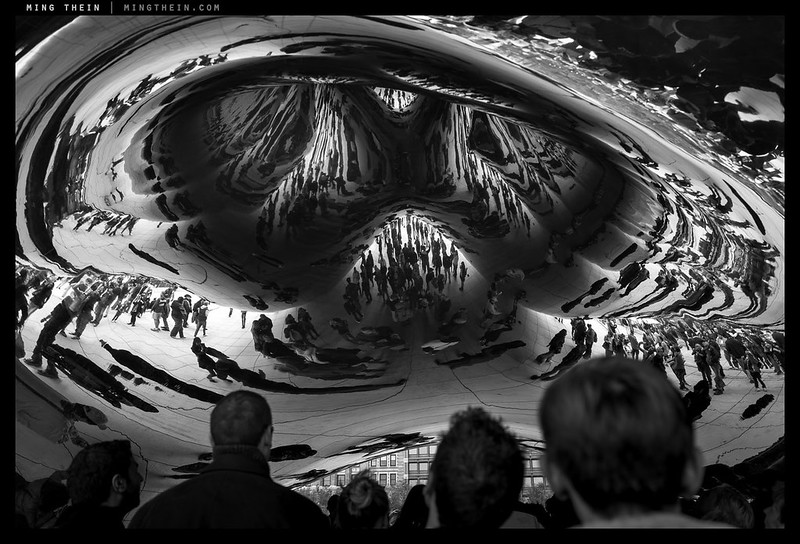
I was in Chicago at the end of last year for my exhibition of the same name at the Rangefinder Gallery; what we showed was actually only 27 of the 70+ images from that series, curated from a further 10,000+ images over the course of many years of shooting. However, I’ve always thought of Idea of Man as an ongoing project; our interpretation of the philosophy of life is as dependent on ourselves as it is on whatever we happen to be observing. And there’s always a place to go or culture to experience that is foreign to us, and may well raise new questions over what is ‘normal’, ‘expected’, and ‘individual’. Thus, the show must go on.
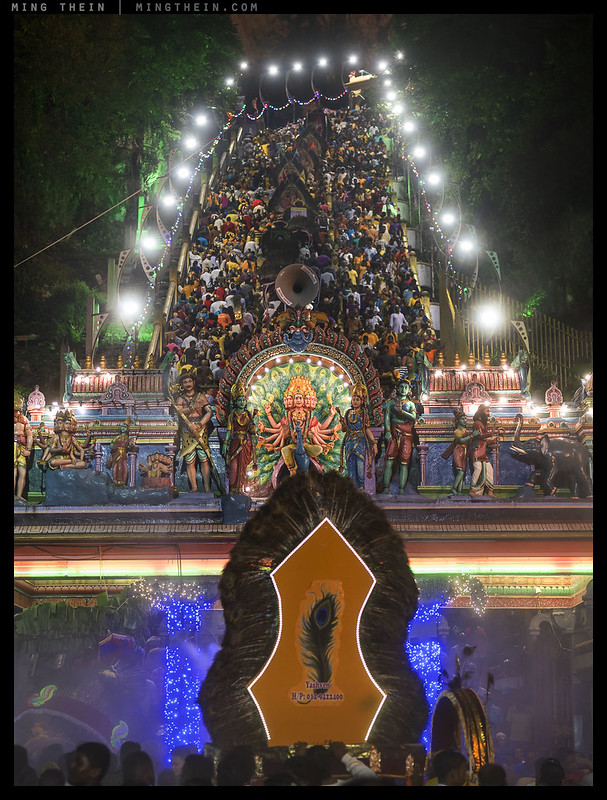
Alternate presentations: cinematic Thaipusam 2016 photoessay
As a follow on to the article a few days ago about my experiences shooting medium format for low light reportage work, I’m presenting the promised cinematic set from Thaipusam 2016. I deliberately left a few articles’ gap between them rather than presenting them back to back; this allows a bit of settling time and objectivity between the two sets of images. It also brings up the question of stylistic choices: how do you decide?
Reportage and medium format: Thaipusam 2016 with a Hasselblad H5D-50C
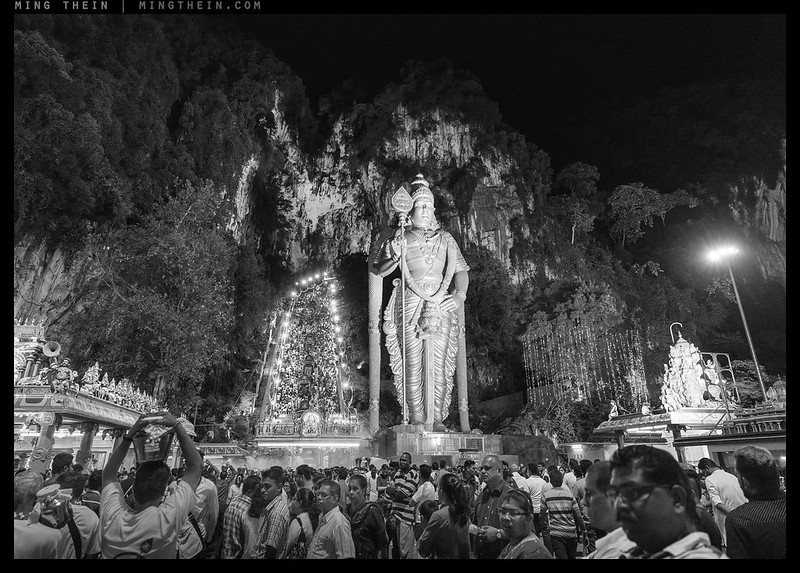
Thaipusam is a Big Deal for those involved religiously* – but also quite an amazing experience as an observer. One of, if not the largest of these festivals takes place in a cave temple about 15km outside of Kuala Lumpur every year at the Batu Caves. I’ve photographed the event previously in 2008, 2011 and 2012. This year’s festival happened just a couple of days ago on the 23rd-24th of January, and I went back for the fourth time. I’ll be the first to admit that it’s a very special experience even as a non-participant and not really understanding the significance of the ceremony to the believers. There really is some energy there from the sheer number of participants and general positive and hopeful thoughts that are going around at the time.
*Wikipedia does a much better job of explaining it than I can.
Photoessay: Saul and Edward
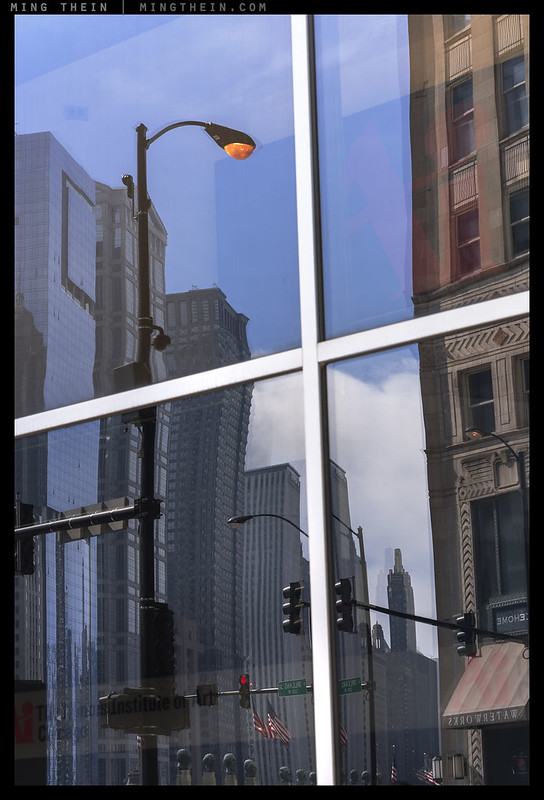
As a very much non-American, Chicago tends to evoke a few things in my imagination every time I visit: gangster hits in back alleys with fire escape stairs and Art Deco building rear entrances; Ayn Rand’s The Fountainhead; Edward Hopper’s Nighthawks painting (which coincidentally is in the Art Institute of Chicago, though I’ve not seen it in person), and to a lesser extent, Saul Leiter’s splashes of color sandwiched between glass. I suppose it must be curious to a local which of the many cultural references make it across the international divide, and how few of them are sporting…
Photoessay: An exercise in masochism
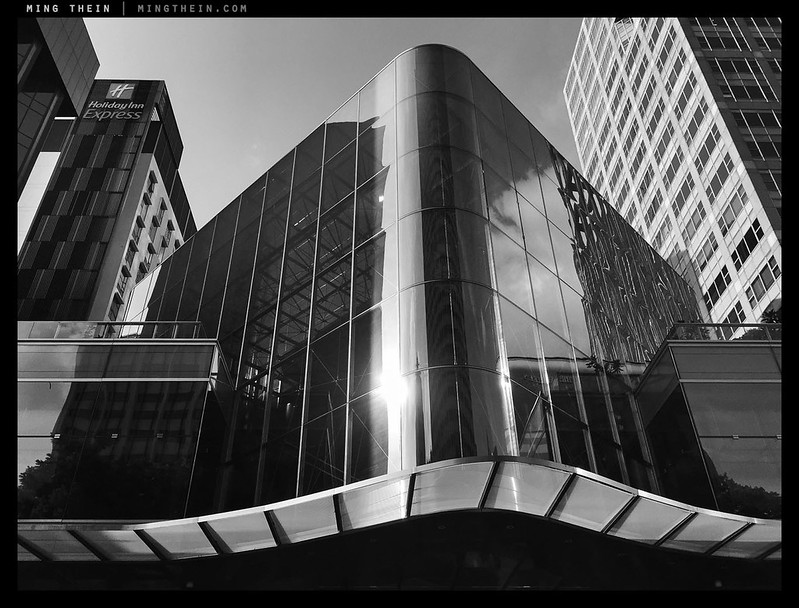
In the unlikely event you might have gotten the wrong impression from the title, let me set the record straight: the masochism refers to attempting to photograph architecture with an iPhone. There are far more reasons not to do so than otherwise – lack of perspective correction, for one. But there might still be reasons why you would: the intellectual exercise; practicing the discipline of composition and light (you definitely don’t have much else at your disposal), only having the wrong focal length on your other camera (or no other camera at all), or because…well, sometimes we all get lazy. Or have to make Instagram fodder. Curiously, I find that the typical clean blue skies I prefer for architecture do not play well at all with iPhones; they land up turning into a noisy mess. I suspect on these smaller sensors, the blue channel is taking a serious hit – worse still if you’re adjusting exposure to avoid clipping in some other area. Something to watch for when postprocessing, and selecting subjects. MT
This set was shot almost entirely with an iPhone 6 Plus (there might be some 5S in there) from various places around the world over the last year or so, and processed with Photoshop Workflow II. You can also look over my shoulder at the underlying postprocessing in the Weekly Photoshop Workflow series.
Photoessay: Abstracted forms, Chicago
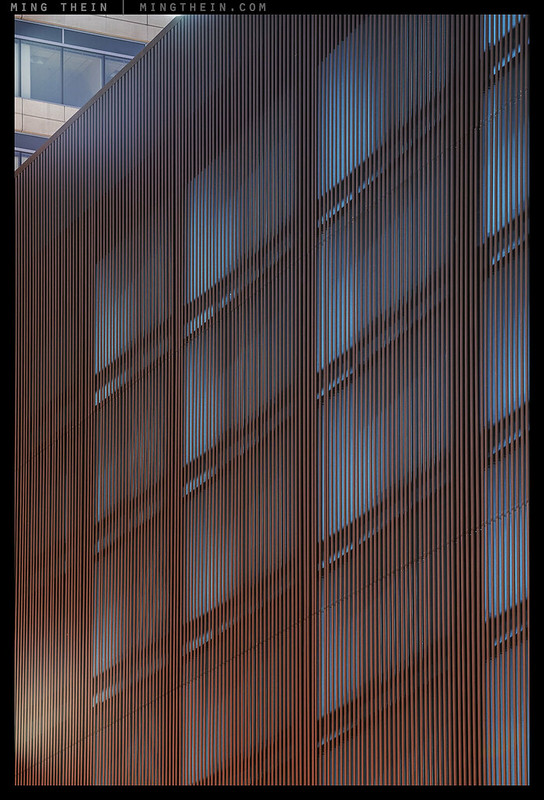
It is only natural that one is drawn to photographing architecture in what must be the most accessible living history in the world – Chicago has a human scale to it that New York does not, space to stand back and see the progression of styles and evolution of engineering from a couple of centuries back to today, and moreover experience the buildings in a human-scale way. It also has the opposite effect of highlighting the abstraction, and in a way coldness – of today’s architectural forms. I suspect it’s because we no longer build to an accessible scale: we just build to a final desired size. From a building user’s perspective, I’m not sure I like this. The detailing and intimacy of historical structures is gone; I suppose the cost is significantly lower, but sadly this isn’t at all reflected in the current purchase price of apartments. As a photographer however, it does make for some interesting images. This is a slightly shorter phototessay than usual simply because I did not find that many opportunities for the graphic compositions I wanted…until next time! MT
This series was shot with a Leica Q, Sony A7RII, Zeiss 2.8/35 PC Distagon, 1.8/55 FE, 1.8/85 Batis and Voigtlander 180/4 APO-Lanthar. Images in this set were processed with Photoshop Workflow II. You can also look over my shoulder at the underlying postprocessing in the Weekly Photoshop Workflow series.
Photoessay: More from the air (and some tips)
Today’s photoessay is a series of images that is both a continuation of the dreamscape series and the result of spending far too much time on an aeroplane in the last few months – think of it as the fruit of doing a little homework before departure. Of course, shooting from a chartered helicopter is nice, but also not something undertaken without a client or access to a central bank’s vault – preferably from a country that’s still solvent.
Photoessay – Architectural details of Aalen and Schwäbisch Gmünd

A few more images from my time in Germany earlier in the year – there are a lot of geometrically simple yet interesting architectural details dotted around the towns of Aalen and Schwäbisch Gmünd; of course I suspect they might be rather more depressing without the benefit of such strongly directional autumn light. I would consider this set to be mainly studies of form and texture; distillation of a scene into almost unrelated and non-contextural component elements and nothing more. Regardless of the subject, the aesthetics of an image boil down to this – every compositional element has different visual weight and presence that’s contingent on color and the amount of image it occupies, in addition to relativity to the rest of the frame. Sometimes it’s nice to be free from the expectations and preconventions a particular subject might imply – portraits must include the eyes, for example; or buildings a sense of scale. Enjoy, and lastly, Happy New Year! MT
This series was shot with a Sony A7RII, Zeiss 1.8/85 Batis and 2.8/35 PC Distagon. You can learn the underlying postprocessing in the Weekly Photoshop Workflow series.
Photoessay: Germany, on the move

Today’s photoessay comes from a much earlier trip in the year to Zeiss HQ in Germany; I had a lot of connections and a lot of transit time. The camera naturally falls to hand and one starts observing and recording. Having personally spent a lot of time in transit in a large number of countries around the world, I always find it remarkable how developed countries are quite similar – but somehow little things make a difference in implementation and efficiency of the overall system. Whilst German public transport lacks the brutal efficiency of the Swiss, it also lacks the unpredictability of the French and Italians, so I suppose that’s reason not to complain…MT
This series was shot with a Leica Q, Sony A7RII and Zeiss 1.8/55 FE and 1.8/85 Batis lenses. You can learn the underlying postprocessing in the Weekly Photoshop Workflow series.
Photoessay: Paradise Lost, part I: the daydream

What if inanimate objects had a soul? Hopes, dreams, lives, consciousness, a feeling of purpose? Do they have salad days? What happens when they retire, descend into old age and start to feel their mortality? How does a retirement community for Air Force aircraft feel?
Paradise Lost is a project I’ve been working on for the last few months that attempts to answer some of these questions in a photographic interpretation. At some point, I’ll expand this to include other machinery – mining equipment would be fantastic (but tricky to access) and cars are probably the next logical steep (and easier to execute). The first part of the series is supposed to evoke feelings of daydreaming, wistfulness and a nostalgia for golden days past. I’m once again experimenting with the metaphor of clouds as insubstantial fleeting thoughts (first encountered in The Dreamscape Project). Enjoy! MT
This series was shot with a Sony A7RII and Zeiss 1.8/55 FE and 1.8/85 Batis lenses.