
The small, light Nikon D600 got me thinking about full frame as a viable alternative for a lightweight travel kit again – the D700 and f1.4 primes was smaller than a D3 and pro zooms, but certainly nowhere near as convenient as Micro Four Thirds. Of course, M4/3 doesn’t give you anywhere near the same control over depth of field, and you lose out at least a stop or more in high ISO performance. The OM-D might give you back a couple of stops of hand-holdability thanks to its excellent stabilizer, but there’s nothing you can do about depth of field control short of using the manual focus Voigtlander f0.95 lenses – they certainly fit the bill, but they’re also large, heavy and somewhat defeat the point of a small, light body.

Shadows
This is where the pancake primes and full frame come in: a D600 body and two primes make for a very light but also very competent travel kit. And if you shoot film, it makes even more sense. (And naturally, being a 28mm lens, I was curious to try it out.) The 28/2.8 has ridden shotgun in my waist pouch when I go out with the F2T and 58/1.2 Noct; sometimes you just need something wider, and it’s a handy option to have without paying too high a weight/ size penalty.

Untitled
The lens is just 24.5mm long (in Nikon F guise; it’s also available in EF mount, which is slightly larger as it has to accommodate the electronic diaphragm components) and weighs a scant 180g; it actually feels reasonably hefty as the entire lens is metal – probably anodized aluminium – and is very well constructed. It’s actually so short that it’s tricky to mount without turning the focusing or aperture rings, as the only portion of the lens that doesn’t rotate is the tiny 3mm wide section in the middle that holds the depth of field scale and index mark. It would have been great to have a locking button on the aperture ring like the ZF.2 lenses, but I suppose Cosina reserves that function for its more expensive siblings.

Urban monk
Being an AI-P spec lens, the 28/2.8 has a chip to communicate aperture and distance information to the camera; you set the lens to f22 on a Nikon body and control the aperture using the command dials as normal. It will mount and provide full metering and electronic compatibility on any Nikon body. Focusing is manual, of course; would have been nice if there was a way to AF couple the lens – a built-in motor would probably have been impossible, but screwdriver focus might have been within feasible limits. That said, you always have the built-in rangefinder and in-focus confirmation dot (or beep on Canons) to help with determining focus, and the manual focus action is nicely damped and perfectly weighted – they certainly got the feel right with this lens. Since the lens is relatively slow and wide, it isn’t always easy to judge focus by the viewfinder alone – and Nikon’s modern focusing screens don’t help much, either. Most of the time, I could get achieve focus with the viewfinder alone, but on the edges it helps to use the dot: the lens suffers from moderate field curvature.

Shifty
The 28/2.8 is a 6-group, 7-element design; Voigtlander does not provide a block diagram or any details about the optical design, but from the way it performs and the fact that it can focus as close as 22cm from the sensor plane – yielding surprisingly high magnification – I suspect that the lens is a retrofocal but non-telecentric design to achieve this. As mentioned earlier, it displays moderate field curvature, some coma at the edges and chromatic aberration until f8 or so. (I tested the lens on the Nikon D600.) There’s also a tiny bit of purple bleeding at high contrast edges.

Through the looking glass
Sharpness is not a problem: the center is excellent at all apertures, with the border and edges lagging until about f5.6 or so; this is partially due to field curvature, and partially due to coma. Note that if you’re going to use wide apertures with this lens, you will need to use focus assist over the subject – not center focus and recompose. Edge sharpness is not too bad, but the corners never get critically sharp due to radial coma/ smearing; you always feel that things have been ‘stretched out’ a little. No problem; just make sure your subjects are within the central portion of the image circle.

Umbrellas
Not having a huge number of elements, color rendition and contrast are excellent; images are rendered with a slightly warm hue, high saturation and macrocontrast. Microcontrast still isn’t as fine as the Zeiss lenses, but it’s certainly on par with Nikon’s regular AF offerings. This would be a good lens for low contrast scenes, but care must be taken if you’re shooting around noon in the tropics – you’re going to get things blocking up to black or overexposing if you don’t pay attention to your blinking highlights warning. It makes a rather good lens for black and white work, too.

The morning after the night before
I consider myself a bit of a 28mm aficionado; perhaps fetishist is a better word. I find that it’s the widest I can go and still maintain a relatively natural look to the images without the usual wideangle geometric distortion; I feel that the focal length also matches my instinctive field of view quite well. This means that in my time I’ve owned and shot with a huge number of 28mm lenses and 28mm equivalents; the two I currently own – the Nikon AFS 28/1.8G and Zeiss ZF.2 2/28 Distagon are reviewed on their respective links, too. Aside from that, I’ve also got the Zeiss ZM 2.8/28 Biogon for my Leica M9-P, the 28/1.8 equivalent on the RX100, the iPhone 4, and an Olympus 15/8 body cap.

Texture
So the natural question would be where does the Voigtlander 28/2.8 fit in – both in the grand hierarchy of 28mm lenses, as well as as a tool; I actually think it has a pretty well-defined niche. The Nikon 28/1.8 G is large but light, has autofocus and pretty good optics; the Zeiss 2/28 Distagon has stellar optics and a unique pictorial rendering, but is manual focus and surprisingly heavy for its size. Both have roughly the same maximum aperture and T stop. The Voigtlander is a tiny slip of a lens that’s capable of excellent results in the center, and decent results at the edges – these optical characteristics suggest it would serve as a good documentary lens (there is some distortion of straight lines which rules it out for architecture), but moreover an option where you a) need something light and small, and b) are unlikely to run out of light – though relatively low light work is still possible thanks to the high-ISO abilities of the current batch of full frame cameras. In short: this is a great lightweight travel lens, especially if paired with something a bit longer – perhaps the 40/2 or 45/2.8P. Now, if only somebody would make a decent focusing screen for the D600…MT
A big thank you to Eric Goh at Fotoman Marketing, the Malaysian distributor for Voigtlander lenses for the extended loan of the review sample.
The lens is available here from B&H in Canon and Nikon mounts.
____________
Visit our Teaching Store to up your photographic game – including Photoshop Workflow DVDs and customized Email School of Photography; or go mobile with the Photography Compendium for iPad. You can also get your gear from B&H and Amazon. Prices are the same as normal, however a small portion of your purchase value is referred back to me. Thanks!
Don’t forget to like us on Facebook and join the reader Flickr group!

Images and content copyright Ming Thein | mingthein.com 2012 onwards. All rights reserved












Photokina 2012 commentary and opinions
The rush of product announcements is over, the collective giddy fanboy-like enthusiasm has died down somewhat, and presumably some serious business is being discussed in the back meeting rooms and dingy service hallways of the exhibition hall in Cologne, or over giant pretzels at the local bierhaus. It’s about the right time for a bit of serious reflection and commentary on some of the more interesting announcements from the last week.
The beginning of full frame for the masses.
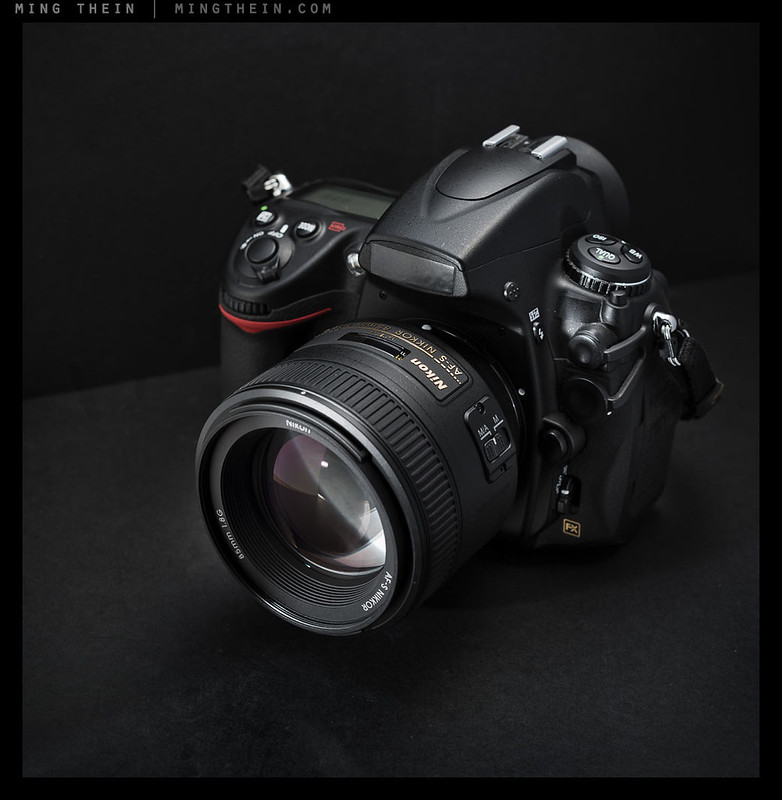
The Nikon D600 and Canon 6D are squarely aimed at the space which the Nikon D70 and Canon 300D battled over nearly eight years ago; enthusiast-level cameras with serious image quality and a reasonably good feature set. Granted, the price point is a bit higher, but then again, inflation has moved things along somewhat, too. I actually think both of these cameras are far more capable than the average user needs, but people will buy them anyway. Commendably, Nikon actually had cameras in stock, and for sale at dealers on the day that was announced; this seems to be a rare exception in days of ‘pre-announcements’ months ahead of actual availability. And there weren’t any shortages, either – my dealer (admittedly one of the largest in Malaysia) got 60 bodies, compared to two(!) D800s. The D600 is an extremely refined camera that has no major issues anywhere – and I’m pleased to see that QC is much better this time, too; even though the camera comes from Nikon’s Thailand plant instead of Sendai. I’ll be doing a full review the D600 in the coming days, so stay tuned.
Breaking away from the traditional fixed limitations to camera software.
Nikon’s S800C is the first attempt by a large, traditionally-camera (I don’t count Samsung) manufacturer at doing quasi-open firmware; I think its success will depend on two things – the ecosystem around apps, and the level of integration with normal photographic functions. I don’t think it makes sense to have a camera that’s touch-screen only, which requires you to navigate some menus before you can even take a picture; instead, perhaps the ‘camera app’ could be loaded and running over the base OS by default, with other functional configurations loaded as required. They’ll need to retain buttons, too. And I have no idea how Android handles image processing, especially for very large files.
Wireless, wireless, wireless
Nikon, Canon and Olympus have gone big on wireless file transfer this year, each taking slightly different approaches. Nikon’s is dongle based, and allows ftp of files to any server, which is great for working professionals; Canon’s is built into camera (why aren’t they all like this?) – I haven’t used one, so I can’t comment on functionality. Olympus is card-based and requires an app on a tablet or smartphone to work, but is very well integrated with social media. I think the strategies actually represent their respective companies quite well; Nikon is still conservative and photographic-focused; Canon is a bit gadgety, and Olympus’ target market is very much the blogger and casual user. I hope that at some point the wireless standards will be sufficiently fast and well-defined enough to allow transfer of any file to any other device, or direct upload from the camera itself; Olympus’ implementation seems to work the best of the lot (as far as speed and multiple users go) – unfortunately there’s no way of having it send anything other than a jpeg to a tablet.
More mirrorless
There were a slew of offerings here: the Fuji X-E1, Panasonic GH3, Sony NEX-6/ NEX-5R, Olympus E-PL5 and E-PM2. It’s clear that smaller sensors are here to stay – remember sufficiency for the masses – and viewfinders are becoming an increasingly rare spec. The X-E1 is probably what the X-Pro should have been in the first place; I honestly found the hybrid finder in the X100 gimmicky after a while, and landed up using the EVF most of the time for more precise framing. If AF is improved as much as they claim, Leica will have competition on its hands, but then again, they probably won’t mind because they’ll just sell more lenses. The GH3 now occupies top spot in the M4/3 pyramid, and appears to be a notch above the OM-D in both spec and price. The asking money – $1299 – isn’t cheap at all. Fortunately, sensor quality in the new M4/3 cameras more than justifies it. Sony is more of the same – a cheaper NEX-7, and an evolution of the NEX-5. The hybrid AF technology with phase detect points in the imaging sensor itself was surprisingly low-key; I would have thought that something this useful would be deserving of more fanfare. Olympus’s lower-end cameras have been updated with the innards of the OM-D (though not the 5-axis gyro stabilizer). The E-P3 remains in the lineup for now, though I don’t see why anybody would buy one given the price and older sensor. I’ve got an E-PL5 here for testing, and it’s a pretty impressive camera – this is what the original E-P1 should have been. It’s fast, responsive, very nicely built, and pocketable with the body cap lens; I’ll have a full review up in the coming days.
Sony A99
Sony’s different approach to mirrorless has meant some unique value propositions at the low and mid range, and a slightly odd product at the high end – the A99 shares a base sensor with the D600, but is positioned at the price point of the D800E. At that level, you get higher fps than either camera, an excellent EVF, but a slightly odd control layout and user interface. General operation is fast enough, but I have no idea whether tracking AF is up to speed with conventional DSLRs or not; this has traditionally been a weak point of Sony cameras. I don’t think the package is compelling enough to attract new photographers to the brand, but videographers might be convinced by the quality of the output; the RX100 is seriously impressive, and that sensor is a fraction of the size of the A99’s. I still don’t think EVF’s are anywhere near good enough for critical applications, though; it’s not so much about resolution as dynamic range. I previously had a hands-on preview here.
Carl Zeiss
It seems that they’ve come back with a vengeance: first the 2/135 APO, and then the 55/1.4 Distagon, not to mention AF lenses for the X-Pro and E mount – a 12/2.8, 32/1.8 and 50/2.8 macro. It seems odd that they would skip over the much larger M4/3 market at first, though the relationship with Sony might have something to do with it. On the SLR front, although most of the lenses are capable of excellent results on even the D800E, the 50/1.4 Planar and 85/1.4 Planar have left much to be desired. It’s interesting to see that the 55/1.4 adopts their wide-angle Distagon formula; I suspect this is going to be an outstandingly good lens – it had better be, given the size (82mm filter!) and likely price. It’s apparently the first in a range of very high resolution DSLR lenses that will sit above the current ZF.2/ ZE line.
More M4/3 lenses
Olympus 60/2.8 Macro, 15/8 body cap lens and 17/1.8 announcement; Schneider’s 14, 30 and 60mm primes and Panasonic’s 35-100/2.8 were all announced. Serious glass is a good sign for system maturity. Whilst I won’t be buying the 17, Schneider 30/ 60 or Panasonic 35-100, the Olympus 60/2.8 macro has proven to be one of, if not the best lens I’ve used on M4/3, and one of the best macro lenses ever, period. I’ve acquired one for myself, along with the 15/8 body cap – it’s a fun toy, makes my E-PM1 an interesting pocket option, and is a very good street shooter thanks to huge DOF and a mechanical focus lever. Being a 28mm lover, the Schneider 14mm is definitely on my list, though the expected price tag is eye-watering. I think they will have to lower prices for this range of optics to be a success; I simply can’t see any quantity of people willing to pay this much for lenses relative to the cost of the rest of the system.
Enthusiast compacts with small sensors are still going strong
There were several announcements in this category: the Olympus XZ-2, Canon S110/ G15, Nikon P7700, Panasonic LX7, and Fuji XF1. All were evolutionary rather than revolutionary; the most exciting thing was the mechanical lens on the rather compact (and surprisingly large 2/3″ sensored) XF1. I think for this category of camera to survive, they’re going to have to get smaller and more versatile with lenses, or cheaper; Sony’s RX100 makes for stiff competition given its much larger sensor and reasonably fast lens – and it’s compact. I see the Canon S110 and Fuji XF1 doing reasonably well because of their size; the LX7 has that f1.4 lens; the rest are probably going to wither.
Leica
Aside from the new, confusing naming, Leica did what we expected them to do (and probably should have done quite some time ago) – brought live view to the M, along with a much improved LCD. Although I’m sure they’ll sell in droves anyway, what will make or break this camera as a professional tool won’t be price – rather, the quality of the sensor from the new Belgian supplier, as well as the reliability of the electronics and other parts. At least we don’t have to worry so much about rangefinder alignment; however the EVF makes things somewhat ungainly and also impossible to use flash or a thumb grip (not that that will work anyway, with the ergonomic modification and extra control dial). The M also loses one of its windows – frame lines are now LED illuminated, which is a big deal because it means much easier viewing under difficult light conditions. The M-E is a stripped down M9; I suppose there were a lot of leftover components to use up. I’m curious about the color, but that’s about it. The S has received a supposedly new sensor, though the pixel count remains the same; let us hope image quality is improved, then.
The wildcards: Sony RX1 and ‘that Hasselblad’
Perhaps this section should have been called ‘the good, the bad and the ugly’; or ‘beauty and the beast’. The RX1 appears to be a masterpiece of innovation, even though the camera isn’t as small as it appears to be, and the price is rather high. I think it’s now only a matter of time before we see great compact full frame cameras in the vein of the older Ricoh GR1v and Olympus Mju II. That can only be a good thing for those of us who don’t always want or need to carry around a D600. The Hasselblad Lunar, on the other hand, is either a masterpiece of capitalistic genius which will make them a boatload of money from the taste-challenged Middle Eastern and Chinese markets, or the beginning of the end for the brand. I suppose this is what happens when a bunch of financiers who don’t understand photography take over a camera company; for shame. Granted, Leica is doing the same thing with its rebranded Panasonics, but at least they look better than the original versions. The Lunar is so hideously ugly that it appears to have been designed by a five-year-old, rendered by a fifth form graphics design student, and then posted on April 1st. Except, it wasn’t, and it seems that nobody within Hasselblad can see that the emperor’s new clothes are missing. Having said that, a technology partnership with Sony makes perfect sense: look at the technical prowess required to create the RX100 and RX1. If anything, they could breathe new life into medium format. However, rebranding the company’s existing cameras is definitely NOT the way to go.
A note on marketing strategy
For whatever reason, companies seem to choose to announce all of their products at the same time – this is stupid. As a result, none of the products individually get the attention they could otherwise have managed if the announcements were spread throughout the year; Photokina should be an industry show where things are on display and the reps are there to answer questions and do business. I’d consider myself a fairly avid follower of the industry in general, and yet I keep finding things that I simply overlooked in the deluge of announcements – the Nikon P7700 was something I wasn’t even aware of until today, for instance. And the Zeiss and Schneider announcements got lost against the noise against the Hasselblad Lunar. Fifteen minutes of fame, yes – it just doesn’t make sense to fight with your competitors for the same fifteen minutes so that everybody at best gets five seconds each. Leica did it right with their May 10 event; I suspect the impact was much stronger than at Photokina, and they certainly got more attention in the blogosphere.
Overall, the theme for this year has been evolution and lenses; there are a lot of solidly interesting products out there, some of which I’ll review, some of those in turn which I’ll buy – but the list isn’t that long, probably just the Schneider 14/2, Zeiss 1.4/55 Distagon and 2/135 APO. I don’t see anything dramatically different or improved over what we’re currently using, but better lenses are always worth lusting after. MT
____________
Visit our Teaching Store to up your photographic game – including Photoshop Workflow DVDs and customized Email School of Photography; or go mobile with the Photography Compendium for iPad. You can also get your gear from B&H and Amazon. Prices are the same as normal, however a small portion of your purchase value is referred back to me. Thanks!
Don’t forget to like us on Facebook and join the reader Flickr group!
Images and content copyright Ming Thein | mingthein.com 2012 onwards. All rights reserved