Photoessay: Tokyo reflections

One more from the Tokyo series. It never ceases to amaze me how clean everything is – combine that with strong, directional light, and you’ve got the making of images with instant depth. Reflections are wonderful things; they’re visual metaphors for something that might or might not be there in reality. Shot with a Sony RX100. Enjoy! MT

_RX100_DSC2139b copy

_RX100_DSC2533b copy

_RX100_DSC1959b copy

_RX100_DSC2216b copy

_RX100_DSC1957b copy

_RX100_DSC2441b copy

_RX100_DSC2458b copy

_RX100_DSC2081b copy

_RX100_DSC2020b copy

_RX100_DSC2154b copy

____________

Visit our Teaching Store to up your photographic game – including Photoshop Workflow DVDs and customized Email School of Photography; or go mobile with the Photography Compendium for iPad. You can also get your gear from B&H and Amazon. Prices are the same as normal, however a small portion of your purchase value is referred back to me. Thanks!

Don’t forget to like us on Facebook and join the reader Flickr group!

appstorebadge

Images and content copyright Ming Thein | mingthein.com 2012 onwards. All rights reserved

The burden of choice

_7065342 copy

A benefit (or curse, depending on how you look at it) of the modern photography era is that we now have a huge amount of choice when it comes to equipment. A lot of it is pretty affordable, too; especially stuff that might be one or two generations behind the latest and greatest. Does it perform any worse than when it was new? Does it have any less potential? No. That still lies with the photographer.

That said, I’m as guilty as the next guy of collecting – nay, hoarding – cameras and lenses. The tactile experience of taking a photo matters to me; it should be just as enjoyable as the result. Nice equipment is a pleasure to use – ergonomic cameras, well-thought out controls, nice materials, bright finders etc. are a pleasure. I don’t like fighting my equipment – nobody sees that struggle in the final image, and it’s just frustrating. A camera that’s enjoyable to use makes you want to go out and use it, which in turn encourages you to experiment, and that – ultimately – can make your images better. It is NOT the same as collecting equipment in the mistaken belief that it will correct some fundamental deficiencies in your own skillset.

The upshot of all of this is two things: firstly, I’ve used a lot of gear over the years (see the CAMERAPEDIA! for concise opinions on everything I’ve used), and the amount that’s filling my dryboxes has steadily increased since I started doing this full time and could write off gear as a business expense. Actually, it’s gotten to the point that I had a sale last month just to clear the clutter. I’ve still got lenses and cameras I seldom use, which both make me feel guilty and like I should be out and shooting even more than I already am.

However, I digress severely. A couple of people emailed me recently asking how I pick what to use on any given day – this is not a straightforward question to answer, and it’s made more difficult by both a combination of lots of gear, a heightened awareness of image quality, and knowing that you have some very specific gear for very specific situations, some of which you might encounter during the day. It’s really about balancing compromises: you know that you’re going to encounter some situations that could benefit from a very small portion of your equipment; do you bring it along or not?

The immediate instinct of most people is to bring whatever they’ve got, just in case. I’ve done this before: in 2008/9, I went on a two week trip to Japan with a D3, D90 and pro zooms to cover 14-300mm. Without gaps. The thing that struck me was a) I really wasn’t enjoying myself by day three because of the weight; and b) at the end, I was only carrying one lens and getting much stronger images out of that. Moral of the story: the less gear you carry, the more you focus on making the most of what you’ve got. Although I’ve tried to follow that philosophy for all future trips and assignments, there are exceptions. And of course the more you shoot, the more things you see – I can count no end of the frames I’ve seen that would suit the FOV or perspective of lenses I wasn’t carrying at the time, especially more so in recent memory.

I guess it’s a very different feeling from carrying everything and wanting to try every lens in every situation to get a bunch of similar but consistently weak images; it’s more about seeing so many different potential frames that you simply do not have the time to shoot everything – to get that feeling like you’ve shot the place conclusively and captured all there is to possibly capture. You go away feeling that there are still more opportunities and possibilities you have’t yet explored or shot.

My solution to this is to focus on the essence: how can I say what I want to say in as few frames as possible? This might mean isolating a single key element and excluding every distraction to the point of abstraction, or including everything as context. But usually, anything in between just feels a little weak and compromised. I find that whilst this certainly helps me to focus, it doesn’t really do anything to appease the feeling of anxiety that I’m missing out on something. In fact, I’m finding that if anything, having more choice isn’t helping. My wife will tell you that I go through the same anxious thought process before every trip whilst deciding what to bring; in fact, it starts weeks before. I will make a list and then change it repeatedly, and in the end bring nothing resembling what I originally intended to pack.

Let’s take the last Japan workshop trip as an example. I initially wanted to go with the M9-P and perhaps GRDIII as a backup; then the RX100 came along, and I was toying with the idea of the OM-D; but if I was to bring the OM-D, should I pick up a 12-35/2.8 for an all-in-one solution? Or do I use the 60/2.8 instead of the 45/1.8? Or bring both? Should I pack the 100-300 for some very compressed perspectives, too? Would I even use it? What about the grip? And then to make things more complicated, I got the D600 and two pancake primes – the 28/2.8 Voigtlander and then 45/2.8P Nikon. The latter might be a bit short for my normal uses, but I could certainly make do. And the size was very attractive indeed, with no compromises in image quality. But how useable would manual focus be on the D600? And why not use a 50/1.8G instead of the 45/2.8P, which would give me AF and another stop? To top it off, I’d have to consider what my students might be shooting – which turned out to be a mix of DSLR, M9, M-Monochrom and compact.

In the end, they all entailed compromises; FX would have meant either size and weight or suboptimal manual focus and slower lenses; rangefinder would mean poor low light ability; M4/3 would mean not sharing a common platform with my students, and as much as I’d love to just shoot with a compact for myself – and did on the days I wasn’t teaching – it wouldn’t really let me teach the things I’d wanted to teach (or try out rare second hand lenses in Tokyo, but that’s another separate matter altogether). I went with the OM-D, 12/2, 20/1.7 (I didn’t use it), 45/1.8 and RX100. I felt like I could perhaps have gotten another 20 or so good images if I’d had the 100-300 too, but I certainly didn’t miss carrying it around, and leaving it behind in the hotel room would almost certainly mean that I’d see something at the precise time I didn’t have it – Murphy’s law and all.

Going on assignment is different, however. In these situations, I know specifically what kinds of images I need to capture, and in what style; more often than not, I have a shot list which I need to deliver, and there will have been a pre-shoot reccie trip to determine the angles, setup and focal lengths required. In short, I pack everything I might possibly need, and a spare or two – you simply cannot afford to have things fail when on assignment. And you never know when a client might ask you to try something different, or add in something extra, so it’s always best to be prepared. For commercial/ corporate style work, I pack the D800E, D600, speedlights, umbrellas/ stands/ diffusers/ modifiers, and the full suite of Zeiss lenses from 21 to 100mm; for macro work, it’s the same except except I’ll have the 60, 85 PCE and 100 macro lenses; for architecture, I bias wide and leave behind the speedlights. A tripod is a must in every situation. The only time when this setup differs fundamentally is when I’ve got to shoot a reportage job: depending on the range and light quality I’m likely to encounter, I might pack anything from the M9 to the OM-D and 100-300mm. But I’ll always have a minimal amount of gear in a waist pouch and two bodies ready to go – one with a wide and one with a tele – that way, you’re never caught unprepared, and you can move quickly.

The last situation I haven’t covered is when I’m shooting solely for myself. This is actually the easiest scenario: I simply take whatever I feel like using on the day, safe in the knowledge that I’m under no pressure to get any particular shots; this leaves me free to focus on purely creative work. I’ll usually take either the newest thing in the arsenal – something I’m least familiar with, so I can push its creative potential and see what I can do with it – or I’ll take the most compact and sufficient thing, just in case I happen to see something – this particularly on the days where photography isn’t my priority, but you just never know. These days, that’s the Sony RX100. I might even take out the F2T if I’m feeling particularly slow and contemplative, and the weather is being cooperative.

Bottom line: there is such a thing as too much choice. For amateurs, I think the best thing to do is apply a little forethought to the kind of situations you might encounter and the resulting type of shots you want to capture; this then translates into the kind of equipment you’ll need. Carry no more, because being a mule isn’t fun – nor is it good for your back. For the more advanced shooters – assuming you’re not on assignment with a shot list – it’s probably beneficial to creative development to focus on changing one or two parameters only – pick one or two primes, or a single format, etc.; I find this forces me out of my comfort zone and into experimental mode, especially if it’s something I’m not familiar with. (Depending on your self-discipline, you might want to carry a more familiar backup, too.) It’s possible that the pictorial results might be a disaster, but then again, they could also be a wild success – you never know until you try. But I do know that if you spend too long trying to decide what to bring out, the light is going to fade and you’re not going to get any pictures at all. MT

____________

Visit our Teaching Store to up your photographic game – including Photoshop Workflow DVDs and customized Email School of Photography; or go mobile with the Photography Compendium for iPad. You can also get your gear from B&H and Amazon. Prices are the same as normal, however a small portion of your purchase value is referred back to me. Thanks!

Don’t forget to like us on Facebook and join the reader Flickr group!

appstorebadge

Images and content copyright Ming Thein | mingthein.com 2012 onwards. All rights reserved

Less is more

_M8_L1026011bw copy
Too many options can be a confusing thing. Leica M8, 21/1.4

This article started out as an exploration of the liberating experience when shooting with the compact point-and-shoot camera. It then morphed into a small dissertation upon the use of the Sony RX100 is a street and travel camera; in the end I landed up rewriting the whole thing because I think there is a larger topic at hand here which is probably of more use to the photographer at large.

In previous articles, I have dealt with subjects such as using just one lens for a trip and shooting with compact cameras professionally. The August competition was the compact challenge which required participants to shoot solely with a fixed-lens, small-sensor point-and-shoot camera. I have also talked about points of sufficiency, and knowing precisely how much resolution or how much told you need for the job at hand. What I want to cover in today’s article, is something a concept spanning all of these subjects, and perhaps a little bit more.

_M8_L1024673bw copy
Ninja coffee. Leica M8, 21/1.4

Let’s throw the entire photographic rulebook and all of its associated dogma out of the window for moment. What really matters when you’re making an image? (I recently dealt with this too in a two-part article here, and here on what makes an outstanding image.) What is it that you audience sees when they look at your photograph? It certainly isn’t the camera, in so far as in that it created the image and the lens and format used enforce both perspective and depth of field properties; going beyond that, the View of a photograph sees light first. In fact, that’s pre-much all they see because without light of some sort, it is impossible to make a any photograph. Thus, the sole function of the camera is reduced to a light capturing, measuring and visualization device. Beyond this, it is all fluff and gravy.

_N8_L1002520 copy
Color coordinated car. Leica M8, Zeiss ZM 2.8/21

Suppose for a minute that a photographer has no preference for any particular focal length, is able to see compositions everywhere they go, and utilize perspectives correctly. In short, they could use any camera and any lens/ field of view combination and still produce strong compositions. Let us continue to assume, that the same photographer also has the ability to recognize interesting light. He or she should also have some modicum of technical capability – perhaps the minimum required to understand the basics of exposure and mechanics of taking a photograph. Last, but not least, they should also be able to recognize interesting subjects. In short: we want a photographer who knows how to see, aim the camera, and press a button.

I don’t think this is a very difficult set of criteria to fill; I’m sure there are many, many people out there who would have no problems in meeting the brief. Now, notice how much the camera has been decoupled from this entire process; in fact, not just decoupled, but completely relegated to being almost unimportant. Photography is about writing like to create images. If the mind of the author is clear, and his command of the language strong, then the type pen and paper employed simply do not matter.

_M8_L1017764 copy
Perfect spacing. Leica M8, 50/1.4 ASPH

In practical terms, what does this actually mean for photographers? Once a photographer has mastered the use of light, composition and perspective, identifying subjects, and I suppose the degree of postprocessing, it means that they are able to create magnificent images regardless of the equipment to hand. I remember personally going through this moment of liberation – a kind of ‘eureka!’ – after which I realized the camera really does not matter; any focal length or format is fair game. Light and composition take center stage, and all else is secondary.

Many of you have probably noticed a high level of consistency in the look and feel of the images I present on the site, regardless of whatever camera was used to capture them. I have actually been criticized for this in the past, with the prosecution claiming that I do not allow the natural qualities of the camera/ lens I am using or testing to shine through in the final image. I beg to differ; I believe that the ability to produce exactly what you envisioned in your mind at the time of pressing the shutter button means that your artistic vision is not compromised or tempered by the equipment. This is not to say that you may not choose to use a particular piece of equipment because of its artistic qualities; however, one needs to know exactly what these qualities are, and how their use affects the final pictorial impression of the final image.

_M8_L1026600bw copy
Questions or directives? Leica M8, 21/1.4 ASPH

I think this liberation came about for me around the end of 2008, or perhaps early 2009. I was shooting with a Nikon D3 at the time in Japan; I carried lenses providing continuous coverage from 14 to 300 mm. Needless to say, this was an extremely heavy way to travel. By the end of the trip, I was leaving everything except my 24-70 zoom in the hotel room and just walking around with one camera and one lens. After a couple of hours, I realized that rather than seeing compositions which I was unable to execute because I wasn’t carrying the right lenses, I was now seeing only the ones I could; a little while after that, I was seeing potential shots everywhere I went.

The second phase came later in 2009. I spent a couple of weeks with the Leica M8.2 whilst writing a review for the magazine I served as editor of at the time; I was only given one lens – a 35/2 (45mm due to the M8’s crop factor). Being completely unfamiliar with the operation of a rangefinder; I stuck to that one lens just to try to familiarize myself with that way of working and seeing. Guess what: I liked it so much, and found the small size and unintimidating nature the camera so liberating, but I landed up selling my D3, and most of my Nikon lenses in order to fund the exact same combination for my personal use. I was never able to afford more than one or two lenses at any given time, given the price of Leica glass, and my humble occupation at the time.

_N8_L1000065bw copy
Looking for company. Leica M8, Zeiss ZM 2.1/28

This austerity by necessity actually forced me to focus on improving the quality of my images through the strength of the compositions; more importantly, I learned the skill of previsualization of both composition and perspective even before bringing the camera to my eye. The were occasions, for instance social gatherings, where I felt the need for a smaller one nondescript camera. I landed up purchasing the smallest Canon point-and-shoot I could find. That IXUS SD780IS landed up following me everywhere, riding shotgun in a pocket – simply because it was so small and unobtrusive. However, I don’t think it was the camera or its size that did this; rather it was me applying the previsualization techniques learned with the Leica M8 to the smaller format. I was getting images I liked, and which were compositionally strong – regardless of the format or type of camera. For the first time in my work, the camera became transparent.

Now, rather than buying something because the spec sheet looked good, or because it came with bragging rights, I bought equipment because it allowed me to achieve the specific look or feel I desired. Coupled with my postprocessing experience, I now felt completely in control of my images; I could create and share exactly what I saw in my mind’s eye.

_780_IMG_2695bw copy
Rushing for the train. Canon IXUS 100 IS

Let’s take a step back and deconstruct my experiences along the road to compositional liberation into something which any photographer might find useful and actionable:

1. You have to begin with a reasonable degree of understanding of the technical skills for both capture and post processing. However, remember that these are merely tools, not an end in themselves.

2. Force yourself to shoot for an extended period of time with what you would perceive to be a limited set of equipment. This may be one zoom, or one prime; the point is that it conditions your mind into recognizing what you can capture and ignoring all of the things that you can’t.

_780_IMG_1784bw copy
The ladder. Canon IXUS 100 IS

3. The ultimate distillation of this is using prime lenses, shooting a good number of frames with each. By using nothing except a single perspective on extended basis, your mind is trained to pre-visualize the angle of view before you look through the viewfinder. You know when you have mastered a particular focal length or field of view when you start seeing compositions everywhere, and you can execute these with the proper perspective and relative prominence of foreground and background. It’s even better if you can do this with the lens stopped down; by eliminating shallow depth of field as a compositional crutch, you are forced to fully think about and utilize all of the space in your frame. You cannot simply fill it with a merely pleasant-looking but non-contextual wall of blur. This of course leads to developing full control of composition, even in the out of focus areas of your frame.

_780_IMG_2485b copy
Canterbury Cathedral. Canon IXUS 100 IS

If you are able to shoot with a compact camera or perhaps a camera phone, and achieve the exact composition you intended, you have come full circle. Image quality, is of course the subject of a completely different discussion. Although many photographers believe that they could manage with much less equipment, or much simpler equipment than they currently have, almost none of them put it into practice. Even I find it difficult to select which get bring on a trip; I am sometimes drawn into the trap of bringing something ‘just in case’ rather than picking a practical selection and concentrating on working with it. It requires a strong and conscious effort to avoid this. (Once again, if I am on assignment then I have the opposite philosophy; this is because you have to be prepared for contingencies, and failure to plan and deliver because of oversight is simply unprofessional.)

_RX100_DSC0319b copy
A little urban abstract. Sony RX100

Unfortunately, the fastest – and perhaps only – way to truly experience this liberation, is to go through the process. (If any of you have managed by other means, I would love to hear from you in the comments.) But I think it is important to at least try it if you’re serious about taking a photography to the next level; in my article on the stages of evolution of a photographer, you’ll remember that the most difficult thing to achieve is the ability to visualize your image first, and then execute it as intended. Strength of the idea and how obvious it is to your audience is paramount. MT

____________

Visit our Teaching Store to up your photographic game – including Photoshop Workflow DVDs and customized Email School of Photography; or go mobile with the Photography Compendium for iPad. You can also get your gear from B&H and Amazon. Prices are the same as normal, however a small portion of your purchase value is referred back to me. Thanks!

Don’t forget to like us on Facebook and join the reader Flickr group!

appstorebadge

Images and content copyright Ming Thein | mingthein.com 2012 onwards. All rights reserved

_RX100_DSC0664b copy
Service. Sony RX100

My end-2012 picks – or a Christmas gift list for photographers

Assuming you have photographer friends whom you’d like to buy a little something for over the festive season, this list is for you. It’s also for you if you just want to indulge yourself; go ahead, there’s nothing wrong with that. I suppose if you were really cunning, you could send one or many items from here to other people as heavy hints (and no, I’m not doing that).

On a more serious note, the list represents some of what I think are the best products of the year – both major purchases and minor ones. Not all will be useful for everybody, but they’re only here because they’re good. Some may surprise you, others may not.

In the interests of full disclosure, the links in the text below take you to the product page on Amazon with a small referral fee credited to me for each purchase. It doesn’t cost you any more, but it does help keep the site running. Thanks in advance for your support!

Compacts
This year’s king of the hill has to be the Sony RX100 – one incredible amount of sensor crammed into that tiny body. Amazingly, despite the increase in resolution, I think pixel-level performance is actually better than the Nikon 1s. For JPEG only shooters – people who don’t do any postprocessing, i.e. your average non-photogrpaher family member or friend – then the Fuji XF1 is superb. If you like lots of external dials and controls, the Canon G15 is a surprisingly nice-feeling package; it isn’t as compact nor is the lens as fast as the Panasonic LX7, but then again it has a bit more reach, too. The nearly-as-good LX5 predecessor is now heavily discounted at $249 and excellent value for money. I’m going to lump the large sensor compacts in here too: of these, I like the Leica X2 and I’ve been impressed by the image samples from the Sigma DP1M and DP2M; however, I’ve not shot with them so I have no idea if they’re still as maddeningly slow as the originals.

CSCs
Without question, the latest generation of Olympus cameras deserves mention – the OM-D being my pick, of course. I would skip the E-PL5 unless you really need that swivel LCD and just get the E-PM2; same sensor at a lower size and price point. Now that the prices are absurdly low, the Nikon V1 actually becomes interesting: it’s small, fast, has an EVF, and a pretty decent kit lens. Plus if you get bored of it, there are fast primes. The Panasonic GH3 is now shipping in some parts of the world; I haven’t handled one, but it looks like a beast. I wouldn’t actually buy it though; at this size and price, you’ve got plenty of interesting DSLR options. You’ll notice the conspicuous absence of the Fuji X mount and Sony NEX cameras; truth is I haven’t spent enough time with either to form an opinion. There are things I like, and things I don’t, which mean that I can’t make an objective recommendation either way.

DSLRs
My first pick for something that will both do everything and live a long life is probably going to be a surprise – it’s still the Nikon D700; unless you need more resolution, then buy the D800E (don’t bother with the regular D800 unless you shoot a lot of fabrics); if weight is a concern, the D600 (but this would be my last choice because of ergonomics). If you’re a birder or wildlife shooter, don’t rule out the D7000 – yes, it’s probably going to be replaced in the next year or so, but until then, prices are great, and it’s not going to take any worse pictures after. In fact, most of the time it’s all the camera most people need. For those on a bit of a budget, the D3200 is also worth a look: the sensor in that is excellent, and the camera (aside from weather sealing) is pretty much where the pro bodies were just a few years ago. It’s price – $50 less than the RX100, including the surprisingly competent kit lens – is also food for thought. I won’t comment on other systems out of lack of familiarity with the current offerings.

Lenses
In the M4/3 world, my nod has to go to the Olympus 45/1.8, the Olympus 60/2.8 Macro and the Olympus 75/1.8; the Panasonic 100-300 is an interesting option if you need reach. And as a stocking stuffer or bit of fun, how can we forget that crazy Olympus 15/8 Body Cap? For DSLR systems, with few exceptions you can’t go wrong with any of the Carl Zeiss ZF.2 or ZE lenses; my picks are the 2.8/21, 2/28, 2/35, 2/50 Makro-Planar and 2/100 Makro-Planar. I’m sure the new 2/135 APO and 1.4/55 Distagon are both awesome, it’s just that neither are available yet. Similarly, for M-mount shooters: take a look at the Zeiss 2/50 Planar. It’ll surprise you. Otherwise, the Leica 35/1.4 ASPH FLE is a superlative lens, as are the usual other Summilux suspects. For Nikon shooters, I actually like the new f1.8 G releases – the 28/1.8G, 50/1.8G and 85/1.8G are all superb, even wide open on a D800E. I picked up a 24-120/4 VR a couple of days ago, and it’s too soon to come to a decisive conclusion, but all early indications point to this being an excellent lens. If you’re thinking of the new 70-200/4 VR, I’m on the fence on this one: it’s optically superb, but it isn’t much lighter, smaller or cheaper than the 70-200/2.8 VRII. I’d probably just go for the big one.

Accessories
You can never have too many memory cards: the Sandisk Extreme HD SD cards are a good tradeoff between speed and price. Extreme Pros are faster, but they’re also significantly costlier. If you’re a Leica shooter, you’re out of luck though – it seems that these cards still cause errors even with the latest firmware. Go for the Transcend Class 10 cards instead. I’ve got a new favorite bag: the not-very-sexy-sounding Kata LPS-216DL. It swallows a surprisingly large amount of stuff without looking like it won’t pass luggage screening. There is of course the old favorite too – the Billingham Hadley Pro. A couple of other things I can’t do without are a good assortment of flashguns – the Nikon SB900 is perfect, no need the SB910 – and batteries to power them. Sanyo Eneloops are my choice because they don’t suffer from serious self-discharge issues. The Maha C801D quick charger is also handy because it’ll top off between one and eight batteries in about fifteen minutes. Not forgetting tripods, I’m a big fan of the Gitzo 1542T Traveller; it’s small, light and very sturdy. For studio work, there’s the larger 5562T Systematic. Their heads are utter rubbish though, so look elsewhere; the Manfrotto 468MG Hydrostat series are the best ballheads I’ve used to date; however I’m preferring the precision of a geared head these days; here, try the Manfrotto 410.

Computers
I’m not going to recommend either of the Retina MacBook Pros or the new iMac; none of those is upgradeable, and the retina experience isn’t that great for non-retina native apps. Not to mention if you plan to do any serious retouching, you might miss stuff even at 100% – but your clients on non-retina computers won’t. Look at the 2.3 i7 Mac Mini instead for power (and ease of teardown/ upgrade later) and the 11″ MacBook Air for portability. That said, it really is powerful enough to be your primary computer even if you’re a reasonably prolific shooter – you’ll just need some external storage to go with it. WD makes 2TB portable drives that are USB 3.0-powered and let you take a backup wherever you go. For heavier needs, get their 6TB array. Finally, you can’t beat a tablet for editing – in this case, the Wacom Intuos 5 – but don’t bother with touch or wireless, they’re just gimmicks. I’d add Photoshop CS6 to the list, but I’m guessing most of you already have it.

Books
There were a few notable releases for me this year – Vivian Maier’s two posthumous books (Street Photographer and Out of The Shadows) being particular highlights; I really wanted to get Kubrick’s Light and Shadows this year, but it looks as though it won’t be available til 2013 (unless you want a collector’s edition). I know it’s not strictly photographic, but Modernist Cuisine has some awesome food photography work in it. And if you’re a foodie, then the actual content is a bonus. Susan Sontag on Photography is not new but still a worthwhile read, too. I also rather liked Kevin Erskine’s Supercell and Reza’s War+Peace (not a new book, but new to me this year). If you want to learn about light and form…take a look at any of the complete Da Vinci anthologies – pay specific attention to his portrait poses. Finally, something random – not photographic at all, but I do appreciate the illustration: The Geometry of Pasta.

Curveballs
Something vintage and indestructible – I see plenty of clean Nikon F2s and F3s (and even F5s) on Ebay going for a song. It’s a shame. Uniqlo has a whole range of camera-related T-shirts; the irony being that I don’t actually have any of the cameras on the shirts (Fuji X100, Ricoh GR-Digital, Sinar, Pentax Q…I drew the line at buying the Canon one and went for Hokkaido Butter instead). I also rather like these polar bears, but I suppose that’s more of a personal thing. Happy shopping! MT

____________

Visit our Teaching Store to up your photographic game – including Photoshop Workflow DVDs and customized Email School of Photography; or go mobile with the Photography Compendium for iPad. You can also get your gear from B&H and Amazon. Prices are the same as normal, however a small portion of your purchase value is referred back to me. Thanks!

Don’t forget to like us on Facebook and join the reader Flickr group!

appstorebadge

Images and content copyright Ming Thein | mingthein.com 2012 onwards. All rights reserved
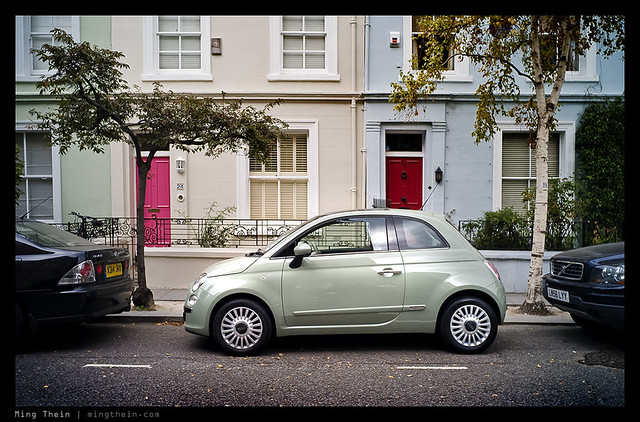
Lens review: The Voigtlander Color-Skopar 28/2.8 AI-P SLII

_5009926 copy

The small, light Nikon D600 got me thinking about full frame as a viable alternative for a lightweight travel kit again – the D700 and f1.4 primes was smaller than a D3 and pro zooms, but certainly nowhere near as convenient as Micro Four Thirds. Of course, M4/3 doesn’t give you anywhere near the same control over depth of field, and you lose out at least a stop or more in high ISO performance. The OM-D might give you back a couple of stops of hand-holdability thanks to its excellent stabilizer, but there’s nothing you can do about depth of field control short of using the manual focus Voigtlander f0.95 lenses – they certainly fit the bill, but they’re also large, heavy and somewhat defeat the point of a small, light body.

_6001758bw copy
Shadows

This is where the pancake primes and full frame come in: a D600 body and two primes make for a very light but also very competent travel kit. And if you shoot film, it makes even more sense. (And naturally, being a 28mm lens, I was curious to try it out.) The 28/2.8 has ridden shotgun in my waist pouch when I go out with the F2T and 58/1.2 Noct; sometimes you just need something wider, and it’s a handy option to have without paying too high a weight/ size penalty.

_6001755 copy
Untitled

The lens is just 24.5mm long (in Nikon F guise; it’s also available in EF mount, which is slightly larger as it has to accommodate the electronic diaphragm components) and weighs a scant 180g; it actually feels reasonably hefty as the entire lens is metal – probably anodized aluminium – and is very well constructed. It’s actually so short that it’s tricky to mount without turning the focusing or aperture rings, as the only portion of the lens that doesn’t rotate is the tiny 3mm wide section in the middle that holds the depth of field scale and index mark. It would have been great to have a locking button on the aperture ring like the ZF.2 lenses, but I suppose Cosina reserves that function for its more expensive siblings.

_6001692 copy
Urban monk

Being an AI-P spec lens, the 28/2.8 has a chip to communicate aperture and distance information to the camera; you set the lens to f22 on a Nikon body and control the aperture using the command dials as normal. It will mount and provide full metering and electronic compatibility on any Nikon body. Focusing is manual, of course; would have been nice if there was a way to AF couple the lens – a built-in motor would probably have been impossible, but screwdriver focus might have been within feasible limits. That said, you always have the built-in rangefinder and in-focus confirmation dot (or beep on Canons) to help with determining focus, and the manual focus action is nicely damped and perfectly weighted – they certainly got the feel right with this lens. Since the lens is relatively slow and wide, it isn’t always easy to judge focus by the viewfinder alone – and Nikon’s modern focusing screens don’t help much, either. Most of the time, I could get achieve focus with the viewfinder alone, but on the edges it helps to use the dot: the lens suffers from moderate field curvature.

_6001658bw copy
Shifty

The 28/2.8 is a 6-group, 7-element design; Voigtlander does not provide a block diagram or any details about the optical design, but from the way it performs and the fact that it can focus as close as 22cm from the sensor plane – yielding surprisingly high magnification – I suspect that the lens is a retrofocal but non-telecentric design to achieve this. As mentioned earlier, it displays moderate field curvature, some coma at the edges and chromatic aberration until f8 or so. (I tested the lens on the Nikon D600.) There’s also a tiny bit of purple bleeding at high contrast edges.

_6001651 copy
Through the looking glass

Sharpness is not a problem: the center is excellent at all apertures, with the border and edges lagging until about f5.6 or so; this is partially due to field curvature, and partially due to coma. Note that if you’re going to use wide apertures with this lens, you will need to use focus assist over the subject – not center focus and recompose. Edge sharpness is not too bad, but the corners never get critically sharp due to radial coma/ smearing; you always feel that things have been ‘stretched out’ a little. No problem; just make sure your subjects are within the central portion of the image circle.

_6001638 copy
Umbrellas

Not having a huge number of elements, color rendition and contrast are excellent; images are rendered with a slightly warm hue, high saturation and macrocontrast. Microcontrast still isn’t as fine as the Zeiss lenses, but it’s certainly on par with Nikon’s regular AF offerings. This would be a good lens for low contrast scenes, but care must be taken if you’re shooting around noon in the tropics – you’re going to get things blocking up to black or overexposing if you don’t pay attention to your blinking highlights warning. It makes a rather good lens for black and white work, too.

_6001609 copy
The morning after the night before

I consider myself a bit of a 28mm aficionado; perhaps fetishist is a better word. I find that it’s the widest I can go and still maintain a relatively natural look to the images without the usual wideangle geometric distortion; I feel that the focal length also matches my instinctive field of view quite well. This means that in my time I’ve owned and shot with a huge number of 28mm lenses and 28mm equivalents; the two I currently own – the Nikon AFS 28/1.8G and Zeiss ZF.2 2/28 Distagon are reviewed on their respective links, too. Aside from that, I’ve also got the Zeiss ZM 2.8/28 Biogon for my Leica M9-P, the 28/1.8 equivalent on the RX100, the iPhone 4, and an Olympus 15/8 body cap.

_6001579bw copy
Texture

So the natural question would be where does the Voigtlander 28/2.8 fit in – both in the grand hierarchy of 28mm lenses, as well as as a tool; I actually think it has a pretty well-defined niche. The Nikon 28/1.8 G is large but light, has autofocus and pretty good optics; the Zeiss 2/28 Distagon has stellar optics and a unique pictorial rendering, but is manual focus and surprisingly heavy for its size. Both have roughly the same maximum aperture and T stop. The Voigtlander is a tiny slip of a lens that’s capable of excellent results in the center, and decent results at the edges – these optical characteristics suggest it would serve as a good documentary lens (there is some distortion of straight lines which rules it out for architecture), but moreover an option where you a) need something light and small, and b) are unlikely to run out of light – though relatively low light work is still possible thanks to the high-ISO abilities of the current batch of full frame cameras. In short: this is a great lightweight travel lens, especially if paired with something a bit longer – perhaps the 40/2 or 45/2.8P. Now, if only somebody would make a decent focusing screen for the D600…MT

A big thank you to Eric Goh at Fotoman Marketing, the Malaysian distributor for Voigtlander lenses for the extended loan of the review sample.

The lens is available here from B&H in Canon and Nikon mounts.

____________

Visit our Teaching Store to up your photographic game – including Photoshop Workflow DVDs and customized Email School of Photography; or go mobile with the Photography Compendium for iPad. You can also get your gear from B&H and Amazon. Prices are the same as normal, however a small portion of your purchase value is referred back to me. Thanks!

Don’t forget to like us on Facebook and join the reader Flickr group!

appstorebadge

Images and content copyright Ming Thein | mingthein.com 2012 onwards. All rights reserved

Announcing 2013 USA workshop tour dates!

_5010906bw copy
Swallowed by the city. Tokyo, October 2012.

I’m very excited to (finally) announce the dates for my 2013 USA workshop tour!

The Outstanding Images Tour

San Francisco
By popular demand, I’m going to doing two sessions:
Session 1: Thursday 28 to Saturday 30 March 2013 (a couple of places due to reshuffling dates)
Session 2: Monday 1 to Wednesday 3 April 2013 (one place)

New York City
Friday 5 to Sunday 7 April 2013 (full)
New date by popular demand: Monday 8 to Wednesday 10 April 2013 (a go if we have 5 or more participants)

The format will be similar to my previous 3-day workshops in Hong Kong and Tokyo but instead chasing a particular topic, we’ll be focusing on improving photographic fundamentals – seeing the scene, finding light, timing, composition, balance, perspective, style etc. – all of the tools that  can apply to any shooting situation, against the background of travel and street photography with specific forays into related technique. The first two days will be hands-on photography, with the third day focused on review, critique and post processing. It will put into practice the content of the ‘What Makes an Outstanding Image?’ essay.

It will not be easy. Expect to be challenged, and have your creative vision opened to subjects and techniques you might not have considered before. Expect to go away as a better photographer – all of my past students have.

You don’t need to be an advanced photographer or pro to participate. All you need to make the most of the workshops is a determination to improve your images, and a basic working knowledge of exposure and operation of your camera. The sessions will be intensive and challenging, but also extremely rewarding; the more you put in, the more you get out. The sole equipment requirements for the session are a camera – even a compact will do – a laptop with Photoshop, and an editing tablet (I recommend Wacom).

Each workshop session is limited to just 10 paid participants to ensure everybody gets as much of possible out of the sessions. Places are reserved on a first-come-first-served basis. Please note that a refundable* 50% deposit will be required to confirm participation, with the balance due one month before the workshop date.

The price for a full three days of exclusive tuition is just US$2,200 per person. I’m pleased to offer an early bird special for US$2,000 per person if you confirm within the next week.

If you’d like to book a spot, or have any questions, please contact me.

Looking forward to meeting everybody in the USA!

____________

Testimonials and feedback from recent workshop attendees:

Azhari (Nov 2012 Melaka Workshop): Truly a work of a master! Love them all. Glad i attended this workshop and had the opportunity to see how the master did it. Thank you very much Ming.

Doyle Shafer (Oct 2012 Tokyo Workshop): It was a challenging and interesting workshop. I would have never forced myself to see Tokyo in different ways. To be honest I was happy with my photography for the most part and had little interest in branching out. But as I mentioned earlier, after the workshop it’s like seeing The Matrix for what it really is: some basic “code” and infinite possibility. Now when I walk through Ginza it’s going to take me much longer than before the workshop. It’s funny because I used to think that place was kind of dry and boring! It’s all still sinking in, but my photography has already tightened up quite a bit. And I won’t even get into post processing…that rocked my world like when we did layering in Ginza @. @

Erwin Kindangen (Oct 2012 Tokyo Workshop): I had a great time there and my photography definitely improved after the workshop. It taught me how to “see” scenes and what scene would actually make a good photo and not just randomly shooting at people. Plus the basic wizardry of Photoshop at the end of the workshop definitely ties it all up. In the meantime, I’ll keep perfecting what I’ve learnt before I jump to the next workshop (I hope there will be a follow up).

Andrew Yaw (Sep 2012 Finding Light workshop, Kuala Lumpur): It was an awesome day out. Second round of beating from the master after the ‘Making light workshop’ . This workshop changed my perspectives on street photography. Looking at not only the life around you but also the architecture, reflections, natural frames and much more. I have never walked around KL that much before. I plan to do it again alone this weekend. Who says you need to travel far to take pictures? The challenges were all interesting and some tough to train us into seeing things in ways never before. It really sort of reminded me of the “Wax on, Wax off” training technique in ‘Karate kid’. Lol. Really, for me it was. Especially the part where we had to shoot with our 2 second timer on and stage the subjects on a particular part of the frame. Epic fail at 1st. After a while though you slowly learn how to anticipate the subject’s movement and then.. ‘click’. Success! and then again and again. It was a full on day with tons of learning and perceiving. Ended the day at 8 PM after a slight debriefing and chattering in a cafe. Thanks Ming for a great day out. Can’t wait for the next one. Have a great time in Japan.

Andrew Yaw, (Sep 2012 Making Light workshop, Kuala Lumpur): Excellent workshop! Great teachings from honing the basics of photography to managing light in a controlled environment followed by hands on guidance while shooting the model for the day. The day ended with a bonus. The shared knowledge of the art of printing which is a totally different ball game. Went home feeling overwhelmed with awesome knowledge and information. Thank you Ming for sharing so much of your knowledge to all of us! Can’t wait for the next workshop!

Ciao Pui (Sep 2012 Making Light workshop, Kuala Lumpur): What a great day! Between the inspiring morning session studying Ming’s jaw-dropping photos and an amazing afternoon shoot with the gorgeous (and funny) Aliza, what Ming didn’t mention was the mouth-watering Malaysian Beef noodles lunch he took us to across the street at the road-side stall! I’ve been reading this blog for months, but I didn’t realized how much more I could learn in person until I took his recent workshops. For example, I’d have missed out on the important training where he raised both arms (see pic #13) waving them vigorously while shouting “Light on, light off” to perfect my shooting methods. Ok, just kidding about the above. On a serious note, the man is a machine! He got in way before everyone else (I know because I arrived an hour early). Then he spent the whole day teaching, instructing, demoing, shooting, working with model, showing his equipment, while tirelessly and patiently answering every questions the workshop participants had, not to mention the 2-hour impromptu print demo/admiration session after the workshop. Great value, great company, great images. I would take his workshops again. Highly recommended.

*No questions asked up to 1 month before the workshop, at which point full payment is due. After the T-1 month point, then refunds are only if I have to cancel or at my discretion under extraordinary circumstances.

____________

If you enjoyed this post, please consider supporting me via Paypal (mingthein2@gmail.com). Visit our Teaching Store to up your photographic game – including Photoshop Workflow DVDs and customized Email School of Photography; or go mobile with the Photography Compendium for iPadYou can also get your gear from Amazon.comhere. Prices are the same as normal, however a small portion of your purchase value is referred back to me. Thanks!

Don’t forget to like us on Facebook and join the reader Flickr group!

appstorebadge

Images and content copyright Ming Thein | mingthein.com 2012 onwards. All rights reserved

KL reader meetup! Saturday 8 Dec, 3pm

_6001446 copy

It’s been a while since the last one, which makes it high time for a reader meetup! This time we’ll have a theme – classic cameras. Bring along your favourites; the rarer and filmier the better. Anybody turning up with modern digital only is buying drinks. 🙂

Location: ACME, Troika, near KLCC
Time: 3pm, Saturday 8 December

Leave a comment below or on the Facebook page if you’re coming. If we’ve got less than five, then we’ll take a rain check and do it another day when more people can make it…

See you all Saturday! MT

Objectively critiquing images: a primer

_PM03858 copy
The ephermeral idea of sushi. Does this image work? Why? Why not? Read on to understand and come to your own conclusions – leave your thoughts in the comments, and let’s start a discussion. For the original essay featuring this image, click here: Sushi, and the philosophy of photography

A reader sent me a great email a couple of weeks back with some suggestions on how to improve the reader Flickr group.

Since inception, it now has 400+ members, tens of thousands of submissions, about 2,500 that have made the cut – and continues to grow every day. Whilst you do get some indication of what constitutes a good image and what doesn’t based on my acceptances and rejections, it doesn’t really provide a structure for objective critiques and feedback from a wide audience – something I’d always wanted to have. Unfortunately, the infrastructure of Flickr isn’t that conducive to this – there’s no real way to tell which comments were left by a member of a particular group without having badges etc. What I propose instead is that anybody who wants to solicit feedback on an image posts it in a new thread on the attached discussion board; if you’d like to weigh in, go ahead – but remember to be objective and civil. (If the volumes get silly, then we’ll deal with it later.)

This brings me to the second problem: what is objective? How does one deliver an objective critique? Hell, what do you even look for in the first place? How do you set a benchmark and what do you compare it to? The aim of this article is to cover these bases, and provide both a structured simplified assessment/ critique framework. Its usefulness of course goes beyond the Flickr pool comments: it’s also a quick way for you to assess your own images on the fly. (The challenge there is of course stepping out away from the personal attachment that every photographer has to their photos – they’re like our children – and learning the art of detachment.)

First up, if you haven’t already read my article on What Makes An Outstanding Image, I highly recommend you do so first and then come back here afterwards. Part one is here, and part two is here. (Both open as links in new windows.)

Boiling everything down, there are only four things I look for in every image. The first three are fundamentals. The last one is a bonus. (In fact, I’ve said these things so many times at so many events and workshops that I wouldn’t be surprised if somebody decides to engrave them on my tombstone.)

1. Light
Every photograph needs light; no light, no photograph. Fantastic light can transform the most pedestrian subjects, and vice versa. I’m looking for light that isolates the subject, that shows off its textures and physical form and lines in a (preferably) unique way; a color temperature that’s either perfectly natural and accurate and puts you into the scene, or a color temperature that’s artfully shifted to elicit an emotional response in the viewer in a cinematic sense. The subject doesn’t have to be the brightest thing in the frame, but it has to be the most obvious.

2. Subject
Subsequent items get more nebulous and harder to define. In short, the subject is what the image is about. It can be a small part of the frame, or the entire frame itself; it can also be the idea. Basically: a viewer should be able to look at the image and know straight away what the focus is; who is the protagonist in the story? Timing is also a key element that affects both subject and composition – both positioning and expression. Abstracts are a little more difficult to assess, because they may not have a focus per se. In such cases, is the frame sufficiently well abstracted that you lose the sense of relativity and scale that provides the normal visual cues for identification of an object?

3. Composition
I like to think of composition as the way in which the elements within a frame relate to each other. It’s to do with positioning, balance and context; are the secondary subject positioned in such a way as to give priority to and not take away focus from the primary subject? Next, do the secondary subjects enhance the story, or take away from it? How are they relevant to the main subject? Would the image be stronger with or without them in the frame? Are any of them distracting? Next is balance; this is even tougher to define and probably should be the subject of an entire article in itself. In short, it isn’t symmetry, but it is about geometry. Are there things that make one side of the frame look heavier than the other? It isn’t a problem, but something that draws the eye in a particular direction – leading lines, for example – should do so in a way that supports the primary subject. Natural frames can also be used to help isolate the primary subject. You’ve also got to look for things that are distracting and not meant to be in the composition – edge and border intrusions are perhaps the most common example of this.

4. Bonus: the idea.
This is the hardest to define of them all. In its most concise form, does the viewer share the vision the photographer had in mind when he or she pressed the shutter? Note: it’s tough to communicate an idea if there wasn’t one to begin with, or it wasn’t well-formed in the photographer’s own mind. In fact, this is perhaps the toughest part in making a good photograph: you need to know what the final image should look like even before you take the shot. The best photographers do this consciously all the time; I know that if I can’t get what I want, I usually won’t bother taking out the camera. A lot of the time it’s because I don’t have control over the light, or because it’s not being cooperative; sometimes it’s because of technical limitations – I physically can’t get close enough, or I’m not carrying the right lenses to get the perspective I want, for instance.

On this basis, an image that scores a 2 is reasonably strong, but maybe lacking in one or two areas. Grade 3 images are excellent, and grade 4s are outstanding. Of course, there’s more to it than that, but at least you could say something along the lines of ‘3, composition is a bit loose around the edges of the frame’ and that would be implicit that the rest of the aspects of the photograph are strong. In the reader Flickr pool, I don’t admit anything less than a 2.5, or a 2 if the idea is very strong. There are a good number of 3s, but very few 4s. It might be an interesting exercise for you to go through the pool of images again to see what qualifies.

Of course, this is all relative; and that’s why it’s important to view and consciously assess as many images as possible to get an idea of what works and what doesn’t; that was one of the reasons to set up the flickr pool. There’s a lot to be learned from looking carefully at famous images: there’s a reason why they work, even if some aspects of the capture may be weak. And it’s almost always because ‘the idea’ is extremely strong, to the point of overshadowing and dominating the any potential shortcomings. (Robert Capa’s Normandy Landing series is a fantastic example of this).

Here’s the proposal – if you’re going to start a thread in the Flickr group putting your image up for critique, then give it a number (rating) – objectively, of course – and talk about what you think is missing, or what you think is exceptionally strong. That provides a good basis to begin discussion.

Even if you don’t put your images up for critique, keeping this framework in mind when viewing and assessing your own images can help immensely: you will land up with a much stronger raw material, and more times to postprocess them – which of course in turn results in an even stronger final set of images. Iterating this process has two positive consequences: firstly, you land up making ever stronger images, and not being tempted into keeping ‘not bad’ images; secondly, you will find you have a heightened cognisance of your own artistic style. This is of course a good thing – and one that’s extremely difficult to achieve. In the end, the greeks had it right: know thyself. MT

____________

Visit our Teaching Store to up your photographic game – including Photoshop Workflow DVDs and customized Email School of Photography; or go mobile with the Photography Compendium for iPad. You can also get your gear from B&H and Amazon. Prices are the same as normal, however a small portion of your purchase value is referred back to me. Thanks!

Don’t forget to like us on Facebook and join the reader Flickr group!

appstorebadge

Images and content copyright Ming Thein | mingthein.com 2012 onwards. All rights reserved

Workshop report: Intro to Wildlife, Nov 2012 Kuala Lumpur

_RX100_DSC3383 copy
Too close. RX100

The final workshop for this year was something a little different to my usual travel/ street or photoshop and lighting sessions: an introduction to basic wildlife photography techniques. Five curious photographers (including one who flew in from Hong Kong) discovered that wildlife photography is actually quite serious physical labor, and that rain isn’t the most pleasant environment to shoot in – but it does yield rather pictorially interesting results.

_5015315 copy
Sleep with one eye open. OM-D, 100-300

We covered basic long lens techniques, tripod and monopod use; stalking birds and getting close; dealing with troublesome lighting and high contrast situations; animal portraiture; getting the right AF settings, and finally touching on species behaviour and what constitutes an interesting animal photograph. I even shot with a compact at one point to prove that you really can get close with the right technique – no more than 100mm. The session was split into two half days – between rain, exhaustion and other commitments it seemed like a smart thing to do – and in-between, images were reviewed and critiqued for feedback and general compositional good-practice reminders, which apply to all subjects.

_RX100_DSC3365 copy
To prove you can do birding with a compact. RX100

Ultimately though, wildlife photography is polarizing: you either like it, or you don’t. There are plenty of things about it that most certainly aren’t fun – hauling heavy equipment around and being eaten by mosquitoes, for instance, or being ‘blessed’ by the birds from above – I think we all got bombed at one point or another – even physically handling the lenses requires some practice. However, the biggest challenge is inevitably patience: in the real world, you might well spend days, or weeks, on location and not see the particular species you’re looking for; the making of ‘Planet Earth’ is highly recommended for a taste into the world of the wildlife photographer/ cinematographer.

_5014972 copy
Hidden. OM-D, 500/4P

We shot at a ‘safe’ location where the birds are captive in a large open-air aviary and relatively tame; they’ll still fly away if you get too close or move suddenly, but at least they’re still in the general area; it’s understandably completely useless to try and teach in a situation where there is no subject material! That said, if you’ve ever been curious, taking a trip to the local zoo or bird park with a decently long lens – say rent a 400 or 500mm – will tell you very quickly if wildlife photography is something you want to pursue farther or not.

_RX100_DSC3343 copy
Part of the park. RX100

For the curious, I was using an Olympus OM-D with a Nikon 500/4 P generously loaned to me by one of my students on the first day (1000/4 equivalent, and an old familiar lens of mine – I used to do most of my wildlife work with one) and the Panasonic 100-300/4-5.6 on the second day (200-600 equivalent). I have to be honest and say that whilst having that much reach was great, it could often be too much; manual focusing is a lot easier than you’d expect on such a combination because the depth of field transition is quite fast. The second day was liberating from a weight standpoint; I was not envying David with his 1Dx and 600/4! That said, in a fast moving environment with say charging buffalo, I’m pretty sure I’d want the latter combination. MT

_RX100_DSC3336 copy

By popular demand, I will be doing a US tour over late March/ early April, stopping at San Francisco (two sessions), New York and probably Boston. Please send me an email if you’d like more details – things are still in the planning stages, which means plans can be kept a bit fluid. Thanks!

____________

If you enjoyed this post, please consider supporting me via Paypal (mingthein2@gmail.com). Visit our Teaching Store to up your photographic game – including Photoshop Workflow DVDs and customized Email School of Photography; or go mobile with the Photography Compendium for iPadYou can also get your gear from Amazon.comhere. Prices are the same as normal, however a small portion of your purchase value is referred back to me. Thanks!

Don’t forget to like us on Facebook and join the reader Flickr group!

appstorebadge

Images and content copyright Ming Thein | mingthein.com 2012 onwards. All rights reserved
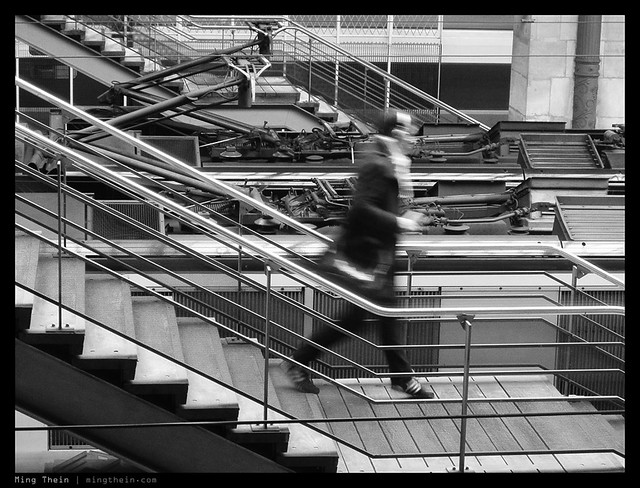
_5015366bw copy
Cloverleaf. OM-D, 100-300

_5015278 copy
The thinker. OM-D, 100-300

_5015146 copy
Scarlet ibis. OM-D, 500/4P

_5015432bw copy
Duck with halo. OM-D, 100-300

_5015451bw copy
Lost in a manmade world. OM-D, 100-300

_5015300 copy
Sheltering from the rain. OM-D, 100-300

_5015210 copy
Grooming. OM-D, 500/4P

_5015040 copy
Untitled. OM-D, 500/4P

_5014910 copy
Vigilant. OM-D, 500/4P

_5015457 copy
Hidden peacock. OM-D, 100-300

2,000,000!

At some point during the last day or so, the site received it’s two millionth visitor. Not too shabby for a fairly ‘heavy’ content site that’s a little over 8 months old. A big thank you for your continuing support, everybody! MT