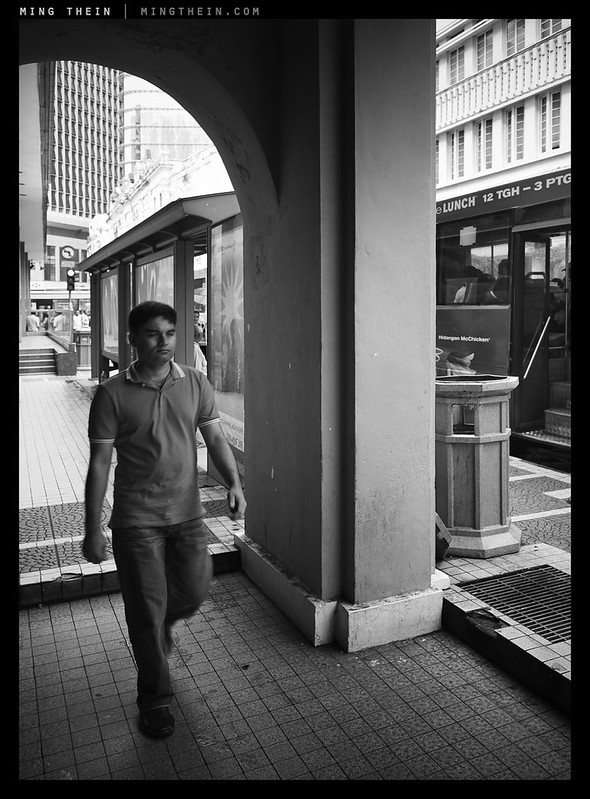
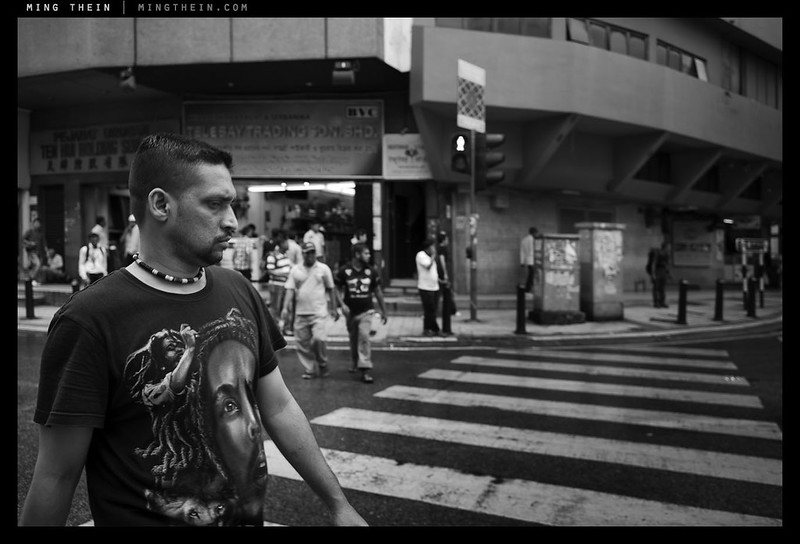
A concise city travel guide for photographers

I’ve been to a lot of places both in the course of my previous life as a wandering professional, as well as more recently as a photographer and occasionally as a tourist. I’ve visited most as a business traveller first, but with a constantly vigilant eye for photographic opportunities. On the whole, some places are more photo-friendly than others; however, every city has its interesting places. What follows is a very brief photography travel guide to some of the more interesting places I’ve been to. It’s organized by city, in alphabetical order. MT

_N5_DSC1861 copy
Auckland. Sony NEX-5, 18-55 OSS

Auckland, New Zealand
Photo friendliness – 8/10
Photo opportunities – 4/10

Most of the activity in Auckland centers around the waterfront; be it related to boats, life, the harbor, watersports, or the sea itself. Kiwis are extremely friendly people, and generally don’t mind having their photo taken; however, note that everything downtown goes dead after about 6pm as businesses close and people retreat to the suburbs, so there isn’t a lot to photograph. There is some interesting architecture and light provided by lots of modern glass buildings around Quay Street and Queen Street. The North Shore is also an interesting area of pavement/ sidewalk cafe life, as well as being a good place to spend a sunny afternoon. Needless to say, one of the biggest events is when the America’s Cup visits the city; great for photographic opportunities, bad for the wallet.

_M9P1_L1012712 copy
Bangkok. Leica M9-P, 35/1.4 ASPH FLE

Bangkok, Thailand
Photo friendliness – 6/10
Photo opportunities – 8/10

Bangkok is so different to most other places – even within Asia, to some extent – that there’s bound to be something different for the traveller to capture. Within Bangkok there are plenty of districts; avoid the places with multi-lane avenues and low pedestrian-friendliness like Rama V, Sukhumvit and Wireless; it’s difficult to capture anything there. Far more interesting is the temple area by the river, around Wat Arun and Wat Pho; there’s also a warren of small streets and bustling city life around Thanon Yowarat in Chinatown. You could easily spend days walking around there and not manage to see everything. Note that whilst most Thais are friendly, a lot do not like having their photograph taken, so please remember to respect cultural sensitivities. The outskirts of the city are likely to provide more photographic opportunities of the rural sort. Note that Bangkok’s famous floating market is not actually in the city, but around two hours’ drive north.

Barcelona, Spain
Photo friendliness – 8/10
Photo opportunities – 7/10

Architecture, culture and people are the three things that stand out in Barcelona. Visit in spring or summer; winter is depressing and can be cold (I actually got stranded at the top of a hill in a snowstorm once). The Barri Gotic, or Old Quarter, is the best place to go exploring on foot; the seaside promenade near the Hotel Arts is also full of interesting characters and is a great place for street photography. I actually don’t like Parc Guell much; yes, it’s interesting from an art point of view, but for photography the space is too open and full of tourists. You might get some interesting detail shots of Gaudi’s handiwork, but the Sagrada Familia is much, much better for that. There are plenty of tourists roaming the streets, so another photographer mostly goes unnoticed; some Catalonians don’t like being photographed, though. If you have extra time, the monastery of Montserrat is worth visiting for its architecture. Sadly no photography is allowed inside the cathedral, though.

Cambridge, England
Photo friendliness – 8/10
Photo opportunities – 7/10

It’s often said that the difference between Cambridge and Oxford is that the former is a city inside a university, and the latter is a university inside a city – the reason being that Oxford town came before Oxford University, and both came before Cambridge. The difference is felt in size: Cambridge feels much roomier and more spread out than Oxford; a lot of the colleges are far away enough that you need at least a bicycle, and might even want to consider taking the bus. Still, there’s plenty of interesting architecture and mediaeval alleyways to explore, as well as the river Cam; don’t forget to pick up some Fudge at the Fudge Kitchen.

_M8_L1024993bw copy
Canterbury. Leica M8, 21/1.4 ASPH

Canterbury, England
Photo friendliness – 7/10
Photo opportunities – 6/10

Most people visit Canterbury for one reason only: the cathedral. A masterpiece of Gothic engineering, it’ll keep any architectural photography fan engaged. Photography inside is allowed. There’s a small network of old streets around the cathedral that can be an interesting backdrop for street photography, but note that most of the old shops have been replaced by modern chains – though some of the frontages etc remain the same. There are some interesting Roman ruins – the city wall – and a Norman castle, though these do not make for particularly arresting photography, unless you bring your own subject – I suppose one could probably do a fashion shoot there.

_8015154 copy
Geneva. Nikon D800E, 28/1.8

Geneva, Switzerland
Photo friendliness – 5-8/10
Photo opportunities – 5/10

I find the personality of Geneva depends very much on what time of the year you visit: I went once during winter, and it was both miserably weathered and full of surly, unfriendly folk; however, during the summer, everybody seems to be in a good mood the moment the sun shows. The city itself transforms, too; the old quarter, on the opposite side of the lake to the train station and behind the main drag of Rue du Rhone, is full of charming buildings and streets, that create interesting pockets of light as the sun starts to drop. Watch fans will also find the Patek Philippe museum of particular interest. Several years ago, they allowed photography of the exhibits, but I’m not sure if that’s changed in the intervening period. Outside Geneva are plenty of opportunities for landscape photography – the Vallee de Joux and the Alps are obvious choices.

_3011285 copy
Hanoi. Nikon D3, 70-300VR

Hanoi, Vietnam
Photo friendliness – 8/10
Photo opportunities – 9/10

Hanoi’s photographic friendliness is reduced a couple of notches solely because of personal risk: you really need to watch out for the city’s thousands of motorbikes. Chimping while crossing the street is a sure way to get run over. That aside, the city itself has various quarters that each have a distinct feel; post-Soviet communist concrete block, French, and Asian. And in between those, there’s a temple on an island in the middle of the lake. In the Old Quarter, all of those elements come together (though with much less concrete block) to create a very unique atmosphere – think French cafe, but with the chaos of Asian wiring, street stalls, and just a little bit of decay to add texture. It’s a photographers’ paradise – and the Vietnamese don’t mind being in your frame, either. Cheap and good pho noodles and banh mi are icing on the cake.

_5006546 copy
Hong Kong. Olympus OM-D, 45/1.8

Hong Kong, China
Photo friendliness – 6/10
Photo opportunities – 8/10

To me, Hong Kong has always been divided up into districts with distinct photographic personalities: Central, for architecture and some light people-watching; the Peak, for that one evening shot across the harbor; Tsim Tsa Shui for neon, glitz and a little bit of transitional Hong Kong; finally, Mong Kok for absolute chaos and the grittier old city. It’s almost as though things get less developed as you head further north and into China proper. If I’m to be honest, the locals aren’t the most friendly bunch, though this is changing with the younger generation. Be careful where you point your camera. Acting like a tourist will usually let you get away with a sneaked-in street shot. Though I’ve been several times on my own, or with non-residents, the best way to see the hidden parts of the city is definitely with a local – there are some hidden photographic gems to be had.

Kamakura, Japan
Photo friendliness – 10/10
Photo opportunities – 8/10

If you can’t take a photograph in Japan, then the chances are if that same situation arose anywhere else in the world, you probably wouldn’t be able to, either. Kamakura is full of more Japanese tourists trying to find their cultural heritage than international ones; everybody has at least one camera. It’s not a very big town, and there are many cultural heritage things of interest here: the big Buddha statue, or daibutsu, multiple temples, including the famous Tsurugaoka Hachiman-gū and the seaside portion of the town; many of these places are UNESCO World Heritage sites. Come here on any festival day – if you can find a place on the train – and you’re assured of plenty of photojournalism material.

_7030977 copy
Kathmandu. Nikon D700, 85/1.4G

Kathmandu, Nepal
Photo friendliness – 8/10
Photo opportunities – 8/10

It’s clear from the moment you step out of the airport that visiting Nepal is going to be completely unlike anything you’ve ever experienced. Not only is there nothing resembling a highway leading into town, the road itself doesn’t really much resemble a road, either. Thanks to fuel shortages, there are long blackouts during the day (make sure your hotel has a generator, and carry plenty of spare batteries) and few streetlights; I’d say that Kathmandu is very much a daytime photography place. Try not to go during a martial law strike, either; you can’t go out on the streets without a permit, and the place is crawling with heavily armed police. That said, the Nepalis are some of the friendliest people around, even if their country is firmly in the ‘developing’ category; like most photographically interesting cities, it has a characterful old quarter – Thamel and plenty of cultural heritage sites (Bodhanarth, Swayambhunath, Patan Durba, Singa Durba, the Narayanthi Museum etc.). It’s also a very cheap place, which explains its popularity with backpackers. Travel a bit outside the city to Nagarkot, and on a clear day, you’ll be rewarded with a magnificent view of the Himalayas.

_7049507 copy
Kuala Lumpur. Nikon D700, 28-300VR

Kuala Lumpur, Malaysia
Photo friendliness – 8/10?
Photo opportunities – 7/10?

It’s very difficult to be objective about your own home city; I can’t say how inspired a foreigner might find the place because it’s always been familiar territory to me. I know exactly where I’d go to shoot what, what kinds of people probably aren’t a good idea to photograph, and what I can get away with. For a visitor, there are a few things worth seeing – Chinatown/ Petaling Street, before the government tears it down for a mass transit station (ironically, to serve the part of the city which will no longer be there after the station is in place); Bukit Bintang, to shop and people-watch; Brickfields, or little India; the Batu Caves, especially during the Thaipusam Festival in late Jan/ early Feb; Merdeka Square, and some of the more interesting architecture. KLCC and the Petronas Twin Towers. If you’re feeling particularly bored, or want to see a whole load of artificial trees, then there’s i-City in Shah Alam by night. For the most part, the residents are friendly, the food is good, and the beer is cold. Although prices are rising, we’re still not as expensive as say Geneva or Hong Kong (and I really feel it in those cities). What’s not to like?

_M227270bw copy.jpg
Old Kyoto. Nikon D200, 17-55/2.8

Kyoto, Japan
Photo friendliness – 9/10
Photo opportunities – 8/10

If you like temples and architecture, then Kyoto is your city. I couldn’t help feel that the atmosphere was a lot colder and more reserved than Tokyo, however; there are also a lot of broad, featureless expanses of urban sprawl between attractions that are pretty much photographic deserts. There are a few must-see places on the list – the big temples like Kinkaku-ji, Kyomizudera and slightly outside, Fushima-Inarii; Gion, the Geisha District; and the portion of the town down by the river, which I believe is called Ponto-Cho. There’s also the Imperial Palace, but aside from some extremely open gardens, there isn’t a lot of interest here. Curiously, Kyoto station itself is a very interesting piece of abstract modern architecture; in some ways it’s at odds to the rest of the historical city. The best way to get around is either by subway, or the tourist buses that run in loops from outside the station.

_0011022 copy
London. Ricoh GR-Digital III

London, England
Photo friendliness – 5/10
Photo opportunities- 7/10

Thanks to overzealous police, one has to be a bit careful when photographing on the streets of London – sad to say, especially if you look a bit ‘ethnic’. Smaller cameras are definitely the order of the day, and be careful where you choose to set up a tripod. The locals in general aren’t particularly camera-friendly, either. That said, there are a number of good places for people watching – the courtyard of the British Museum is one of my favourites, along with the Piccadilly Circus to St. James and Jermyn Street stretch, Trafalgar Square and the surrounding areas. The City can be interesting but also harried; Canary Wharf was good for some architectural abstracts, though on my last visit security tended to eye every camera with suspicion. The area around City Hall on the south side of London Bridge has a nice open plaza and plenty of human activity, especially if it’s sunny. There are still a number of museums which allow photography inside – this is interesting not so much for the exhibits as the spaces and people – the British Museum is by far the best, though Maritime Greenwich, The Tower of London, the Science Museum’s hangar floor and the Tate Modern are also excellent. Aside from photography, there are plenty of other things to do, so don’t feel as though you have to get postcard shots of all the sights – that’s what postcards are for.

_5006840 copy
Macau. Olympus OM-D, 45/1.8

Macau, China
Photo friendliness – 7/10
Photo opportunities – 9/10

Thanks to a densely-packed warren of streets, Macau seems a lot larger on foot than it does on a map; the area around the ruins of St. Paul’s Cathedral are especially rich with photographic opportunities. And the locals seem so immune to tourists that it’s also a very safe environment to pratice street photography. The casinos are a different story, however – external photography is fine, but I’m pretty sure if you pull out a camera inside, you’ll have a bunch of armed guards on you in no time. Oh, and don’t forget to try the famous egg custard tarts.

_N5_DSC0325 copy
Malacca night market. Sony NEX-5, 18-55 OSS

Malacca, Malaysia
Photo friendliness – 8/10
Photo opportunities – 7/10

There are two areas of interest in Malacca – the stretch leading from St. Paul’s church to the fort ruins on the hill during the day, and the area across the river known as Jonker Street – especially on a Saturday night when the market is in full swing. There are also a number of old clan houses that feature traditional decoration and architecture; some are still inhabited by their respective clans and offer historical tours. Most allow photography. Like the rest of Malaysia, Malacca is fairly photo friendly; unlike the major cities, it’s also fairly pedestrian friendly. Local specialities include the cendol with gula melaka and chicken rice balls; pass on the latter, but the former can be a life saver during a hot afternoon.

_3032195 copy
Nara. Nikon D3, 24-70/2.8

Nara, Japan
Photo friendliness – 10/10
Photo opportunities – 9/10

A bastion of old Japan, and a daytrip out of Kyoto, Nara is home to a large number of temples – in fact, so much so that one wonders where the residents actually live, and perhaps even if there are any permanent residents to the city at all. There are also a surprising number of inquisitive deer, and stalls lining the avenues between temples serving some of the best takoyaki I’ve eaten. It’s one of the few cities in which I felt I could freely photograph everything I wanted, and I did so; however, once you get tired of temples, there’s not much else and it’s time to get back on the train to head back to base.

New York, USA
Photo friendliness – 5/10?
Photo opportunities – 8/10?

I’m guessing somewhat at these numbers, because it’s been a very, very long time since I was last in New York, and that was in the days before I had a camera surgically attached to me. But I definitely felt like it wasn’t a particularly open or friendly place; it probably didn’t help at all that I was there in the middle of winter. However, it is one of the spiritual homes of street photography, and home to numerous galleries and art collections, plus no end of skyscraper architecture. At least if you feel too intimidated to shoot people, there are buildings, or other inspirations to be had from other artists. I really need to get out here again at some point in the near future.

_3029633 copy
Nikko. Nikon D3, 24-70/2.8

Nikko, Japan
Photo friendliness – 10/10
Photo opportunities – 8/10

Nikko is a cultural heritage city much in the same vein as Nara and Kamakura; there are lots of temples, plenty of scenic things buried in dark, damp forests, and curiously little life outside that. And once again, like the other two cities, feel free to shoot away at anything and everything; but you will get bored of temples eventually. Once again, a day trip from Tokyo will suffice for most.

_7013875 copy
Niseko. Nikon D700, Zeiss 2/28 Distagon

Niseko, Japan
Photo friendliness – 10/10
Photo opportunities – 6/10

Niseko is a place for skiiers during the winter and outdoorspeople during the summer; photography is almost entirely of the landscape variety. You’ll probably get bored of views of Mt. Yotei, but there are plenty of other interesting vignettes around – the trouble is, you’ll have to find them, and without a car or bicycle (not recommended because the place is a lot hillier than it looks) it’s difficult because things are fairly spread out. Hokkaido is probably the only place in Japan that actually has space. Personal pick – the onsen at the Hilton Niseko is outdoors and offers a fantastic view of the perfectly-conical Mount Yotei; it’s a great place to relax at the end of the day.

_M8_L1024258bw copy
Oxford. Leica M8, 21/1.4 ASPH

Oxford, England
Photo friendliness – 8/10
Photo opportunities – 7/10

Another one of my familiar hunting grounds (I spent several years here as a student). Curiously, I didn’t shoot that much at the time; mostly to do with the fact that film was expensive, and consumer digital was still some years out. Nevertheless, I returned later on, better armed and photographically somewhat wiser. Much like Cambridge, Oxford is about history, architecture, and drunken students. (I would say learning, but the public really doesn’t see much of that going on; it’s behind closed doors). The city’s main attractions are small; you could get off the bus from London at High Street, walk past the Radcliffe Camera, around Radcliffe Square, through Broad Street, and down towards St. Giles and cover most of the interesting bits. There are a number of good museums – the Pitt Rivers is probably the most interesting of the lot – which allow photography, but they’re rather dark to preserve the artefacts. Good high ISO and fast lenses are a must. Note that most colleges allow entry during the day with a fee, or for free if you have somebody on the inside to take you around. The river Cherwell is worth punting down during summer, but beware drunken students in other punts colliding with yours…

_M8_L1025466 copy
Paris. Leica M8, 21/1.4 ASPH

Paris, France
Photo friendliness – 5/10
Photo opportunities – 8/10

Another spiritual home of street photography, Paris’ grand avenues and boulevards provide a fantastic backdrop to the lives of its inhabitants. Sadly, those inhabitants aren’t usually that friendly, and I’ve received my fair share of abuse and rude gestures when trying to photograph them. (Curiously, I’ve also had a guy on a bicycle yell out ‘Nice Leica!’ from about 30 yards away). Aside from the huge number of museums – it’s a great place to see both traditional art masterpieces, for inspiration – there are also a lot of small galleries and bookstores dotted around the city, many of which specialize in Photography. There’s plenty of old architecture, and a concentration of newer stuff at La Defense; the Ille de la Cite during summertime is a particularly nice place to shoot street, as are the artificial beaches along the Seine (Paris Plage). I’m told there’s also an excellent aviation museum out at Le Bourget, but I’ve never gotten around to visiting it. Particularly interesting districts are the left bank, and Montmartre.

_3013431 copy
Penang. Nikon D3, 24-70

Penang, Malaysia
Photo friendliness – 8/10
Photo opportunities – 5/10

I personally didn’t find that much inspiration in Penang; it’s a pleasant city, but in many ways somewhat provincial and small. There’s some interesting street life – especially along Gurney Drive as the sun sets, near the food stalls – but for the most part, people come here to relax (though curiously not when driving. If you had to choose between Penang and Malacca for a day trip from Kuala Lumpur, there are far more photographic opportunities in the latter city. Penangites are perhaps the most aggressive drivers in the country). There are reasonably nice beaches further north near Batu Ferringhi and beyond. The western side of the island is mostly undeveloped and covered in rainforest. Personal favorite – afternoon tea at the E&O hotel.

_PM05660 copy
Prague. Olympus Pen Mini, 45/1.8

Prague, Czech Republic
Photo friendliness – 7/10
Photo opportunities – 9/10

I came not expecting very much. I left wanting to go back – Prague is perhaps one of the richest cities in Europe for street and urban photography opportunities. The city is divided by the river Vltava; on the western shore, you’ve got the Malostranska, Prague Castle complex, St George’s Basilica and a network of narrow old streets; the other side of the Charles Bridge is the new, commercial center of town, with broad avenues and the old town square, which contains the famous astronomical clock, several churches, a few excellent cafes, the sex machines museum, and a tower which you can climb for excellent sunset views of the city. It’s also one of the cheaper places in Europe to visit; this must have something to do with the fact that the currency isn’t the Euro. In fact, it didn’t feel much more expensive than staying home in Kuala Lumpur. There’s something about the atmosphere here that just makes it an extremely pleasant city to walk around with a camera. We spent four days here, and I feel like I barely scratched the surface. The illuminated buildings and well-lit streets are great for night photography, too.

_7014607bw copy
Sapporo. Nikon D700, Zeiss 2/28 Distagon

Sapporo, Japan
Photo friendliness – 10/10
Photo opportunities – 5/10

Sapporo may be the capital of Hokkaido, but I couldn’t shake the feeling that it felt a lot like midtown New York – with its broad, grid-like streets, modern buildings, and odd combination of density and open green spaces. The issue here is that it just doens’t feel very conducive to photography; the place somehow lacks character. However, the food is especially good because a lot of it is locally grown – seafood and corn come highly recommended. But don’t come expecting it to be like Tokyo; it’s a lot more laid back.

P1020718b copy.jpg
Singapore. Panasonic TZ3

Singapore, Singapore
Photo friendliness – 8/10
Photo opportunities – 7/10

Singapore is another city with distinct districts where one can go to shoot certain things; unlike many places in the world, people don’t mind you taking photographs inside shops; I suppose they’re savvy enough to realize that any offshoot internet publicity is good for free PR. I actually like shooting in Singapore because of the rich variety of modern architecture; there’s a few good pickings around Orchard Road, especially Ion; more downtown near Raffles Quay, and even more at Marina Bay. There’s also the new Botanic Gardens building, which promises to be interesting. On the other hand, more traditional scenes can be found around Chinatown, Club Street and the Mustafa complex; there’s a beach out at Sentosa if you like wildlife. Oh, and the Jurong Bird Park has a large and extremely well-stocked aviary – it’s a good place to practice birding. Much like Malaysia, people here think it’s normal to slip an SLR around your neck before heading out of the house. Snap away.

_3030515 copy
Tokyo. Nikon D3, 24-70

Tokyo, Japan
Photo friendliness – 10/10
Photo opportunities – 10/10

Tokyo remains my number one place for photography. It’s a combination of a few things – the huge cultural differences between Japan and the rest of the world; the sheer size of the city, meaning that there are plenty of districts of distinctly different ages and characters; and the fact that it’s possibly the most photography-friendly city on earth. After all, most of the world’s cameras are designed in Japan…Nikon, Olympus, Ricoh, Canon and Leica all have flagship stores around Ginza, some of the most expensive real estate anywhere. In fact, that portion of Tokyo is so well lit that you can shoot ISO 200 at night and still get enough shutter speed to handhold. Aside from the usual places – Harajuku’s Takeshitadori, the Meiji Shrine, Akihabara, Omotesando, Shinjuku, Shibuya and Tsukiji – there are hidden pockets of photographic opportunity anywhere and everywhere you care to look. And the chances are you’re going to feel more inspired about being here than anywhere else, because everything is so different you feel you have to capture it. The Tokyo Metropolitan Museum of Photography out at Ebisu is worth a visit; they often have great exhibitions on. There are also a large number of small, one-room galleries all over the city which offer a good introduction to local Japanese photography. Totem Pole Gallery is a good example. Note that Kamakura, Nikko, Odawara (castle) and Hakone (Fuji) are all day-trippable from Tokyo thanks to their fast train network – though I happened to be there in December 2008 when a computer glitch somehow brought the whole thing grinding to a halt. Tokyo is one of the few places I can go to now and actually feel like I’m in a completely different world; I’m very much looking forward to going back in a couple of months for the October Workshop. (There’s still one place left, if any readers would like to join).

_DSC8648-2012 copy
Venice. Nikon D70, 24-120/3.5-5.6

Venice, Italy
Photo friendliness – 7/10
Photo opportunities – 9/10

Like Tokyo, Venice is one of the few cities left on earth that’s a true unique place unto itself – this providing a never-ending series of photographic opportunities, though you might get a bit sick of canals and museums after a while. Murano is worth a visit to see the glassmaking factories, and photograph a slower pace of life; though the Campanile is going to be crowded, ascending at sunset is recommended. Don’t go in winter, it floods and the locals are miserable – spring is probably the best time of year to visit; it isn’t oppresively hot, the locals aren’t sick of the tourists, and the place isn’t as crowded as during the peak travel season. Carnivale is of course another great time to go, from a photographic standpoint – but already expensive accommodation and food (everything comes in by boat) gets even more exorbitant.

_M9P1_L1003722 copy
Vienna. Leica M9-P, 28/2.8 ASPH

Vienna, Austria
Photo friendliness – 7/10
Photo opportunities – 7/10

Vienna is a pleasant city. It has its historical landmarks – Stefansdom, for one – and plenty of newer, more modern, post-war concrete blocks. It’s a much smaller city than it appears on the map; everything is walkable. The Stilwerk building (designed by Jean Novel) is quite an interesting piece in its own right, especially the view from the top floor (and its seemingly frameless windows). Vienna’s highlights for the photographer are its museums and galleries: aside from the painters and artists (great permanent collections at the Belvedere and Kunsthaus; Schonnbrunn is worth a visit too), there’s the Westlicht Gallery, which has year-round photographic installations (a Weegee retrospective was on when I was there). It also happens to be neighbours with the Leica Store – the second hand equipment selection there is mind-boggling. Food is also one of Vienna’s strong points: the Nachtmarkt has great fresh produce, and a few simple eateries that make the most of that; there’s also a good selection of high end, with the two-Michelin star Steirereck being one of my favorite restaurants anywhere.

Remember to travel safe – don’t go out of your way to attract attention, and keep copies of important documents back at the hotel. Figure out the bare minimum of equipment and carry no more; the less gear you have, the more you’ll experience the city rather than worry about which lens to use, and in turn, the better images you’ll capture. Oh, and don’t forget a good pair of walking shoes. MT

For travel equipment suggestions for 2012, have a look at this article.

____________

If you enjoyed this post, please consider supporting the site via Paypal ([email protected]); Ming Thein’s Email School of Photography – learn exactly what you want to learn, when you want to learn it or learn how to achieve a similar look with our Photoshop workflow DVDs.  You can also get your gear from Amazon.com via this referral link.  Prices are the same as normal, however a small portion of your purchase value is referred back to me. Thanks!

Don’t forget to like us on Facebook and join the Flickr group!

Photoessay: Paris part three: some architectural cliches

Finishing this three-part series on Paris are some architectural shots and general cityscapes; the grandeur, oldness and overall feel of the place is something that’s evident the moment you start walking around. Capturing the atmosphere in a photograph of a relatively static scene that both invokes some feeling (and not a postcard) isn’t so easy to do; there are only so many angles of the Eiffel tower that work compositionally.

This series shot with a Leica M8, 21/1.4 ASPH and 50/1.1 in 2009, except for the Eiffel Tower shot which was with a D200 and 17-55 in 2007.

_M8_L1025381bw copy

_M8_L1025982 copy

_M8_L1025414bw copy

_M8_L1025232 copy

_M8_L1025256bw copy

_M212668bw copy.jpg

_M8_L1025318 copy

_M8_L1025915 copy

_M8_L1025340 copy

_M8_L1025554 copy

_M8_L1025970bw copy

_M8_L1025374 copy

_M8_L1025394 copy

_M8_L1025272 copy

____________

If you enjoyed this post, please consider supporting the site via Paypal ([email protected]); Ming Thein’s Email School of Photography – learn exactly what you want to learn, when you want to learn it or our Photoshop workflow DVDs.  You can also get your gear from Amazon.com via this referral link.  Prices are the same as normal, however a small portion of your purchase value is referred back to me. Thanks!

Don’t forget to like us on Facebook and join the Flickr group!

Thoughts on modern wedding photography: the wrong way, and the right way

_7034062 copy

Disclaimer: I’m not a wedding photography professional, I never have been or claimed to be at any point, nor is it likely that I ever will be in the future. So take this with the intended grain of salt as written from the position of an external observer. The images illustrating this post were shot as a guest at the various weddings I’ve attended in the past.

It seems that in the last twenty or so years – perhaps even less than that – wedding photography has moved from ‘capturing some memories of your (hopefully) once in a lifetime event with family and friends’ to ‘create an overprocessed hollywood epic composed of thousands of pictures with you and your other half in unlikely, impossible and completely out-of-charachter poses in which none of the protagonists at all resemble each other!’. How? When? Why? More importantly, doesn’t anybody who’s actually paying for the images realize that in twenty years, if you look at the images again at all, the first thought entering your mind will probably be ‘ugh, what was I thinking?’

_P8_L1024166 copy
One from my own wedding. I grabbed my friend’s M8.

This opinion piece aims to deconstruct the modern wedding photography genre, and figure out whether there’s still any room for somebody who wants to do it right – the best term I can use is honestly.

I have actually shot my fair share of weddings over the years – once or twice as primary photographer, nowadays under the condition that the couple hires somebody else, I’ll bring a camera along to the events I attend, and I’ll shoot like I normally do. Invariably, their print album and the images they share land up being the ones I shoot, not the ones they paid for. Why is this?

_7018959 copy

Firstly, I make sure I don’t get in the way of the proceedings; in doing so, I’m forced to find unusual angles or work from the point of view of the guest as observer – so the documentary takes place from a slightly different viewpoint. I shoot as a photojournalist, not an event photographer; I look for emotion and context. Finally, I don’t shoot weddings commercially. I recognize that isn’t one of my strengths, and it wouldn’t be fair to any potential clients to do anything less than a perfect job on an occasion which simply isn’t repeatable. (“Excuse me, could you walk down the aisle again please? My flash didn’t fire” doesn’t quite cut it, does it?). I do them for very close friends and family; instead of buying a gift that might well be your fifth toaster, I might as well give you something unique and which actually requires some effort and thought to produce – and I know will be appreciated later. But I digress.

_M8_L1018120bw copy

The reason why I don’t shoot weddings is threefold: one, they scare the crap out of me: I can’t be in twenty places at once, capturing each and every single little emotional moment – there are bound to be many – but at the same time, I can’t hire secondary photographers because I can’t guarantee quality. And having assistants in itself brings up a whole new set of issues, which I’ll get into later. Secondly, the market is dire. Either you compete on price – a thousand shots for just US$200! Or you compete on extravagance – pre-wedding shoots in a hot air balloon at dawn shot from a helicopter over the Himalayas! And neither market is sustainable, for obvious reasons.

_7034644 copy

However, the most important missing element for the hired gun is almost always the emotional connection: as a friend of the couple, or family, you probably know most of the other guests – that being the case, they feel comfortable around you (and know you’re a photographer); this means that what you get to capture are genuine, unguarded emotions. This is the ideal of the serious wedding photographer, and something that almost none of them manage – because they’re looking for the significant action, or the interesting perspective, or some technical showcase, not the emotion. And I know that it’s nearly impossible to do this when you don’t know the guests personally – they just don’t open up to you.

_7035572 copy

I can understand the desire for a couple, and their families, to have the big day properly documented for posterity. I went through the same issue of trying to figure out who would shoot my own wedding several years ago – in the end, a photojournalist friend and my brother did the bulk of the work, and I provided first-person filler thanks to a compact in my suit jacket and a borrowed camera. I edited the 8,000+ raw files down into a storyline of about 150, and did the processing myself. The result was a remarkably consistent look and feel; most of it was processed in a traditional B&W photojournalism style (which I may later come to regret, but at least I have the raw files) which fit the way the images were shot, and the style of the photographers.

_7019130 copy

But it seems that today’s trend is to go for the most over the top production you can find – the output shown (usually on a slideshow at the wedding banquet) is often so ridiculous that if you know the couple, you also realize that the photos are in no way representative of their personality, or even physical appearance, most of the time. Perhaps this is only a trend in Asia; I don’t know. But I’ve seen enough ultra-wide-from-the-tail-of-the-gown-in-forest-ruins-with-studio-strobes shots to suggest that this may be an international thing.

_7014859 copy

I think what bothers me the most is the lack of integrity about it all – I do know that a lot of couples select options like this because it’s either what’s socially acceptable, or because they don’t know any better (and it most certainly isn’t in the interests of the photographers to educate them otherwise). What has become a relatively minor expense in the whole scheme of things has now turned into something that can consume 10% or more of the entire wedding budget. What I don’t know is how many of these couples are actually happy with the output – Asians tend not to complain unless something is vomitoriously bad – but I do know that a lot of the wedding photographers don’t actually care, because repeat customers usually aren’t an issue – there’s always somebody else going to get married.

_7034699 copy

One of the biggest sins that almost all wedding photographers commit is getting in the way. At a recent family wedding I attended, the photographer and his two assistants continuously hovered in front of the couple, machine-gunning away with flashes. The problem here is that a) quarters were pretty tight, as with Asian weddings a portion of the ceremony is traditionally at home, and most homes can’t easily accommodate the hundred or more invited guests; b) as a family member or guest, you can’t see anything. For starters, this pisses off your family; not to mention feeling like you’re being mobbed by paparazzi. As a couple, ask yourself: is this wedding for us, for the family, or for the photographers? Because as an external observer, it sure as hell feels like the latter.

_7034259 copy

And that’s not the only trespass. Over the top airbrushing, or use of hideous filters – think applying the entire Instapop or Hipstagram or whatever repertoire to every image – to hide fundamental compositional sloppiness or focusing errors at critical moments – is de rigeur. In fact, I don’t think I’ve seen a single wedding banquet slideshow which contained anything approaching a natural looking image – and I’ve attended dozens of weddings in the last couple of years. Do you really need thousands of crappy photos instead of perhaps fifty, or a hundred, perfectly-timed, natural, emotional ones?

_M8_L1018253 copy

Of course not! But that’s difficult to produce, and thus makes for a very poor business model, so nobody does it. Which is a shame: the ideal wedding photographer could exist, and with some customer education, do pretty well. What attributes should such a mythical creature have?

1. Don’t get in the way. The wedding is for the couple and the family, not the photographer and his assistants.
2. Don’t miss critical moments – you don’t need twenty cake cutting shots, you just need one or two well-timed ones.
3. Look for emotion, and capture only emotion. Preserve the atmosphere and the feeling. We are human. Your audience is human. Your clients are human. They’ll look at the images and instantly feel that connection to the subject when looking at the images afterwards.
4. Less is more: spend some time curating, and you’ll find that you now have time to process each image individually instead of running them all through the SuperSoft-Crayolamatic-HDR filter.
5. Know who the key players are: you don’t have to get headshots of everybody, but if you miss the tearful mother of the bride hugging her daughter because you thought it was her kindergarten teacher, your clients probably aren’t going to be happy.

_M8_L1018054 copy

6. Be prepared! Don’t miss a shot because something wasn’t set right or malfunctioning or you weren’t paying attention. Get the program beforehand. If in doubt, shadow the bride. Doing otherwise is a cardinal sin.
7. Images don’t take a month to deliver, especially if you’re running them through filters or delivering JPEGs. There is NO EXCUSE! If a guest can find time to process each shot individually and deliver in a couple of days, and it isn’t even his job, then as a ‘professional’, it’s just embarrassing.
8. Break out of your stylistic silo occasionally – there are a lot of big-name society wedding photographers here who have a compositional repertoire that can be counted on less than the fingers of one hand.
9. Don’t overdo the output.
10. Be reasonable about what you charge – this goes in both directions. If you’re good, don’t kill the market for everybody (and yourself) by undercharging. Similarly, if you’re crap, don’t rip clients off. Steer them towards quality instead of quantity and location productions if they can’t afford it – ultimately, they’ll be happier, and it doesn’t take a genius to figure out that this will in turn be good for your business.

_M8_L1018457 copy

Most importantly, as a photographer, make sure you have integrity in what you do. It might just be work to you, but it is a once-in-a-lifetime day for somebody – you’ve been hired to do a job, don’t mess it up. This is the number one reason why I probably won’t ever shoot weddings – playing it safe doesn’t deliver that something extra; but at the same time, taking risks is also a no-no in case you miss the shot. And I wouldn’t want to fall short on either count for the client.

As a consumer, be educated: know what you want in terms of style, deliverable, and how much it should roughly cost – see the work of many people and get quotes before you make a decision. Ask a photographer friend for an opinion if in doubt. The more informed you are, the better a product you’re going to get. Don’t be bridezilla, either. MT

____________

Visit our Teaching Store to up your photographic game – including Photoshop Workflow DVDs and customized Email School of Photography; or go mobile with the Photography Compendium for iPad. You can also get your gear from B&H and Amazon. Prices are the same as normal, however a small portion of your purchase value is referred back to me. Thanks!

Don’t forget to like us on Facebook and join the reader Flickr group!

appstorebadge

Images and content copyright Ming Thein | mingthein.com 2012 onwards. All rights reserved

Photoessay: Paris part two: the streets, in B&W

Part two continues with a series from my last visit; focusing on the people of Paris. This is a place where hyperfocal shooting, honing your distance-estimation skills and shooting like a stealth ninja are the order of the day.

This series shot in 2009 with a Leica M8, the 21/1.4 ASPH and Voigtlander 50/1.1.

_M8_L1025697bw copy

_M8_L1026180bw copy

_M8_L1025793bw copy

_M8_L1025458bw copy

_M8_L1025280bw copy

_M8_L1025308bw copy

_M8_L1026056bw copy

_M8_L1025558bw copy

_M8_L1025296bw copy

_M8_L1026350bw copy

_M8_L1025617bw copy

_M8_L1025748bw copy

_M8_L1025435bw copy

_M8_L1025455bw copy

_M8_L1026132bw copy

____________

Visit our Teaching Store to up your photographic game – including Photoshop Workflow DVDs and customized Email School of Photography; or go mobile with the Photography Compendium for iPad. You can also get your gear from B&H and Amazon. Prices are the same as normal, however a small portion of your purchase value is referred back to me. Thanks!

Don’t forget to like us on Facebook and join the reader Flickr group!

appstorebadge

Images and content copyright Ming Thein | mingthein.com 2012 onwards. All rights reserved

Street photography in context: diversion, documentary or nuisance?

_M9P1_L1006378 copy
The Police are everywhere. Prague. Leica M9-P, 28/2.8 ASPH

After spending some time thinking about it, I’ve come to the conclusion that street photography – I prefer to think of it as ‘reporting on life – is an increasingly popular genre of photography for several reasons:

1. It’s easy to do, and accessible to all – the barriers to entry are low. Wildlife or say automotive photography, for instance, is not. There isn’t any setup involved beyond remembering to take your camera with you when you leave the house, no matter where you live.
2. The definition of the genre is extremely broad; to the point that you could probably almost say there was no definition at all. This means it’s both open to much creative interpretation, and also an excuse for anybody whose generic images have no specific idea or subject in mind.
3. As humans, we are psychologically drawn to other people: no man is an island. Street photography lets us get our fill of humans without having the tread the social minefield of heaven forbid, actually having to interact with them. (It’s a bit like the internet in this regard.)
4. Everybody likes to play documentary photojournalist once in a while.
5. Building on from #4, some photographers have a burning need to record everything and everybody around them – I’m one of these people – and sometimes we just shoot out of compulsion, because our compositional minds just simply do not turn off. Having trained yourself to see workable frames in the most unlikely of places, it’s difficult to un-learn this skill (or curse, depending on whether you’re the photographer or the one waiting for the photographer to hurry up).

I believe the sum of these things is that street photography falls into one of three categories for the vast majority of photographers and audiences – diversion, documentary, or nuisance.

Diversion
For the unafflicted photographer, it can be a nice genre to experiment with when you have the desire to shoot something, but you have no clear subject in mind. Taking a walk with a camera allows you to go in with a blank but receptive mind, and just wait for an endless parade of subjects to pass you by. They’re all time-sensitive, however; if you don’t react fast enough, they’re gone. This doesn’t matter, however, because there are always more subjects where they came from, and you weren’t going out shooting with something specific in mind anyway. Serendipity is probably the best way to sum up your overall attitude towards it.

Similarly, for casual viewers, street photography can provide an interesting window into the lives of others; an unusual or otherwise missed moment preserved for posterity. You see it, appreciate it for a little longer than the actual fleeting instance of the moment, and move on. It doesn’t really stick in your mind.

Of course, this all depends on the strength of one’s compositions; of chief importance for all images, street or otherwise, is having a prominent subject and a clear idea of what the image is supposed to achieve or say. Purely aesthetic images are fine, too; but the execution must obviously support the idea.

Documentary
Those who take street photography a bit more seriously start to tip over into the documentary category – they view the images they capture as preserving a slice of life, or singling out an interesting instant from the constant flow of life around them. This is of course a continuum; you can be looking for just that little bit more over your normal street photographer, or you could be very, very serious about the decisive moment like HC-B. These photographers don’t always have a clear idea of what they want in an image, but they recognize an interesting scene when it happens and are ready to respond and capture the shot.

I think I fall into this category. Whilst I still make some images that I consider to be aesthetically pleasing rather than saying anything strong or documenting a particular moment of life, I do look for something out of the ordinary in my images; I think it’s probably the natural progression for all street photographers as they eventually land up with far too many ordinary looking images. This leads to seeking the common theme that separates out the strong images from the weak ones – and it always comes back to idea, subject, and execution (which covers framing, light, processing etc.)

To some extent, as a competent photographer, I feel that we have a moral duty to record life for posterity – especially so in fast-changing environments such as developing countries. I’ve lived in the same neighbourhood of downtown Kuala Lumpur for the last seven years; in that time the landscape and flow of people has changed so much that there are things I don’t even remember seeing, much less capturing, in my old images from just a few years ago. If we, the first hand observers, don’t even remember – how are any future generations going to manage? I’ve shown images to fellow residents, and will inevitably be told at least once or twice something along the lines of ‘I’ve never seen that before’, or ‘Where’s this? So nearby, really?’.

The observer must therefore be an impartial one, with an abstract but fixed idea of what is ‘ordinary’ in their minds. This is something that gets harder and harder the longer you live in a place, or the more familiar you get with it; the foreign soon becomes the commonplace and soon you won’t notice anything at all. Observation and recognition of differences is an innate human skill; but continuous observation and attentiveness is very much a trained one.

The nuisance
In trying to be both observers and recorders, we must endeavour not to become public nuisances. In a previous article, I talked about the ethics of street photography and the importance of maintaining basic human standards of politeness and courtesy; something that many modern photographers choose to ignore behind the pretence of anonymity, or simply choose to ignore. It’s true that we feel less inhibited as photographers when we are not in our own comfort zones or cities of residence; at the same time, this is when we are also at our most observant and probably least culturally sensitive state. It’s worth remembering that what we might not find culturally offensive at home could well be the opposite overseas.

Often, the most interesting things happen well within the boundaries of polite personal space; intruding that makes me (personally) feel uncomfortable; it’s important to remember that we as photographers have both our personal and group reputations to maintain – it certainly won’t help anybody if street photographers are eventually perceived as being at the same level as paparazzi.

So where does this all leave us?

My personal opinion – and I stress this is highly subjective – is that those of us who have the ability and inclination, should go beyond the realm of causal snapping and treat street photography as social documentary/ reportage; try to say something with every shot, but at the same time, do this in an ethical way that doesn’t intrude on the privacy, rights or personal space of the subject(s). The overarching goal should be to preserve these little vignettes on present-day life for posterity; this also means making the work accessible and viewable to as great an audience as possible, which is one of the reasons why I use flickr.

I’ve noticed that my personal street photography style has evolved over the years from – get a worthwhile composition, to get people in frame, to get as close as possible, to cinematic style with plenty of OOF areas, to get close but retain context. It seems that today I’m working towards a style that documents man in the context of his environment, natural or built; I don’t specify a man and his individual, personal characteristics as much as use that figure as an abstract for the idea of humans in a particular situation. Where you choose to take it (and if you even bother with street photography or reporting on life) is very much a function of personal style – something you will have to discover and define for yourself, if you haven’t already done so. I just thought it might be interesting to throw another perspective out there. MT

____________

Visit our Teaching Store to up your photographic game – including Photoshop Workflow DVDs and customized Email School of Photography; or go mobile with the Photography Compendium for iPad. You can also get your gear from B&H and Amazon. Prices are the same as normal, however a small portion of your purchase value is referred back to me. Thanks!

Don’t forget to like us on Facebook and join the reader Flickr group!

appstorebadge

Images and content copyright Ming Thein | mingthein.com 2012 onwards. All rights reserved

Photoessay: Paris part one: color vignettes

One of the spiritual homes of street photography, Paris is actually quite a challenging environment to shoot in – partially because the people are rather unfriendly, and because the urban space itself isn’t really human scale. The left bank is much more conducive to shooting.

This series is a mix of images from 2007 and 2009; shot with a Leica M8, 21/1.4 ASPH, 50/1.1 and Nikon D200 with 17-55/2.8.

_M8_L1025466 copy

_M8_L1026299 copy

_M8_L1026229 copy

_M8_L1026085 copy

_M8_L1025241 copy

_M8_L1025305 copy

_M212811 copy.jpg

_M8_L1025260 copy

_M212319 copy.jpg

_M8_L1025741 copy

_M8_L1026176 copy

_M8_L1025475 copy

____________

Visit our Teaching Store to up your photographic game – including Photoshop Workflow DVDs and customized Email School of Photography; or go mobile with the Photography Compendium for iPad. You can also get your gear from B&H and Amazon. Prices are the same as normal, however a small portion of your purchase value is referred back to me. Thanks!

Don’t forget to like us on Facebook and join the reader Flickr group!

appstorebadge

Images and content copyright Ming Thein | mingthein.com 2012 onwards. All rights reserved

Photoessay: The immigrants of Kuala Lumpur

Developing countries have just as much, or perhaps even more immigration going on than in developed ones. For starters, border controls are a lot more lax; as is visa enforcement. At a recent visa amnesty, the Malaysian government granted over 600,000 national identity cards – representing permanent residency or citizenship – to previously unregistered foreign workers or illegal immigrants. Put that in perspective for a moment: that’s nearly 2.5% of the people in the country who were previously operating under the radar. What do they all do? Well, mostly provide cheap labor or services for the jobs the locals don’t want to do; and as the immigrant community expands, many have started businesses providing a bit of home for their own people, too.

There’s one part of Kuala Lumpur that’s mostly home to the Bangladeshi, Burmese and Nepali immigrants of the city – it’s the area around Leboh Ampang and the older portion of the city. I took a walk around with a student a little while back, and this is a short series on the other side of Kuala Lumpur. Understandably, a lot of them are still nervous about being photographed, because I suspect some are not officially supposed to be here…MT

Shot with a Leica M9-P and Zeiss ZM 2.8/28 Distagon. Exif data is intact, click through to Flickr to view.

_M9P1_L1016307bw copy

_M9P1_L1016271bw copy

_M9P1_L1016214bw copy

_M9P1_L1016232bw copy

_M9P1_L1016198bw copy

_M9P1_L1016314bw copy

_M9P1_L1016303bw copy

_M9P1_L1016276bw copy

_M9P1_L1016249bw copy

_M9P1_L1016211bw copy

____________

Visit our Teaching Store to up your photographic game – including Photoshop Workflow DVDs and customized Email School of Photography; or go mobile with the Photography Compendium for iPad. You can also get your gear from B&H and Amazon. Prices are the same as normal, however a small portion of your purchase value is referred back to me. Thanks!

Don’t forget to like us on Facebook and join the reader Flickr group!

appstorebadge

Images and content copyright Ming Thein | mingthein.com 2012 onwards. All rights reserved

Photoessay: Kowloon in color

Shot on a particularly rainy night in Kowloon, post-typhoon with a Leica M9-P and Zeiss ZM 28/2.8. Surprisingly, both functioned fine despite the moisture and humidity. I must be one of the few strange photographers who actually like shooting in the rain – it’s not masochism, despite what it might appear as. Three simple reasons: one, there’s a lot more texture and color from the water, reflections and umbrellas; two, the light is a bit more diffuse; three, nobody pays you any attention – everybody is simply too busy trying to keep dry. And this makes street photography significantly easier. MT

_M9P2_L1000628 copy

_M9P2_L1000463 copy

_M9P2_L1000492 copy

_M9P2_L1000609 copy

_M9P2_L1000567 copy

_M9P2_L1000554 copy

_M9P2_L1000518 copy

_M9P2_L1000490 copy

_m9p2_l1000481 copy

_M9P2_L1000473 copy

____________

Enter the August 2012 competition: Compact Challenge – here!

If you enjoyed this post, please consider supporting the site via Paypal ([email protected]); Ming Thein’s Email School of Photography – learn exactly what you want to learn, when you want to learn it or learn how to achieve a similar look with our Photoshop workflow DVDs.  You can also get your gear from Amazon.com via this referral link.  Prices are the same as normal, however a small portion of your purchase value is referred back to me. Thanks!

Don’t forget to like us on Facebook and join the Flickr group!

My thought process when shooting

One of the more common questions I’ve been asked recently (aside from what my Photoshop workflow looks like) is what my thought process is when shooting. This basically breaks down into two streams – am I in control of the situation photographically, or not?

By that I don’t mean whether I’m out of my depth or not; it’s about whether I have the ability to direct exactly the elements in my frame. The order doesn’t mean that one item is hugely prioritized over another; it isn’t. It’s more a case of if I have no choice,then which comes first?

In a controlled setting – studio, tripod, portrait, macro, landscape etc
Lighting
Perspective
Framing/ composition
Subject positioning
Reflections/ specular highlights
Edges
Exposure
Focus

The first things you’ll notice is that the subject doesn’t even enter into the equation – why? Well, it might as well be taken as given the there will be a clear subject to the image if I’m going to bother setting up lights to photograph it! This too, is the main reason why one would work in a controlled setting – the ability to perfectly light your subject, as well as control the composition precisely. You’ve got all the time in the world to perfect focus, and the exposure you select falls out of your lighting choices; this is why some minutae like reflections and subject positioning take precedence: simply because they can.

Perspective comes before framing, because you’re working in a situation where you have the luxury of choosing and fine tuning your perspective for every shot – no matter if that requires a ladder and telephoto. Your subject and light will wait for you.

It’s also worthwhile nothing that the processing I do in Photoshop for controlled images is very different to uncontrolled ones; I don’t have to use gradients to even out light; I don’t have to do shadow/ highlight recovery to control my dynamic range; I don’t have to spend time getting the color balance perfect. It simply isn’t necessary, because if you know what you’re doing, you should have gotten it right in camera in the first place.

In a non-controlled setting – photojournalism, street, travel
Lighting
Subject (interchangeable with lighting)
Framing/ composition/ perspective
Edges
Secondary subject
Exposure
Focus
Shoot a burst
Reset camera settings to a neutral position

Without light, your subject is invisible. And without a subject, framing is pointless; if your composition is poor, then the edges don’t matter; if you don’t have a clearly defined primary subject that’s supported by strong framing and well lit, then secondary subjects are meaningless.

There will be situations in which you’ll see the shot, and have not much time to react; this is where having a strong working process helps. I shoot aperture priority; I’m always adjusting aperture, exposure compensation and focus distance on the fly (if I’m using a manual focus camera) depending on the lighting conditions. When it gets dark, I frequently kick over to manual mode, take the camera out of auto-ISO and rely on my internal light meter. It’s not that difficult to get a consistent exposure when shooting manual; do it enough and you can usually judge the right exposure by eye – more often than not getting within 1/2 stop or so of the ideal exposure, which is well within the post-capture adjustment latitude of digital. This continual ‘fiddling of the dials’ does have the downside of making it look as though I’ve got some sort of obsessive-compulsive disorder, but it does result in my camera always being ready to shoot – and this makes me pretty quick on the draw.

This is why I place the technical execution – exposure and focus – last, because a strong composition will always be a strong composition, regardless of whether it’s tack sharp or somewhat grainy. If you capture something amazing, nobody will care what it was shot with because a) they’ll be too busy looking at the subject, and b) it’ll probably make the rounds via the internet, which as we all know, isn’t exactly a high-fidelity reproduction medium. When photographing under conditions where you are continually responding rather than being proactive, it’s better to get a shot with a strong idea rather than one with strong technical qualities but no idea. Nobody ever criticized Robert Capa for camera shake; but by the same token, I don’t think Annie Leibowitz was ever rushed on a shoot, either.

I want to add a note on the framing/ composition/ perspective portion – I do the majority of my work with just one or two focal lengths – 28/85mm; especially when it comes to travel and reportage. The simple reason is because I’m so familiar with the perspective and field of view of these lenses that I can frame without having to bring the camera to my eye; it’s as though I’m always walking around with the frame lines suspended in my field of vision. Sticking to one or two lenses and training yourself to see this way can also hugely improve your response time – being able to previsualize/ precompose the shot hugely improves your reaction time, and avoids having to waste time in framing. I then usually take a burst of a few images both to alleviate camera shake (the middle one is usually sharp because your shutter finger isn’t moving) and to perfect composition, especially around the edges.

In summary, controlled situations are all about getting the picture perfect – because you have the control and ability to do so. Reactive situations are about being always prepared and ready to get the shot – some things can be done in advance, such as setting exposure and anticipated subject distance, some things can be done in parallel, like looking for light, subject and framing; others you have to adjust for afterwards, for example, uneven exposure across the frame – there are gradients in Photoshop to take care of that.

How you choose to take care of the details is up to you; but the general advice is to make sure you take control of the things which have the biggest impact on the audience of your image first. MT

____________

Enter the August 2012 competition: Compact Challenge – here!

If you enjoyed this post, please consider supporting the site via Paypal ([email protected]); Ming Thein’s Email School of Photography – learn exactly what you want to learn, when you want to learn it or our Photoshop workflow DVDs.  You can also get your gear from Amazon.com via this referral link.  Prices are the same as normal, however a small portion of your purchase value is referred back to me. Thanks!

Don’t forget to like us on Facebook and join the Flickr group!

Photoessay: Macau, part two

A continuation of the set from Macau. Shot in the tail end of a typhoon with a Leica M9-P, Zeiss ZM 2.8/28 Biogon and ZM 2/50 Planar lenses. MT

_M9P2_L1000693 copy

_M9P2_L1000923 copy

_M9P2_L1000971 copy

_M9P2_L1001019 copy

_M9P2_L1000967 copy

_M9P2_L1000801 copy

_M9P2_L1000918 copy

_M9P2_L1001042 copy

_M9P2_L1001011 copy

_M9P2_L1001032 copy

_M9P2_L1000927 copy

_M9P2_L1000840 copy

_M9P2_L1000755 copy

____________

Enter the August 2012 competition: Compact Challenge – here!

If you enjoyed this post, please consider supporting the site via Paypal ([email protected]); Ming Thein’s Email School of Photography – learn exactly what you want to learn, when you want to learn it or learn how to achieve a similar look with our Photoshop workflow DVDs.  You can also get your gear from Amazon.com via this referral link.  Prices are the same as normal, however a small portion of your purchase value is referred back to me. Thanks!

Don’t forget to like us on Facebook and join the Flickr group!