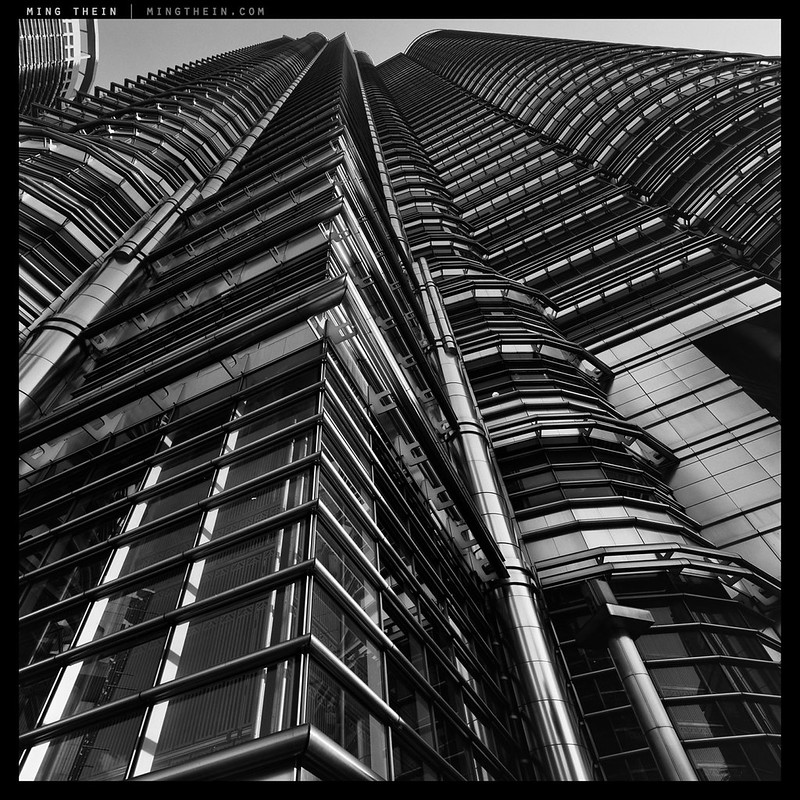
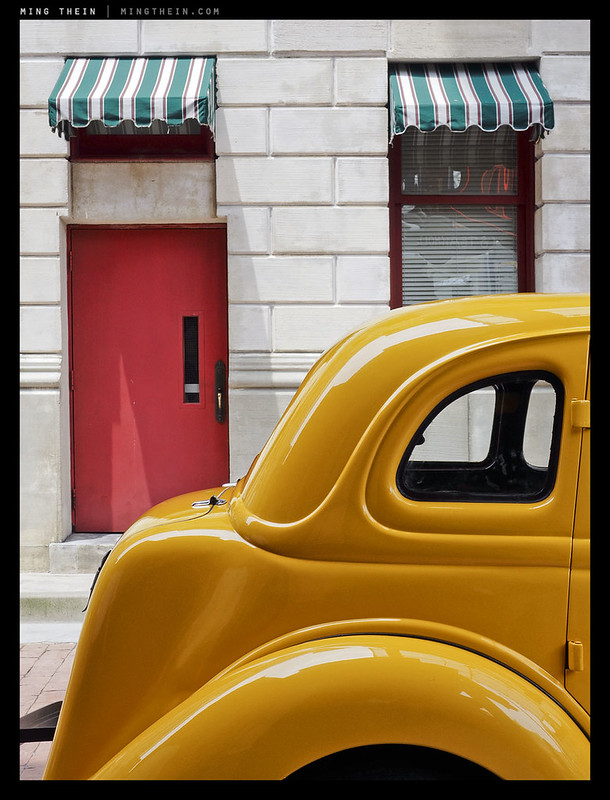
I’ll be straight up honest here: I’m not known as a landscape photographer. Far from it, in fact. But that hasn’t stopped me from experimenting, and as we all know, experimentation is the key to artistic development and evolution: applying what you learn in one discipline to your others can result in something unique, and vice versa. I think the relationship between landscape, cityscape and architectural photography is pretty obvious. Might I approach a watch or food plating as a landscape in future? Why not! Or treat a landscape as an abstract? Certainly.
A very OT review: the 2013 BMW Z4 28i
In a break from regular programming, I’m going to take up one of my readers’ suggestions from a flickr comment and review something different for a change: a car. There are a few automotive journalists I admire and whose work I enjoy for various reasons; the Top Gear trio, Chris Harris, etc. But I’m going to approach this in the same style I approach my camera reviews: from an unashamedly practical standpoint and with some nice images. I’m an enthusiast and nothing more. Read on if you dare.
Defining ‘art’, redux

Is a creative interpretation in another medium of the work of another artist art in itself?
Not so long ago, we had a healthy debate on the line between photography and art (if you haven’t already read it, I highly recommend spending some time on both the main article and the comments – especially the comments). In yesterday’s photoessay, I attempted something different. Distilled out of this are a few thoughts and interpretations on the definition of art…
Originality is dead: or is it?
Today’s post is going to be something of a counterpoint to yesterday. Every time we frame up an image, we ostensibly try to capture something different, unique – in essence, to take a photograph that has never been taken before. But more importantly, the resultant outcome must actually look like it has never been taken before, by appearing quite distinctly different from anything else. That’s the part which is not so easy.
Each of the images in this set represents the outcome of a new experiment for me: subject, idea, execution, processing, equipment or something else. They are almost certainly unique, but I cannot say that they have not been attempted before, by somebody else. Take, for example, the fact that they were all shot on film: film is not new, even to me. But developing my own film and looking at the tonality achievable undoubtedly influences the way I process my digital files. Just as composing in squares does affects the way I see the world, too; and so on.
Working the scene: interpretation, timing and storytelling
Timing is key, but patience is a virtue for every photographer. Very often, we see some rather stunning images of a place we’ve been to before – and wonder how on earth we managed to miss the shot; the reality is even for a static location, there’s at least one factor in play – light – and often more. But I find it often goes beyond that: we ourselves change, and this plays a part in how we perceive the world at any given moment in time. If we’ve only got the opportunity to be in a given location or shoot a certain object once – how can we ensure we at least get a shot we’re happy with, and better yet, something defining?
Managing the creative commercial populist disconnect
What a mouthful of a title. It should really also have the subtitle “what pays isn’t always what’s popular or what I want to shoot” – but that would have exceeded the string length for post titles, run off onto three lines on the title, and completely ruined the front page design aesthetic of the site.
But I think there’s really no simple or concise way to express it. What sells/ what clients pay for is not always what is popular with the viewing public; in fact, it’s usually completely uncorrelated since the commercial side of things seldom elicits an emotional response in the way personal photographs do. And on top of that, what photographers actually enjoy photographing is seldom what pays – sometimes also because the nature of the subject matter means that it has no commercial value in the first place. So, as a commercial photographer, what do we do?
Artificial environments and ‘tourist’ photography
A couple of months ago, I spent some time in a theme park – not because I particularly wanted to go on any of the rides or because I felt like I needed a little escapism, but because I was teaching a workshop as part of the Maybank Photo Awards 2013, and Universal Studios Singapore was a sponsor. Being there made me realize a number of things.
Why photography satisfies

Photography is like food: the variety is endless, and it can satisfy on many levels. But how many of us can make world-class, award-winning food in seconds with minimal equipment?
My earlier article on why we photograph led me to spend a little more time thinking specifically about what it is about the photographic process that is enjoyable. It seems that it’s engaging on many levels – firstly, there’s the anticipation of buying new equipment, and continually pursuing gear – I suppose you could call that the ‘collectors’ itch’. As much as I see cameras as tools, I admit there’s a certain satisfaction in finding, acquiring and owning/ using something rare; the F2 Titan, for example. Like every other accessory or object we choose to use – it signals something about the tastes of the owner. (There’s also the ego-stroking fact that it promotes jealousy amongst other photographers, but I’m going to ignore that and say it really is all about the image.
My love-hate relationship with gear

The guilt (and equipment) stacks up like tetris: this is only one of my equipment cabinets; if I don’t put everything in just so, then it won’t fit. And lighting gear, accessories, tripods, bags etc. are stored elsewhere.
Any photographer who tells you that they are a hundred percent, completely indifferent to equipment is lying. It is almost (I say almost to cover myself in the unlikely event there really is somebody out there) impossible to be immune to the lull of new cameras, lenses or accessories; we’ve all felt the pull at one time or another, no matter how weak or irrational. Actually, it’s the irrational that I’m going to talk about today – purchases that are necessary from a professional standpoint (e.g. you have to buy lights if you’re going to be a studio product photographer) don’t really require justification; at least insofar as there are degrees.
Photography and psychology, part two: how we view images

Woman, umbrella and street scene 1 – think for a moment, how does it make you feel?
Today’s article is the conclusion of the previous article on photography, psychology and why it’s all a mind game; we’ll explore how our subconscious and conscious mind views images, and how the photographer can exploit that to gain control over the way an image is interpreted. Understanding how your audience views an image is critical to determining how that image should be optimally constructed to deliver the right message, and in a way that’s memorable and impactful.